
Water activity, potency claims & cold chain
Six things that decide how many organisms reach the customer.
Freeze-dried cultures and enzyme preparations survive because they are dry. Introduce water and metabolic activity resumes without the nutrients to sustain it, and viable counts fall. Packaging for this category is therefore a moisture-control exercise first, an oxygen and temperature question second, and a labeling question about what the claim actually means.
Water activity, not humidity, is the controlling variable
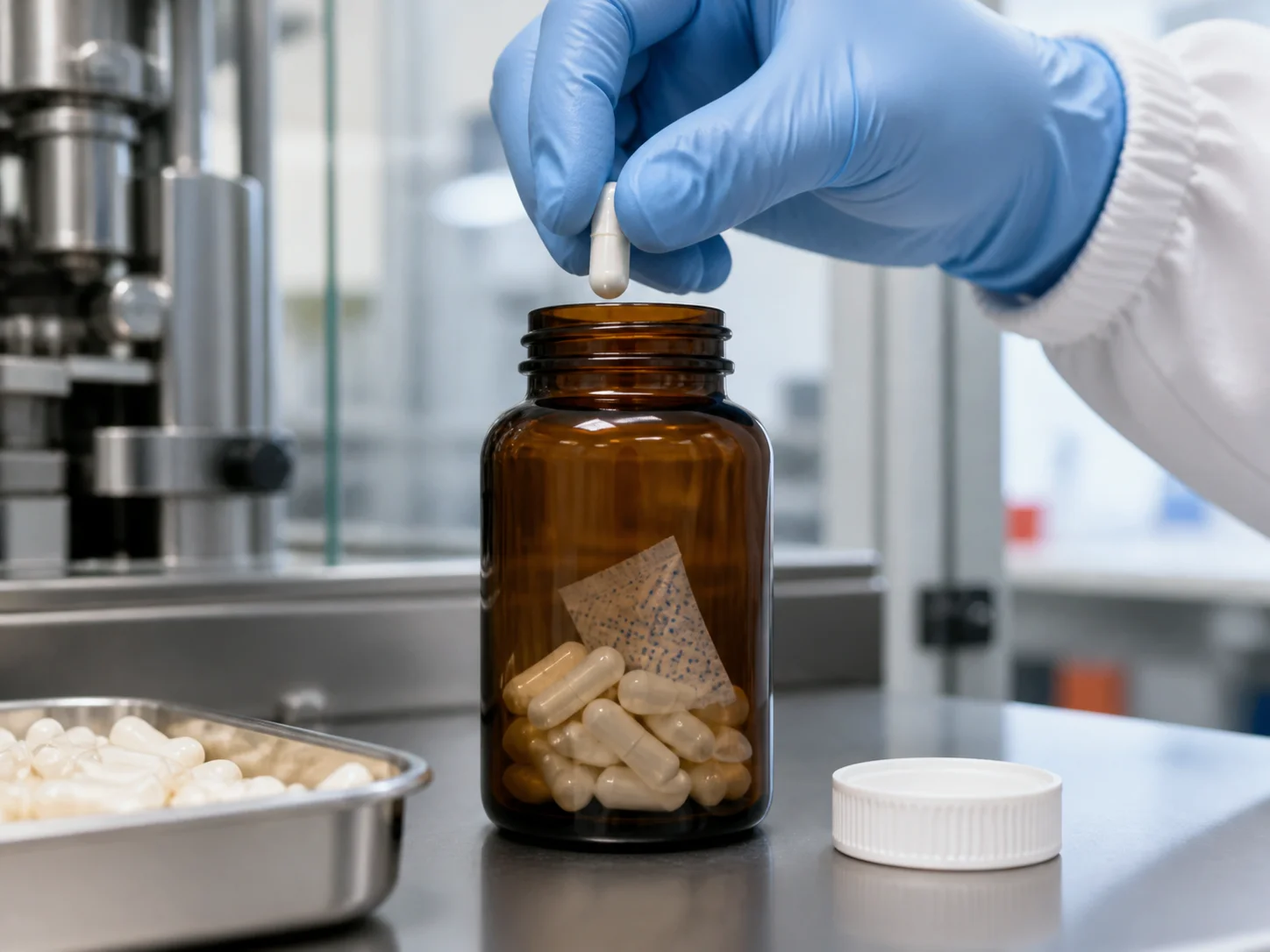
A freeze-dried culture is stable because its water activity is low. Moisture entering the pack raises it, partially rehydrating organisms that then metabolize and die without substrate. That is why probiotic packs almost always carry a desiccant and why the desiccant is sized against expected ingress across the whole shelf life rather than added as a token.
The label claim is an end-of-shelf-life count
Responsible probiotic labeling states viable organisms at expiry, not at manufacture, which means the product is overdosed at packing to cover the expected decline. Better packaging reduces that overage directly. It is the same economics as vitamin overage and it is worth making explicit, because the alternative is a claim that quietly stops being true.
Glass changes where the moisture comes in
HDPE bottles transmit moisture through the wall, which is a major ingress route in plastic probiotic packs. Glass does not, so the closure and its liner become the whole path. That usually means less desiccant is needed and more attention should go to the seal, which is a different balance from the one plastic packs are designed around.
Cold chain is strain-dependent, not universal
Some strains and formats are shelf stable at room temperature; others need refrigeration to hold their count. That decision belongs to the strain and the formulation, and it changes the pack: a refrigerated product needs a label that survives condensation and a bottle that fits a fridge shelf. Assuming either way is a mistake.
Enzymes fail differently from organisms
An enzyme preparation is not alive, but it denatures with heat and moisture and loses activity in a way that is measured in units rather than counts. The packaging levers are similar — dryness, temperature, oxygen — but the analytical endpoint differs, and a pack validated on a probiotic claim does not automatically satisfy an enzyme activity claim.
Desiccant capacity is sized to the shelf life, not to the bottle
A canister that saturates in four months leaves the remaining eight months unprotected while looking exactly as it did on day one. Capacity is calculated from the moisture ingress rate of the closed pack over the full claimed life, and it is verified by weighing desiccant from stability samples.