Side-arm geometry, thermometer placement & separation
Why two distilling flasks of the same volume can give different boiling points.
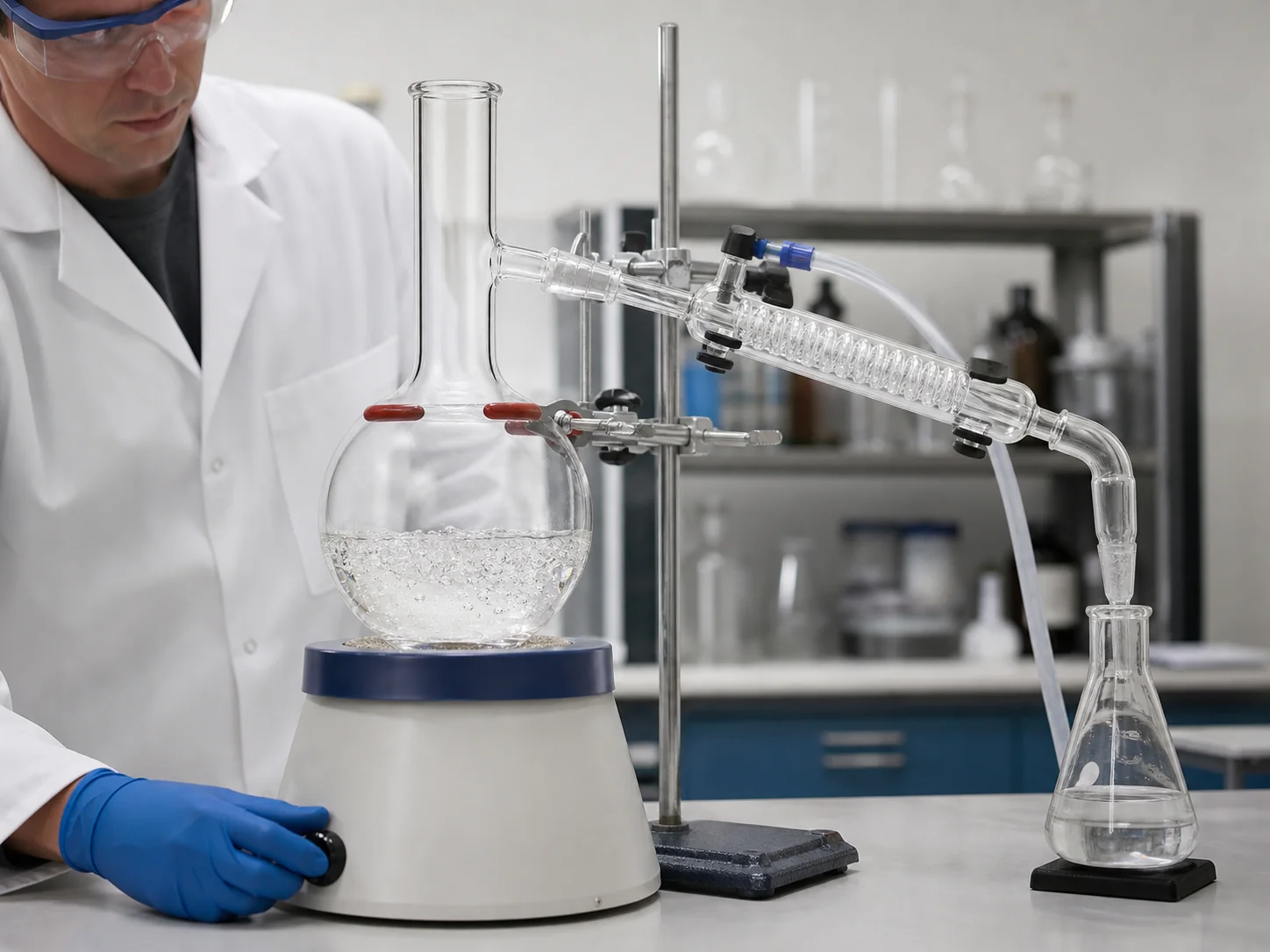
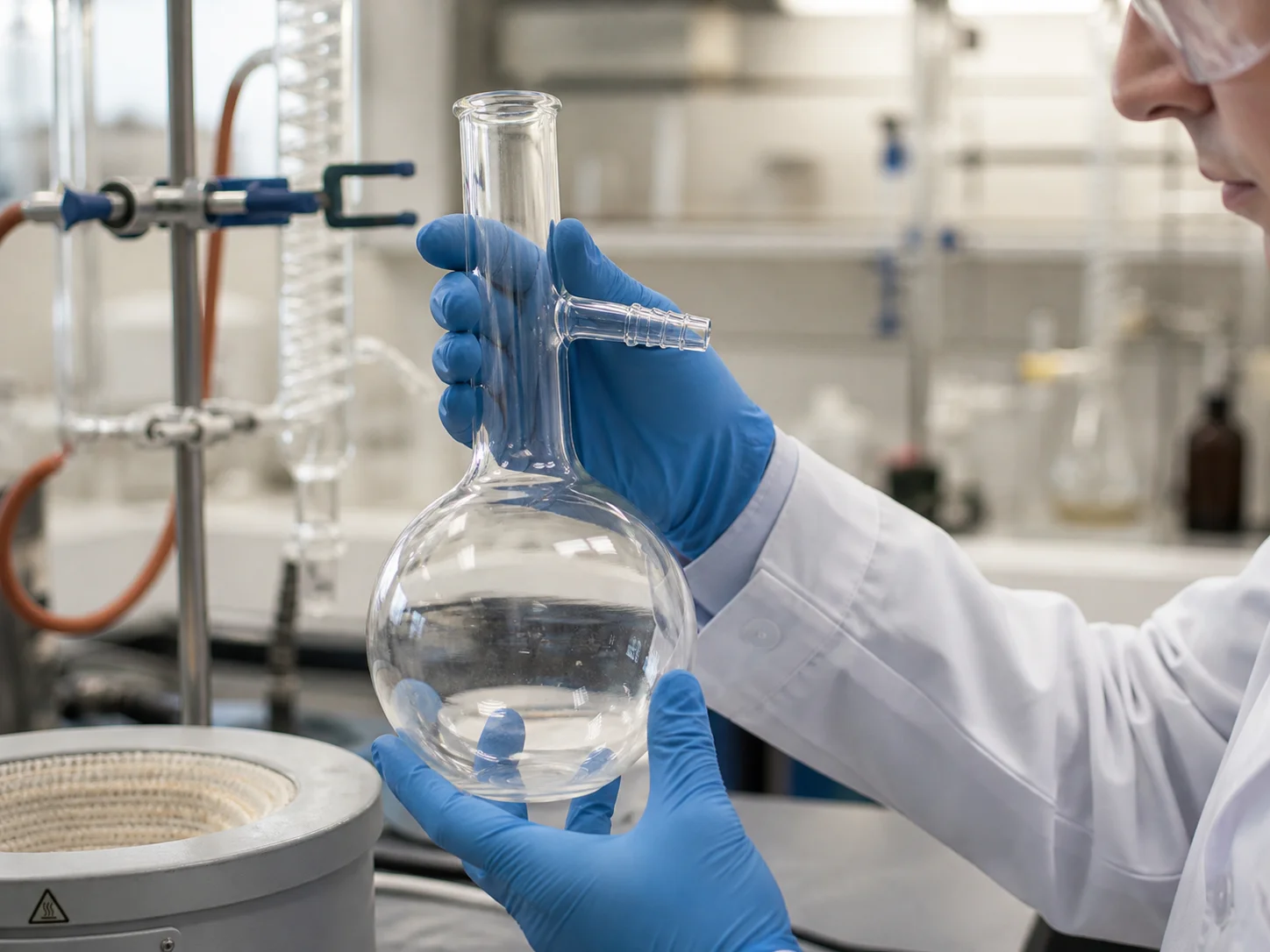
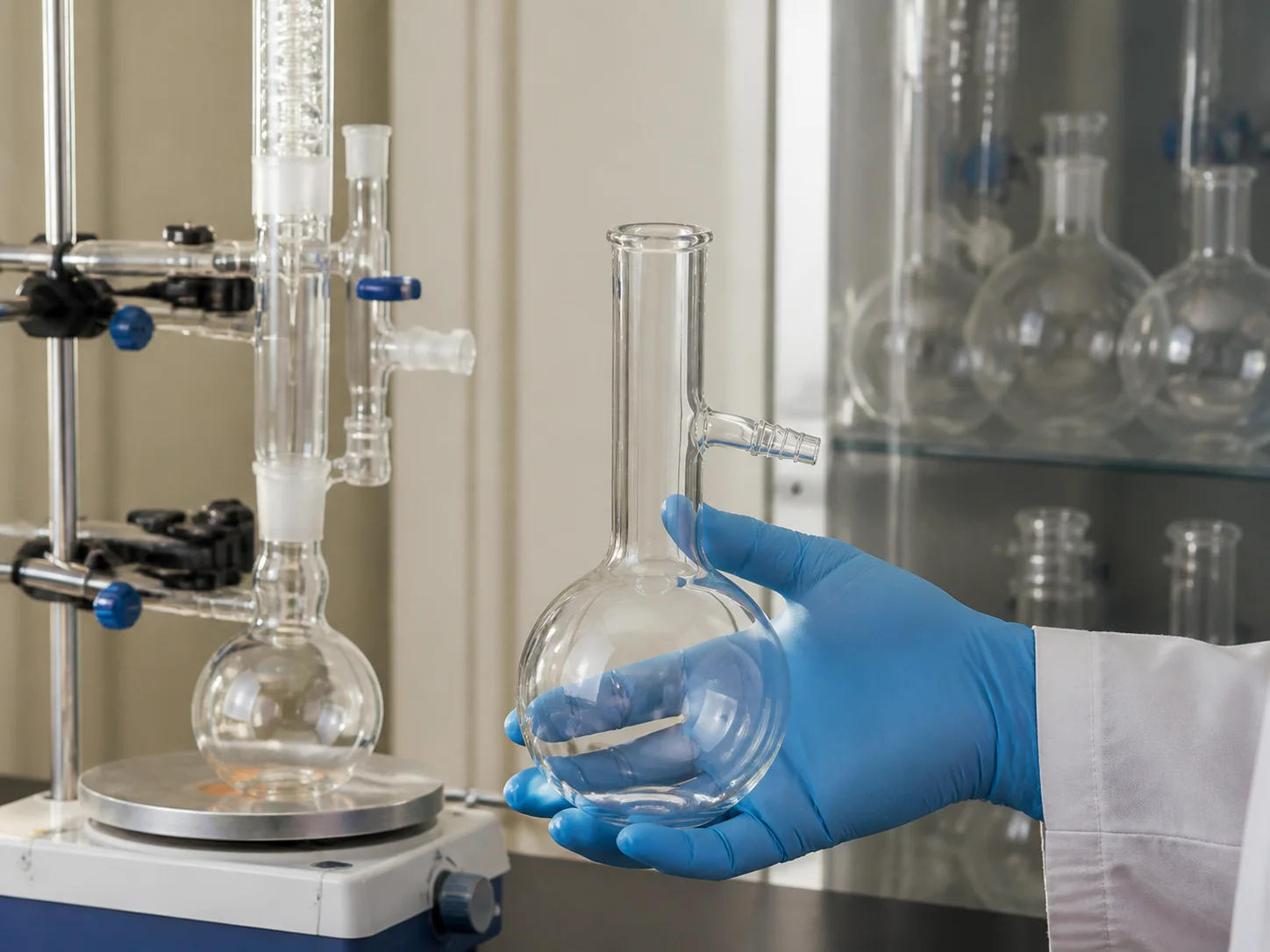
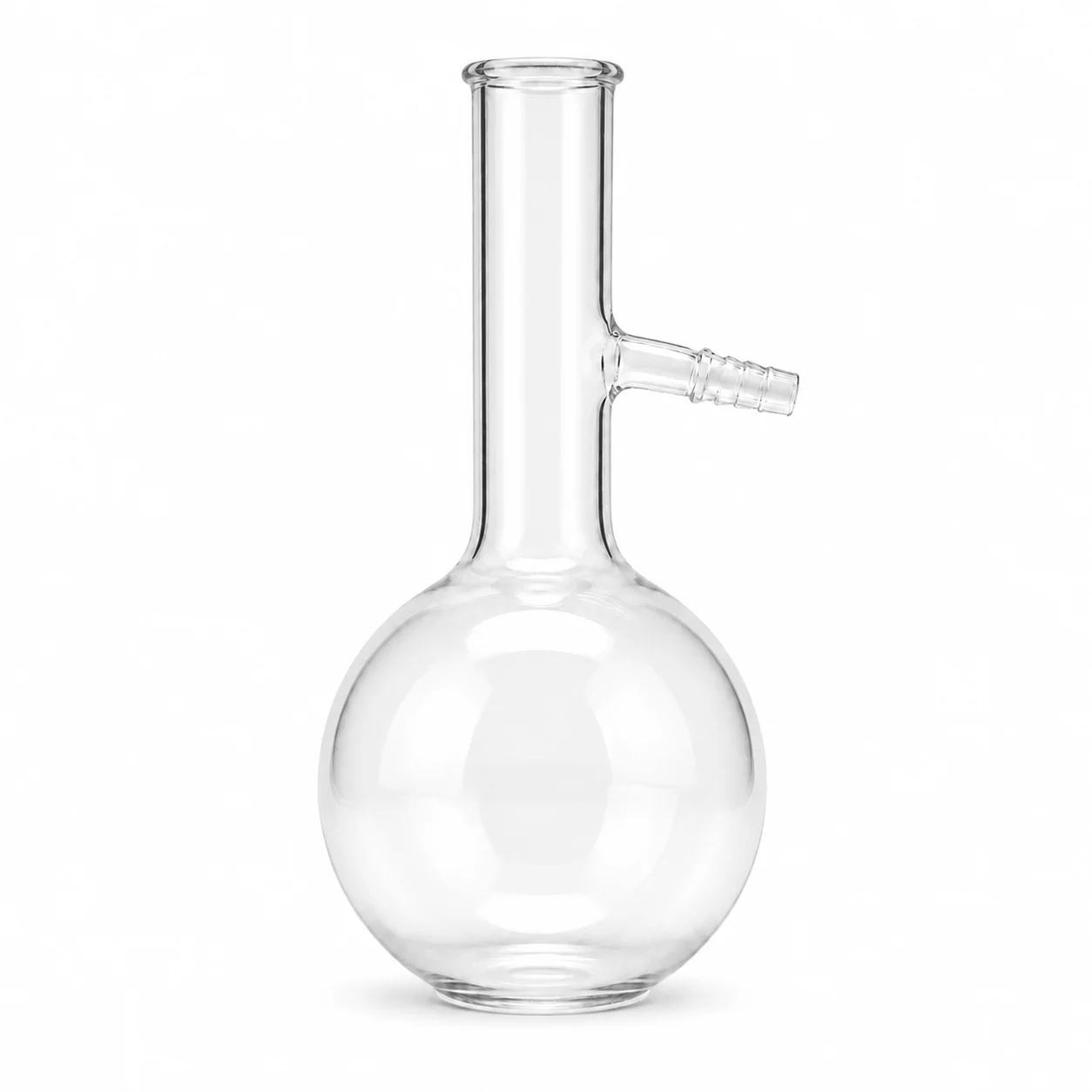
In a distilling flask the take-off is formed into the neck rather than added as a separate stillhead. That fixes the geometry of the whole separation: how far vapor travels before it leaves, where the thermometer bulb has to sit to read the vapor rather than the liquid, and how much reflux happens on the way up.
The thermometer must read vapor, not liquid or glass
The bulb belongs just below the side arm, entirely in the vapor stream that is leaving. Set too high and it reads a partly condensed vapor and reports low; set too low and it picks up radiant heat and superheated liquid and reports high. Because the arm position is fixed in the glass, the flask itself determines where that correct position is.
Neck length is a fractionating decision
Vapor rising through a long neck partially condenses and runs back, which is reflux and which sharpens the separation. A short neck passes almost everything through and distills faster with less resolution. A flask with a long neck is therefore doing a little of the work a fractionating column would do, and choosing it is choosing purity over throughput.
Ground joints turn one flask into several setups
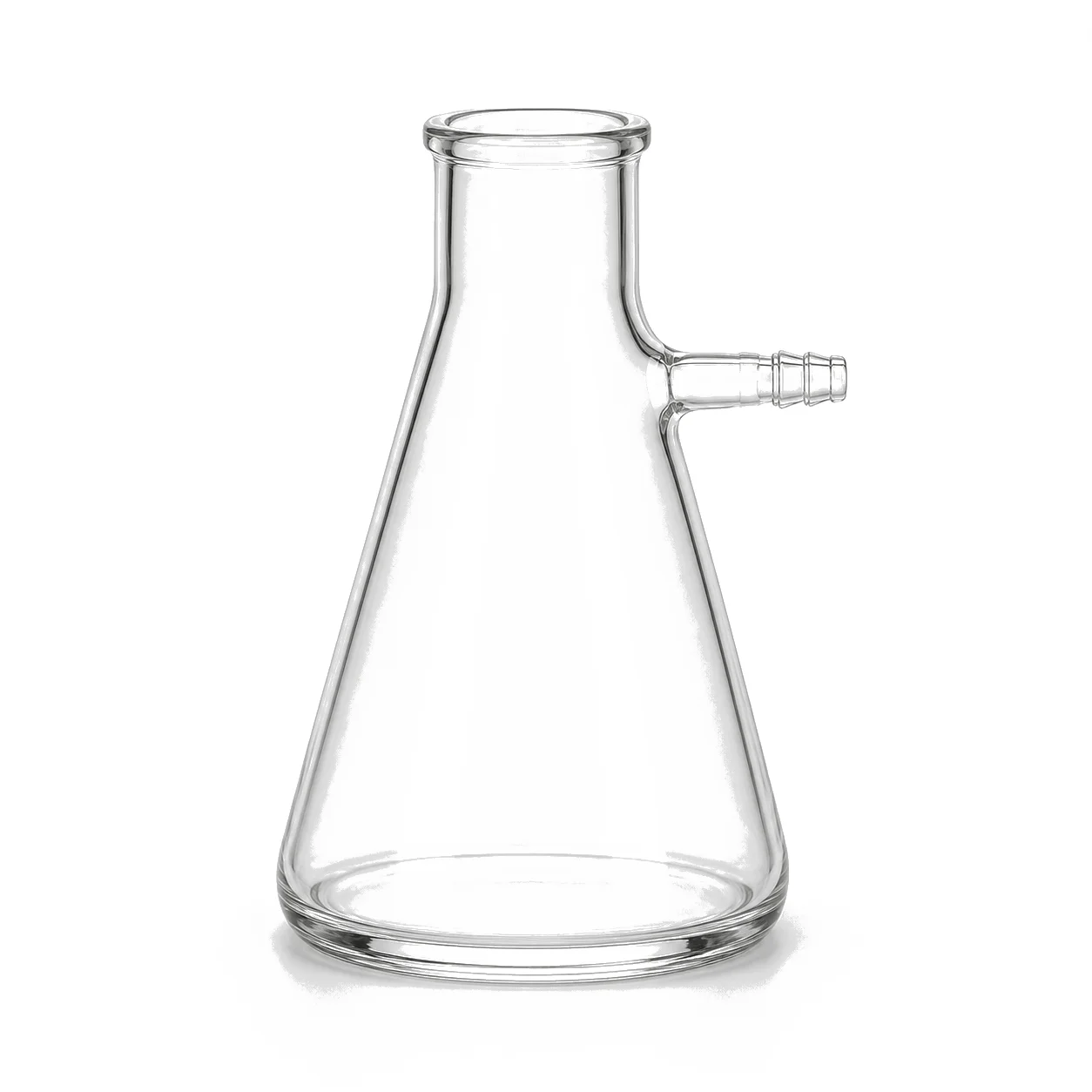
Versions with ISO 383 joints on the neck and at the arm accept a thermometer adapter, a condenser and a receiving adapter, so the same flask serves simple distillation, steam distillation and short-path work. Plain-neck flasks with a ridged arm connect by tubing instead, which is cheaper and appropriate for teaching but less tolerant of vapor at temperature.
Bumping is prevented in the flask, not at the condenser
A liquid heated smoothly in a flask with no nucleation sites superheats and then boils violently, throwing liquid into the side arm and contaminating the distillate. Boiling chips, a stirrer bar or a capillary bleed under vacuum all give the vapor somewhere to start. It is the single most common reason a careful distillation produces an impure first fraction.
Never distill to dryness, and design for it
Residues concentrate as the pot empties, and peroxides, nitro compounds and unstable residues become dangerous exactly at that point. Leaving a heel in the flask is the standard precaution, and it is easier to observe when the flask is sized so the charge is a comfortable fraction of its volume rather than filled to the shoulder.
Size the flask for a one-third to one-half charge
A flask filled much beyond half leaves too little vapor space, bumps more readily and carries liquid over into the arm. One filled far below half wastes heating capacity and leaves more residue behind proportionally. Sizing the charge at roughly a third to a half of nominal volume is the practical rule that most distillation problems in a teaching laboratory come back to.