Body form, stopcock choice & pressure control
What separates a funnel that works from one that sprays solvent across a bench.
A separating funnel is shaken hard with volatile solvents inside it, which generates pressure in a closed glass vessel held in two hands. ISO 4800 covers the forms. The design questions — stopcock material, stopper type, the taper of the body — are all about controlling that pressure and then reading the phase boundary precisely enough to cut it.
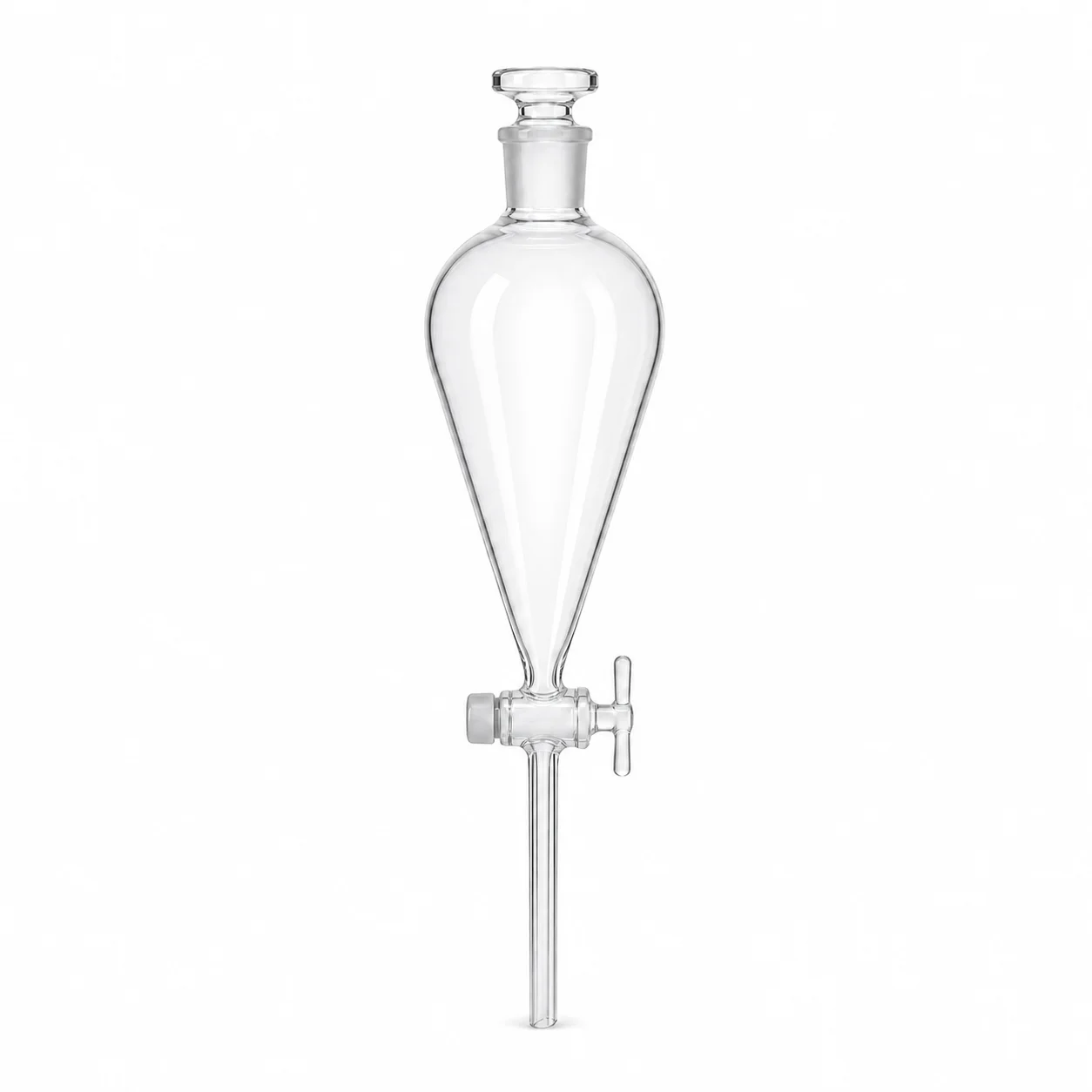
Pear form concentrates the interface where it is read
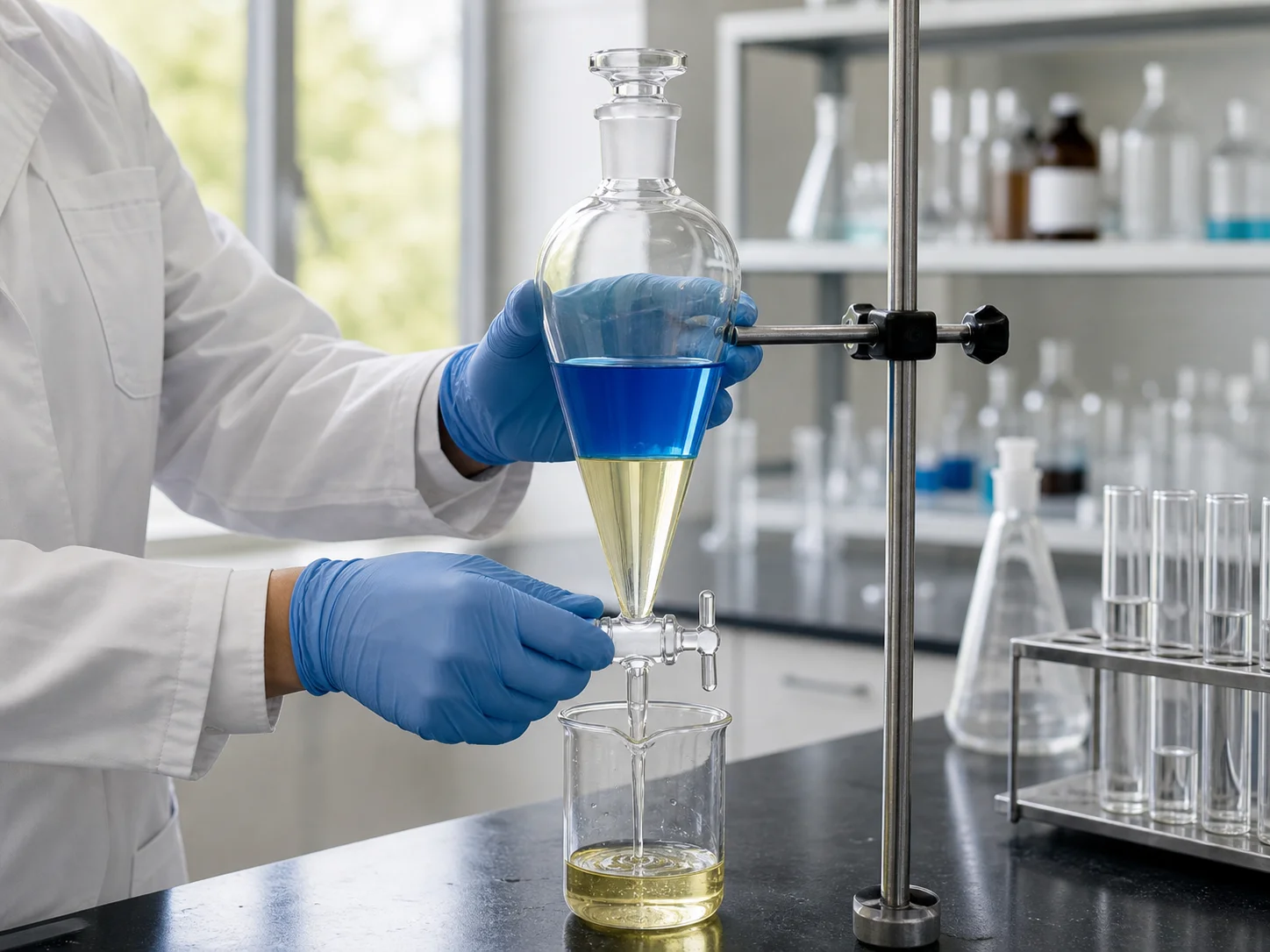
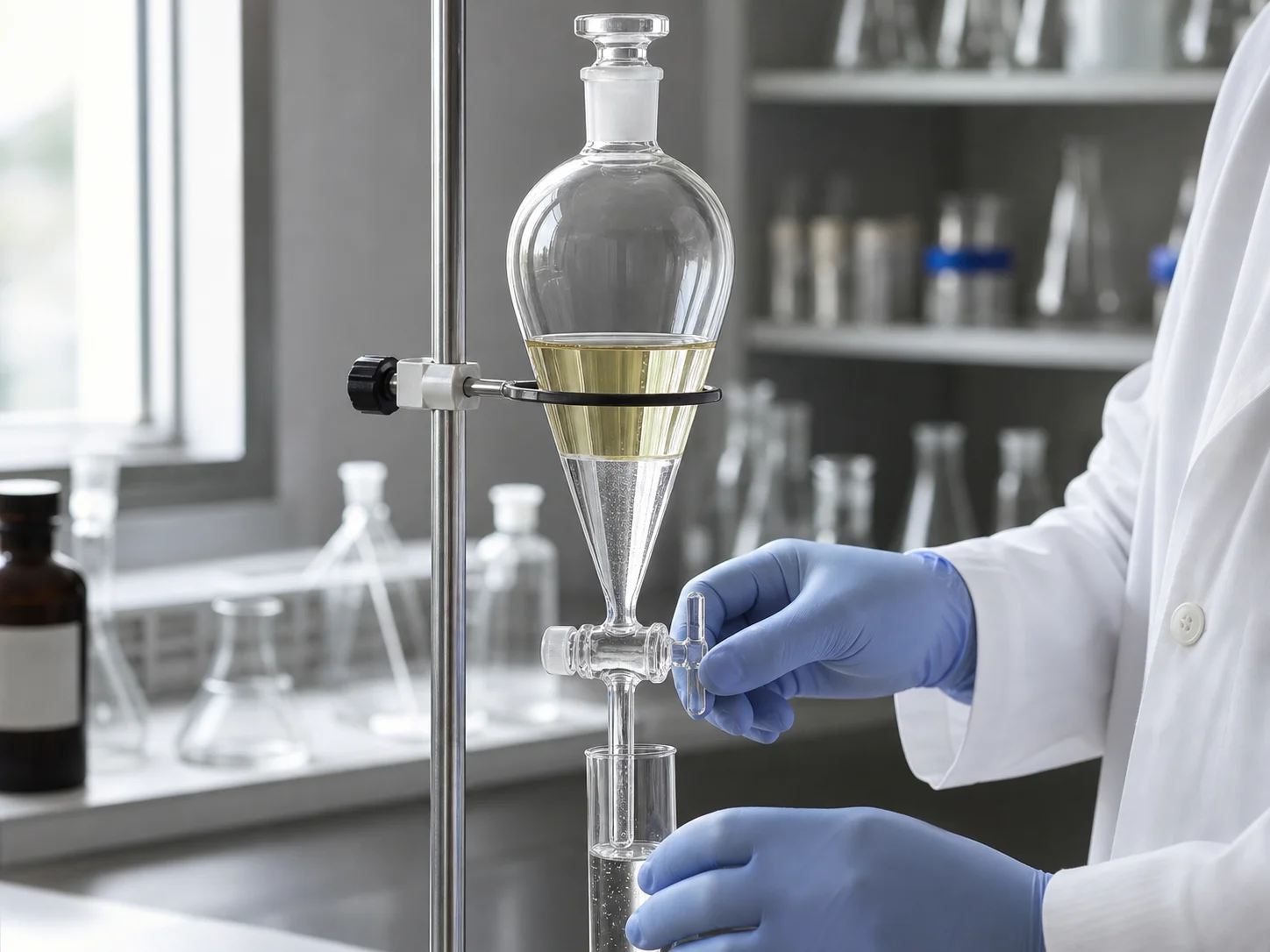
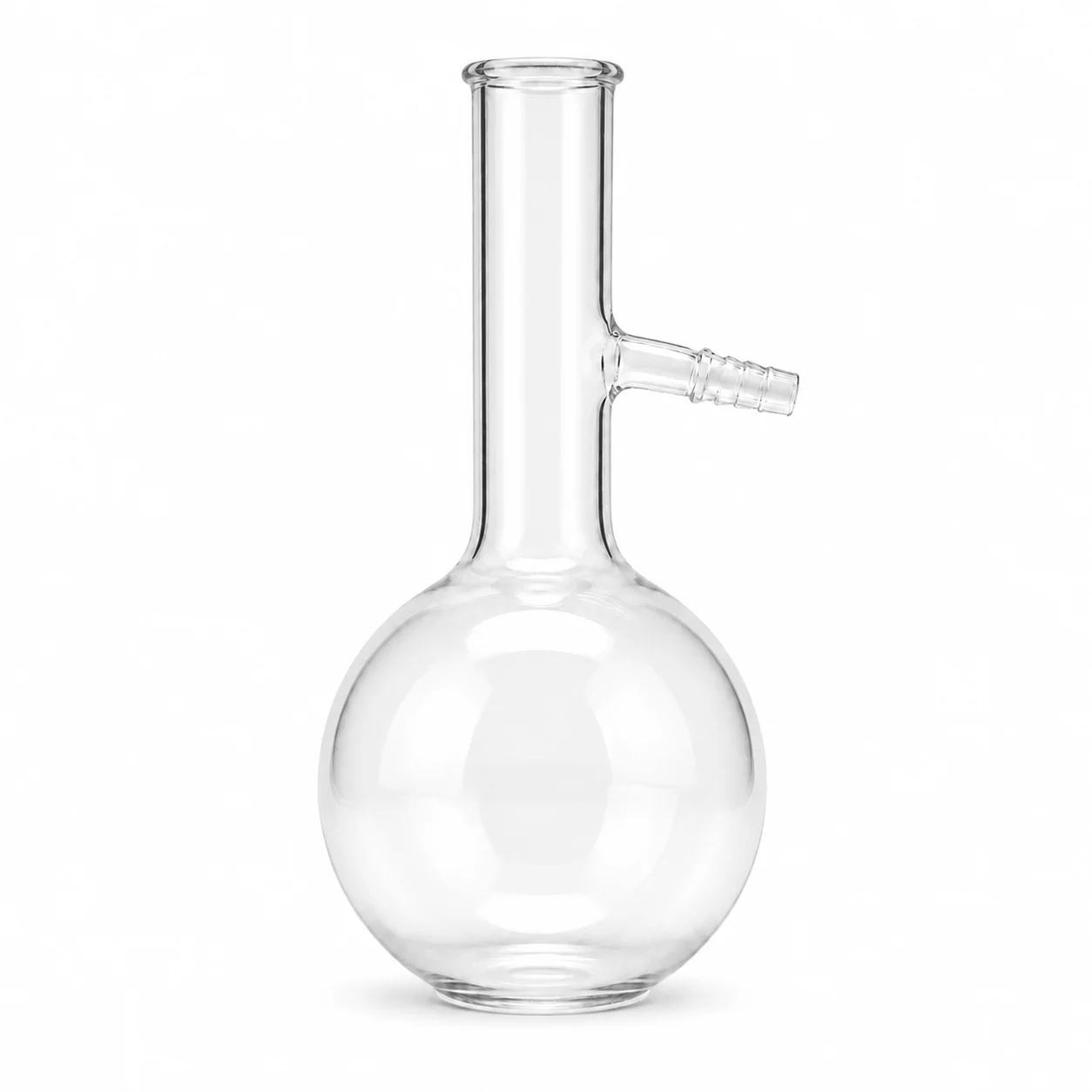
The tapering lower body narrows as the boundary descends, so a small volume occupies more height at the end of a separation and the interface is easy to see and stop on. Globe and cylindrical forms trade some of that resolution for other properties, which is why ISO 4800 covers more than one shape.
PTFE stopcocks removed a whole class of failure
A ground-glass key needs grease, and grease dissolves in the very solvents an extraction uses, contaminating the sample and eventually seizing the joint. PTFE runs dry, resists almost everything and cannot fuse shut with alkali. Its one requirement is a nut adjusted occasionally, because PTFE creeps under load and a stopcock that has loosened will weep at exactly the wrong moment.
Venting is a technique, not a precaution
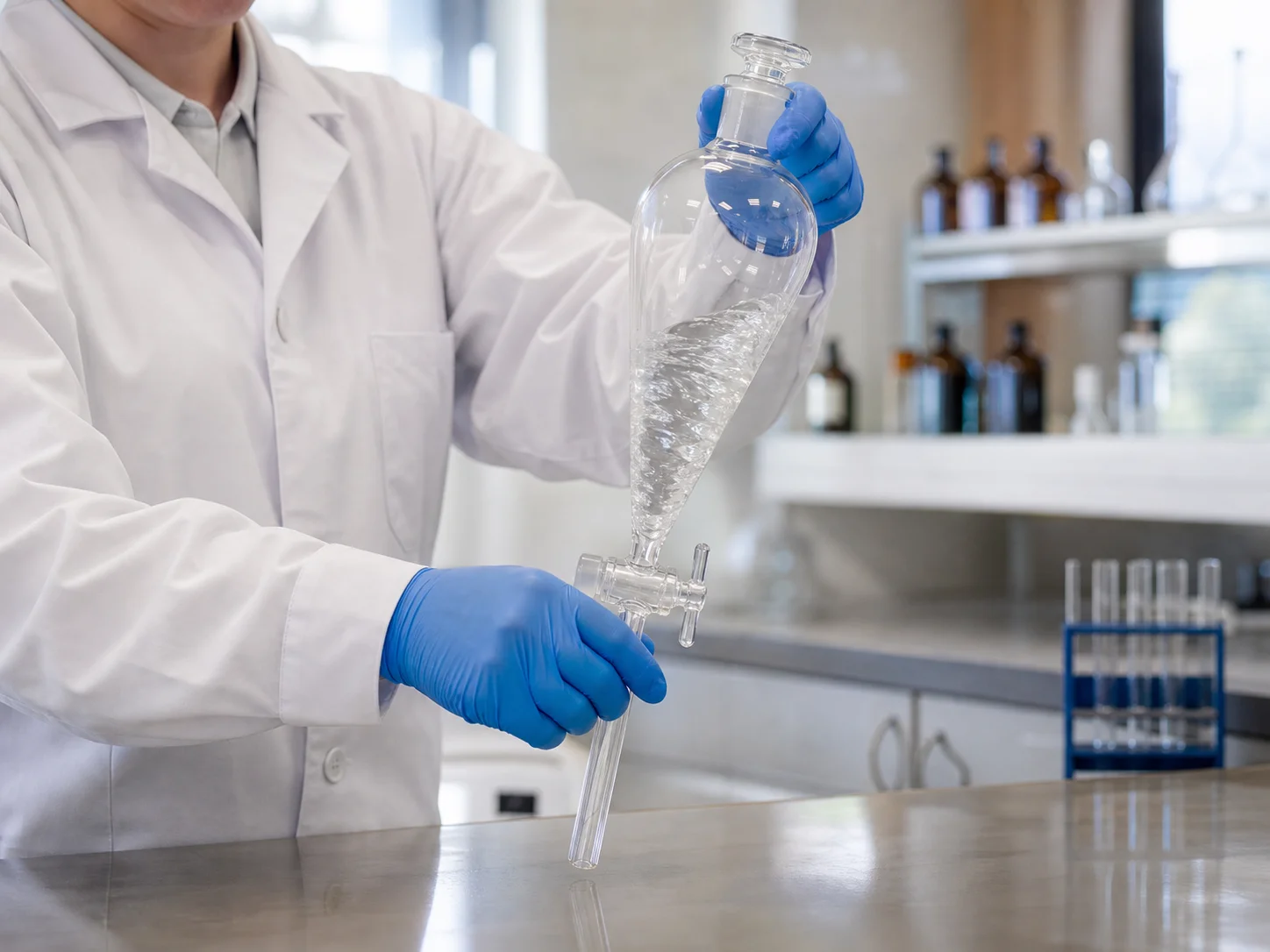
Shaking dichloromethane or ether with an aqueous phase generates pressure within seconds, and a stoppered funnel will push its stopper out with contents behind it. Standard practice is to invert the funnel with the stopper held, point the stem away from everyone and open the stopcock to vent, repeatedly and early. It is the first thing taught and the first thing forgotten.
Emulsions are a property of the system, not the glass
Vigorous shaking of surfactant-bearing or protein-rich mixtures produces an emulsion layer that will not settle. Gentler inversion rather than shaking, brine, a little more solvent or time in the stand all help. No funnel design prevents it, so the practical response is to plan the extraction technique around the sample rather than to blame the equipment.
The stopper has to be secure and removable
Ground-glass stoppers can jam after standing with alkali or evaporating solvent; PTFE stoppers are less prone to sticking. Whichever is used, it must be held physically during inversion. A stopper that departs mid-shake takes the upper phase with it and usually a fume hood cleanup as well.
Support it, and never set it down stoppered
A separating funnel has no base. It lives in a ring or a clamp, and a full one left on a bench falls over. Equally, a funnel left standing stoppered with volatile solvent inside builds pressure as it warms. The routine that avoids both — into the ring, stopper off — is worth making a habit rather than an instruction on a wall.