Joints, heating & the practical consequences of a sphere
What to settle before a round-bottom flask reaches a rig.
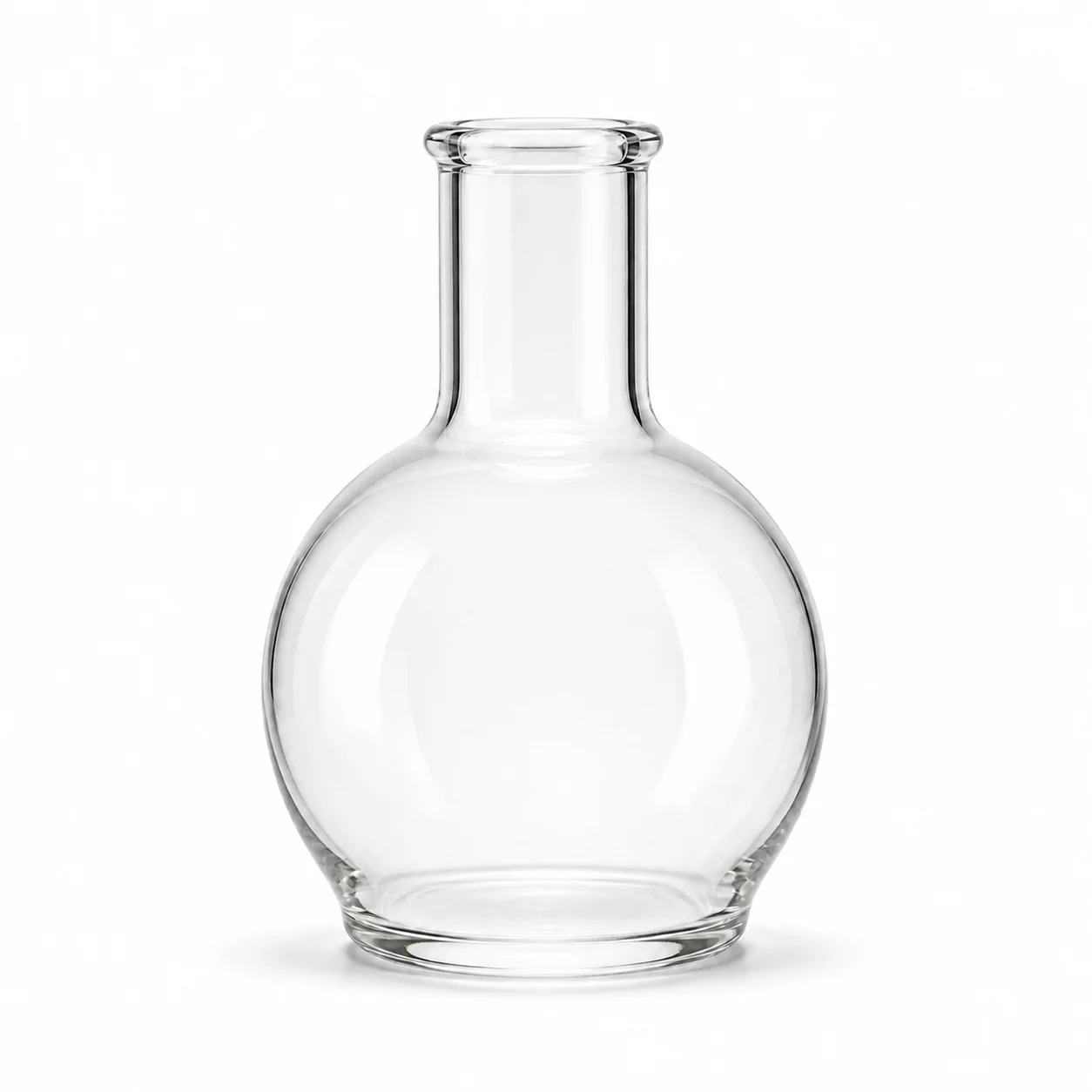
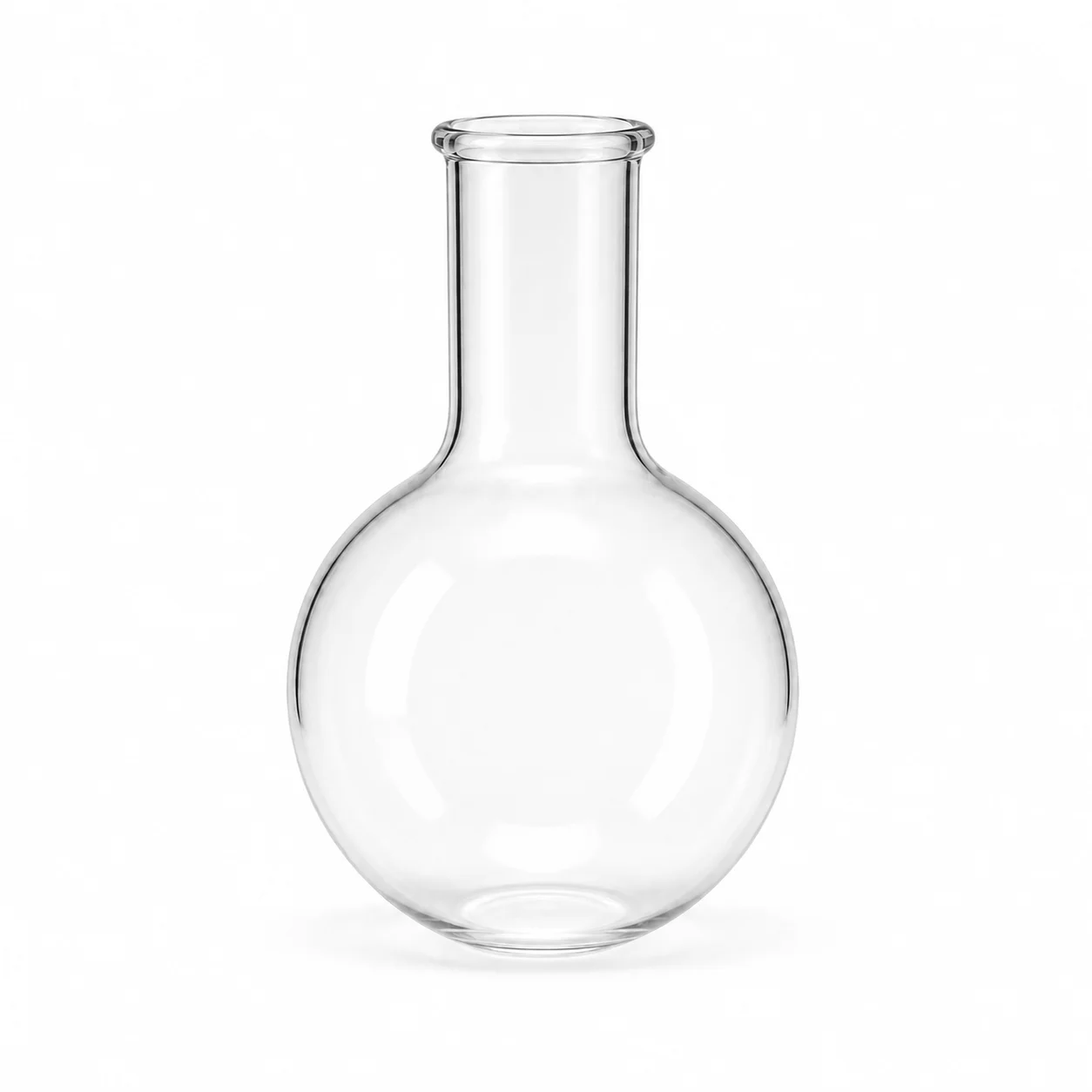
Reflux, distillation and rotary evaporation put glass under a pressure difference while heating it unevenly. A sphere handles both better than any other form: the wall is in pure membrane stress and a heating mantle wraps it completely. The price is that it cannot stand up, which is why round-bottom flasks come with a support requirement rather than a base.
The joint is the interface to everything else
ISO 4797 flasks carry ISO 383 conical joints so condensers, stillheads and adapters connect without tubing. The size — 14/23, 19/26, 24/29, 29/32 — is what determines whether a flask joins the apparatus a laboratory already owns. Buying capacity without specifying the joint reliably produces a cupboard of flasks that fit nothing, which is a slow and expensive mistake.
A mantle fits the curve; a hotplate does not
Heating mantles are made to match standard spherical radii, so the glass is in contact over most of its lower surface and heats evenly. On a flat hotplate a round flask touches at a point, which produces a local hot spot, bumping and eventually a crack. Matching mantle size to flask size is not a convenience, it is the condition under which the flask is safe.
One neck or several depends on the chemistry
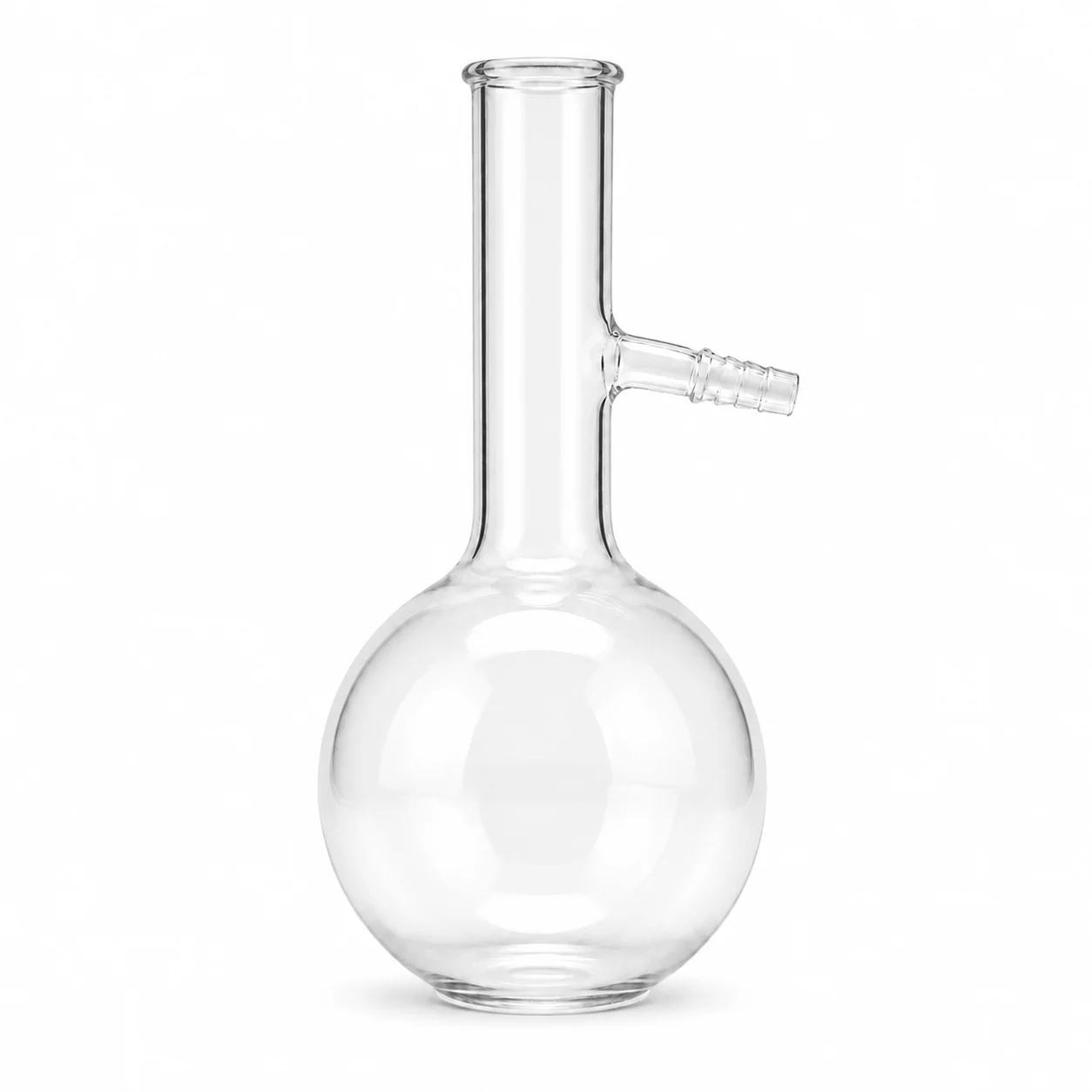
A single-neck flask suits reflux and rotary evaporation. Two- and three-neck versions let a condenser, a thermometer and an addition funnel work at once, which is what any controlled addition or temperature-following reaction requires. Extra necks are angled rather than vertical, and their sizes are usually specified smaller than the central one.
Never heat a closed system, and never trust a stuck joint
A ground joint sealed by heat, by crystallized product or by a clip left in place turns a heated flask into a pressure vessel. Standard practice keeps a vent path open at all times and uses joint clips deliberately rather than habitually. Where a reaction produces gas, the vent is designed into the apparatus rather than left to whichever joint happens to leak.
Support it before you fill it
A round-bottom flask lies on its side on a bench and rolls off it. Cork rings, clamped stands and mantle nests are part of the specification of the workstation, not optional accessories. Most laboratory breakages of these flasks happen when a full one is set down for a moment, which is the moment the shape was never designed for.
Wall thickness is a compromise, not an upgrade
Thicker glass survives more knocks and resists more pressure difference, and it also stores more thermal stress and heats more slowly. Standard-wall flasks suit reflux and routine rotary evaporation; heavy-wall versions are for high or prolonged vacuum. Fitting a heavy-wall flask everywhere costs heating performance and gains little.