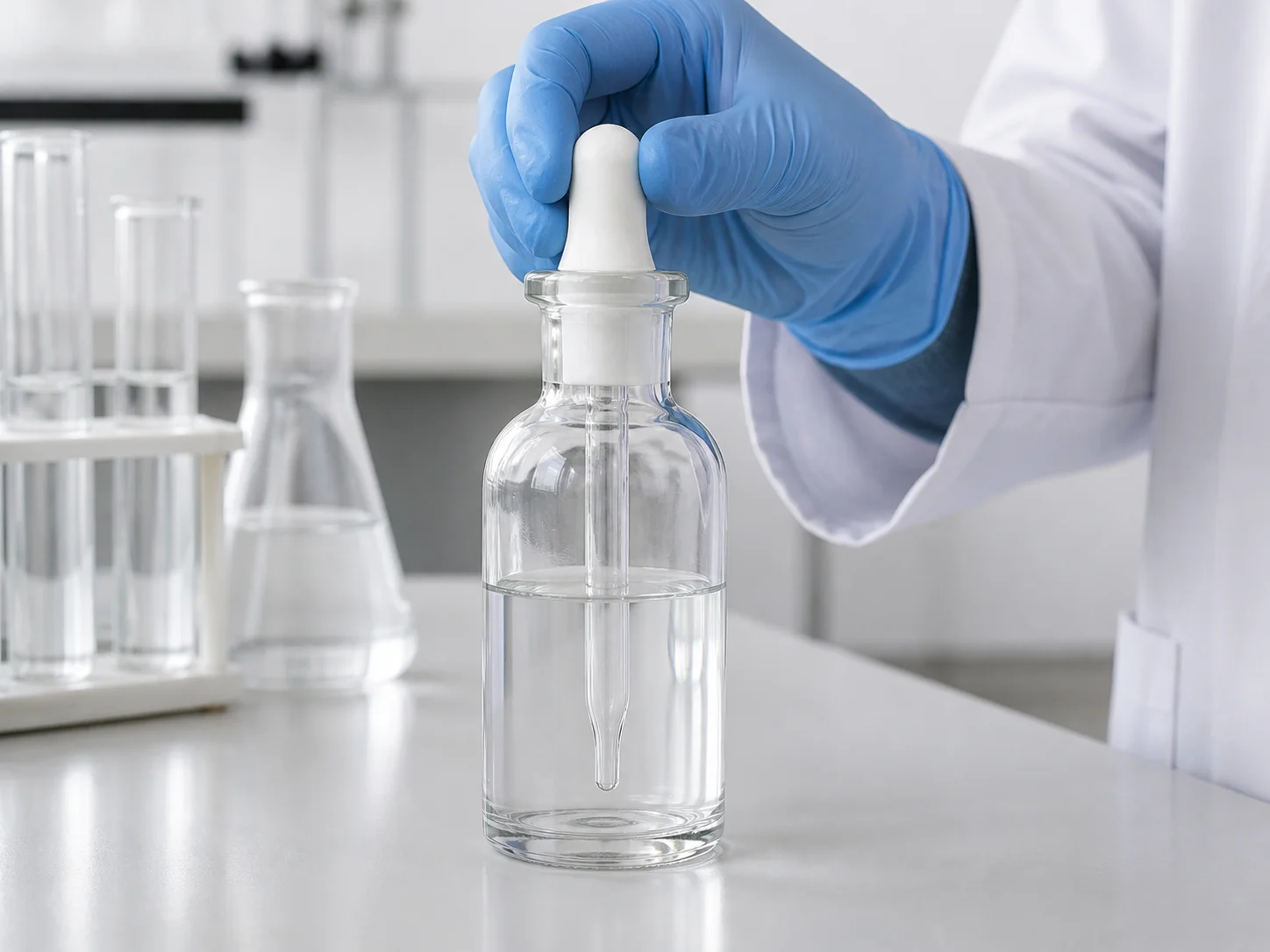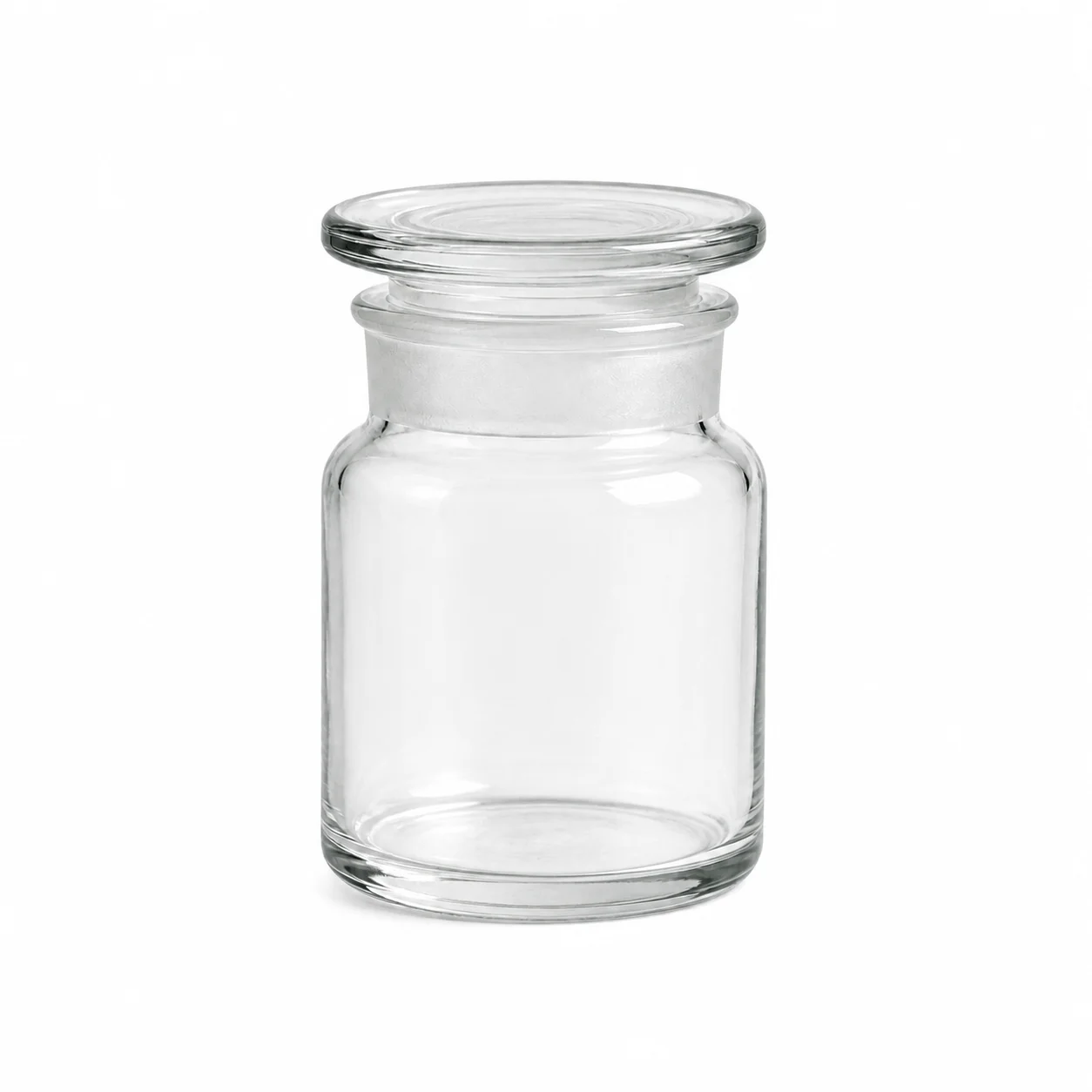
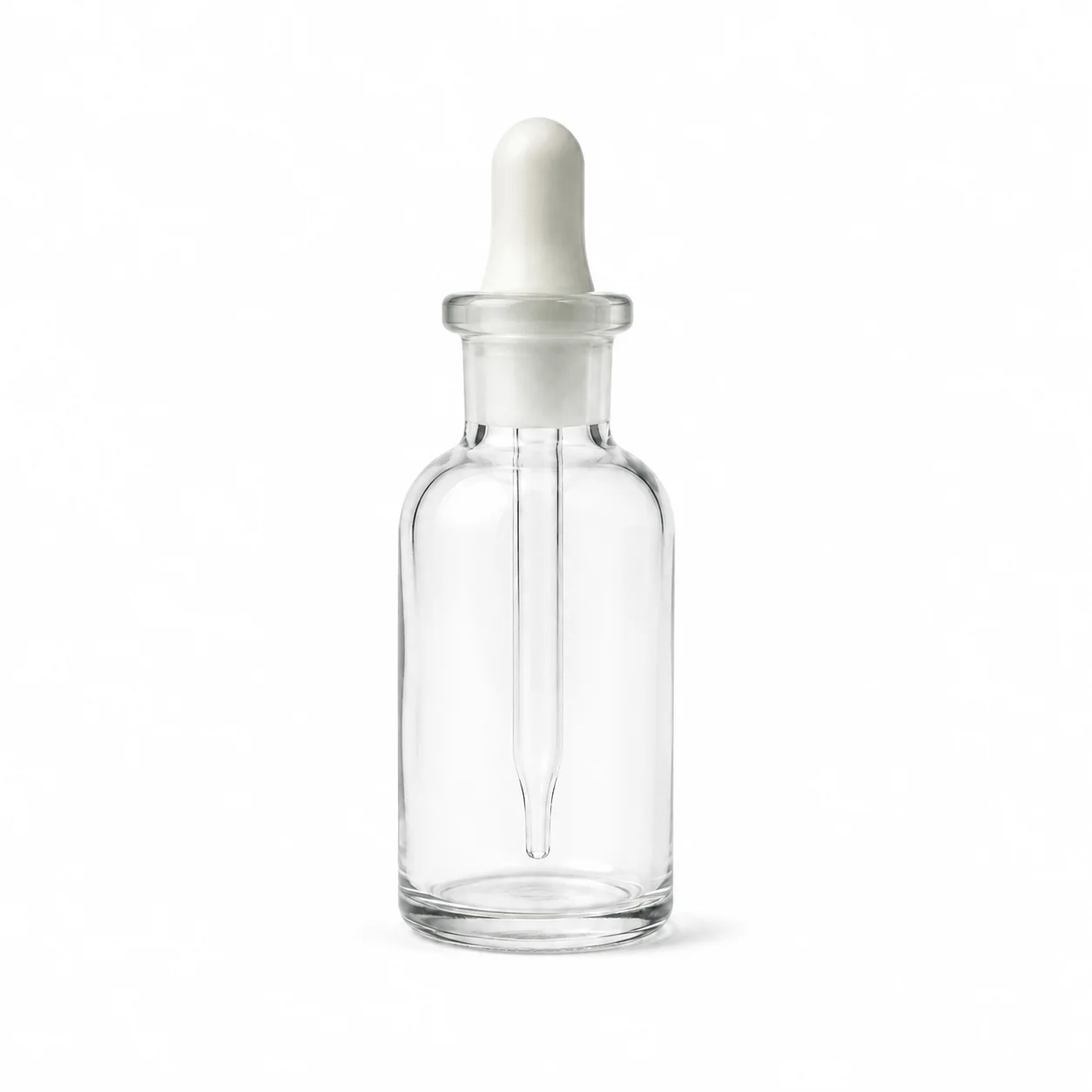
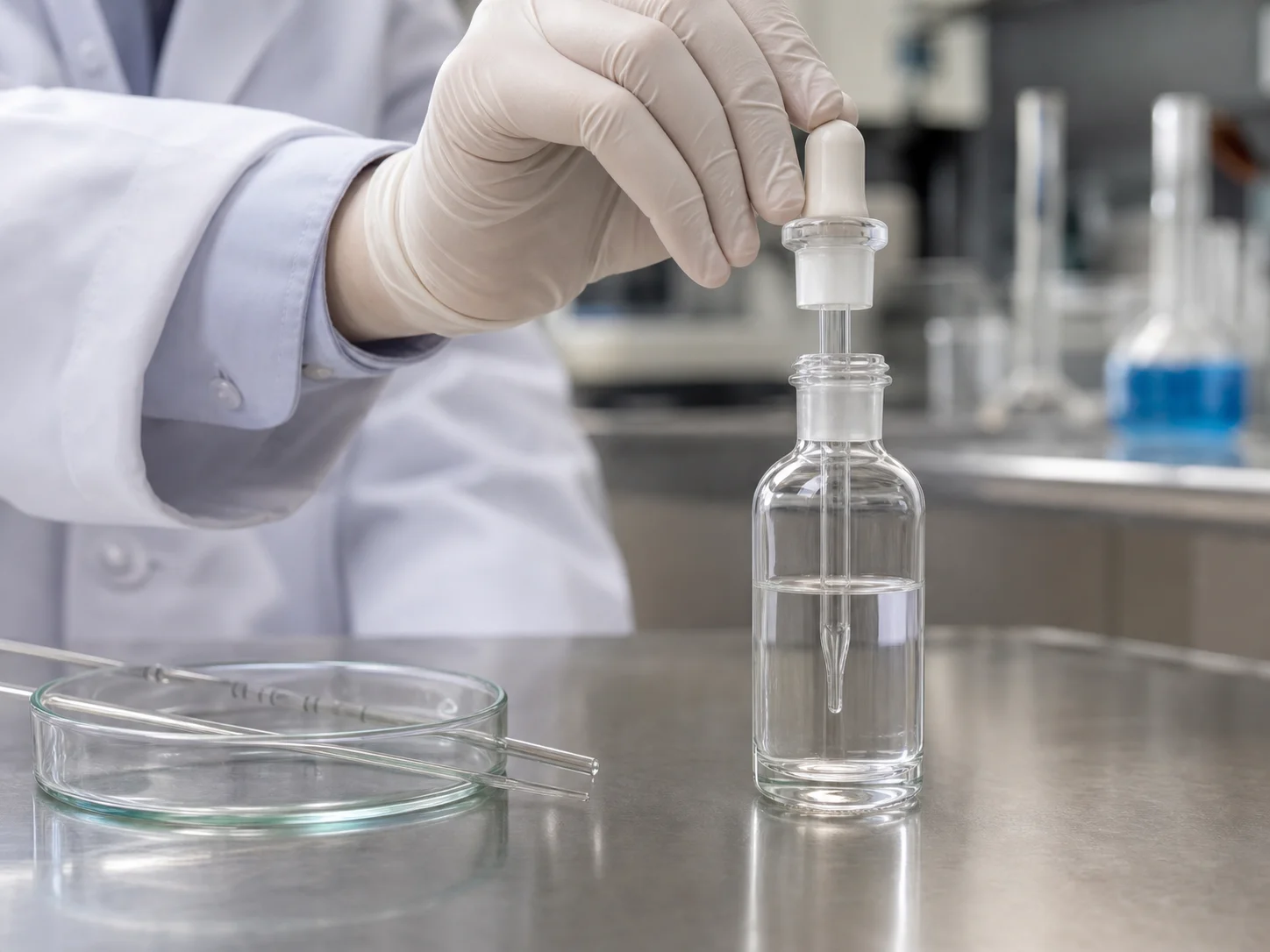
Straight-sided glass bottle with a frosted bulb collar and a long internal dropper tube
Shown configuration · bottle with dropper assembly / bulb, liquid and label not shown

Indicator & reagent dispensing

Dropping Bottle

A dropping bottle whose pipette and rubber bulb are held by a ground collar, so an indicator or a test reagent is delivered drop by drop without decanting.

Ground collar assemblyPipette drawn to a fine tipFlint and amber bodies
Stock status
In stock
Lead time
2–3 weeks
FOB price / pc
$0.15 - $0.45
MOQ
3,000 pcs

Final availability, dimensions, materials, assembled components and commercial terms are confirmed against the selected drawing and approved sample.

Drop size is the tip

Bore and taper decide the volume delivered

Stays with its own reagent

The dropper carries contamination between bottles

Amber for light-sensitive indicators

Same assembly, different body

Dropping Bottle profile

A bottle where the dispenser lives permanently in the reagent.

Drop formation, bulb materials & contamination

Five things that decide whether the drop is repeatable and the reagent stays clean.

In a dropping bottle the pipette is not fetched, used and washed — it sits in the liquid between uses and is put back wet. That makes it fast for indicator work and makes cross-contamination a matter of discipline rather than accident. The design questions are drop consistency, what the bulb is made of, and keeping each dropper with its own bottle.

01

The tip makes the drop, not the squeeze

A drop detaches when surface tension can no longer hold it against gravity, so its volume is set by the outside diameter at the tip and by the liquid, not by how hard the bulb is pressed. Two bottles with different tip tapers deliver visibly different drops of the same indicator, which matters as soon as anyone counts drops as a rough measure.

02

The bulb is the component that fails

Natural rubber softens and goes tacky against solvents and terpenes; nitrile resists oils far better; silicone stays flexible longest but lets volatiles permeate. Whatever is chosen, the bulb ages faster than the glass, and a bottle whose bulb has taken a set draws less and dispenses inconsistently while looking entirely serviceable.

03

One dropper, one bottle, permanently

Because the pipette is stored wet in the reagent, moving it to another bottle transfers whatever is on it. In a teaching laboratory with a row of identical indicator bottles this happens constantly unless the assemblies are marked or color coded. It is a labeling problem more than a design one, and it is the main way indicator sets get ruined.

04

The collar has to seal against vapor, not liquid

A dropping bottle spends its life upright, so the collar is rarely holding back liquid. What it does control is evaporation of a solvent-based indicator and creep of the reagent onto the outside of the bottle. A ground collar does that better than a plain push fit, which is why the format persists for alcoholic indicator solutions.

05

Amber matters more here than on a storage bottle

Indicators sit out on an open bench under laboratory lighting for months, which is a far harsher light exposure than a reagent in a cupboard. Where a solution is photosensitive, the dropping bottle is the place amber earns its keep. Keeping the same assembly and changing only the body makes that a simple substitution rather than a new format.

06

Pipette length is matched to the bottle, not chosen freely

A pipette too short leaves reagent that cannot be reached, and one too long strikes the base and chips it, dropping glass into the very solution being dispensed. The assembly is specified as a pair for a given bottle height, and a replacement pipette is measured before it is fitted.
Application guide

The dropper lives in the bottle and never leaves it.

A dropping bottle keeps its pipette permanently in the reagent, so a technician lifts, dispenses and replaces in one motion without ever setting a wet dropper down. These are development directions confirmed with the actual reagent.

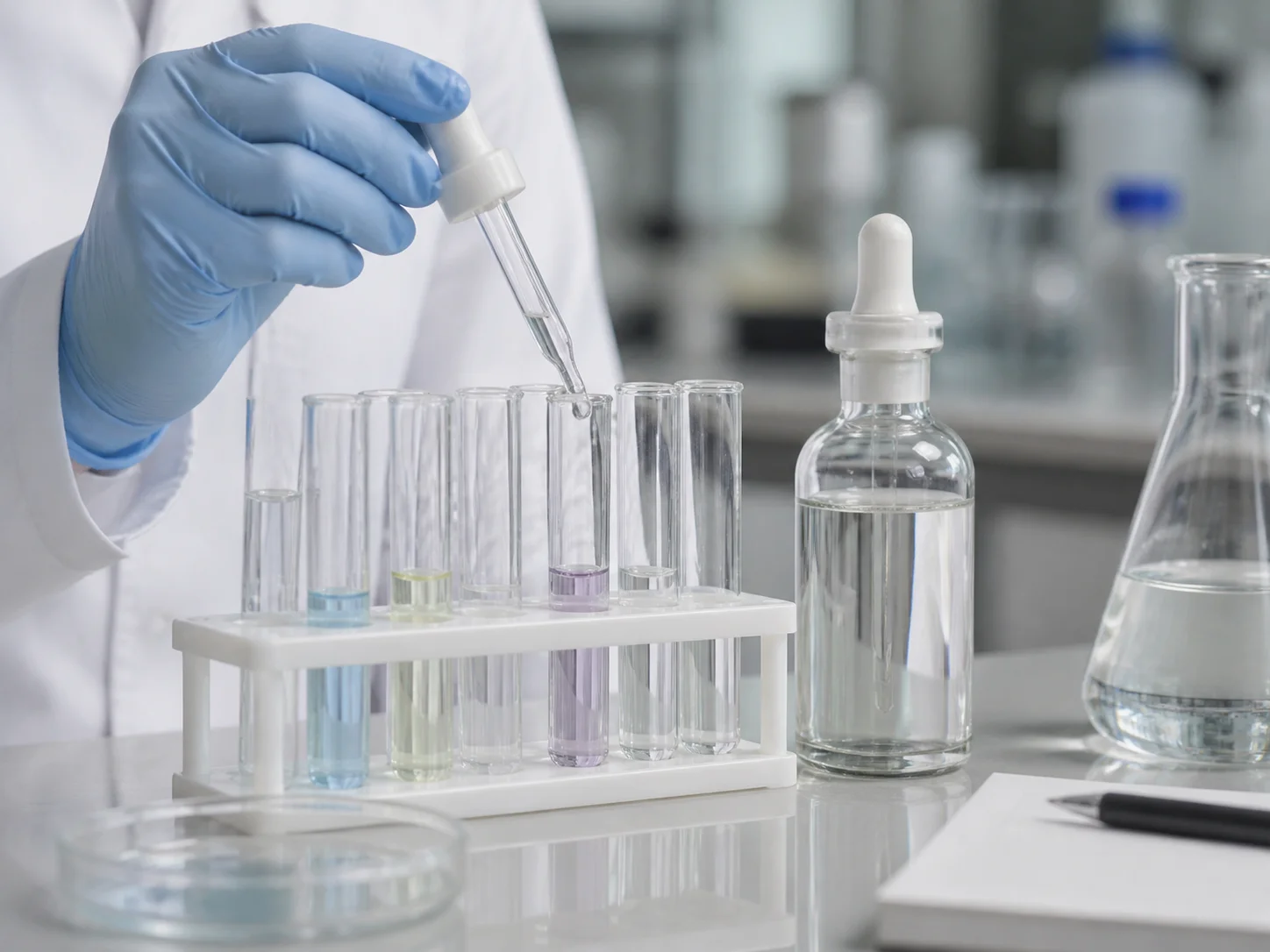
Dropping Bottle used for indicators and reagents used all day in a bench reagents setting

Bench reagents

Indicators and reagents used all day

For solutions a technician reaches for repeatedly during a working day, adding a drop or two to a test and replacing the dropper immediately. Because the pipette stays in the liquid, nothing is contaminated by contact with a bench and nothing drips across the workspace between uses.

  • Confirm one-handed lift and dispense
  • Check the dropper returns cleanly
  • Size the bottle to daily bench use
Dropping Bottle used for glass collar matched to glass neck in a ground fittings setting

Ground fittings

Glass collar matched to glass neck

The frosted collar and neck form a ground fit made as a matched pair, which is why a dropper from one bottle may not seat properly in another. That matters in a laboratory where several identical bottles stand side by side and get mixed up.

  • Keep matched pairs together
  • Confirm the ground fit seats fully
  • Label bottle and dropper as a set
Dropping Bottle used for bulb material against the solution in a reagent contact setting

Reagent contact

Bulb material against the solution

The bulb is the only non-glass component in the assembly and it sits directly above an evaporating reagent for months at a time, which perishes some elastomers and stiffens others until they no longer draw. Its material has to be chosen against the specific solutions the bottle will hold rather than supplied as standard.

  • Match the bulb to the reagents used
  • Check for perishing over time
  • Confirm draw stays consistent

Applications describe assembly directions. Method suitability, chemical compatibility and laboratory outcomes are confirmed for the selected program.

Common questions

Dropping Bottle questions

Consistency and contamination are the two things these bottles are judged on.

Which bulb suits a laboratory dropper?

Nitrile where solvents or terpenes are involved, since natural rubber softens and turns tacky against them. Silicone stays flexible longest and lets volatiles permeate its wall. Natural rubber is fine and cheapest for aqueous indicators. Whatever is chosen, the bulb ages faster than the glass and should be stocked as a replacement part.

Can we move a dropper between bottles?

Not without transferring whatever is on it. The pipette is stored wet in the reagent, so it carries that reagent everywhere it goes. In a teaching laboratory with a row of identical indicator bottles this happens constantly unless assemblies are marked or color coded. It is the usual way a set of indicators gets quietly ruined.

Does the collar need to be ground?

For alcoholic and solvent-based indicators, it is worth it. The bottle stands upright so the collar is rarely holding back liquid; what it controls is evaporation and creep of reagent onto the outside of the bottle. A ground collar manages that better than a plain push fit, which is why the format has survived for indicator work.

Can the pipette length be chosen freely?

No — it is matched to that bottle. The tip has to reach close to the base without touching it, so a pipette from another bottle either strands reagent or bottoms out and shortens the draw. Order the assembly rather than the parts.

Next step

Send us the Dropping Bottle brief.

Tell us the product, fill volume, closure preference and destination market. We will come back with the matching drawings, available configurations and a sample plan before anything is quoted.

  • 01Send the briefProduct, volume, closure and market
  • 02Get the optionsMatching drawings and configurations
  • 03Approve the sampleConfirm the pack before production