Displacement collection, sealing & handling limits
What the format does well, and the two things it must never be asked to do.
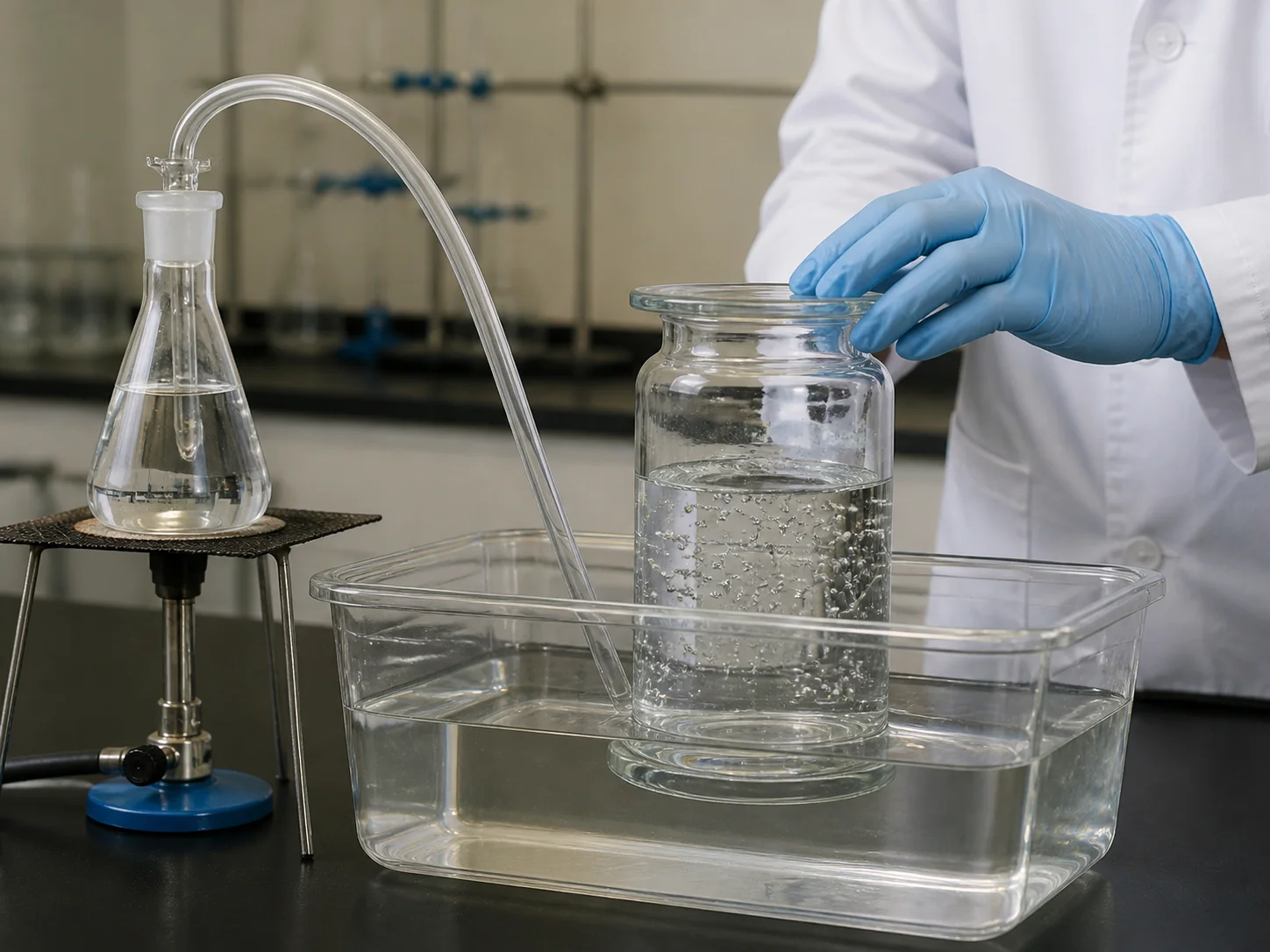
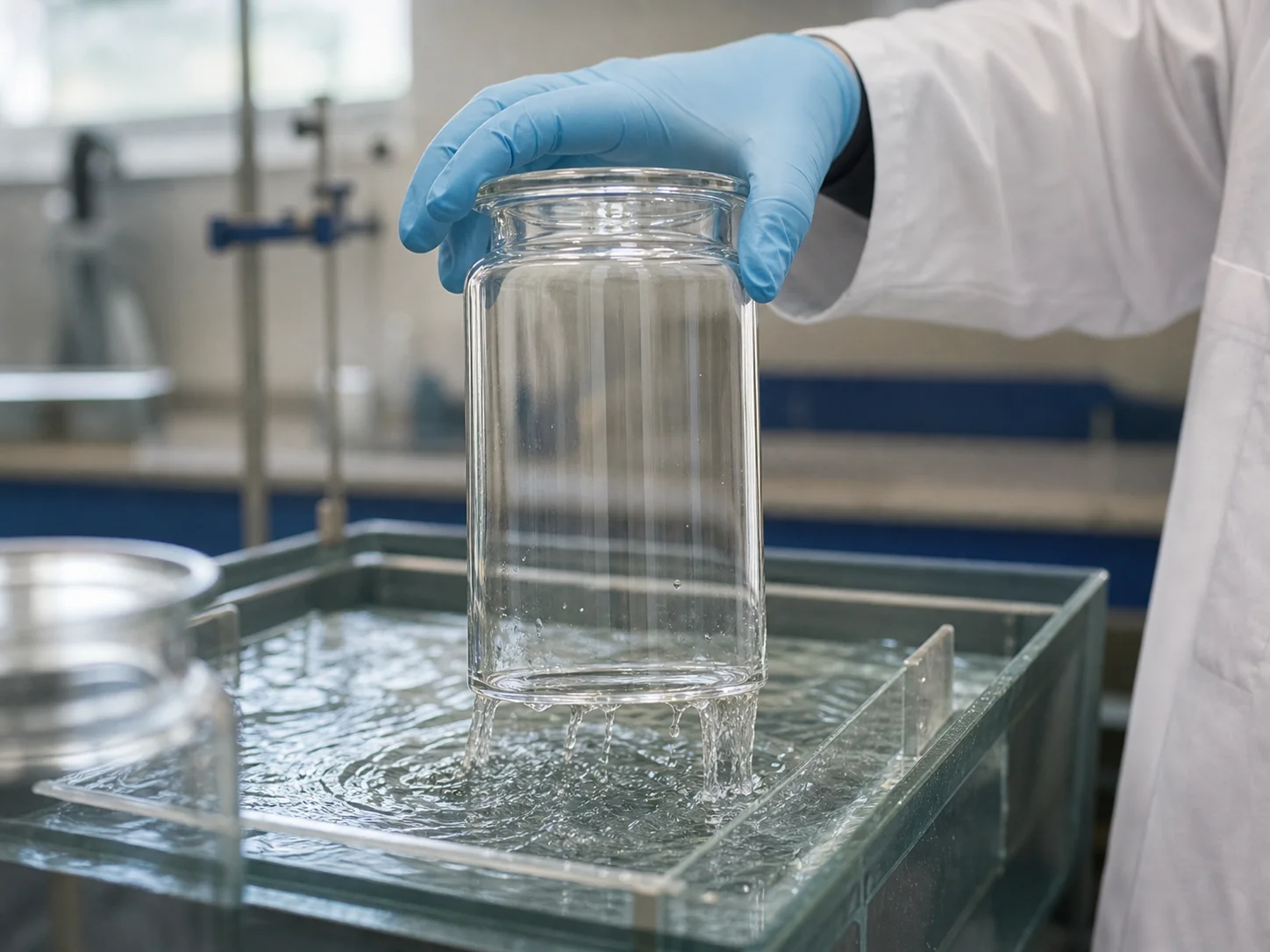
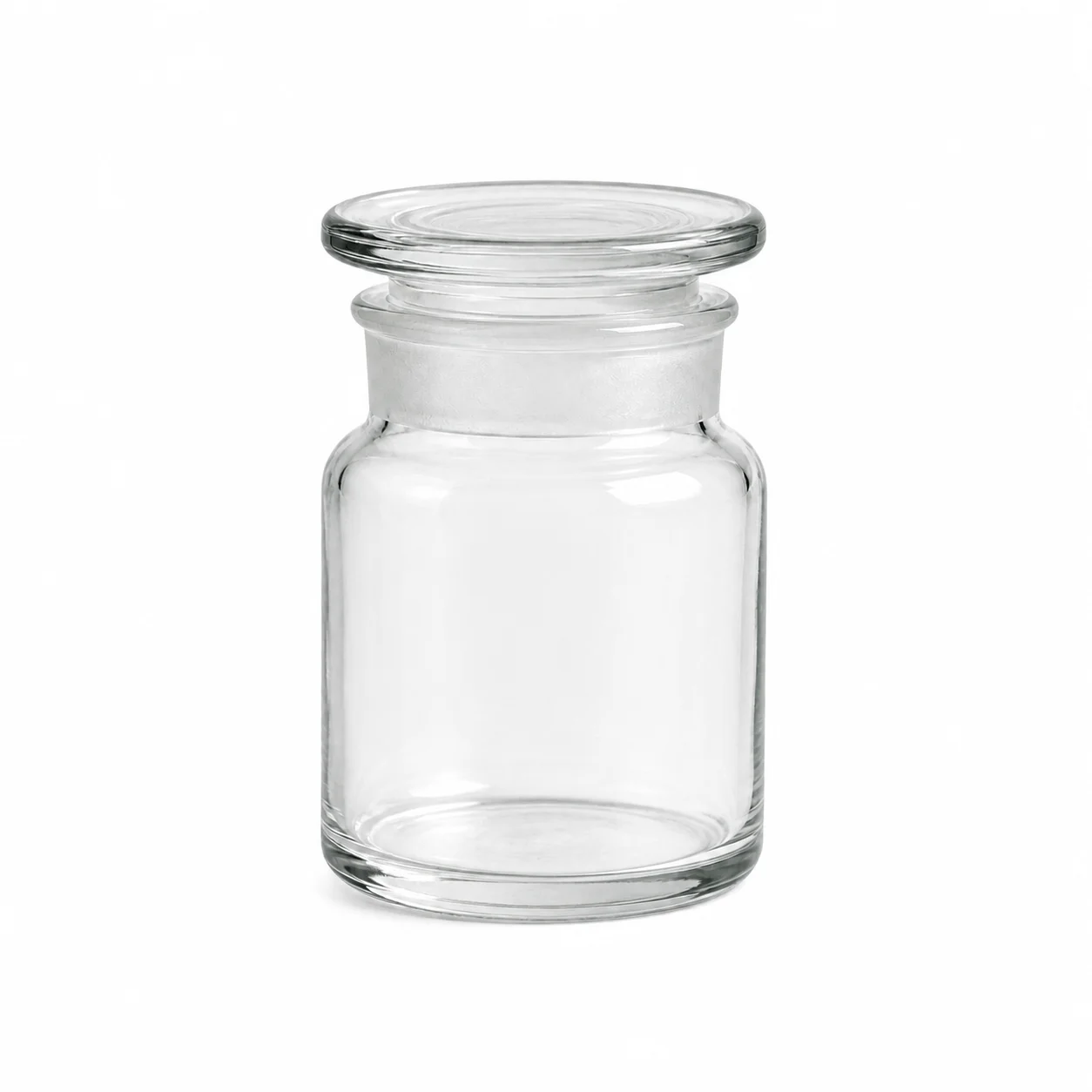
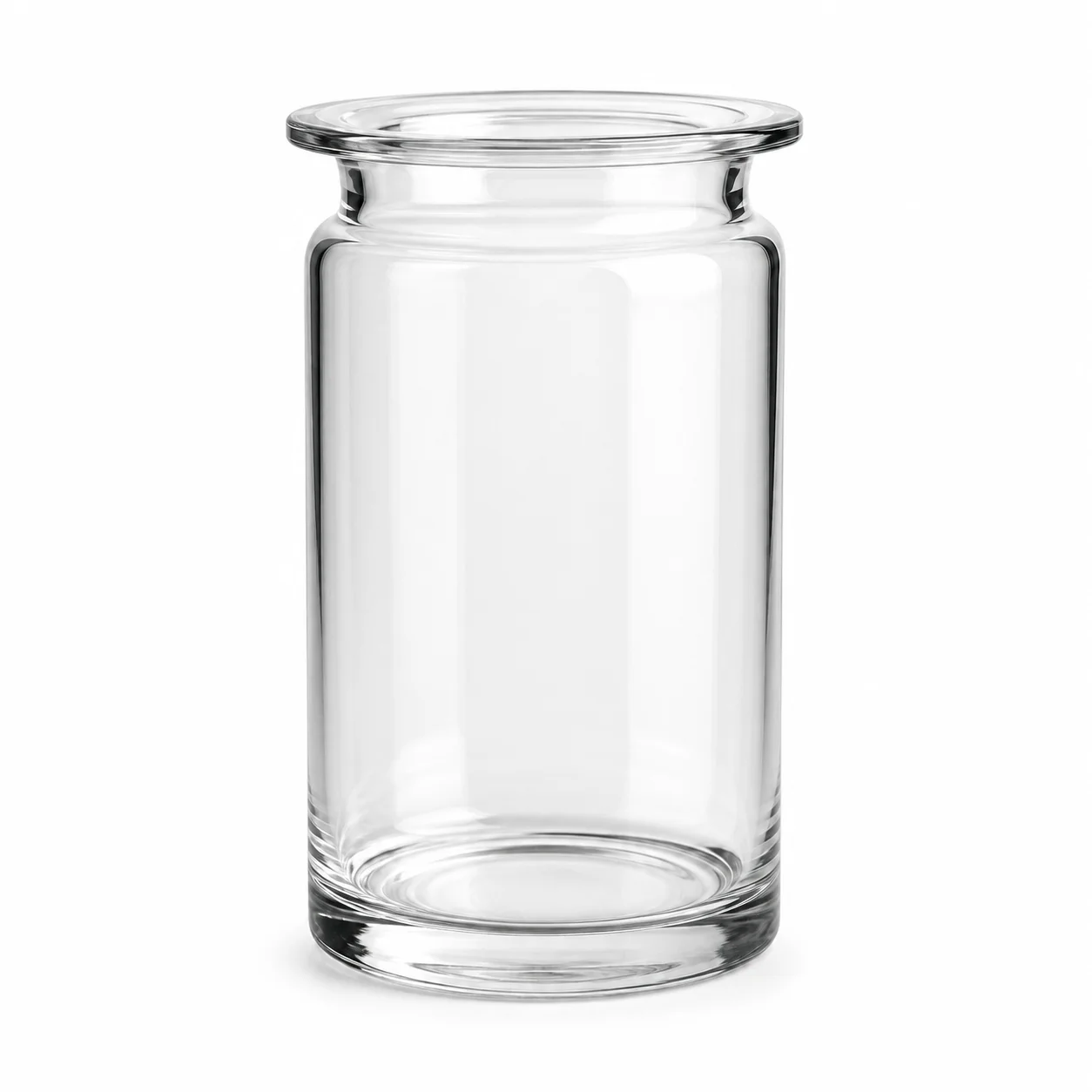
A gas jar is filled by displacement: it is submerged full of water, gas is bubbled in until the water is pushed out, and a ground glass plate is slid across the rim underwater. The seal is the flatness of two ground surfaces with a water film between them. That is enough to hold a gas for a demonstration and nothing like enough to store one.
The ground rim and plate seal on water, not pressure
Two flat ground surfaces with a water film between them hold together well enough to carry an inverted jar of gas across a bench. There is no gasket and no clamping force, so the seal fails as soon as the jar is jolted or the film dries. It is a working seal for the length of a demonstration and not a closure in any storage sense.
Collection method follows the gas
Gases that are insoluble in water are collected over water; those that dissolve are collected by upward or downward displacement of air, and the jar is oriented according to whether the gas is lighter or denser than air. The jar itself does not change, which is why the same vessel appears in procedures that look completely different on paper.
Never seal a jar that is generating gas
A gas jar has no pressure rating. Closing the plate over a reaction that is still producing gas, or leaving one sealed as it warms in sunlight, loads a thin, flat-topped vessel in the direction it is least able to resist. The plate is intended to be slid on after collection and slid off before anything else happens.
The thick base is a stability feature
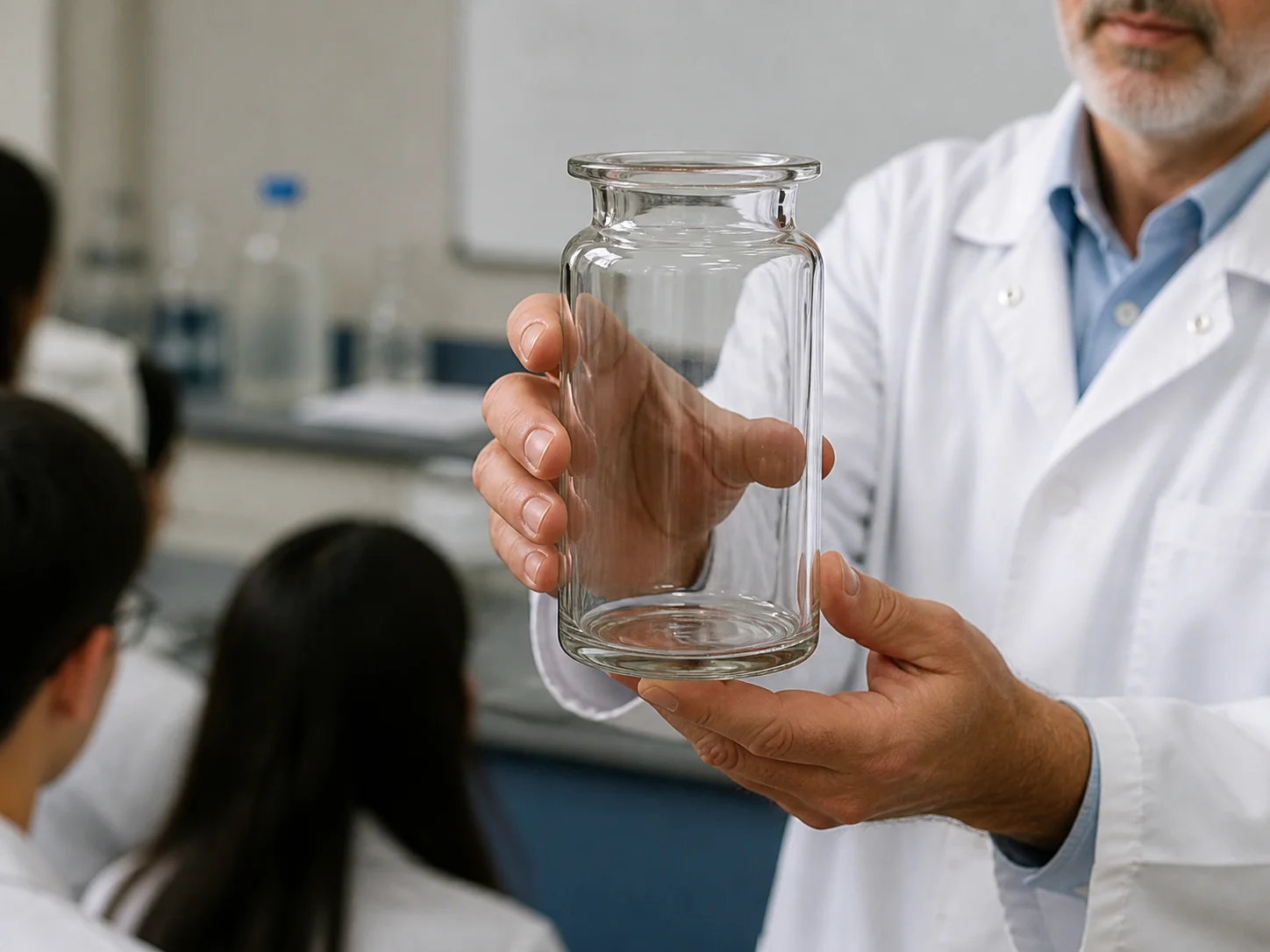
A tall jar full of gas is almost weightless at the top and easy to knock over, and a jar that goes over on a bench takes its plate and its contents with it. A heavy base lowers the center of mass. It also survives being set down in a trough repeatedly, which is where most of these jars are actually damaged.
Ground surfaces need care, not grease
The rim and plate seal because they are flat. Grease attracts grit and turns a sliding seal into an abrasive one, and grit scores both surfaces permanently. Rinsing and drying both faces, and storing the plate flat rather than balanced on the jar, keeps a set usable for years. A scored rim cannot be repaired in a school laboratory.
The graduations are nominal, and the volume is measured elsewhere
A collecting bottle is blown to a nominal size, not calibrated, so any mark on it is a guide rather than a measurement. Where the volume of gas collected is part of the result, it is read from a measuring cylinder or a gas syringe and the bottle simply holds the sample.