Constant mass, handling discipline & the ground cover
Six habits the glassware is designed to enforce.
In gravimetric work the number that matters is a difference of a few milligrams, and moisture, fingerprints and warm air all move that number. A weighing bottle isolates the sample between the oven, the desiccator and the balance. Its ground cover, its handling rules and its thermal behavior are all in service of that one requirement.
Drying to constant mass is a procedure, not a time
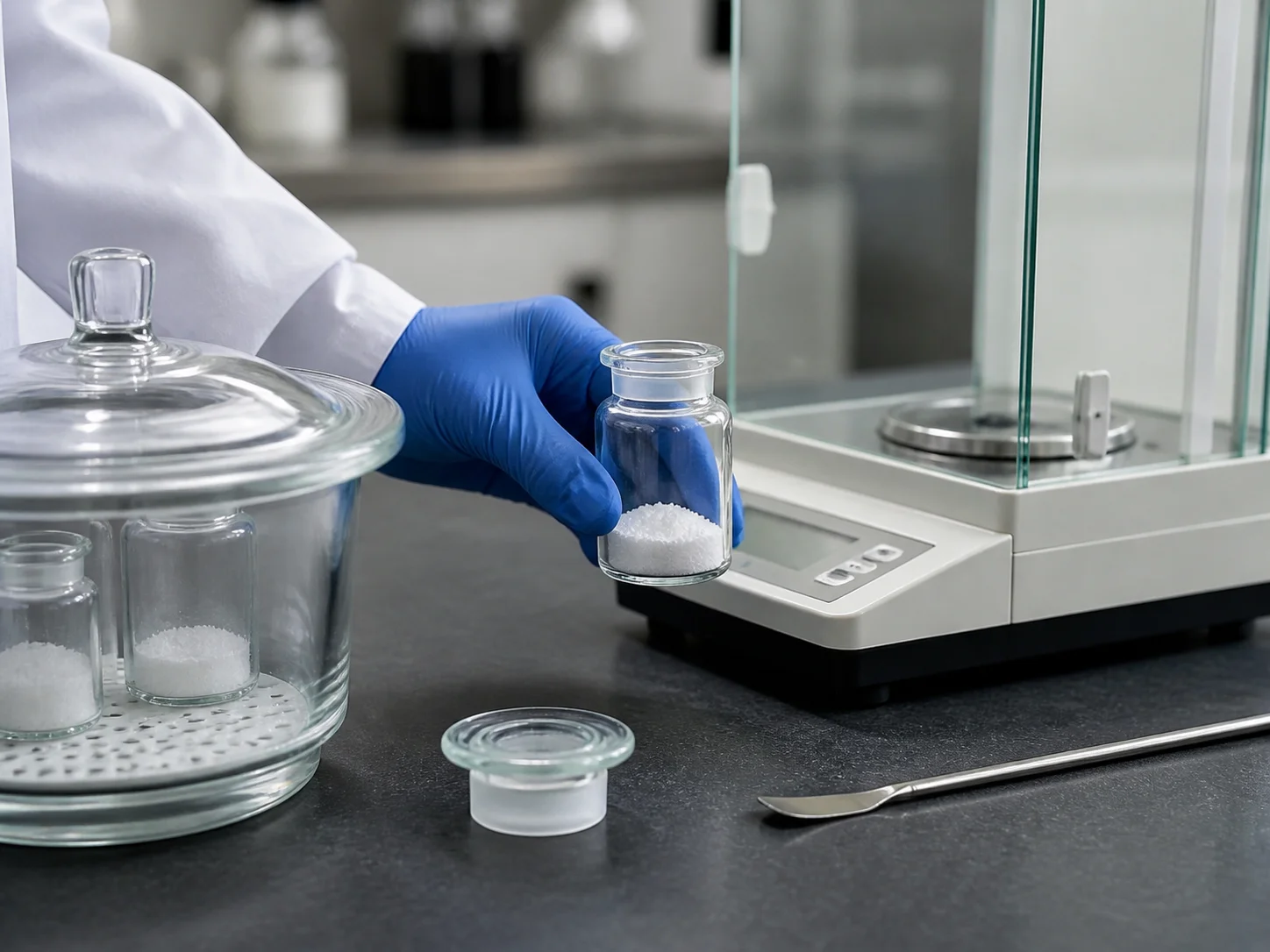
A sample is dried, cooled and weighed, then dried again until successive weighings agree within a stated limit. The bottle makes that practical because the sample can be moved between oven, desiccator and balance in the same vessel. Reporting a moisture content from a single drying period skips the check that the method was built around.
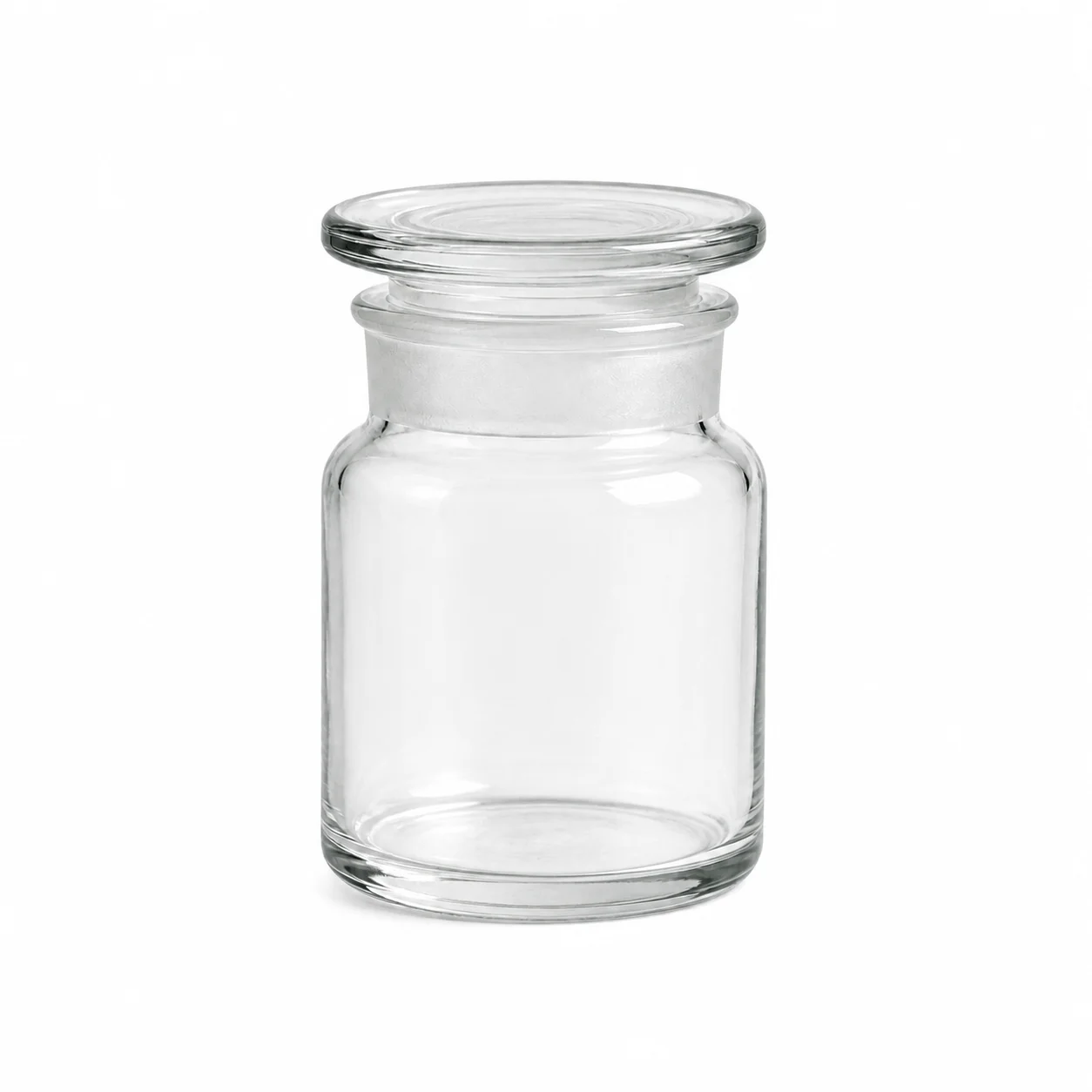
The cover is lapped to that bottle
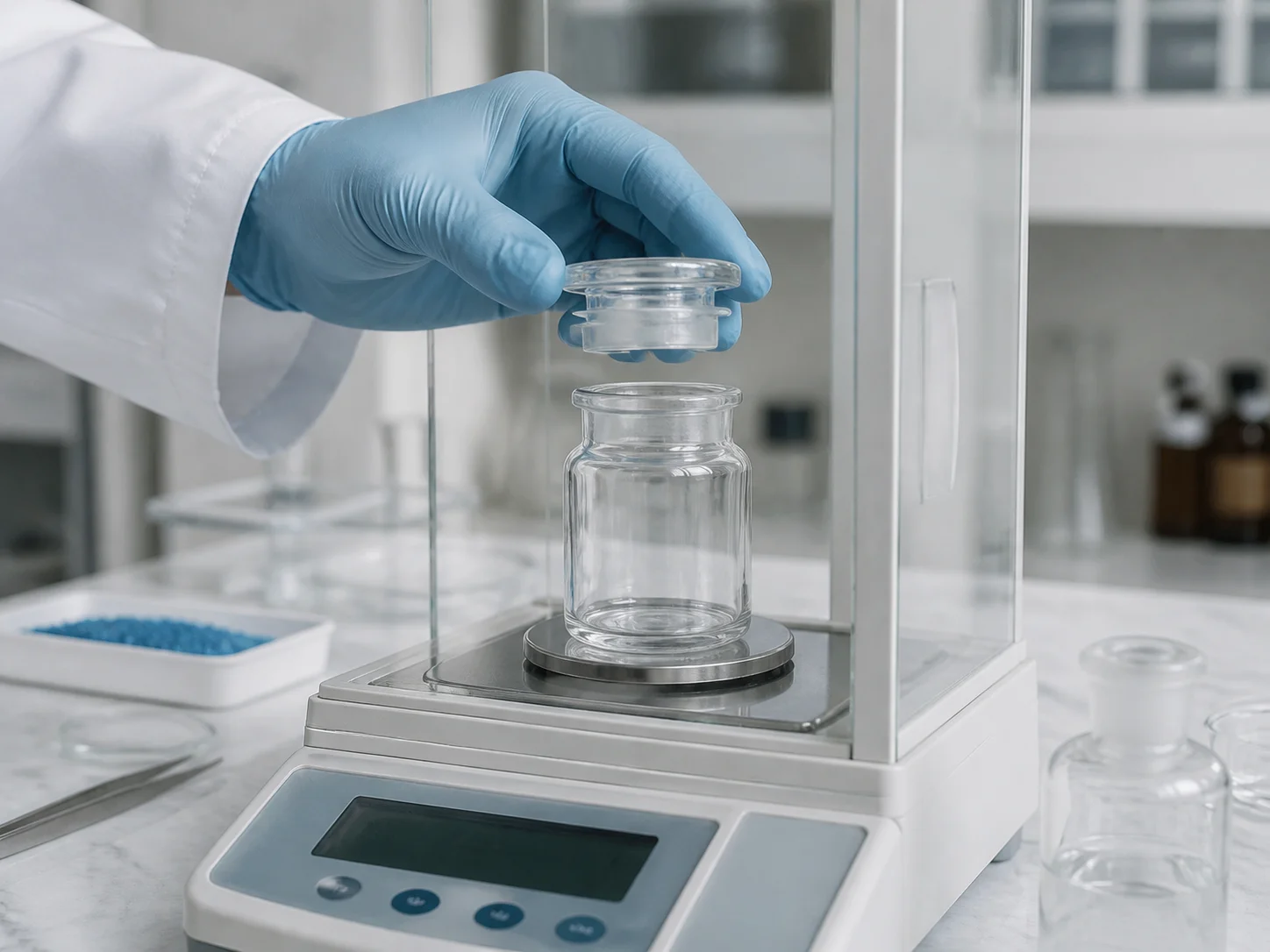
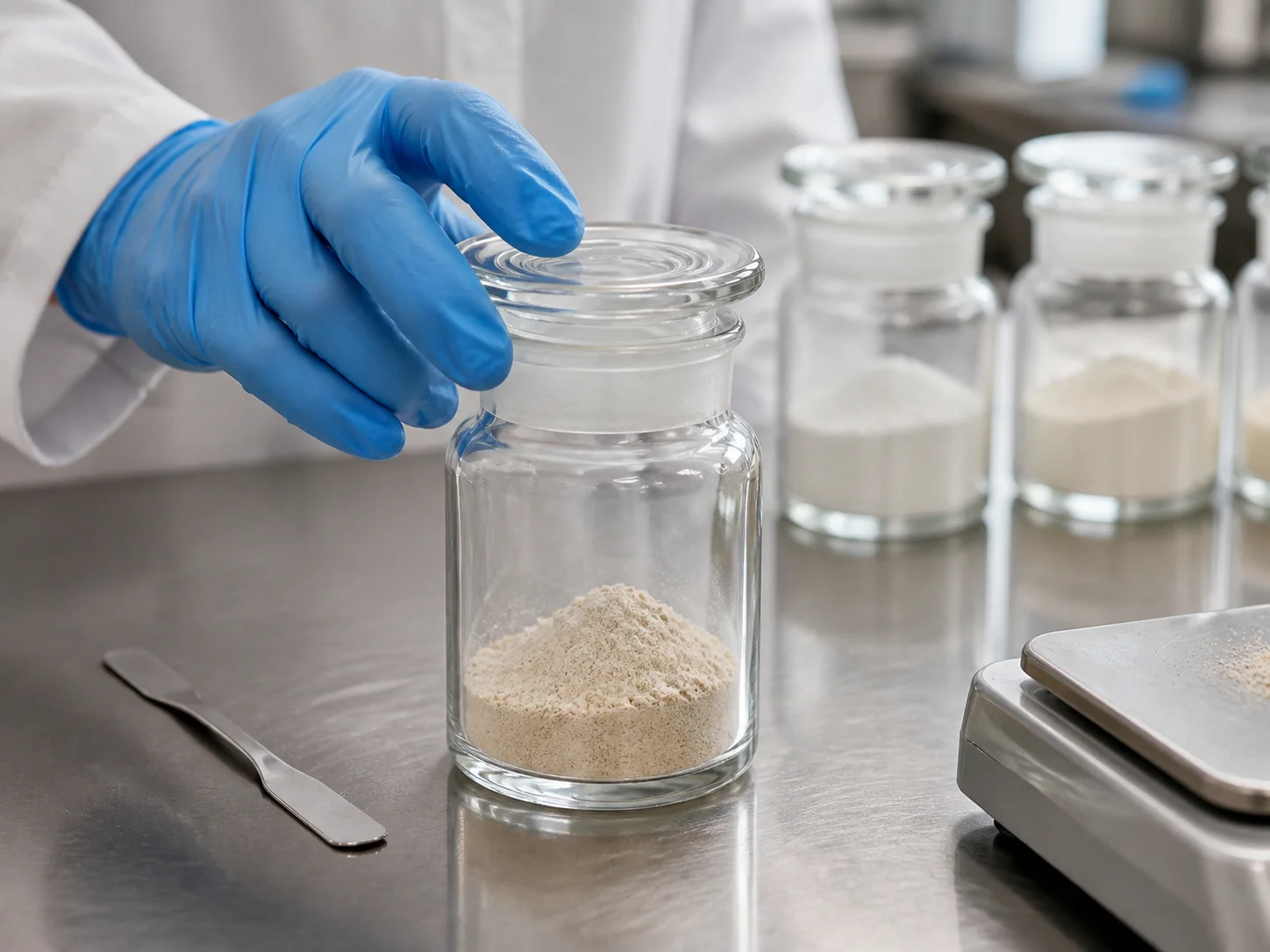
Ground rims and covers are finished as pairs, so a cover from the next bottle sits proud and lets room air exchange with the sample. In a laboratory running twenty bottles, covers get separated during washing within a week unless they are numbered. That marking is what keeps a set of weighing bottles a set rather than a collection.
Never touch the glass with fingers
A fingerprint deposits a weighable amount of oil and moisture that changes over the following hours as it equilibrates with the room, so a bottle handled bare-handed drifts between weighings. Tongs or a paper strap are standard practice for exactly this reason. It is the most commonly ignored rule in gravimetric work and the easiest to see once it is measured.
Weigh cold or weigh a convection current
A warm bottle sets up an upward air current around itself on the balance pan and reads low, then climbs as it cools. That is why samples cool in a desiccator to room temperature before weighing, and why the desiccator is opened only briefly. The effect is large enough to swamp the difference being measured on a small sample.
Form follows the sample, not preference
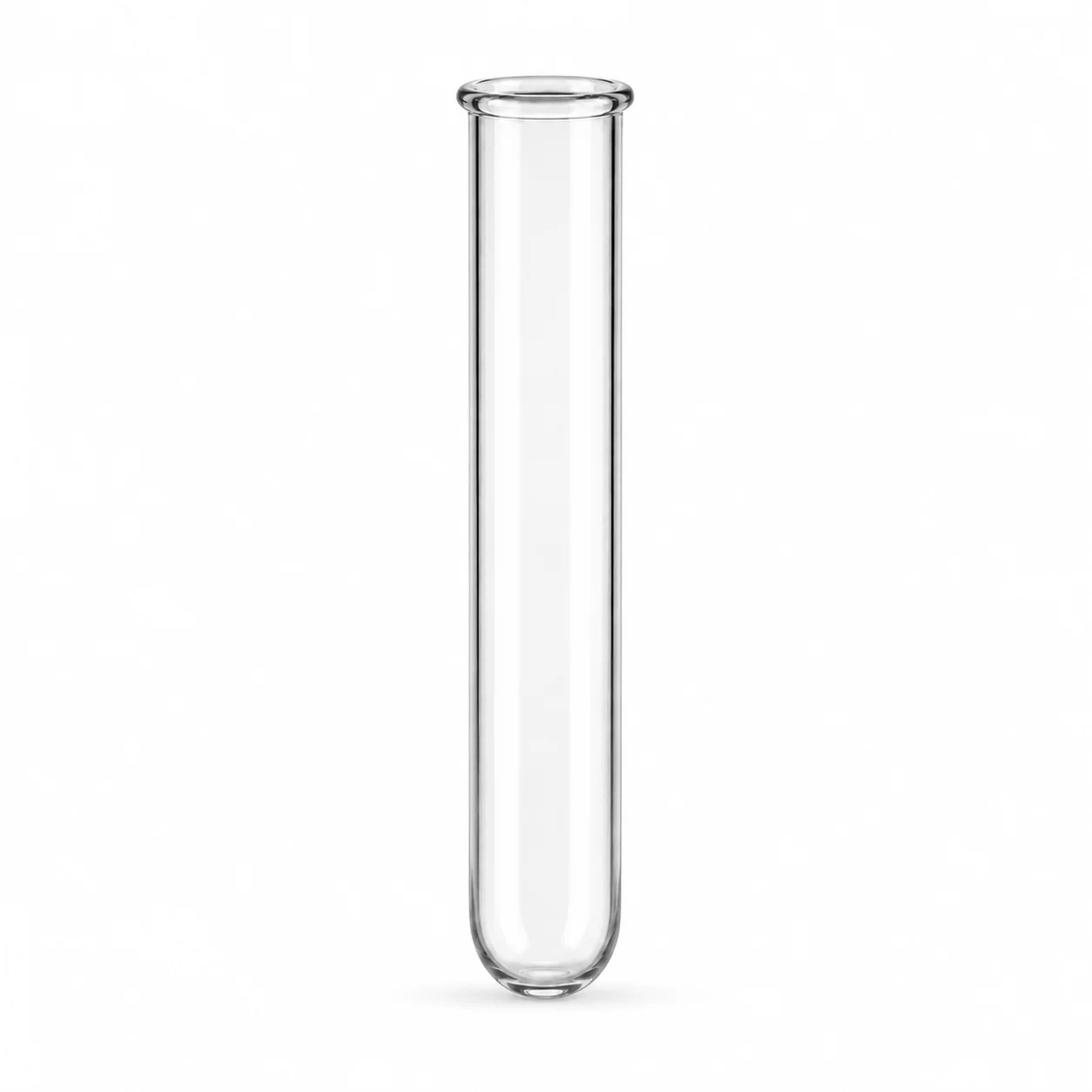
Tall weighing bottles hold a deeper bed and suit larger samples and liquids; squat ones present more surface for a given mass, so they dry faster and are easier to empty completely. Where a method specifies drying times, the form is part of that method, and substituting one shape for the other changes how long constant mass takes to reach.
Dry glass carries static, and a balance reads it
In a heated laboratory in winter the air is dry enough that glass holds a charge, and that charge pulls on the balance pan in a way that looks exactly like drifting mass. Handling with tongs, wiping with a damp cloth or using an ionizer removes it. Chasing a reading that will not settle is usually chasing static rather than moisture.