Forms, heating behavior & why the scale is approximate
How to use a beaker well, starting with what not to trust on it.
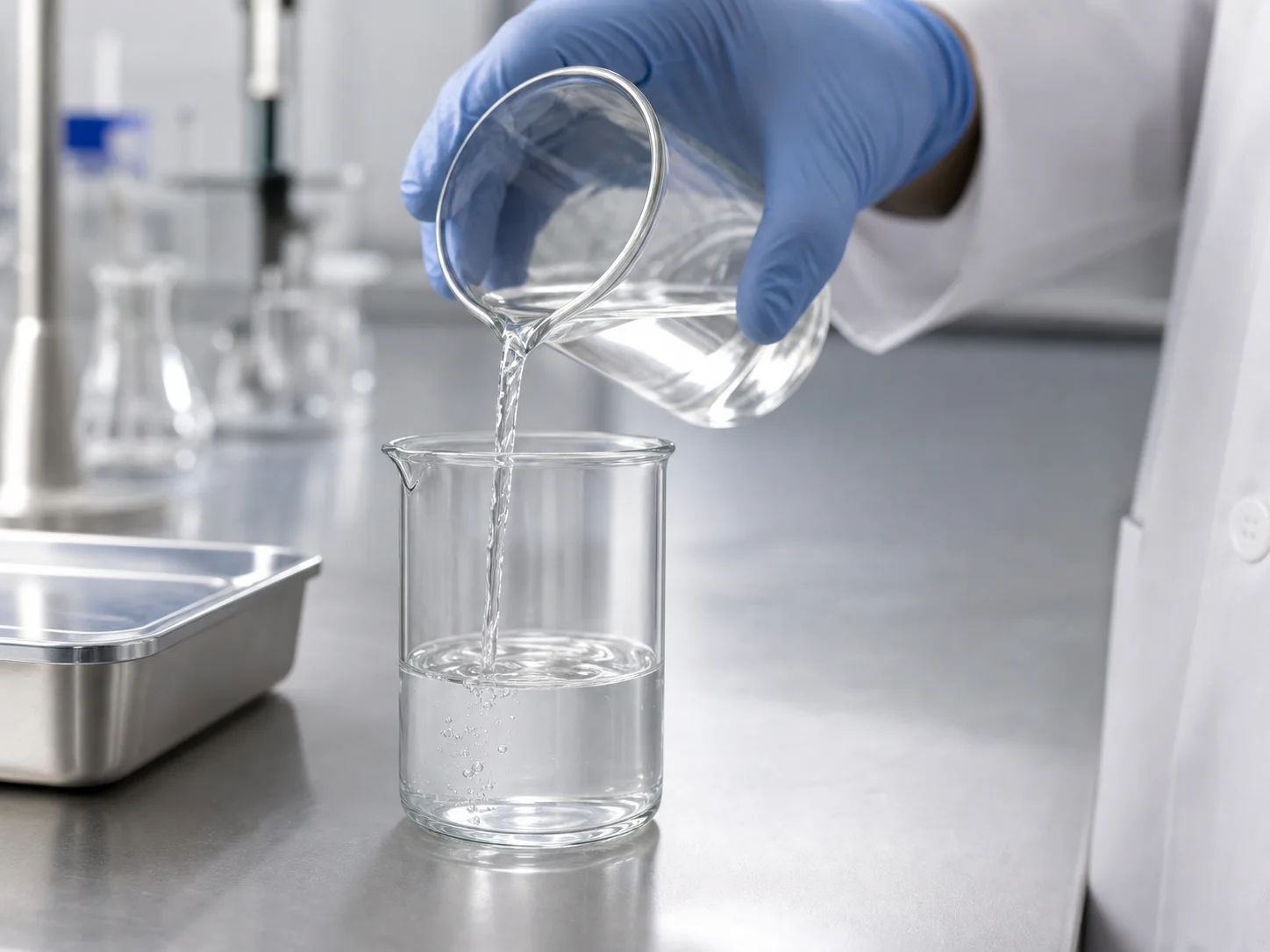
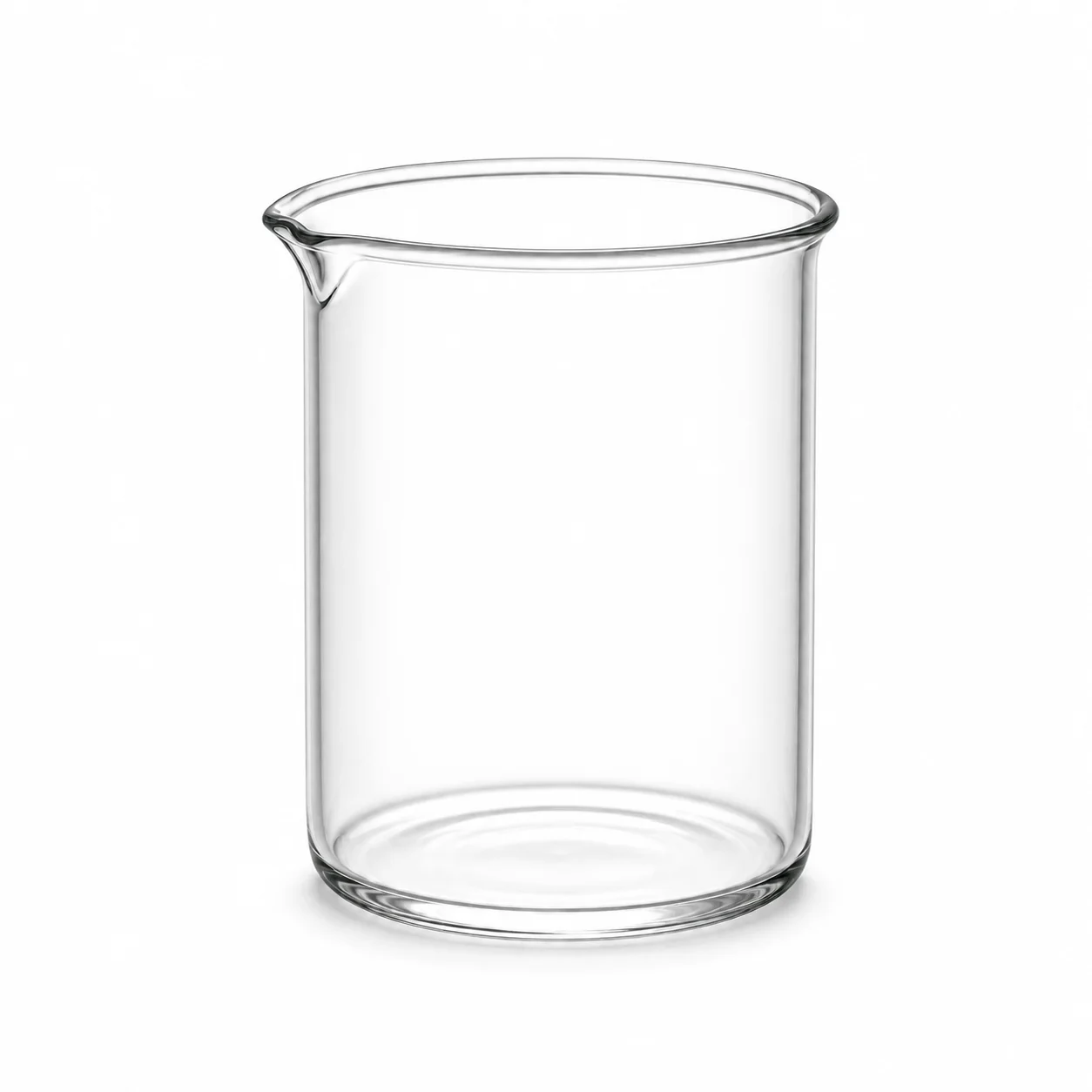
A beaker gets stirred, heated, scraped and stacked. ISO 3819 covers the series, and its specification reflects that working life: a uniform wall so heat spreads evenly, a flat base broad enough to stand on a stirrer, a rolled rim for strength and a spout so it can be emptied without a rod. Its graduations are the least important thing on it.
Low and tall forms are chosen by what happens inside
The low Griffin form, roughly one and a half diameters high, gives easy access for a stirring rod and a wide surface for evaporation. The tall Berzelius form has the same capacity in a narrower column, which reduces evaporation loss and suits titration and heating with less splashing. They are not interchangeable once a procedure has settled around one of them.
The printed scale is a convenience, not a measurement
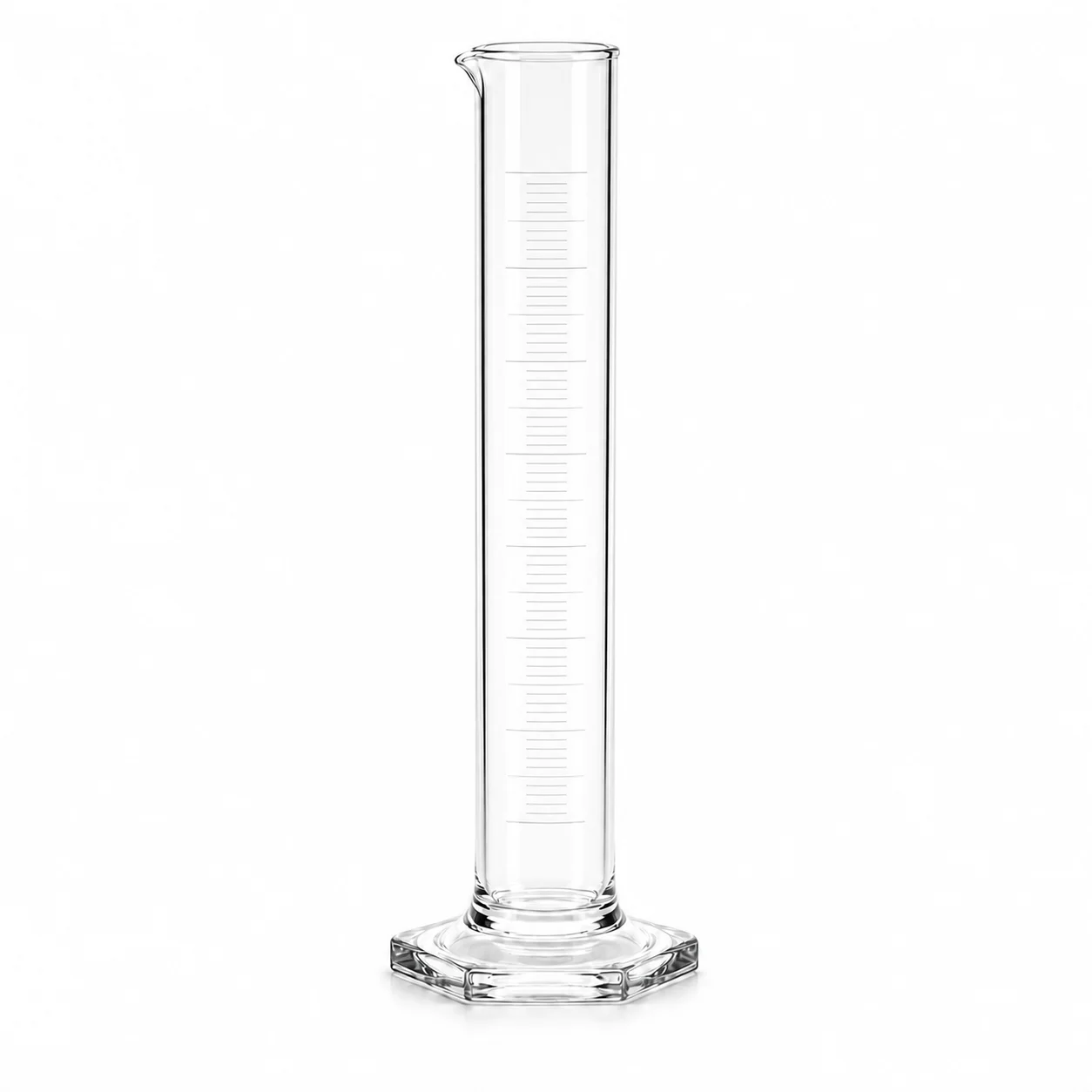
Beaker graduations sit on a wide cylinder with a wall printed to a working tolerance, typically taken as around five percent. That is fine for adding roughly 200 mL of solvent and useless for anything reported. Where a laboratory routinely measures in beakers, the practical fix is putting a cylinder next to the beaker rather than arguing about the marking.
Borosilicate makes it a heating vessel
Borosilicate 3.3 expands roughly a third as much as soda-lime glass, which is what lets a beaker go from a hotplate to a bench without failing. That property is why the same beaker survives a hot solution being poured in. It is also why a hairline scratch matters: thermal stress concentrates at the flaw and turns it into a crack under conditions the intact vessel would shrug off.
Flat is a specification, not an assumption
A base that is slightly dished rocks on a magnetic stirrer, throws the flea and heats unevenly on a hotplate, producing bumping in a solution that was near boiling. Base flatness and wall thickness at the corner are among the things a standard series controls, and they are the difference between a beaker that stirs quietly and one that walks across the plate.
The rim decides how long it survives
Most beakers die at the rim: a chip from a knock against a tap, then a crack propagating on the next thermal cycle. A properly rolled or beaded rim resists that and also gives a cleaner pour. Inspecting rims when glassware comes back from washing catches damaged vessels before they fail in use, which is when they cause harm.
Marking fields are worth more than they look
A fired white enamel panel takes a pencil or marker and cleans without ghosting, which is the difference between a bench of labeled beakers and a bench of unlabeled ones. Printed labeling patches wear away in a washer. On glassware that will be machine cleaned daily, the marking specification deserves as much attention as the capacity.