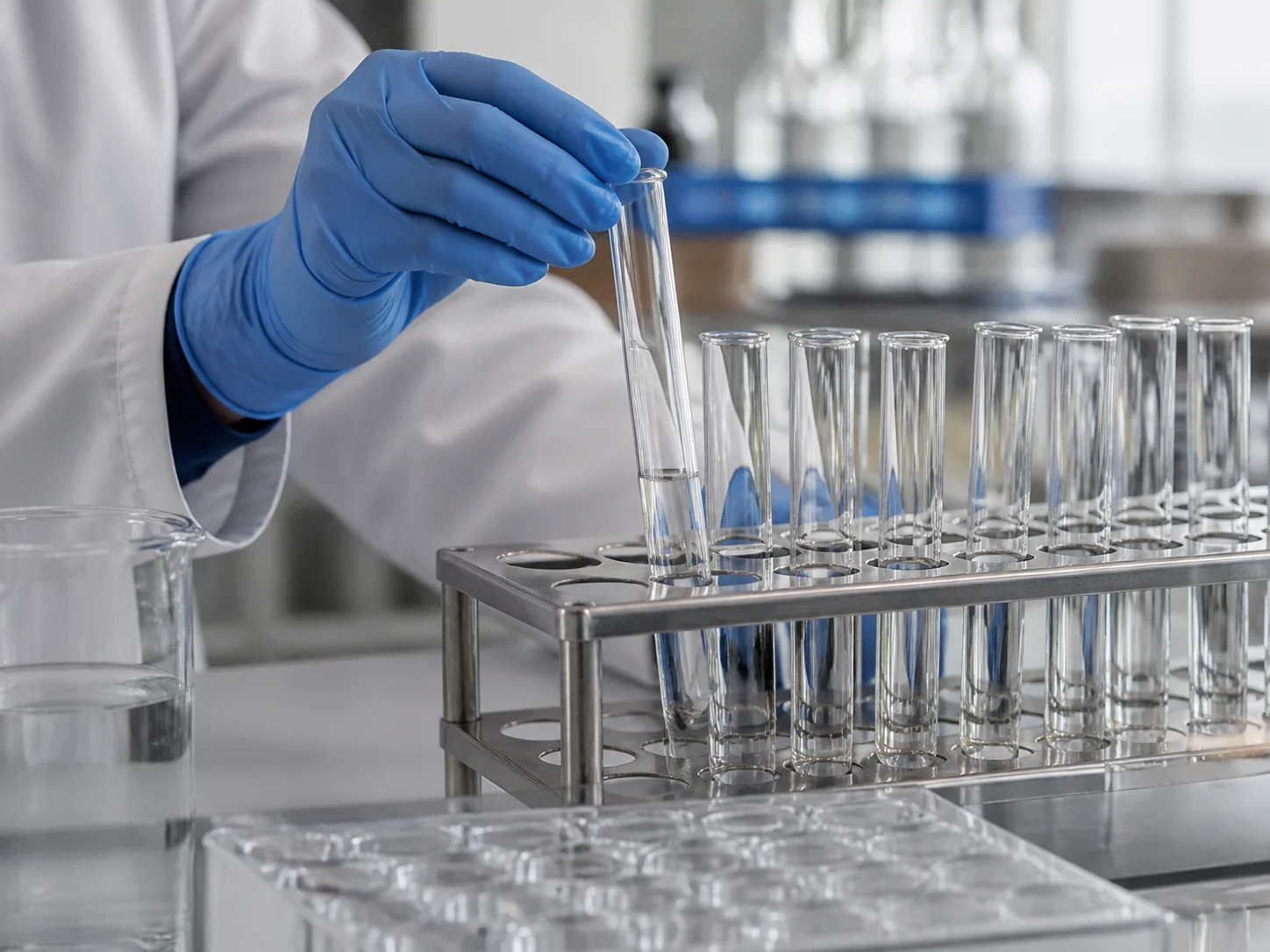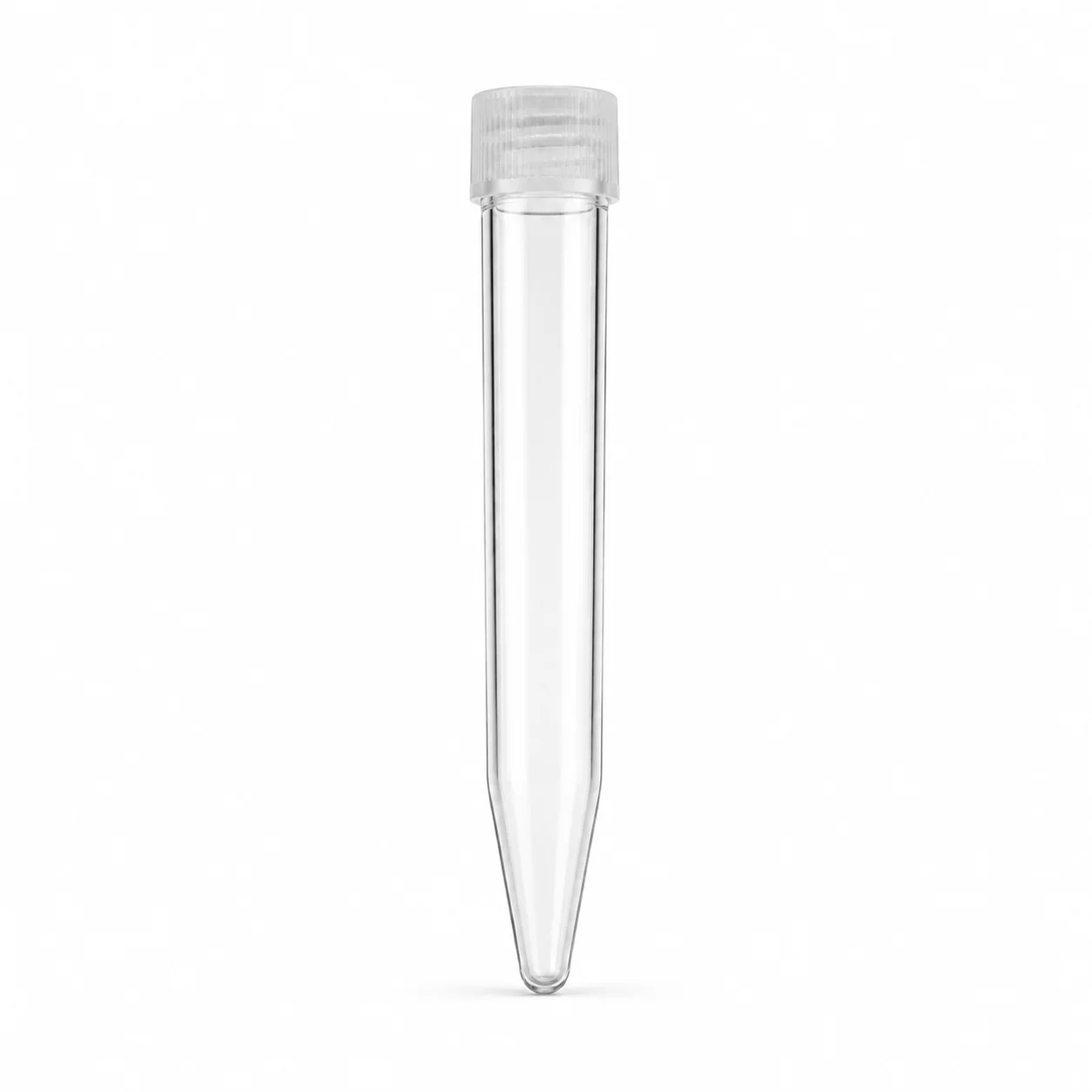
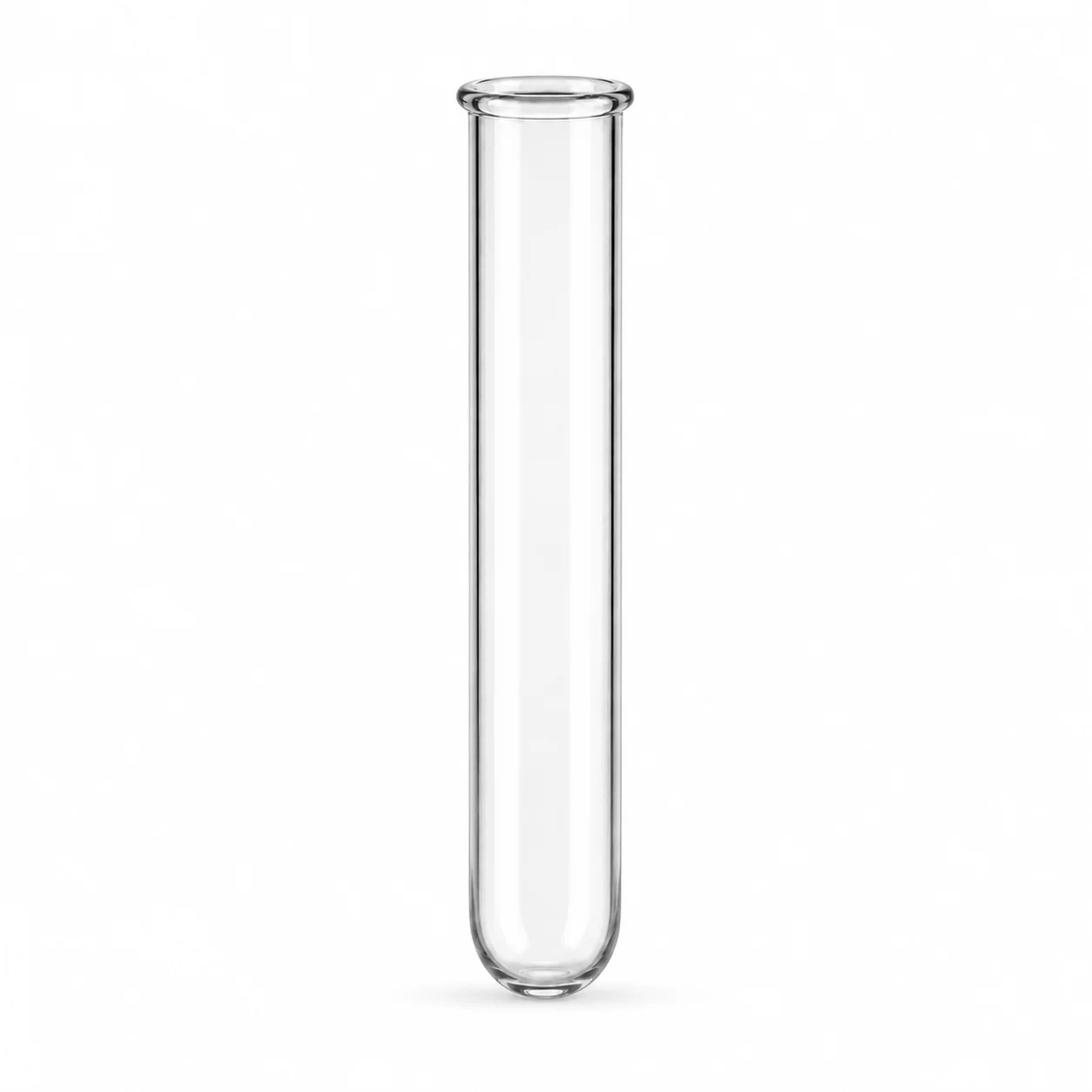
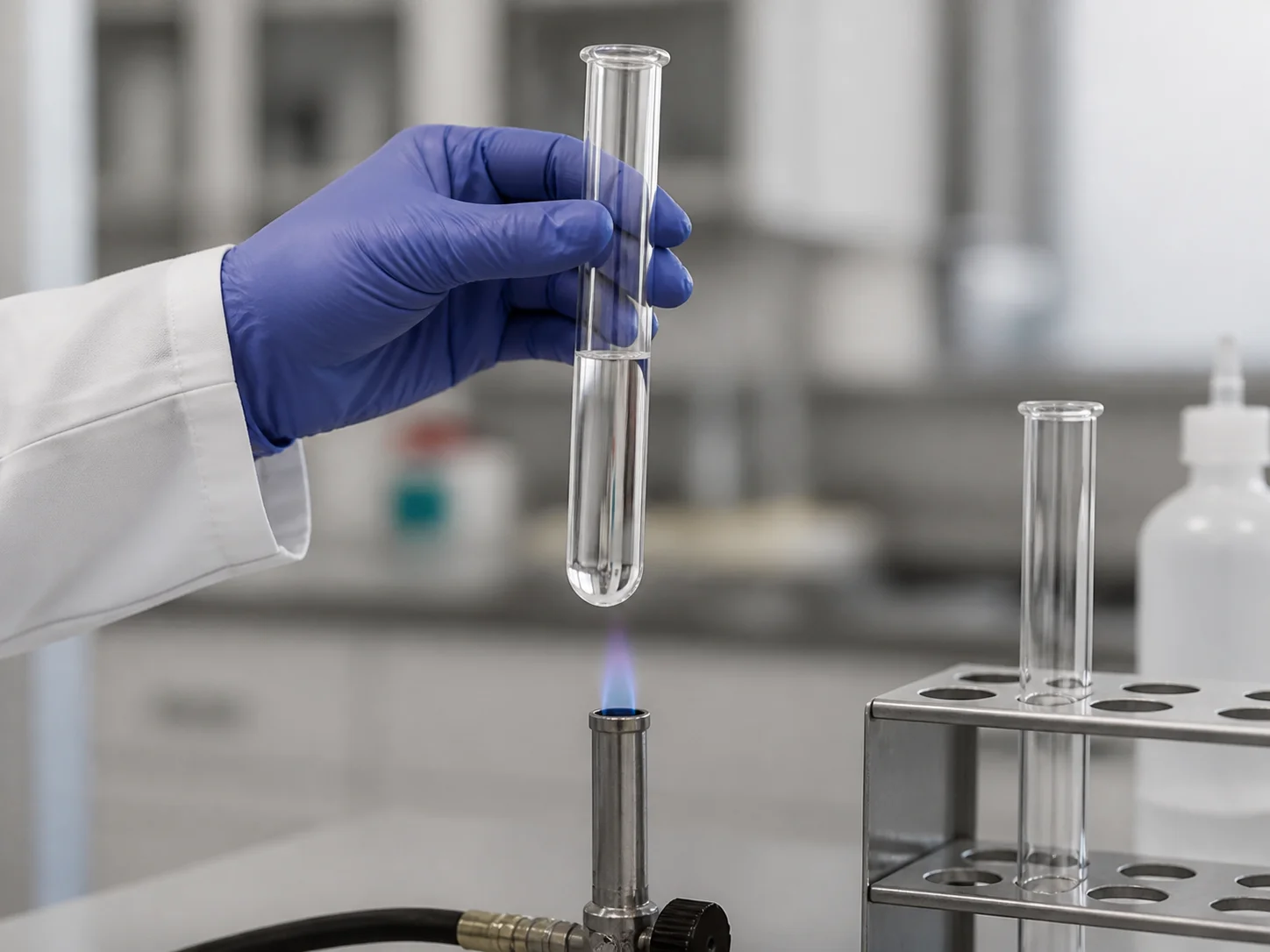
Clear cylindrical test tube with an open top and a rounded closed end
Shown configuration · tube alone / rack, closure, contents and markings not shown

Tubes & culture glassware

Test Tube

A round-bottom test tube described by outside diameter and length — 12 × 75, 16 × 100 and 18 × 150 mm — supplied with a rolled rim or cut plain.

12 × 75 to 18 × 150 mmRimmed or rimlessBorosilicate or soda-lime
Stock status
In stock
Lead time
2–3 weeks
FOB price / pc
$0.35 - $0.60
MOQ
3,000 pcs

Final availability, dimensions, materials, assembled components and commercial terms are confirmed against the selected drawing and approved sample.

Sized by OD × length

Racks and centrifuges are built to those numbers

Rim decides the closure

A rolled lip takes a cap; a plain one takes a plug

Round base drains

Nothing collects in a corner

Test Tube profile

Two numbers on a box, and both of them are decisions.

Sizing, rim form & glass choice

How to order tubes that fit the equipment already in the laboratory.

Test tubes are specified as outside diameter by length in millimeters, because that pair is what a rack, a centrifuge carrier, a heating block and a cap are built around. The other real choice is the rim. Everything else — glass type, wall thickness, whether it carries a mark — follows from what happens inside the tube.

01

Outside diameter is the dimension the equipment sees

A 16 mm tube goes into a 16 mm rack position, a 16 mm carrier and a 16 mm block whatever its wall thickness or capacity. That is why tubes are sold by OD and length rather than by volume. Ordering by nominal capacity is the fastest way to receive tubes that will not stand in the racks the laboratory already owns.

02

Rimmed tubes take caps; rimless tubes take plugs

A rolled or beaded lip strengthens the mouth and gives a snap cap or a screw closure something to grip. A plain cut rim suits cotton or foam plugs, fits closer in a rack and is easier to flame. Mixing the two in one stock leads to closures that fit some tubes and not others, which is a small annoyance repeated hundreds of times a week.

03

Glass choice is a heating question

Soda-lime tubes are cheap and adequate for room-temperature work and for teaching, and they crack when heated unevenly in a flame or a block. Borosilicate 3.3 takes direct heating and repeated autoclaving. A laboratory that heats tubes routinely spends less on borosilicate than on replacing soda-lime, and the two are indistinguishable once they are in a rack.

04

The round bottom is functional, not traditional

A hemispherical base has no corner for a pellet, a precipitate or the last of a sample to hide in, so contents drain and resuspend evenly. It also spreads thermal stress when a tube is heated from below. Flat-bottom tubes exist where a tube must stand unaided on a bench, and they trade both of those properties for it.

05

Wall thickness is a centrifuge decision

Standard-wall tubes are for handling and heating; heavy-wall tubes are for spinning. A tube in a centrifuge carrier takes a load it never sees on a bench, and a standard-wall tube used at speed fails inside the rotor where it makes a mess of everything else. Where tubes are spun, the wall grade belongs on the order rather than in a hope.

06

Marking spots and graduations are separate options

A fired enamel marking spot takes pencil and survives washing, which matters when a rack of forty tubes has to stay identifiable. Graduation marks are a different option and are approximate working scales, not calibrations. Ordering one when the laboratory wanted the other is common enough to be worth confirming explicitly on the first order.

Application guide

The simplest vessel in the laboratory, used in dozens.

A test tube holds a few milliliters, costs very little and is used in racks of twenty at a time, which makes consistency between tubes matter more than the properties of any single one. These are development directions confirmed with the actual method.

Test Tube used for small-scale tests run in racks in a routine reactions setting

Routine reactions

Small-scale tests run in racks

For qualitative tests where a technician sets up a row of tubes, adds reagent to each and compares what happens across them. Because the comparison is visual and side by side, tubes need consistent wall thickness and clarity or apparent differences reflect the glassware rather than the chemistry.

  • Confirm consistency across a batch
  • Check clarity for visual comparison
  • Match the tube to the rack
Test Tube used for tubes warmed directly in a flame or bath in a heating setting

Heating

Tubes warmed directly in a flame or bath

Test tubes are routinely heated in a water bath or directly, and the rounded base is what lets them take that without a stress point. Whether the glass tolerates direct flame depends on its grade, and using the wrong tube is how tubes crack in someone's hand.

  • Confirm the grade suits direct heating
  • Heat with the tube pointed away
  • Reject tubes with any star crack
Test Tube used for tubes pushed in and pulled out all day in a racks in daily use setting

Racks in daily use

Tubes pushed in and pulled out all day

For benches where the same tubes go into racks, under clamps and occasionally into a rotor dozens of times a week. Chips start at the rim, and a chipped rim both cuts the fingers reaching for it and stops a stopper seating, so looking at the top edge becomes a habit rather than an inspection step.

  • Inspect rims before each use
  • Confirm the tube suits any spinning
  • Match the diameter to the rack

Applications describe workflow directions. Method suitability, thermal performance and laboratory outcomes are confirmed for the selected program.

Common questions

Test Tube questions

Two dimensions and a rim. Getting those right avoids most test tube problems.

Rimmed or rimless?

A rolled lip strengthens the mouth and gives snap or screw closures something to grip. A plain cut rim sits closer in a rack, takes cotton or foam plugs and is easier to flame. Keep one convention across a stock: mixing them produces closures that fit some tubes and not others, which is a small irritation repeated hundreds of times a week.

Is borosilicate worth it for routine tubes?

If you heat them, yes. Soda-lime is cheap and adequate at room temperature and in teaching, and it cracks when heated unevenly in a flame or a dry block. Borosilicate 3.3 takes direct heat and repeated autoclaving. Where tubes are heated routinely, the replacement rate of soda-lime usually exceeds the price difference within a year.

Can we centrifuge standard tubes?

Not safely at speed. A tube in a rotor carries loads it never sees on a bench, and a standard-wall tube fails inside the carrier where it contaminates the rotor and every other sample. Heavy-wall tubes are made for the duty. If tubes will be spun, put the wall grade on the order rather than assuming the stock ones will cope.

Can we measure with the tube markings?

They are an approximate working scale, useful for seeing roughly how much is in a tube and not for reporting a volume. They are also a separate option from a marking spot, and laboratories regularly order one when they wanted the other. Confirm which you want explicitly on the first order and the rest follow.

Do we need marking spots or graduations?

They are separate options, and only one is usually needed. A white marking spot gives a place to write; graduations are approximate working marks. Specify which you want, since ordering plain tubes and then wanting to label them is a common regret.

Next step

Send us the Test Tube brief.

Tell us the product, fill volume, closure preference and destination market. We will come back with the matching drawings, available configurations and a sample plan before anything is quoted.

  • 01Send the briefProduct, volume, closure and market
  • 02Get the optionsMatching drawings and configurations
  • 03Approve the sampleConfirm the pack before production