Alcohol strength, aroma retention & presentation
Six requirements that follow from a strong aromatic spirit.
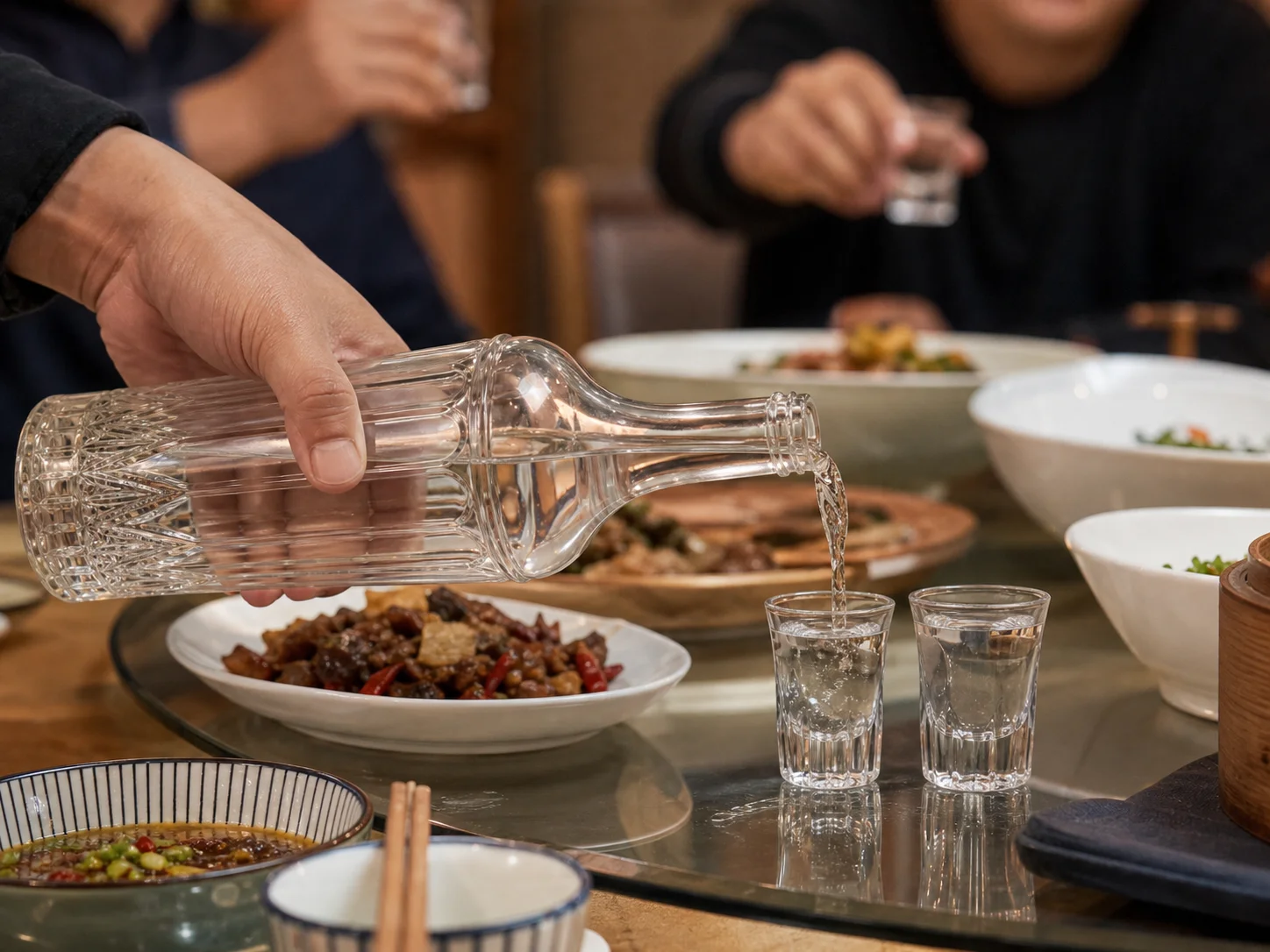
Baijiu is bottled at strengths well above most spirits and carries an aromatic profile that is the entire point of the product. Alcohol at that concentration behaves as a solvent on liners, adhesives and internal coatings, while the aroma compounds are both valuable and mobile. Container and closure selection is therefore a compatibility exercise before it is a design one.
High-strength alcohol extracts what it touches
At the concentrations baijiu is bottled, alcohol acts on liner materials, adhesives and any internal coating in the closure, potentially drawing compounds into the spirit. Compatibility comes from storage testing on filled product at realistic temperature, since a material acceptable for a lower-strength drink may not survive here.
Aroma is the product and it must stay in the bottle
The characteristic aromatic profile is what distinguishes one baijiu from another, and it consists of volatile compounds that can be absorbed by unsuitable liner materials or lost through a marginal seal. Sensory testing against a control after storage is the check that matters, because a seal can be technically sound and still cost the product its character.
Sealing is expected to be visible and secure
The category convention is a closure with a visible seal or wrap, both for tamper evidence and because the customer expects it on a gift-grade product. That combines a functional requirement with a presentational one, and both are judged at the moment the bottle is opened in front of other people.
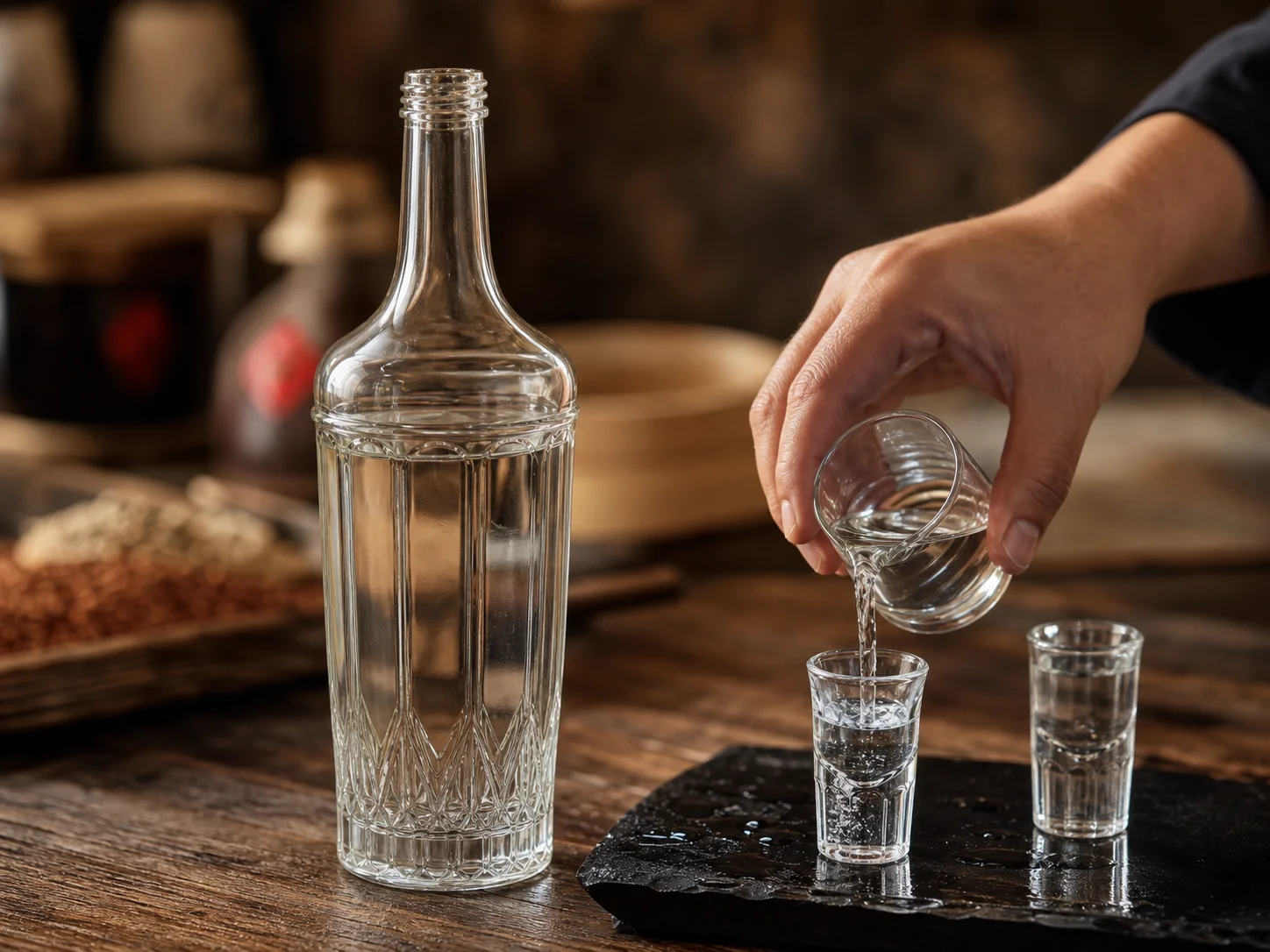
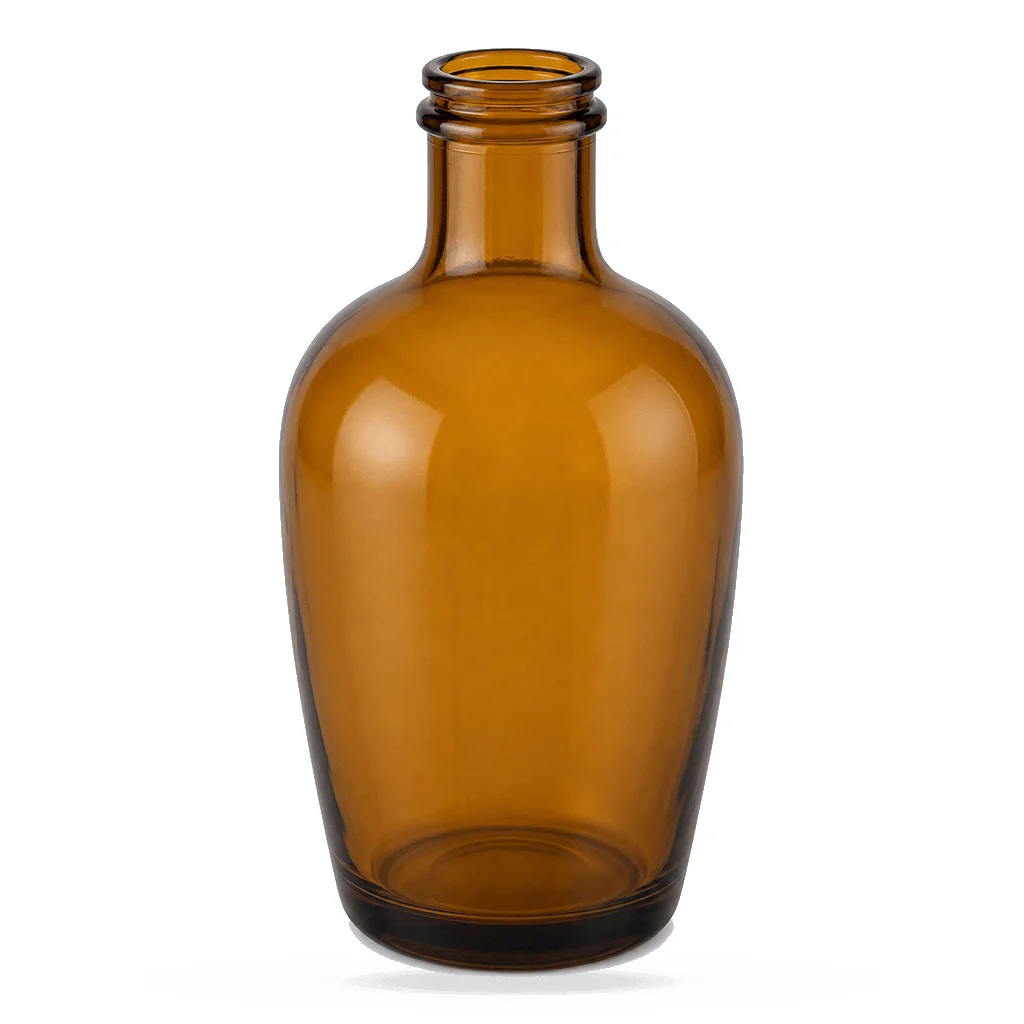
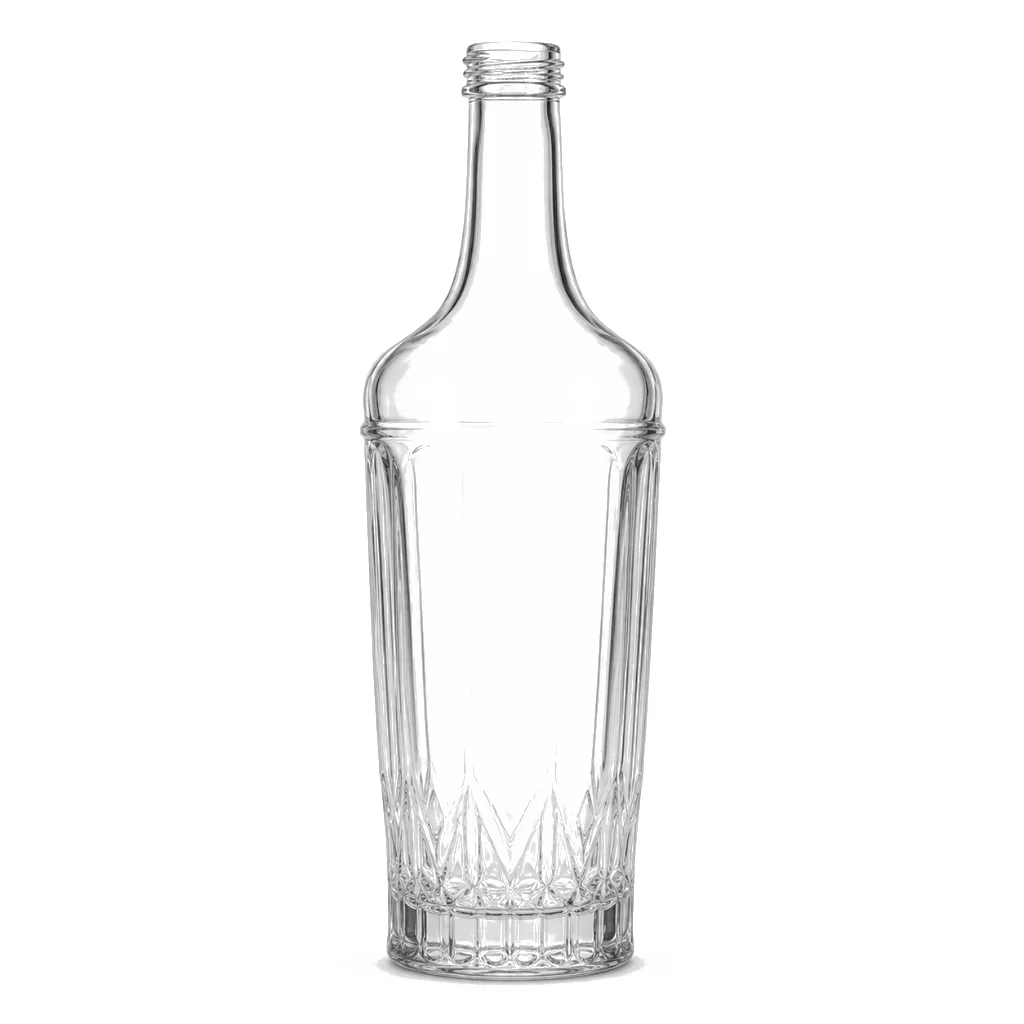
Opaque and decorated glass is the category norm
The spirit itself is clear and offers nothing to display, so the bottle carries the identity entirely. That is why opal glass, heavy decoration and sculpted forms are standard rather than exceptional here, and why decoration budget in this category is spent on the bottle rather than on a label.
Decoration has to survive the alcohol as well as handling
Where decoration reaches near the finish, or where a decorated component sits inside the closure, it meets the spirit directly. Inks, metallized finishes and coatings all need confirming against the actual product rather than being carried over from a lower-strength application without checking.
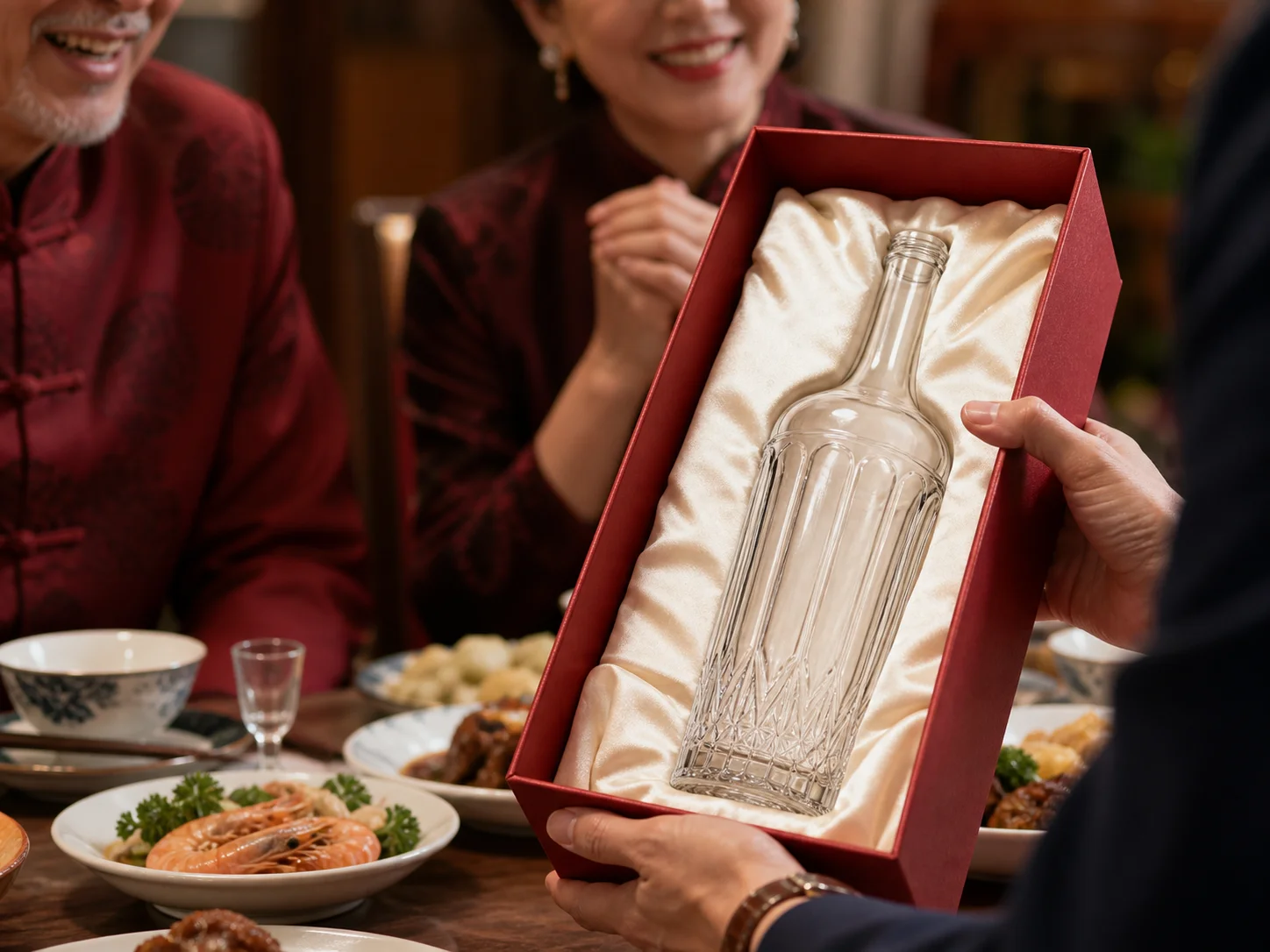
The pack is presented, not just opened
A large share of this category is bought as a gift, so the carton, the insert and how the bottle looks when the box is opened carry commercial weight comparable to the bottle itself. Development that treats the outer pack as an afterthought misjudges where the product's value is perceived.