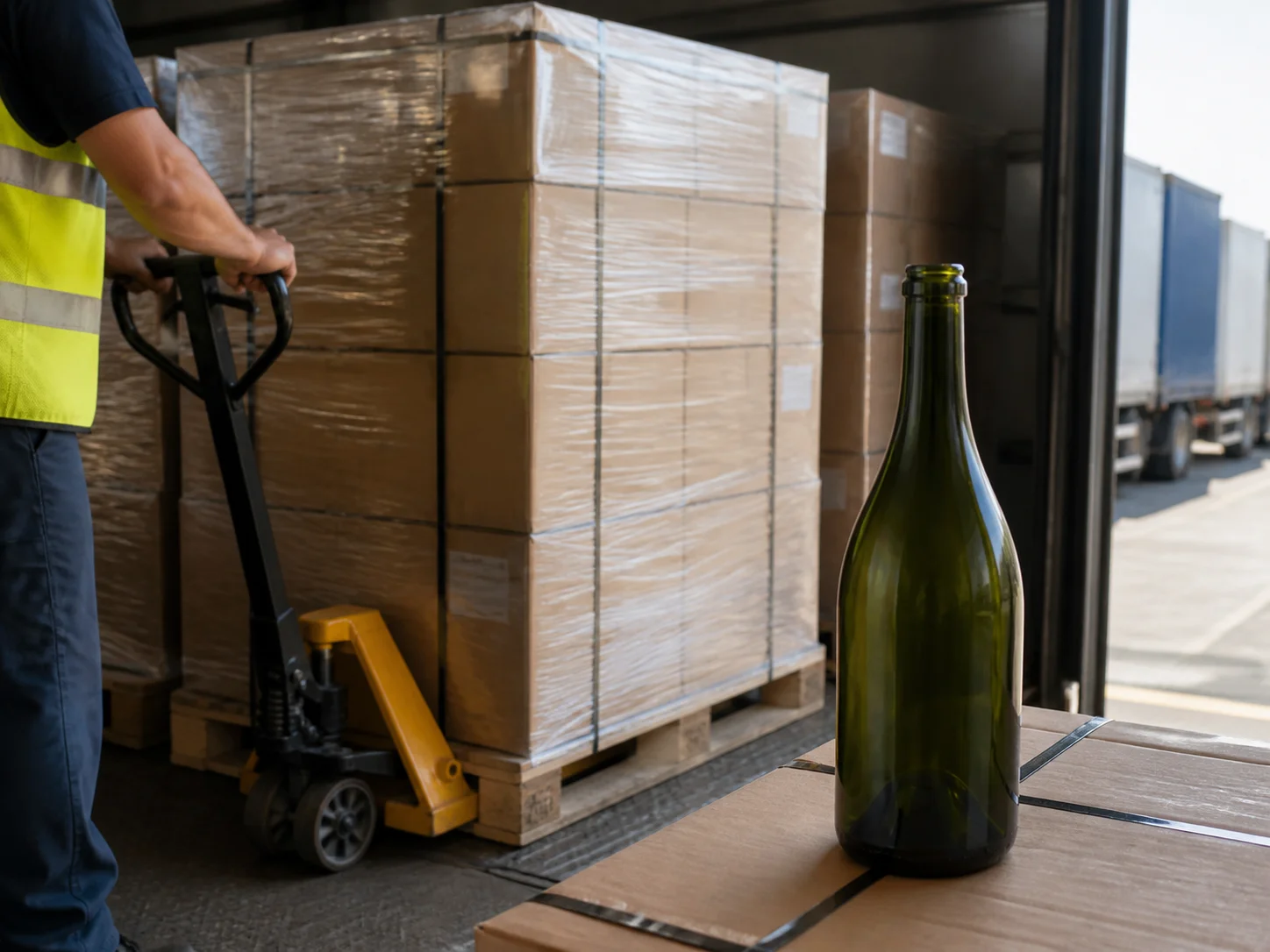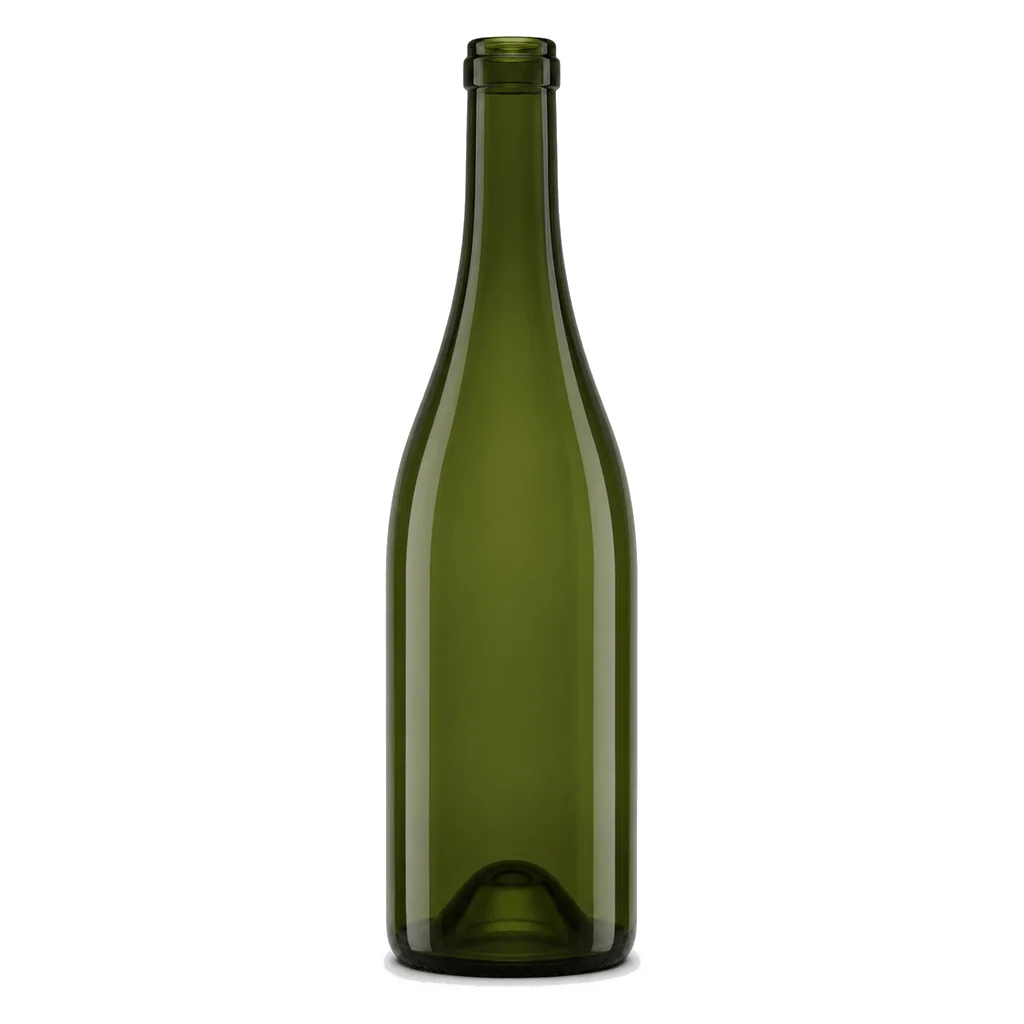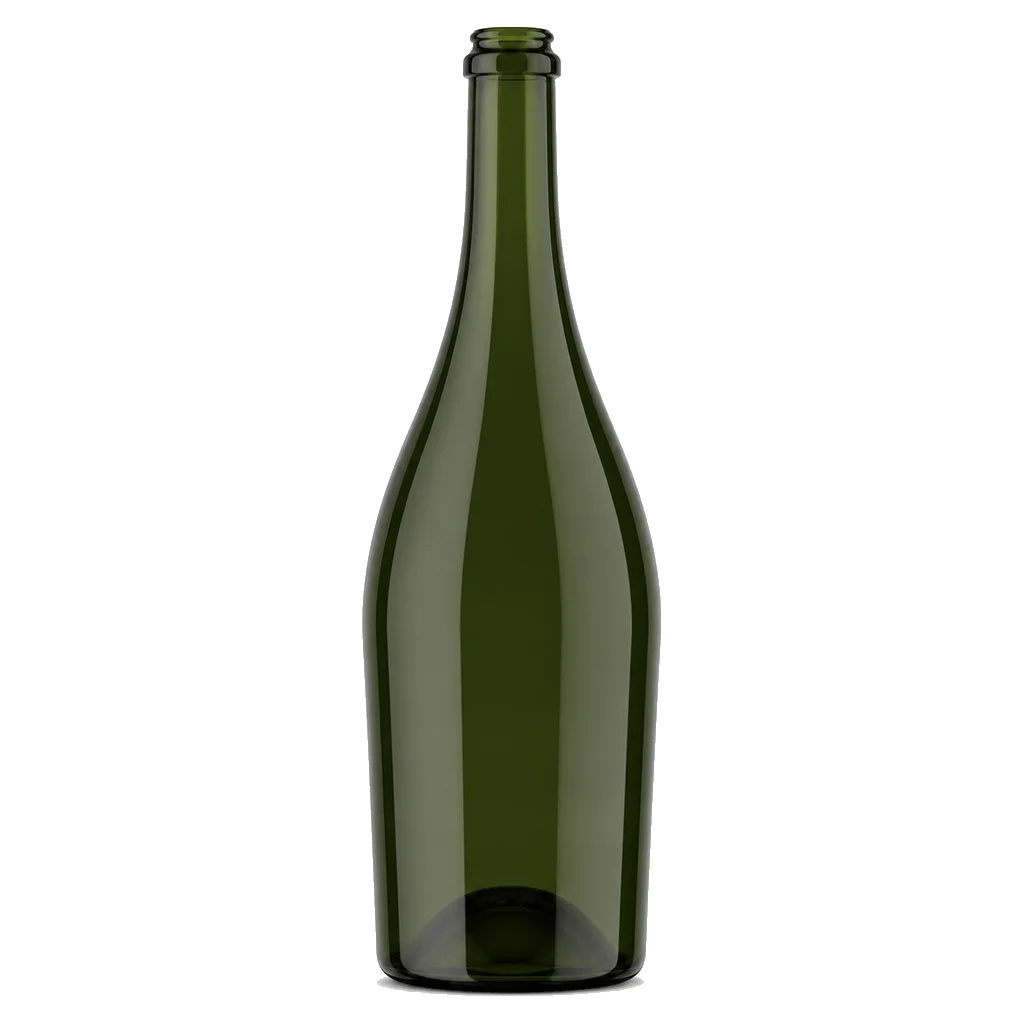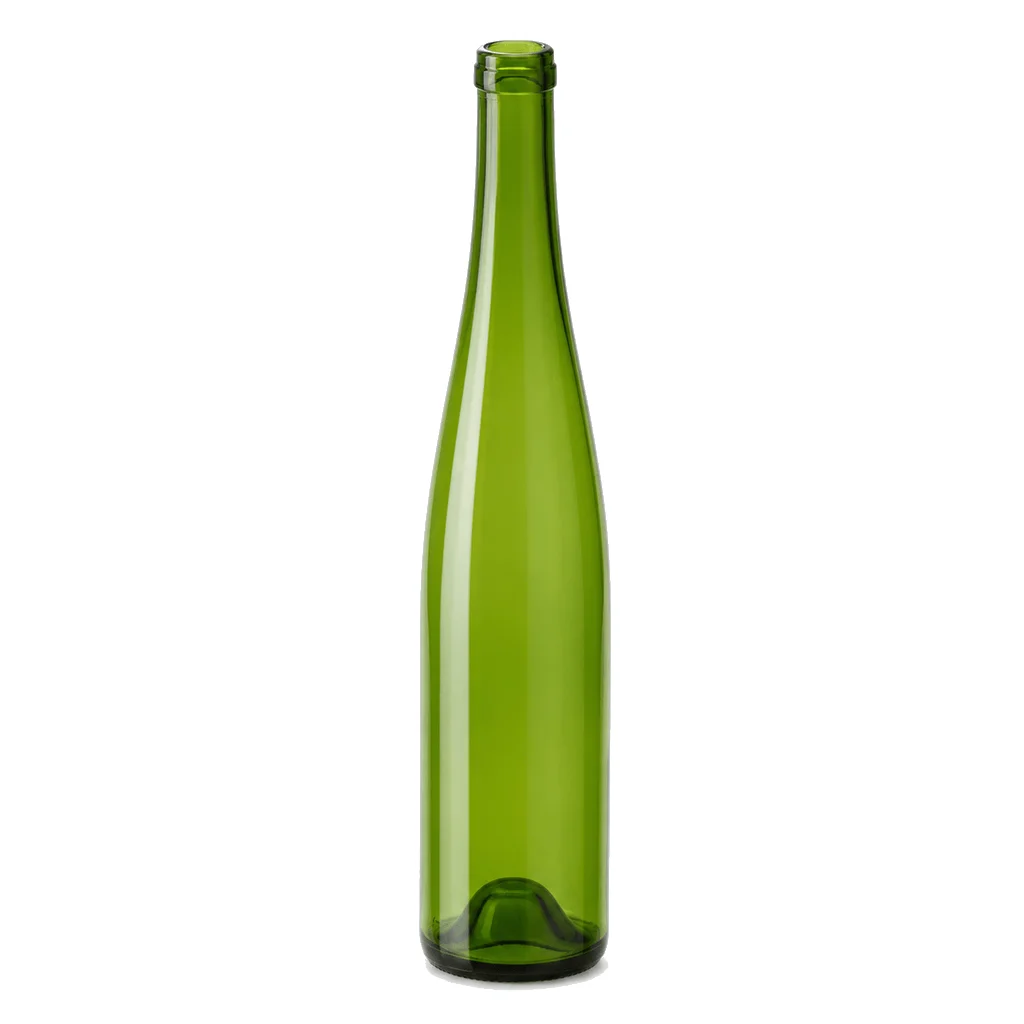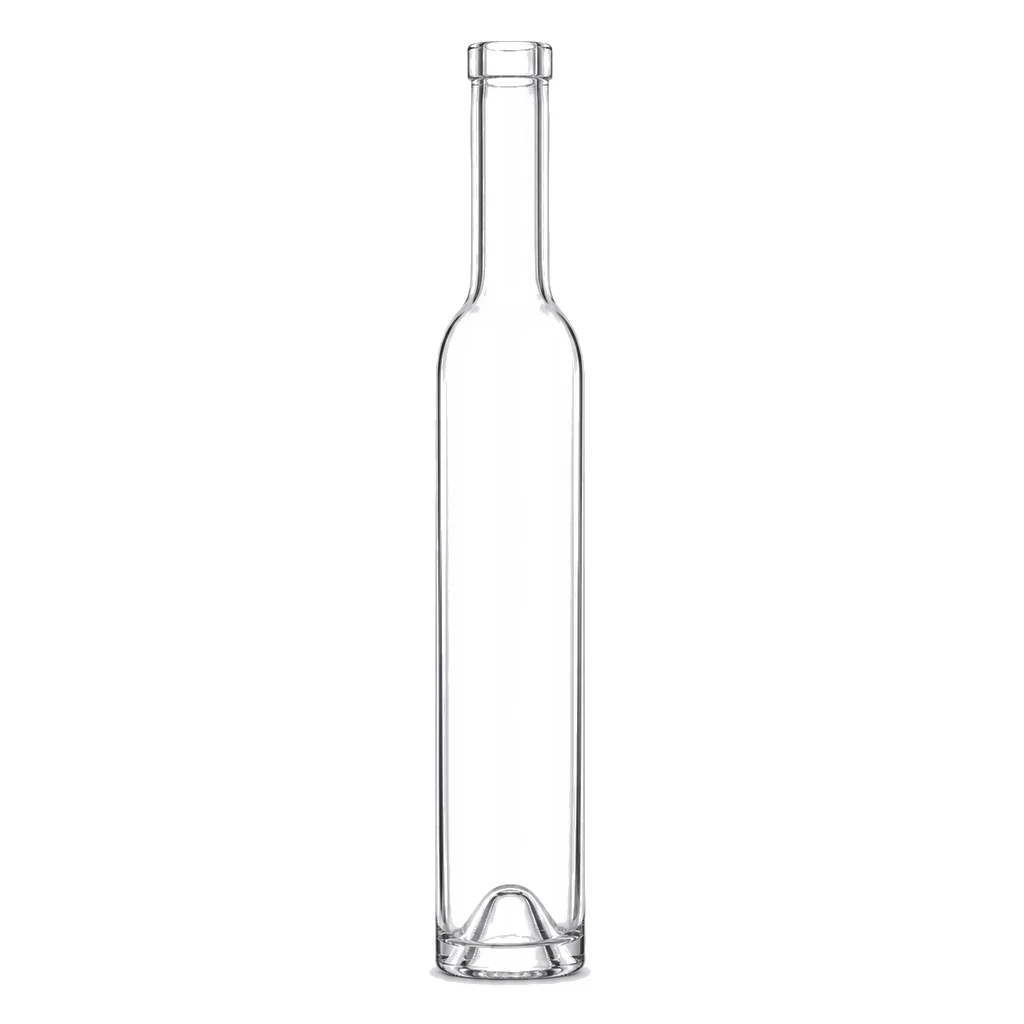
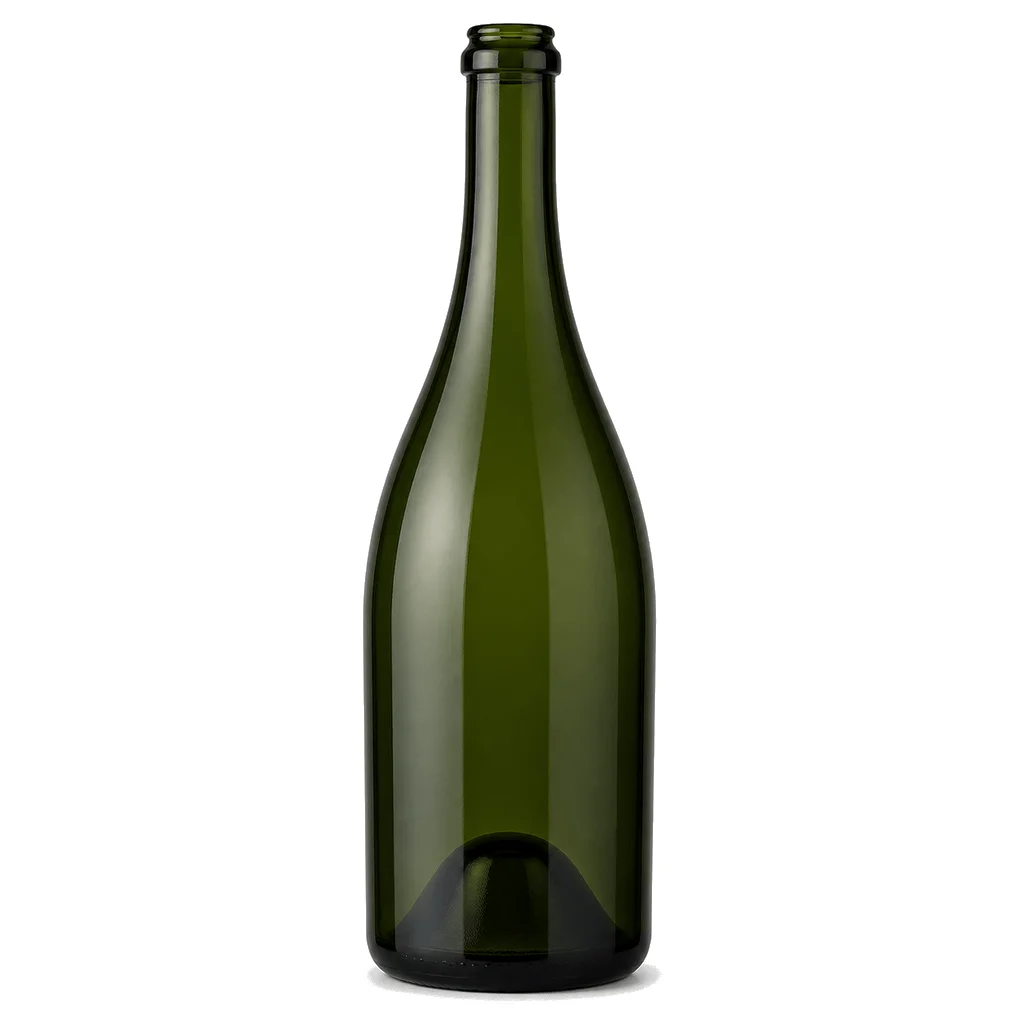
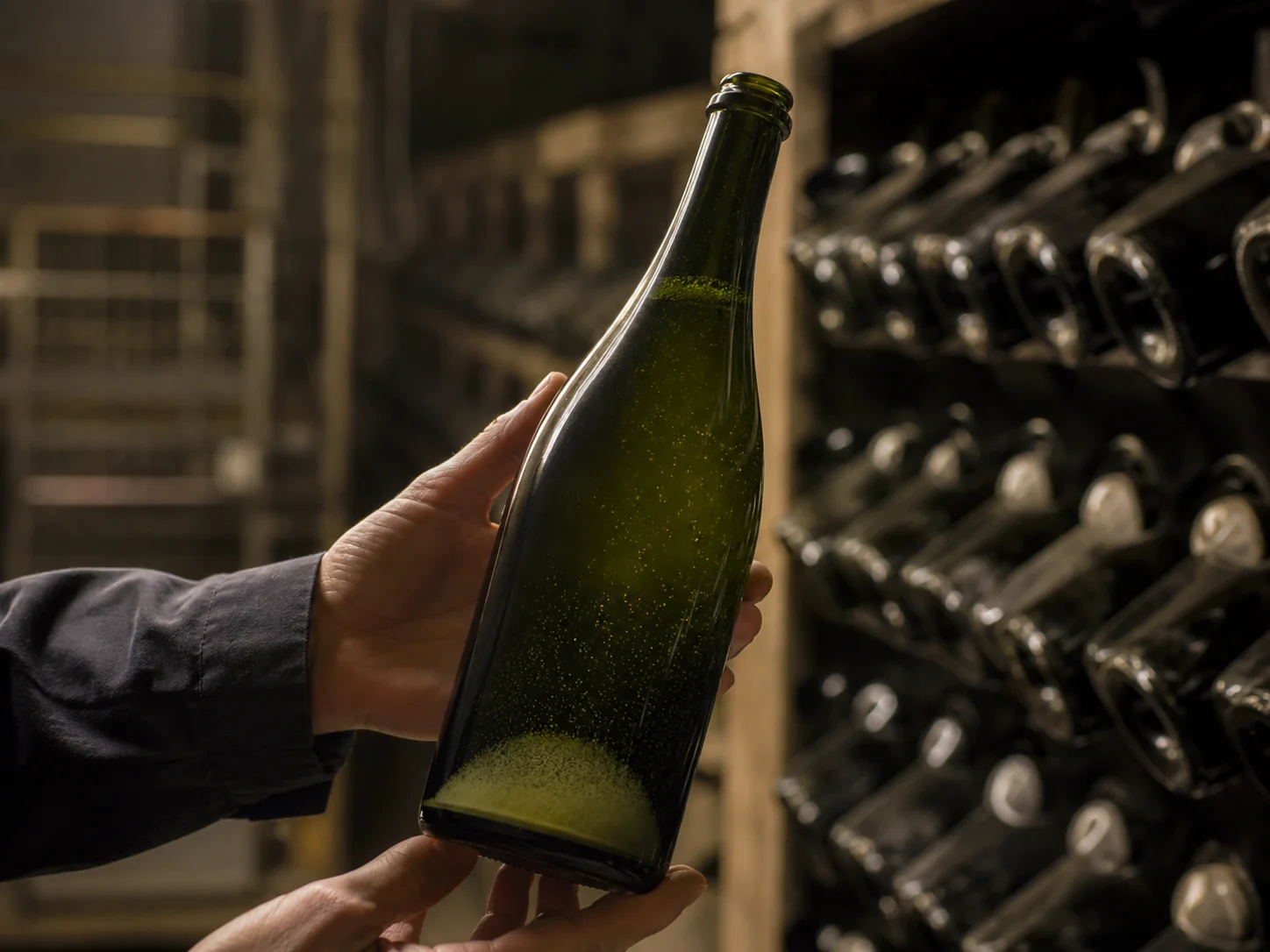
Heavy dark green bottle with sloping shoulders, a thick wall and a deep punt
Shown configuration · bare bottle / cork, wire muselet, capsule and wine not shown

Sparkling wine bottles

Champagne Bottle

A champagne bottle built for around 6 bar of internal pressure, with heavy glass, a deep punt and a finish that takes a crown for tirage and a mushroom cork for release.

Around 6 bar internal pressureDeep punt, heavy wallCrown then cork and muselet
Stock status
In stock
Lead time
2–3 weeks
FOB price / pc
$0.30 - $0.60
MOQ
10,000 pcs

Final availability, dimensions, materials, assembled components and commercial terms are confirmed against the selected drawing and approved sample.

Pressure sets the glass

Wall and punt are structural, not stylistic

Two closures in one life

Crown during tirage, cork at disgorgement

Weight is unavoidable

The mass is doing engineering work

Champagne Bottle profile

A pressure vessel that has to look like a wine bottle.

Pressure, closure sequence & the punt

Six things the pressure decides about this bottle.

Fully sparkling wine typically sits at around 6 bar and may be as low as 5, and EU wine regulation defines sparkling wine as anything above 3 bar. That pressure, held for years through a second fermentation in the bottle, is what makes champagne glass heavy, its punt deep and its finish unlike any still wine bottle.

01

Six bar is the design condition, not a maximum

A fully sparkling wine typically carries around 6 bar of internal pressure, and the bottle holds it continuously for the months or years the wine spends on its lees. That is a sustained load rather than a momentary one, and it is why champagne glass is specified by weight and wall distribution rather than by capacity alone.

02

The punt is structural before it is traditional

A deep punt turns the base from a flat plate into a dome, which carries internal pressure far better and removes the sharp internal corner where stress would otherwise concentrate. It also gives a place for the hand during pouring and collects sediment before disgorgement, but the pressure argument is the one that fixed the shape.

03

The bottle wears two closures in its life

During the second fermentation and aging the bottle is closed with a crown cap, which is cheap, gas-tight and easy to remove for disgorgement. Only afterwards does it receive the mushroom cork and the wire muselet. The finish therefore has to accept both, which is a requirement no still wine bottle carries.

04

The muselet exists because the cork alone will not hold

At 6 bar a mushroom cork would be pushed out of the neck, so a wire cage holds it down. That cage is a functional restraint rather than a decoration, and the bottle's neck profile has to give the wire something to grip beneath the lip. Removing the muselet from a chilled bottle is what the whole assembly is designed around.

05

Sparkling is defined by pressure in regulation

EU wine rules treat any wine above 3 bar as sparkling, which sets a legal boundary between a lightly petillant style and a fully sparkling one. Producers working near that line need to know which side of it their pressure sits on, because it changes the labeling as well as the bottle they must use.

06

The weight is not negotiable in the way still wine glass is

Still wine bottles have been lightweighted substantially in the last two decades. Sparkling bottles have far less room to follow, because the glass is doing structural work. Where a lighter sparkling bottle exists it comes from better glass distribution rather than simply less glass, and its pressure rating is stated rather than assumed.

Application guide

Six atmospheres of pressure inside a bottle of wine.

Sparkling wine bottles are pressure vessels first and presentation second: the heavy glass, the deep punt and the thick finish all exist to contain a secondary fermentation. These are development directions confirmed with the actual wine and process.

Champagne Bottle used for bottles fermented and aged on lees in a traditional method setting

Traditional method

Bottles fermented and aged on lees

For wines that undergo their second fermentation in the same bottle a customer eventually opens, spending months or years under pressure in a cellar. The glass has to hold that for the whole period, and the finish must accept a crown cap during aging and a cork and wirehood at disgorgement.

  • Confirm pressure rating for the method
  • Check the finish takes both closures
  • Test after the full aging period
Champagne Bottle used for bottles opened in front of people in a celebration and gifting setting

Celebration and gifting

Bottles opened in front of people

Sparkling wine is opened at moments that matter, often by someone who has never opened one before, and the wirehood and cork are part of that ritual. Foil, neck dressing and how the bottle looks being carried to a table all become part of what the customer is buying.

  • Coordinate foil and neck dressing
  • Confirm the wirehood applies cleanly
  • Review how it presents when carried
Champagne Bottle used for heavy bottles shipped long distances in a distribution setting

Distribution

Heavy bottles shipped long distances

Sparkling bottles are among the heaviest in wine, which multiplies freight cost and makes case design and pallet stability real commercial concerns. Testing the loaded case as it will actually travel catches problems that a single-bottle drop test never reveals.

  • Test the loaded case as shipped
  • Confirm pallet stability at weight
  • Model freight cost against glass weight

Applications describe development directions. Pressure performance, closure fit, filling and distribution outcomes are confirmed for the selected program.

Common questions

Champagne Bottle questions

Six bar, held for years, decides everything about this bottle.

Why does the bottle need two different closures?

Because it lives two lives. During second fermentation and aging it is closed with a crown cap — cheap, gas-tight and easy to remove for disgorgement — and only afterwards receives the mushroom cork and wire muselet. The finish therefore has to accept both, which no still wine bottle is asked to do.

Is the wire cage decorative?

No. At 6 bar a mushroom cork would be pushed straight out of the neck, so the muselet holds it down. The neck profile has to give the wire something to grip beneath the lip, and the whole assembly is designed around removing that cage safely from a chilled bottle without losing control of the cork.

At what point does a wine count as sparkling?

Above 3 bar under EU wine rules, which draws the line between a lightly petillant style and a fully sparkling one. Producers working near that boundary need to know which side their pressure falls on, since it changes the labeling as well as the bottle and closure they are obliged to use.

Can the glass weight be reduced like a still-wine bottle?

Not in the same way. On still wine, weight is largely a positioning choice; here it is holding roughly 6 bar for years and carrying a deep punt that is structural before it is traditional. Lightweighting is possible but it is an engineering exercise, not a specification preference.

Next step

Send us the Champagne Bottle brief.

Tell us the product, fill volume, closure preference and destination market. We will come back with the matching drawings, available configurations and a sample plan before anything is quoted.

  • 01Send the briefProduct, volume, closure and market
  • 02Get the optionsMatching drawings and configurations
  • 03Approve the sampleConfirm the pack before production