Method, pressure classes & closure retention
Six things that determine a sparkling bottle specification.
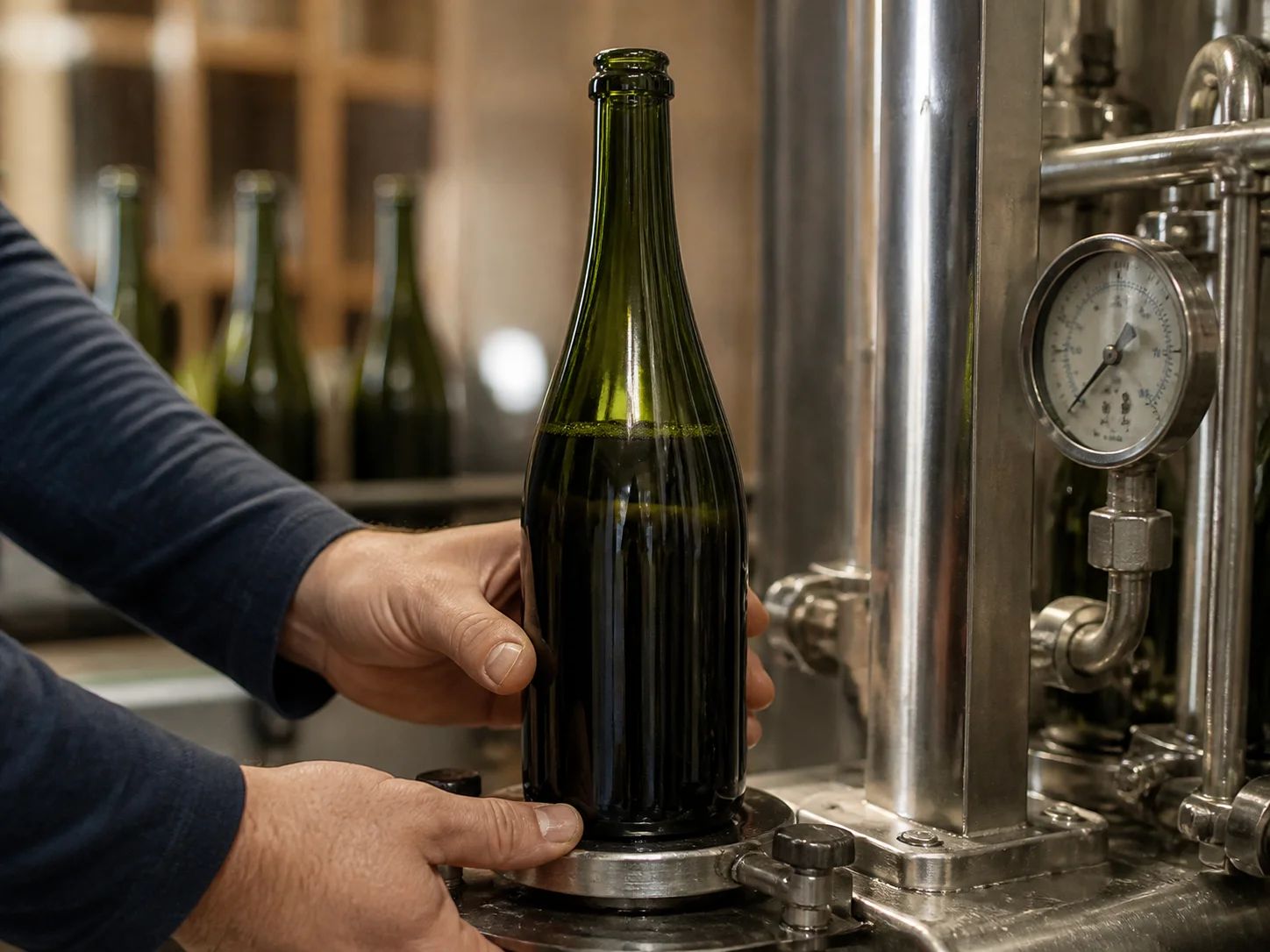
Sparkling wines made by secondary fermentation in the bottle carry substantially more pressure than those carbonated in a tank, and the glass differs accordingly. Specifying the heaviest available bottle for a lightly sparkling wine is a common and expensive habit; specifying too light a bottle for a fully sparkling one is a safety problem. The pressure figure settles both.
The method determines the pressure
A wine refermented in the bottle reaches considerably higher pressure than one carbonated in a pressurized tank and filled under counter-pressure, and lightly sparkling styles are lower still. Establishing which method and which target pressure applies is the first step, because the glass weight follows directly from it.
Weight is bought to hold pressure, not to signal quality
The substantial feel of a traditional sparkling bottle comes from the wall thickness needed to contain its pressure with a safety margin. Where the pressure is lower, that weight is not required, and carrying it anyway means paying to ship glass that is doing nothing. The saving is real across a full production run.
Pressure rises with temperature, and the rating follows the worst case
Dissolved gas exerts more pressure as the wine warms, so a bottle comfortable in a cellar approaches its limit in a hot warehouse or a delivery vehicle. The specification is set against the warmest realistic condition rather than the intended storage, which is where the safety margin is genuinely spent.
The finish has to retain the closure against that pressure
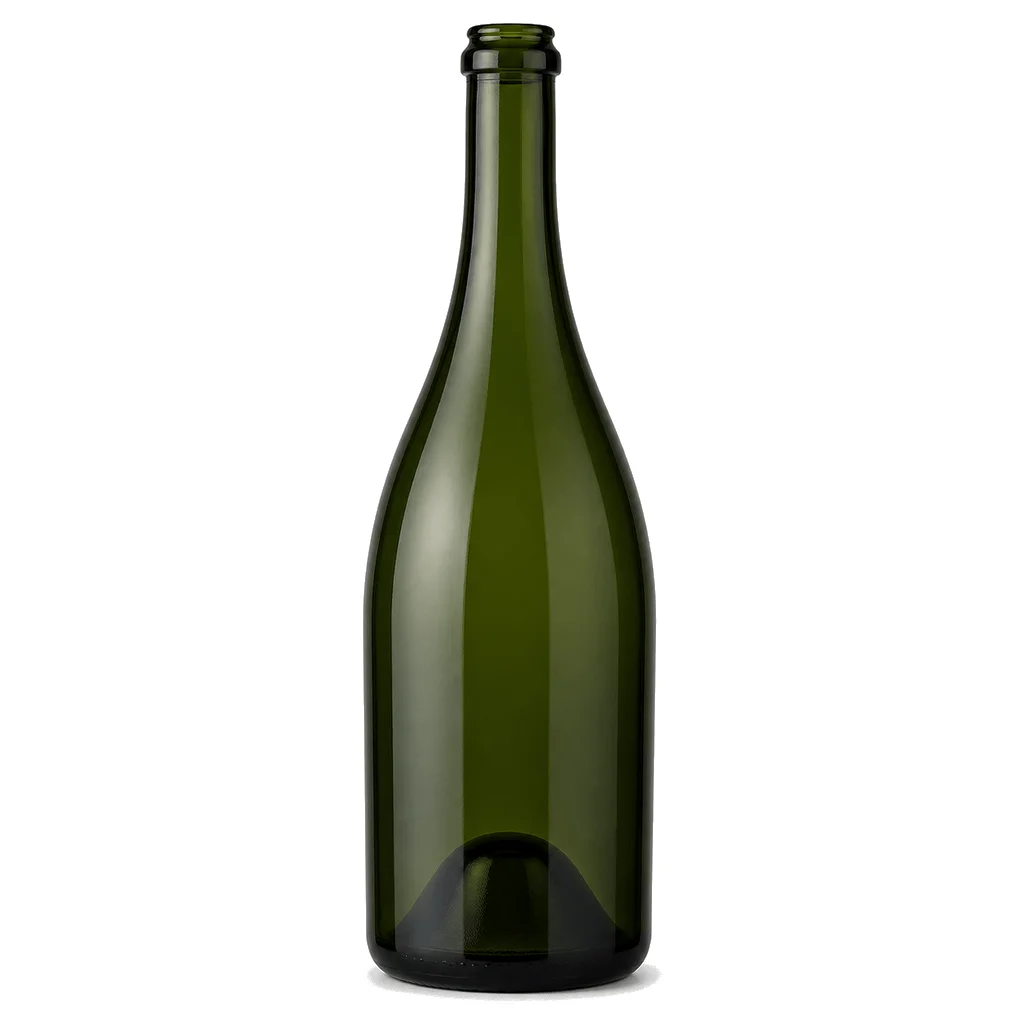
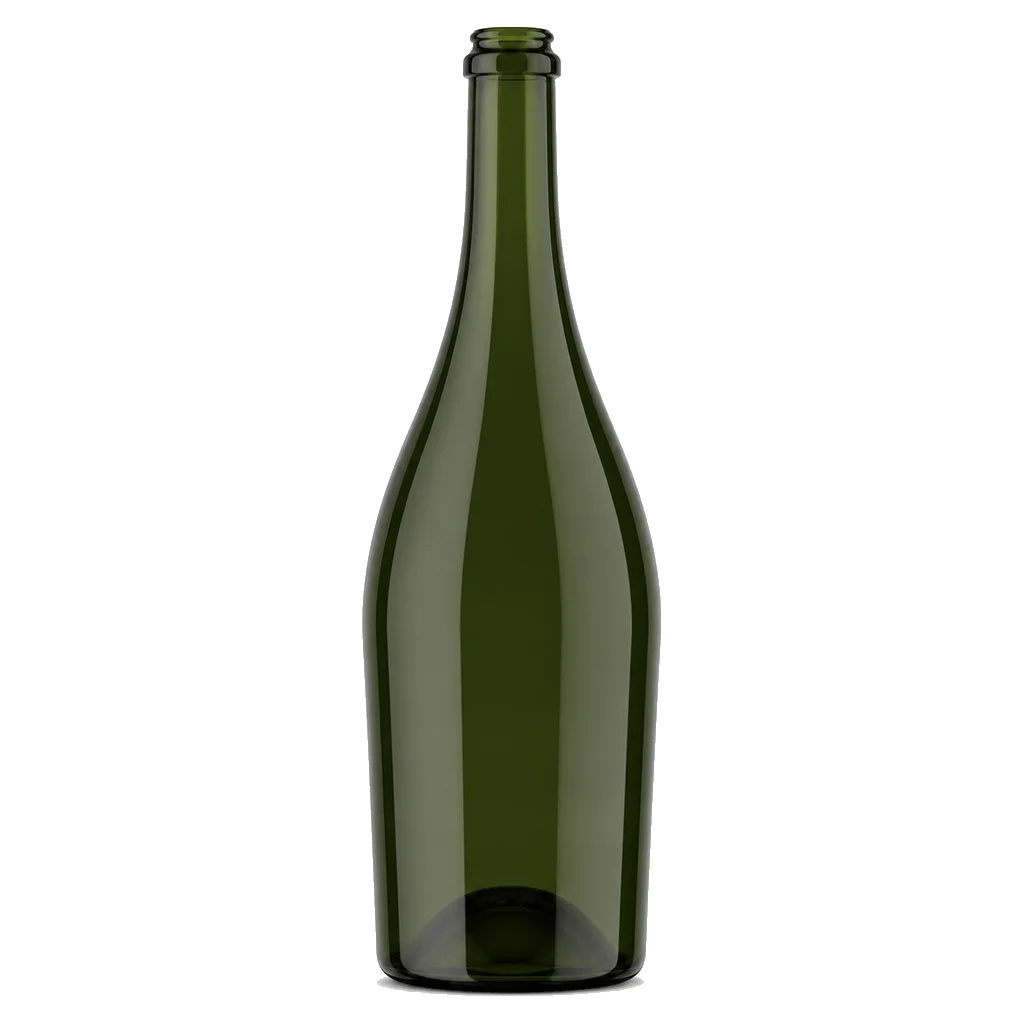
A mushroom cork is held by a wire cage anchored under a ring on the finish, and that ring is a specified feature with defined dimensions rather than decorative detail. A finish that does not match the cage will not retain the closure reliably, which is a safety matter rather than a fitting inconvenience.
Crown caps do real work before the cork arrives
Bottles undergoing secondary fermentation are usually sealed with a crown during that stage, so the same bottle has to accept a crown for months and a mushroom cork afterwards. That dual requirement is worth confirming with the glass supplier where the production method calls for it.
The punt is functional here in a way it often is not
In still wine a deep punt is largely convention. In a pressurized bottle the domed base distributes stress away from a flat area that would otherwise be the weak point, and it gives a handling grip during riddling and pouring. It is one of the places where a traditional feature has a straightforward engineering purpose.