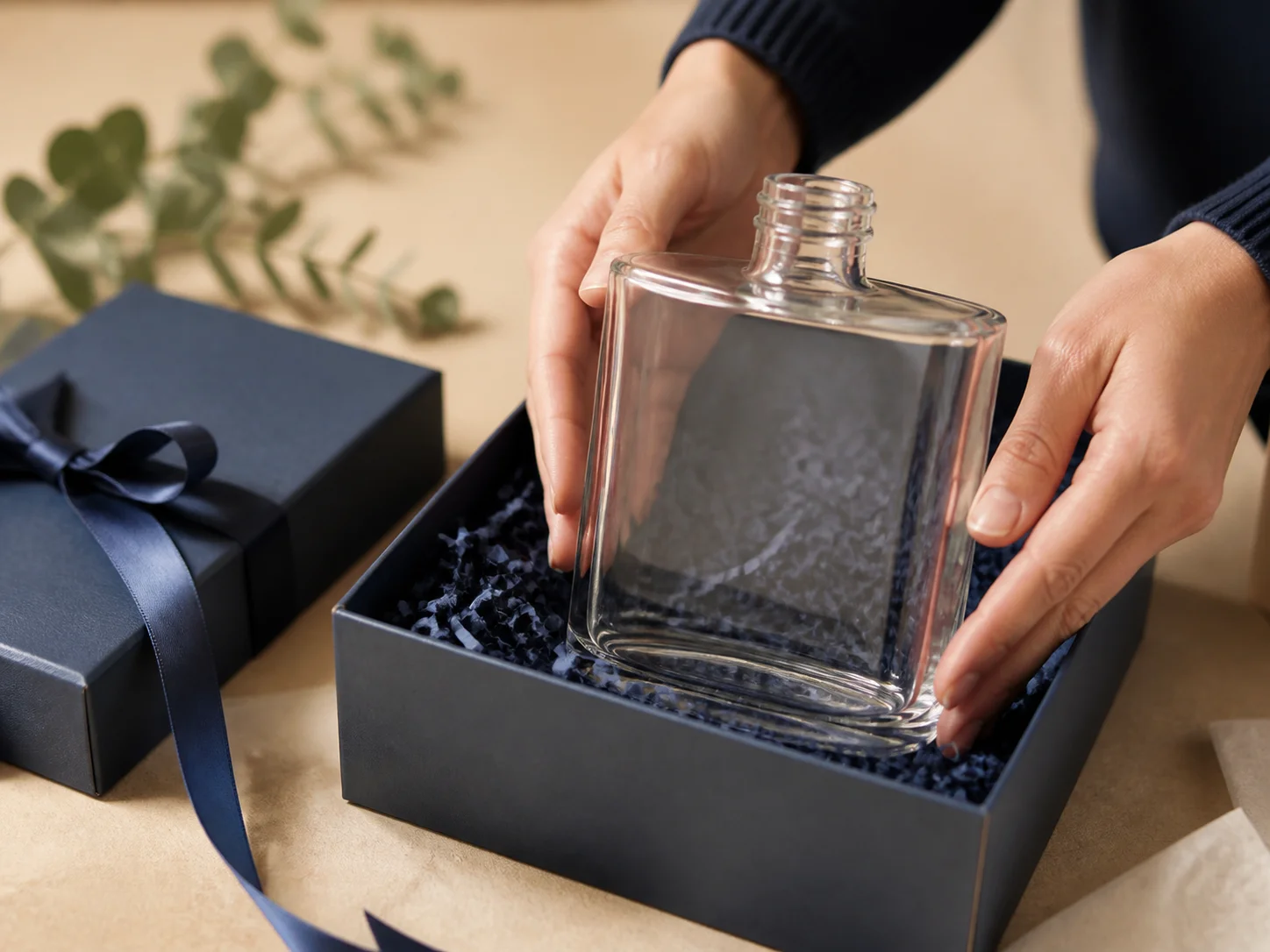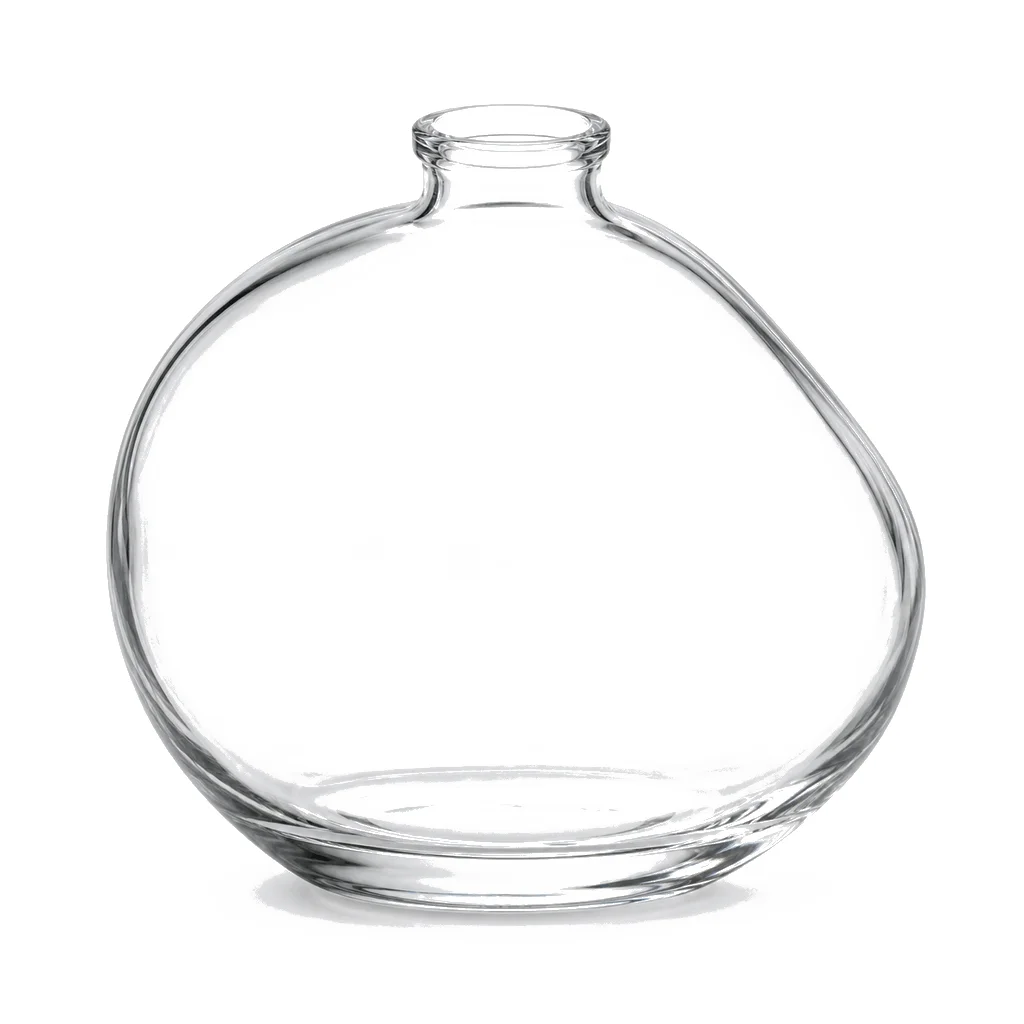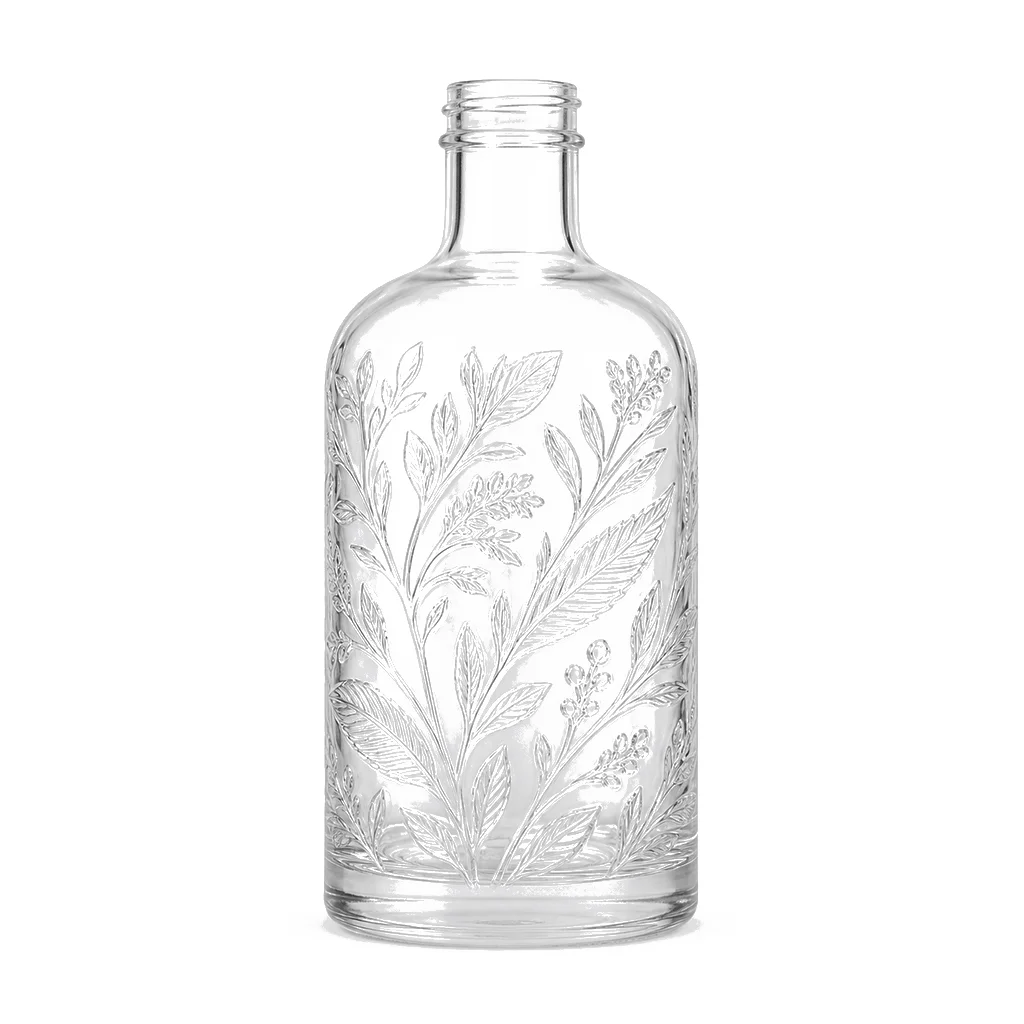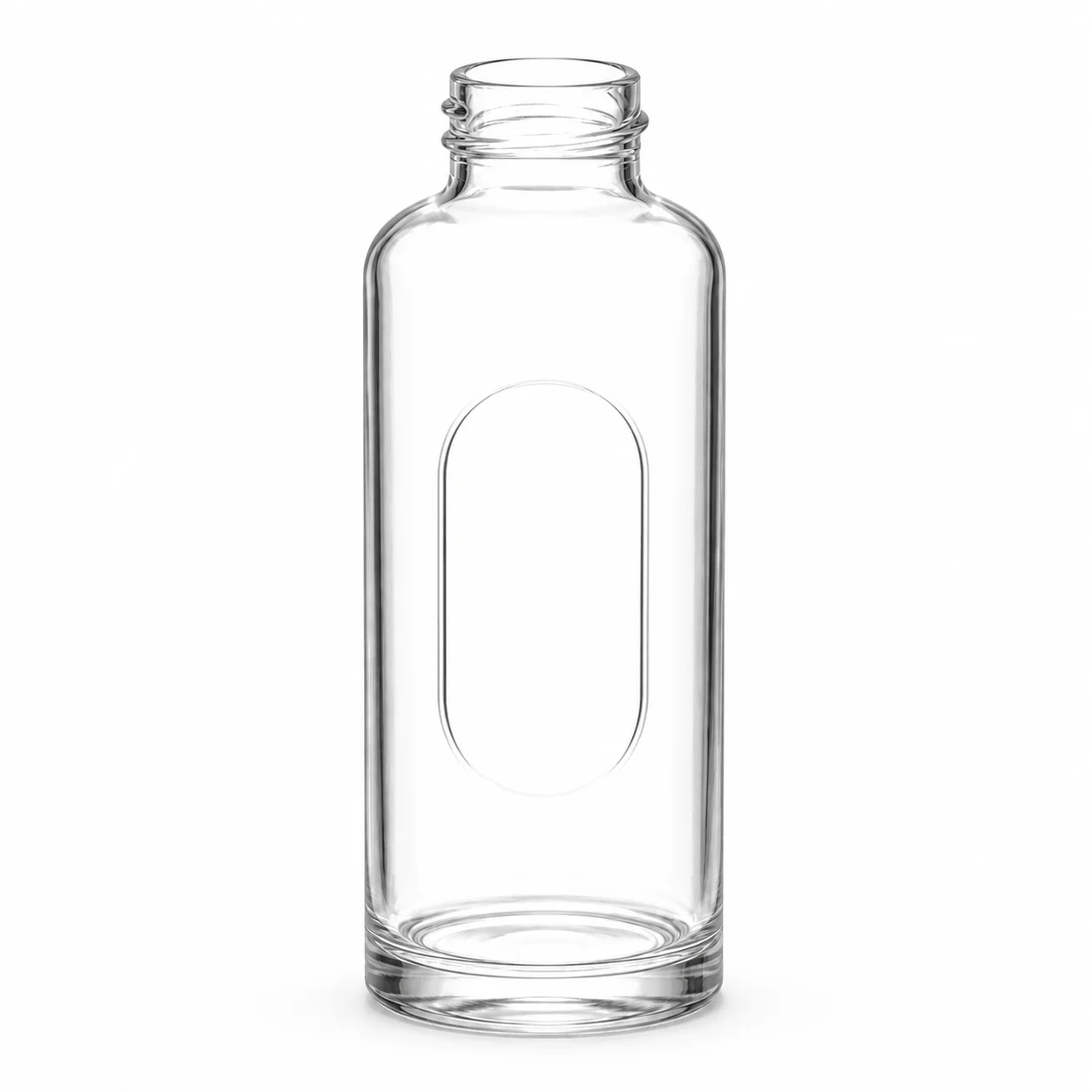
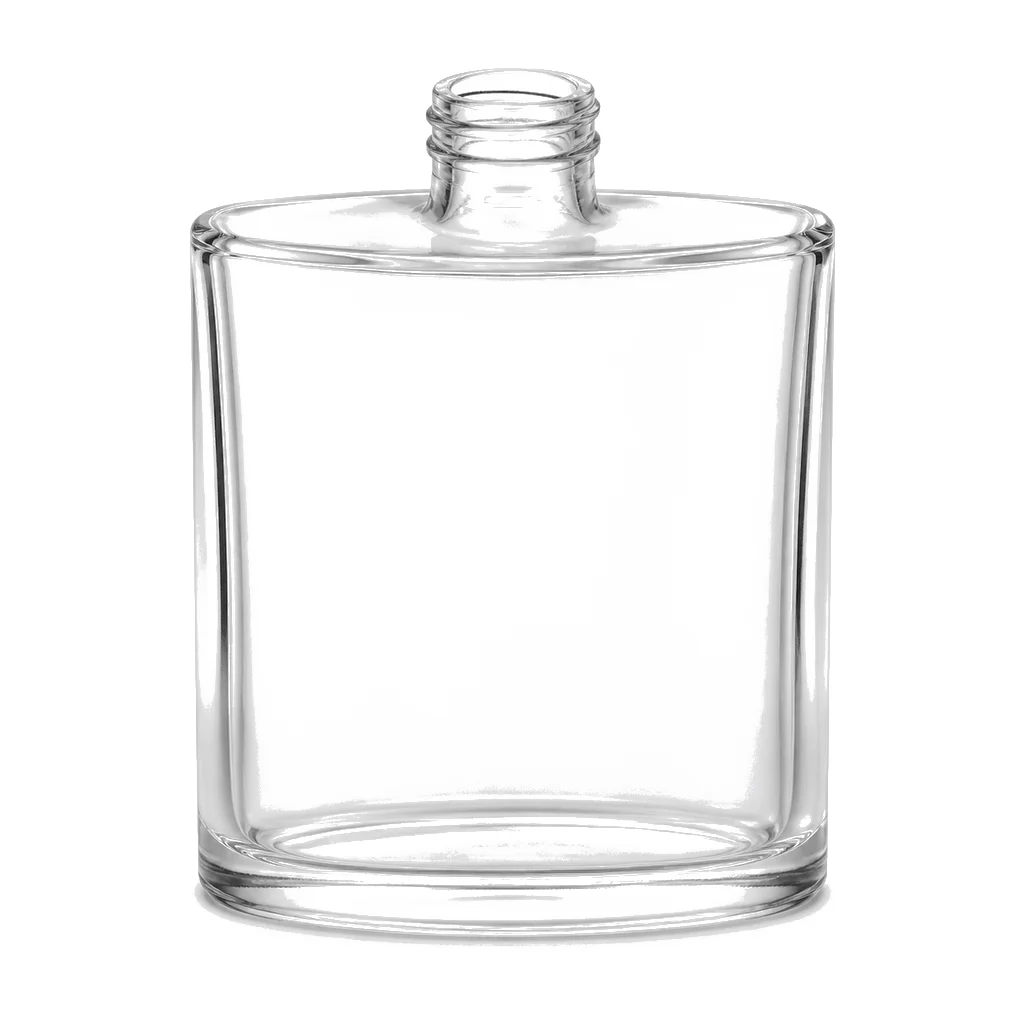
Flat curved glass flask with rounded shoulders and a screw finish
Shown configuration · bare bottle / closure, label and spirit not shown

Spirits bottles

Hip Flask Bottle

A flat, curved flask bottle that packs densely and shows well, at the cost of the uneven glass distribution every flat-sided container has to manage.

Flat sides pack tighterCorners run thinTwo full-width label panels
Stock status
In stock
Lead time
2–3 weeks
FOB price / pc
$0.80 - $1.20
MOQ
5,000 pcs

Final availability, dimensions, materials, assembled components and commercial terms are confirmed against the selected drawing and approved sample.

Density in the case

Flat bottles waste less space

Corner radii do the work

Sharp corners are where it fails

Front and back panels

A flat face labels beautifully

Hip Flask Bottle profile

A flat bottle earns its space in the case and pays for it in the corners.

Packing density, corner stress & the flat panel

Six consequences of flattening a bottle.

Round bottles waste space between them; flat ones do not, which is why a flask format fits more product into the same case and the same pallet. The compensation is structural: glass does not distribute into flat panels as evenly as into a cylinder, and the transitions at the corners are where thickness falls and stress concentrates.

01

Flat sides remove the wasted space between bottles

Cylinders leave gaps against each other no packing arrangement recovers. Flat-sided bottles sit face to face, which raises the product in a case and the cases on a pallet. On a spirit sold in volume that saving repeats across every shipment and is usually the strongest argument for the format.

02

Glass thins at the transitions

In a blow mold the parison expands until it meets the cavity, and it reaches a flat face before it reaches a corner. The corner is therefore the last place to be filled and the thinnest place on the finished bottle. Generous corner radii are how that is managed, and squaring the corners for appearance works directly against it.

03

A flat panel is the best label surface there is

Front and back panels take a flat label without any of the compensation a curved surface needs, so registration is easier, foils and embossed papers behave better, and the artwork looks exactly as designed. Where a brand invests in label finishing, a flask format is where that investment shows most clearly.

04

The curve is for the pocket it was named after

The gentle curve through the body came from a flask carried against the body, and it survives because it makes the bottle comfortable to hold and easier to slide into a gift box or a carton. It also adds stiffness across a face that would otherwise be a large flat span.

05

Stability depends on the base footprint, not the profile

A flat bottle is stable across its width and much less so across its depth, so the base needs enough depth to stand securely on a moving conveyor or a bar. Testing the tipping angle in the narrow direction is the meaningful test, since that is the direction the bottle actually falls.

06

Line handling favors flats less than the case does

Star wheels and guide rails are designed for cylinders, so a flask usually needs change parts and careful setup, and it can rotate in transit unless it is guided. Those costs sit against the packing saving, and the comparison is worth making with real figures for a specific line and case format.
Application guide

Use a flask where portability or panel area is the point.

Flask formats earn their place through carrying convenience and decoration area. These directions still require product-specific validation.

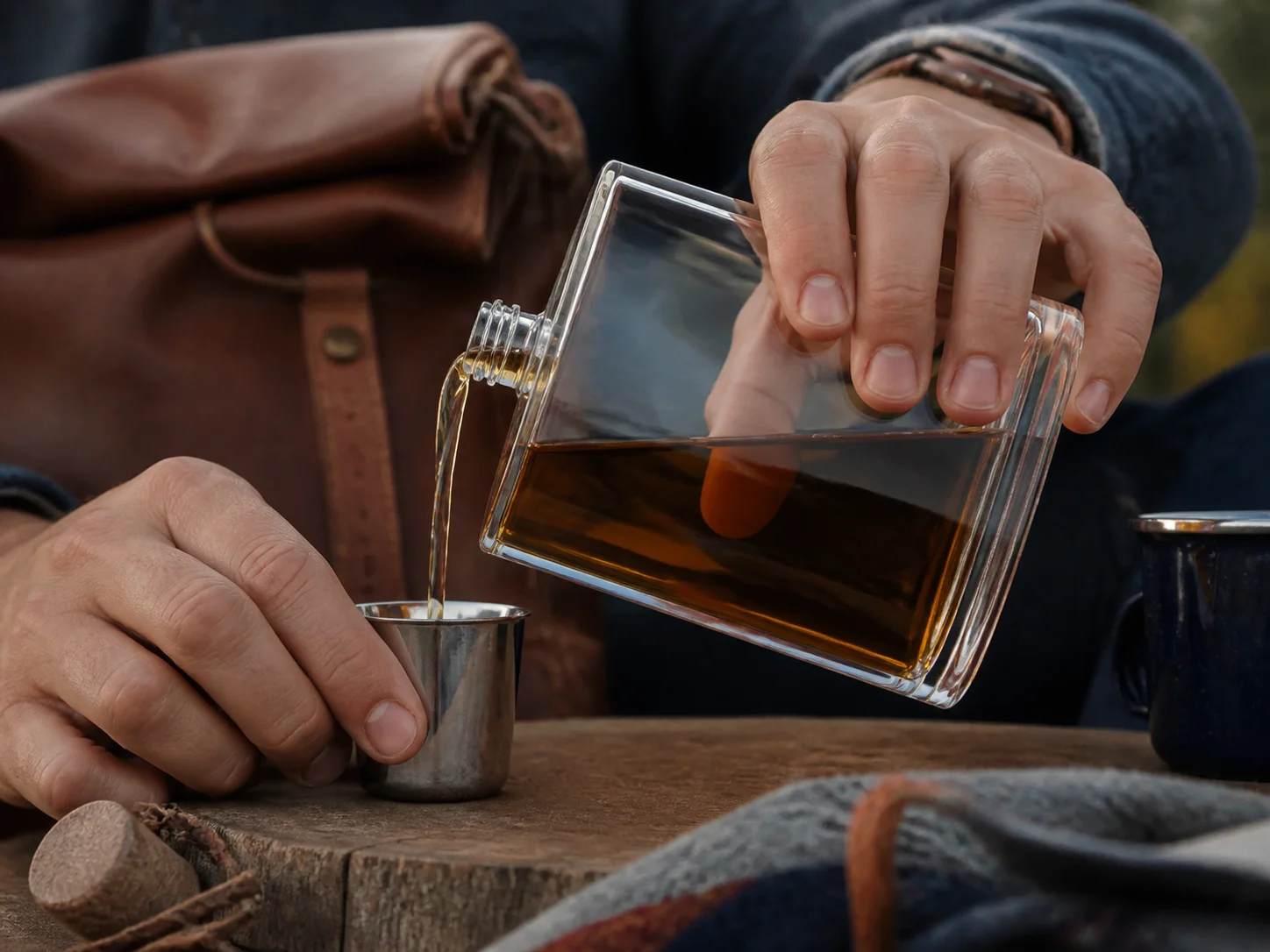
Hip Flask Bottle used for whisky, rum & pocket formats in a spirits setting

Spirits

Whisky, rum & pocket formats

For products intended to be carried to an event, a hike or a gathering. Because the bottle moves around while full, closure reliability and seal integrity under motion matter far more than they would for a bottle that sits on a back bar.

  • Confirm seal under movement
  • Select a secure closure
  • Test with the actual spirit
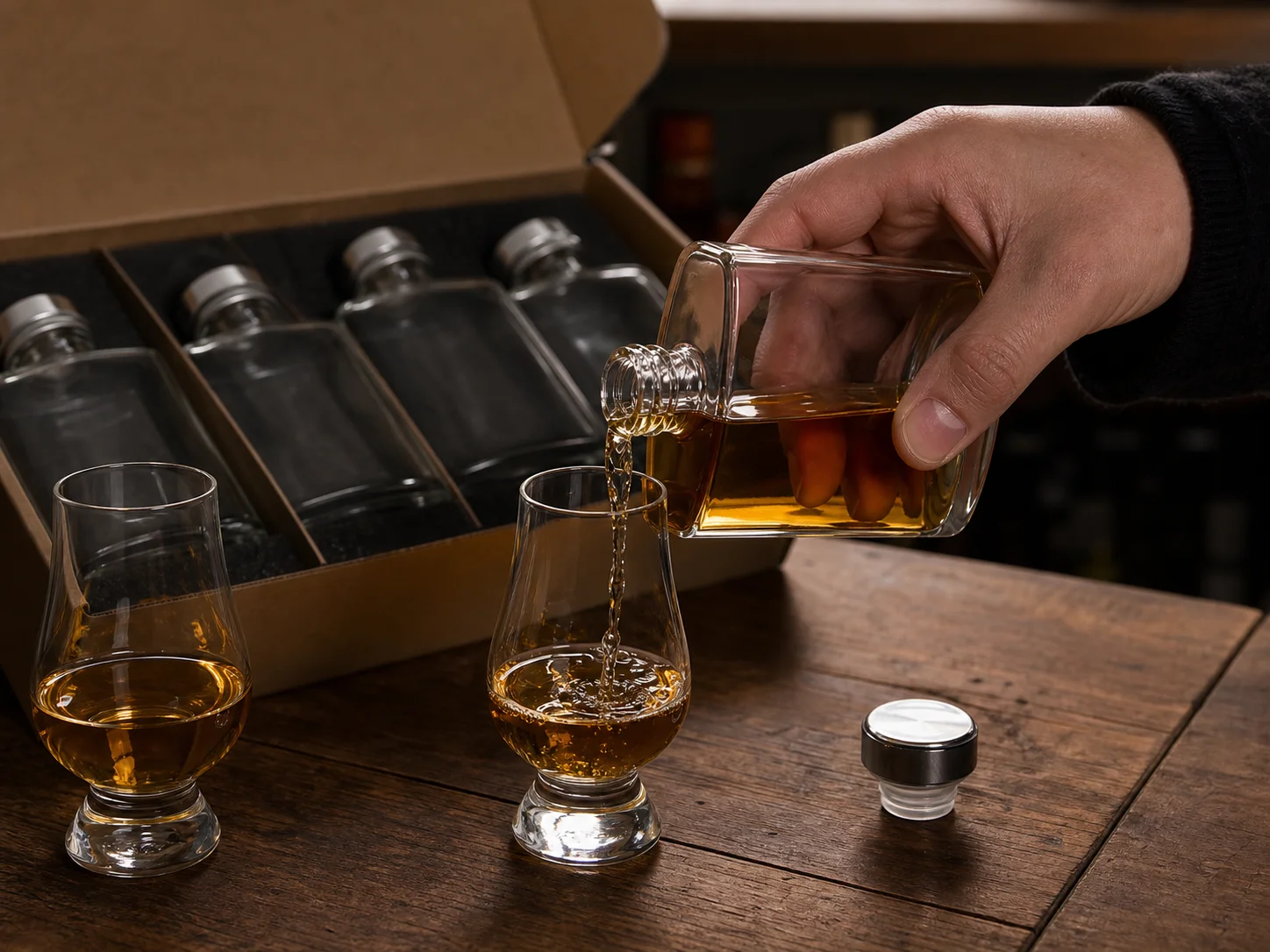
Hip Flask Bottle used for miniatures & discovery sets in a trial & sampling setting

Trial & sampling

Miniatures & discovery sets

For sampling programs and tasting sets where a customer receives four or five variants together and works through them over a month. Flat bodies stack efficiently in a slim box, and holding one common finish and carton architecture across every variant keeps closure sourcing and packing straightforward as the range grows.

  • Standardize the finish
  • Design a common carton
  • Confirm unit cost at volume
Hip Flask Bottle used for travel retail & branded gifts in a gifting setting

Gifting

Travel retail & branded gifts

For gift and corporate programs where a recipient's name or a company mark is applied to the broad flat face, and the bottle is handed over as an object rather than shelved. The panel carries detailed decoration comfortably, and the flat profile suits slim presentation boxes without the wasteful void fill a round bottle needs.

  • Exploit the full panel
  • Plan personalization route
  • Confirm gift carton fit

Actual spirit, closure, filling, sealing and distribution requirements are confirmed for the selected program.

Common questions

Hip Flask Bottle questions

The saving is in the case; the engineering is in the corners.

Why do flask bottles crack at the corners?

Because the corner is the last place the glass reaches. In a blow mold the parison meets the flat faces before it meets the corners, so the corners end up thinnest and carry the highest stress. Generous radii are the answer, which is why squaring the corners for a sharper look works directly against durability.

Is a flat panel really better for labels?

Noticeably. A flat surface takes a label without the compensation a curved one needs, so registration is easier and foils and textured papers behave as intended. If a brand is investing in label finishing, this is the format where that investment is most visible on the finished pack.

Why is the body curved at all?

It began with a flask carried against the body, and it survives for practical reasons: it is comfortable in the hand, it slides into gift boxes and cartons cleanly, and it adds stiffness across a face that would otherwise be a large flat unsupported span. The heritage and the engineering happen to agree.

Is it stable enough for bar service?

Across its width, yes; across its depth, less so. The base needs enough depth to stand securely on a moving conveyor or a wet bar, and the meaningful test is tipping angle in the narrow direction, since that is the way the bottle actually falls when it is knocked.

Does the case saving cost us anything on the line?

Some of it, yes. Flat bottles pack tightly into a case but orient less predictably through guides and star wheels than a cylinder, so part of the freight saving goes back out in change parts and slower accumulation. Weigh both before committing to the format.

Next step

Send us the Hip Flask Bottle brief.

Tell us the product, fill volume, closure preference and destination market. We will come back with the matching drawings, available configurations and a sample plan before anything is quoted.

  • 01Send the briefProduct, volume, closure and market
  • 02Get the optionsMatching drawings and configurations
  • 03Approve the sampleConfirm the pack before production