Botanical oils, clouding & category expectation
Six things a gin bottle has to account for.
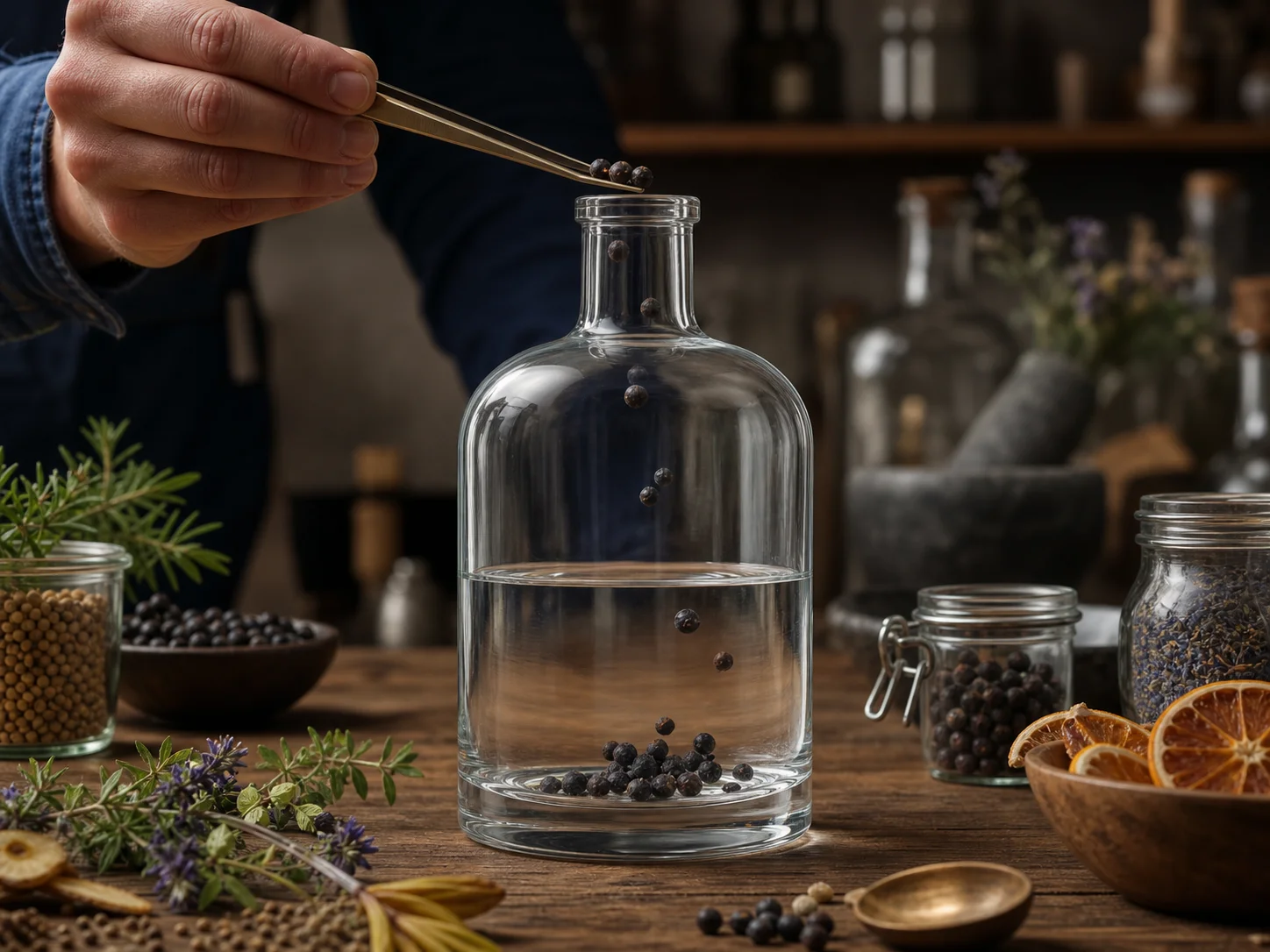
Gin is a neutral spirit carrying juniper and other botanical oils in solution, held there by the alcohol. Reduce the alcohol concentration by adding water, or lower the temperature enough, and those oils come out of solution and the liquid turns cloudy. That behavior is central to the product, and it shapes what the packaging has to protect and what it has to explain.
Clouding on dilution or chilling is expected behavior
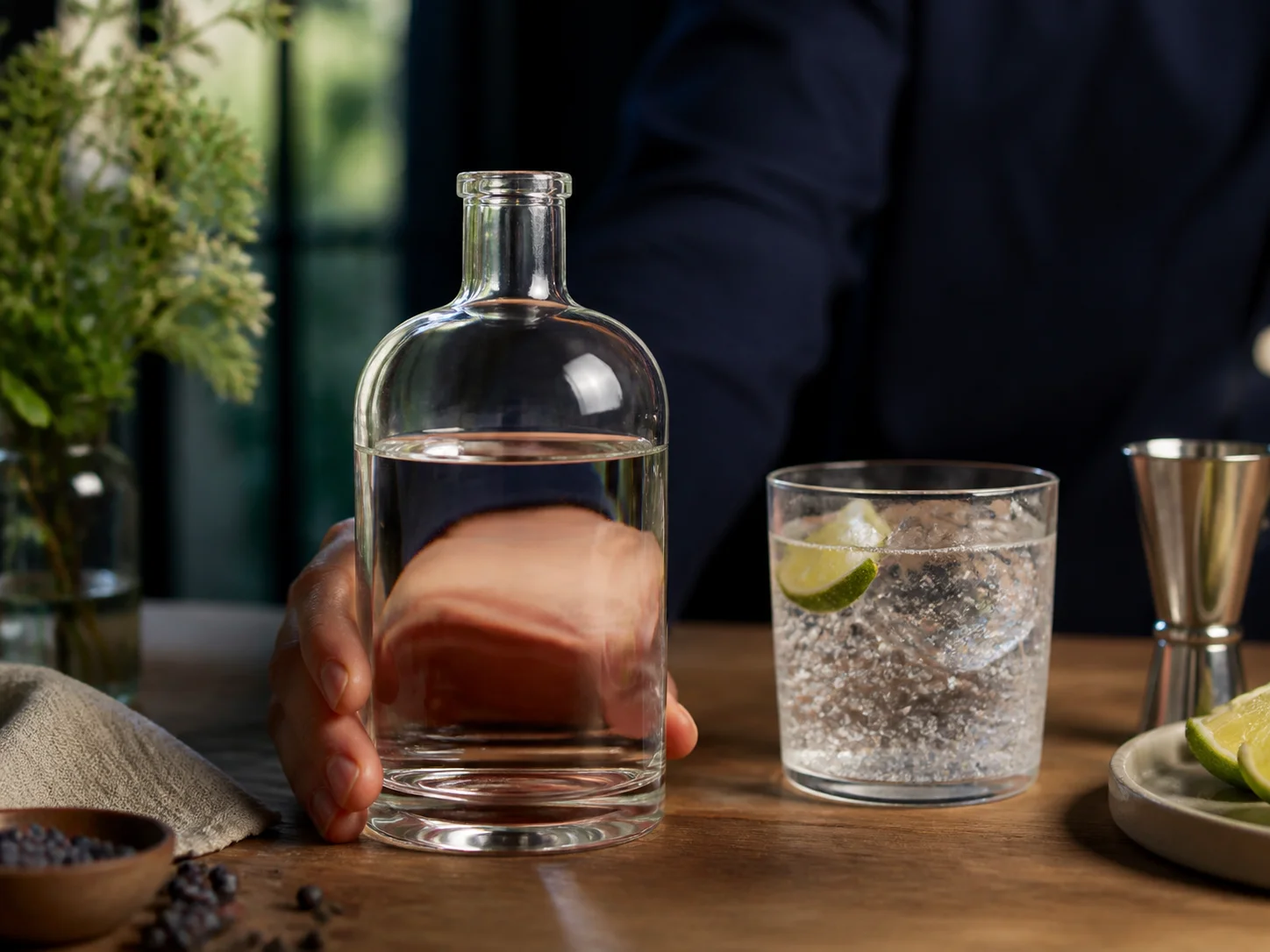
Essential oils dissolved in spirit come out of solution when the alcohol concentration drops or the temperature falls, turning the liquid hazy. In a gin served over ice or with tonic that is a familiar effect. In a bottle stored in a freezer it can alarm a customer, and a brief word on the label is more effective than any reformulation.
Liner materials can absorb the botanicals
The aromatic compounds that distinguish one gin from another are exactly the sort that some liner and closure materials take up over months. That is a slow, invisible loss of character rather than a leak, and the only way to detect it is a sensory comparison against a control after storage on the actual product.
Clear glass exposes the container as well as the spirit
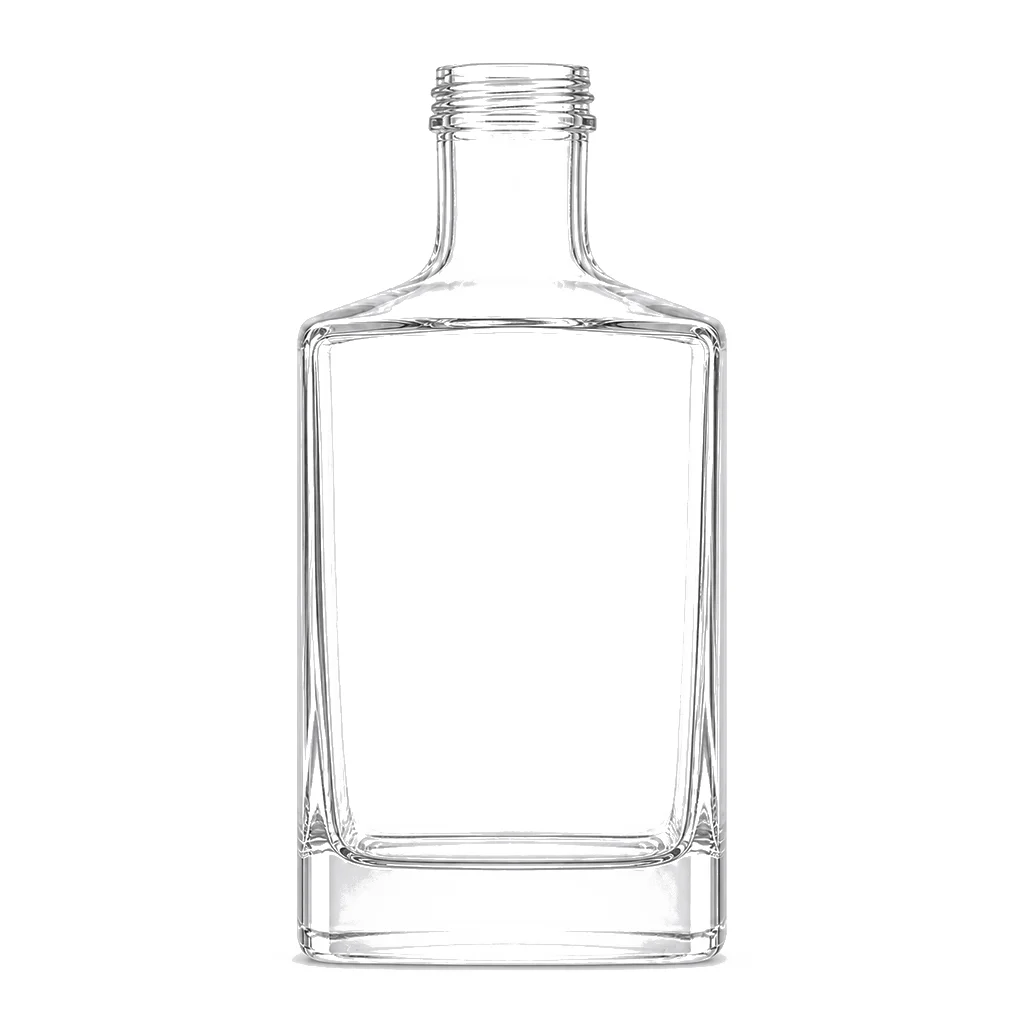
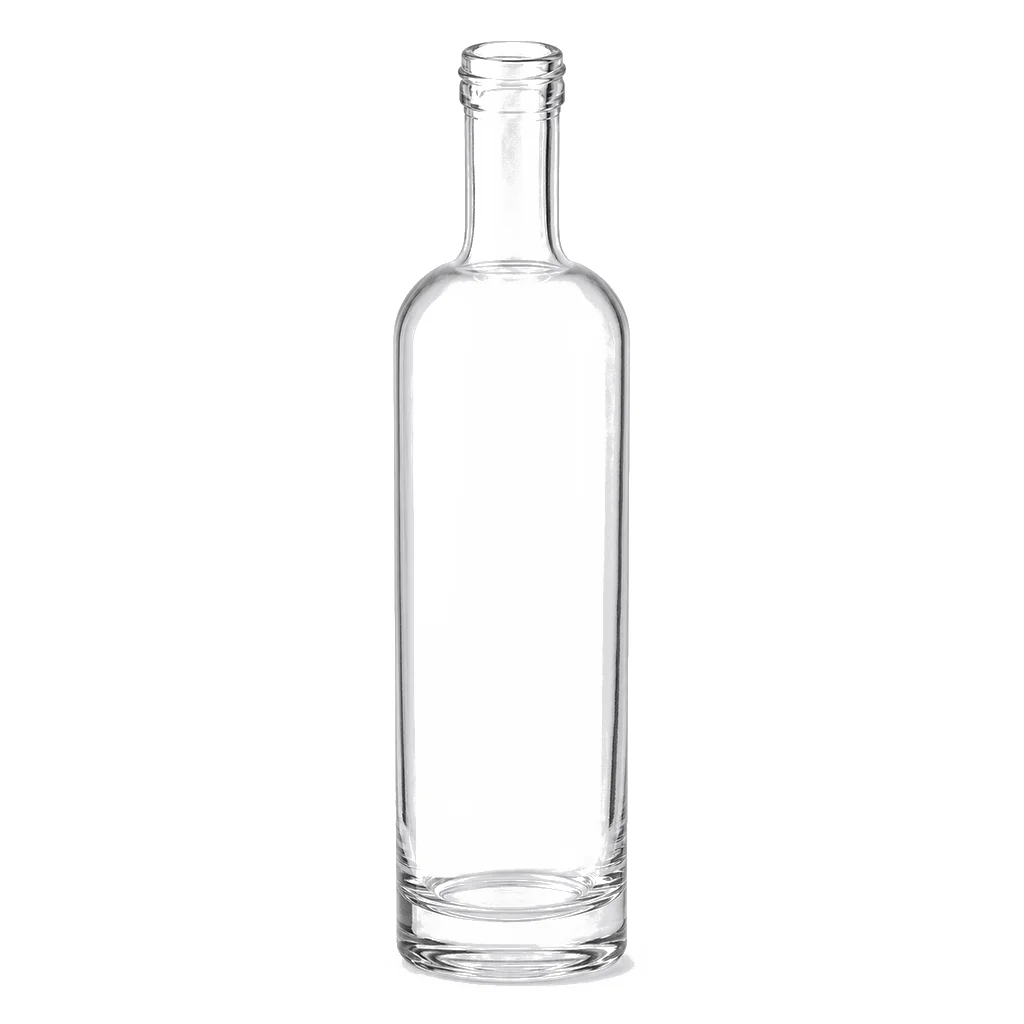
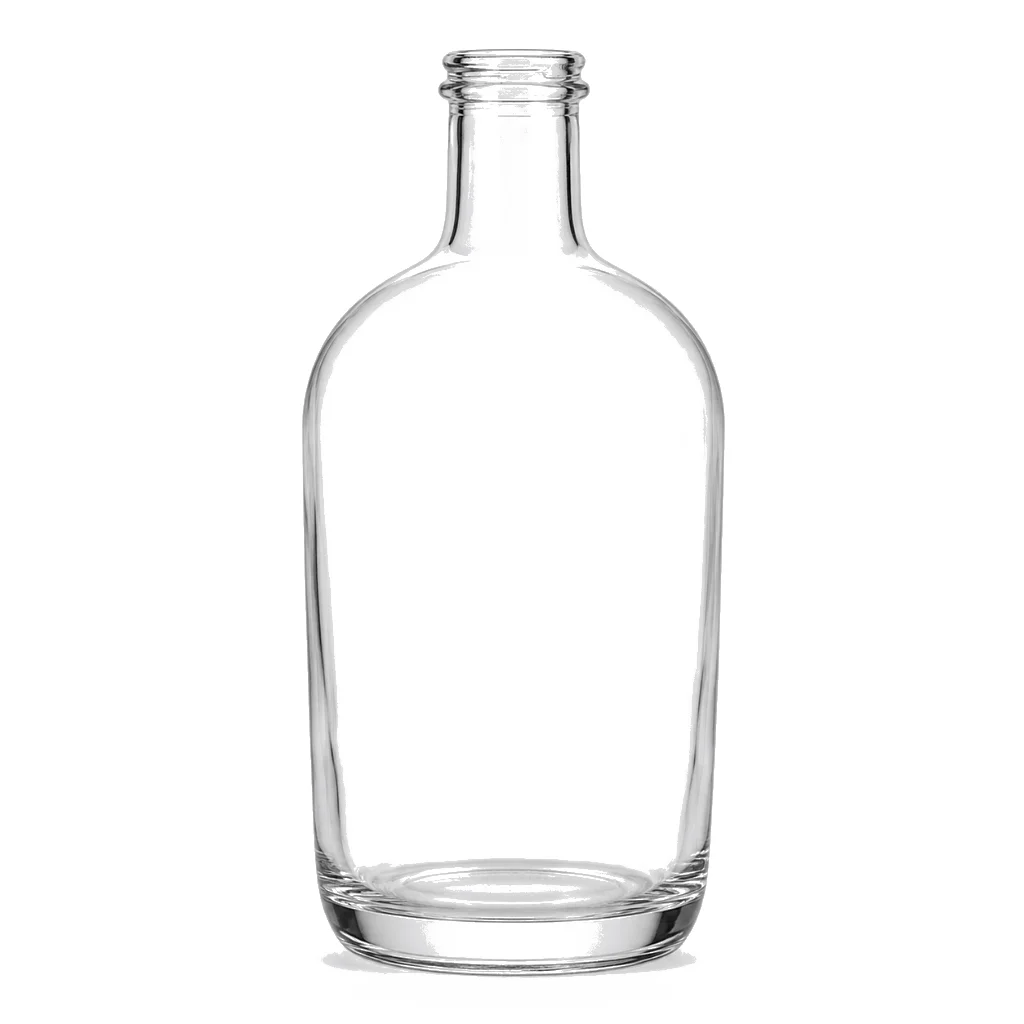
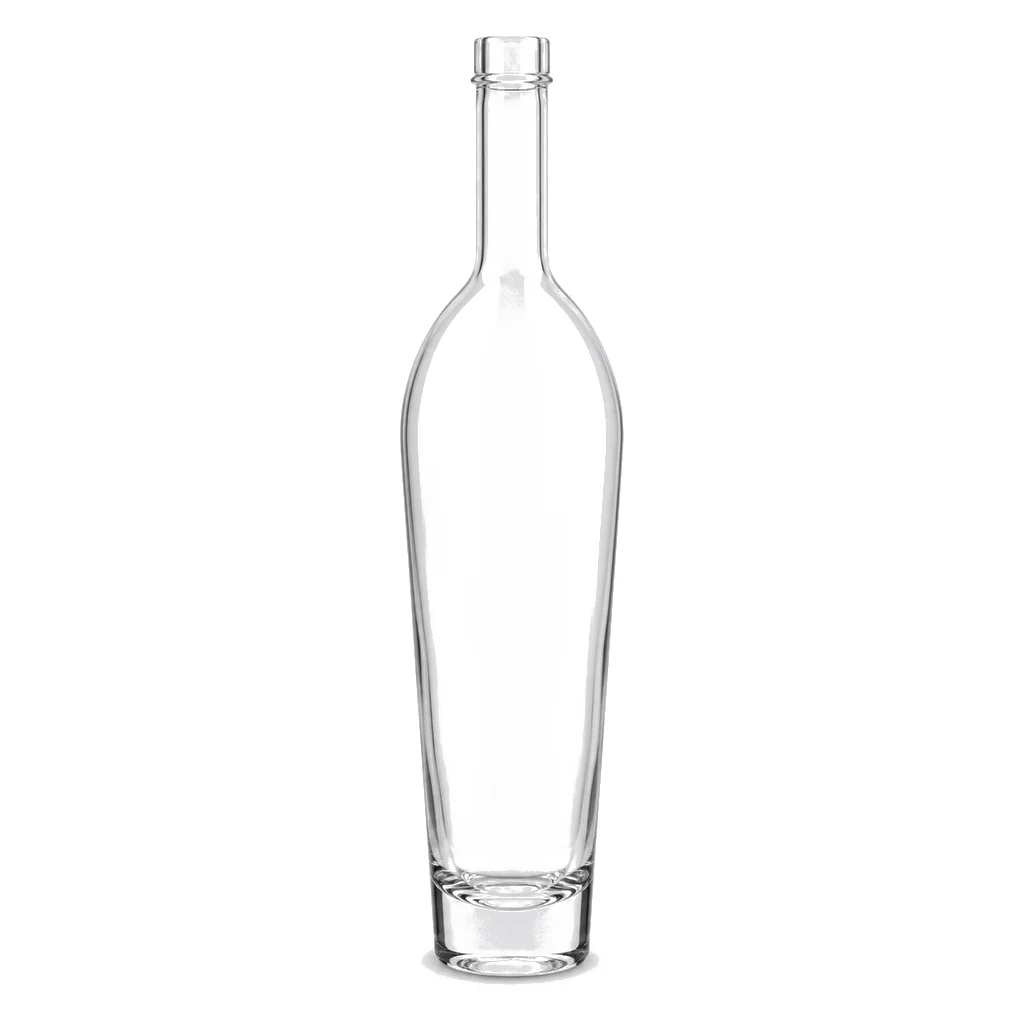
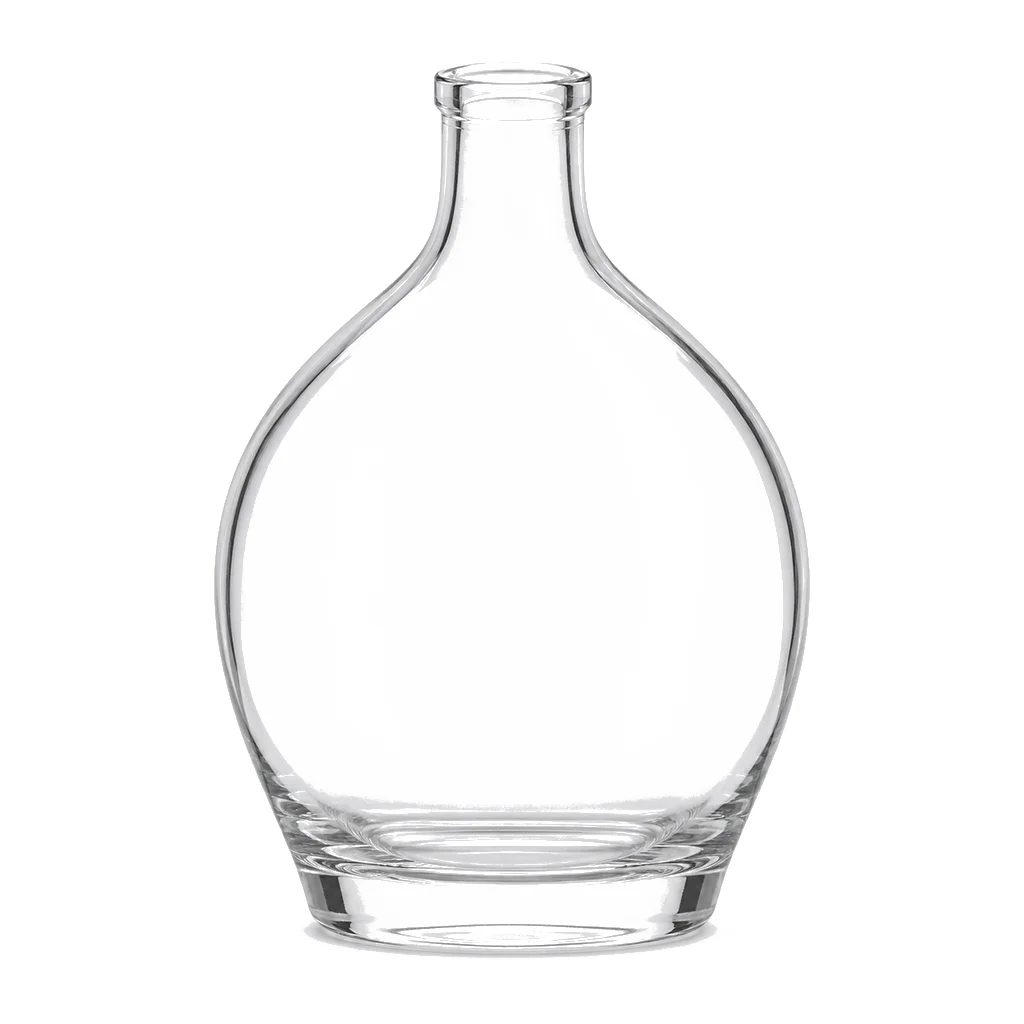
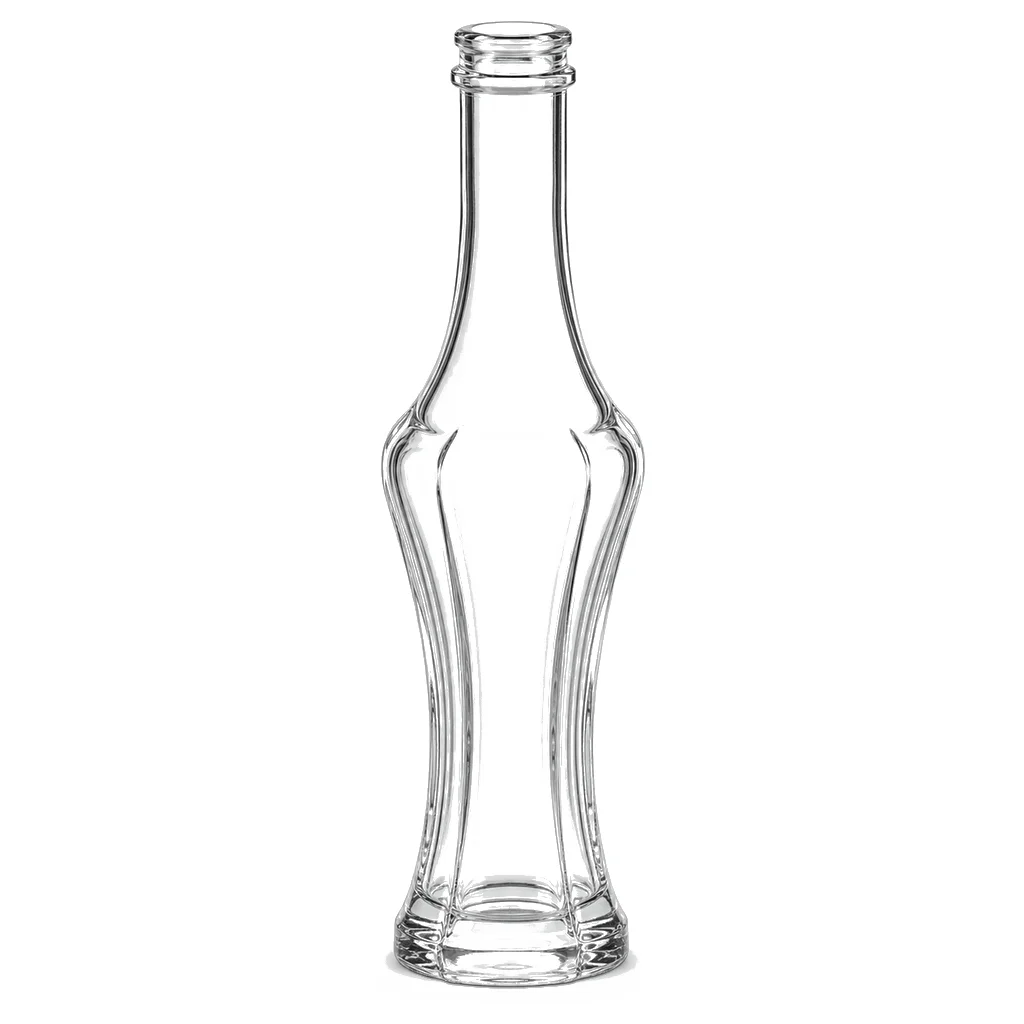
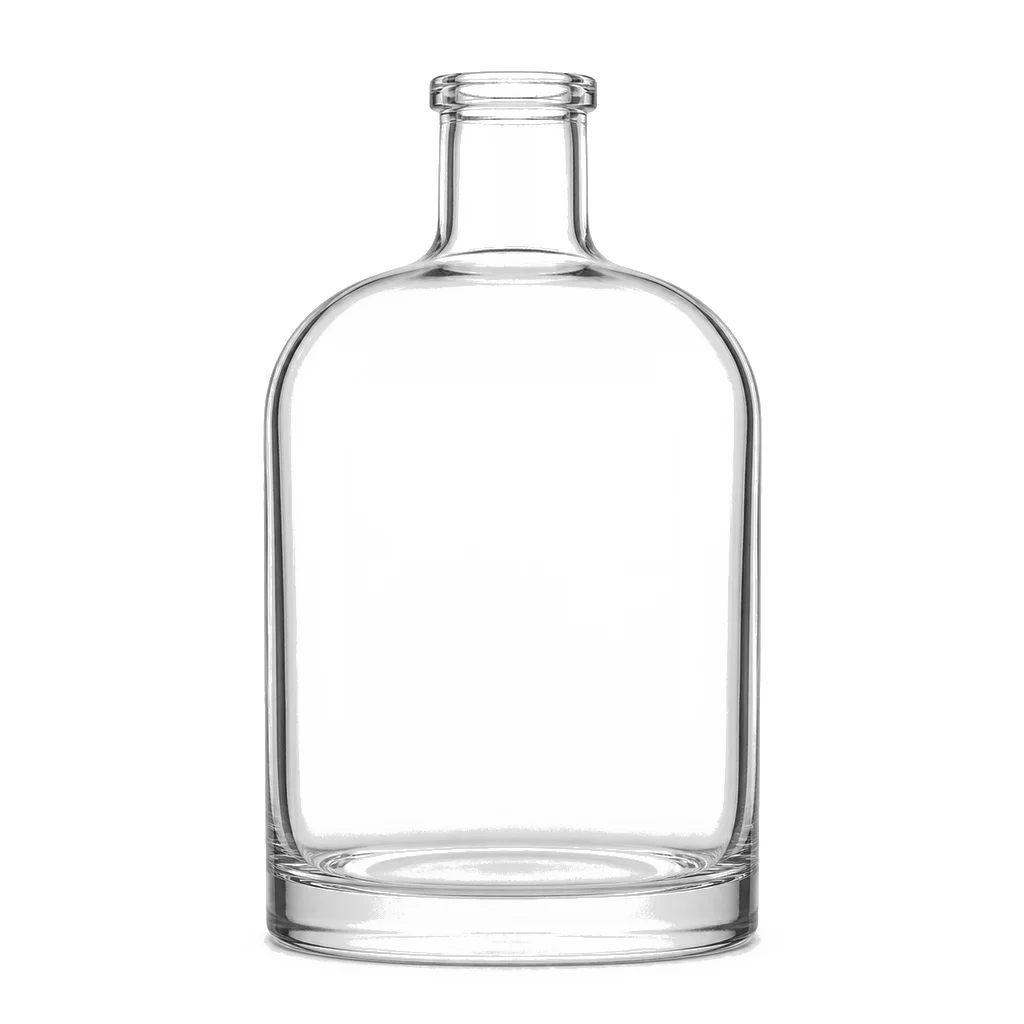
Like any colorless spirit, gin gives a customer nothing to look at but the glass, so inclusions and slight color casts that would disappear behind a whisky are visible. Acceptance limits for glass quality belong on agreed physical samples rather than in a general specification.
The category expects the bottle to state its ingredients
Gin has become a category where botanical imagery, embossed leaves and apothecary references are close to standard, because customers buy on the recipe. Embossing suits that particularly well since it costs nothing per bottle once tooled and cannot wear off in a busy bar.
Cork suits the serving ritual and complicates the line
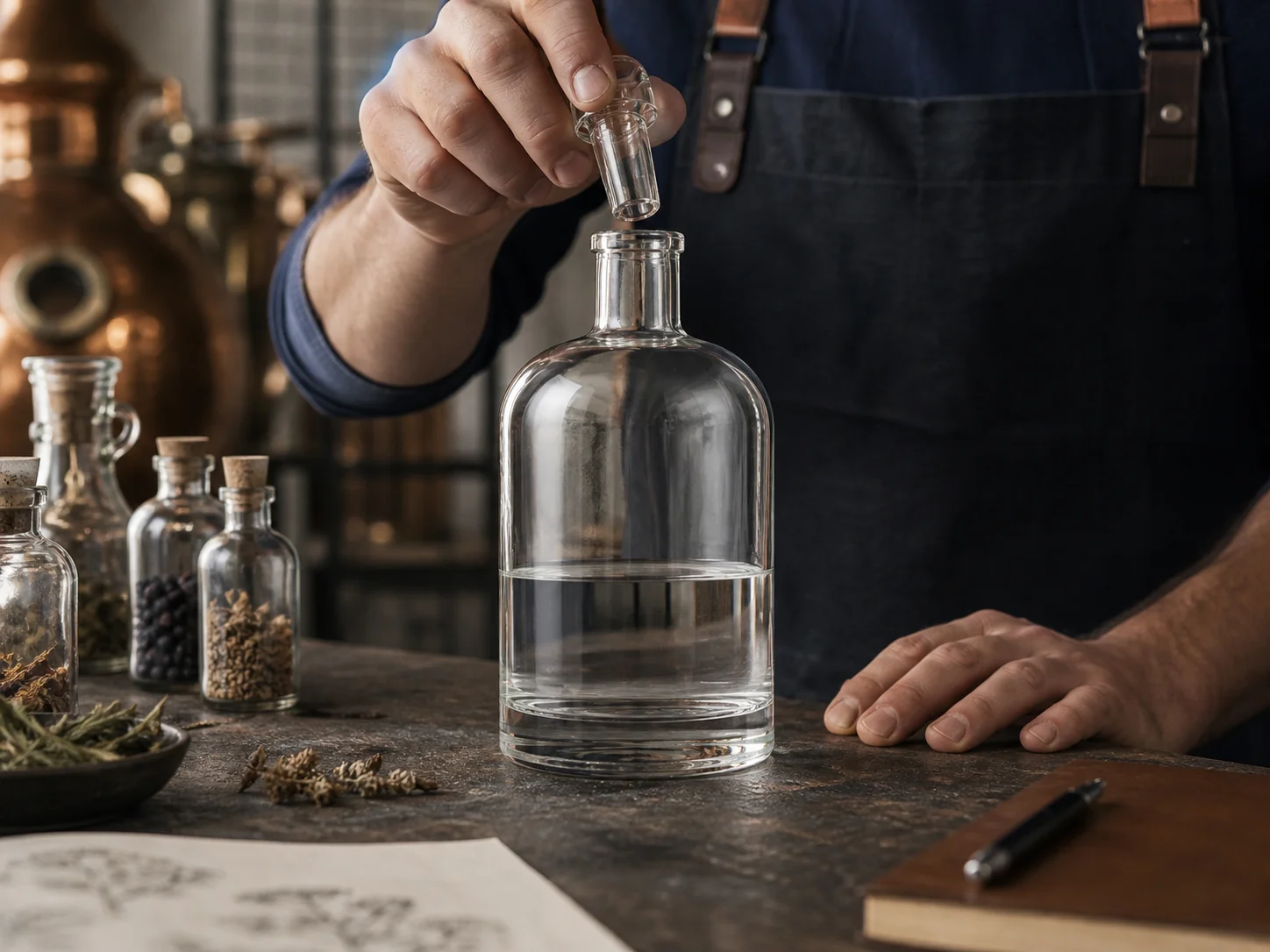
A T-top cork gives the opening sound and the reclosure that a premium gin is expected to have, at the cost of a slower closing process and a natural material with its own variability. A screw closure performs better technically and says something different about the product, and the choice is a positioning one.
The bottle works in a bar, not only on a shelf
Gin is a mixing spirit, so bottles are picked up wet, poured quickly and set down at speed on a hard surface. Grip when wet, balance when half empty and resistance to chipping at the finish matter more than they do for a spirit bought mainly to be given as a present.