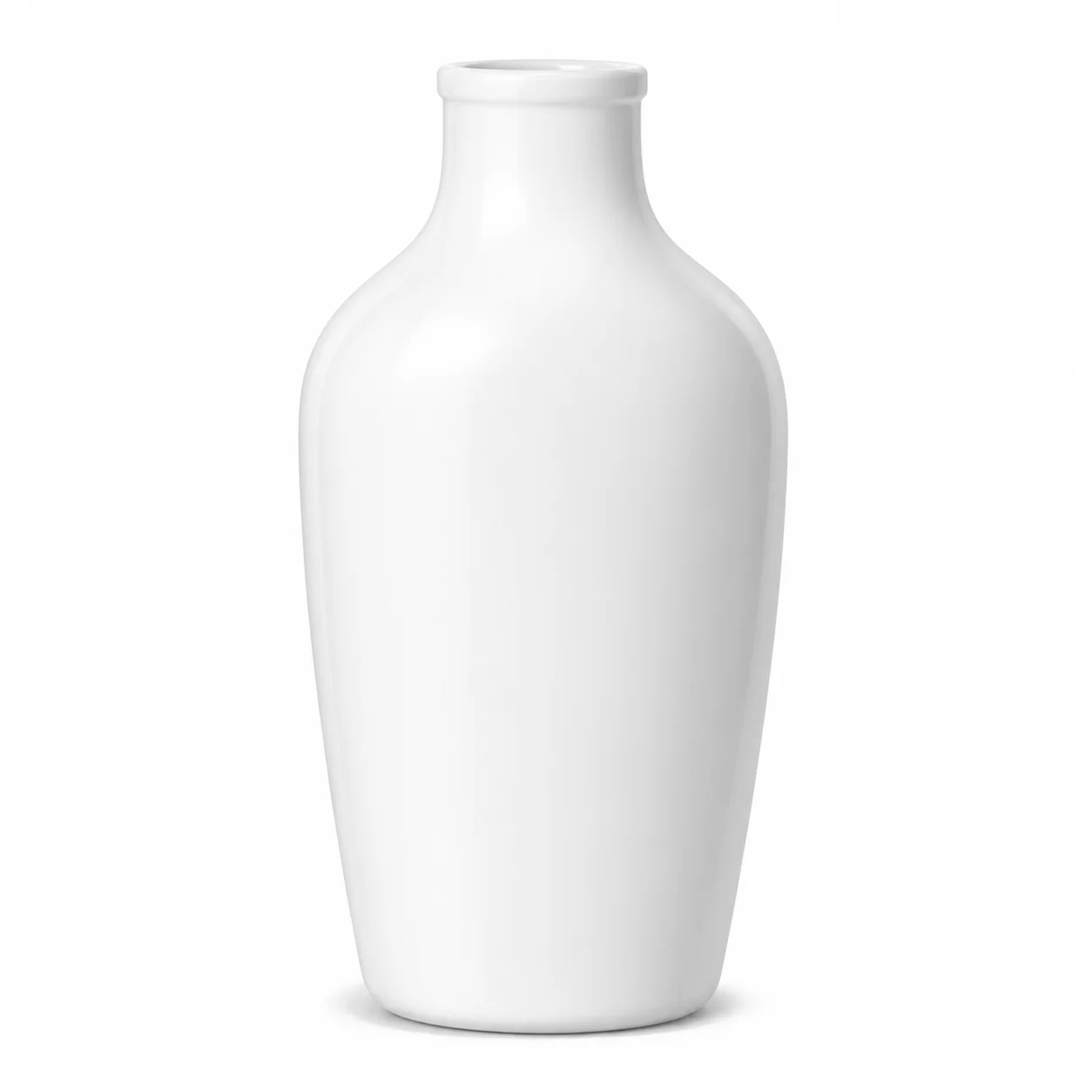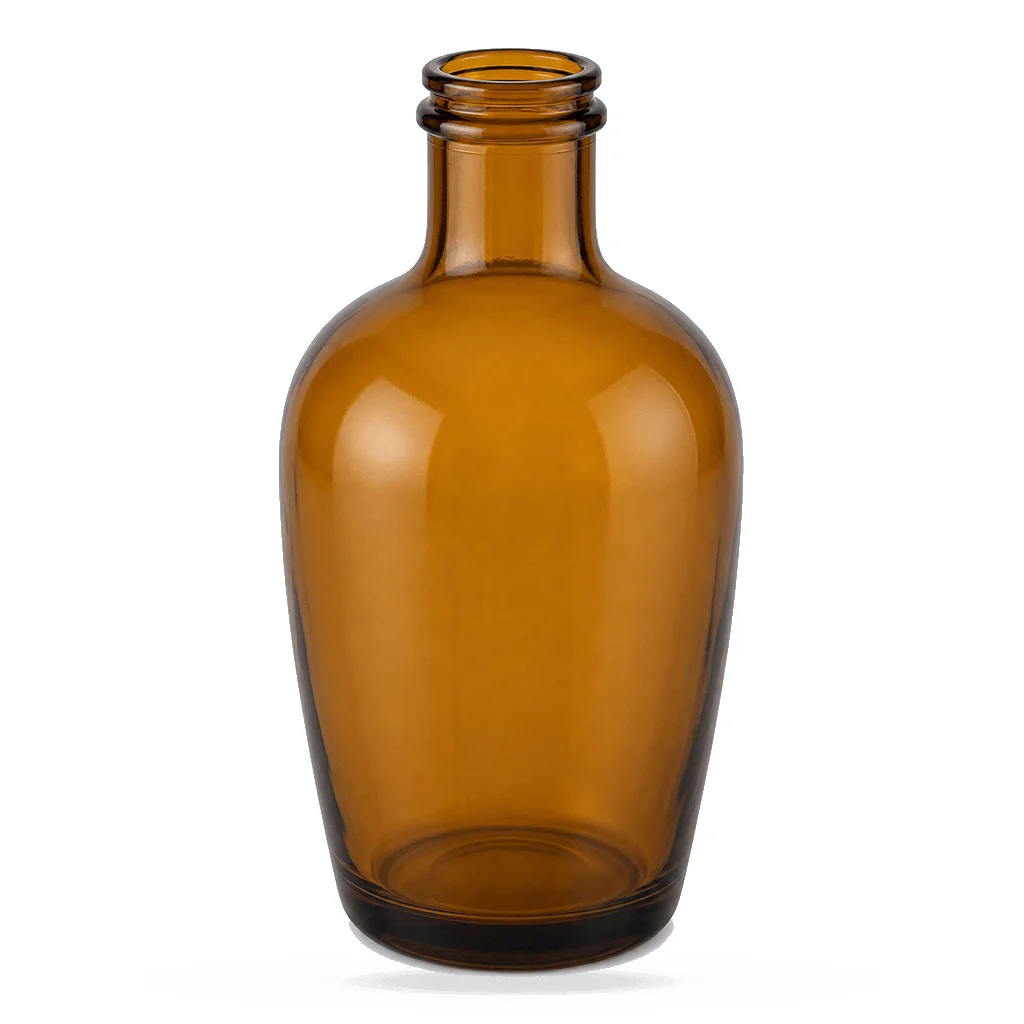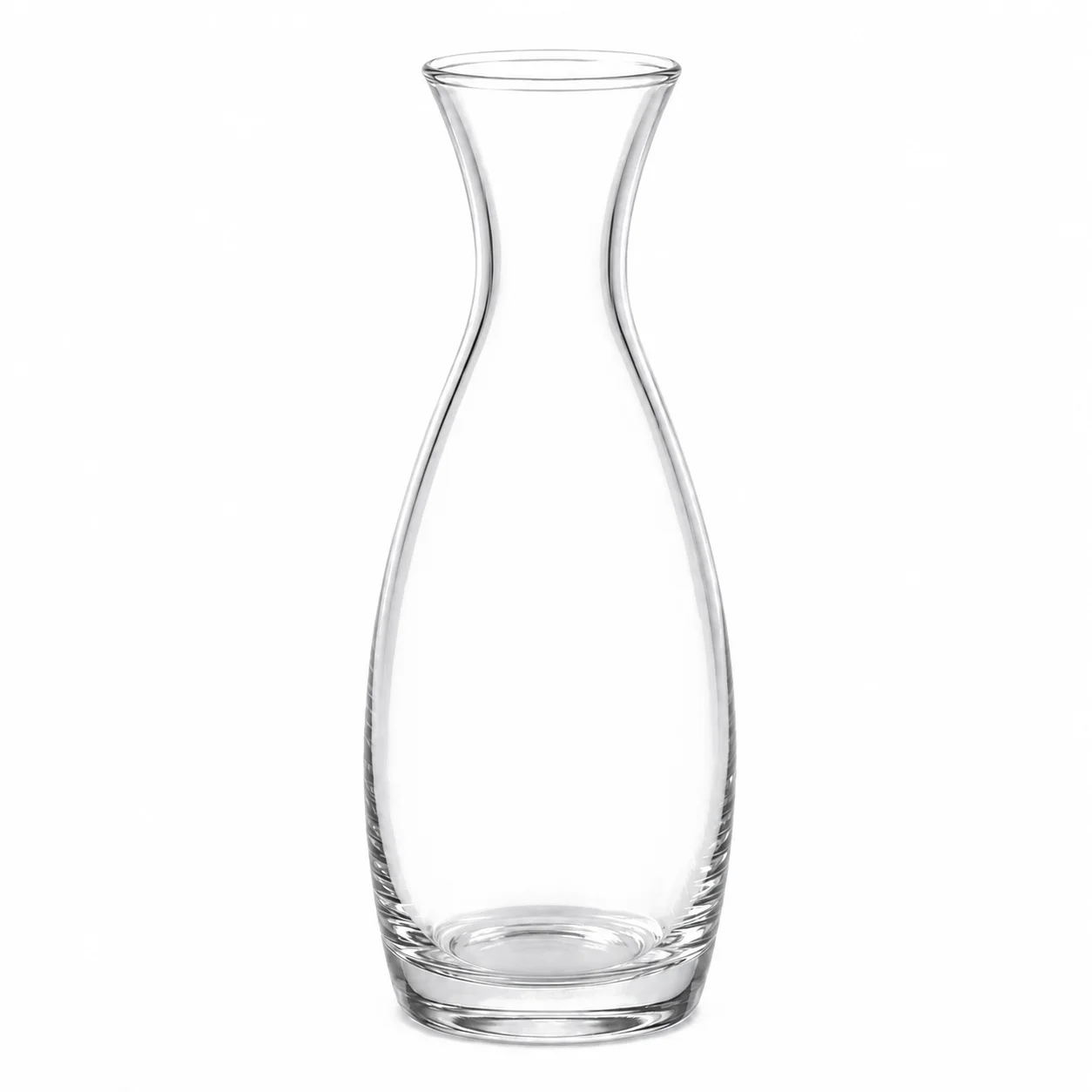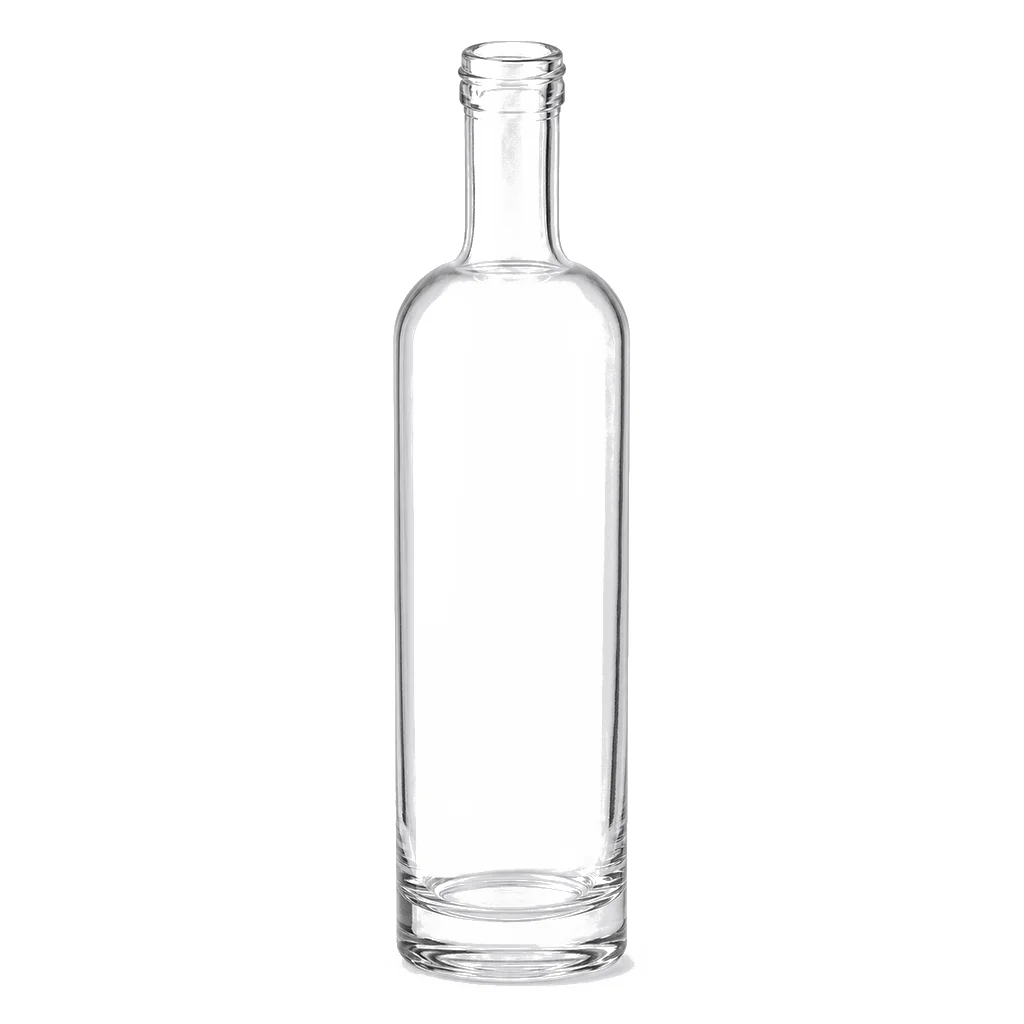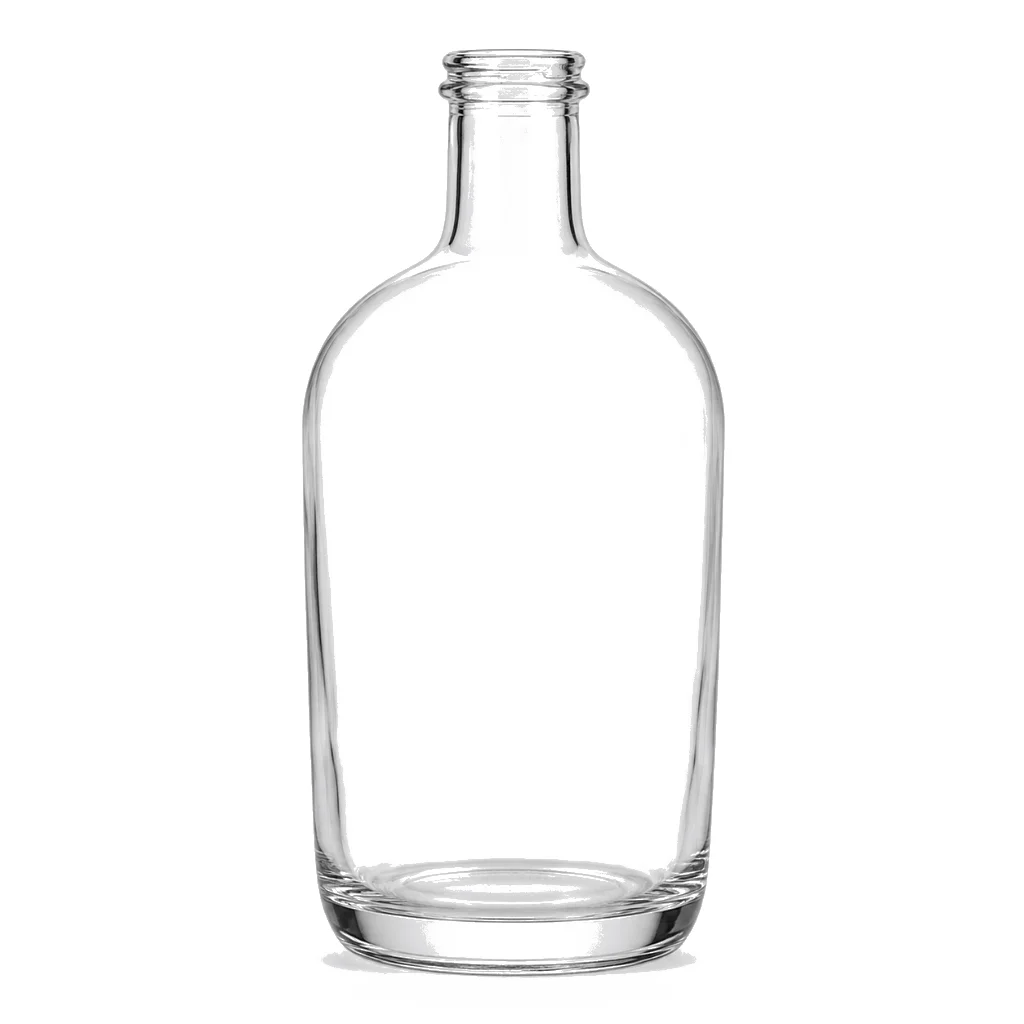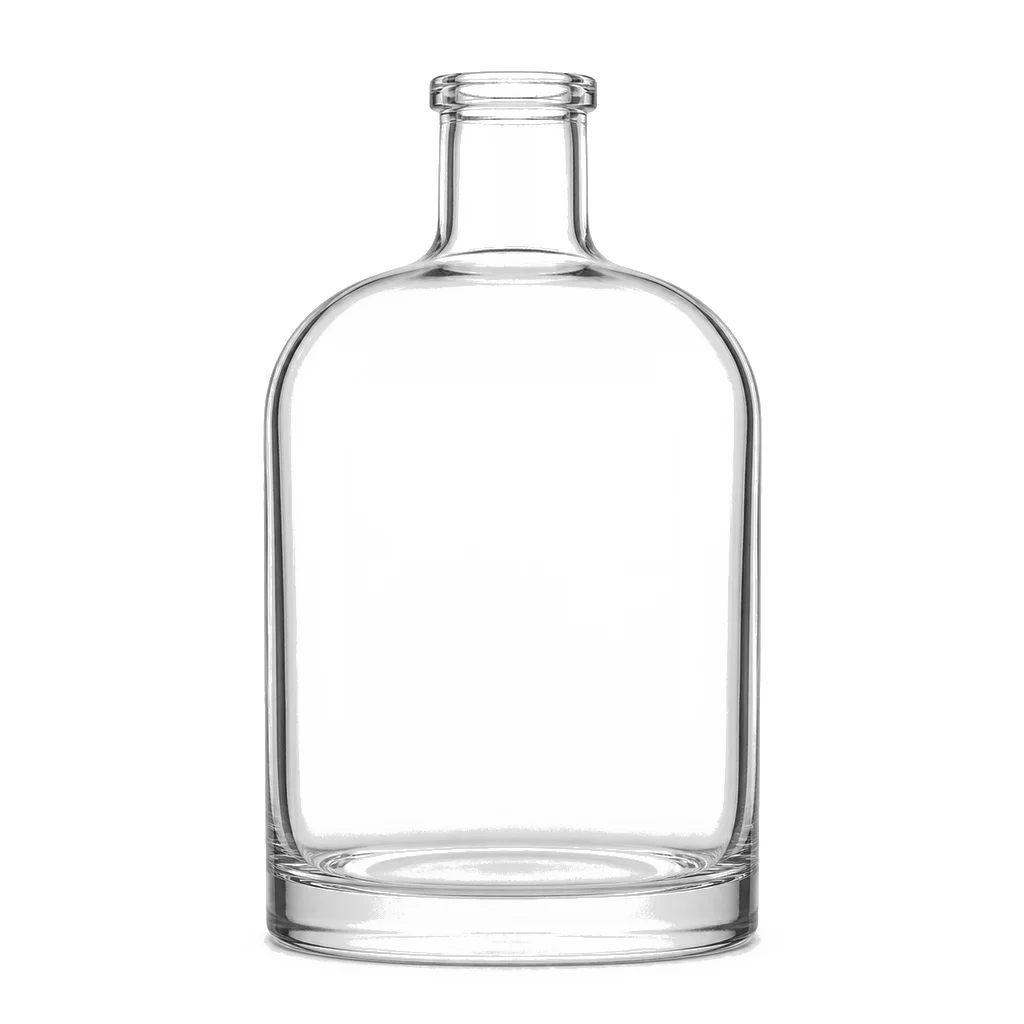
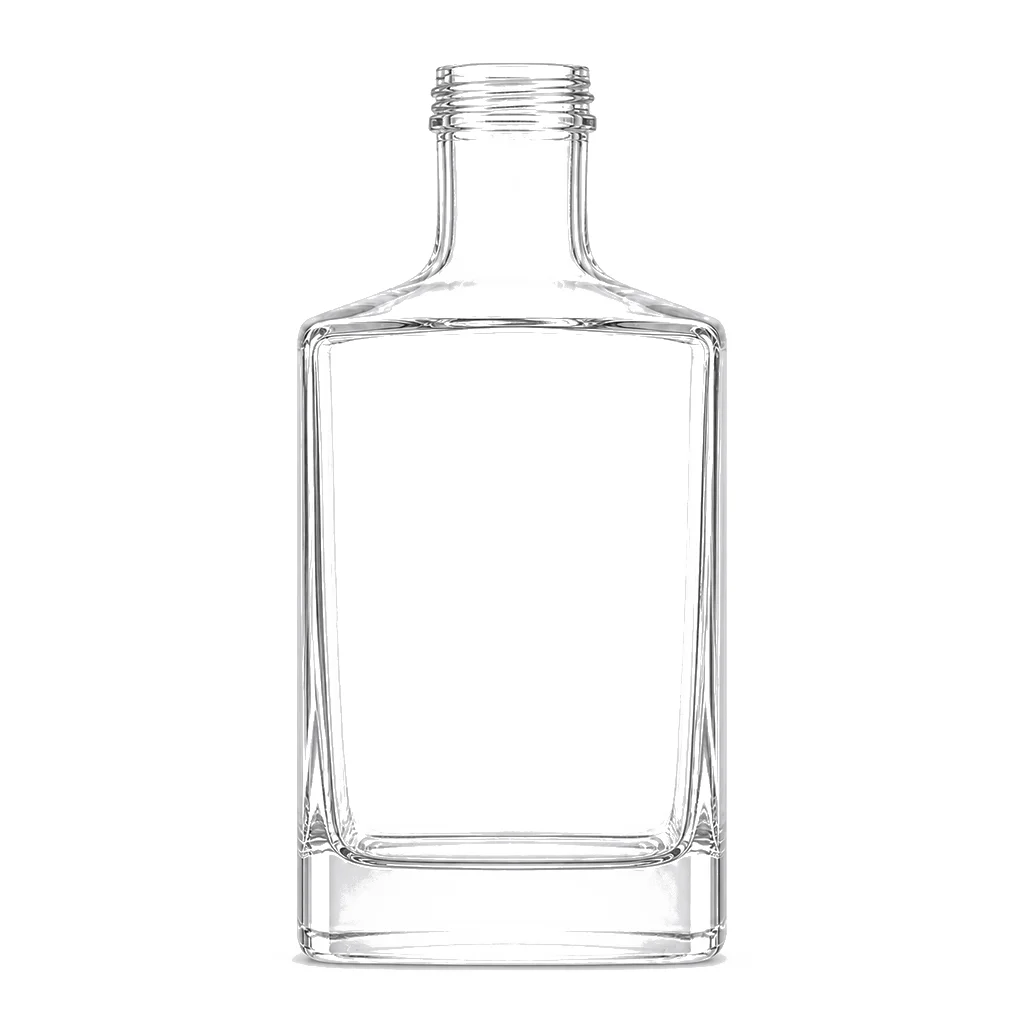
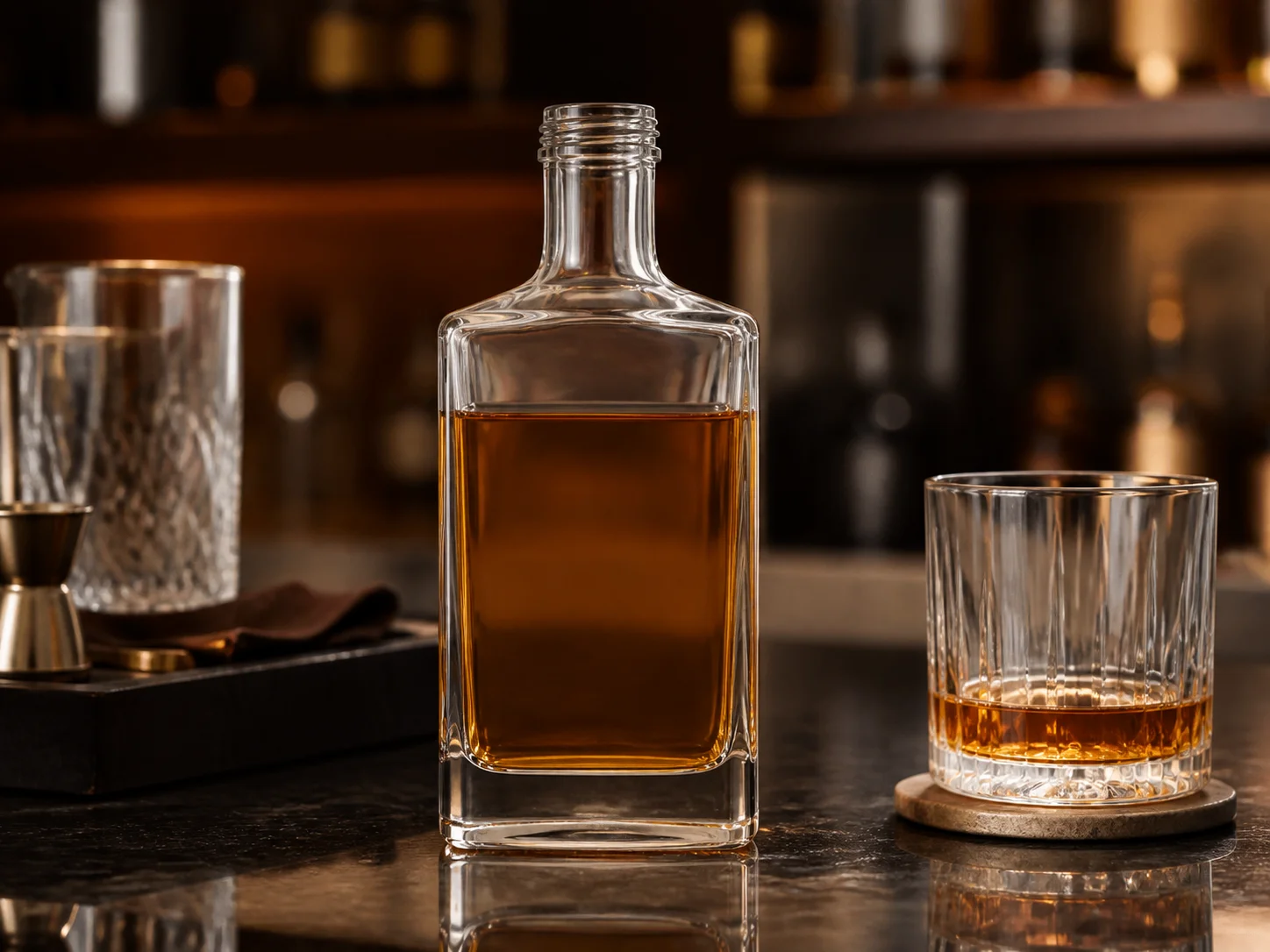
Squat heavy glass spirits bottle with broad shoulders and a thick base
Shown configuration · bare bottle / closure, capsule, label and spirit not shown

Spirits bottles

Whiskey Bottle

A whiskey bottle where weight, base thickness and a T-top cork closure carry most of the perceived value, and the shoulder has to survive being poured repeatedly.

T-top cork or screw finishHeavy base by conventionPoured many times per bottle
Stock status
In stock
Lead time
2–3 weeks
FOB price / pc
$0.85 - $1.20
MOQ
5,000 pcs

Final availability, dimensions, materials, assembled components and commercial terms are confirmed against the selected drawing and approved sample.

Weight signals the tier

Base mass is the fastest cue

Reclosed dozens of times

The closure works all through the bottle

No pressure, so shape is free

Design is unconstrained by the contents

Whiskey Bottle profile

A still spirit puts no demands on the glass, which is exactly why the design carries everything.

Design freedom, closure feel & pouring

Six things that matter when the contents demand nothing.

Whiskey is not carbonated, not light sensitive in the way beer is and not pressurized, so the bottle faces almost no functional constraints. That freedom is why spirits packaging is where glass design gets ambitious, and it shifts the entire specification onto weight, closure feel and how the bottle behaves when it is poured from twenty times.

01

The contents impose almost no constraints

There is no pressure to contain, no pasteurization to survive and little light sensitivity at whiskey's alcohol strength. That leaves shape, weight and finish free in a way beer and sparkling wine never are, which is why spirits carries the most distinctive glass in the drinks industry and why the design brief dominates the technical one.

02

Base mass is the fastest quality signal a bottle sends

A customer lifting a spirits bottle forms a price judgment in the first second, and thick glass at the base delivers it more cheaply than thickening the whole bottle. It also refracts light through the spirit, deepening its color. Both effects are worth buying knowingly rather than inheriting from a catalog shape.

03

The closure is used far more than on wine

A wine bottle is opened once; a whiskey bottle is opened and reclosed dozens of times over months. A T-top cork has to be extractable by hand, reseat cleanly and not shed cork dust into the spirit, and the shank has to survive alcohol without softening. That duty cycle is what separates a spirits closure from a wine one.

04

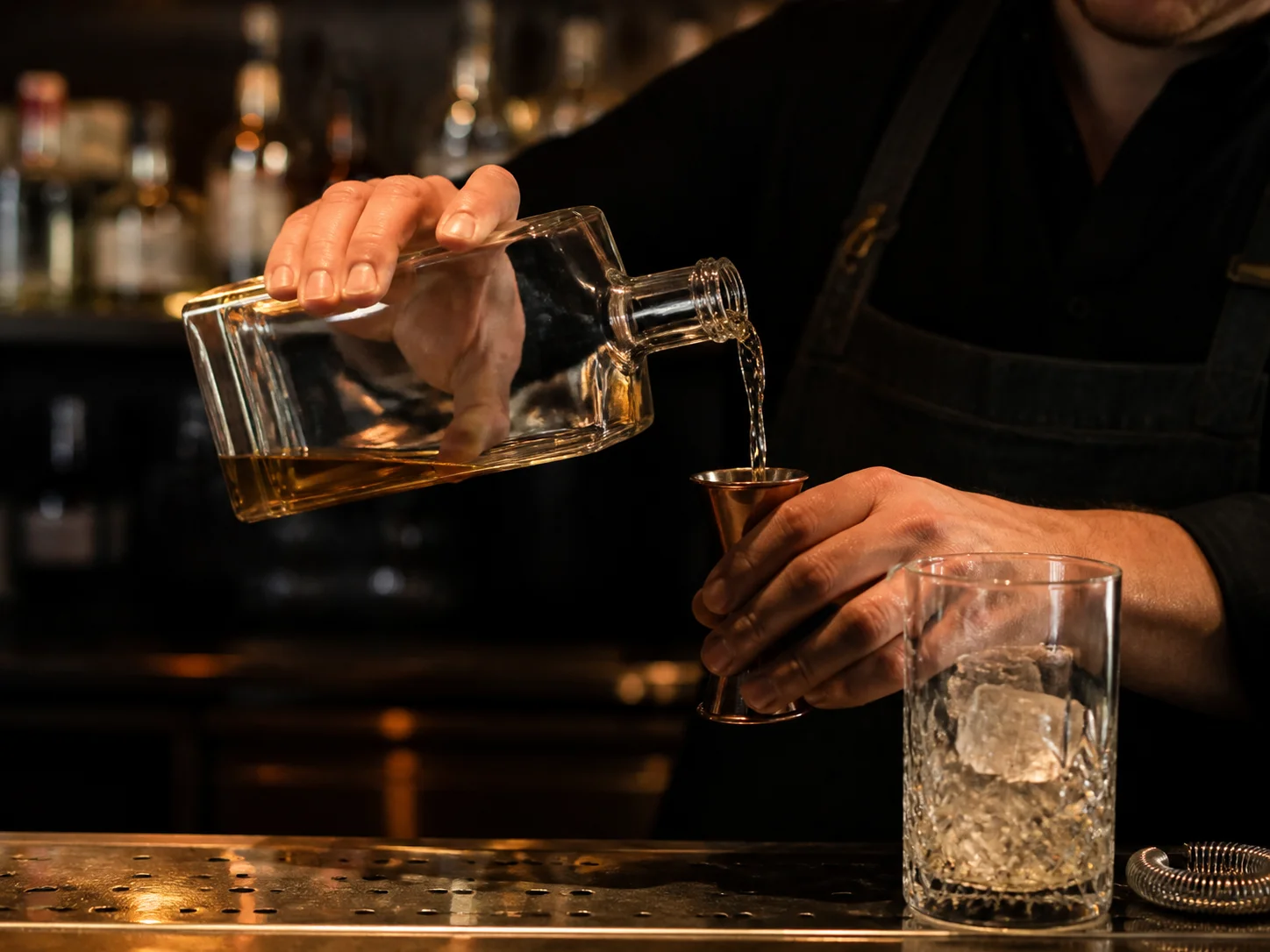
Pouring is a two-handed operation on a heavy bottle

A full 700 mL bottle with a heavy base is poured with control, often over a glass with ice, and the lip has to break the stream cleanly rather than dribble down a decorated label. Lip geometry gets less attention than it deserves on spirits bottles, and it is the detail bartenders notice immediately.

05

Decoration is where the money goes

With the glass unconstrained, spirits programs spend on embossing, applied ceramic labeling, metallized closures and heavy capsules. Those are per-unit or tooling costs that have nothing to do with containment, and separating them from the bottle's functional specification keeps a project's budget legible.

06

Alcohol strength affects labels, not the glass

At bottling strength, spirit attacks label adhesives and can lift print if it runs down the outside, particularly around the shoulder where a pour drips. Glass is indifferent to it. Specifying alcohol-resistant label stock is the practical response, and it is often overlooked because the bottle itself shows no effect at all.
Application guide

Square shoulders read as whiskey before the label does.

The broad, squared bottle has become the visual shorthand for aged brown spirit, which means a customer scanning a shelf categorizes it before reading a word. These are development directions confirmed with the actual spirit.

Whiskey Bottle used for bottles reached for on a back bar in a whiskey release setting

Whiskey release

Bottles reached for on a back bar

For whiskey a bartender grabs by feel in a busy service and a customer recognizes across a room. The squared shoulder gives a secure grip when pouring a measure one-handed, and the flat faces stand square on a shelf without the rolling that a round bottle risks when knocked.

  • Confirm grip when pouring a measure
  • Check the bottle stands square
  • Test the closure at service speed
Whiskey Bottle used for front panels carrying age statements in a premium range setting

Premium range

Front panels carrying age statements

Whiskey labels work hard, carrying distillery, age, cask type and strength in a hierarchy a customer reads in seconds. The broad flat front gives that information room, and the recessed face protects the label from the scuffing that repeated handling on a bar otherwise causes.

  • Plan the label hierarchy first
  • Confirm the panel protects the label
  • Test scuffing after repeated handling
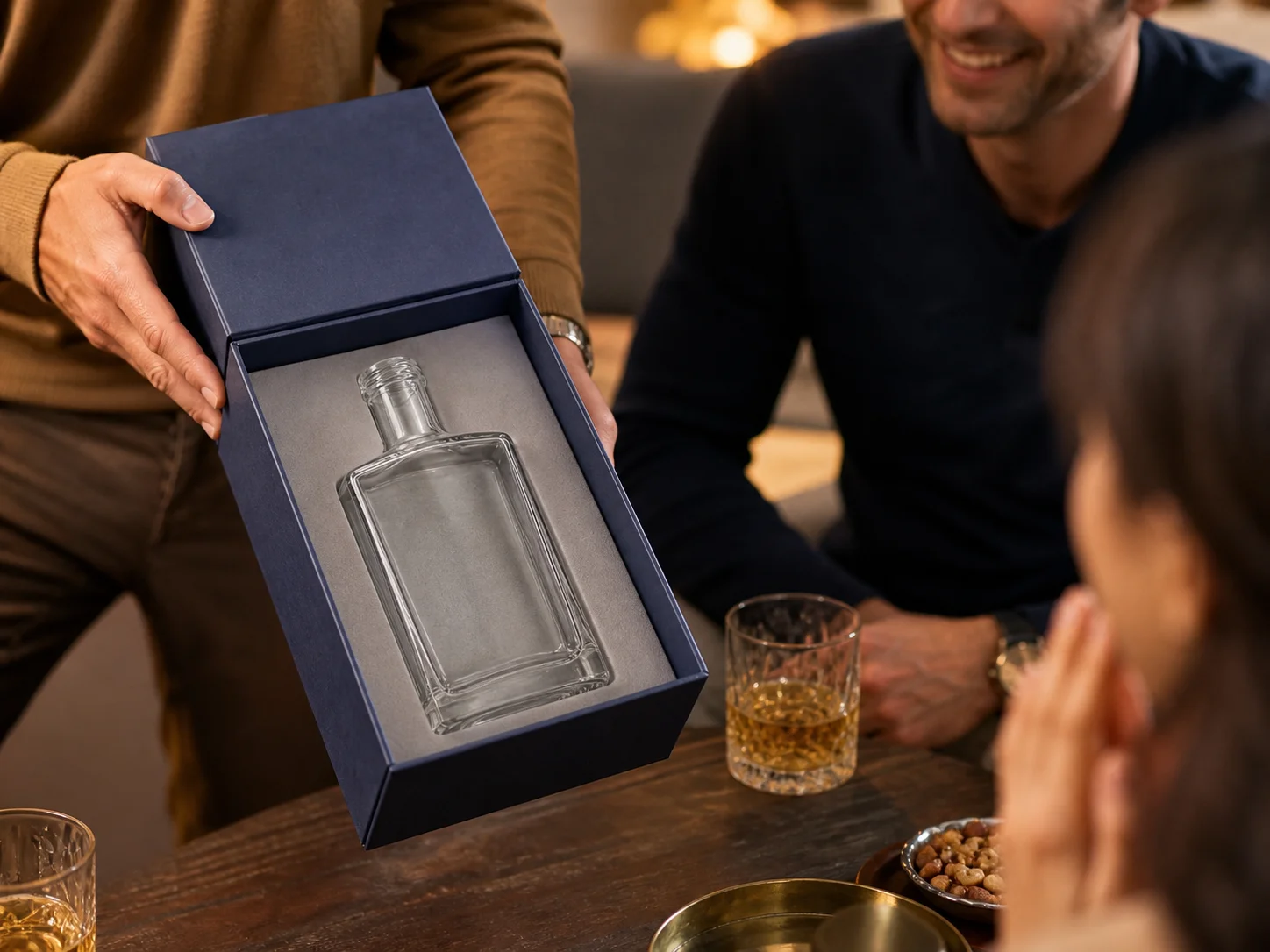
Whiskey Bottle used for boxed bottles opened in front of people in a gift and hospitality setting

Gift and hospitality

Boxed bottles opened in front of people

Whiskey is bought as a gift more than almost any other spirit, and the moment the box opens is part of what was paid for. The insert has to present the bottle upright, and heavy square glass needs supporting at the base rather than gripped at the shoulder.

  • Present the bottle upright in the box
  • Support the base, not the shoulder
  • Drop test the boxed filled bottle

Applications describe development directions. Spirit compatibility, closure fit, filling and distribution outcomes are confirmed for the selected program.

Common questions

Whiskey Bottle questions

When the contents demand nothing, the design decisions carry everything.

Is a heavy base worth paying for?

As perception, usually. A customer lifting the bottle forms a price judgment in the first second and mass is most of it, and thick glass at the base delivers that more cheaply than thickening the whole bottle while also deepening the spirit's color optically. Buy it knowingly rather than inheriting it from a catalog shape.

Does lip shape matter on a spirits bottle?

More than it usually gets credited for. A full heavy bottle is poured with control over a glass, and a lip that dribbles sends spirit down a decorated label. Bartenders notice immediately, and it is one of the few functional details on a spirits bottle that customers experience directly every time they pour.

Does the alcohol affect anything?

The label rather than the glass. At bottling strength spirit attacks label adhesives and can lift print where it runs down the outside, particularly around the shoulder after a pour. Glass is indifferent to it, which is why alcohol-resistant label stock is so often overlooked until the first returns arrive looking scruffy.

Where does the budget go on a spirits pack?

Into decoration, almost always. The contents impose so few constraints that the glass itself is rarely the difficult part — the money goes into the finish treatments, the closure and the capsule, which is where the customer reads the price tier.

Next step

Send us the Whiskey Bottle brief.

Tell us the product, fill volume, closure preference and destination market. We will come back with the matching drawings, available configurations and a sample plan before anything is quoted.

  • 01Send the briefProduct, volume, closure and market
  • 02Get the optionsMatching drawings and configurations
  • 03Approve the sampleConfirm the pack before production