Application, color control & durability
Six things that determine whether a sprayed finish holds up.
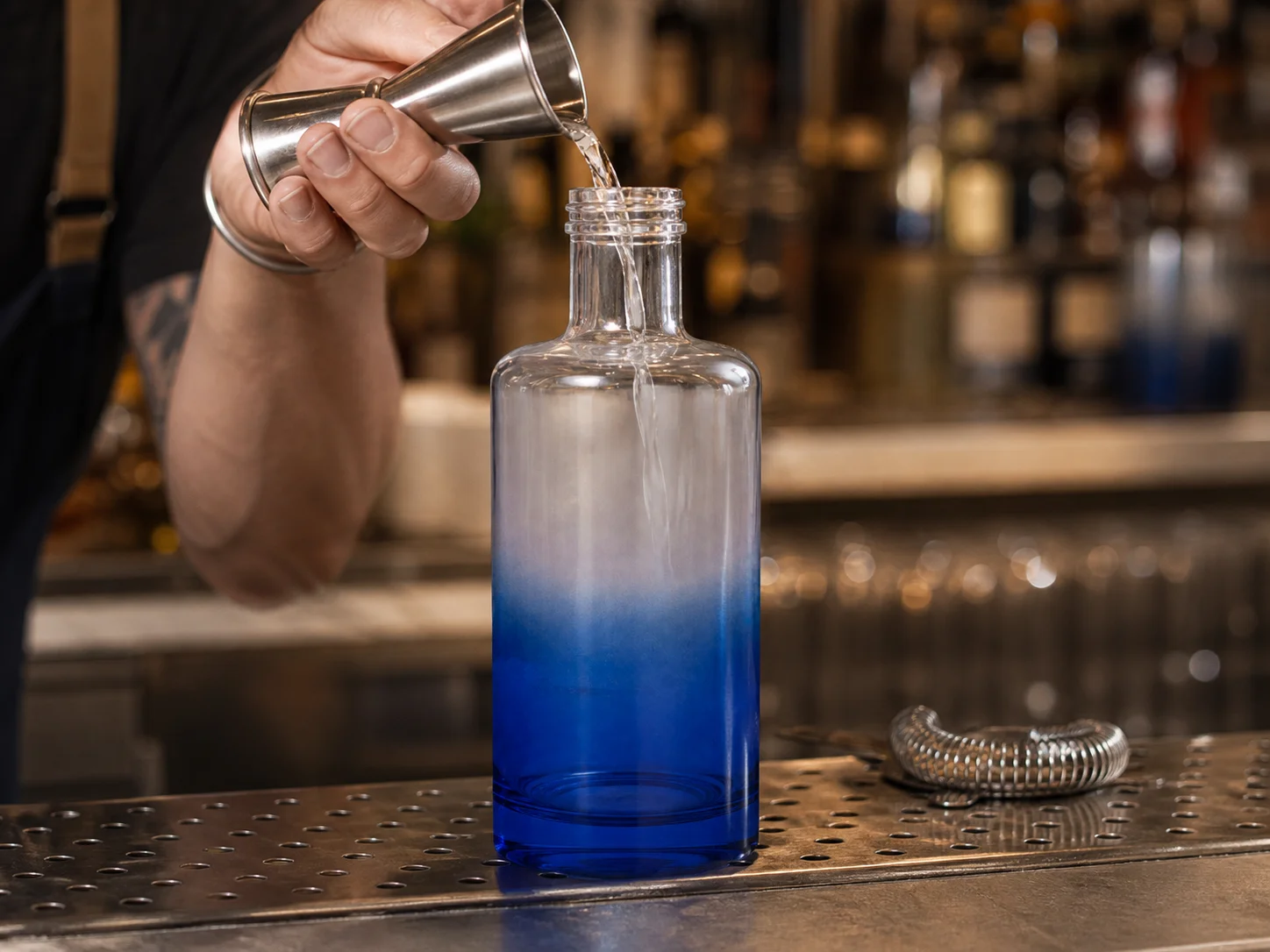
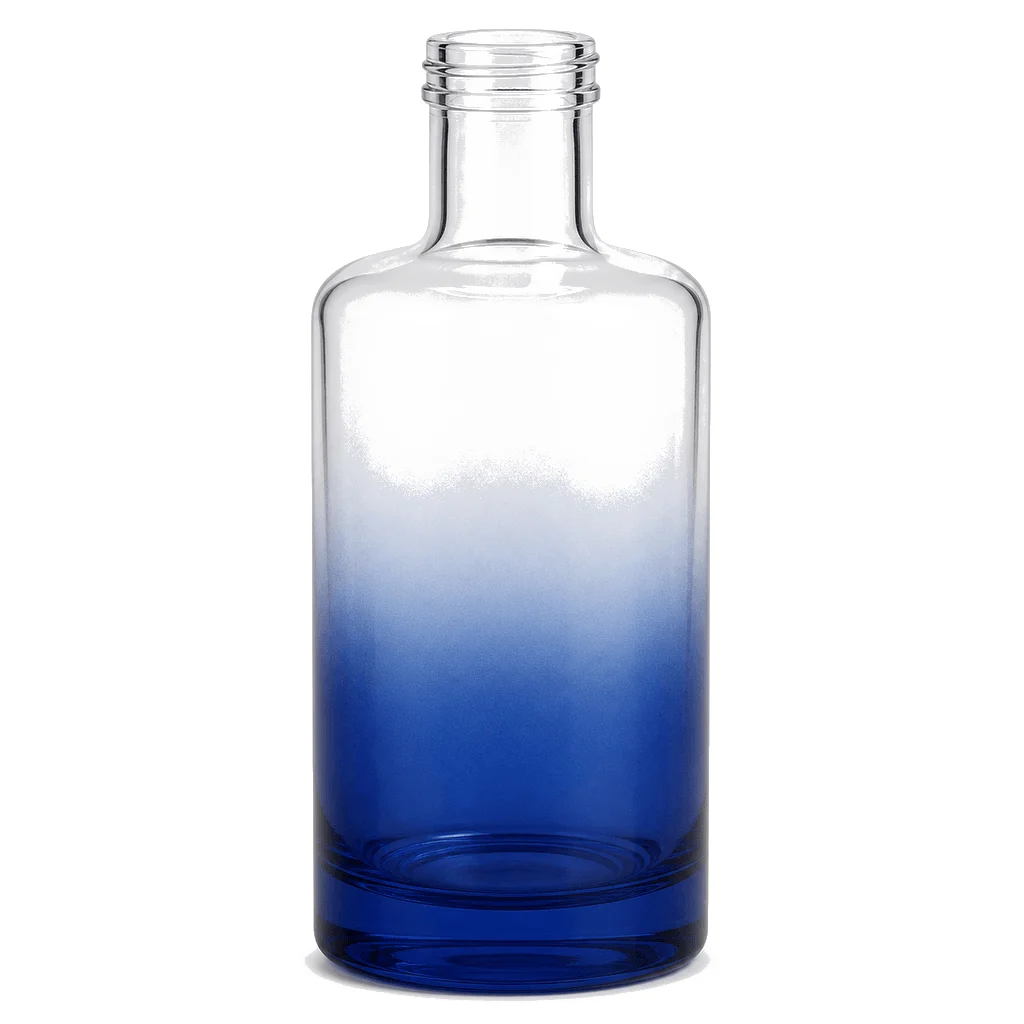
A sprayed gradient is produced by traversing a rotating bottle past spray heads with the flow varied along its height, then curing the coating. The technique is well established. What separates a good supplier from a poor one is whether the fifth production run looks like the first, and whether the coating survives what the pack meets in use.
The gradient is a process setting, not an artwork
Where the color starts, how quickly it fades and where it reaches clear are all consequences of spray head position, bottle rotation and flow rate. That means the effect is defined by an approved physical sample and a set of process parameters rather than by a drawing, and the sample is what production is checked against.
Color drift is the real quality risk
Coating batches vary, spray equipment ages and cure ovens shift, so shade moves gradually across production runs. The defense is a physical color standard with an agreed tolerance, checked against every run — not comparison with the last delivery, which lets small differences accumulate into a large one over a year.
Adhesion has to be tested rather than assumed
Coating adhesion depends on glass surface preparation and cure schedule, and both can go wrong invisibly. Cross-hatch adhesion testing, abrasion resistance and, where relevant, dishwasher or ice-bucket exposure are the checks that catch it. They are quick, and they are the difference between finding a problem in the laboratory and finding it in the market.
A coated surface shows damage differently from glass
Bare glass scuffs to a faint white bloom. A saturated coating scratches to reveal clear glass underneath, which is far more visible. That makes handling, crate contact and conveyor rub more consequential on a coated bottle, and it argues for lighter shades or a protective overcoat where handling is rough.
Coating changes how the bottle is recycled
Organic coatings behave differently in the recycling stream from glass colored in the melt, and sorting equipment may read a coated bottle by its coating rather than its glass. Anyone making a recyclability claim on a coated pack should confirm how the coating behaves in their market's system rather than assuming glass is glass.
The fade needs somewhere to end
A gradient that runs into the label area makes the label sit on two different backgrounds, and one that runs into the finish interferes with capping and inspection. Setting the start and end points against the label footprint and the finish exclusion area is a five-minute decision that avoids reworking the artwork.