Mold division, draft & glass distribution
Six constraints that shape a figural bottle before the artwork does.
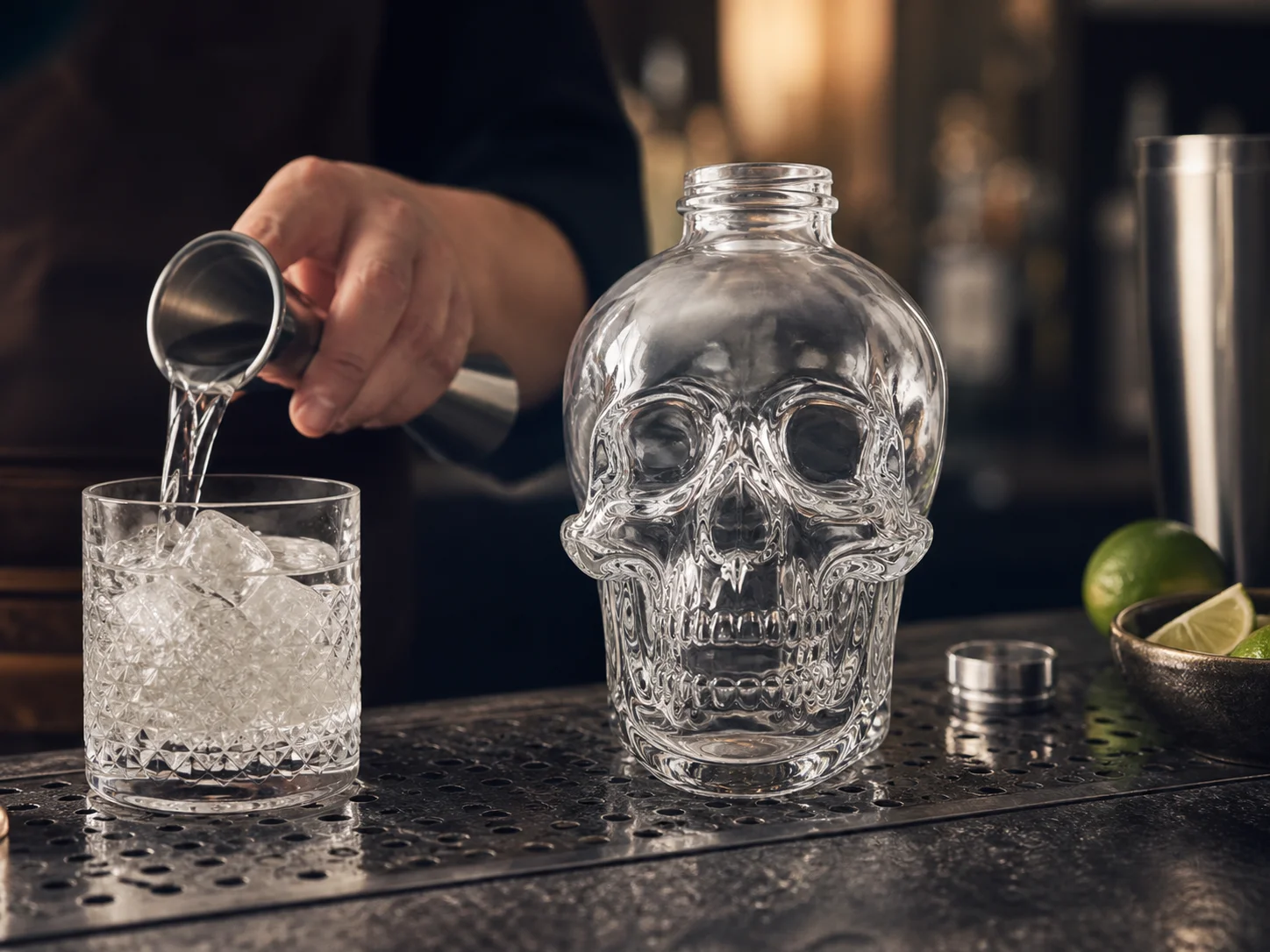
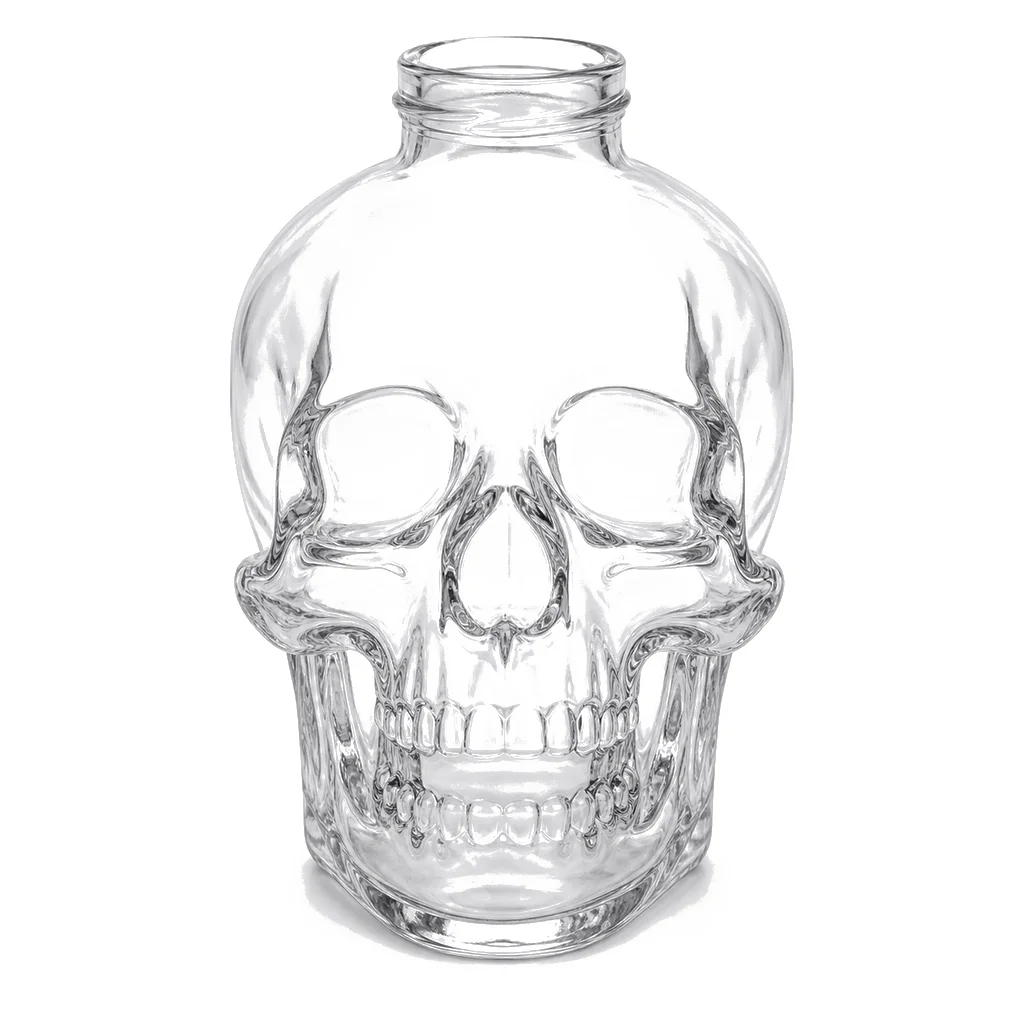
A skull bottle succeeds or fails on details a modeler rarely thinks about: where the two halves of the mold meet, whether every surface angles outward enough to release, and how evenly glass distributes into a shape with deep recesses and thin projections. The finish, meanwhile, stays a plain round opening because filling and capping equipment demands it.
The parting line has to go somewhere
A blow mold opens in halves, and the seam where they meet shows on the finished bottle. On a face, running it down the center is the worst possible choice; taking it through the sides where a temple meets a jaw hides it in a natural transition. That decision belongs at the sculpting stage rather than at the tooling stage.
Every surface needs to angle outward
Glass releases from a mold by moving straight out, so any feature that overhangs — an undercut brow, a deep eye socket, a lip that curls back — cannot be produced. Sculpting for glass means converting those into shallower forms that read the same way from a distance while releasing cleanly, which is craft rather than compromise.
Complex shapes distribute glass unevenly
In a simple cylinder the parison expands evenly. In a shape with deep recesses and abrupt transitions it does not, leaving thick zones where glass pools and thin zones where it stretched. The thin areas are where the bottle will crack, and finding them takes wall thickness mapping on real samples rather than confidence in the model.
The finish stays ordinary no matter what the body does
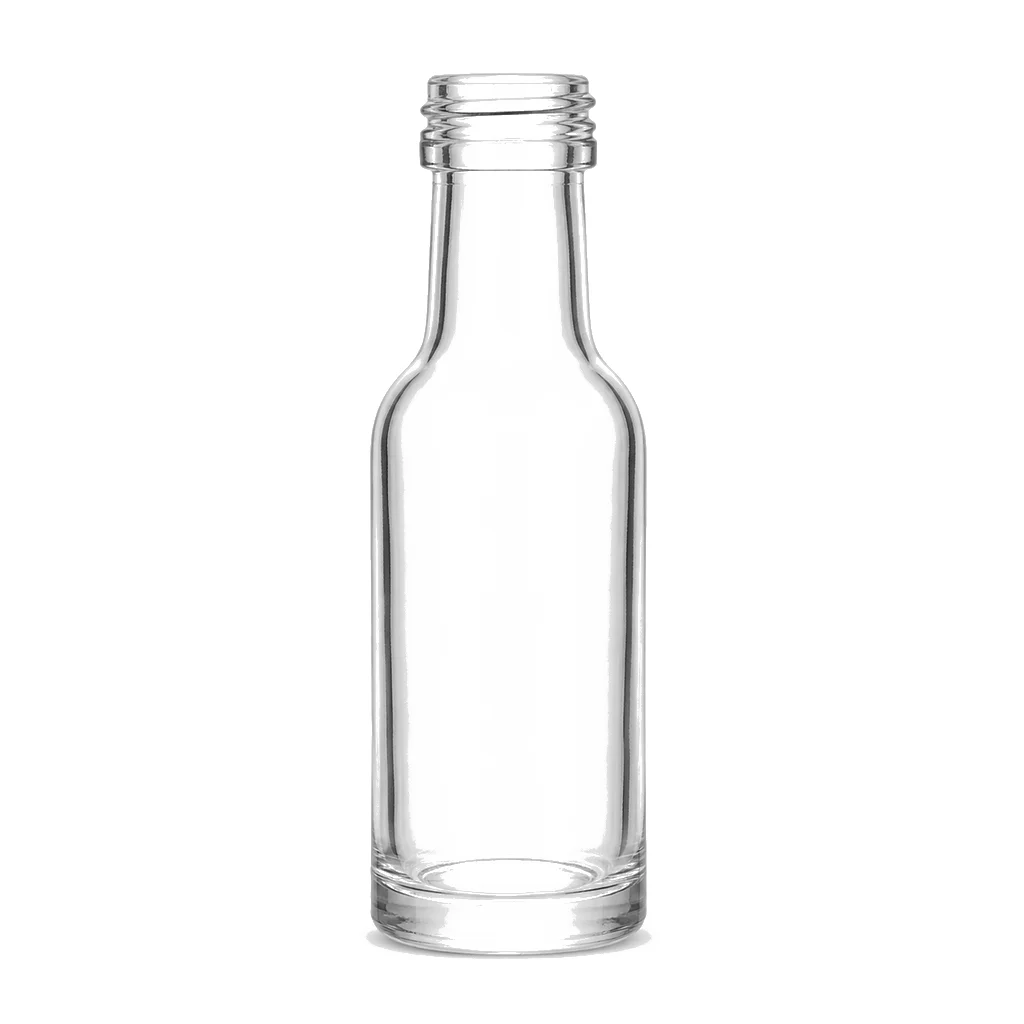
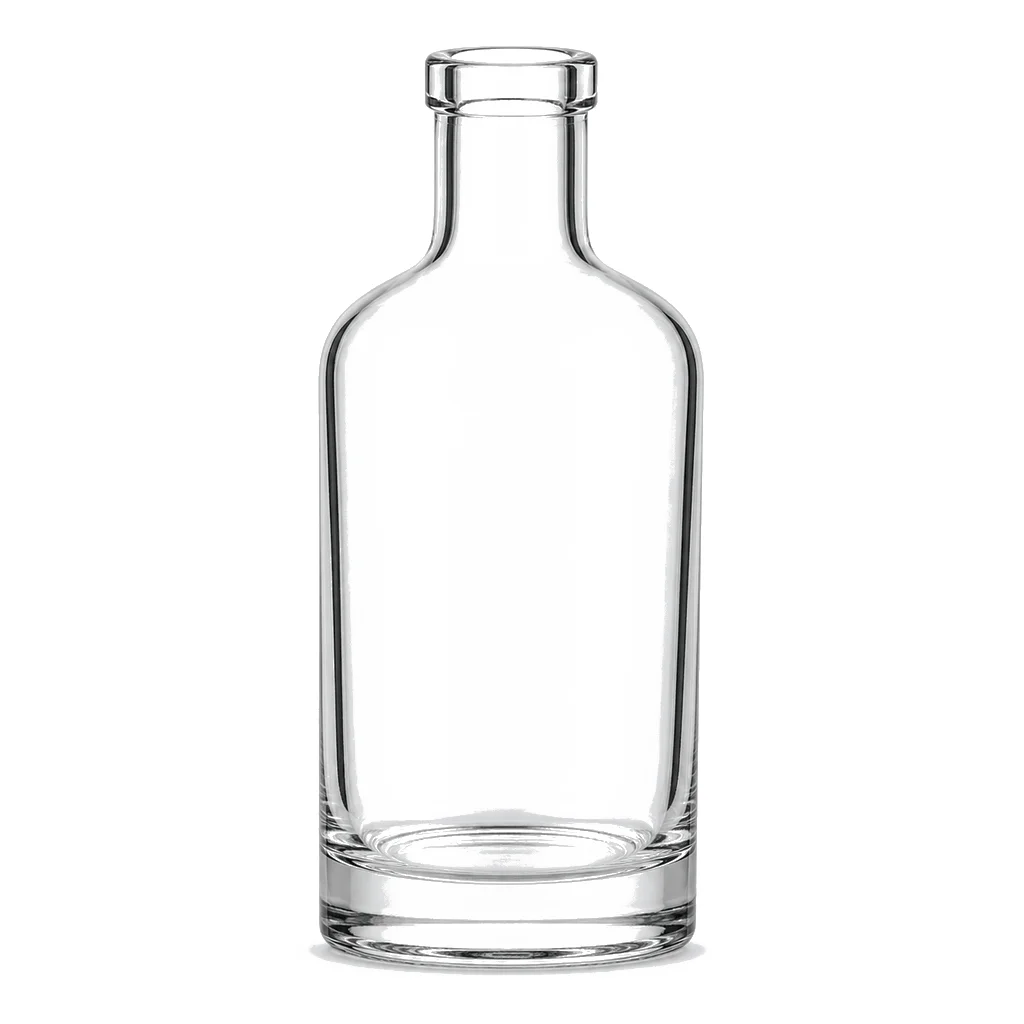
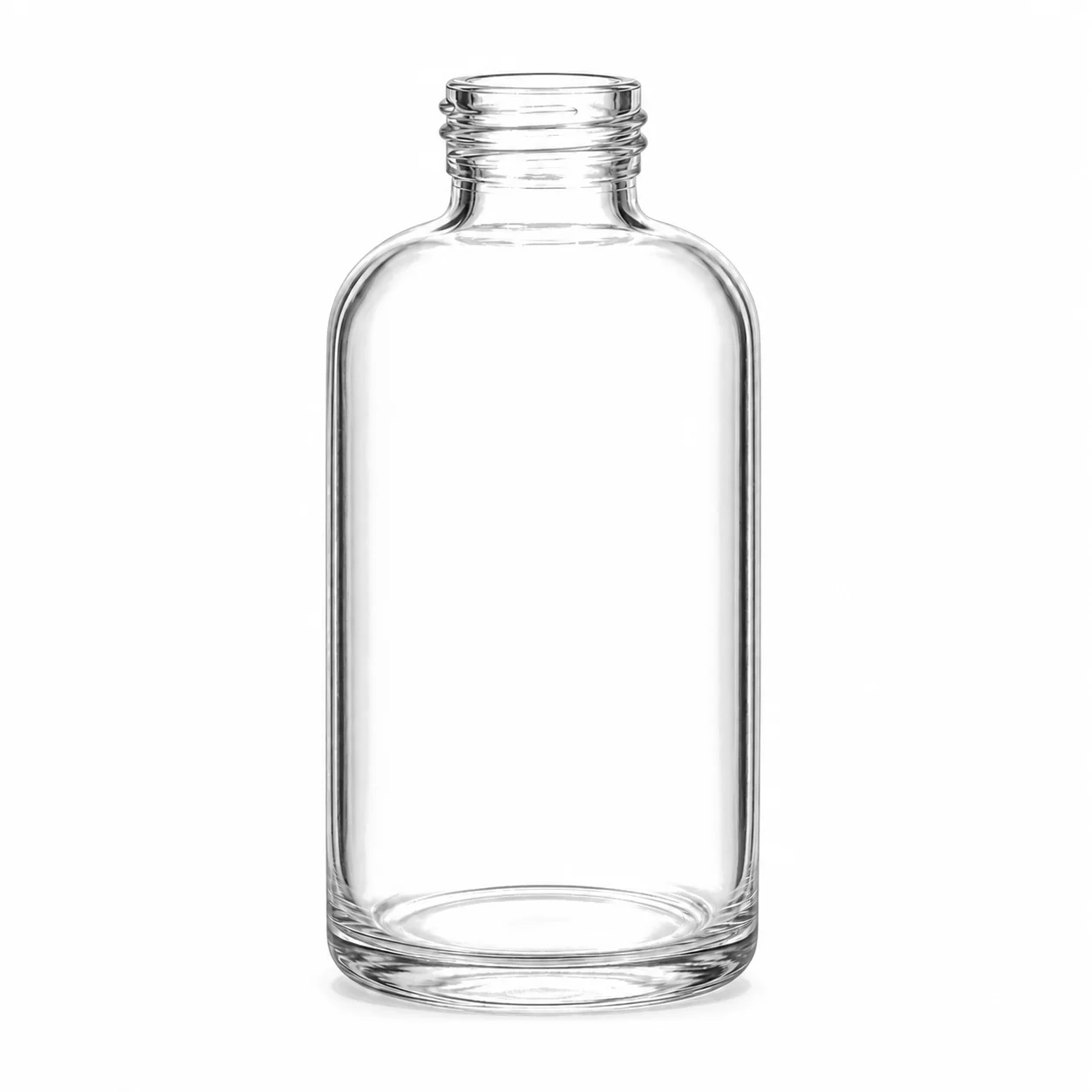
Filling nozzles, cappers and inspection equipment all assume a round, vertical, standard finish, so that is what the bottle gets whatever the body looks like. Attempting a shaped opening turns a decorated bottle into a bespoke filling problem, and the cost of that lands on every unit rather than on the tooling.
There is no flat panel for a label
A sculpted body offers nowhere for a paper label to lie without creasing, so decoration goes to direct printing, a shrink sleeve or a hang tag — or the bottle carries its identity in the glass alone. Deciding that early prevents a beautiful bottle arriving with nowhere to put the mandatory declarations.
The bottle is kept, so it is judged twice
Figural spirits bottles are displayed long after they are emptied, which means the glass quality, the seam and the base are examined at leisure in good light. That second inspection is far more searching than the one at purchase, and it is the reason to spend on finish quality in this category rather than on any other feature.