Viable counts, oxygen sensitivity & cold chain
Six things that determine whether the claim still holds at the end.
A probiotic claim is a viable count, and viable counts fall. They fall faster with oxygen, faster still with warmth, and they keep falling in the customer's refrigerator. The producer compensates by filling well above the claimed number, and the packaging's job is to slow the decline enough that the overage is affordable.
The claim applies at the end of shelf life, not at filling
A stated count has to be met when the product is consumed, which for a dated pack means the last day of its life. Producers fill above the claim to allow for the decline, and every improvement the pack makes to survival reduces how much of that expensive overage is needed.
Oxygen is directly lethal to many strains
A number of probiotic organisms tolerate oxygen poorly, so headspace air and oxygen entering through the closure both reduce viable counts over time. Minimizing headspace, dosing with inert gas and selecting a liner with low oxygen transmission are the practical measures, and they are worth quantifying rather than assuming.
Temperature governs the rate of loss
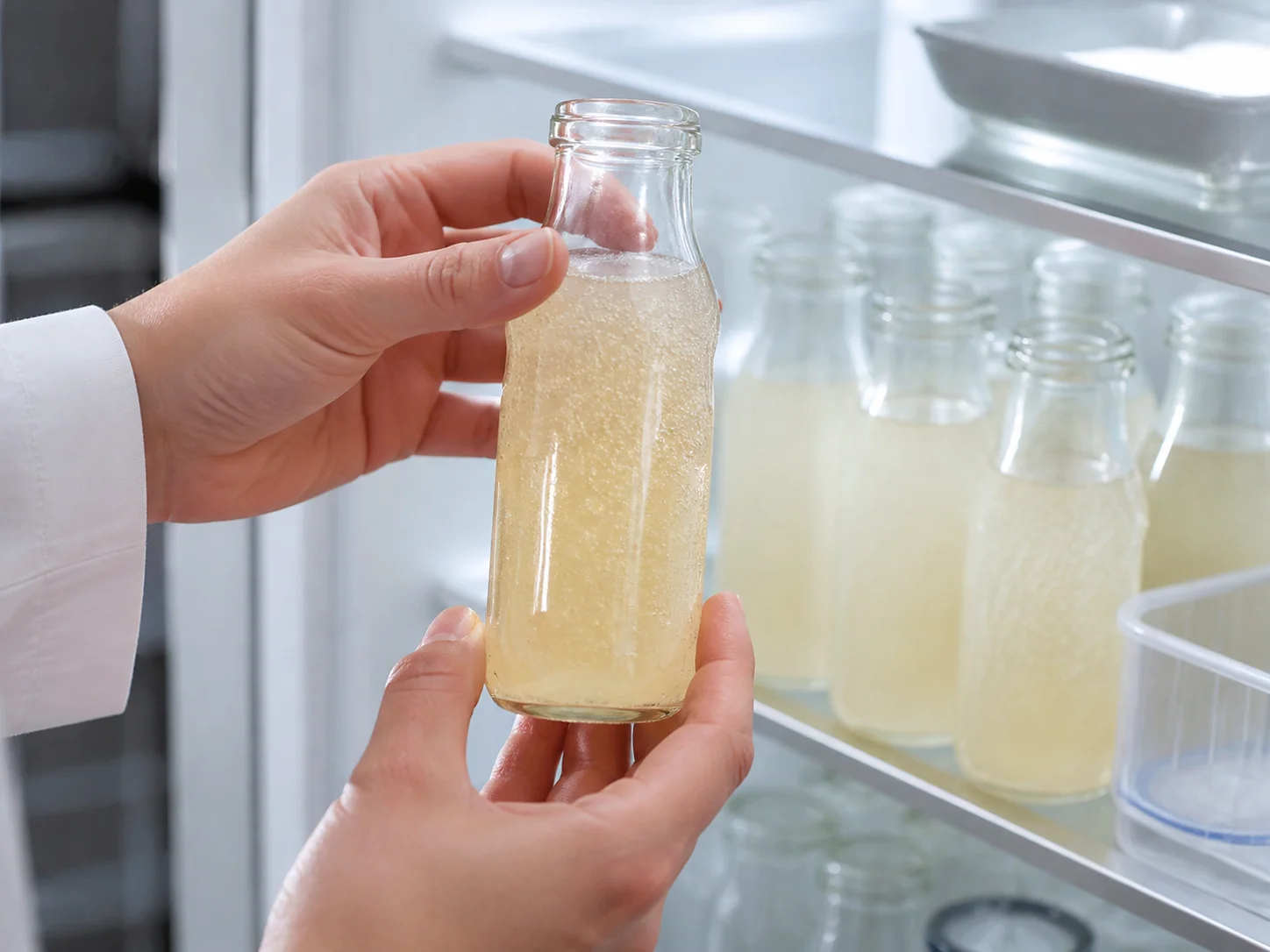
Survival falls faster at higher temperature, so a break in the cold chain costs viable organisms permanently rather than temporarily. That makes chilled distribution a condition of the claim, and it makes storage trials at realistic temperature abuse the only honest way to set a shelf life.
Acidity in the product works against its own culture
Most probiotic drinks are acidic, and continued acidification during storage lowers pH further, which stresses the organisms that produced it. Formulation manages that balance; the pack supports it by keeping the product cold and by not adding oxygen to the equation.
Small single-dose formats suit the economics
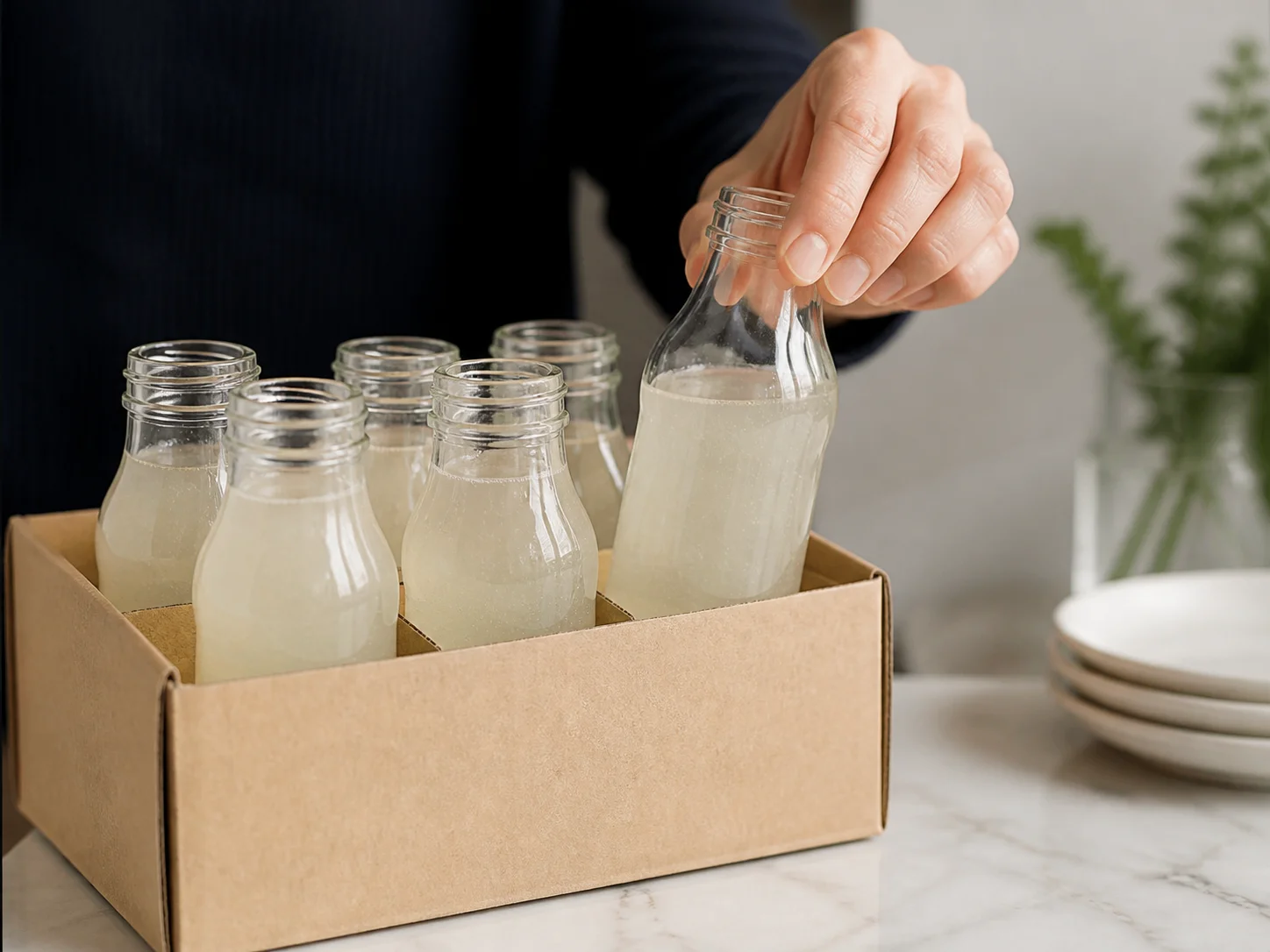
These products are sold as a daily shot, which keeps the fill small and the pack cheap per unit while allowing a high concentration per serving. It also means the bottle is finished immediately, so reclosability is irrelevant and the closure is judged purely on seal integrity and easy opening.
Glass contributes nothing and is easy to verify
In a product whose whole value is a population of living organisms, a container that is chemically inert and gives a straightforward barrier removes several variables from the stability work. That simplifies the storage trials, which in this category are the most expensive part of development.