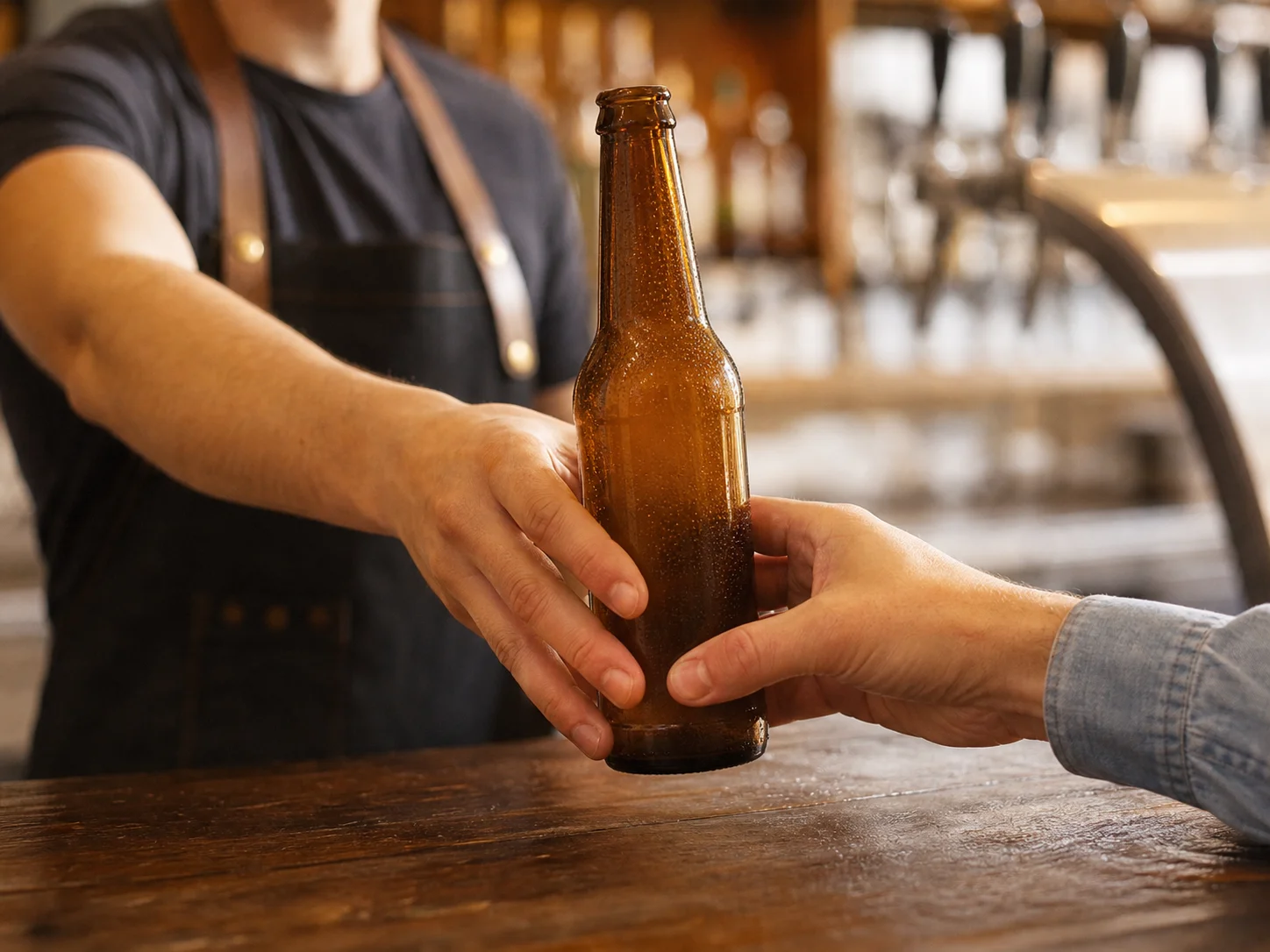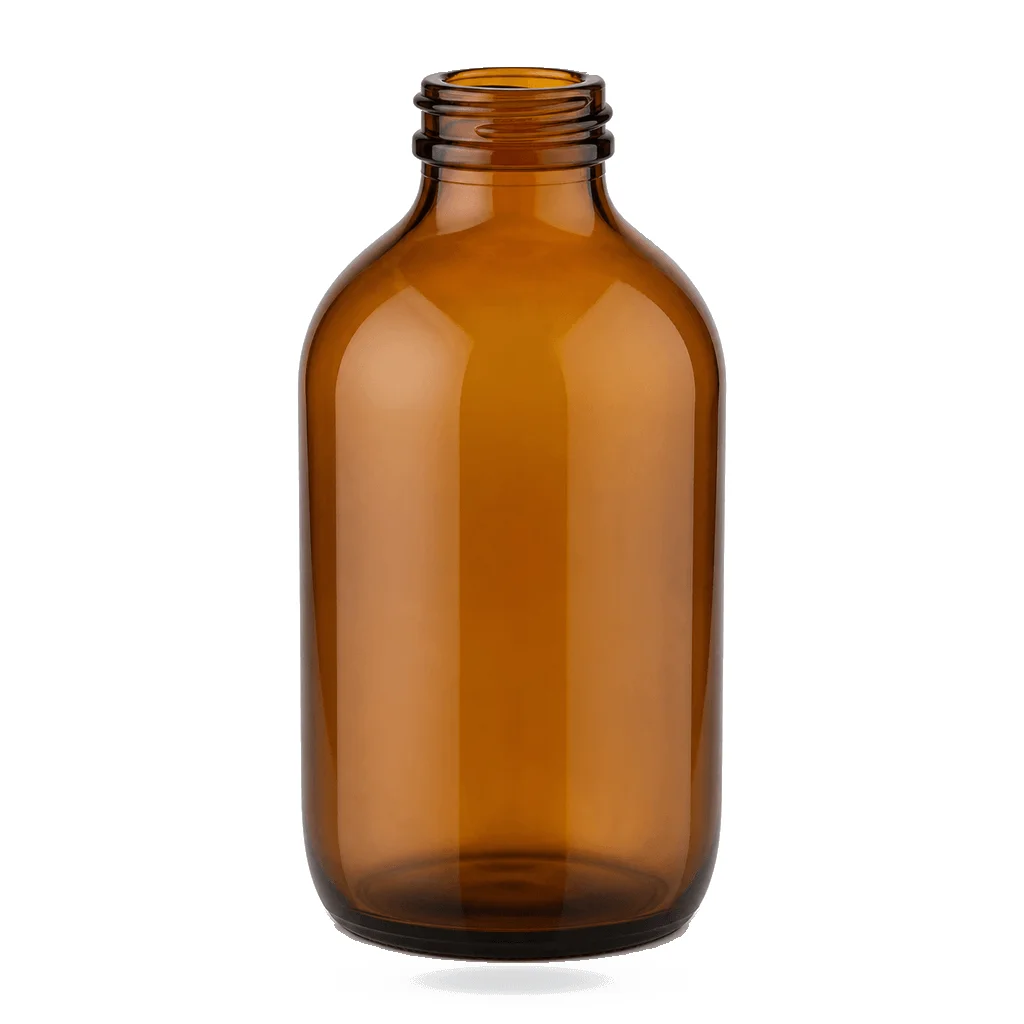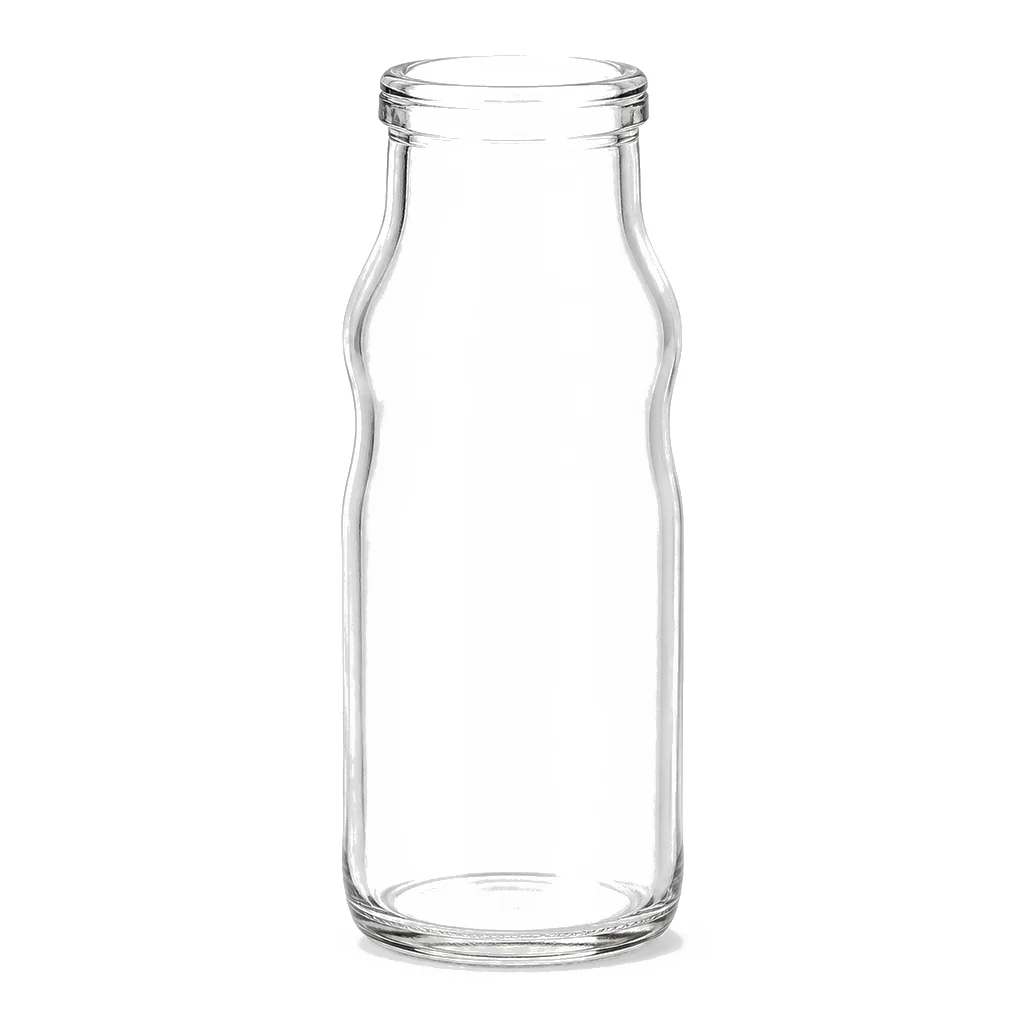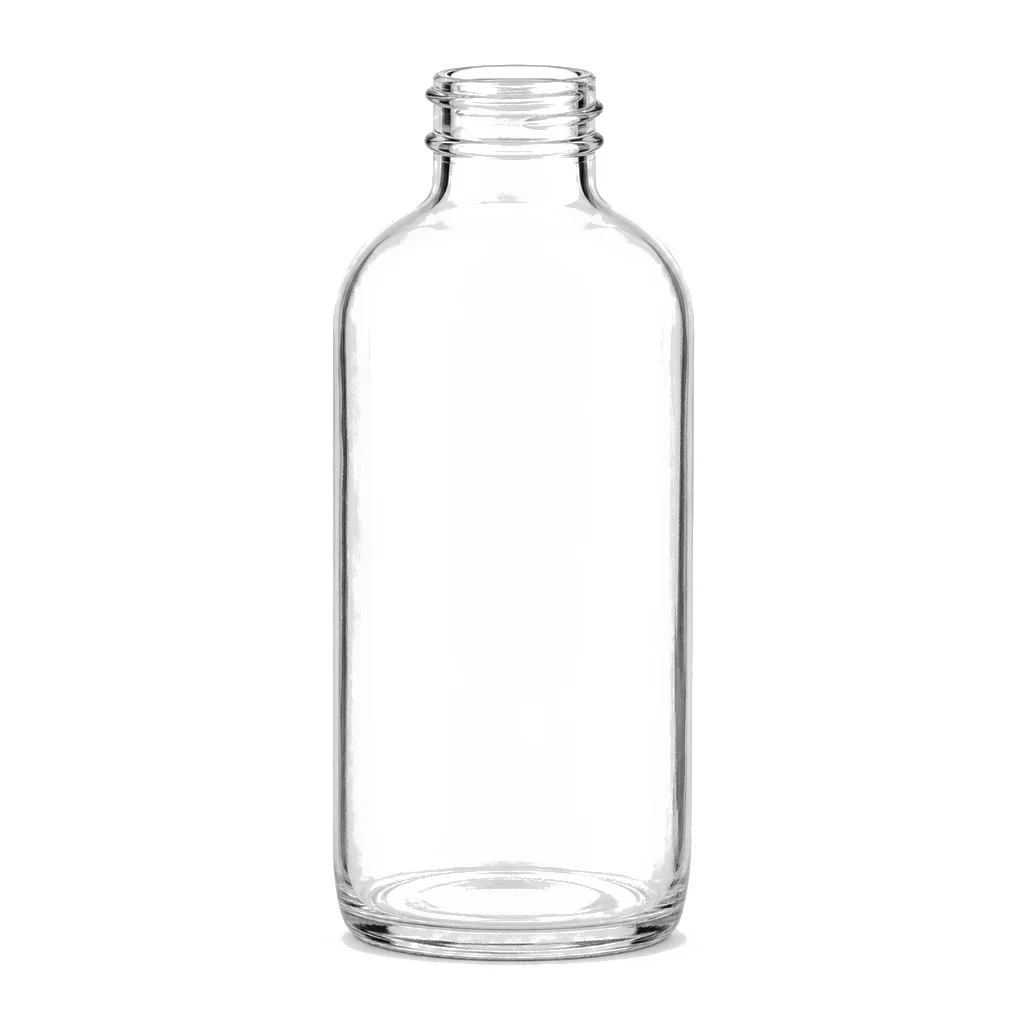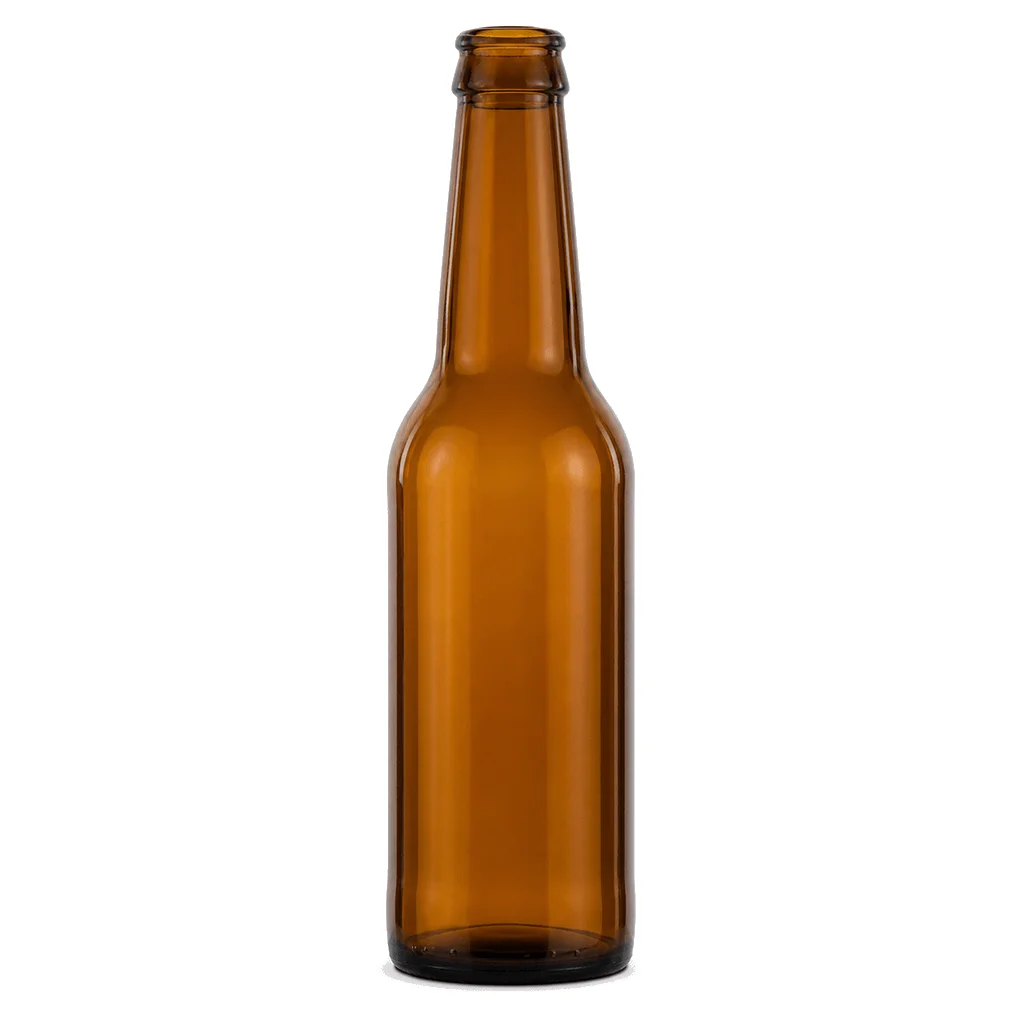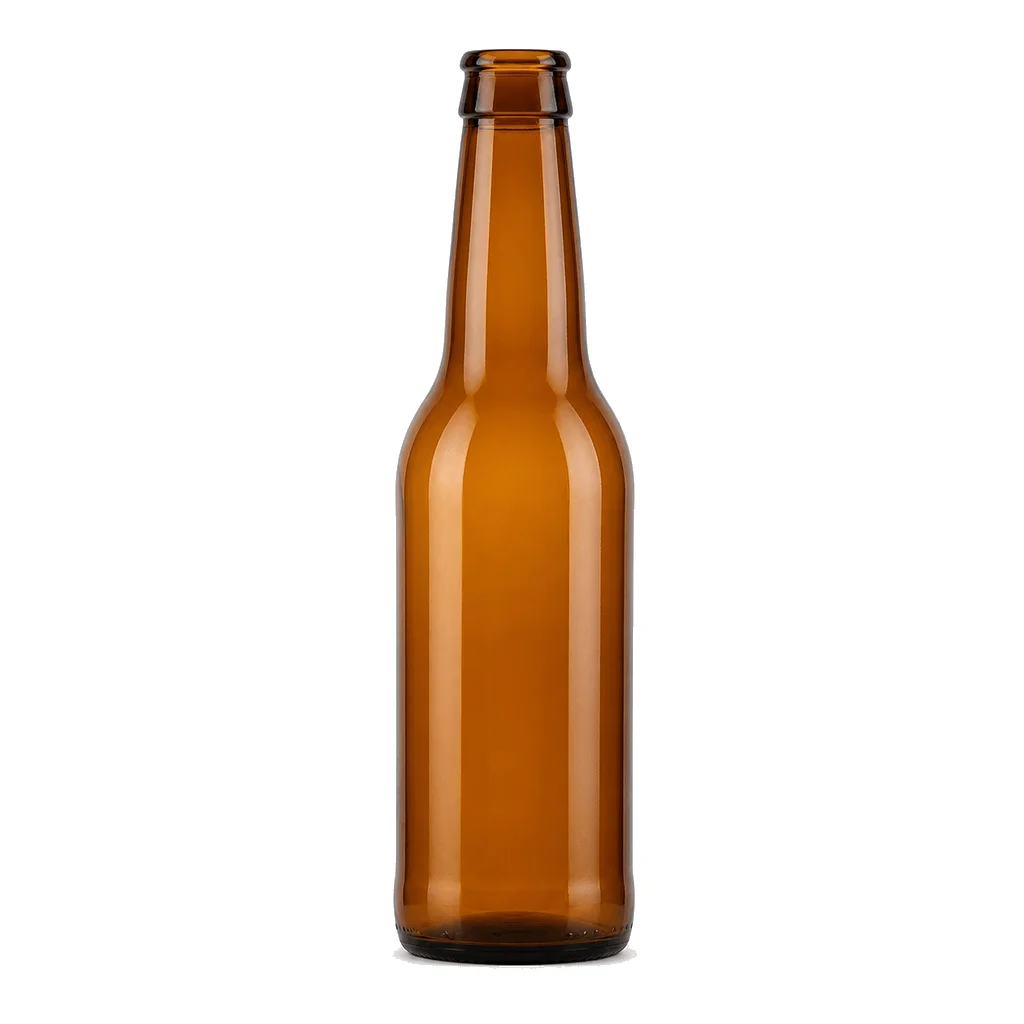
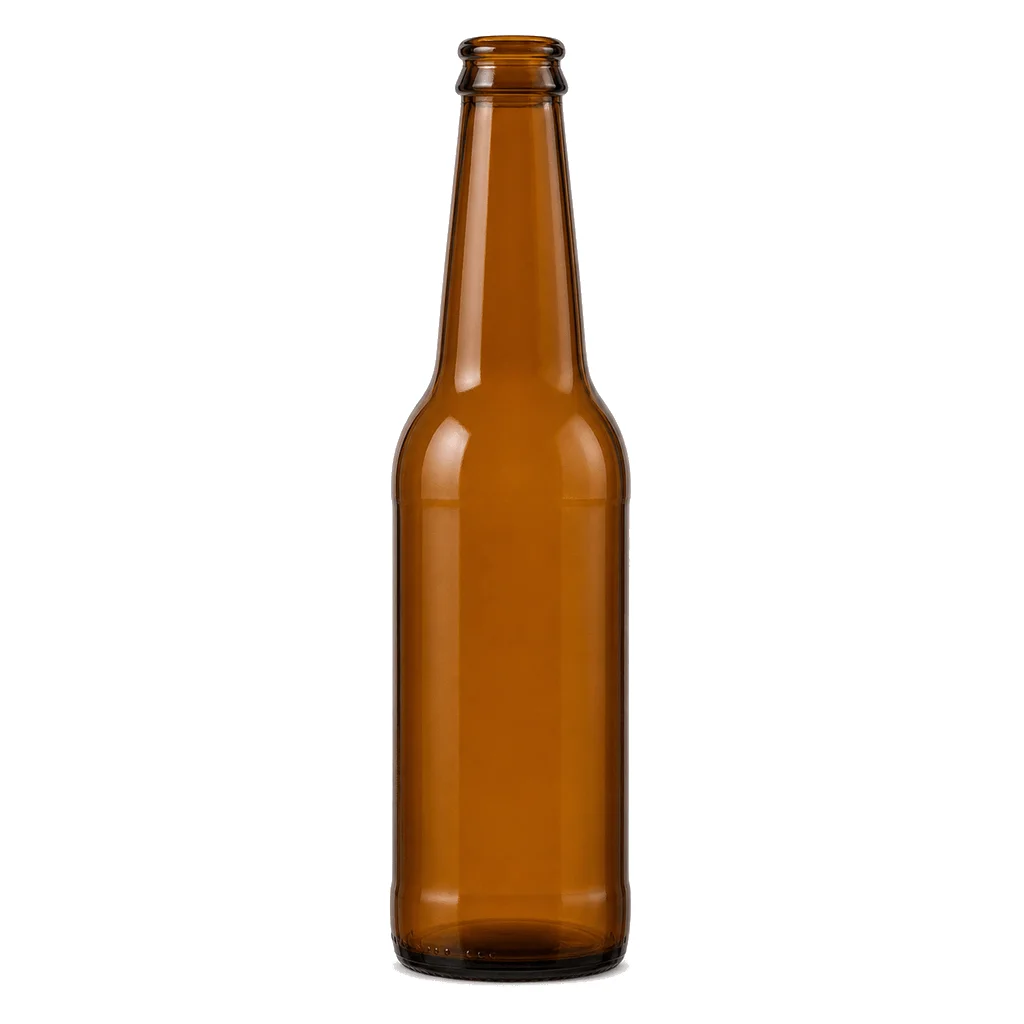
Amber beer bottle with a short neck, sloping shoulder and crown finish
Shown configuration · bare bottle / crown cap, label and beer not shown

Beer bottles

Standard Beer Bottle

A standard beer bottle on a 26 mm crown finish to EN ISO 12822, holding carbonation through pasteurization and designed to be returned or recycled in volume.

26 mm crown finishHolds carbonation through heatAmber against light strike
Stock status
In stock
Lead time
2–3 weeks
FOB price / pc
$0.85 - $1.10
MOQ
3,000 pcs

Final availability, dimensions, materials, assembled components and commercial terms are confirmed against the selected drawing and approved sample.

Crown finish is standardized

Any conforming cap fits any conforming bottle

Amber blocks light strike

Green and clear do not

Designed for volume handling

Fillers, crates and returns

Standard Beer Bottle profile

The most standardized bottle in the drinks industry, and that is its whole advantage.

The crown finish, light strike & pressure with heat

Six things that make a beer bottle a beer bottle.

A beer bottle carries carbonation, survives pasteurization, protects a light-sensitive product and runs at line speeds measured in thousands per hour. Almost every part of it is standardized — the 26 mm crown finish above all — because interchangeability between bottles, caps and fillers is what makes those volumes possible.

01

The crown finish is defined by standard on both sides

The cap side is covered by EN 17177 for a 26 mm crown and the glass side by EN ISO 12822 for the 26 H 126 finish. Naming both in a specification is what stops a supplier substituting a nominally similar crown that will not seat, and it is the interchangeability those standards create that lets the industry run at the scale it does.

02

Light strike is a real defect, not a myth

Hop-derived compounds react under light to produce the characteristic skunked aroma, and the reaction runs in minutes under direct sun. Amber glass blocks the responsible wavelengths effectively; green blocks some; clear blocks almost none. A brewer choosing clear glass for appearance is accepting that risk and should manage it in distribution.

03

Pressure and heat arrive together

A pasteurized beer is heated while carbonated, so internal pressure rises well above its cold value at the moment the glass is hottest. Bottle design accounts for that combination rather than for carbonation alone, which is why a bottle adequate for a cold-filled soft drink is not automatically adequate for pasteurized beer.

04

Returnable and one-way bottles are different products

A returnable bottle is heavier, more scuff resistant and designed for many trips through a washer, while a one-way bottle is lightweighted for a single journey. Running a one-way bottle in a returnable system produces a rapidly degrading fleet, and the two are specified from the start rather than swapped for price.

05

Scuffing is what ages a returnable fleet

Bottles rubbing in crates and on conveyors develop white scuff rings at the contact points, and after enough trips a returnable bottle looks tired even though it is structurally sound. Surface coatings applied at the hot and cold ends reduce it substantially, and they are part of what a returnable specification buys.

06

Line speed makes dimensional consistency critical

At thousands of bottles an hour, a finish a fraction out of tolerance jams a capper and stops a line rather than producing one bad unit. Dimensional consistency at the finish is therefore worth more to a large brewer than almost any other glass property, and it is what separates suppliers at that scale.
Application guide

The most-produced glass container shape in the world.

The amber long-neck crown-finish beer bottle exists in enormous volume precisely because it works: it holds carbonation, protects hopped beer from light and runs on every brewery line built in the last century. These are development directions confirmed with the actual beer.

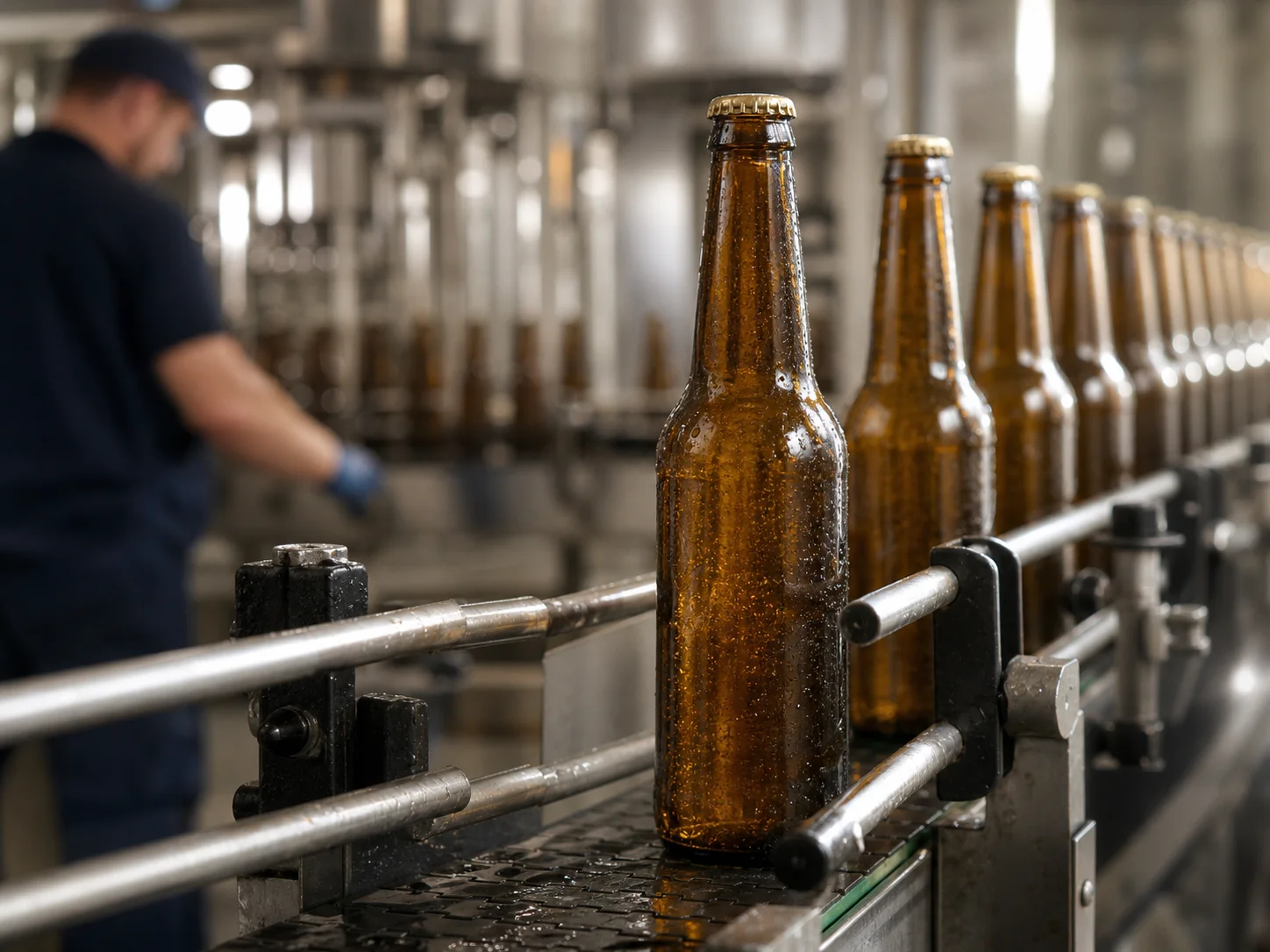
Standard Beer Bottle used for bottles filled by the million in a core brewing setting

Core brewing

Bottles filled by the million

For breweries producing at scale, where the bottle is a commodity chosen on cost, availability and line compatibility rather than on design. Universal tooling and crown finishes mean a brewer can source the same bottle from several suppliers, which matters more than any visual consideration at this volume.

  • Confirm compatibility with existing lines
  • Check availability from multiple sources
  • Match the finish to the crowner
Standard Beer Bottle used for labels doing the differentiating in a craft brewing setting

Craft brewing

Labels doing the differentiating

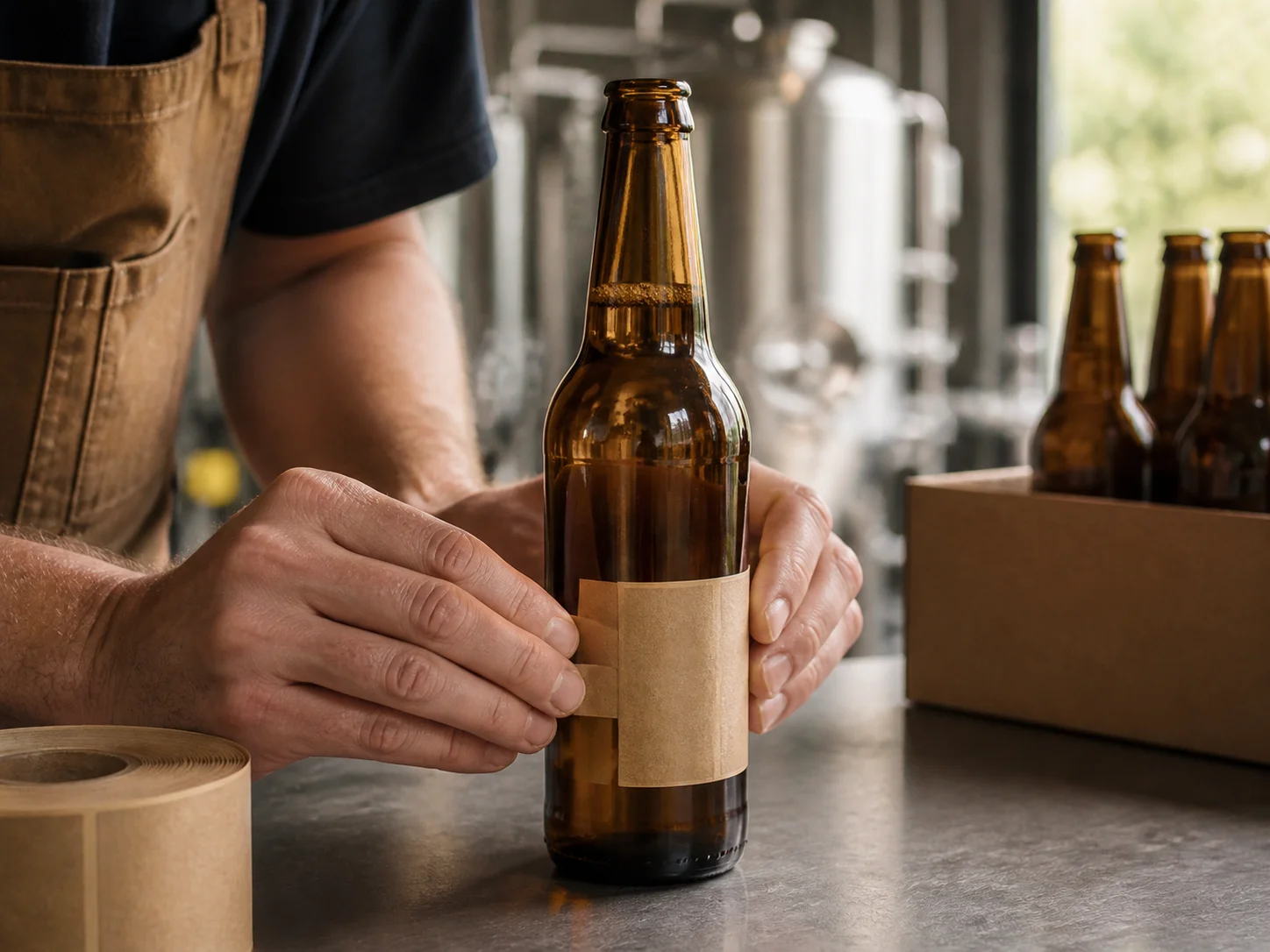
For craft brewers using a standard bottle and letting the label carry everything, which keeps glass cost and lead time low while artwork changes freely between batches. The amber body limits how much color the label can rely on, so contrast and legibility matter more than on clear glass.

  • Test label contrast on amber
  • Keep one bottle across the range
  • Confirm legibility in a fridge
Standard Beer Bottle used for bottles opened and handed over in a bar service setting

Bar service

Bottles opened and handed over

In venues the bottle is opened and passed straight to a customer, so the finish has to open cleanly with a standard opener and the neck has to be comfortable to hold. Condensation from a fridge also affects whether the label stays intact in someone's hand.

  • Confirm clean opening with a standard tool
  • Test the label against condensation
  • Check the neck is comfortable to hold

Applications describe development directions. Carbonation pressure, closure fit, filling and distribution outcomes are confirmed for the selected program.

Common questions

Standard Beer Bottle questions

Standardization is the point. These questions are where it matters.

Does clear glass really cause skunking?

Yes, and quickly. Hop-derived compounds react under light to produce the characteristic aroma, and in direct sun the reaction runs in minutes. Amber blocks the responsible wavelengths well, green blocks some and clear blocks almost none. Choosing clear for appearance means accepting that risk and managing it through distribution.

Is a soft drink bottle adequate for beer?

Not if the beer is pasteurized. Heating a carbonated product raises internal pressure well above its cold value at exactly the moment the glass is hottest, so beer bottles are designed for pressure and heat together. A bottle adequate for a cold-filled soft drink at the same carbonation is not automatically adequate here.

Can we use one-way bottles in a returnable system?

Not for long. A returnable bottle is heavier, more scuff resistant and built for many washer trips; a one-way bottle is lightweighted for a single journey. Mixing them produces a fleet that degrades rapidly, and the two are specified from the outset rather than substituted for price partway through.

Why does line speed make dimensional consistency critical?

Because there is no time to accommodate variation. A filling line running at commercial beer speeds assumes every bottle presents the same height, diameter and finish to the machine, so tolerance drift shows up as jams and breakage rather than as a measurement problem. Agree the dimensional limits before the first trial.

Next step

Send us the Standard Beer Bottle brief.

Tell us the product, fill volume, closure preference and destination market. We will come back with the matching drawings, available configurations and a sample plan before anything is quoted.

  • 01Send the briefProduct, volume, closure and market
  • 02Get the optionsMatching drawings and configurations
  • 03Approve the sampleConfirm the pack before production