Ingredient interaction, process choice & single-serve format
Six things that make a bottled cocktail harder than it looks.
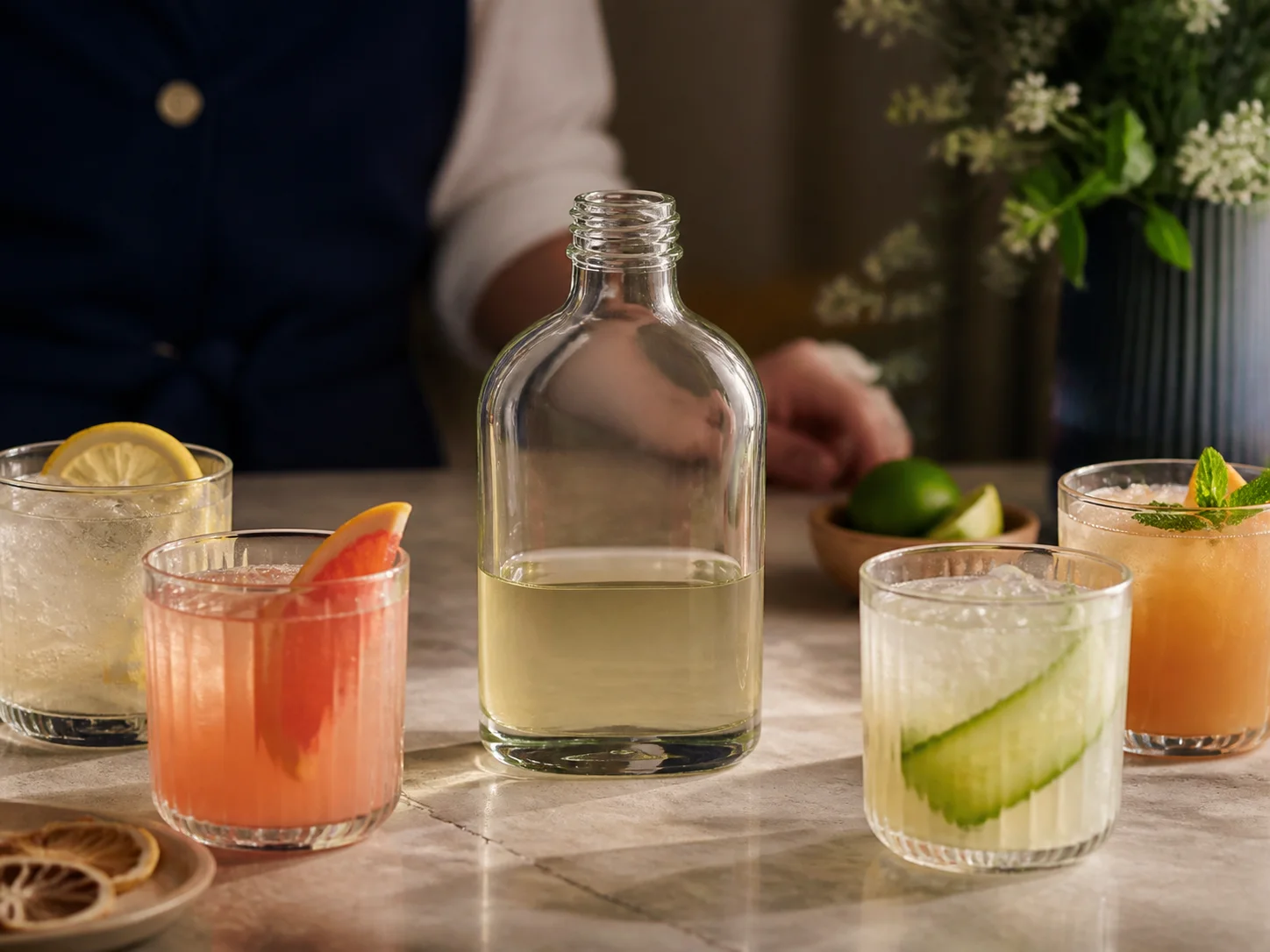
Behind a bar, a cocktail exists for minutes and nobody has to think about what its ingredients do to each other. Bottled, the same combination of spirit, citrus, sugar, bitters and sometimes dairy has to hold its color, clarity and flavor for months. The container matters, and the stability testing behind it matters more.
Ingredients keep reacting after the pack is sealed
Acids, sugars, colors and botanical extracts interact slowly, shifting color, dulling aroma and sometimes producing haze or sediment. None of that is predictable from the components individually, which is why stability work has to run on the finished formulation in its actual pack rather than on the recipe.
Citrus is the ingredient that ages worst
Fresh citrus carries oils and enzymes that behave nothing like a stable flavoring, changing character within weeks and often clouding. Producers either accept a short chilled life, use a stabilized citrus preparation, or reformulate around it — and which route is chosen determines whether the pack is chilled or ambient.
Alcohol strength sits in an awkward middle
A premixed cocktail is usually diluted well below spirit strength, so it does not preserve itself, and it is not necessarily acidic enough to be treated as a juice. Establishing which preservation route applies is a formulation and process question that has to be settled before the container is specified.
Carbonated versions bring a pressure requirement
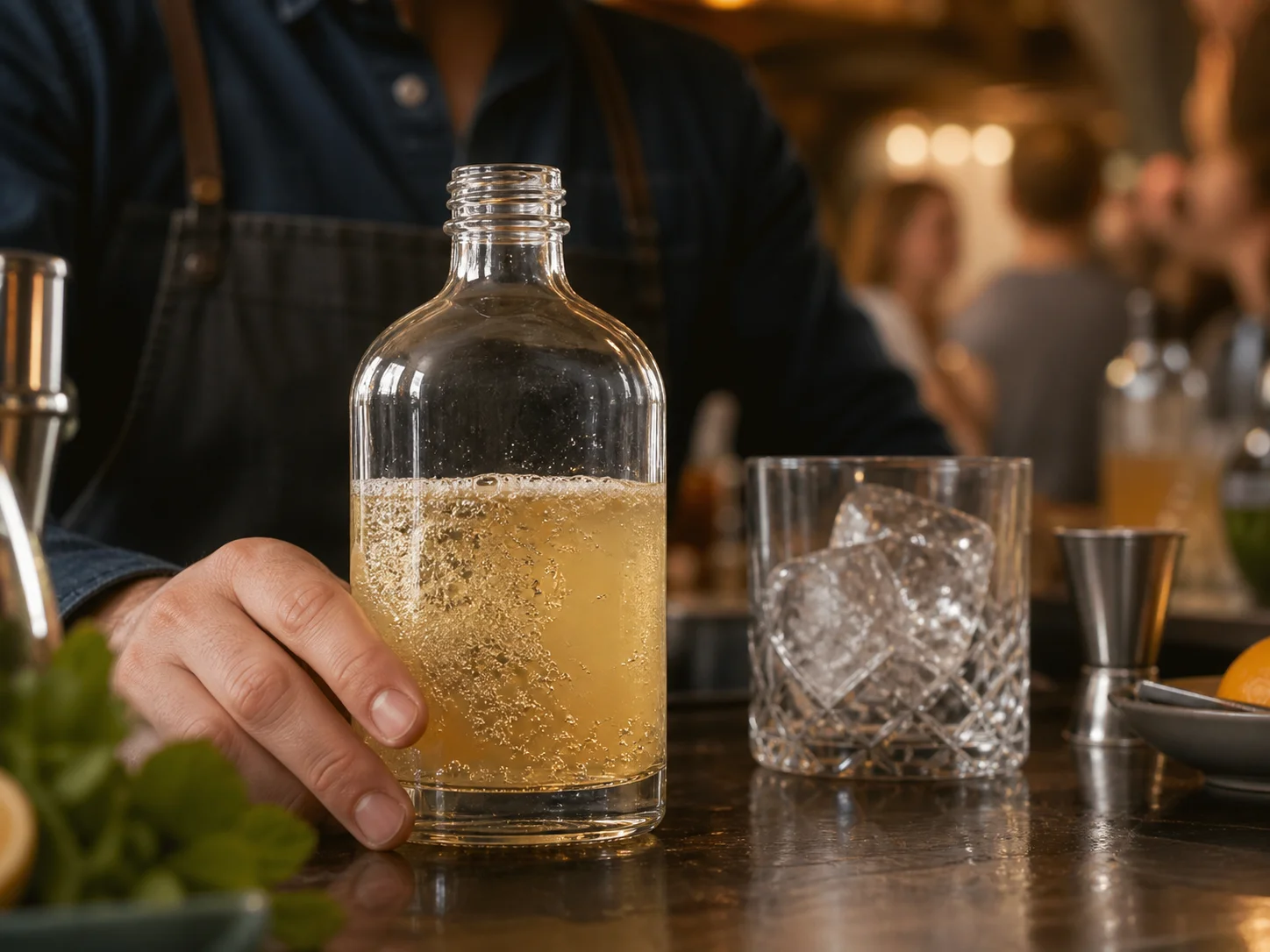
Where the cocktail is sparkling, the bottle needs a full pressure rating with margin for warm storage, and the alcohol present makes the fill foam more than a soft drink at the same carbonation. Counter-pressure filling and a suitable finish follow, which is a different pack from a still premix.
The single-serve format sets the label problem
Alcohol declarations, serving information, allergen statements where dairy or other ingredients require them, and any health warnings all compete for a small panel. Laying that content out before selecting a bottle is what prevents a shape being chosen and then abandoned at artwork stage.
The pack is drunk from or poured, and both should work
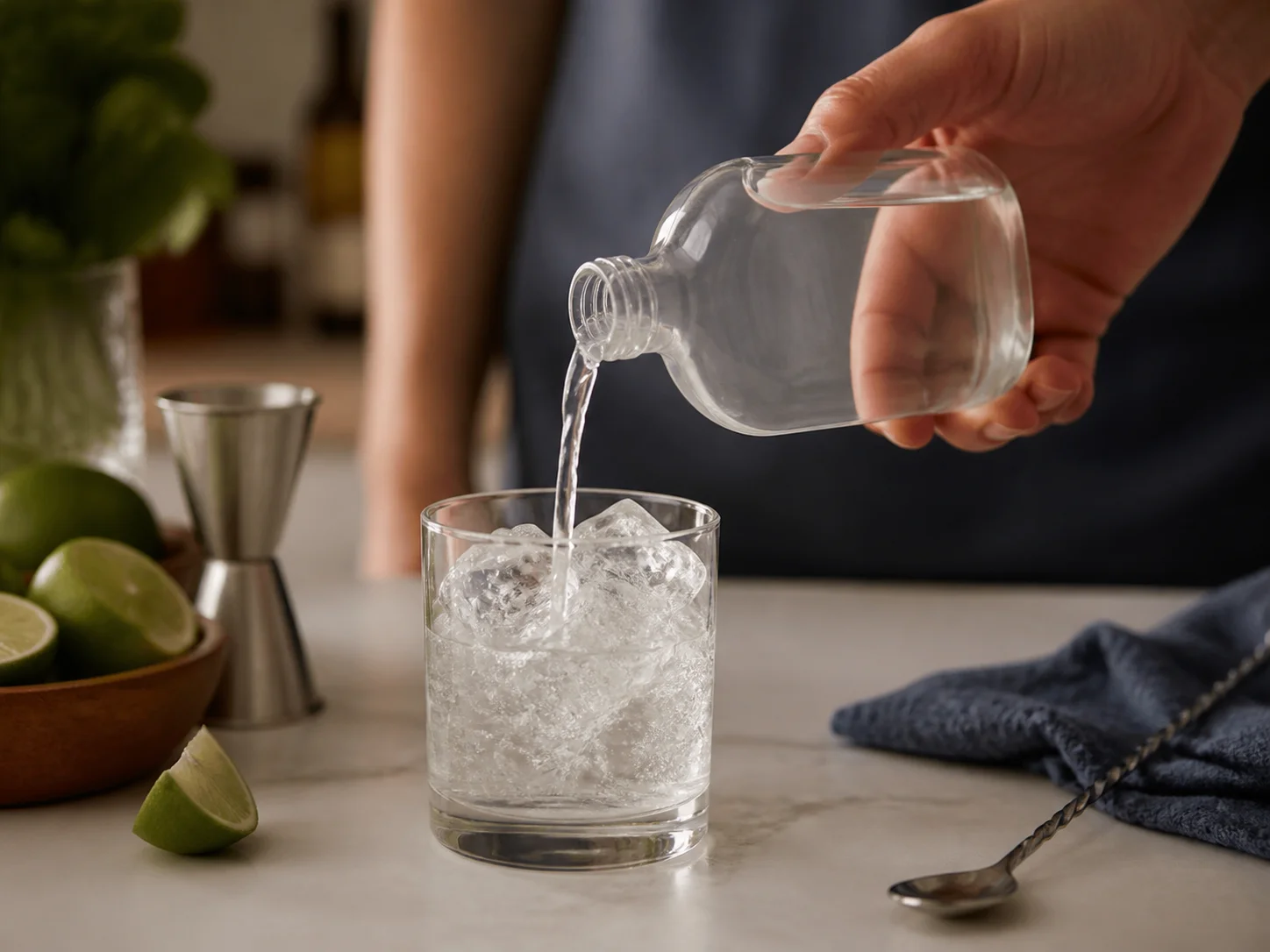
These products are consumed straight from the bottle at an event and poured over ice at home, so the finish has to be comfortable against a mouth and controlled when pouring. Checking both on samples with the actual liquid is quick and catches problems no drawing would reveal.