Wick interaction, spacing & wide-bore behavior
Six things that only happen when wicks share a vessel.
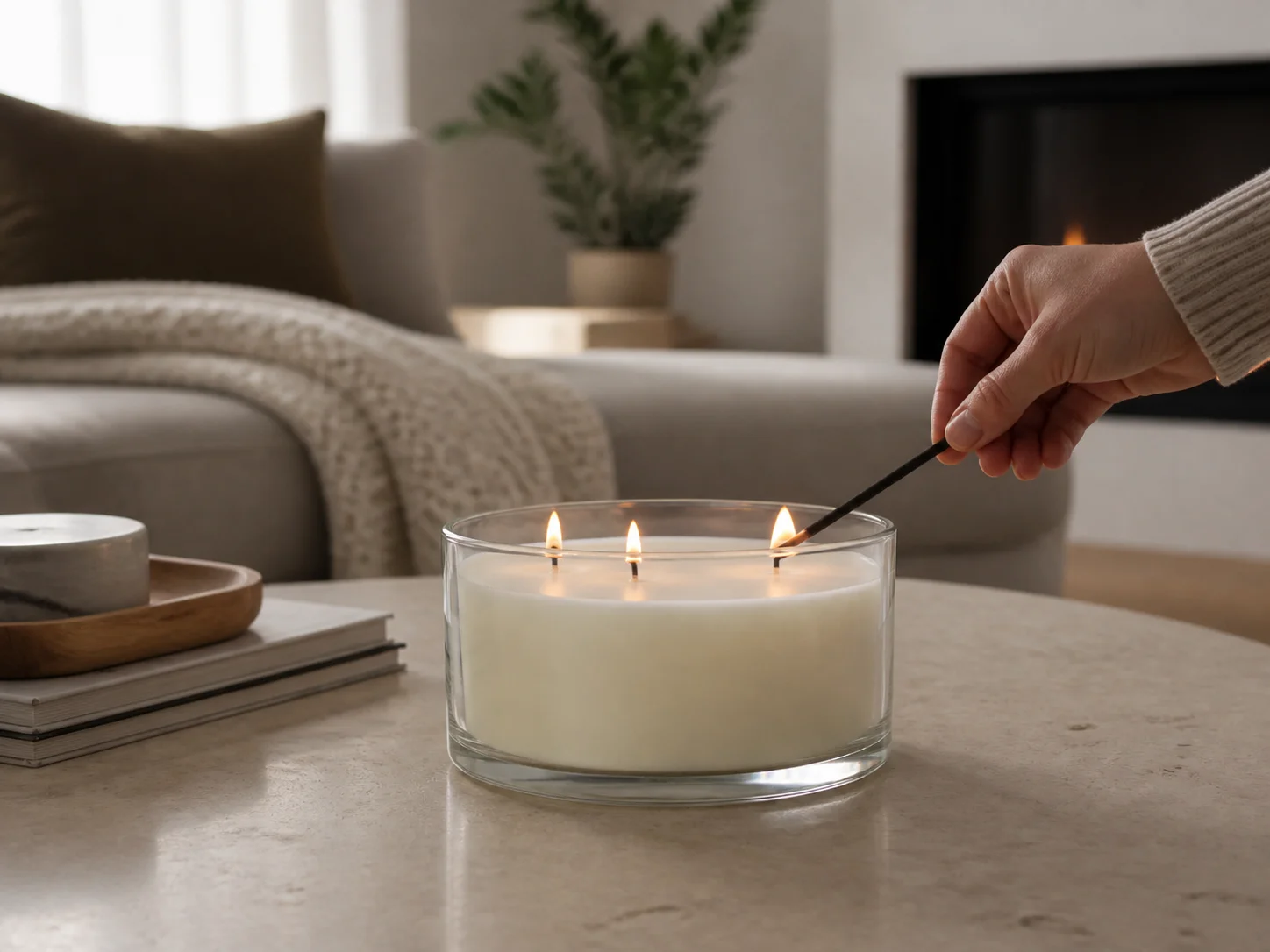
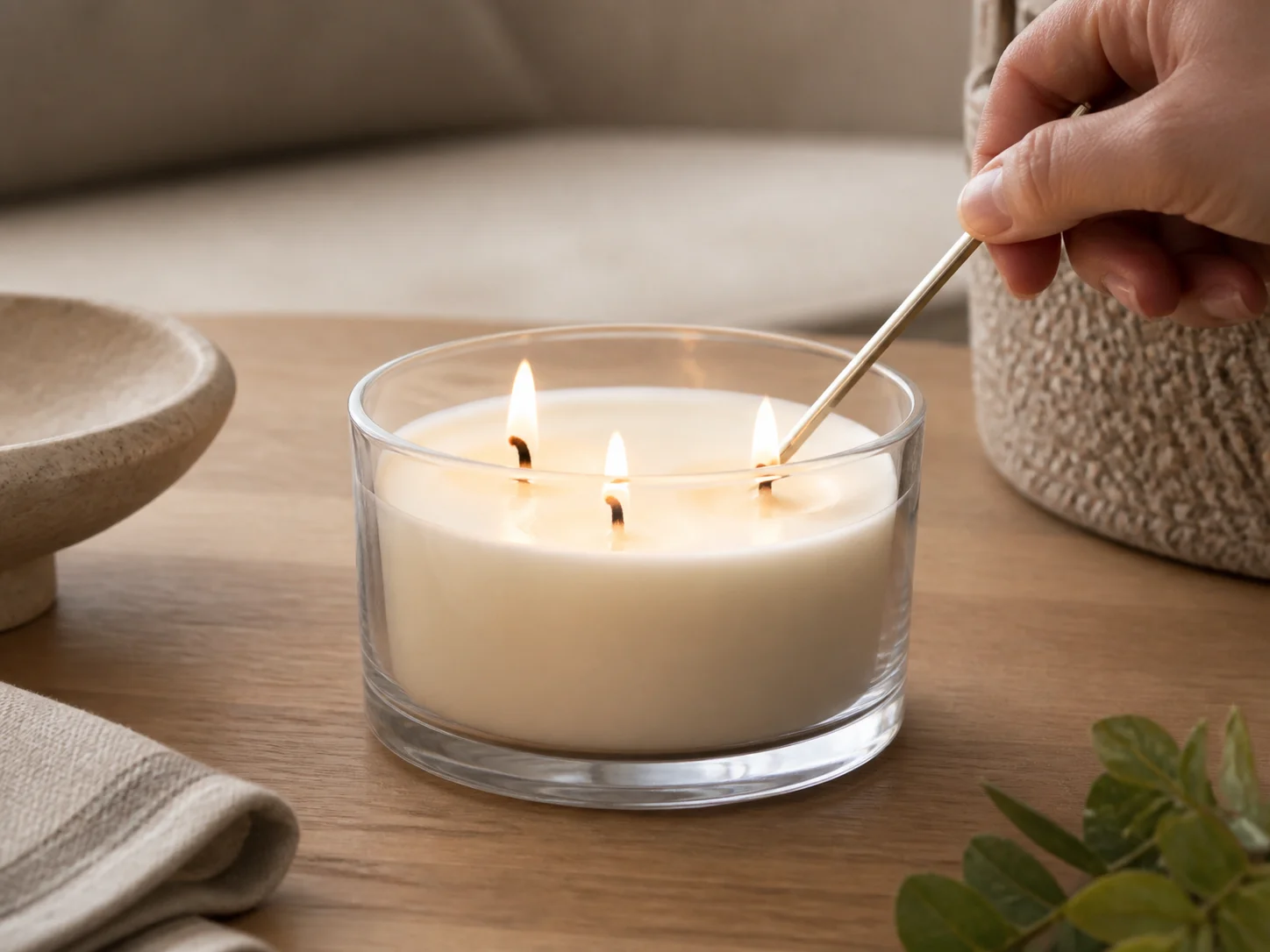
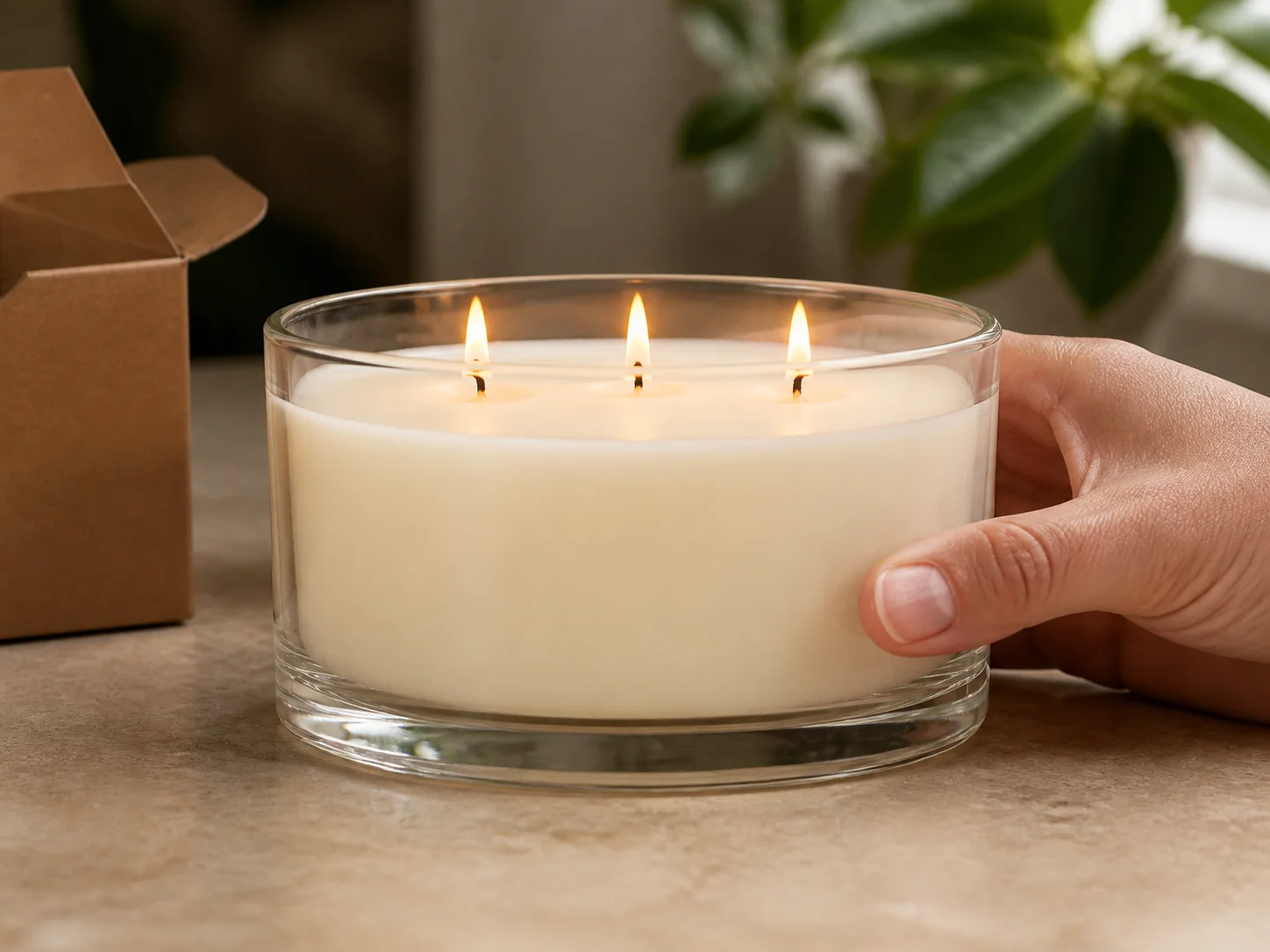
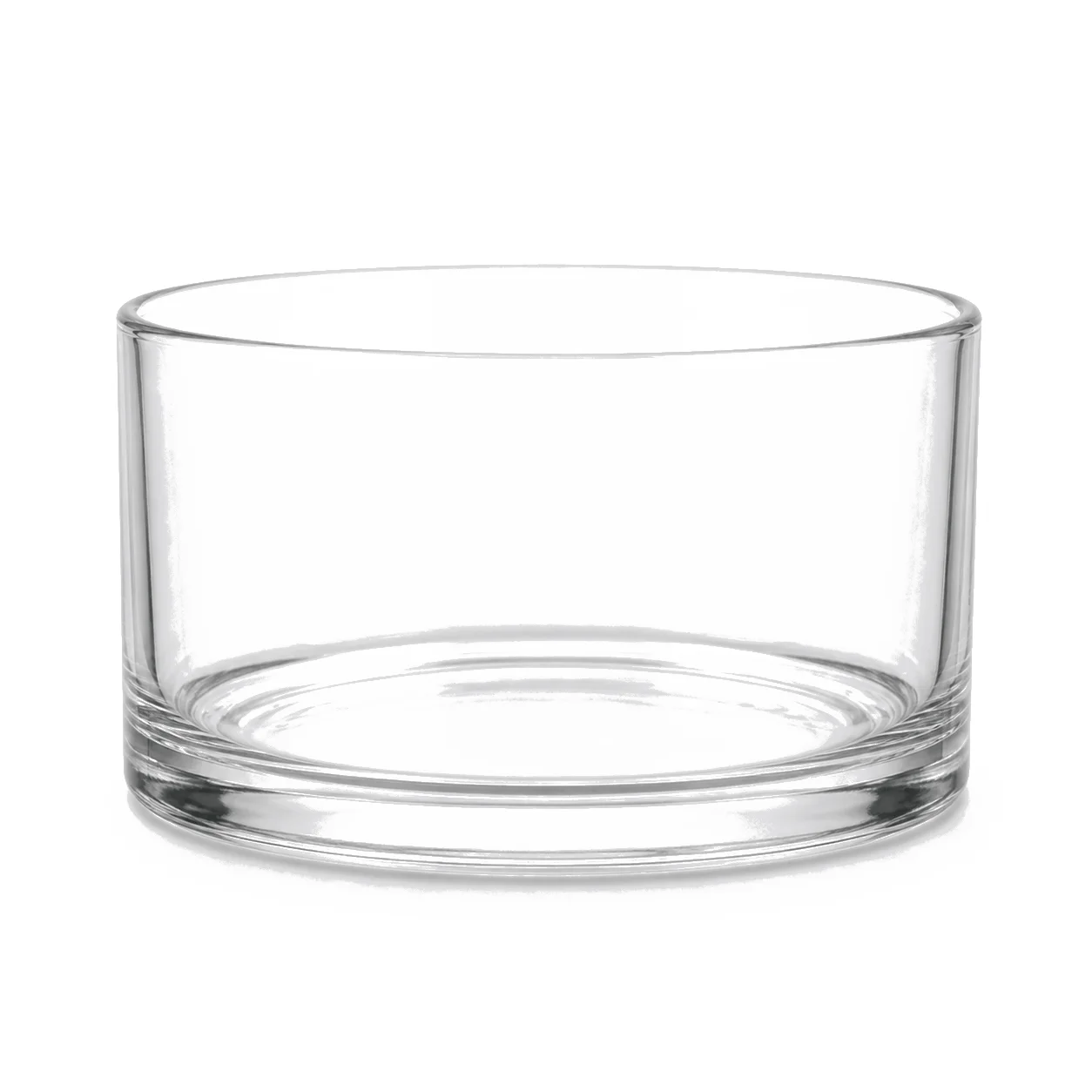
Beyond roughly ten centimeters of diameter a single wick cannot reach the wall without burning dangerously hot, so wide vessels use several. Those wicks warm each other and the wax between them, so each one runs hotter than it would alone. Sizing them means sizing the array, not the individual wick.
Each wick runs hotter in company
Radiant and conducted heat from neighboring flames raises the wax temperature around every wick, so a wick that gave a controlled pool alone will produce a larger flame and a deeper pool in an array. Practical multi-wick design therefore starts a size or two cooler than single-wick intuition suggests and works up from there.
Spacing is a dimension, not a layout preference
Wicks placed too close create a single merged flame zone that overheats the center and the glass above it; placed too far apart they leave unmelted wax between them and against the wall. The workable band is narrow for a given diameter and wax, and it is found by testing rather than by dividing the circle evenly.
Wide bore gives fast throw and a short burn
A large open surface releases fragrance quickly, which is much of the appeal, and it also consumes wax faster than a narrow jar of the same volume. Stated burn times for multi-wick candles are correspondingly shorter per unit of wax, and setting the customer's expectation on that is a labeling decision as much as a design one.
The center of the pool is the hottest place in the candle
Heat converges where the flames' fields overlap, and in a three-wick arrangement that is the middle of the vessel. Base thickness and glass distribution at the center matter more than at the wall, and a vessel with a thin or unevenly distributed base is more likely to fail there than anywhere the flame is actually near.
Lighting habits break the test assumptions
Customers light one wick of three when they want a small flame, which produces an asymmetric pool, a lean toward the lit side and tunneling on the other. A candle that only performs when all wicks are lit needs that stated clearly on the label, because the alternative is a complaint that reads as a manufacturing fault.
Customers light one wick, and the vessel has to survive that too
Lighting a single wick in a multi-wick jar tunnels the wax on one side and runs heat unevenly against the wall. The vessel is tested for that misuse as well as for correct use, because it is common enough to be the normal case rather than the exception.