Cavity versus exterior, mold constraints & second life
Six things that decide whether a sculptural vessel burns as well as it looks.
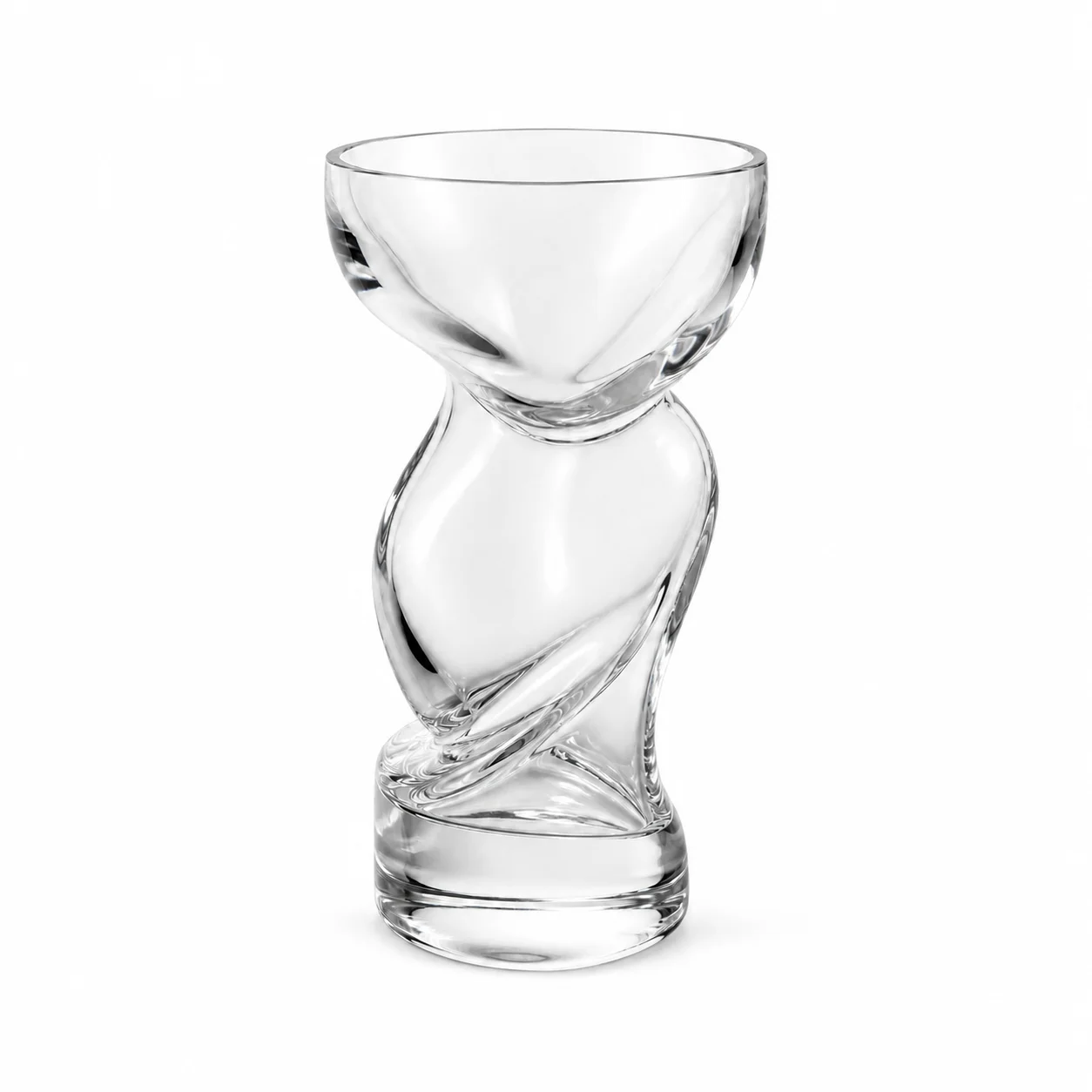
A sculptural vessel has an exterior designed as a figure and an interior that is whatever the mold and the glass thickness leave behind. The candle only ever sees the cavity. Understanding that separation — and where molding physically prevents the two from being independent — is what makes these vessels work rather than merely look interesting.
Wick to the cavity, not to the silhouette
The melt pool exists inside the vessel, so the diameter that matters is the internal bore at each height. On a figure with a wide exterior and a narrow cavity, wicking to the outside dimension over-burns badly. Getting the internal profile drawn and dimensioned, rather than inferred from a photograph, is the first step in any burn development.
Molding cannot make undercuts
Glass has to release from a mold, so external features that trap the tool are impossible however good they look in a sketch. Draft angles, parting lines and the position of the opening all constrain the sculpture. That is why sculptural glass tends toward simplified forms, and why a design conversation early with the moldmaker saves a redesign.
Wall thickness varies a great deal
A sculpted exterior with a simpler internal cavity produces thick and thin regions around the same vessel, so heat from the melt pool travels through an uneven wall. That is manageable within limits and unacceptable beyond them, and where those limits sit is established by burning samples rather than by modeling the geometry.
The opening decides both the fill and the flame
A sculptural vessel usually has a small opening relative to its body, which restricts the filling nozzle, limits air to the flame and makes the candle harder to light as it burns down. Enlarging it improves all three and changes the sculpture, which is the central trade in this format and one worth making explicitly.
It is bought to be kept, so plan the empty vessel
Customers keep sculptural vessels as objects long after the candle has gone, which means the label has to come off cleanly and the empty piece has to look finished. That is a real commercial advantage, and it only materializes if adhesive residue and a wax-stained interior have been thought about at specification.
The mold parting line runs somewhere on the figure, and it should be chosen
Every sculpted vessel carries a seam, and on a figure it lands on a face, a limb or a natural edge depending on how the form is oriented in the mold. Deciding that during sculpting rather than during tooling is what separates a good figural vessel from a cheap one.