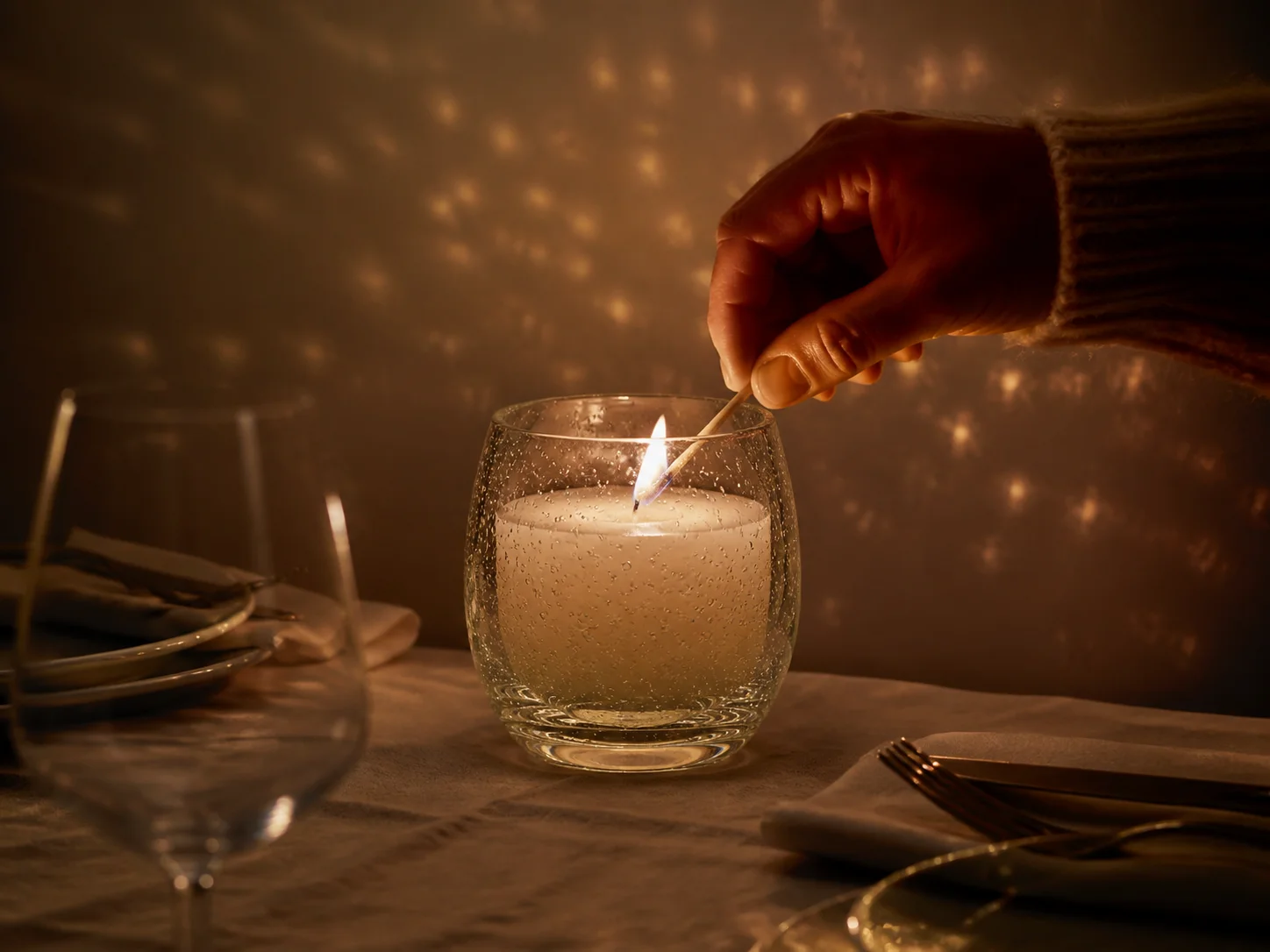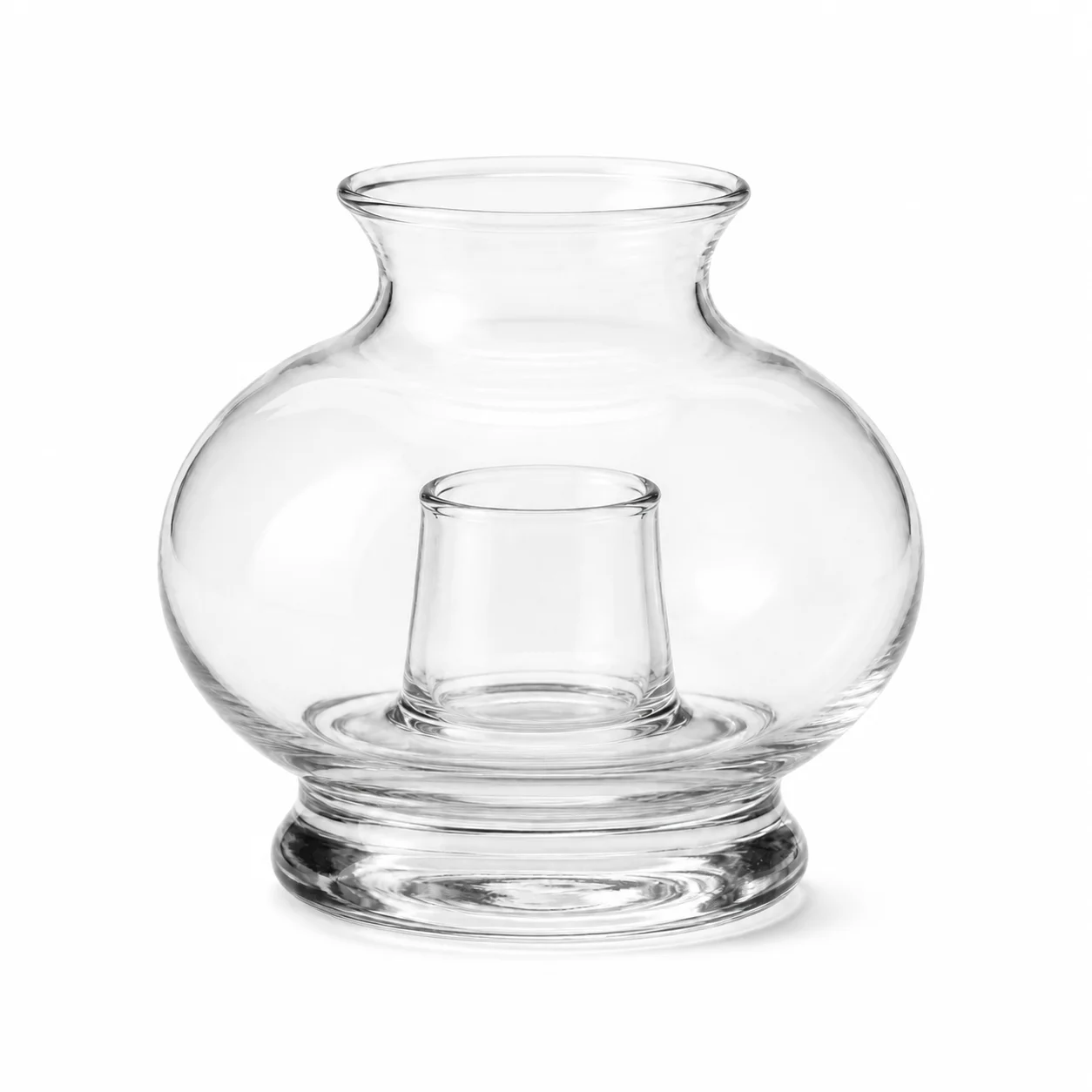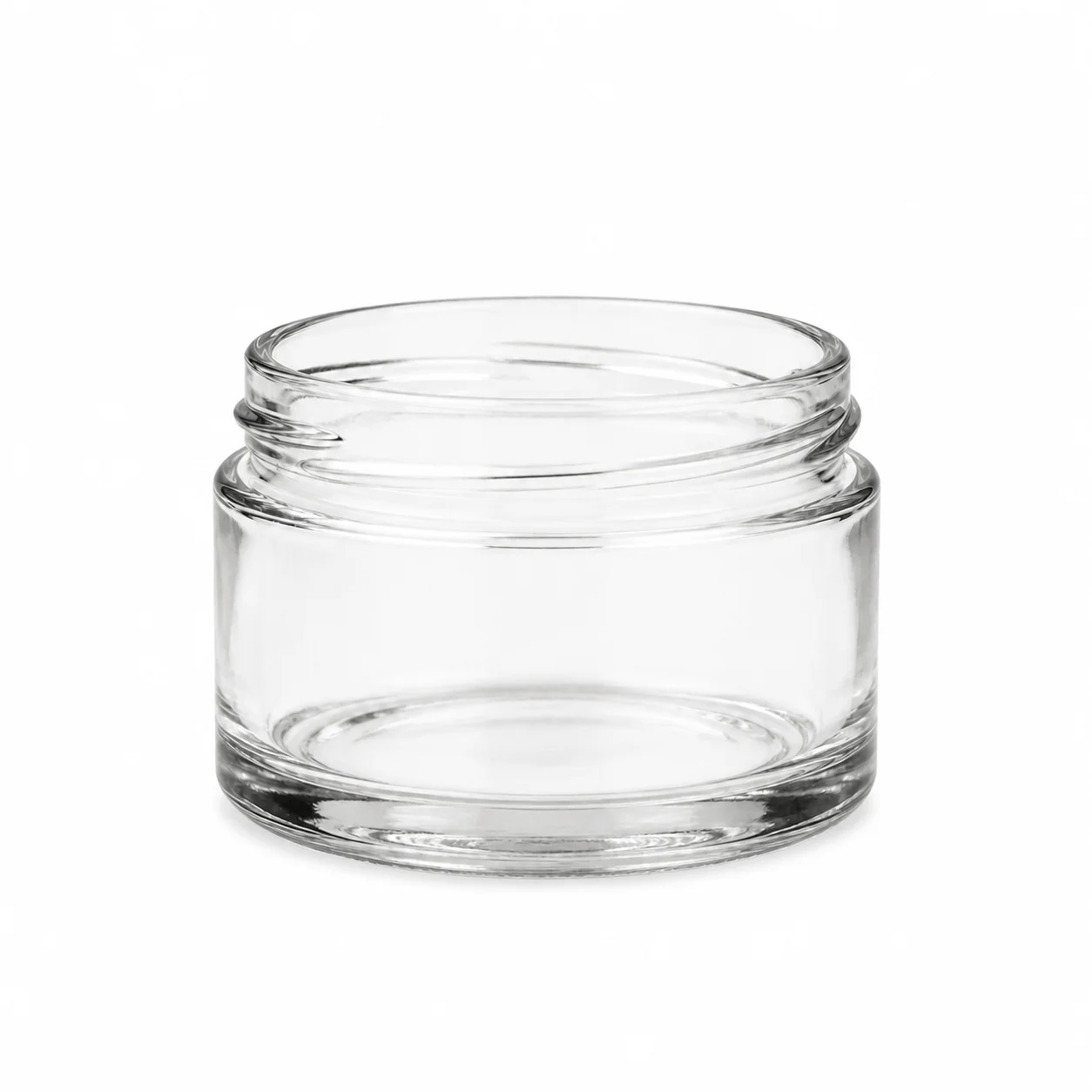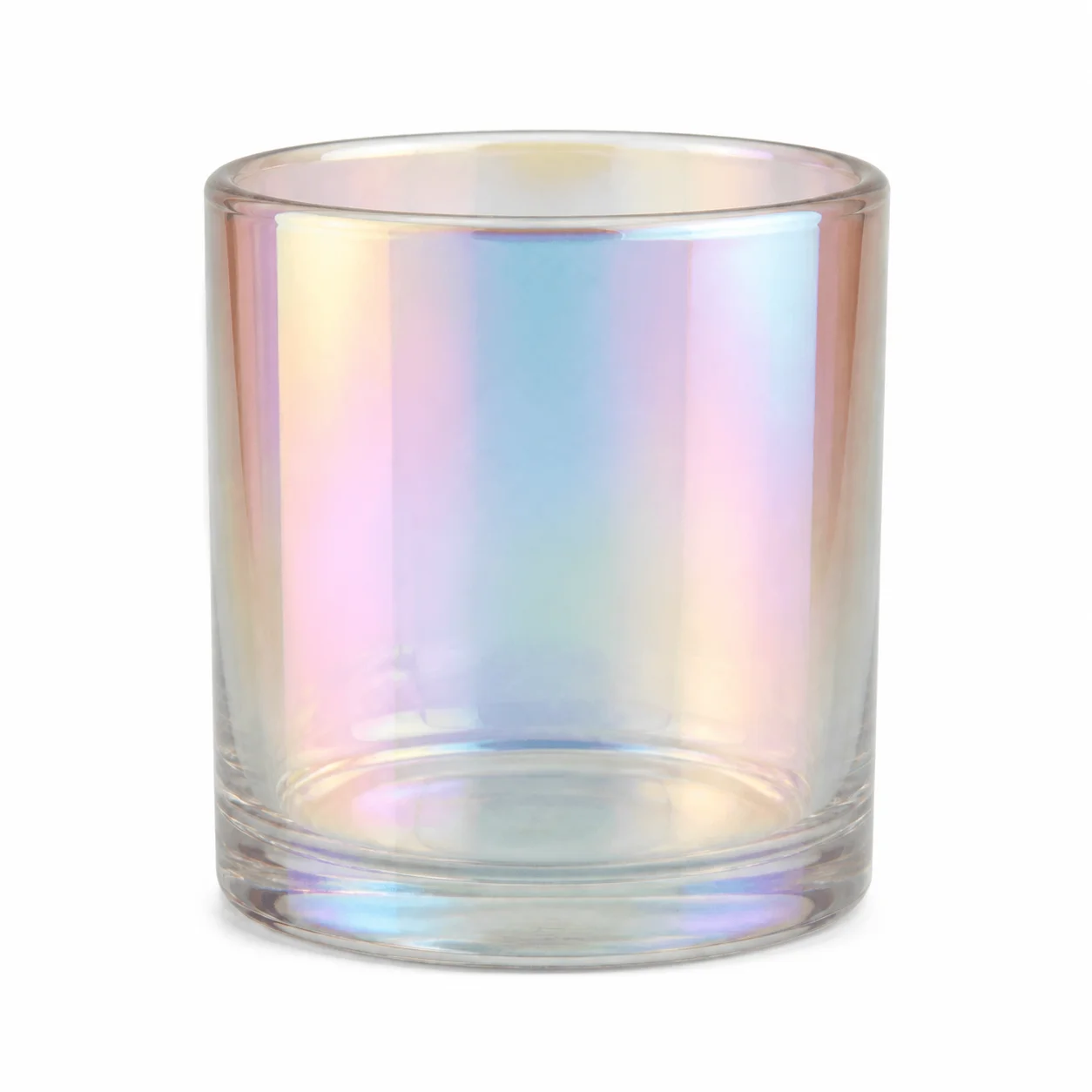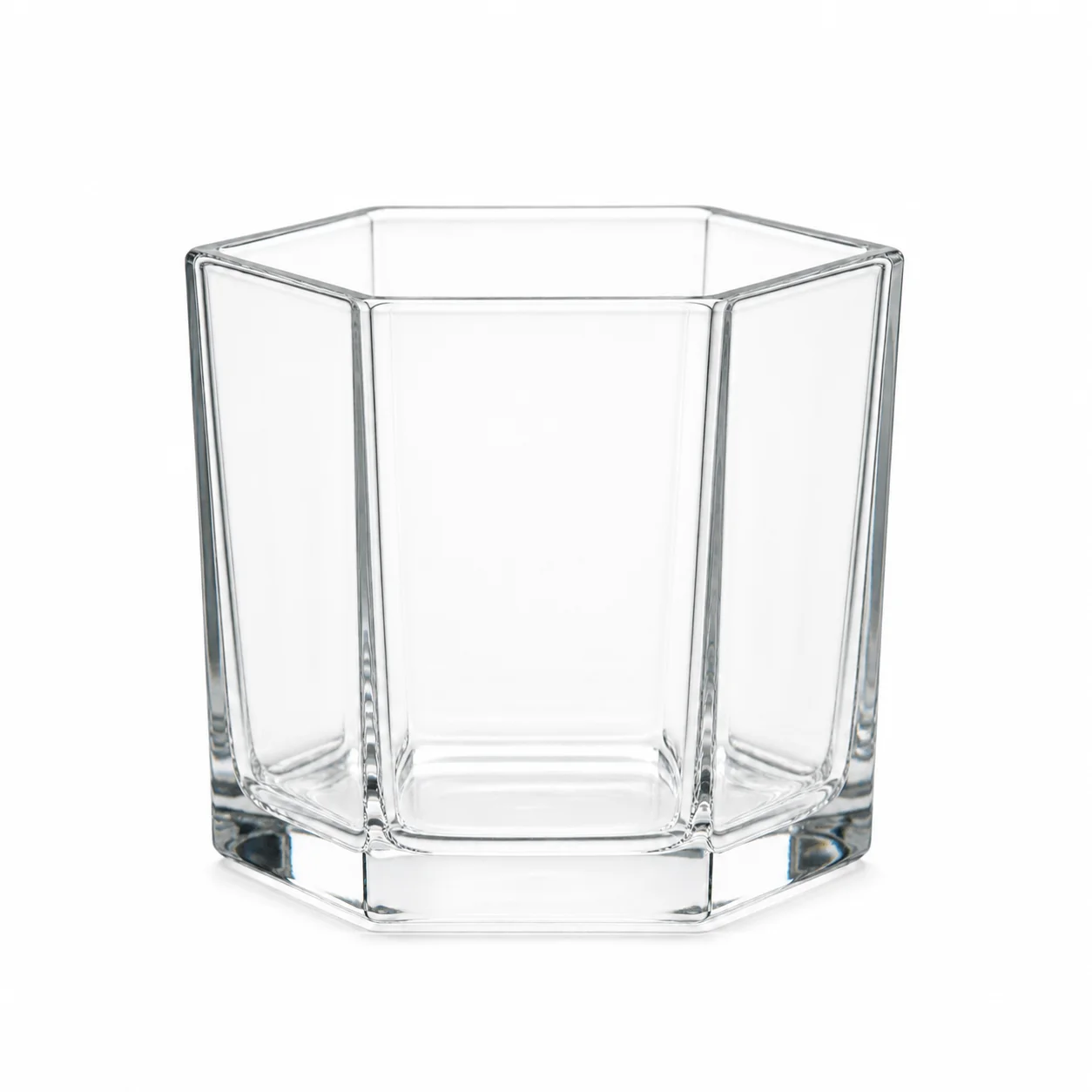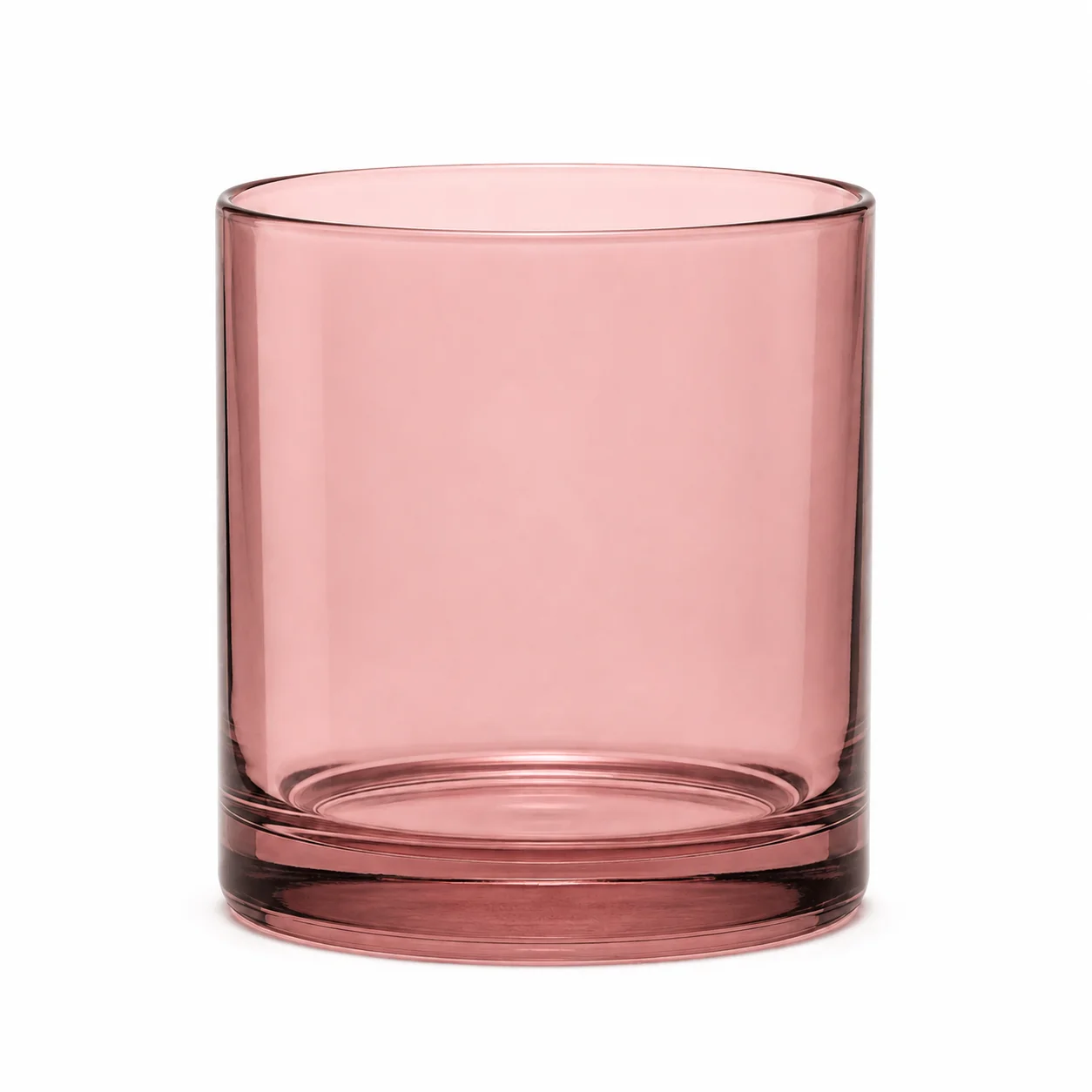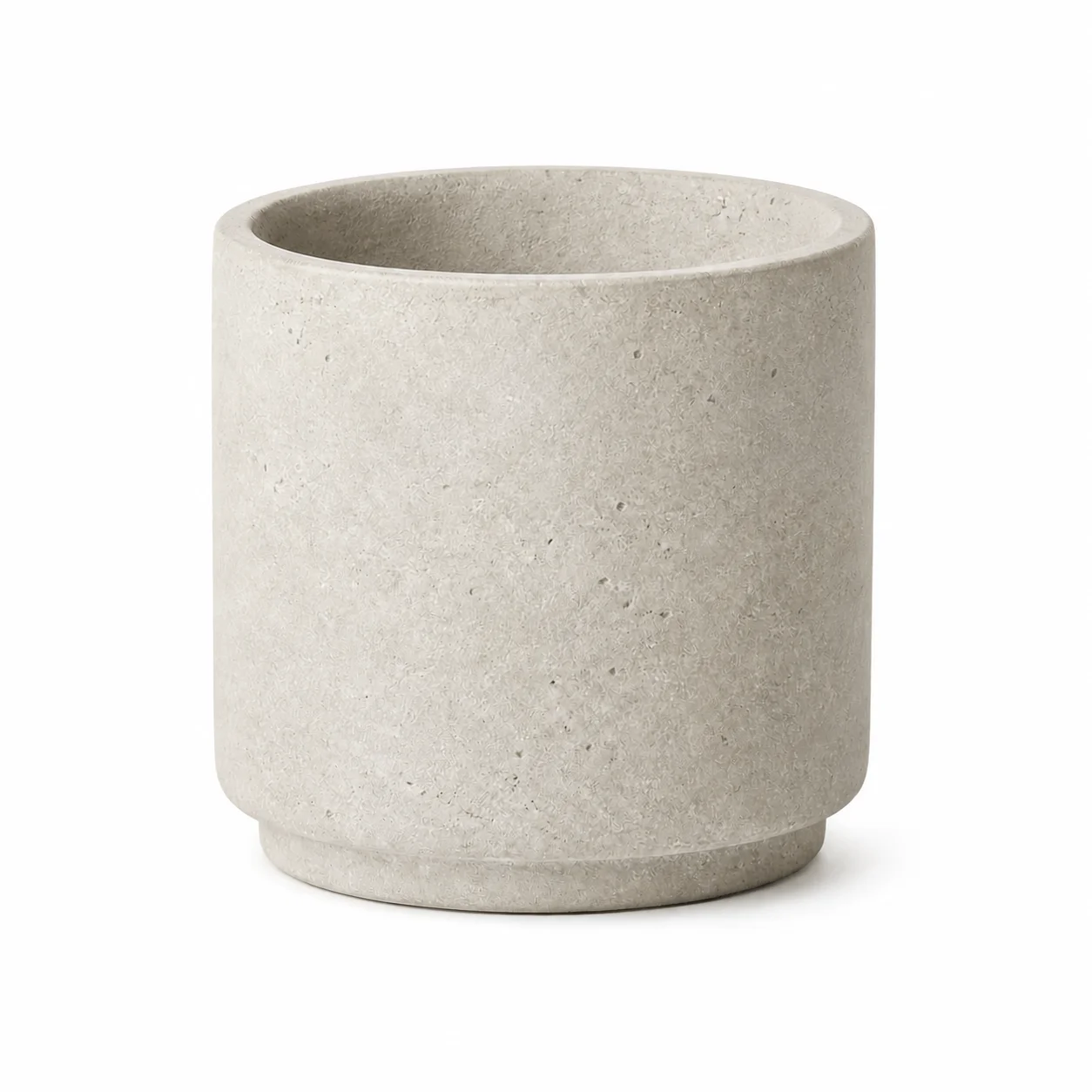
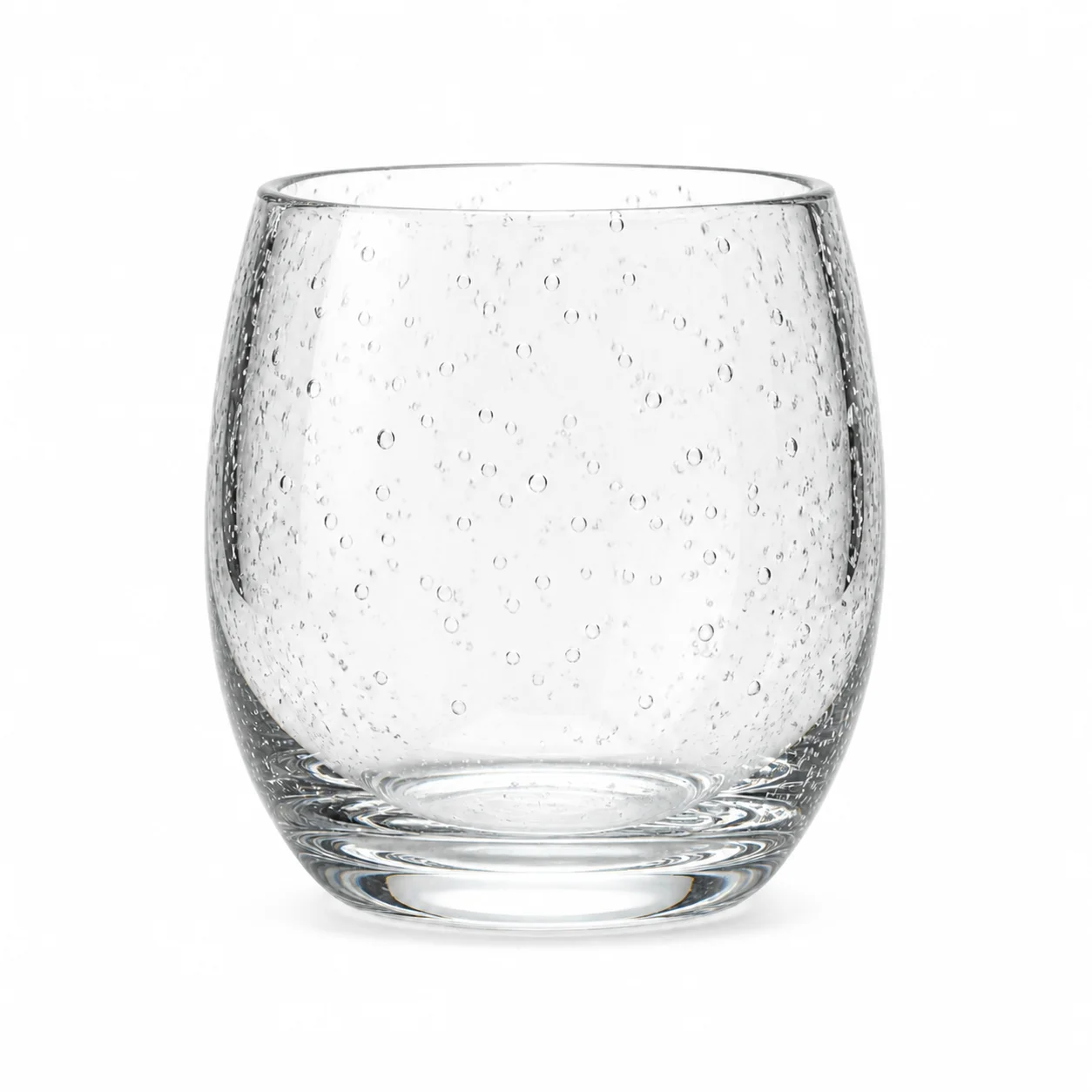
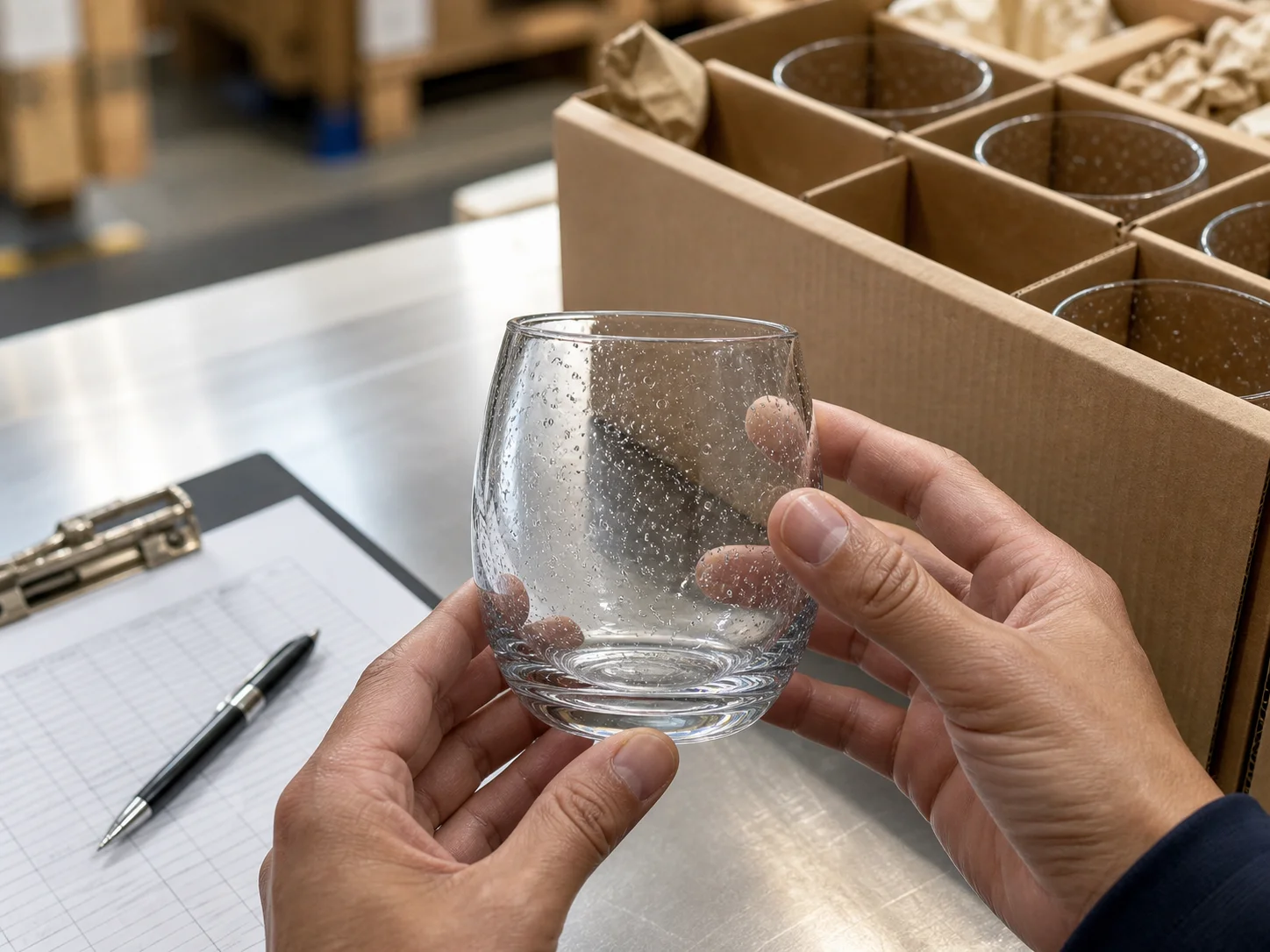
Heavy clear glass vessel with regular bubbles suspended within the wall thickness
Shown configuration · empty vessel / wax, wick, lid and label not shown

Decorated candle vessels

Bullicante Bubble Glass Vessel

A vessel with bubbles deliberately trapped inside the glass wall, a hot-shop technique that puts an ordered pattern of voids where the wall would otherwise be solid.

Bubbles inside the wallOrdered, not accidentalThicker wall by necessity
Stock status
In stock
Lead time
2–3 weeks
FOB price / pc
$0.55 - $0.80
MOQ
10,000 pcs

Final availability, dimensions, materials, assembled components and commercial terms are confirmed against the selected drawing and approved sample.

Voids catch the light

Each bubble reflects a flame

Wall has to be thick

Bubbles need glass around them

Handmade variation expected

No two vessels are identical

Bullicante Bubble Vessel profile

Deliberate voids in the wall, which is the opposite of everything glassmaking normally wants.

Technique, wall thickness & handmade variation

Five things that follow from putting bubbles in on purpose.

Bubbles in glass are usually a defect. In bullicante they are the product: the gather is pressed onto a spiked mold to create a regular array of indentations, then cased in more glass so each becomes a trapped void. The result is a thick wall full of ordered bubbles that catch a flame from every angle.

01

The bubbles are placed, not accidental

A random scatter of bubbles reads as a fault; a regular array reads as a technique. Bullicante produces the second by indenting the hot gather on a spiked mold and then casing it, so the voids sit in a grid. That distinction is what a customer perceives, and it is worth explaining on the pack rather than assuming it is obvious.

02

Trapped voids demand a thick wall

Each bubble needs glass around and outside it, so the wall is substantially thicker than a plain vessel of the same capacity. That makes the piece heavy, expensive in glass and slower to heat, and it is why bullicante vessels sit at the top of a range rather than in the middle of it.

03

The optical effect is why it exists

Each void has a curved interface that reflects and refracts, so a single flame becomes dozens of small highlights distributed through the wall. The effect is strongest in a dark room with the candle low in the vessel, which is the condition to evaluate it in rather than on a bright showroom shelf.

04

Handmade means a tolerance, not a defect list

Bubble size, spacing and wall thickness vary between pieces because the technique is manual. Approving against a single perfect sample guarantees rejections; agreeing an acceptable range with limit pieces is the workable approach, and it is also the honest description to give a customer buying a handmade object.

05

Heat behavior needs checking, not assuming

A thick wall with voids in it conducts heat differently from solid glass of the same thickness, and the pattern of voids is not uniform. That is not a reason to avoid the format, but it is a reason to burn test the actual vessel with the intended wax and wick rather than reasoning from a plain jar of similar dimensions.

06

Bubbles near the wick line are the ones that matter

A void close to the heat concentrates stress in the glass around it, so where the bubble pattern sits relative to the wax line is a structural question and not only a decorative one. Keeping the densest bubbling below the flame zone is the usual answer, and it is set when the pattern is designed.

Application guide

Deliberate bubbles are craft; accidental ones are defects.

Bullicante glass carries bubbles introduced on purpose and arranged through the wall, which is the opposite of the seed and blister a quality inspector normally rejects. Telling the two apart is the whole conversation. These are development directions confirmed on approved samples.

Bullicante Bubble Glass Vessel used for candles sold on handmade character in a artisanal candles setting

Artisanal candles

Candles sold on handmade character

Ranges positioned on craft, where a customer reads visible bubbles as evidence of a person having made the piece. Each vessel varies, and that variation is part of the appeal, so the brief has to define an acceptable spread rather than a single approved appearance.

  • Define the acceptable bubble spread
  • Retain high and low reference pieces
  • Explain the variation on pack
Bullicante Bubble Glass Vessel used for an inspector told bubbles are the point in a incoming inspection setting

Incoming inspection

An inspector told bubbles are the point

For the people checking a delivery against a specification that everywhere else in the plant says bubbles are a defect. Without a written standard for this format they will reject exactly what was ordered, so size, distribution and the treatment of any bubble breaking the surface are put in writing and the team is briefed.

  • Write a bubble standard for inspection
  • Reject bubbles breaking the surface
  • Brief inspectors on the intent
Bullicante Bubble Glass Vessel used for bubbles lit in a dim room in a dinner tables setting

Dinner tables

Bubbles lit in a dim room

For vessels lit in front of guests after the main lights go down, which is the moment the format was made for. Each bubble catches the flame and throws points of light across the wall, and none of that is visible on a bench in daylight, so buyers should approve these with a candle burning.

  • Approve with a candle burning
  • Review the effect in a dim room
  • Check bubble density against the flame

Applications describe visual directions. Bubble consistency, strength, burning, safety, handling and distribution outcomes are confirmed for the selected program.

Common questions

Bullicante Bubble Vessel questions

Bubbles on purpose, with everything that follows from a thick handmade wall.

How is this different from bubbles as a defect?

Placement. A random scatter reads as a fault; a regular array reads as a technique. Bullicante indents the hot gather on a spiked mold and then cases it in more glass, so the voids sit in a grid. That difference is what customers perceive, and it is worth stating on the pack rather than assuming it is self-evident.

How should the effect be judged?

In a dark room with the candle burning low in the vessel. Each void has a curved interface that reflects and refracts, turning one flame into dozens of small highlights distributed through the wall. On a bright showroom shelf almost none of that is visible, which is the condition most sample reviews unfortunately use.

Does the bubble structure affect burning?

It can, because a thick wall with voids conducts heat differently from solid glass of the same thickness and the void pattern is not uniform. That is a reason to burn test the actual vessel with your wax and wick rather than reasoning from a plain jar of similar dimensions, not a reason to avoid the format.

Which bubbles actually matter?

The ones near the wick line. Voids in the wall where the flame concentrates heat are the ones with a technical consequence; the rest are decoration. Set the pattern so the bubble field sits away from the burn zone, and confirm it with a burn test.

Next step

Send us the Bullicante Bubble Glass Vessel brief.

Tell us the product, fill volume, closure preference and destination market. We will come back with the matching drawings, available configurations and a sample plan before anything is quoted.

  • 01Send the briefProduct, volume, closure and market
  • 02Get the optionsMatching drawings and configurations
  • 03Approve the sampleConfirm the pack before production