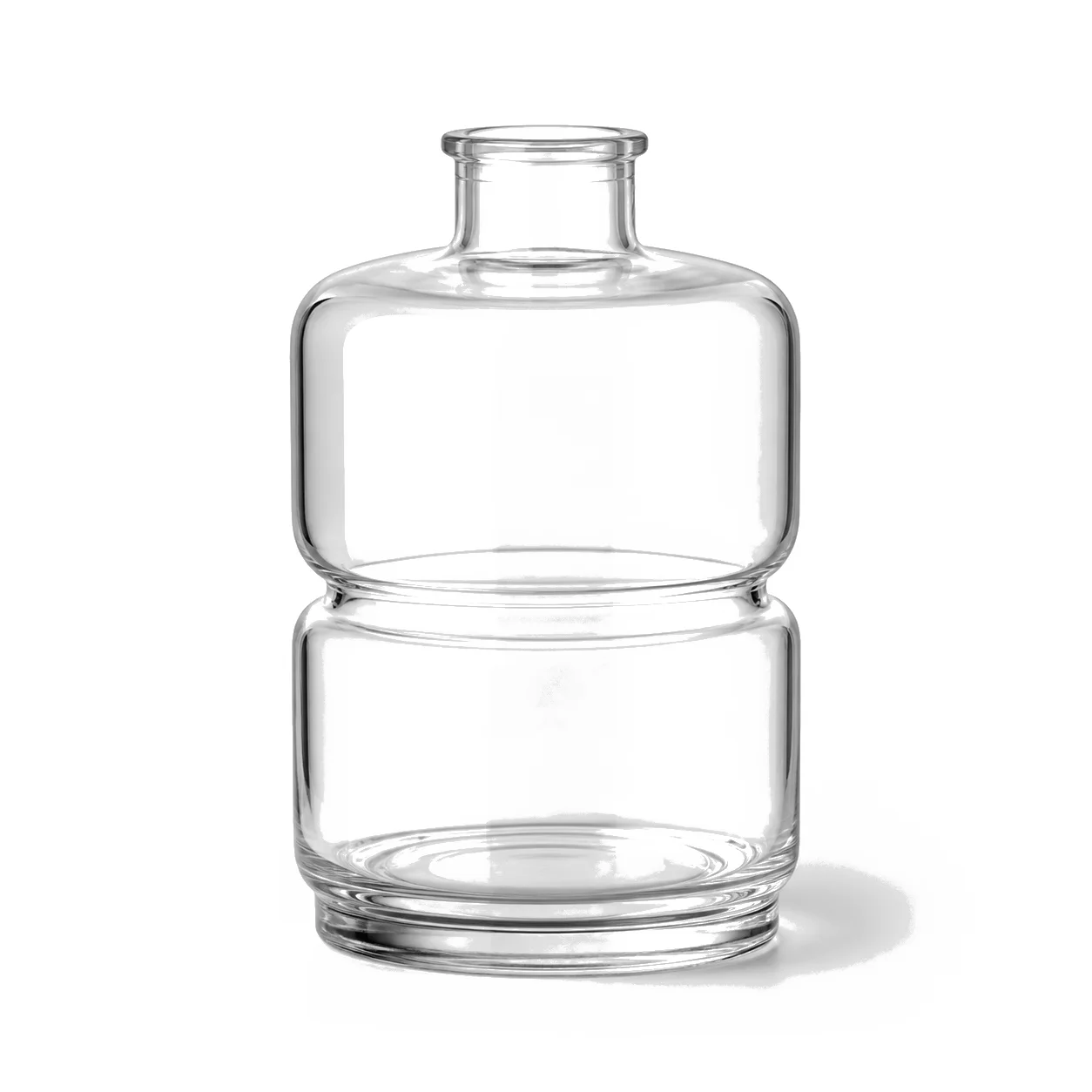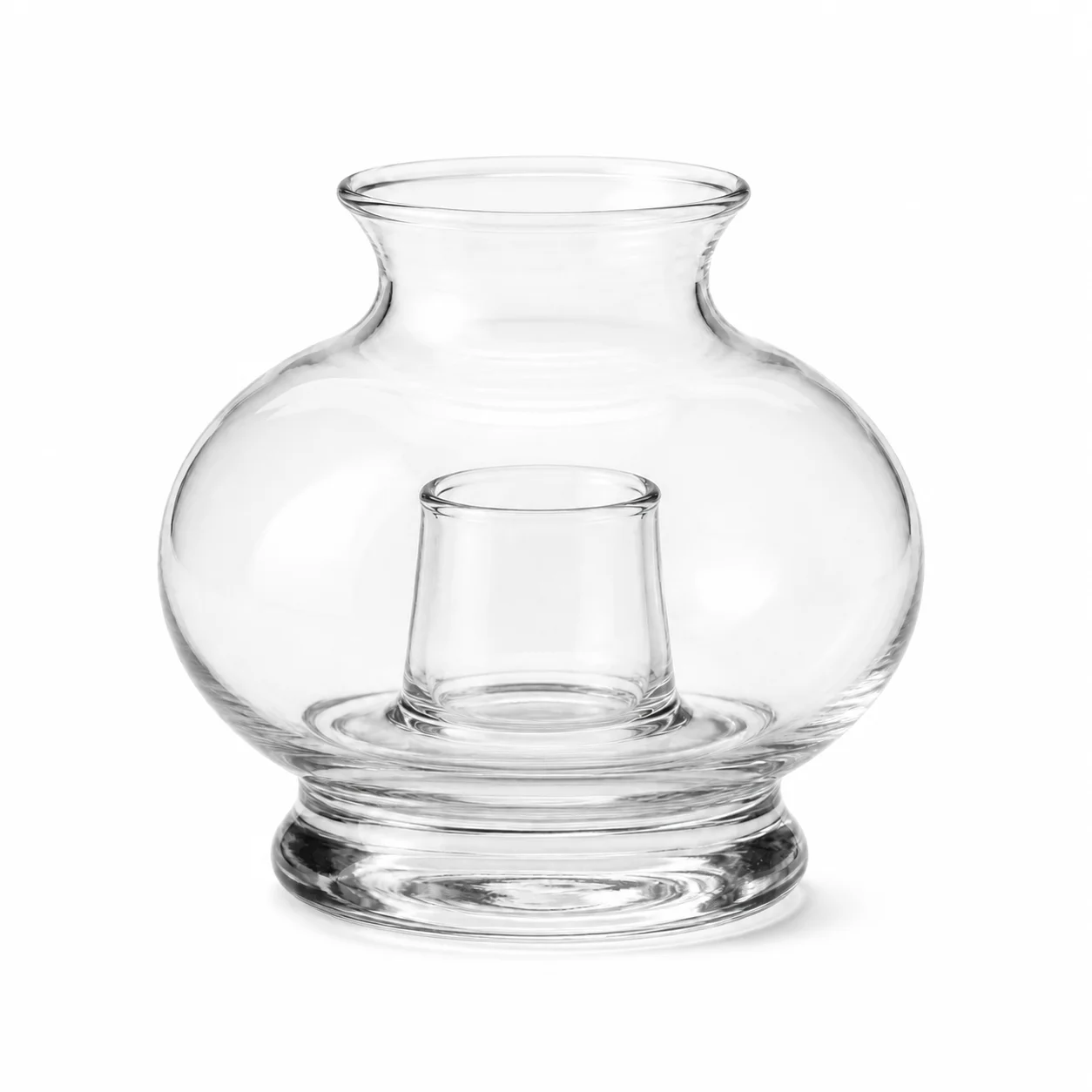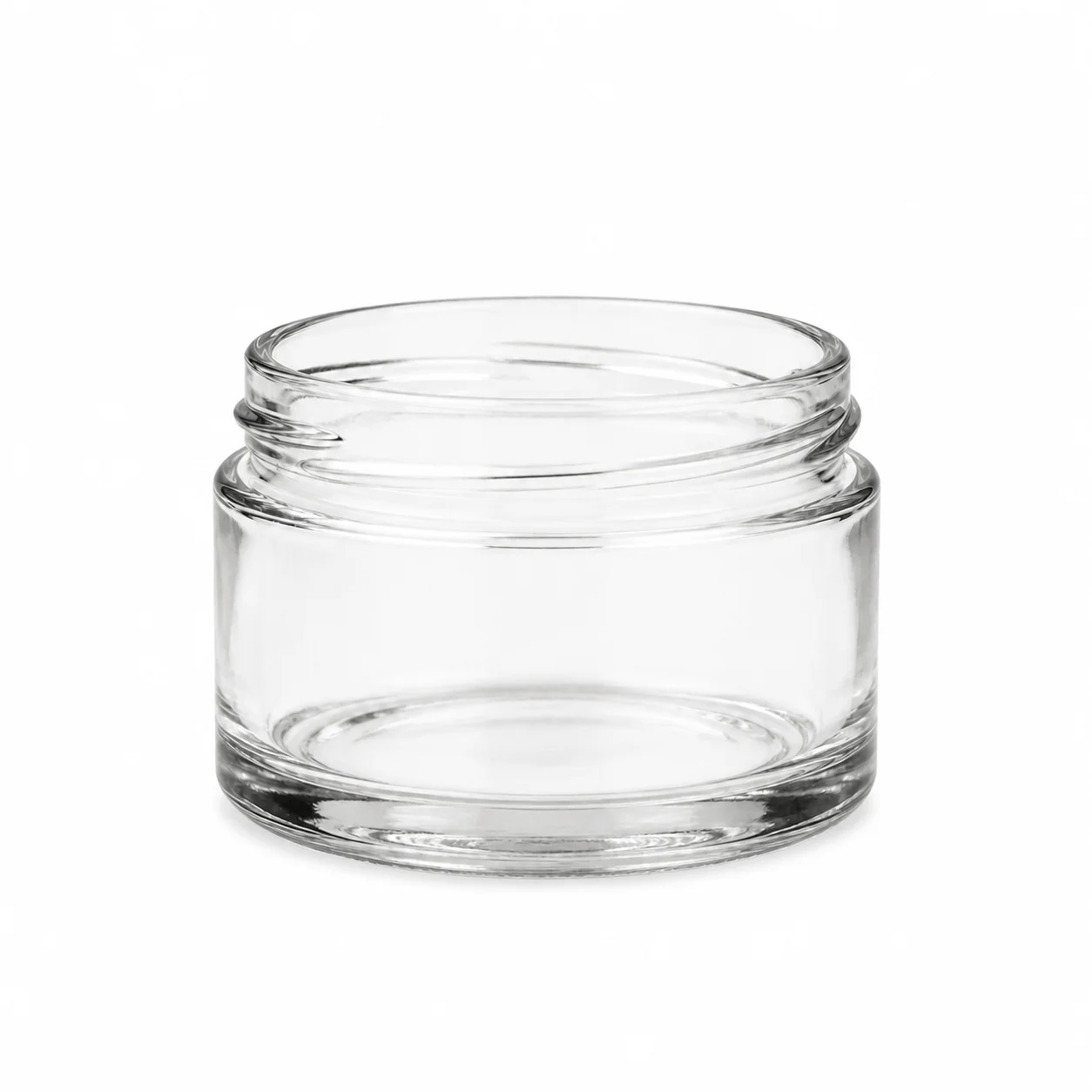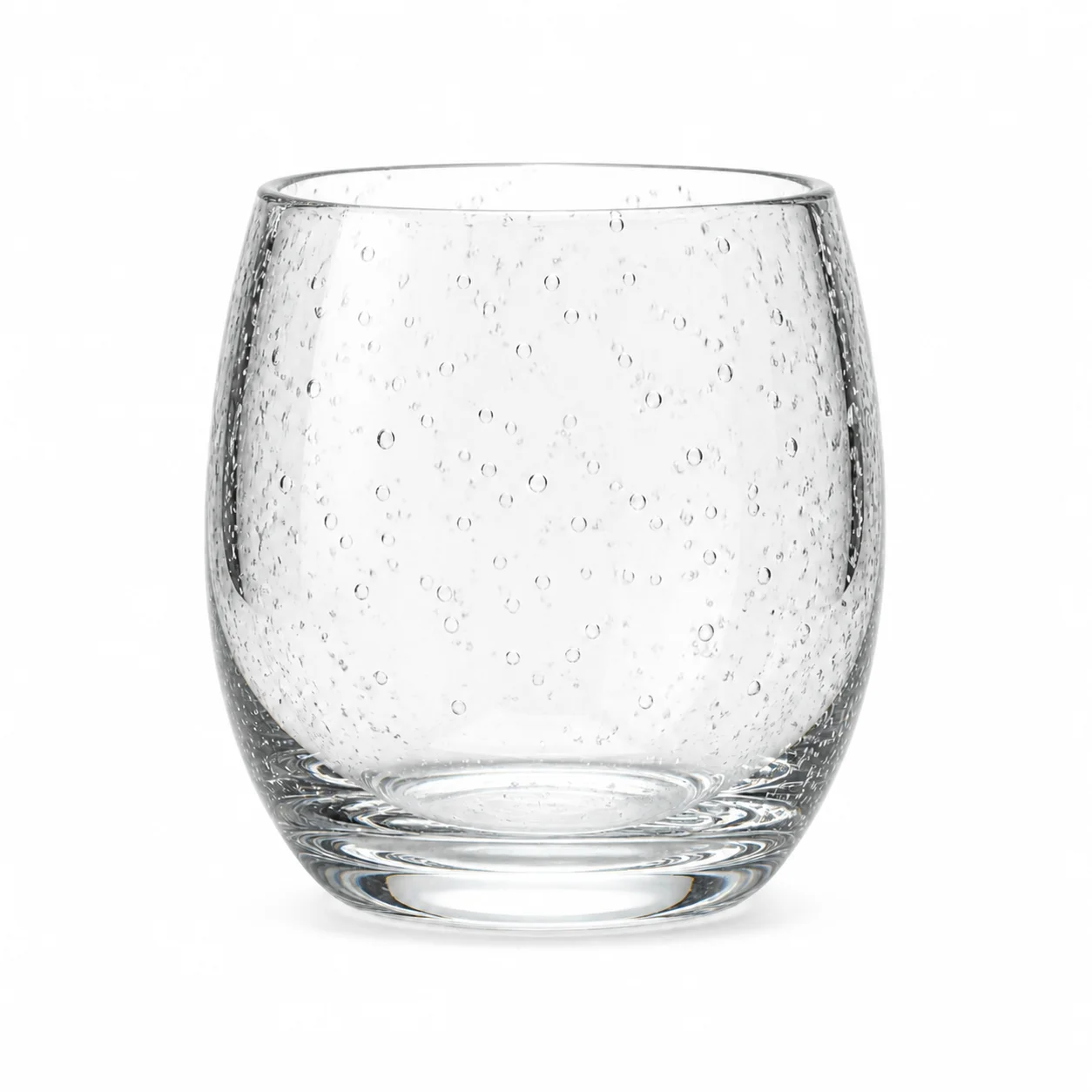
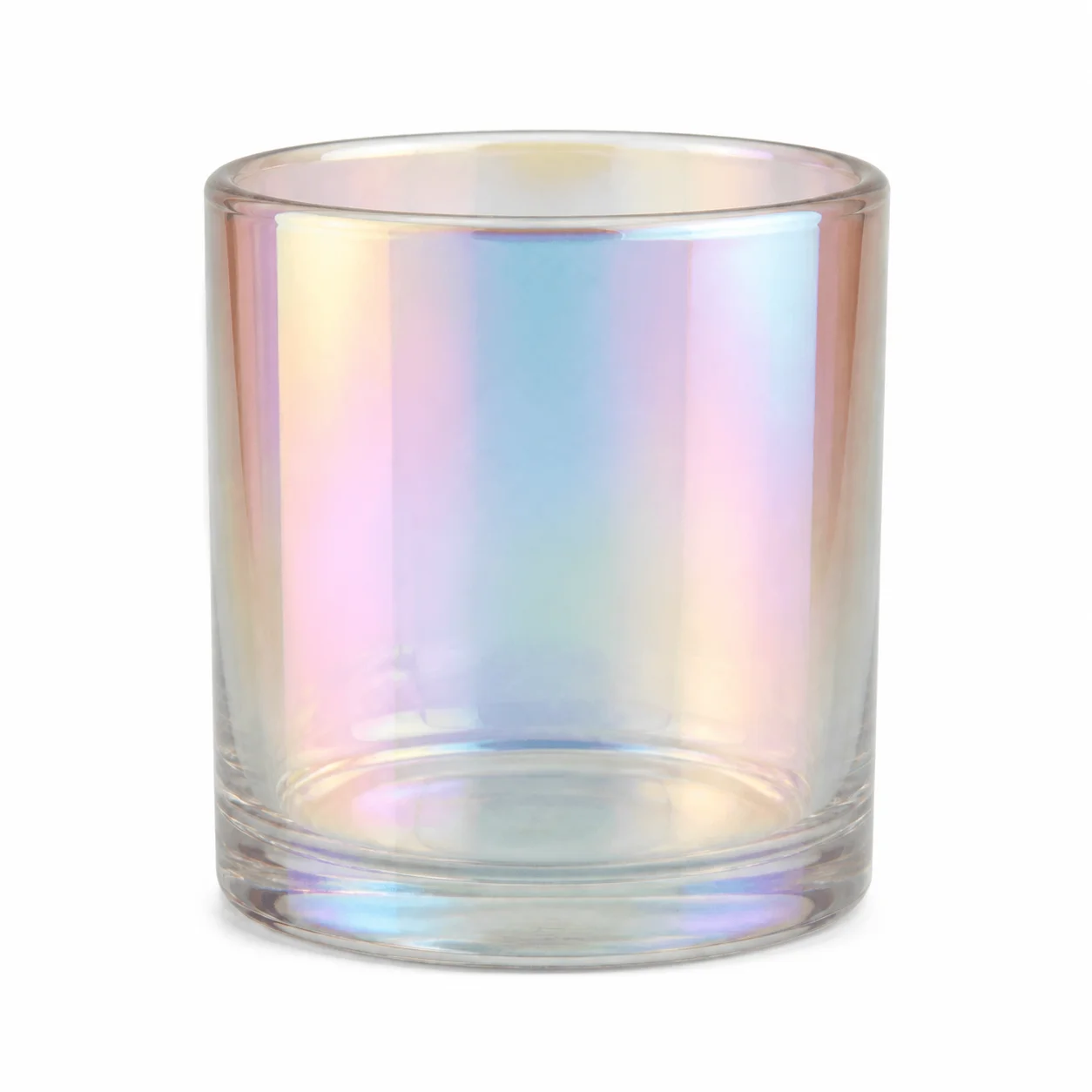
Clear glass vessel with a rainbow sheen shifting across its surface
Shown configuration · empty vessel / wax, wick, lid and label not shown

Decorated candle vessels

Iridescent / Aura Glass Vessel

An iridescent vessel finished with a thin interference coating, so the color shifts with viewing angle rather than being a pigment applied to the glass.

Interference film, not pigmentColor shifts with anglePhotographs unlike it looks
Stock status
In stock
Lead time
2–3 weeks
FOB price / pc
$0.50 - $0.95
MOQ
5,000 pcs

Final availability, dimensions, materials, assembled components and commercial terms are confirmed against the selected drawing and approved sample.

Angle makes the color

No single shade to match against

Film thickness is the shade

Nanometers decide what you see

Hard to photograph honestly

Product shots rarely match the object

Iridescent Aura Vessel profile

A finish with no fixed color, which makes every part of quality control unusual.

Interference optics, batch matching & photography

Five things that are unusual about a color with no pigment.

Iridescence comes from a film thin enough that light reflecting off its two surfaces interferes with itself, so the color you see depends on film thickness and on the angle you look from. There is no pigment. That makes approval, batch matching and even product photography behave differently from any other finish in the category.

01

The color comes from thickness, measured in nanometers

A thin transparent film reflects light from both its surfaces, and those two reflections interfere constructively or destructively depending on wavelength, thickness and angle. Change the deposited thickness slightly and the whole sequence of colors shifts. It is the same physics as an oil film on water, applied deliberately and controlled to a tolerance.

02

There is no single shade to approve

Standard color approval compares a sample against a reference under defined lighting, and that method fails here because the color changes as the sample is turned. Approval works instead by agreeing a pair of physical limit samples and a viewing protocol — the same angle, the same light — and accepting the range between them.

03

Batch variation shows as a different rainbow, not a different shade

When deposition drifts, the effect is not that the vessel is slightly bluer but that the sequence of colors across the surface has moved. Customers who have bought before notice, because they compare against the object in their hand. Tight process control matters more here than on a pigmented finish where a small shift is barely visible.

04

Photography almost always misleads

A camera fixes one angle and one light source, so a product shot shows one slice of a finish that exists as a range. Customers regularly report that the object does not match the picture when both are correct. Showing two or three angles, or a short video, prevents a return that would otherwise be entirely avoidable.

05

The film still has to survive a candle

Whatever the optics, it remains a coating on the outside of a vessel that will be heated from the inside along a traveling wax line. Adhesion and appearance are assessed by burning filled units to the base, because a film thin enough to produce interference is also thin enough to craze in a way that changes the color.

06

The effect depends on the angle it is viewed from, so the sample must be handled

An interference film changes color as the eye moves, which means a flat photograph or a single fixed view describes almost nothing about the finished product. Approval is done by turning a physical sample under the lighting the product will be sold in.
Application guide

Iridescence exists only in the light that hits it.

An iridescent coating shifts color with viewing angle and light source, which makes it striking in person and almost impossible to specify from a photograph. These are development directions confirmed on physical samples under real lighting.

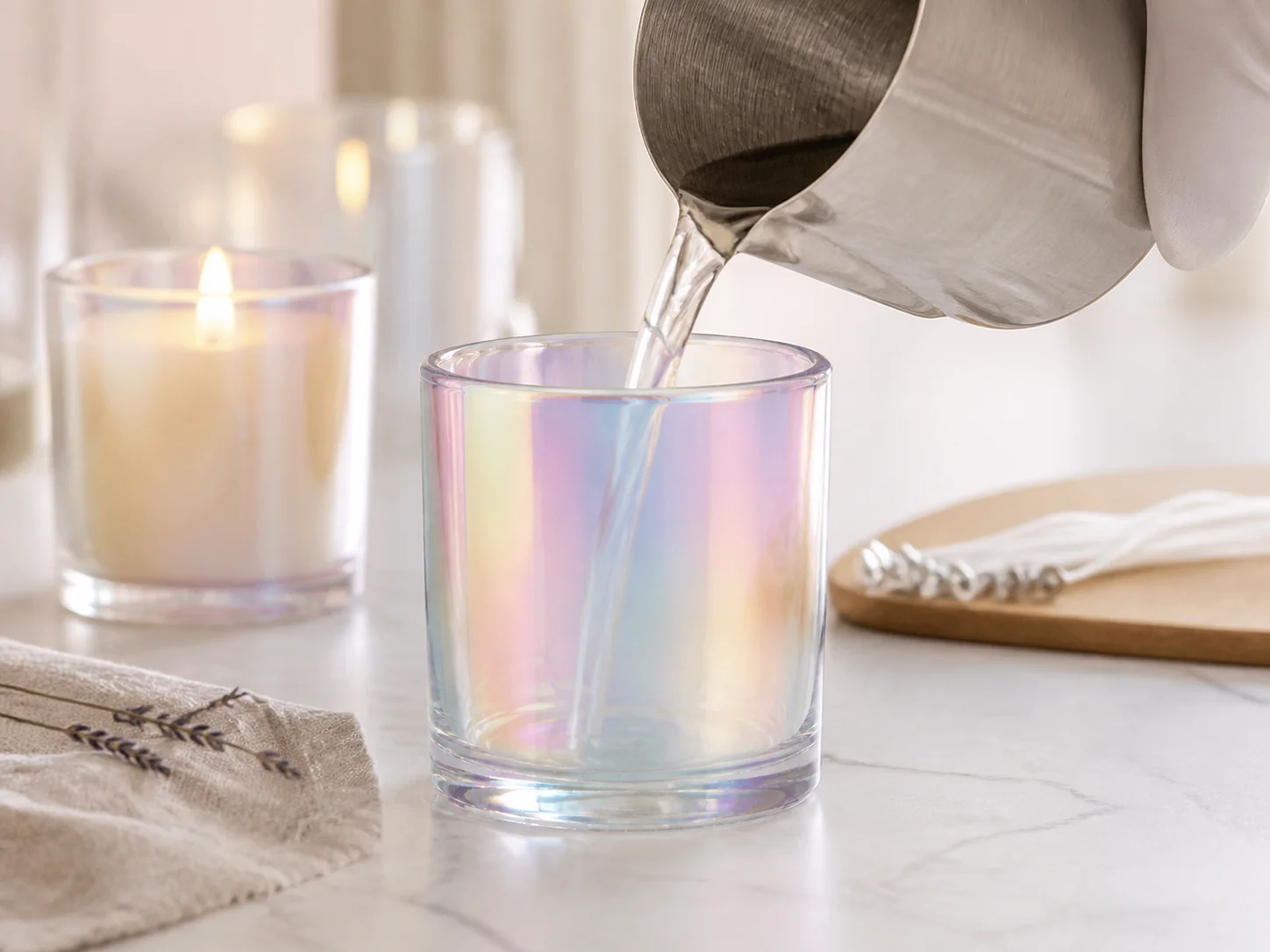
Iridescent / Aura Glass Vessel used for aura finishes for social-led ranges in a trend-led candles setting

Trend-led candles

Aura finishes for social-led ranges

Ranges aimed at customers who discover products on a phone screen and buy them partly to photograph, where a shifting rainbow sheen performs unusually well. The effect changes with every angle, so both the buyer and the photographer need physical samples rather than renders.

  • Approve on physical samples only
  • Photograph before committing
  • Review the shift across angles
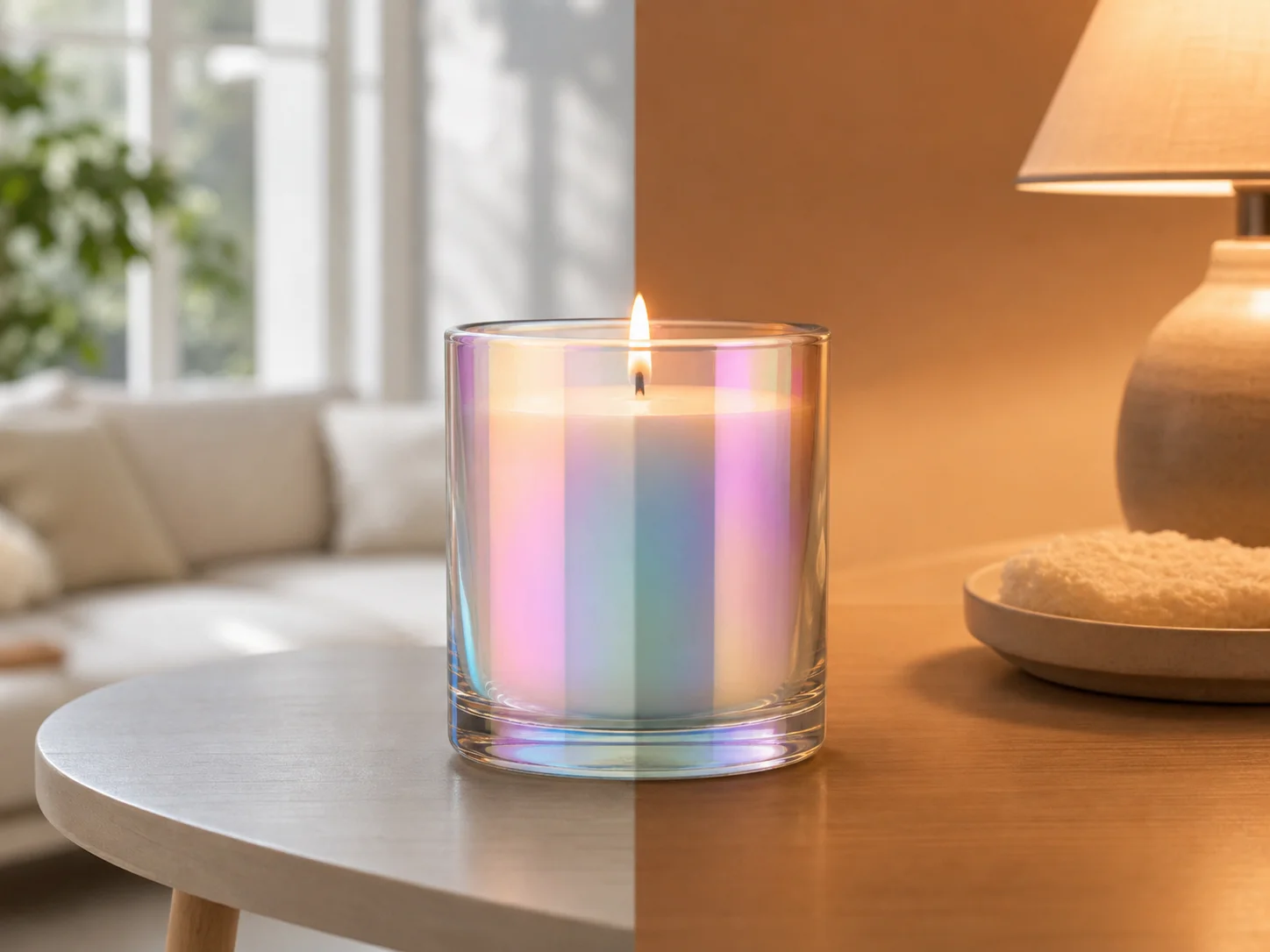
Iridescent / Aura Glass Vessel used for how the finish reads in different rooms in a lighting dependence setting

Lighting dependence

How the finish reads in different rooms

Iridescent coatings look vivid under directional retail spotlights and can fall flat under warm domestic bulbs, which is where the customer actually sees them. Checking both conditions prevents a finish approved in a showroom that disappoints in a living room.

  • Compare retail and domestic lighting
  • Confirm the effect survives warm light
  • Review with a candle lit inside
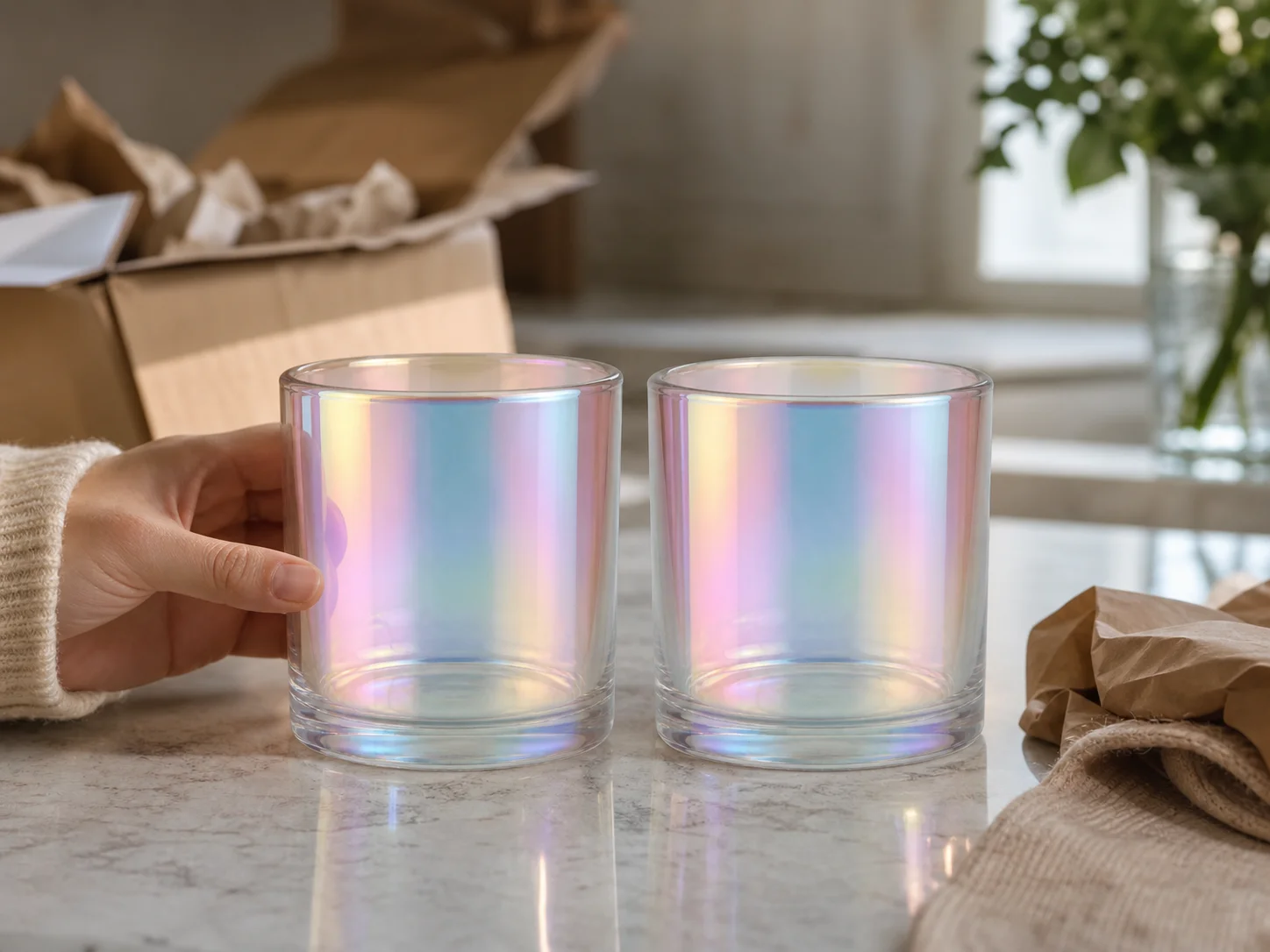
Iridescent / Aura Glass Vessel used for two vessels a customer stands together in a pairs and sets setting

Pairs and sets

Two vessels a customer stands together

For pieces bought in twos and threes for a mantel or a table setting, where the owner puts them beside each other the moment they get home. A finish that shifts by design drifts between batches, and side by side that difference is obvious, so a tolerance is agreed and physical reference pieces are kept.

  • Agree a tolerance for the shift
  • Retain physical reference pieces
  • Compare units side by side

Applications describe visual directions. Surface durability, color consistency, burning, safety, handling and distribution outcomes are confirmed for the selected program.

Common questions

Iridescent Vessel questions

A finish with no fixed color changes how it is bought, approved and photographed.

How do we approve the color?

With physical limit samples and a stated viewing protocol — the same angle, the same light — accepting the range between them. Comparing a sample against a single reference under defined lighting is the standard method and it fails here, because the color changes as soon as either the sample or the viewer moves.

What does batch variation look like?

Not a slightly different shade but a different sequence of colors across the surface. Repeat customers notice it because they compare against the object they already own. Process control therefore matters more here than on a pigmented finish, where a small drift is barely perceptible even side by side.

Why do customers say the product looks different from the photo?

Because a camera fixes one angle and one light source, and the finish exists as a range rather than a value. Both the picture and the object can be correct and still not match. Showing two or three angles, or a short video, prevents returns that are otherwise entirely avoidable and cost more than the extra photography.

Does the coating survive a candle?

That has to be established by burning filled units to the base and inspecting along the whole height. A film thin enough to produce interference is also thin enough to craze, and crazing changes the color as well as the surface. Candle fire safety work includes coatings, and an oven soak does not reproduce the traveling wax line.

Can the effect be approved from a photograph?

No — it changes with the viewing angle. An iridescent film shows a different rainbow as it turns, so a fixed image captures one moment of it and misleads about the rest. Approval needs a physical sample handled under the lighting the product will be sold in.
Next step

Send us the Iridescent / Aura Glass Vessel brief.

Tell us the product, fill volume, closure preference and destination market. We will come back with the matching drawings, available configurations and a sample plan before anything is quoted.

  • 01Send the briefProduct, volume, closure and market
  • 02Get the optionsMatching drawings and configurations
  • 03Approve the sampleConfirm the pack before production