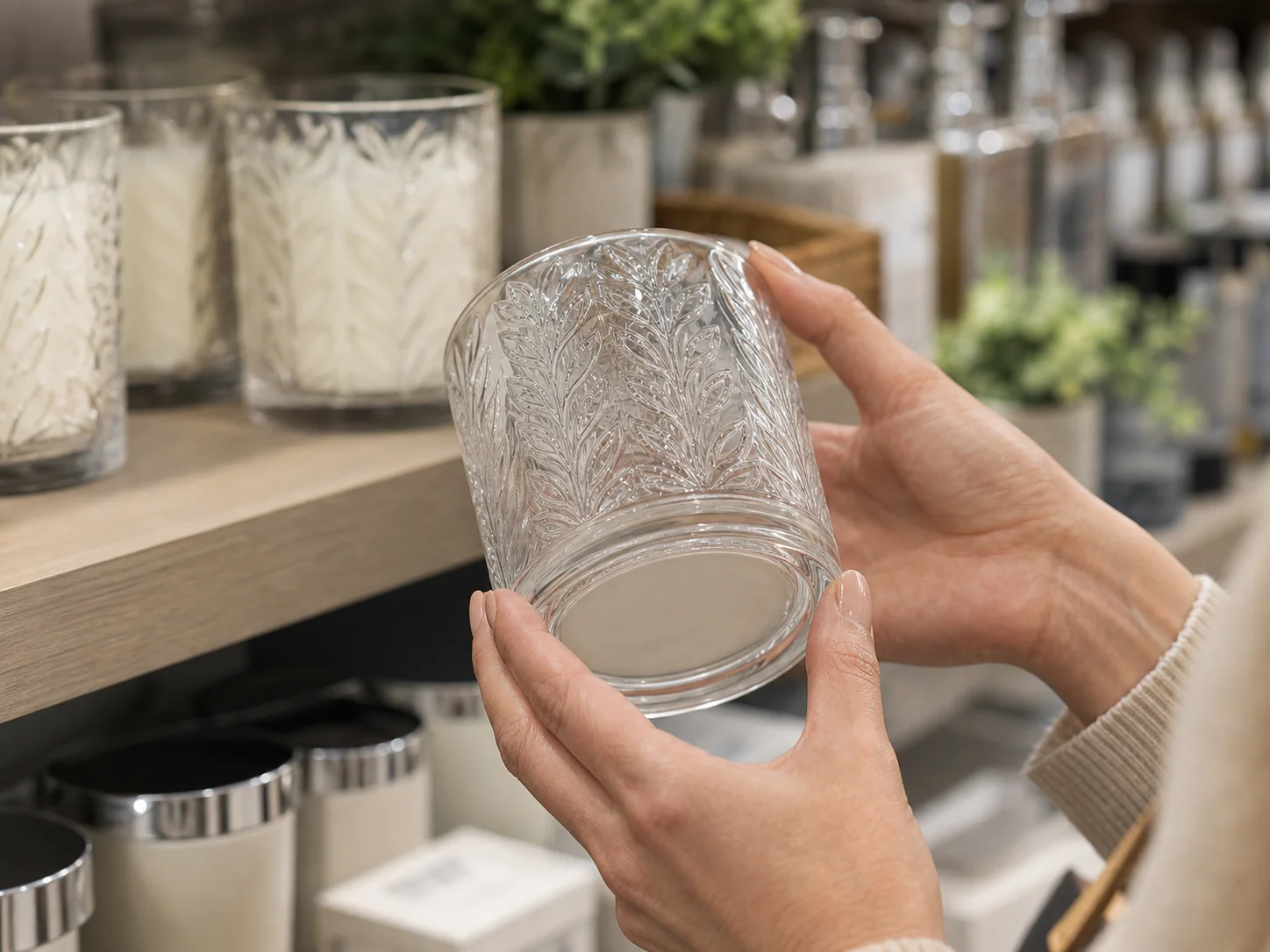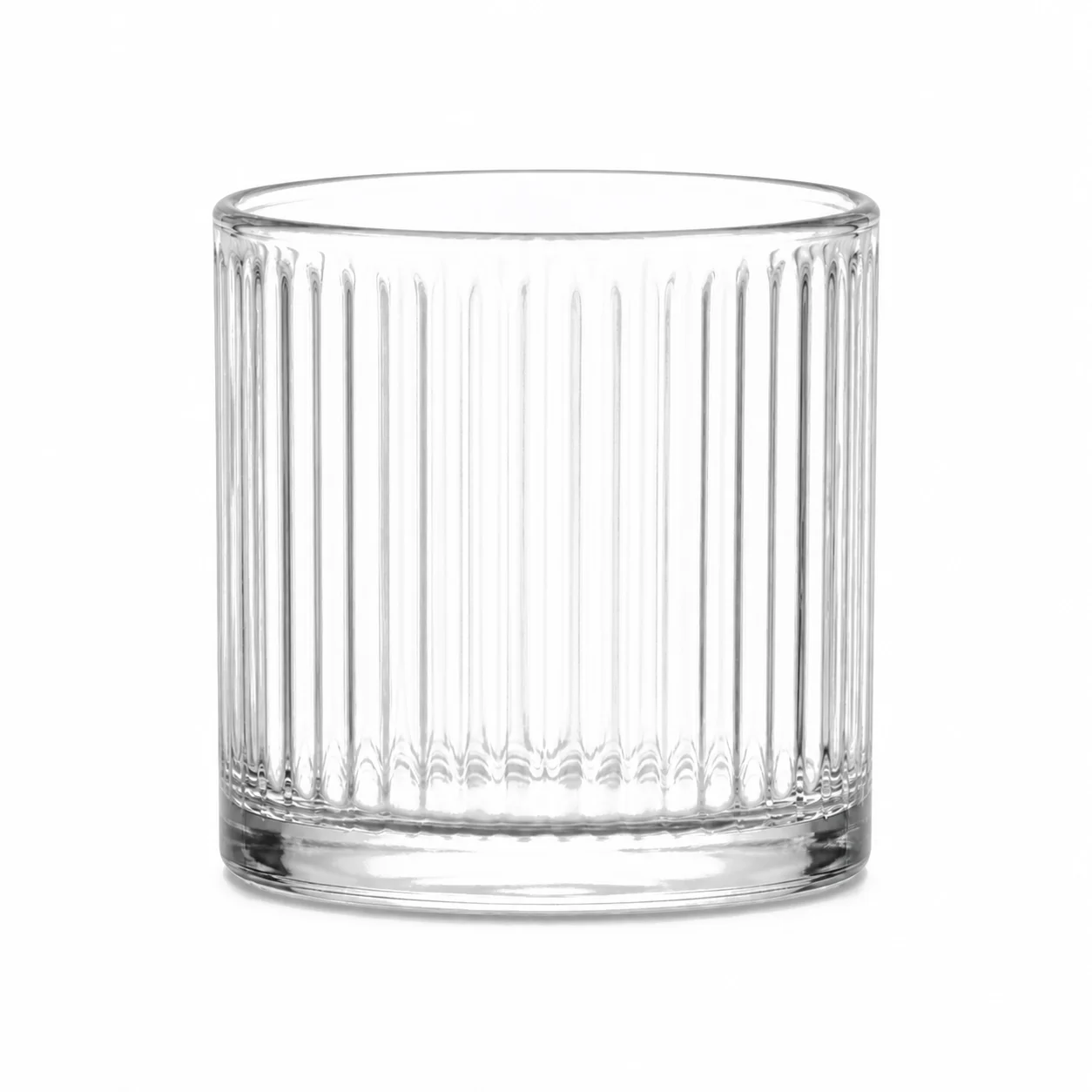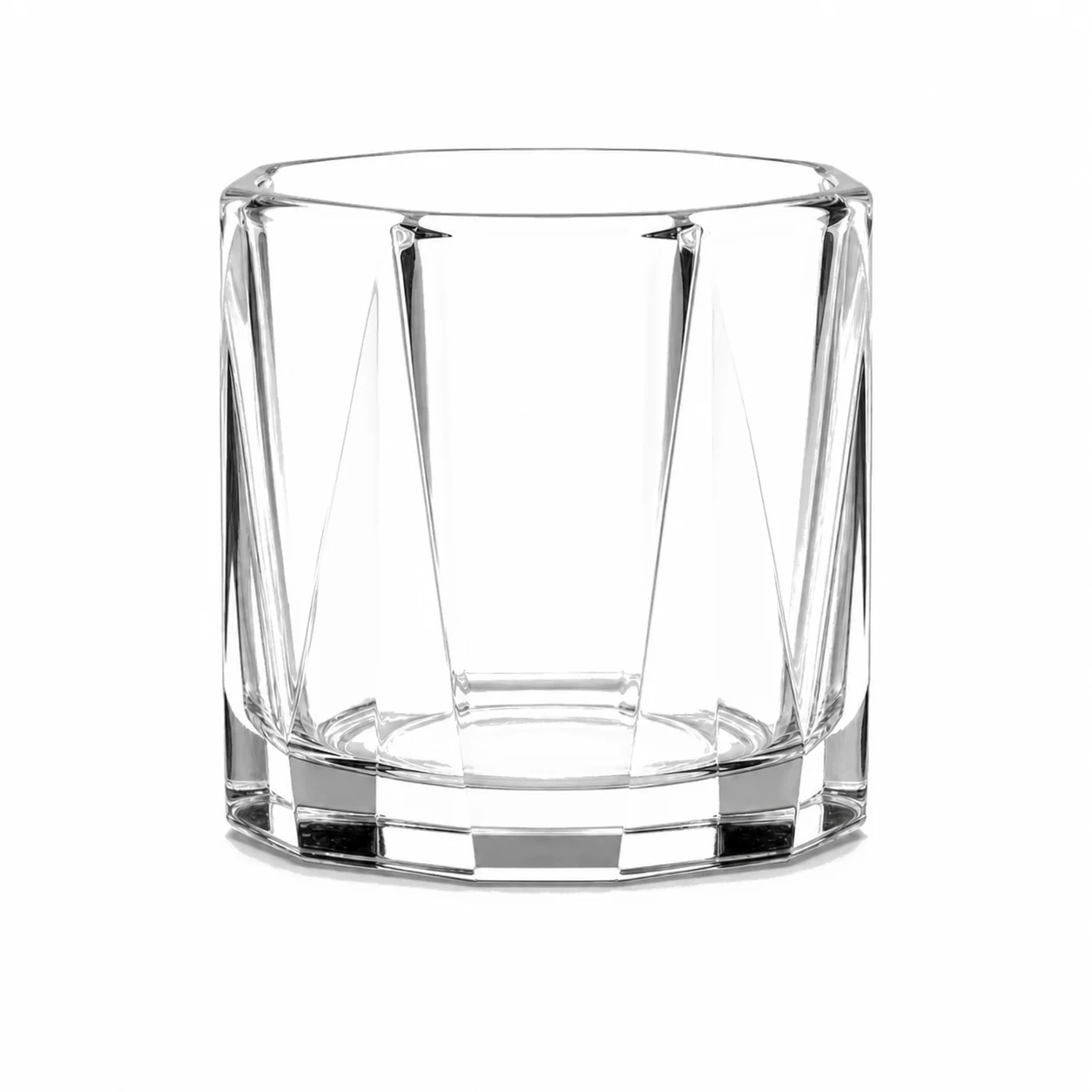
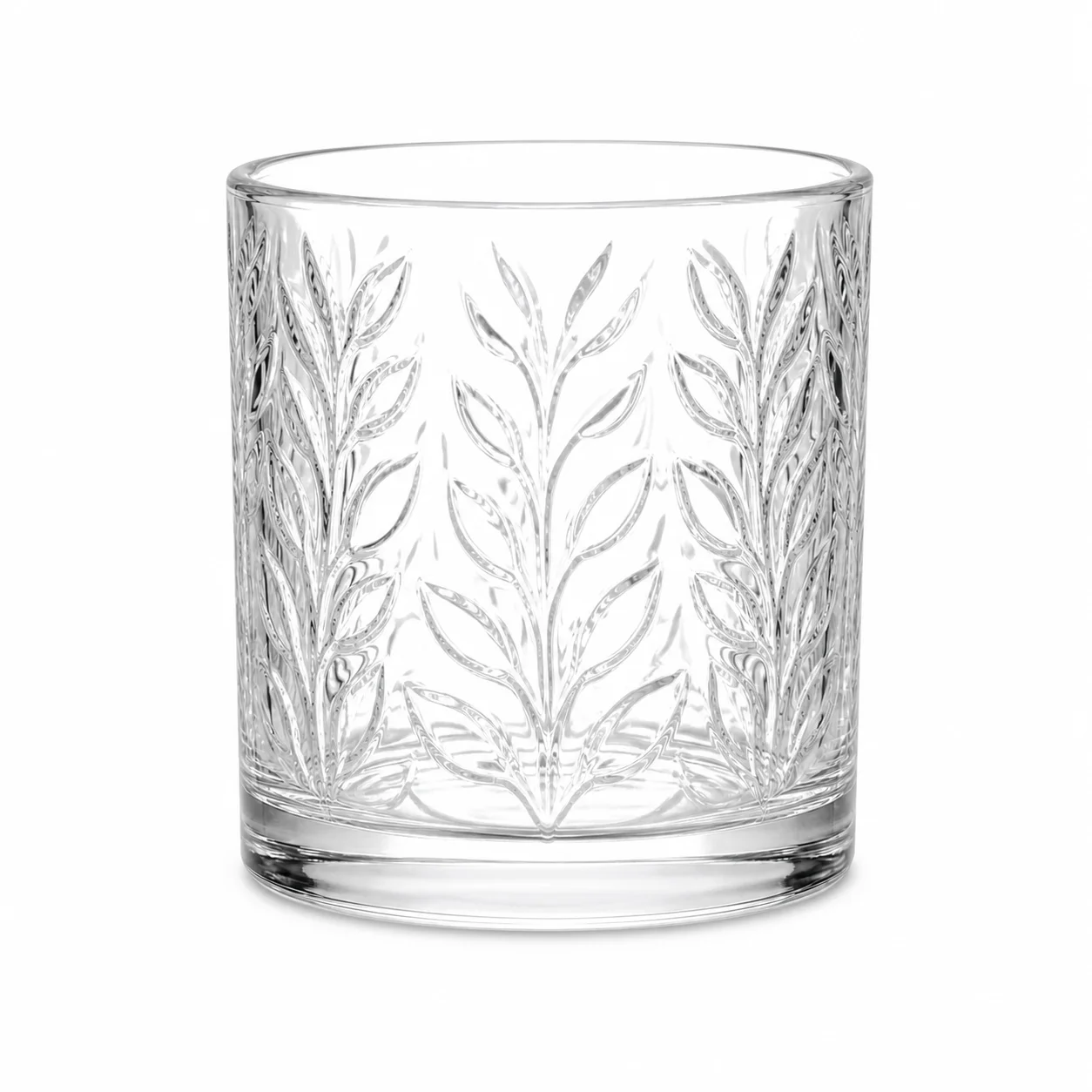
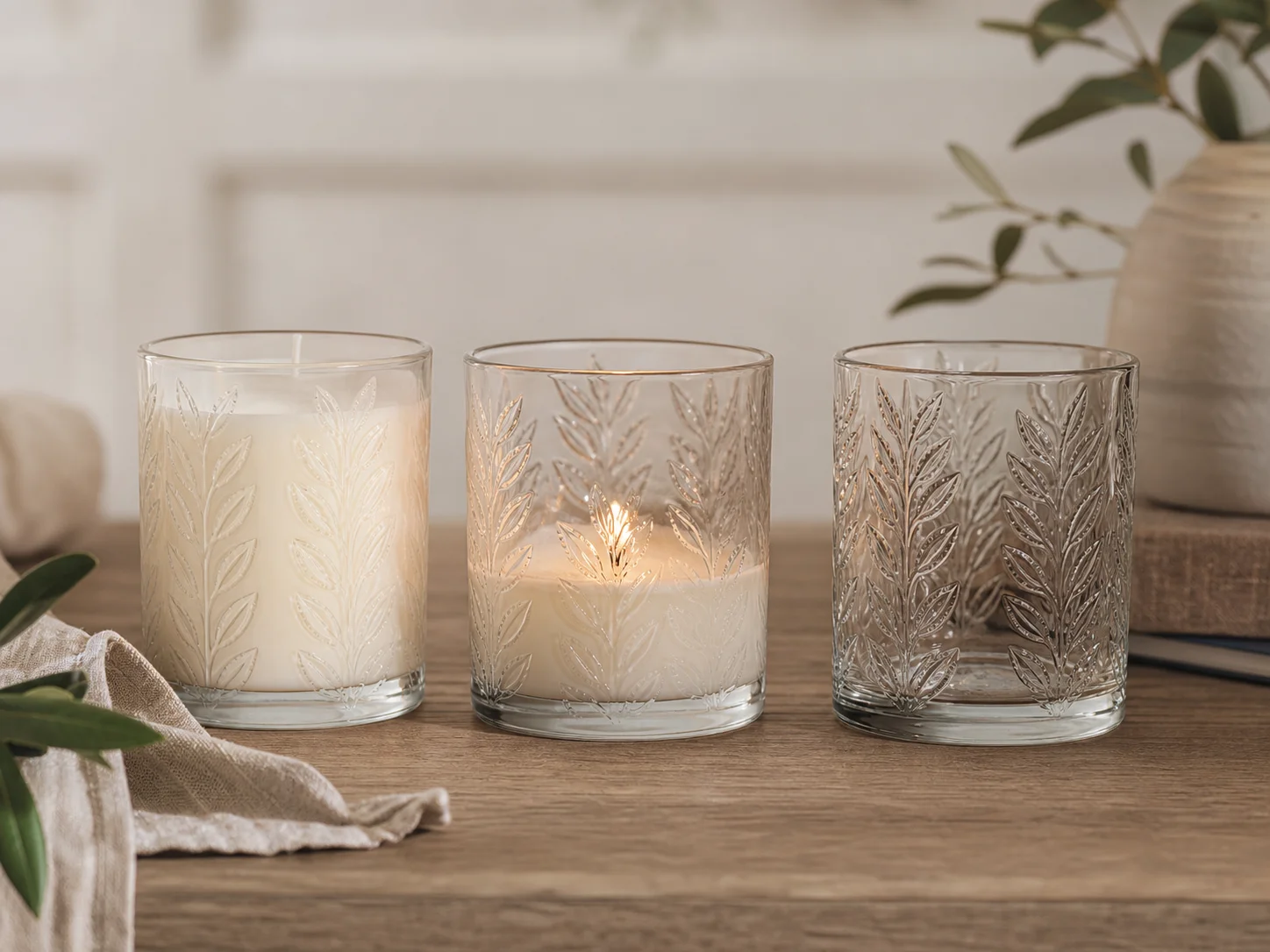
Clear candle jar with a raised relief pattern formed into the glass wall
Shown configuration · empty jar / wax, wick, lid and label not shown

Decorated candle vessels

Embossed Candle Jar

An embossed candle jar where the pattern is formed in the mold, so it varies the wall thickness — which changes both how the glass heats and where a label can go.

Pattern formed in the moldWall thickness variesTooling cost, no unit cost
Stock status
In stock
Lead time
2–3 weeks
FOB price / pc
$0.35 - $0.80
MOQ
5,000 pcs

Final availability, dimensions, materials, assembled components and commercial terms are confirmed against the selected drawing and approved sample.

Paid once in tooling

No per-unit decoration charge

Relief refracts the flame

Lit appearance is the point

Label needs a flat island

Relief and artwork planned together

Embossed Candle Jar profile

Decoration that costs nothing per unit and everything in tooling.

Mold economics, thickness variation & label planning

Five consequences of putting the decoration into the glass itself.

An embossed pattern is cut into the mold, so every jar carries it with no added process and no coating to fail. The costs move to the front: mold engraving, minimum runs and a design that has to work as varying glass thickness rather than as a printed image. It also refracts candlelight in a way no applied decoration can.

01

The cost structure inverts

Engraving a mold is a one-off charge and then embossing adds nothing per unit, where spraying or printing charges every jar forever. That makes embossing cheap at volume and expensive at low volume, and it locks the design for the life of the mold. Changing an embossed pattern means new tooling rather than new artwork.

02

Relief means the wall thickness is not uniform

Raised areas are thicker and recessed areas thinner, so heat from the melt pool spreads unevenly through the wall. On a well-designed pattern that is immaterial; on a deep relief with abrupt transitions it concentrates stress. Depth and the sharpness of transitions are the parameters to watch, and burn testing is done on embossed samples rather than plain ones.

03

The pattern is designed for candlelight, not for daylight

Relief in glass refracts a flame into bright and dark passages that move as the flame moves, which is the reason to choose it over a printed pattern. A design evaluated only under showroom lighting misses that entirely. Judging embossing means putting a lit candle in a sample in a dark room, which takes ten minutes and settles most arguments.

04

Label placement has to be designed with the relief

A pressure-sensitive label will not lie flat over raised glass, so the mold needs a smooth island where the label goes, sized to the artwork with margin. Deciding label size after the mold is cut is the standard mistake, and it produces either a lifted label or a design that has to be shrunk to fit a space nobody planned.

05

Mold seams and pattern have to be reconciled

Every molded jar has seams, and a continuous pattern crossing one shows a slight step. Patterns that break at the seam positions, or designs that make a feature of them, avoid a defect that is otherwise inherent to the process. It costs nothing at the design stage and cannot be fixed once the mold exists.

06

Relief on the inside wall would interfere with the melt pool, so it stays outside

Any pattern is formed on the outer surface only; an inner projection would break the pool surface and channel wax unpredictably. That constraint is easy to forget when a design calls for a deeply sculpted look, and it is the reason inner walls on this format stay plain.

Application guide

Relief in the glass survives the candle being used up.

Embossed decoration is formed in the mold, so it cannot scratch off in a drawer or wash away when the vessel is cleaned out for reuse. That permanence is what separates it from a printed or labeled candle. These are development directions confirmed by burn testing.

Embossed Candle Jar used for candles built on a garden story in a botanical ranges setting

Botanical ranges

Candles built on a garden story

For fragrance ranges tied to herbs, flowers or a season, where a raised botanical pattern states the theme before the customer reads the scent name. Because the relief is in the glass rather than on a label, the vessel keeps telling that story after the candle is finished and washed out.

  • Tie the relief to the fragrance story
  • Confirm the pattern reads unlit
  • Consider how it looks emptied
Embossed Candle Jar used for how relief changes what the customer sees in a wax behind pattern setting

Wax behind pattern

How relief changes what the customer sees

Wax sits directly against the embossed inner face, so the pattern appears different when the vessel is full, half burned and empty. Reviewing the candle at all three stages avoids approving a design that looks resolved only when it leaves the factory.

  • Review the pattern full and half burned
  • Check wax contact behind the relief
  • Confirm the design reads when empty
Embossed Candle Jar used for a shopper looking for the scent name in a shelves in a store setting

Shelves in a store

A shopper looking for the scent name

For candles a customer picks up in a gift store and turns over to find out what it smells like. Relief pattern and label want the same wall, so either a flat panel is designed into the mold or the range accepts that the name lives on the base — and once the pattern is cut, that is settled.

  • Reserve a clear label panel in the mold
  • Decide on base-only labeling early
  • Fix the choice before tooling

Wax, fragrance, wick, fill, burning, safety and distribution requirements are confirmed for the selected program.

Common questions

Embossed Candle Jar questions

Embossing moves cost to the front and locks the design. These are the trade-offs.

Is embossing cheaper than printing?

At volume, considerably. Engraving a mold is a one-off charge and then the pattern costs nothing per jar, where spraying or printing charges every unit forever. At low volume it is the other way round, and either way the design is locked for the life of the mold — changing it means new tooling rather than new artwork.

Does the relief affect how the jar behaves with a candle?

It can, because raised areas are thicker and recessed ones thinner, so heat from the melt pool spreads unevenly through the wall. A shallow, well-transitioned pattern is immaterial; a deep relief with abrupt steps concentrates stress. Burn test embossed samples rather than plain equivalents, and watch depth and transition sharpness in the design.

How should we judge an embossed design?

With a lit candle in a dark room. Relief refracts a flame into bright and dark passages that move as the flame moves, and that is the entire reason to choose it over a printed pattern. A design signed off under showroom lighting has been evaluated on the one condition where embossing shows least.

What about mold seams crossing the pattern?

Plan the pattern to break at the seam positions. Every molded jar has seams, and a continuous pattern crossing one shows a slight step that reads as a defect. Designing around it costs nothing at the drawing stage and cannot be corrected once the mold exists, which makes it worth raising before artwork is approved.

Can the relief go on the inside wall?

No — it would sit in the melt pool. Anything raised on the internal surface interferes with how the wax pools and how the wick burns, so the pattern stays on the outside and the inner wall remains smooth. That constraint shapes what the design can do.

Next step

Send us the Embossed Candle Jar brief.

Tell us the product, fill volume, closure preference and destination market. We will come back with the matching drawings, available configurations and a sample plan before anything is quoted.

  • 01Send the briefProduct, volume, closure and market
  • 02Get the optionsMatching drawings and configurations
  • 03Approve the sampleConfirm the pack before production