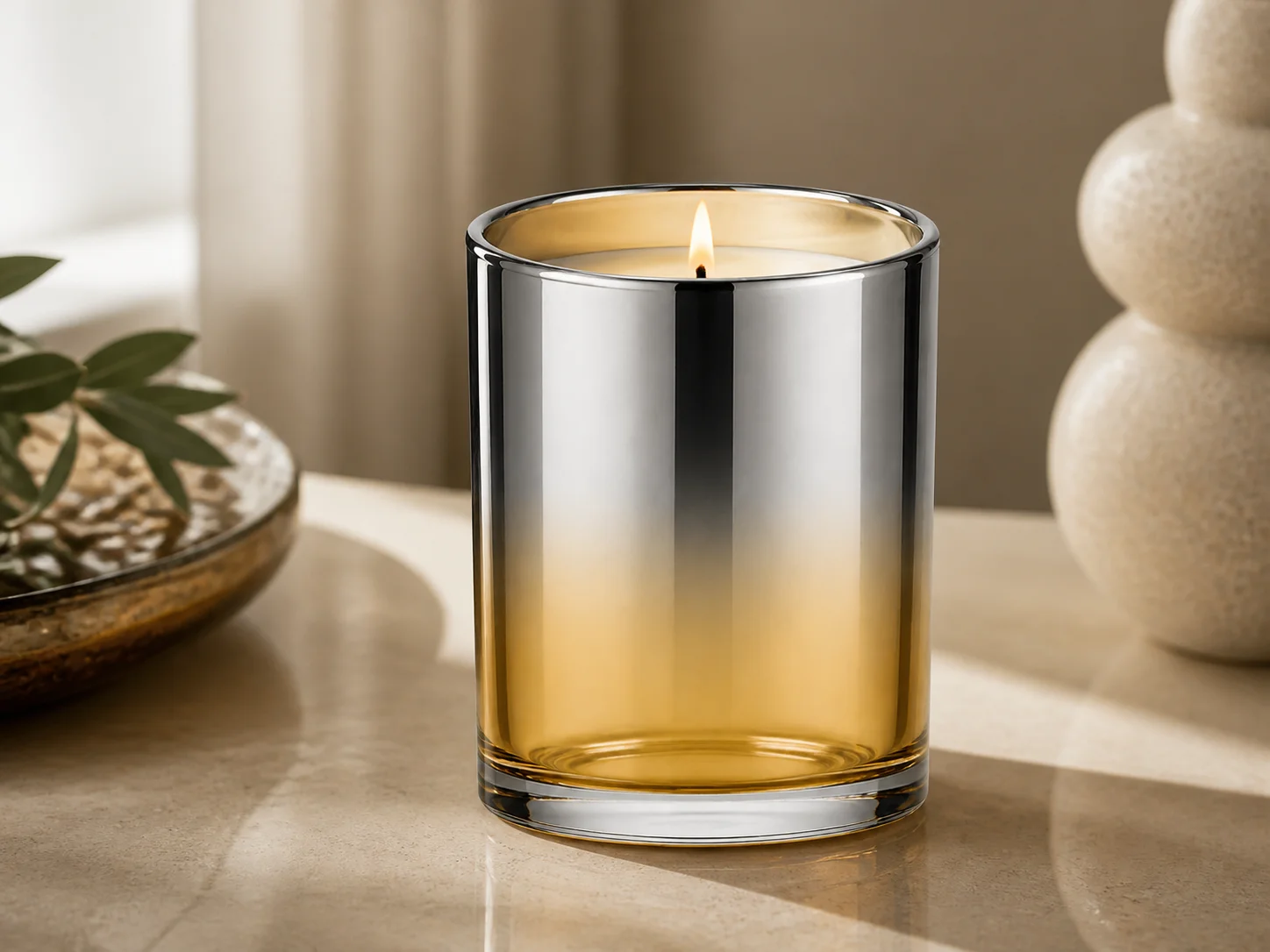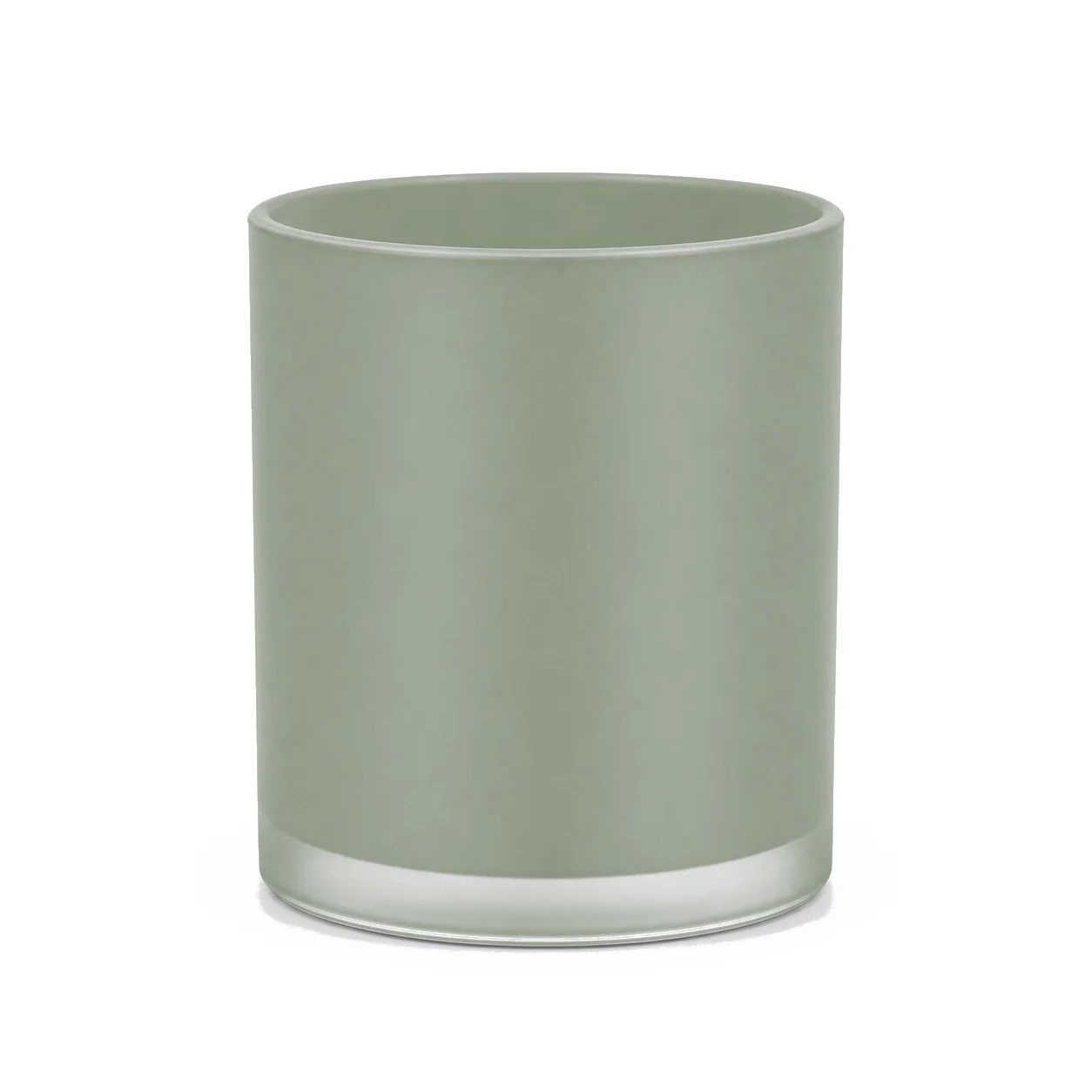
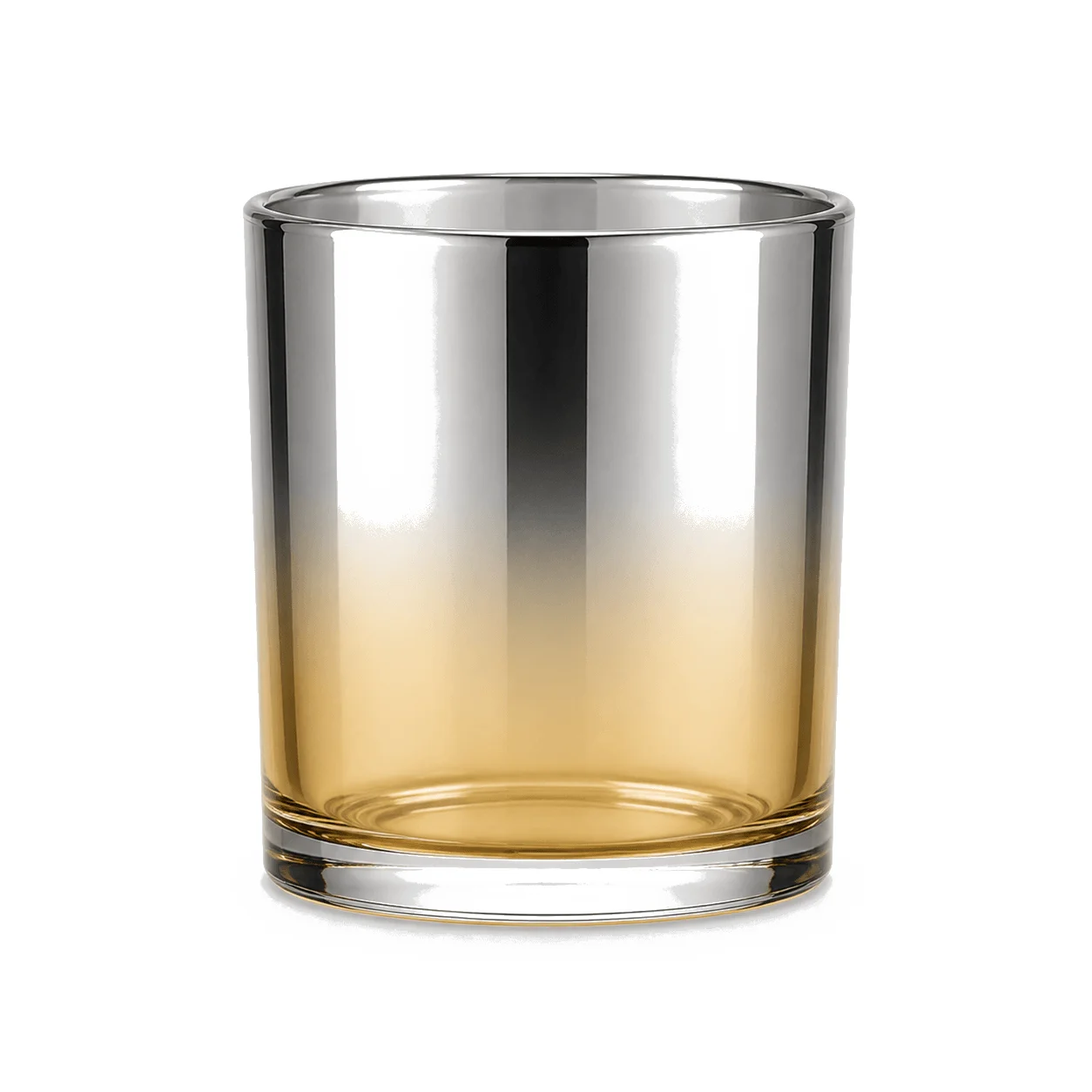
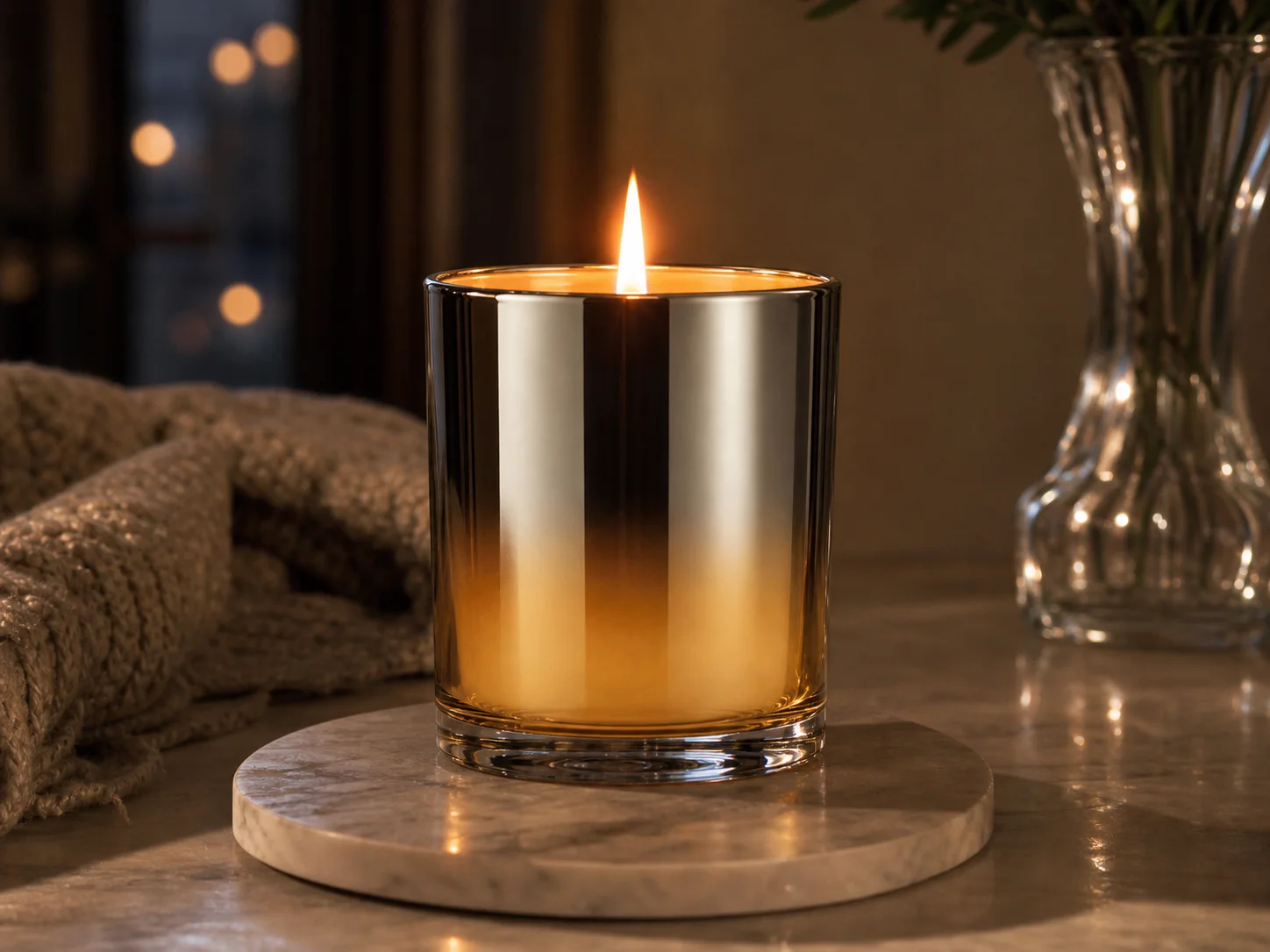
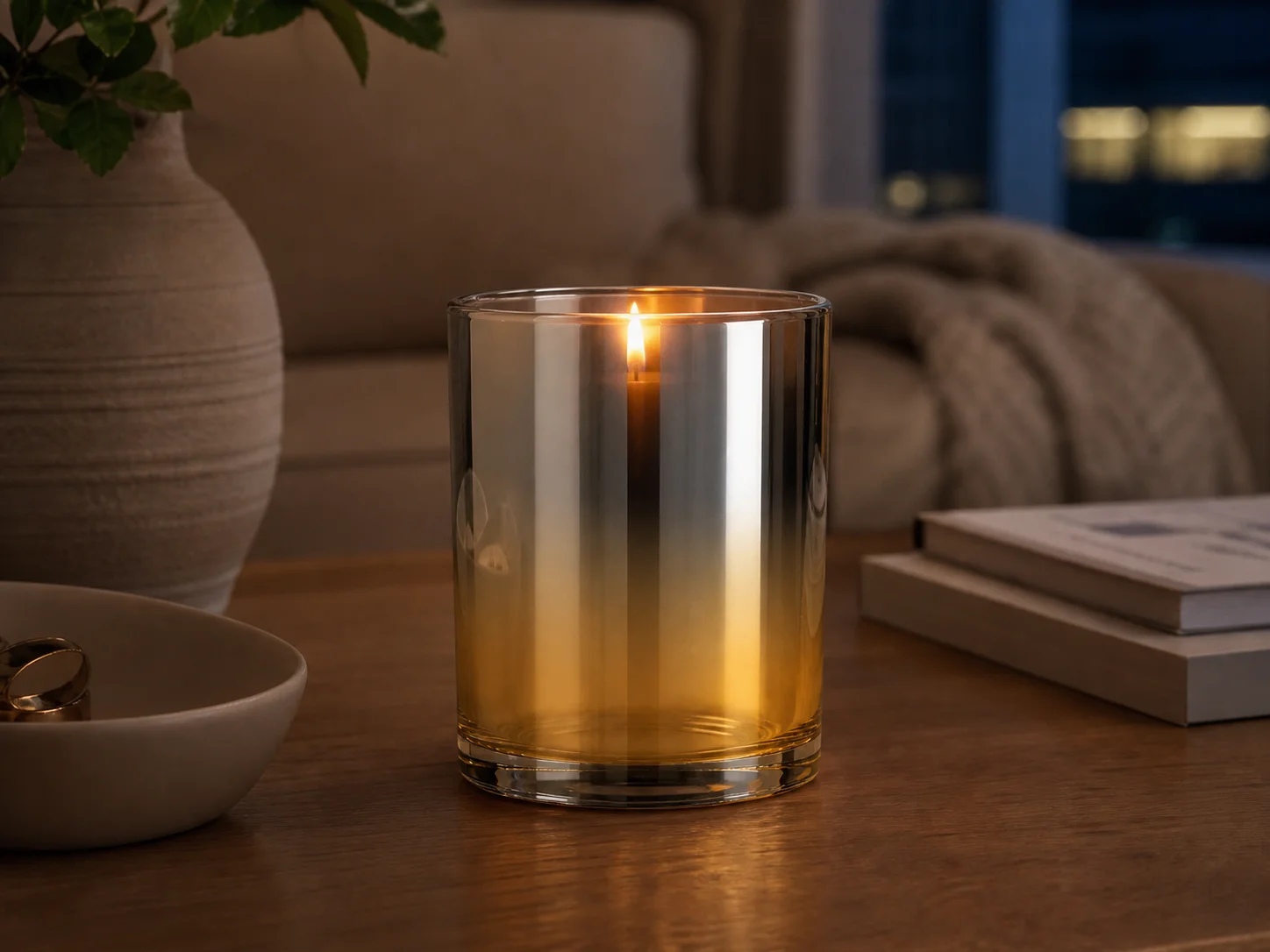
Candle jar with a metallic finish fading from dense at the base to clear at the rim
Shown configuration · empty jar / wax, wick, lid and label not shown

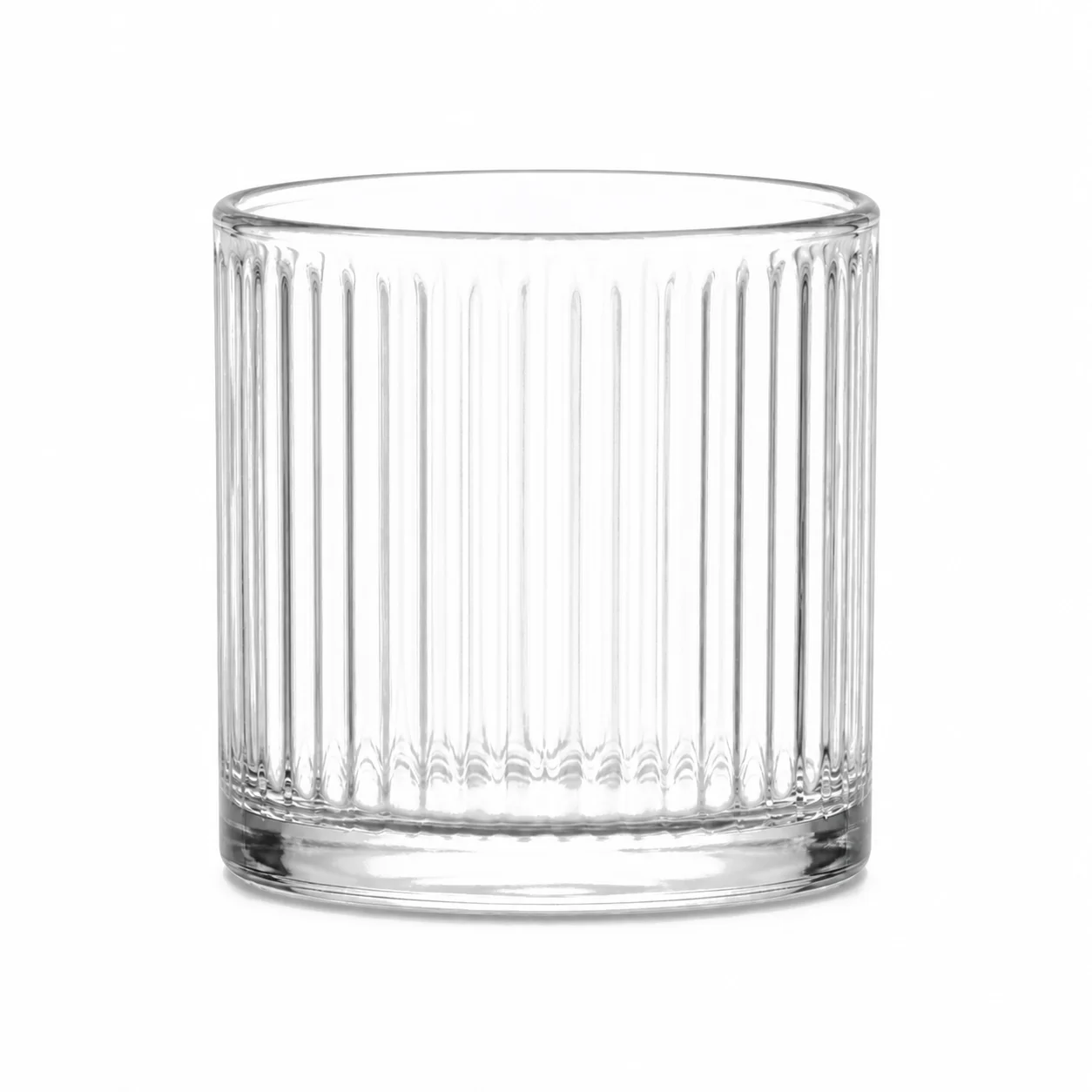
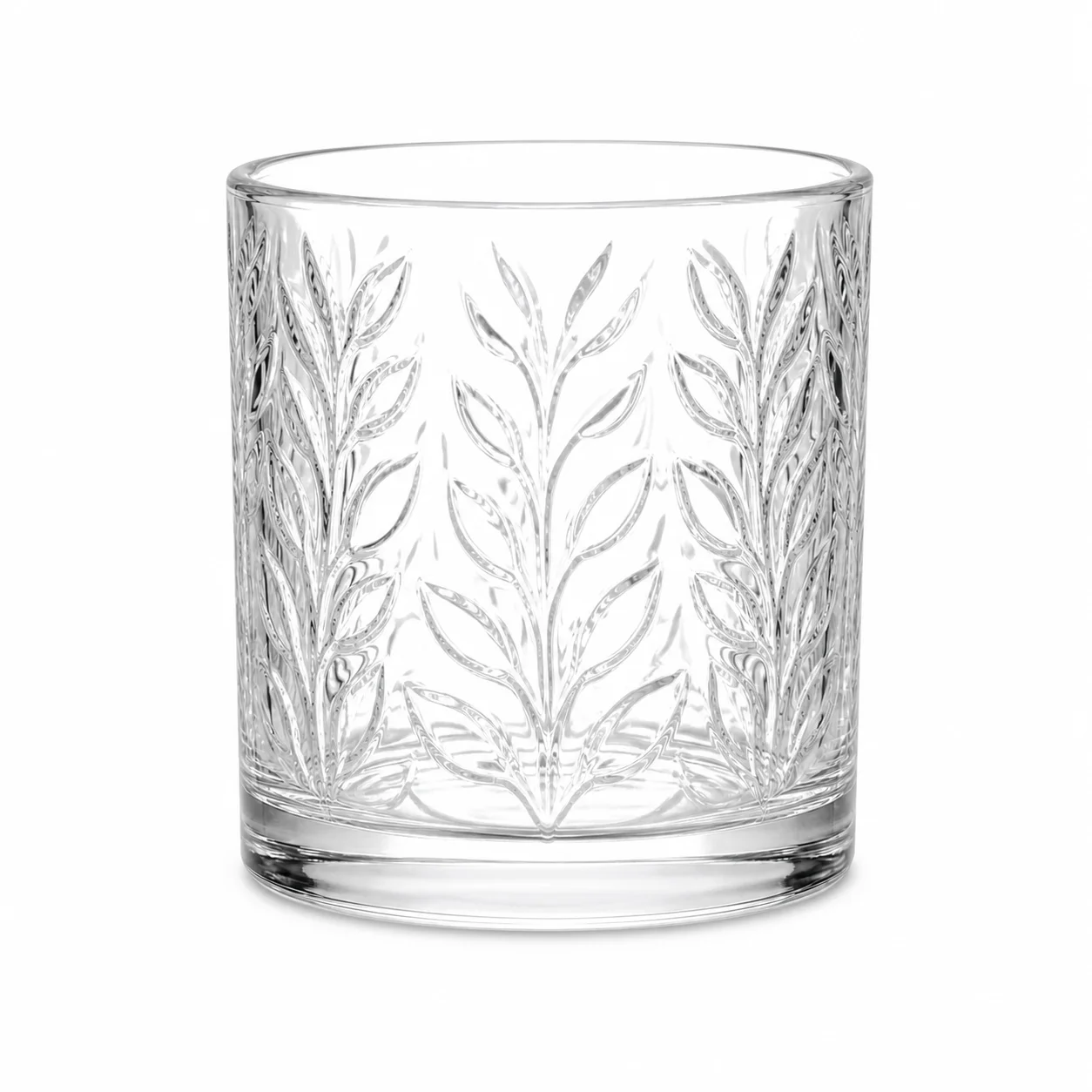
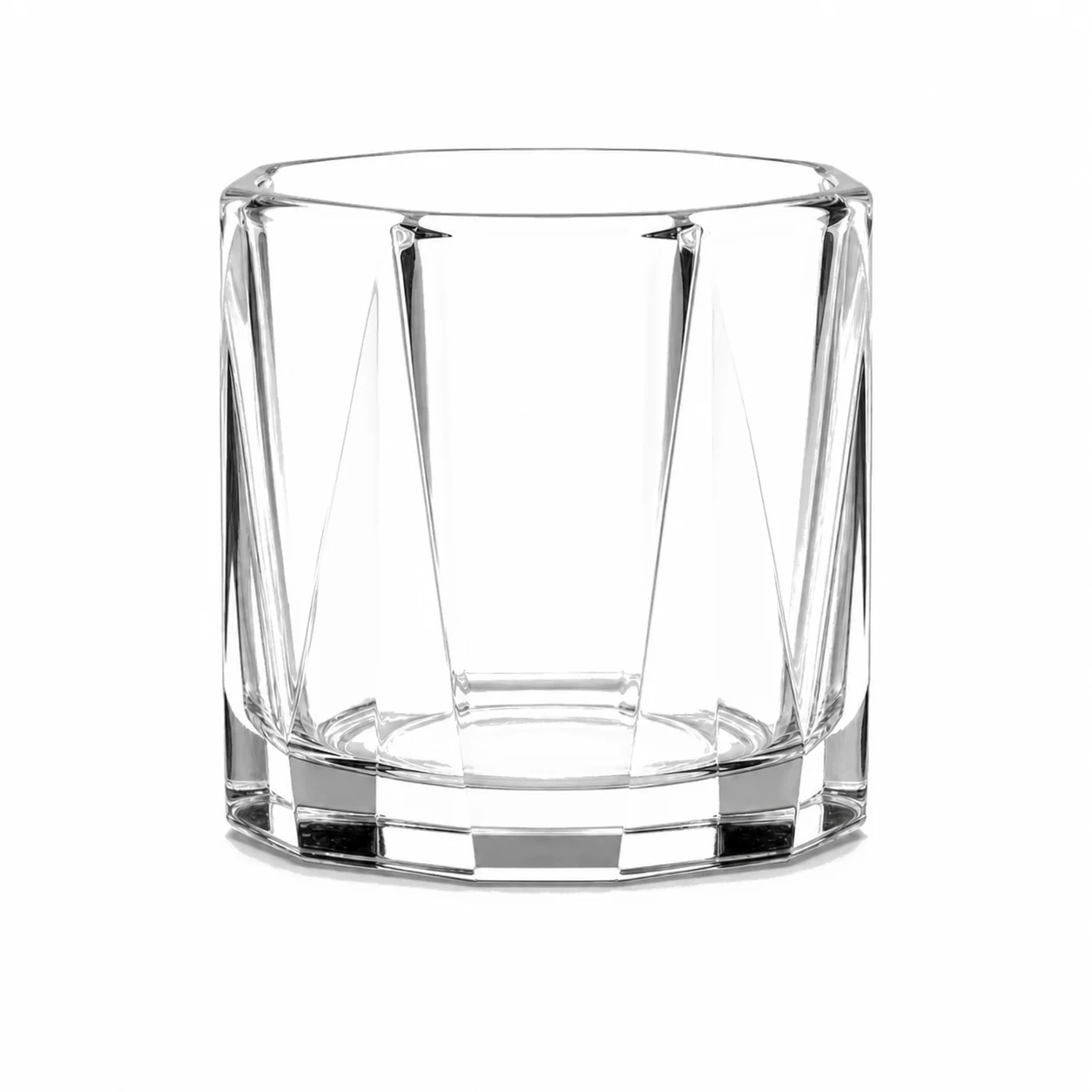
Decorated candle vessels

Electroplated Gradient Candle Jar

A candle jar with a vacuum-metallized gradient, where a thin metallic film is deposited onto the glass and then has to survive a candle burning behind it.

Vacuum-deposited metal filmGradient fades to clearHeat is the test, not the shelf
Stock status
In stock
Lead time
2–3 weeks
FOB price / pc
$0.45 - $0.75
MOQ
2,000 pcs

Final availability, dimensions, materials, assembled components and commercial terms are confirmed against the selected drawing and approved sample.

Film measured in nanometers

Thin enough to see through where it fades

Adhesion fails with heat

Peak temperature sits at the wax line

Outside only

No coating in contact with wax

Electroplated Gradient Candle Jar profile

A microscopically thin metal layer, with a heat source on the other side of the glass.

Deposition, adhesion at temperature & gradient control

Five things that decide whether a metallized candle jar survives its first burn.

Vacuum metallizing deposits a metal film onto the outside of the glass, and masking or rotation during deposition produces a gradient that fades from dense to transparent. It is one of the most striking finishes available and one of the most demanding, because a burning candle heats the glass exactly where the film is thickest and most visible.

01

The film is deposited, not plated in a bath

Vacuum metallizing evaporates metal in a chamber and condenses it onto the glass as a film measured in nanometers, usually with a base coat below and a protective lacquer above. Understanding that it is a three-layer stack rather than a single coating explains most of its failure modes: any one of the three can be the weak layer.

02

Adhesion is tested with a candle, at the wax line

A metallized jar spends its life with a heat gradient across it, hottest at the surface of the melt pool. That line moves down the jar as the candle burns, so every part of the coated area is heated in turn. Testing a coated sample in an oven misses that traveling boundary, which is where crazing and lifting actually start.

03

A gradient is harder to control than full coverage

Fading from opaque to clear means the film thickness varies continuously, and thin regions are both more fragile and more sensitive to deposition variation. Batch-to-batch consistency in where the fade begins and how quickly it clears is the property that most often disappoints, and it is agreed with limit samples rather than a written description.

04

The coating stays outside the container

Metallizing is applied to the exterior only, so nothing coated ever contacts the wax. That keeps the question purely one of appearance and durability rather than of what might migrate into a fragranced product, and it is worth stating explicitly because customers frequently assume the reverse when they see a mirrored interior effect.

05

Handling marks show more than on any other finish

A polished metallic surface records fingerprints, scuffs and packing marks with unusual clarity, and a scratch through to the glass cannot be touched in. That drives the carton design, the interleaving and often a decision to ship in individual boxes, which is a cost that belongs in the finish decision rather than appearing later.

06

The gradient has to start above the highest wax line

Where the coating meets the heat of the melt pool it is at its most vulnerable, so the fade is planned to reach full coverage only above the level the wax ever reaches. Setting that boundary from the fill height rather than from the drawing is what keeps the finish intact through the burn.
Application guide

A metallized coating meets a flame from the other side.

Electroplating gives glass a mirrored, shifting surface that reads as luxury on a shelf. It also puts a metallic layer on a vessel that will be heated repeatedly from within, which is the question this format has to answer. These are development directions confirmed by burn testing.

Electroplated Gradient Candle Jar used for reflective vessels lit in the evening in a luxury candles setting

Luxury candles

Reflective vessels lit in the evening

For candles bought to be seen lit, where the smoke-to-gold shift changes as the flame moves and the room darkens. That living quality is the whole appeal, so the finish should be reviewed with a candle actually burning inside rather than under bench lighting.

  • Review the finish with a lit candle
  • Watch the shift as light changes
  • Confirm the gradient sits consistently
Electroplated Gradient Candle Jar used for a candle lit for four hours at a time in a long evenings setting

Long evenings

A candle lit for four hours at a time

For customers who light a candle when they get home and blow it out at bedtime, night after night. The metallized layer sits on glass that runs hot through those hours and hottest at the base as the wax runs low, and whether it discolors or lifts is answered by burning samples out, not by handling a cold one.

  • Burn test to the base for coating change
  • Check the hottest zone near the end
  • Confirm adhesion after repeat burns
Electroplated Gradient Candle Jar used for metallic families across a fragrance range in a collections setting

Collections

Metallic families across a fragrance range

Electroplated finishes let a range signal tiers by metal tone while keeping one vessel, and customers read gold, smoke and rose as price signals immediately. Batch-to-batch consistency is harder with plating than with paint, so retained references matter more here than in most decoration routes.

  • Retain a physical reference per tone
  • Check batch consistency closely
  • Match metal tone to price tier

Finish process, wax, fragrance, wick, fill, burning, safety and distribution requirements are confirmed for the selected program.

Common questions

Electroplated Gradient Candle Jar questions

A nanometer-thin film with a flame behind it. These are the questions that matter.

Is this actually electroplating?

In practice it is vacuum metallizing: metal is evaporated in a chamber and condensed onto the glass as a film measured in nanometers, usually with a base coat below and a lacquer above. Knowing it is a three-layer stack rather than a single coating explains most failures, because any one of the three layers can be the weak one.

How should the coating be tested?

With a candle burning to the base, not in an oven. A metallized jar carries a heat gradient that is hottest at the melt pool surface, and that line travels down the jar as the candle burns, heating every part of the coated area in turn. An oven soak misses the traveling boundary, which is exactly where crazing starts.

Does the coating touch the wax?

No. Metallizing is applied to the exterior only, so nothing coated ever contacts the product. That keeps the question to appearance and durability rather than migration into a fragranced wax. It is worth saying explicitly, because customers seeing a mirrored effect frequently assume the coating is on the inside.

Where should the gradient start?

Above the highest wax line, without exception. The coating is a deposited film on the outside, and starting it where the burning candle heats the wall is where adhesion problems begin. Fix the start height against the fill line rather than against the jar height.

Next step

Send us the Electroplated Gradient Candle Jar brief.

Tell us the product, fill volume, closure preference and destination market. We will come back with the matching drawings, available configurations and a sample plan before anything is quoted.

  • 01Send the briefProduct, volume, closure and market
  • 02Get the optionsMatching drawings and configurations
  • 03Approve the sampleConfirm the pack before production