Optics, thickness transitions & labeling
Six things that follow from cutting a cylinder into planes.
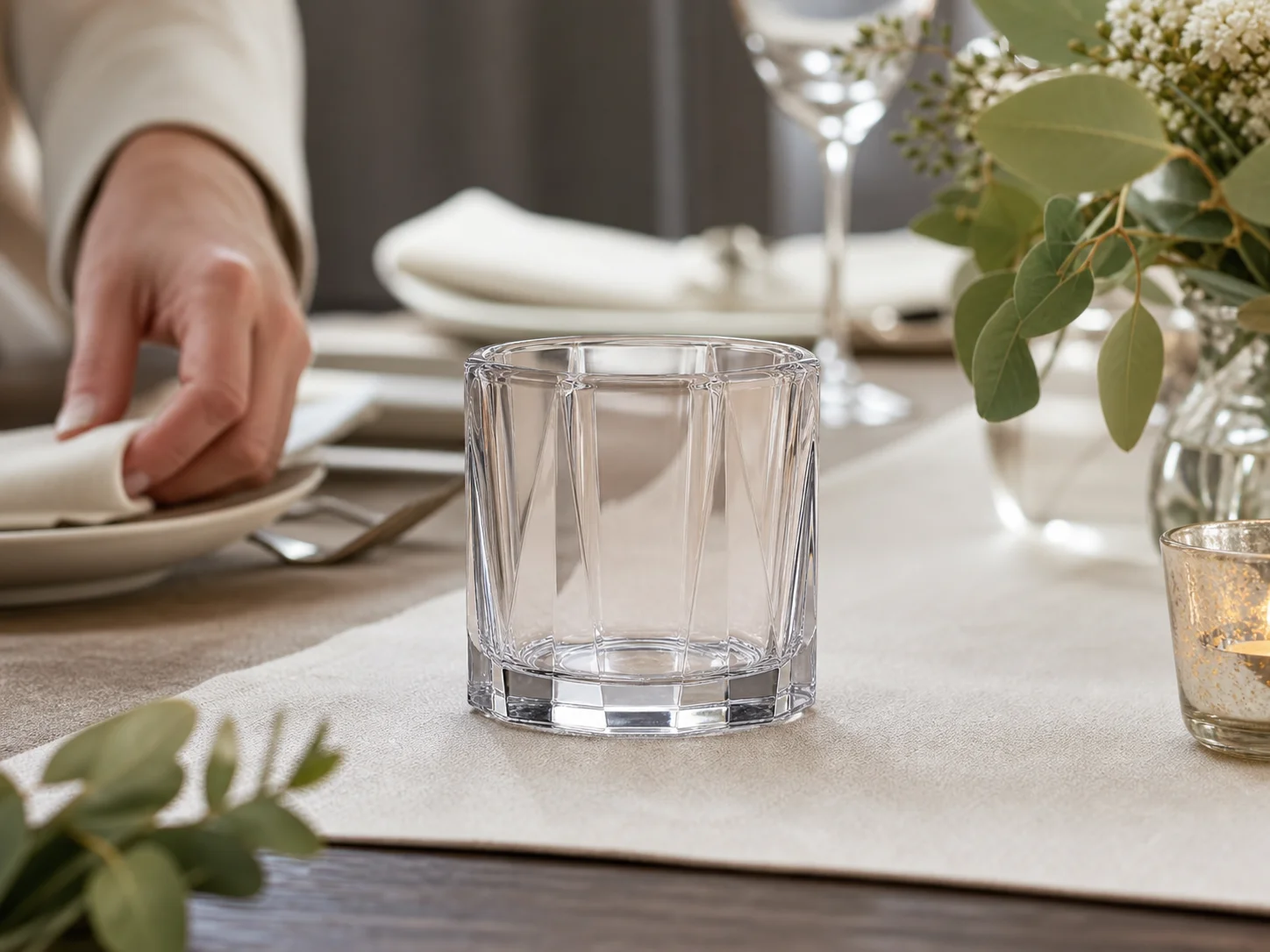
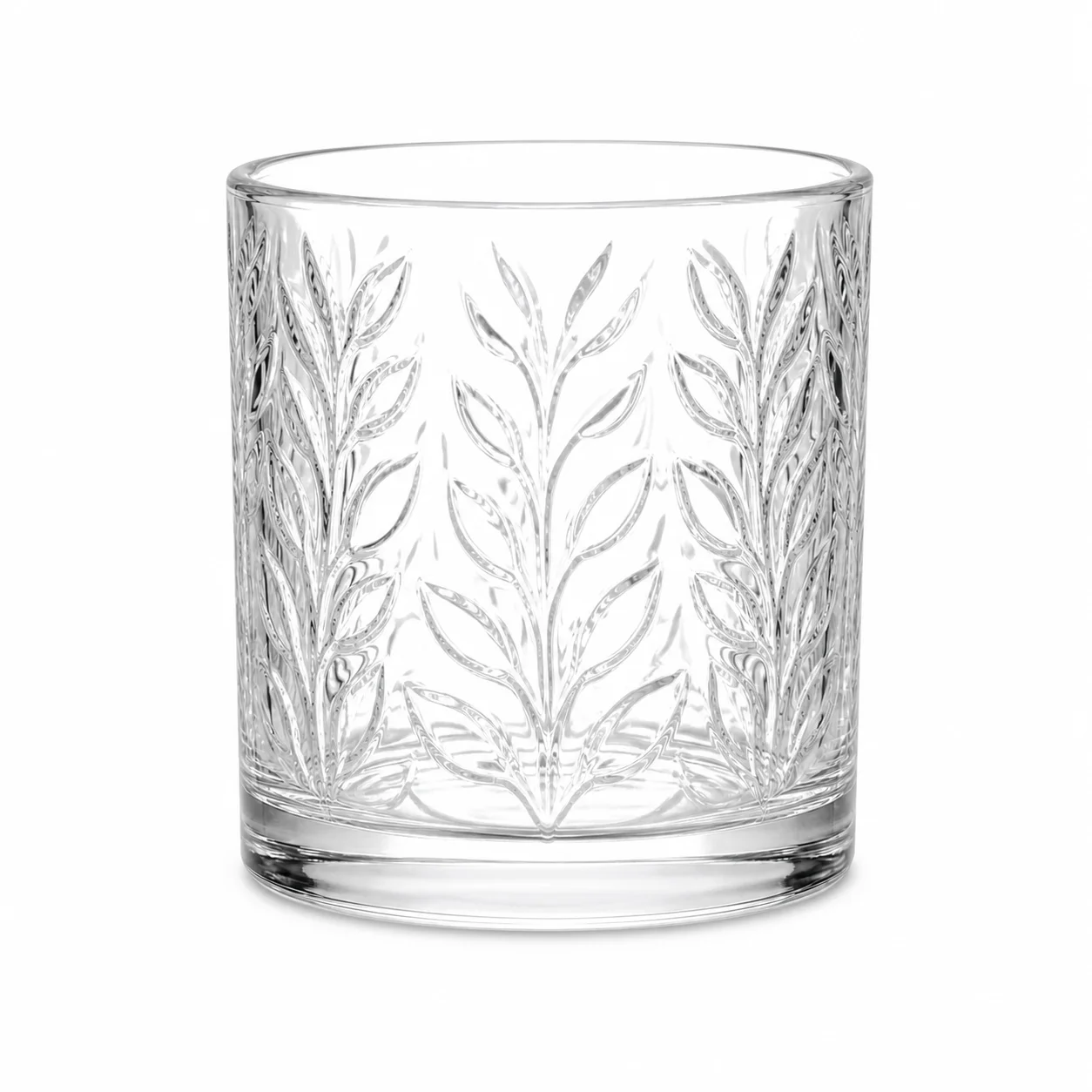
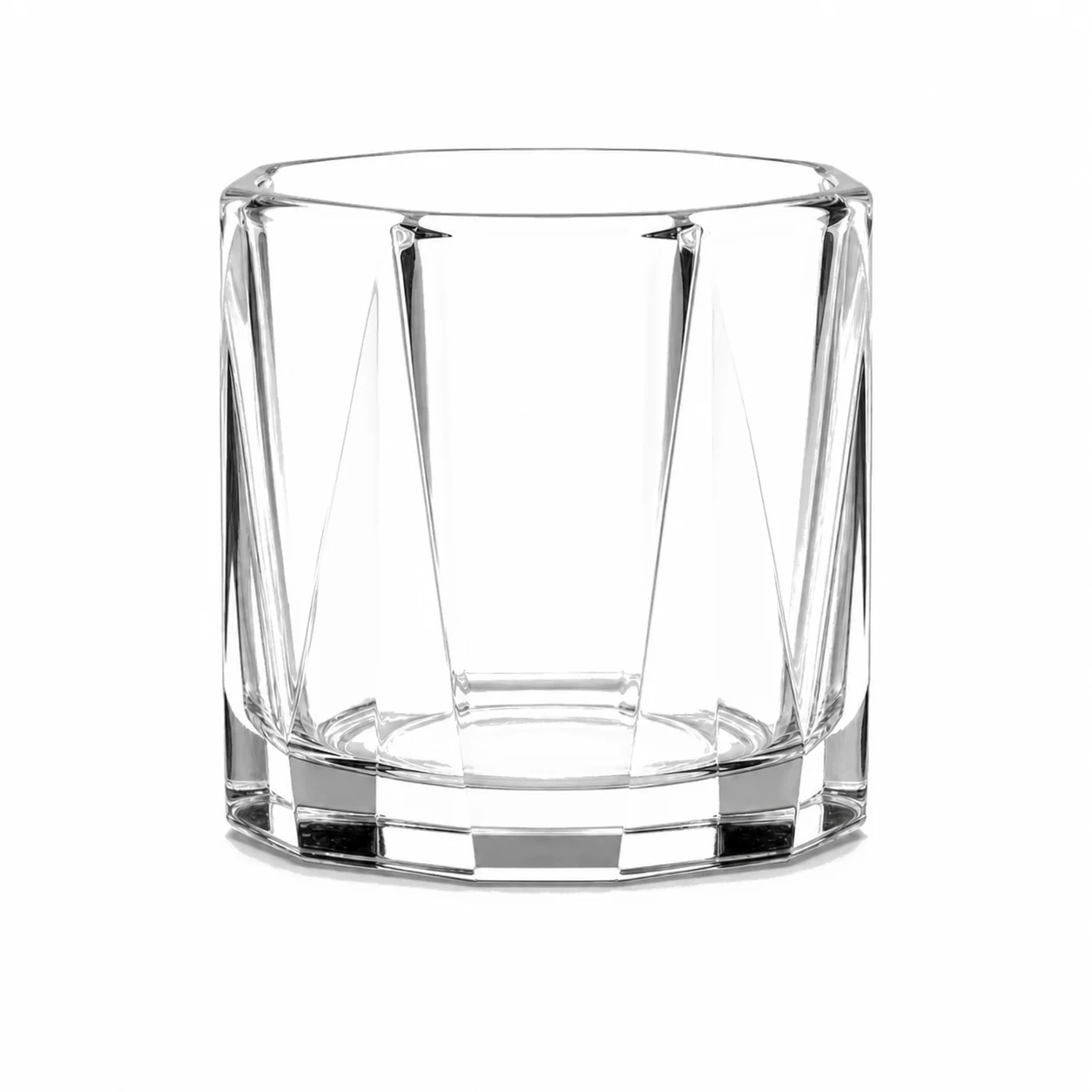
Faceting replaces a smooth cylinder with flat planes meeting at edges, which turns a single flame into a scatter of moving highlights. It also means the glass is thicker at the edges than at the centers of the facets, and heat from the melt pool passes through a wall whose thickness changes several times around the circumference.
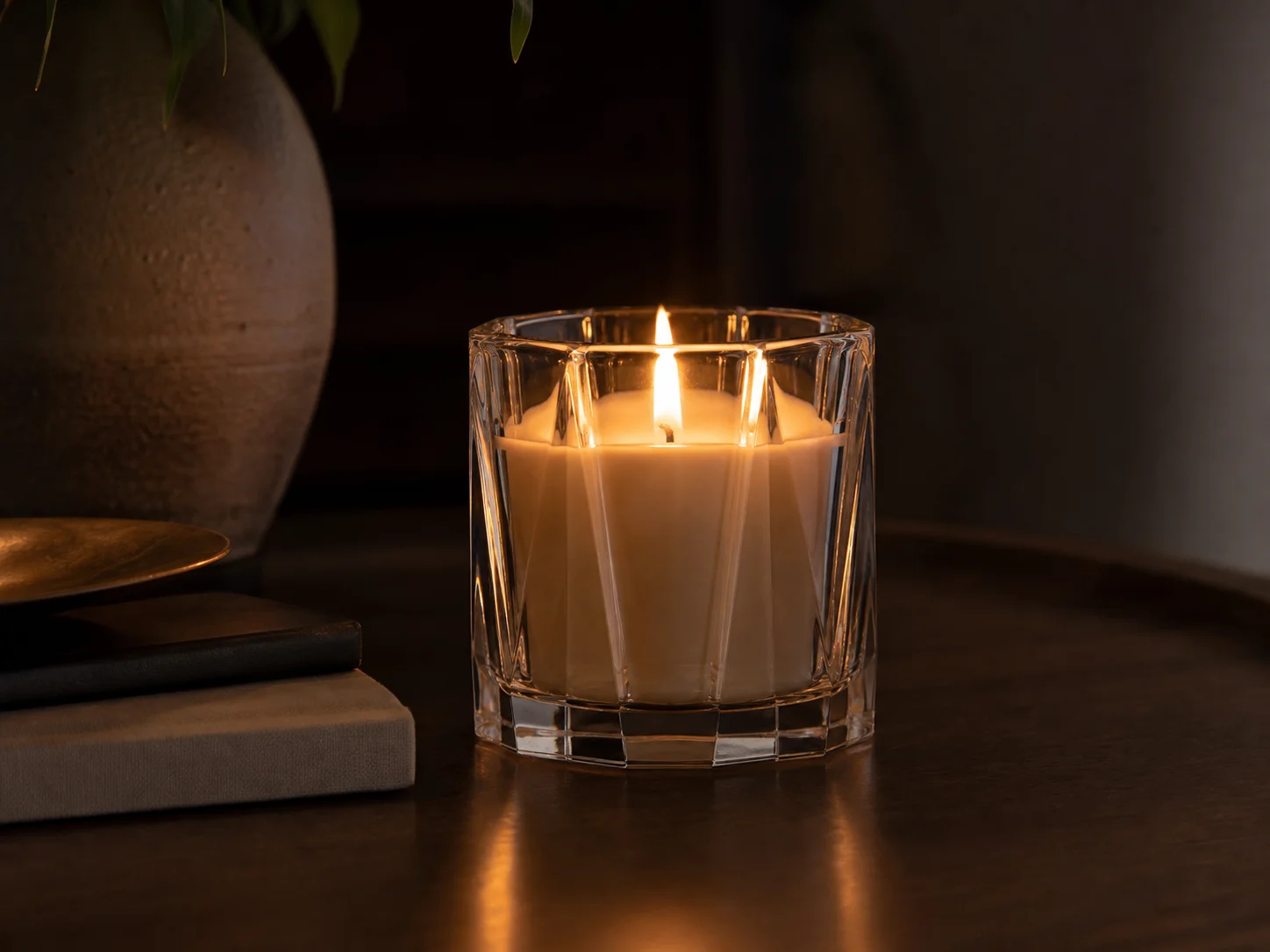
The optical effect is the reason, so judge it lit
Facets refract candlelight into bright edges and dark planes that shift as the flame moves, and that effect is invisible in daylight on a shelf. Any evaluation of a faceted design should happen with a lit candle in a dark room, because that is the condition the design exists for and the one nobody checks in a sample review.
Wall thickness steps at every edge
Where two planes meet, the glass is thicker than in the middle of either facet, so heat from the melt pool travels through a wall of varying section. Gentle transitions and moderate facet depth keep that immaterial; sharp, deep cutting concentrates stress at the edges. Burn testing is done on faceted samples rather than on smooth equivalents.
Sharp edges are a handling issue as well
A crisply faceted vessel has edges that chip in transit and can feel unpleasant in the hand. A small radius on each edge removes both problems and takes almost nothing from the optical effect, which is a trade most designs should take and many take only after the first shipment arrives damaged.
One facet has to be reserved for the label
A pressure-sensitive label lies flat only on a single plane, so the design has to allocate a facet wide enough for the artwork, or accept a label that spans an edge and creases. Deciding that at mold design is free; discovering it when artwork arrives means either a smaller label or a redesigned pattern.
Faceting and coating rarely combine well
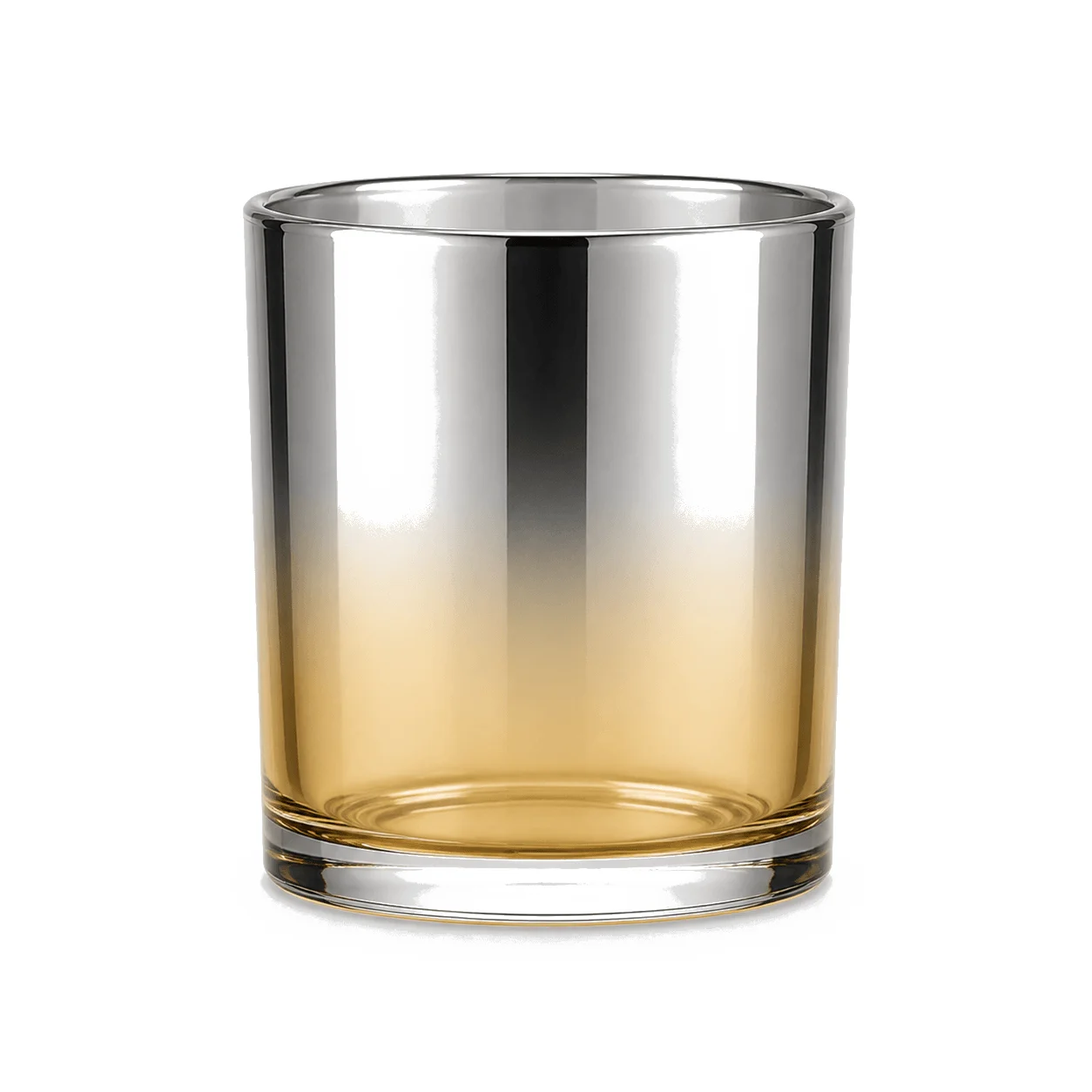
A sprayed or metallized finish over facets pools slightly at the edges and thins on the planes, so coverage varies exactly where the eye is drawn. Where a faceted vessel is to be colored, pot-colored glass or a tint gives a far more even result than a coating, and it is worth raising before a finish is specified.
Facets read as a full jar even when it is nearly empty
Refraction through angled walls conceals the wax line, so the pack keeps its shelf presence to the end of the burn. That is a genuine commercial advantage of the form, and it is also why fill weight should be declared plainly rather than inferred from appearance.