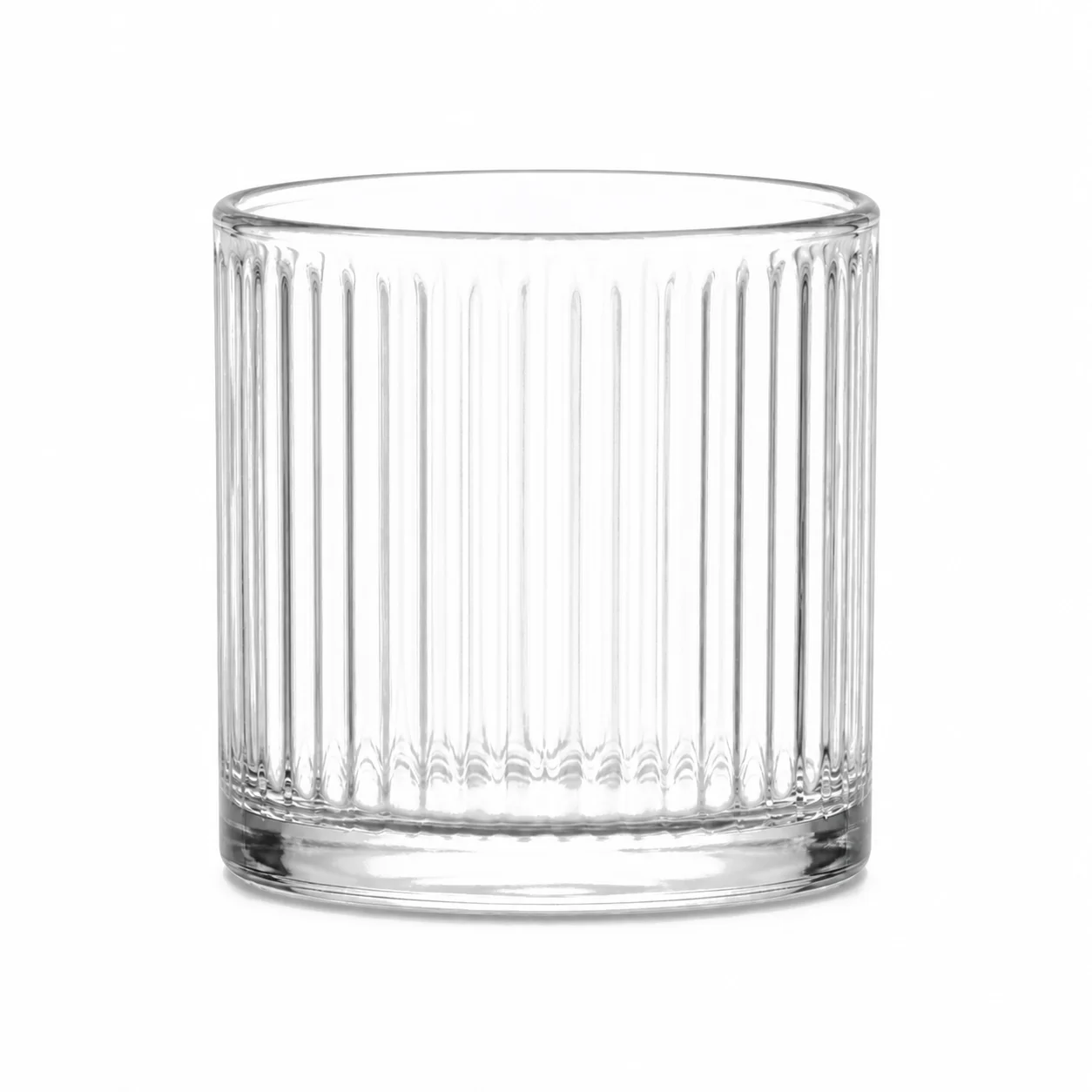
Grip, mark concealment & vertical optics
Six reasons ribbing outperforms most applied decoration.
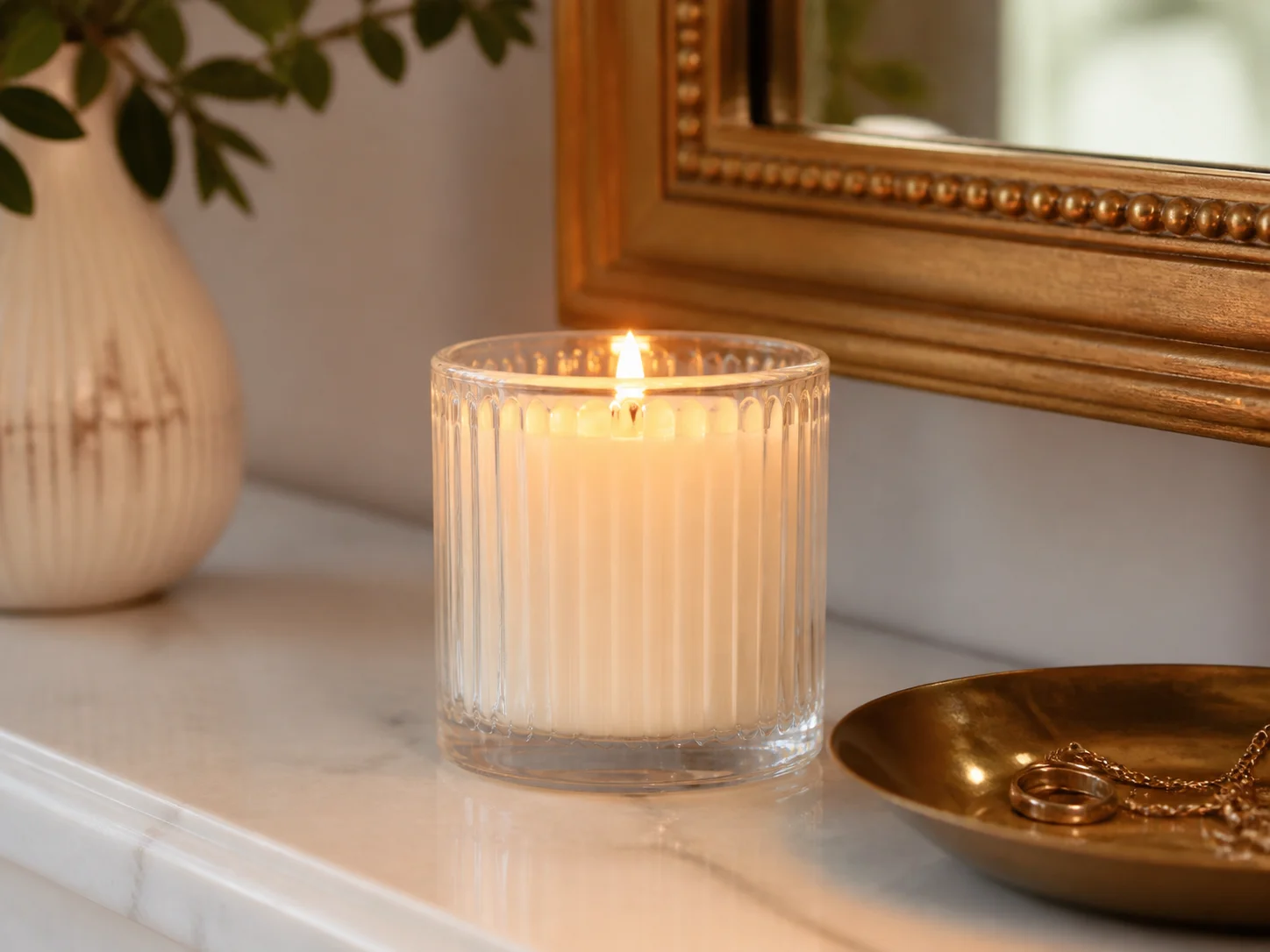
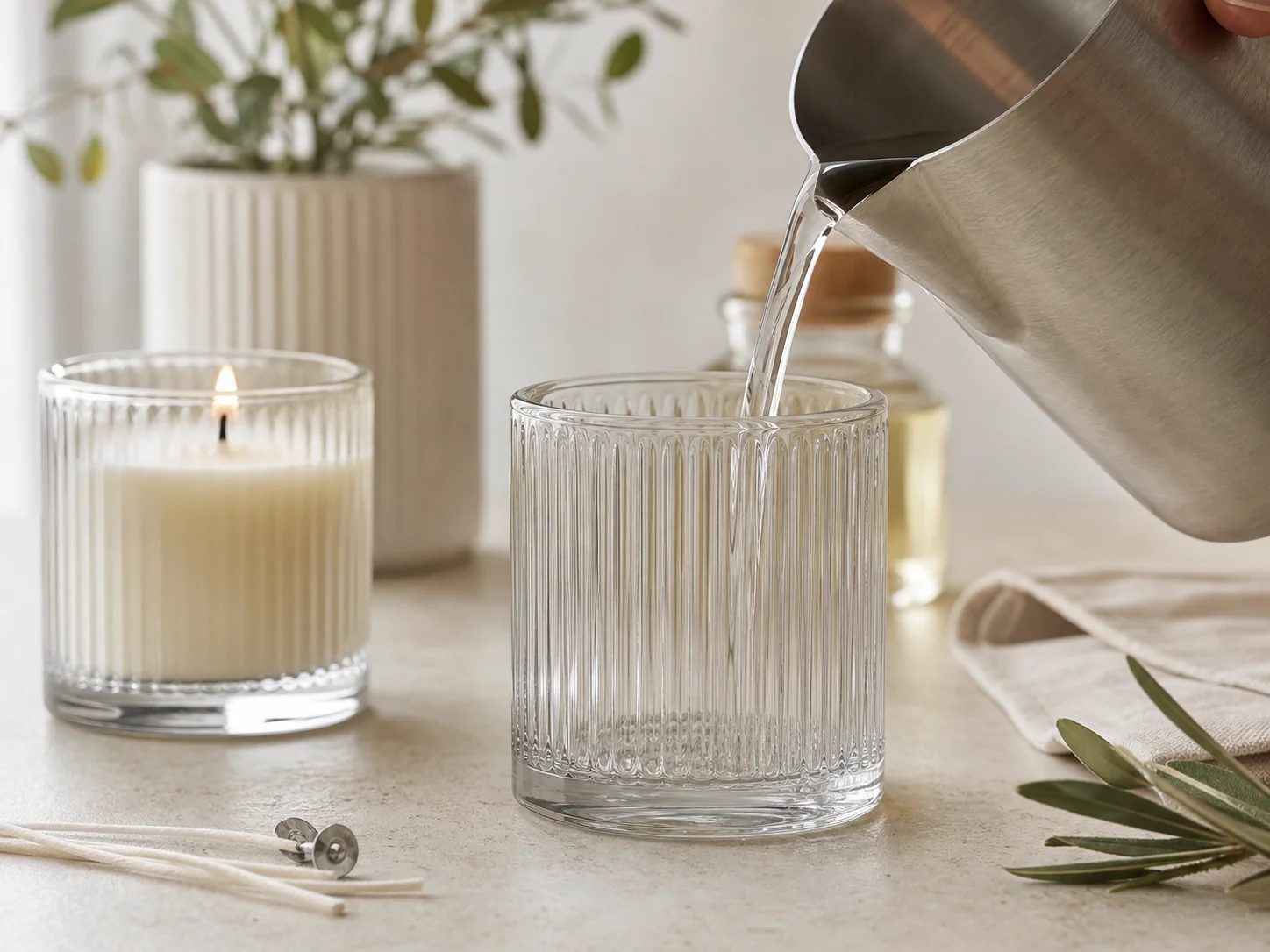
Vertical ribbing is decoration that earns its keep. It gives a wet or oily hand something to hold, disguises the fingerprints and light scuffs that plain glass displays, breaks candlelight into repeating vertical highlights, and adds no per-unit cost because it is formed in the mold along with the jar.
Grip is a genuine safety feature
A candle jar is picked up warm, sometimes with a hand that has just been washed. Vertical ribs give purchase in a way a smooth cylinder does not, and dropping a lit or recently extinguished candle is the failure worth designing against. It is the rare case where decoration and safety point at the same feature.
The pattern hides what plain glass reveals
Fingerprints, light scuffs and packing marks disappear into a ribbed surface because there is no continuous smooth plane to reflect them. On a retail shelf where customers handle stock, that means fewer units taken out of rotation for cleaning, which is a real operational saving that never appears in the packaging cost.
Vertical flutes stripe the light
Each rib acts as a small lens, so a single flame becomes a series of vertical highlights that rise up the wall. The effect is quieter than faceting and more consistent, because the pattern is uniform around the circumference. It also stays legible when the melt pool is low and the flame sits deep in the jar.
Labeling needs a plan, though less of one than faceting
A pressure-sensitive label over ribs will show the corrugation and can lift at the edges. Some designs mold a smooth panel into the ribbing for the label; others use a shrink sleeve that conforms, or a hanging tag instead. Any of the three works, and choosing none of them is what produces a label that peels in a month.
Ribs add strength as well as pattern
Vertical corrugation stiffens a thin wall in the same way it stiffens sheet metal, so a ribbed jar can be made slightly lighter for the same rigidity. That saves glass and freight, and it is one of the reasons the pattern has stayed in production across every price tier rather than being a fashion that passes.
Ribs catch dust, and a candle jar sits out for months
A ridged surface holds household dust in the valleys where a smooth one sheds it, and after a season the pattern reads gray rather than clear. Rib depth and spacing are the levers, and a shallower profile keeps the appearance without losing the grip.