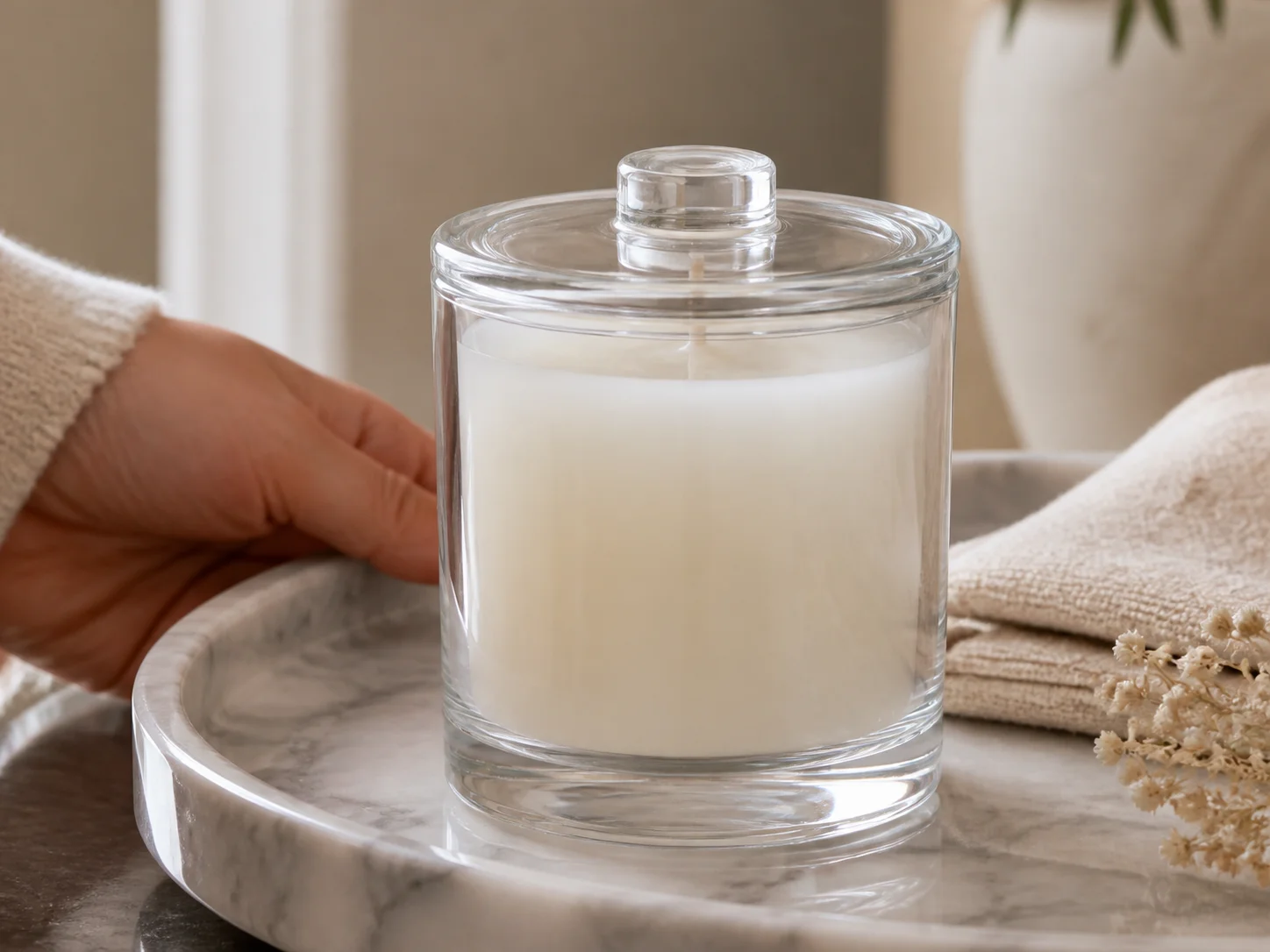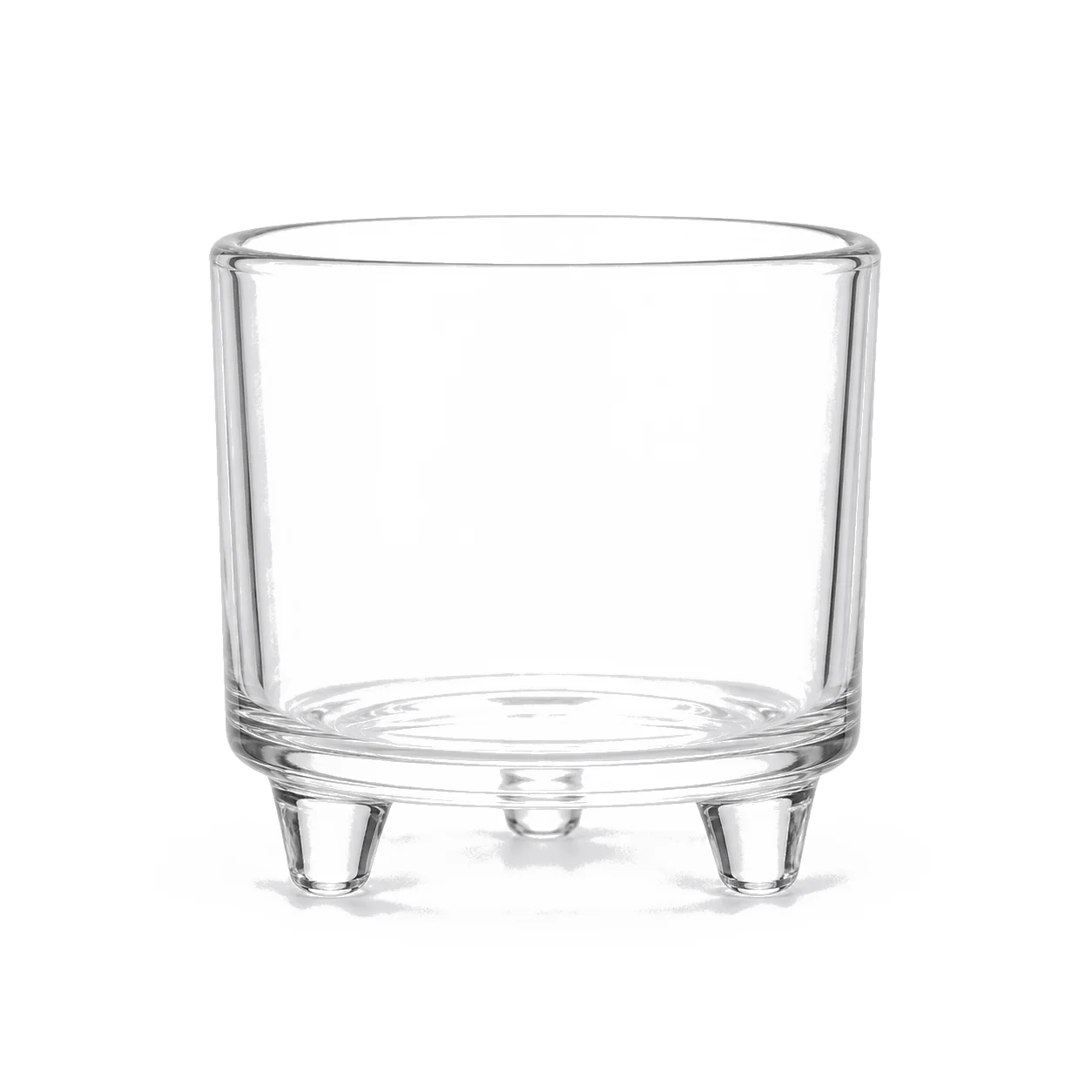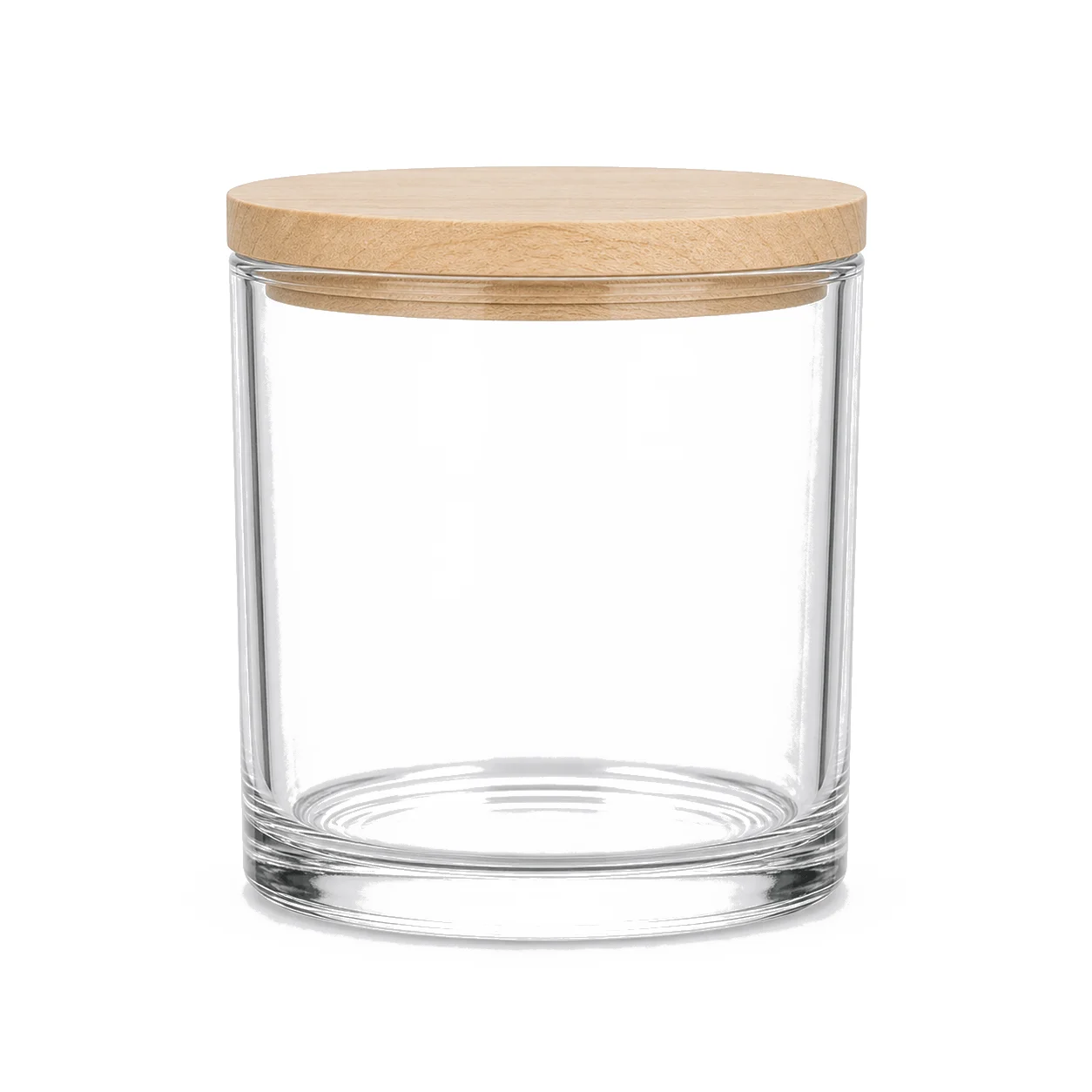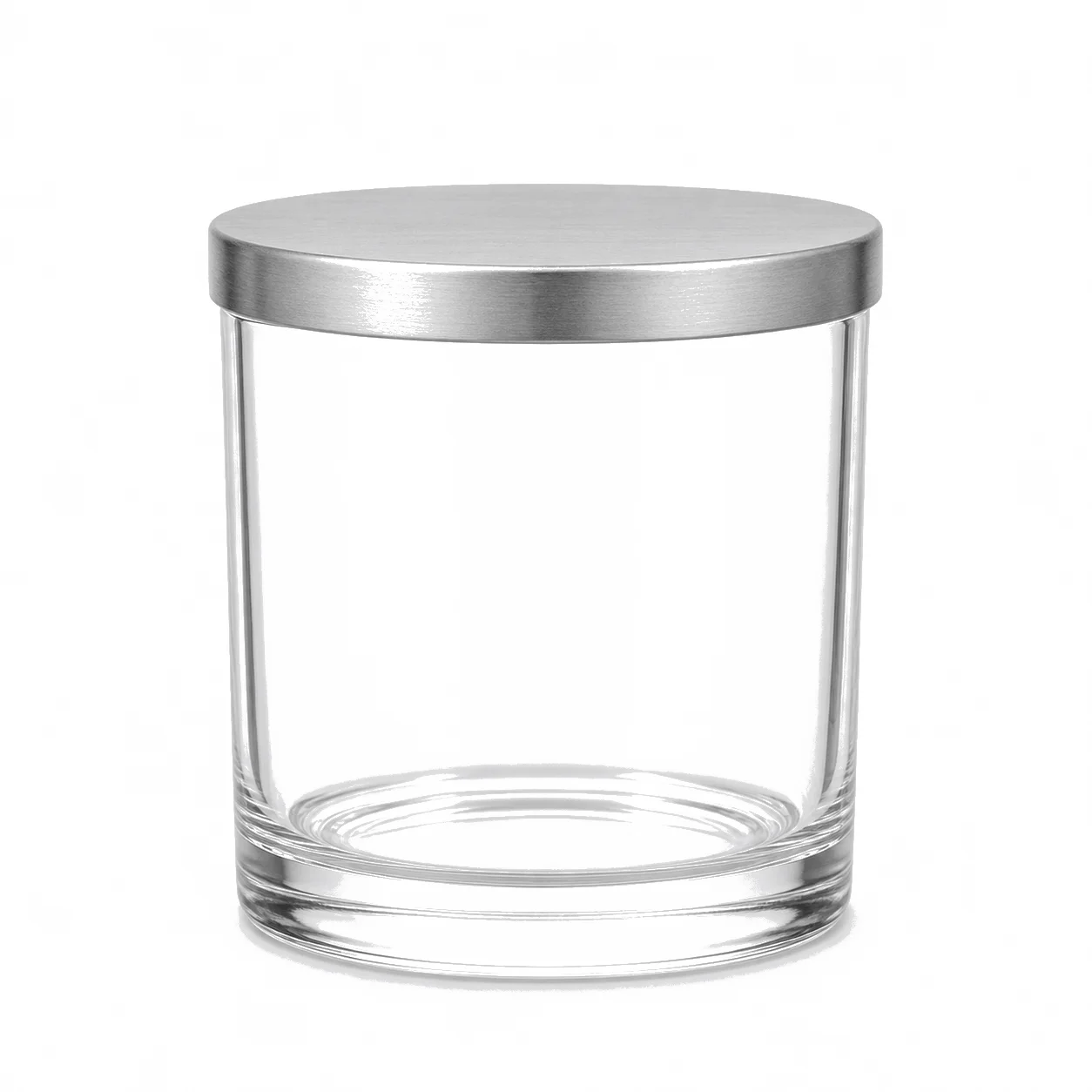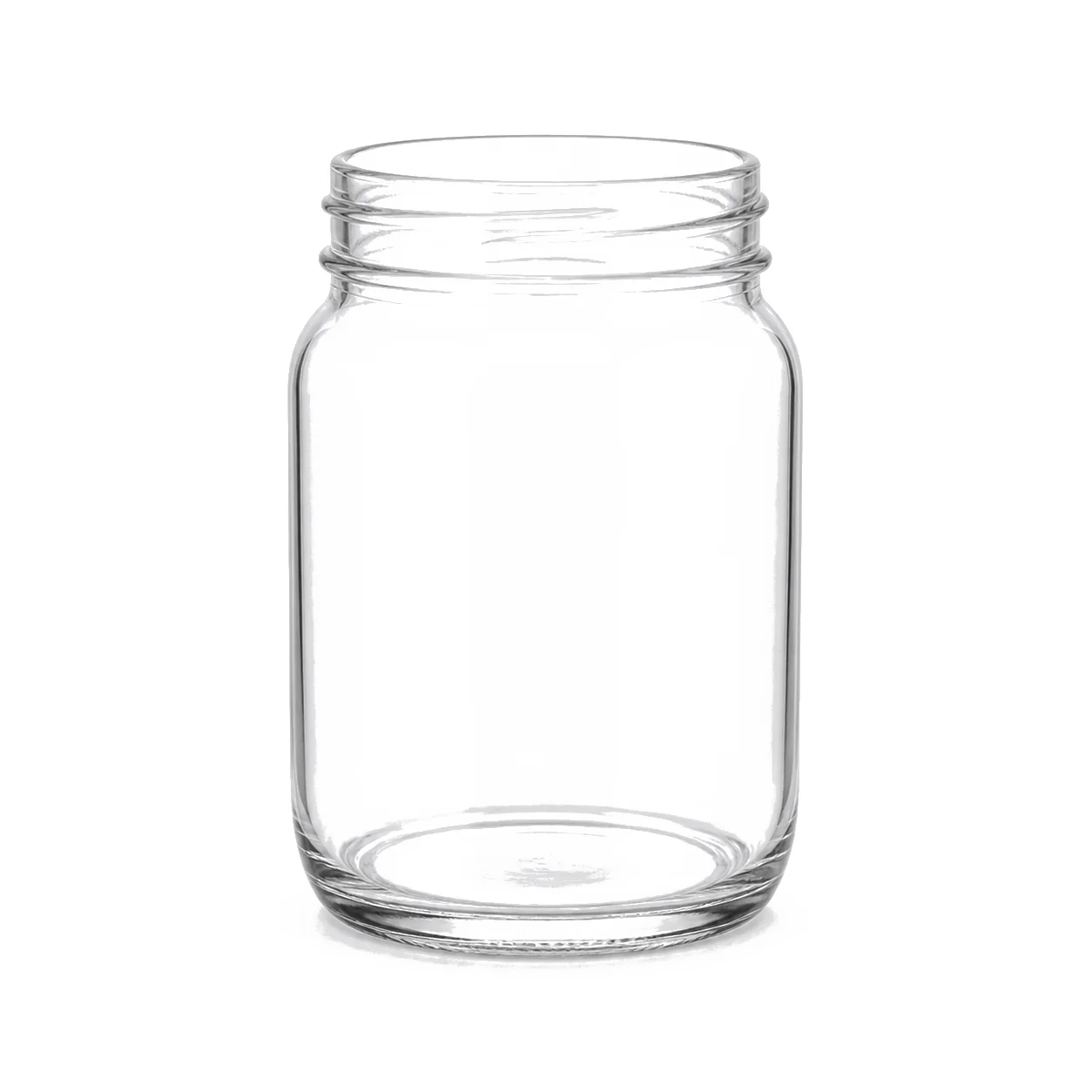
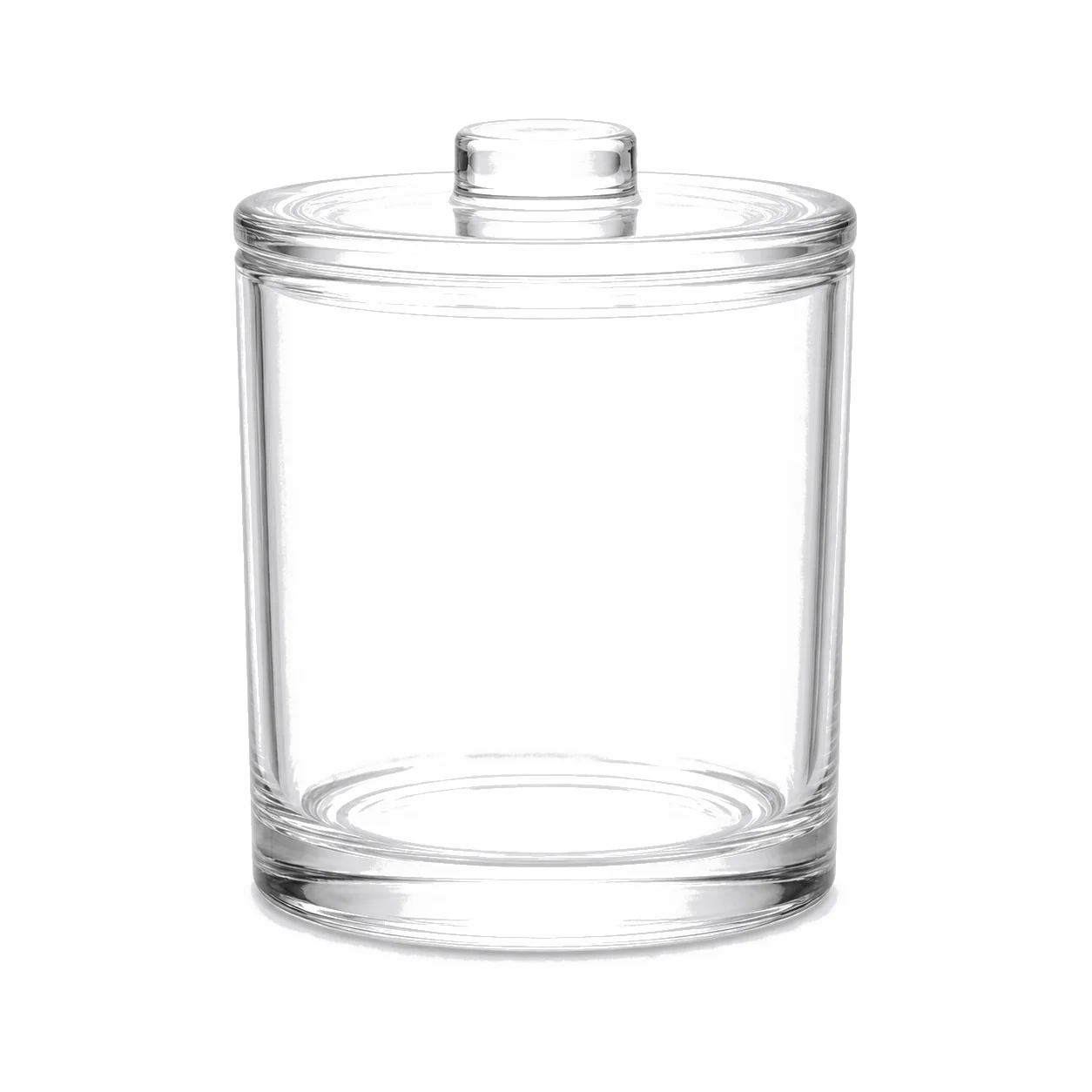
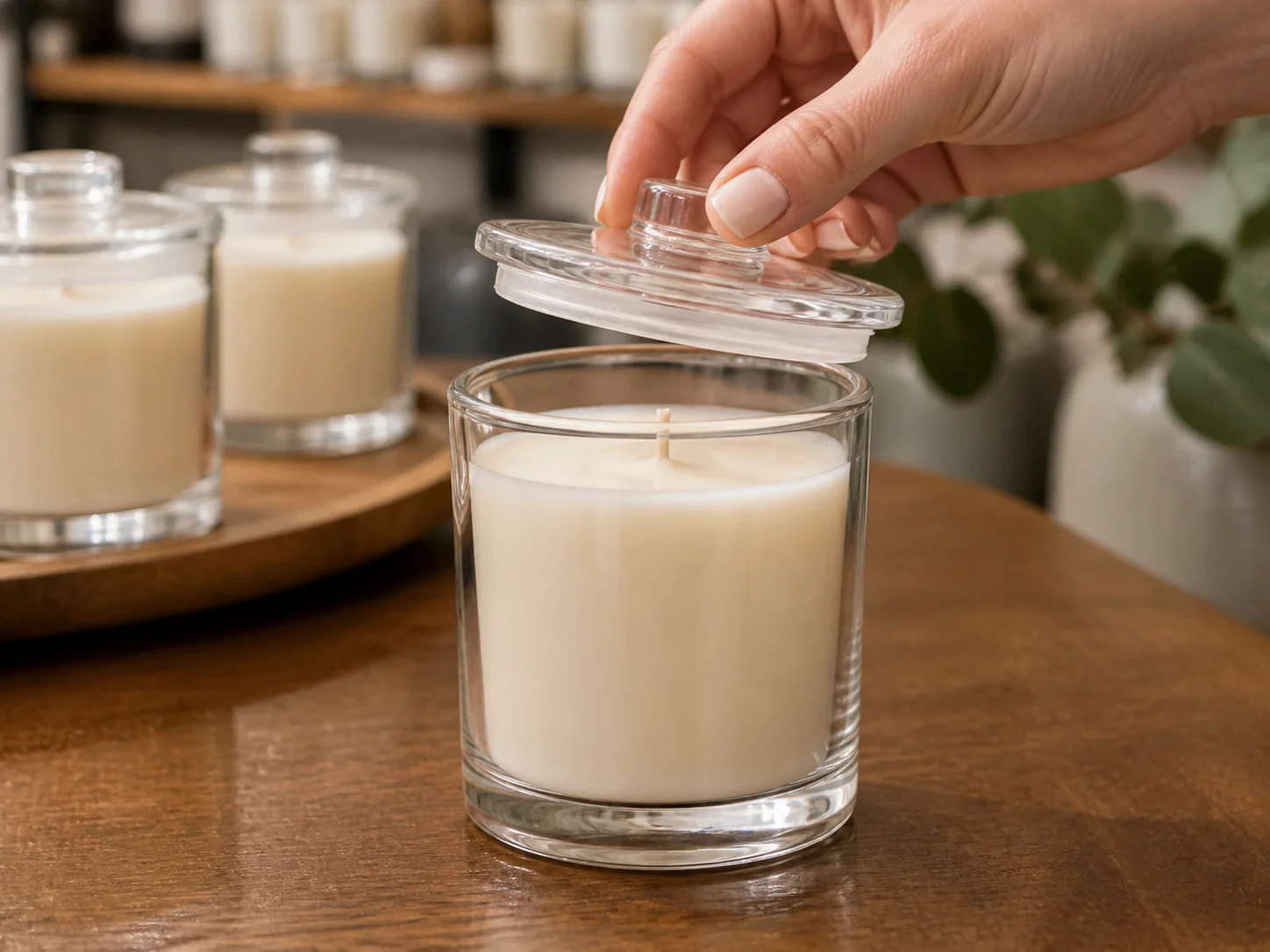
Clear candle jar with a matching clear glass lid resting on the rim
Shown configuration · jar with glass lid / wax, wick, gasket and label not shown

Lidded candle vessels

Glass-lid Candle Jar

A candle jar with a matching glass lid, where the lid is made and annealed like the vessel, shows condensation and soot immediately, and is the heaviest of the three options.

Lid annealed like the jarEverything shows on glassMatched optically to the body
Stock status
In stock
Lead time
2–3 weeks
FOB price / pc
$0.15 - $0.40
MOQ
5,000 pcs

Final availability, dimensions, materials, assembled components and commercial terms are confirmed against the selected drawing and approved sample.

One material, one look

Lid and jar share glass and finish

Shows soot honestly

Marks are visible, so use rules matter

Weight is the risk

Chipping between two glass parts

Glass-lid Candle Jar profile

The most beautiful lid and the least forgiving one.

Matching, glass-on-glass contact & visible marks

Five consequences of making the lid from the same material as the jar.

A glass lid completes a vessel visually in a way wood or metal cannot, because it shares the same material, color and finish. It also hides nothing: condensation, soot, fingerprints and any chip are all plainly visible, and two pieces of glass meeting at a rim is a contact no other lid type has.

01

The lid needs the same glass treatment as the jar

A glass lid over a candle is exposed to the same heat gradient as the vessel, so it is annealed to the same expectations rather than treated as an accessory. A lid formed to ordinary decorative standards and paired with a candle-specification jar is the weaker half of the pair, and it will be the part that cracks.

02

Glass meeting glass chips at the rim

Unlike wood or a lined metal cap, a glass lid contacts the jar rim directly unless a gasket is fitted. Setting it down carelessly, or vibration in a carton, produces edge chips on both parts. A silicone ring under the lid removes the contact and adds a seal, and it is the difference between a returnable pack and a fragile one.

03

Condensation is visible and reads as a defect

Capping a candle before it is fully cool leaves moisture on the underside of a glass lid, where it is obvious rather than hidden as it would be on wood. Customers read it as water in their candle. The instruction to cool before covering matters more here than on any other lid type, precisely because glass is transparent.

04

Color and clarity have to match across two components

A flint lid on a very slightly green flint jar looks wrong at close range, and the mismatch is more visible where the two pieces meet. Matching is easier when both come from the same glass source and harder when a lid is sourced separately on price, which is one of the few cases where splitting suppliers is a false economy.

05

It is the heaviest option, and freight notices

A glass lid adds significantly more mass than wood or thin metal, which shows up in carton weight, in shipping cost and in how the pack feels. That weight reads as quality in the hand and as cost on a freight invoice, and it is worth putting both sides of that in front of whoever signs off on the format.

06

A glass lid left on after extinguishing draws a vacuum as the jar cools

Trapped hot air contracts and pulls the lid down hard enough that a customer struggles to lift it, and forcing it is how rims chip. Either the lid is designed to vent or the instruction is to leave it off until the jar is cold.

Application guide

Glass on glass means two hard surfaces meeting.

A glass lid keeps the whole piece in one material and lets the wax stay visible when closed, but it also puts rim against rim, where chipping starts. These are development directions confirmed on assembled samples.

Glass-lid Candle Jar used for a candle that stays out unlit in a styled interiors setting

Styled interiors

A candle that stays out unlit

For pieces that sit on a coffee table or a bathroom counter as part of how a room is arranged, lit perhaps once a week. Keeping lid and vessel in one material lets the closed candle read as an object rather than a container wearing a hat, which is what an owner is really buying.

  • Review the closed piece as one object
  • Match lid and vessel clarity
  • Confirm the knob is comfortable to lift
Glass-lid Candle Jar used for a lid lifted and put back by shoppers in a store displays setting

Store displays

A lid lifted and put back by shoppers

For candles set out unboxed so customers can lift the lid and smell them, dozens of times a day. Two glass rims meeting takes a chip the moment someone lets the lid fall the last centimeter, and a chipped rim is a candle staff cannot sell, so the seat is relieved and the contact line watched.

  • Relieve the seat where rims meet
  • Inspect both rims after transit
  • Test the lid dropped from a small height
Glass-lid Candle Jar used for a candle that stays on show when closed in a visible wax setting

Visible wax

A candle that stays on show when closed

Unlike an opaque lid, a clear top leaves the wax surface visible, so the finish of that surface matters even between uses. Frosting, an uneven pour or a burned-down pool are all on display, which raises the standard the pour has to meet.

  • Review the wax surface through the lid
  • Hold pour quality to a visible standard
  • Consider how a used candle looks closed

Lid interface, wax, fragrance, wick, fill, burning, safety and distribution requirements are confirmed for the selected program.

Common questions

Glass-lid Candle Jar questions

Glass hides nothing, which is both the appeal and the difficulty.

Why do our lids and jars chip in transit?

Because glass is meeting glass at the rim. Unlike wood or a lined metal cap, a bare glass lid contacts the jar directly, and carton vibration produces edge chips on both parts. A silicone ring under the lid removes the contact and adds a seal at the same time, which is usually the cheapest fix available.

Customers report water inside the lid. What is happening?

They capped the candle before it cooled, and the moisture condensed where glass makes it obvious. On a wooden lid the same thing happens invisibly. The instruction to let a candle cool fully before replacing the lid matters more on this format than any other, precisely because the customer can see the result.

Is the extra weight a problem?

It is a trade rather than a fault. A glass lid adds noticeably more mass than wood or thin metal, which reads as quality in the hand and as cost on a freight invoice. Put both sides in front of whoever signs off the format, because the second one appears every month while the first is felt once.

What happens if the lid goes on straight after extinguishing?

The jar draws a vacuum as it cools. Warm air trapped under a glass lid contracts, and the lid can grip hard enough that a customer struggles to lift it. Tell customers to let the candle cool first — the same instruction that protects the wax also protects the lid.

Next step

Send us the Glass-lid Candle Jar brief.

Tell us the product, fill volume, closure preference and destination market. We will come back with the matching drawings, available configurations and a sample plan before anything is quoted.

  • 01Send the briefProduct, volume, closure and market
  • 02Get the optionsMatching drawings and configurations
  • 03Approve the sampleConfirm the pack before production