Air gap, point loading & stability geometry
Six consequences of lifting a candle off the table.
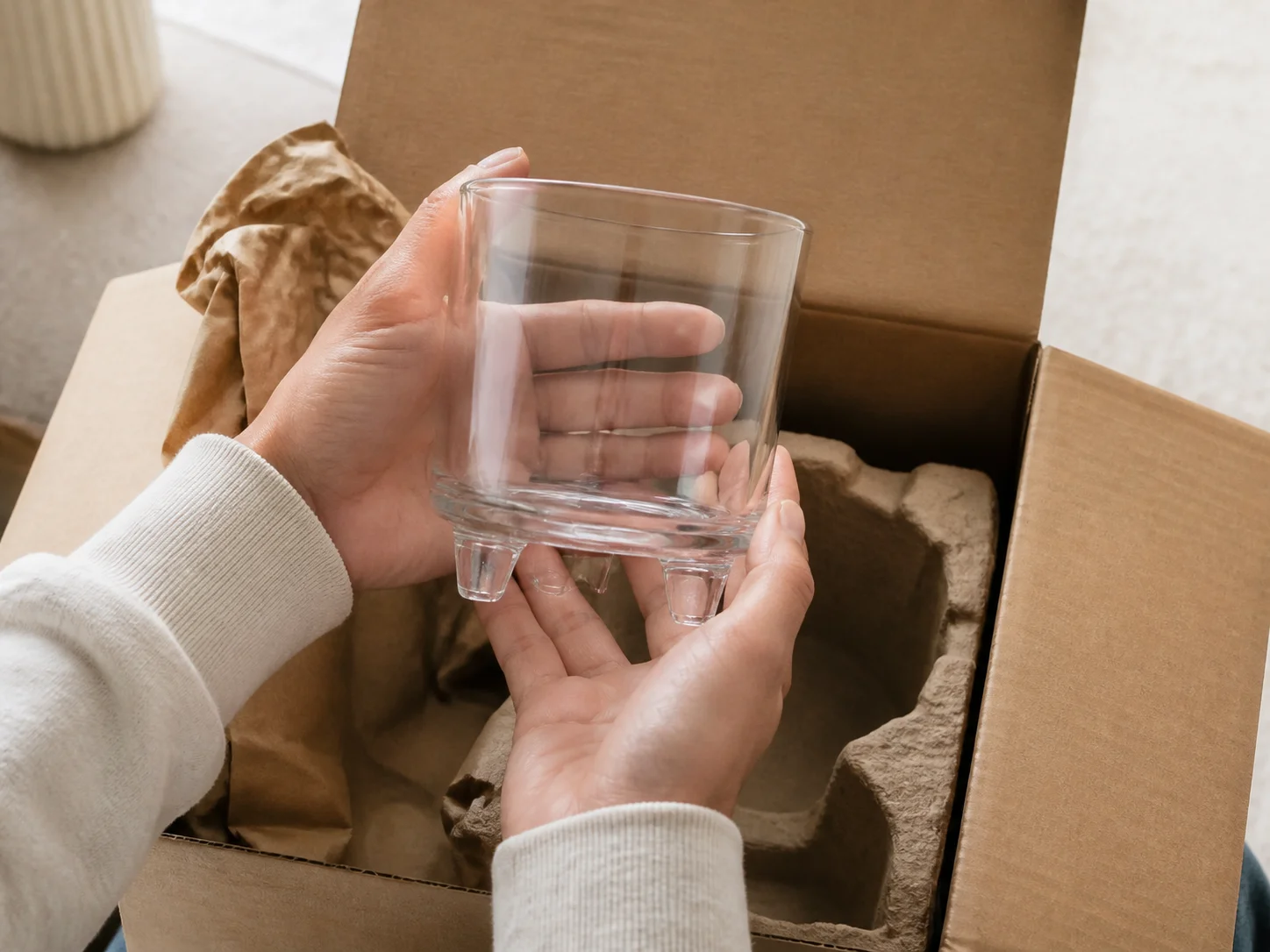
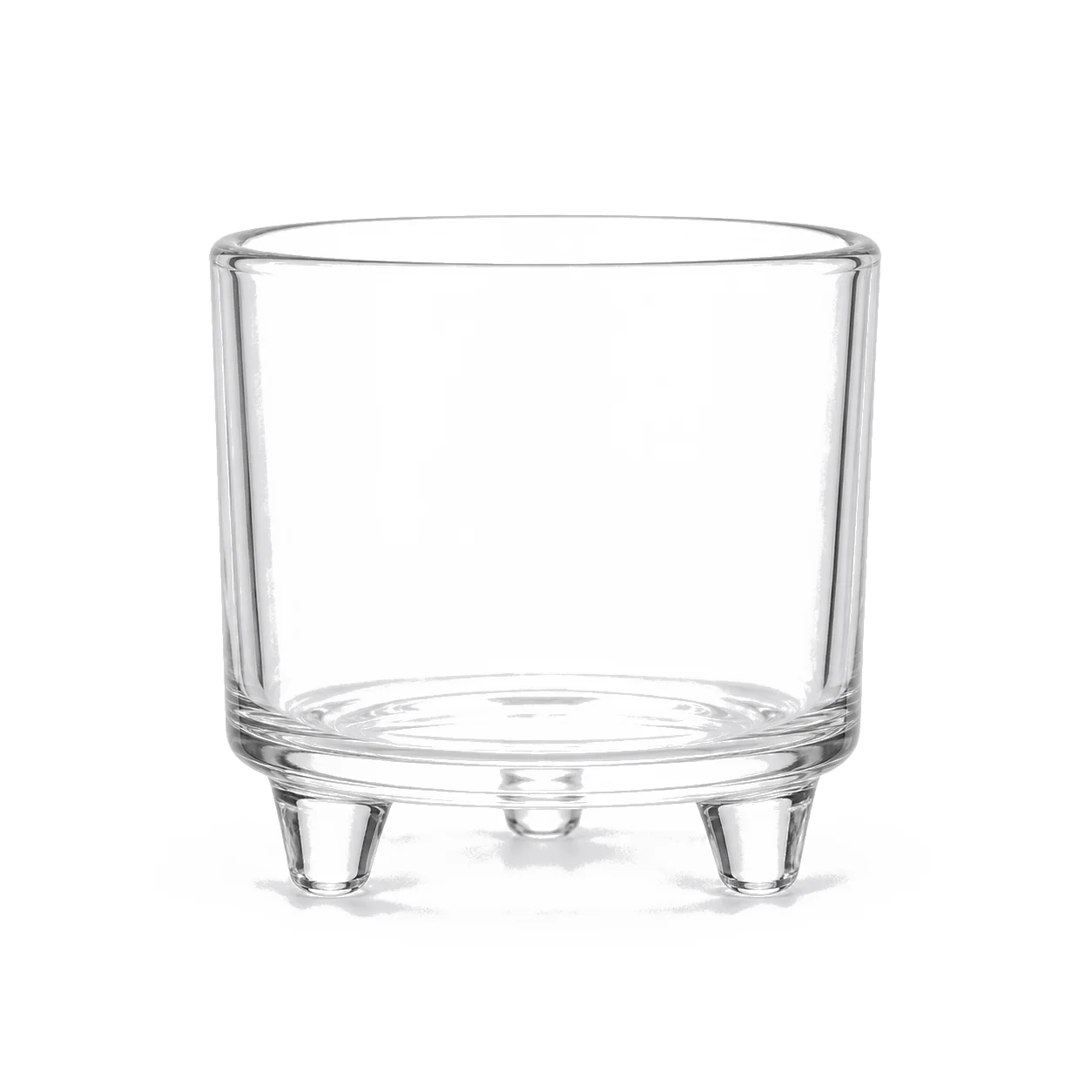
Standing a candle on legs puts an air gap between the hot base and the table, which protects the surface underneath and lets the vessel cool from below. It also concentrates the entire filled weight onto three points of molded glass, and moves the stability question from a broad footprint to the triangle those points describe.
The air gap protects the surface below
A candle burning to its base transfers heat into whatever it stands on, which is why marks on polished furniture are a familiar complaint. Feet interrupt that path and let air circulate, so the surface underneath stays substantially cooler. It is the most practical argument for the format and it is rarely the one used to sell it.
Three points carry the whole load
A flat base spreads a filled candle's weight over its whole area; three feet concentrate it into three small contacts. Foot geometry, radius and glass distribution at the junction therefore matter more than the base thickness does, and a design with abrupt transitions into the legs is the one that fails when a candle is set down firmly.
Stability is the triangle, not the diameter
A three-point stance is stable in principle on any surface, but the relevant footprint is the triangle joining the feet rather than the diameter of the vessel. A tall body on closely spaced legs tips more readily than its silhouette suggests, and that is checked with the vessel filled rather than empty.
Uneven surfaces suit three feet better than four
Three points define a plane, so a three-legged vessel never rocks, however uneven the table. Four feet do rock on an imperfect surface. That is a genuine reason to prefer three, and it also means one slightly short leg is a real dimensional fault rather than something the surface can absorb.
Feet make it read as an object rather than a container
Lifting a vessel off the table is a design language borrowed from furniture and ceramics, and it moves a candle out of the packaging category in a customer's mind. That perception is what the format is bought for, and it justifies the additional mold complexity and the more careful packing that legs require.
The feet are the first thing to break, and they break in transit
Three small projections concentrate every impact the pack receives, and a chipped foot makes the vessel rock even if the body is perfect. Cushioning that supports the base rather than the wall, and a foot profile without sharp roots, are what get them through distribution.