Scent retention, wood movement & heat rules
Five things a wood lid does, and one thing it must not do.
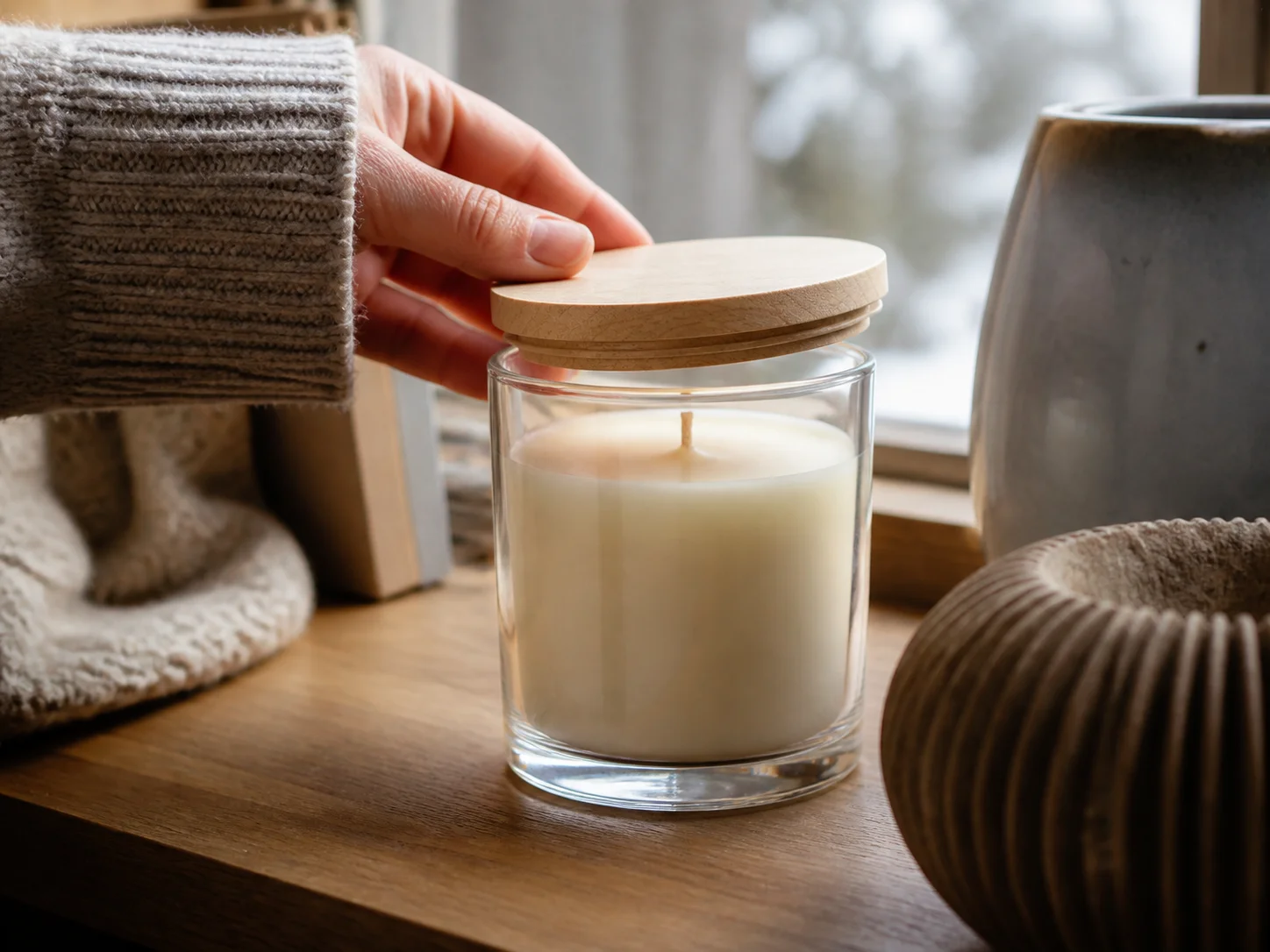
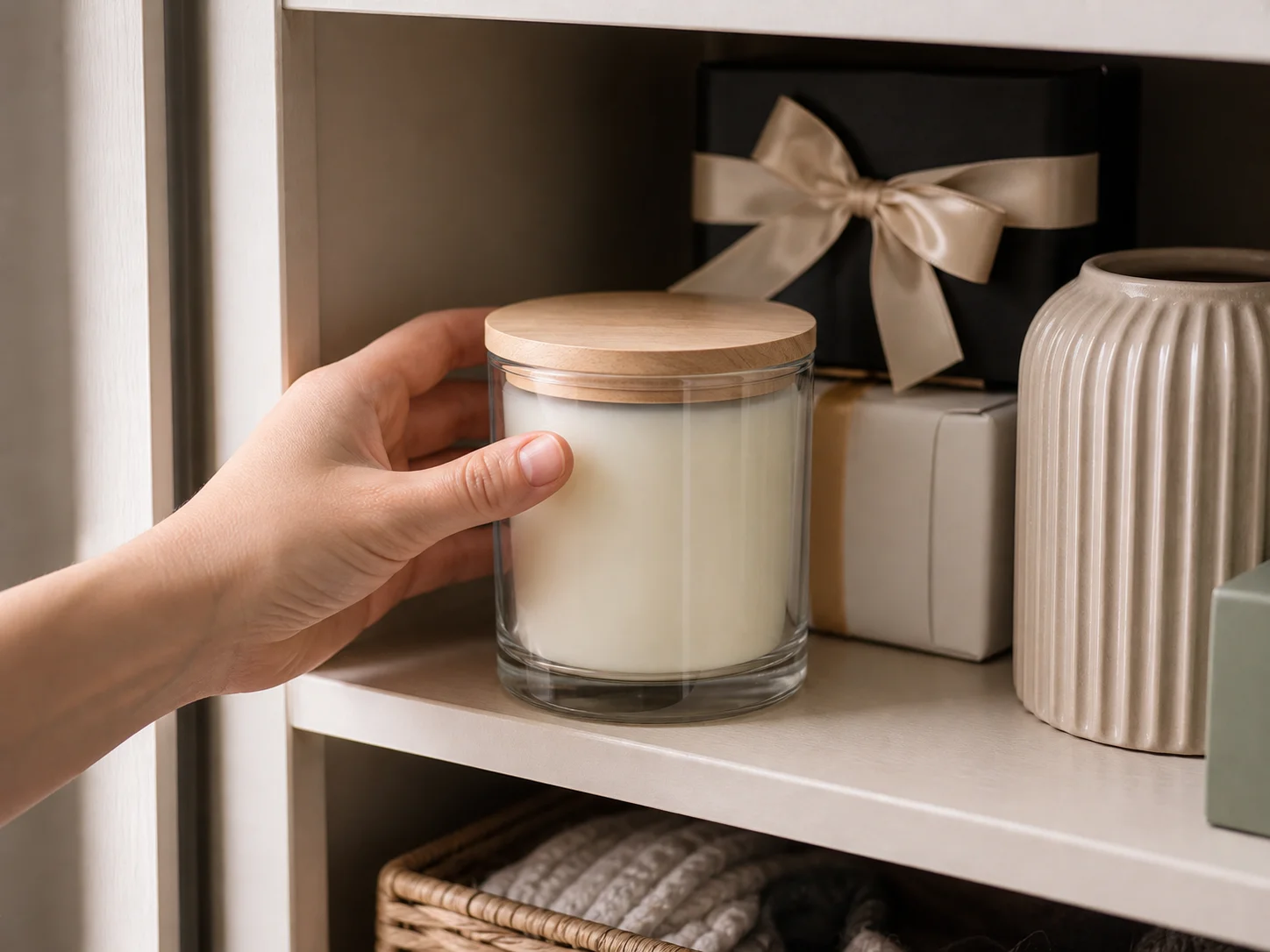
A candle loses fragrance to the air from the moment it is poured, and most of that loss happens while it sits in a warehouse and on a shelf. A lid with a soft inner fitment slows it substantially. After first use its role changes entirely, to keeping dust and soot residue off a wax surface the customer will look at every day.
Pre-sale scent retention is the real economic case
Fragrance oil evaporates from an exposed wax surface throughout storage and display, and a candle that has sat unlidded for months smells weaker on opening than the one poured beside it. A lid with a silicone fitment slows that loss, which protects the impression a customer forms in the first three seconds of opening the box.
The wood is not sealing anything
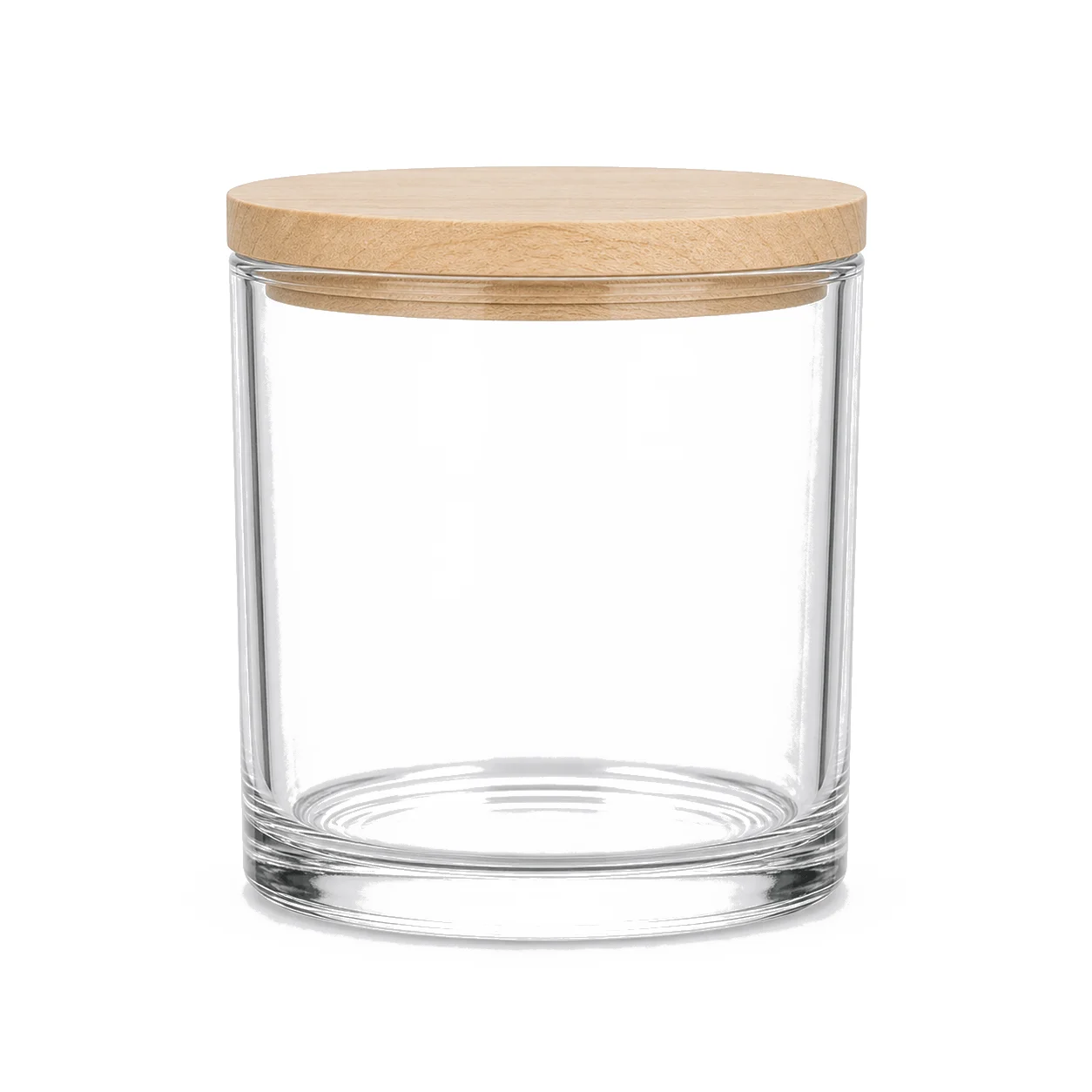
As with any wooden lid, the seal comes from an inset silicone ring or fitment; the timber provides appearance, weight and grip. That means fit tolerance is absorbed by the elastomer, which matters because wood changes diameter with ambient humidity and a lid turned in one climate arrives in another slightly different.
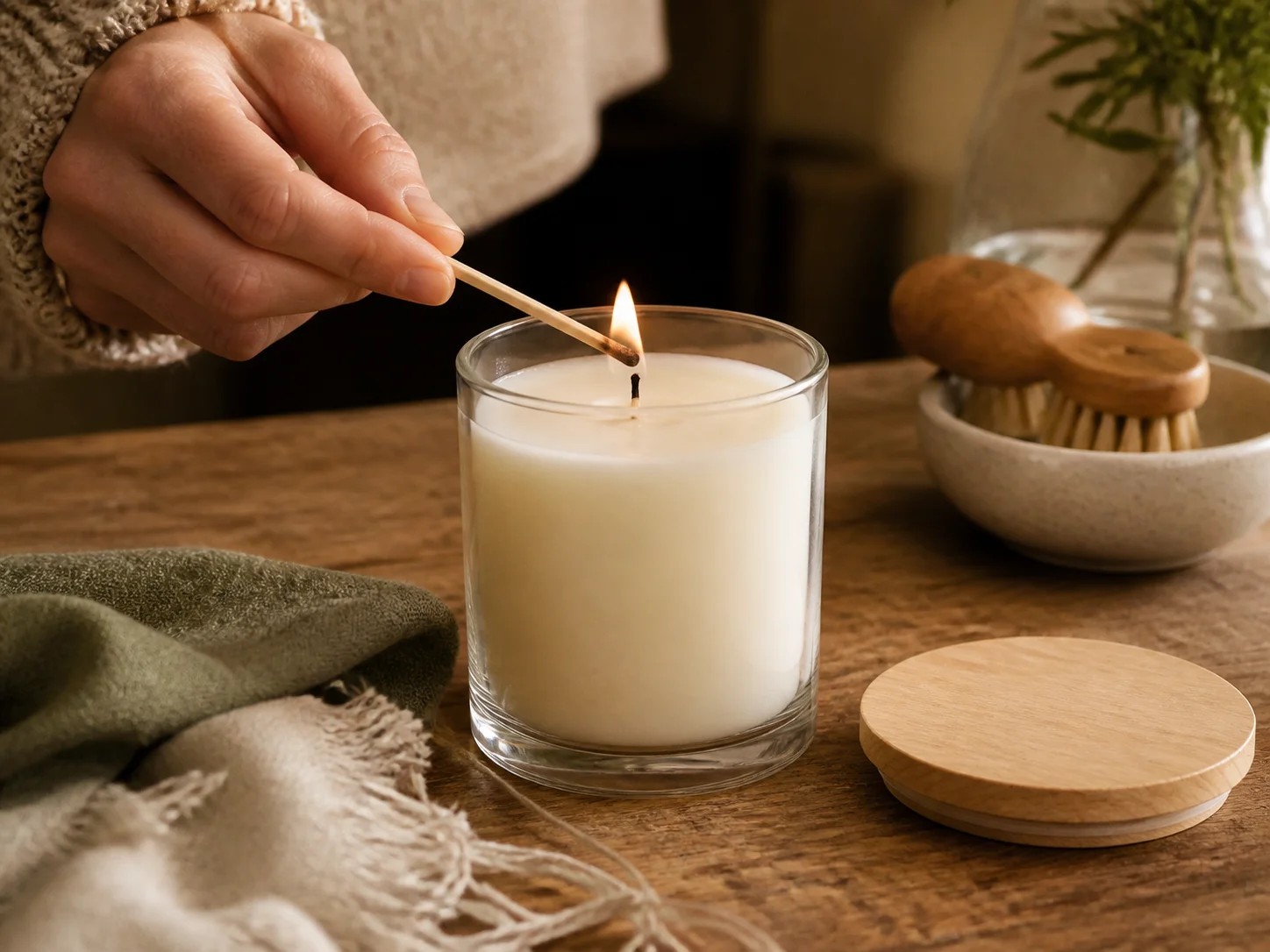
Never cap a candle that is still warm
Putting a lid on a hot candle traps volatiles and moisture against the wood and condenses soot onto the underside, leaving a stained lid and a wax surface that looks dirty. It can also lift an oil finish. The instruction to let a candle cool fully before replacing the lid belongs on the pack, not in a knowledge base.
Natural variation is approved with limit samples
Timber tone and figure vary between pieces and between seasons, so color is agreed with a light and a dark limit sample rather than a single reference. A program that approves one perfect lid and rejects everything that differs will reject a large share of an honest delivery, and that discovery usually happens at goods-in.
The lid is handled more than the jar
It is lifted, set down on a table, picked up with a candle-scented hand and eventually washed by somebody. Oil finishes can be renewed with a cloth and hide marks well; lacquer resists marking and chips at the edge. Neither survives a dishwasher, so the care line on the pack does real work for a returning customer.
Wood moves with the seasons, and the fit changes with it
A lid fitted in a humid month can sit loose in a dry one and bind again the other way round, because the timber moves and the glass does not. Allowing clearance for that movement, and specifying moisture content at supply, is what stops a lid that no longer fits its own jar.