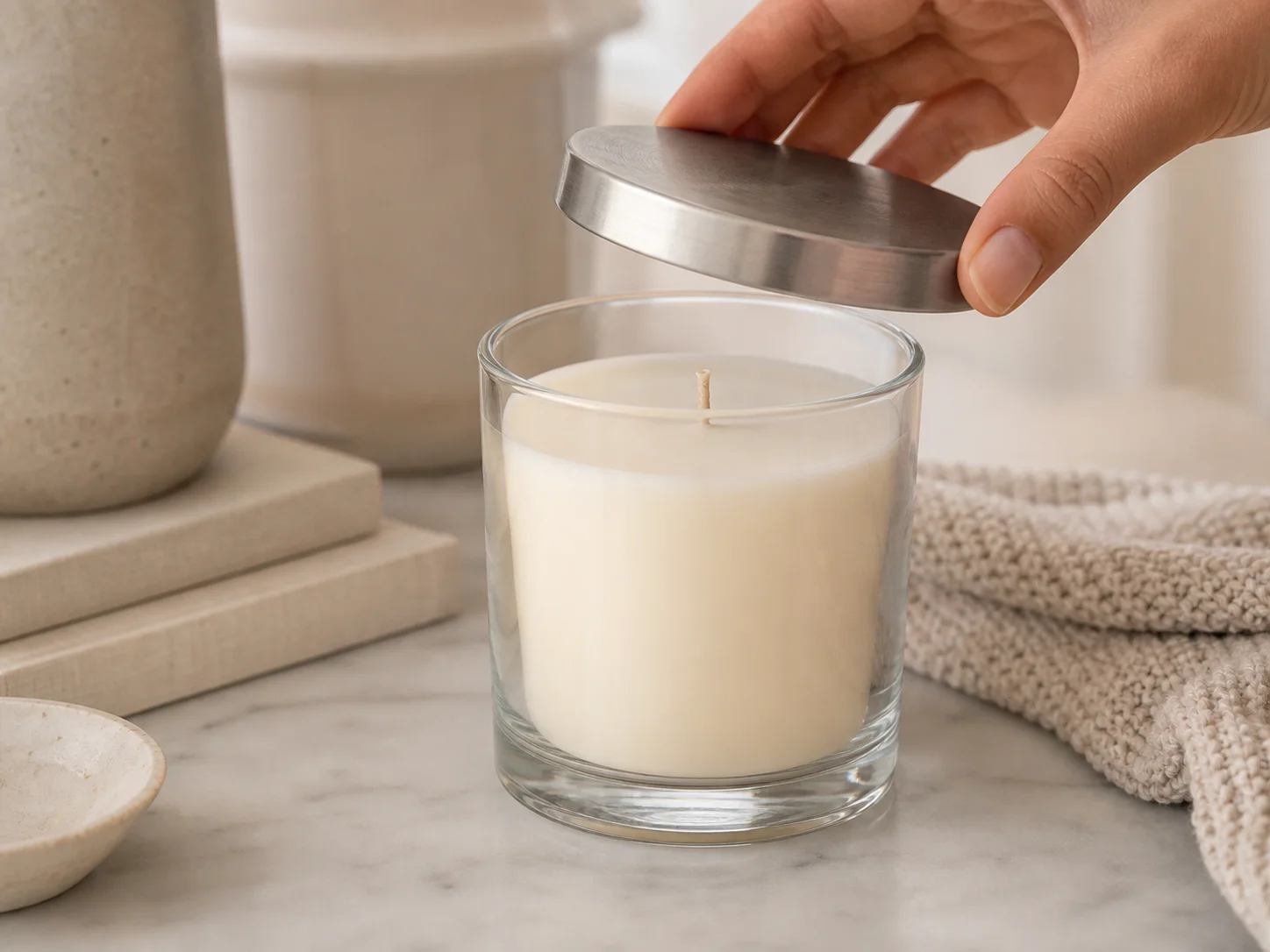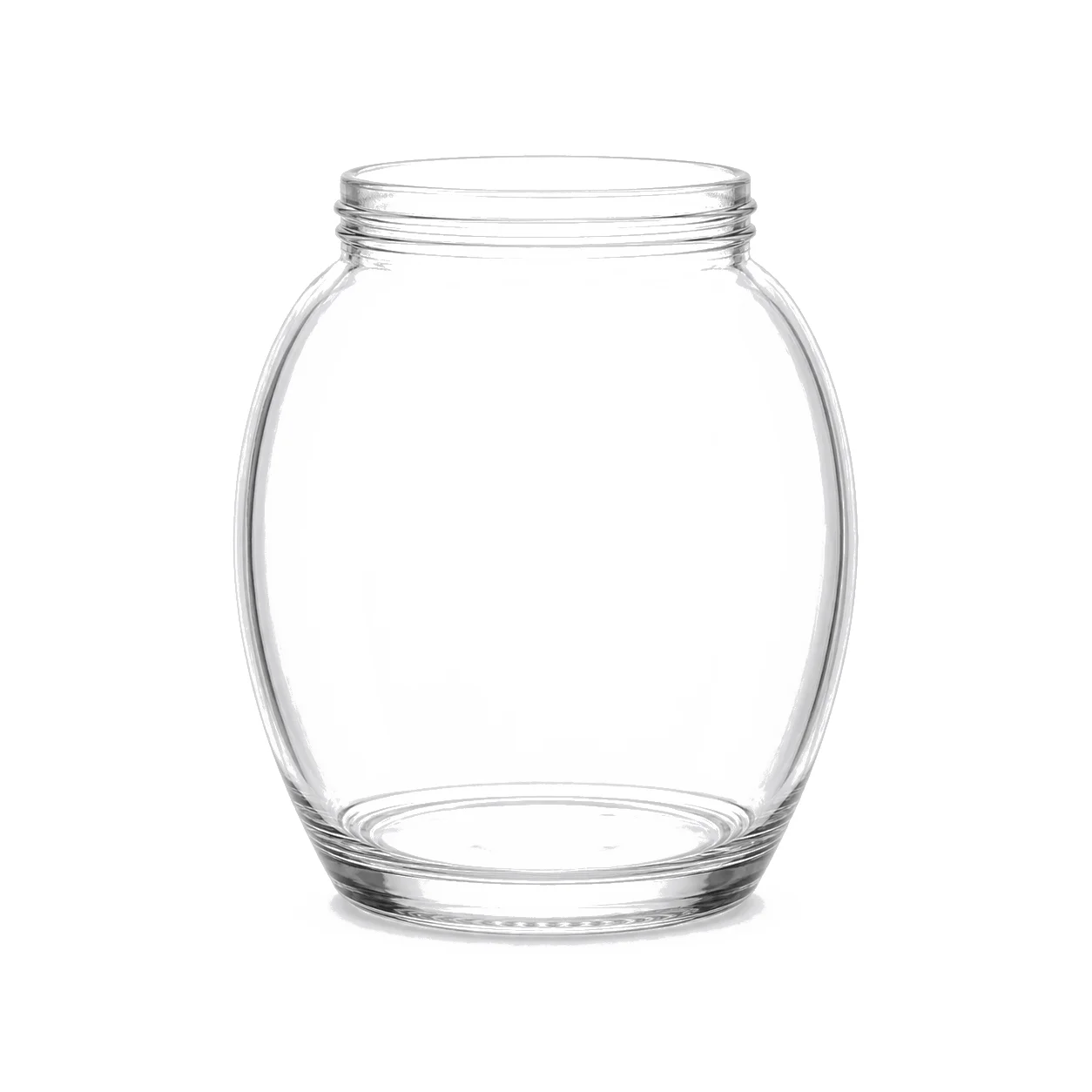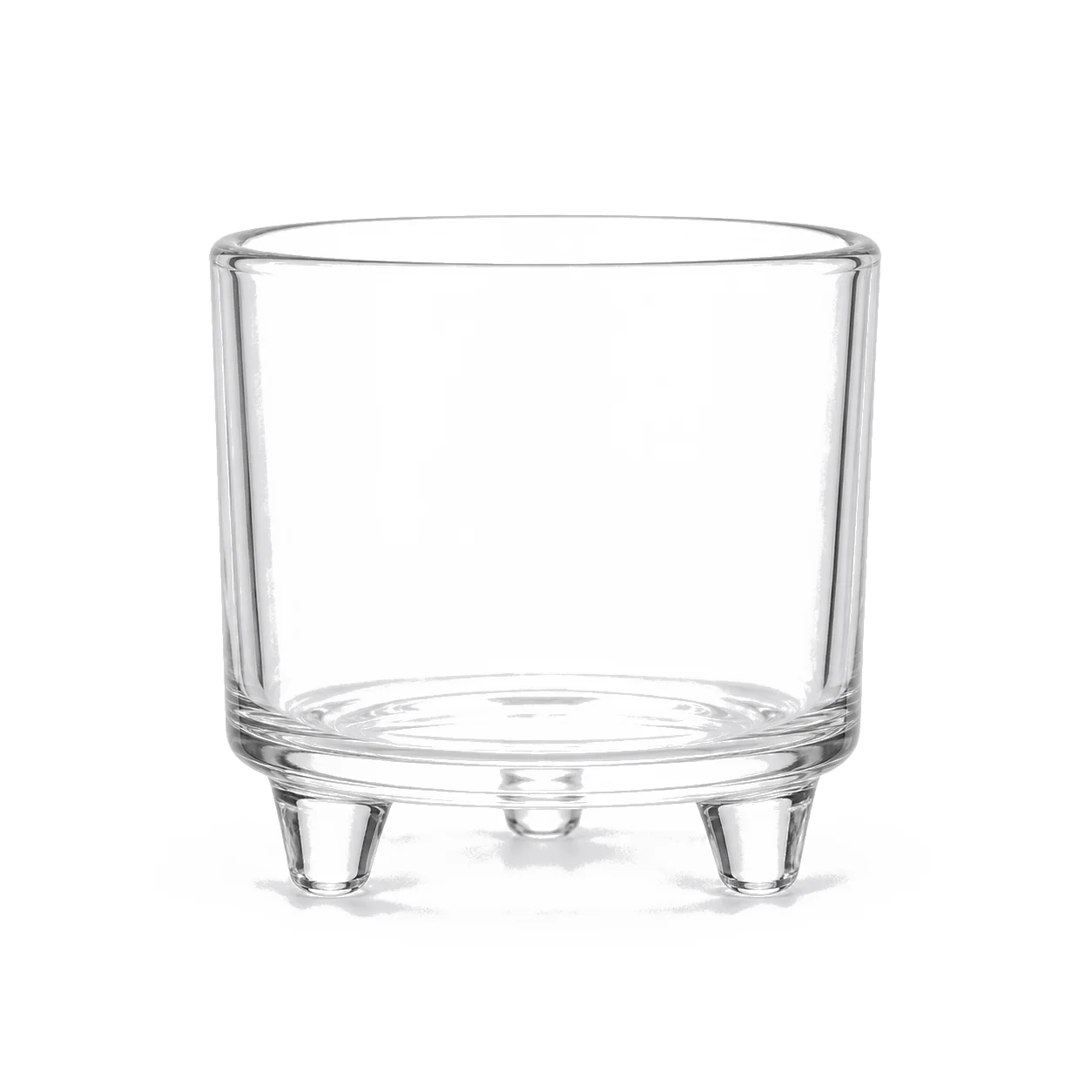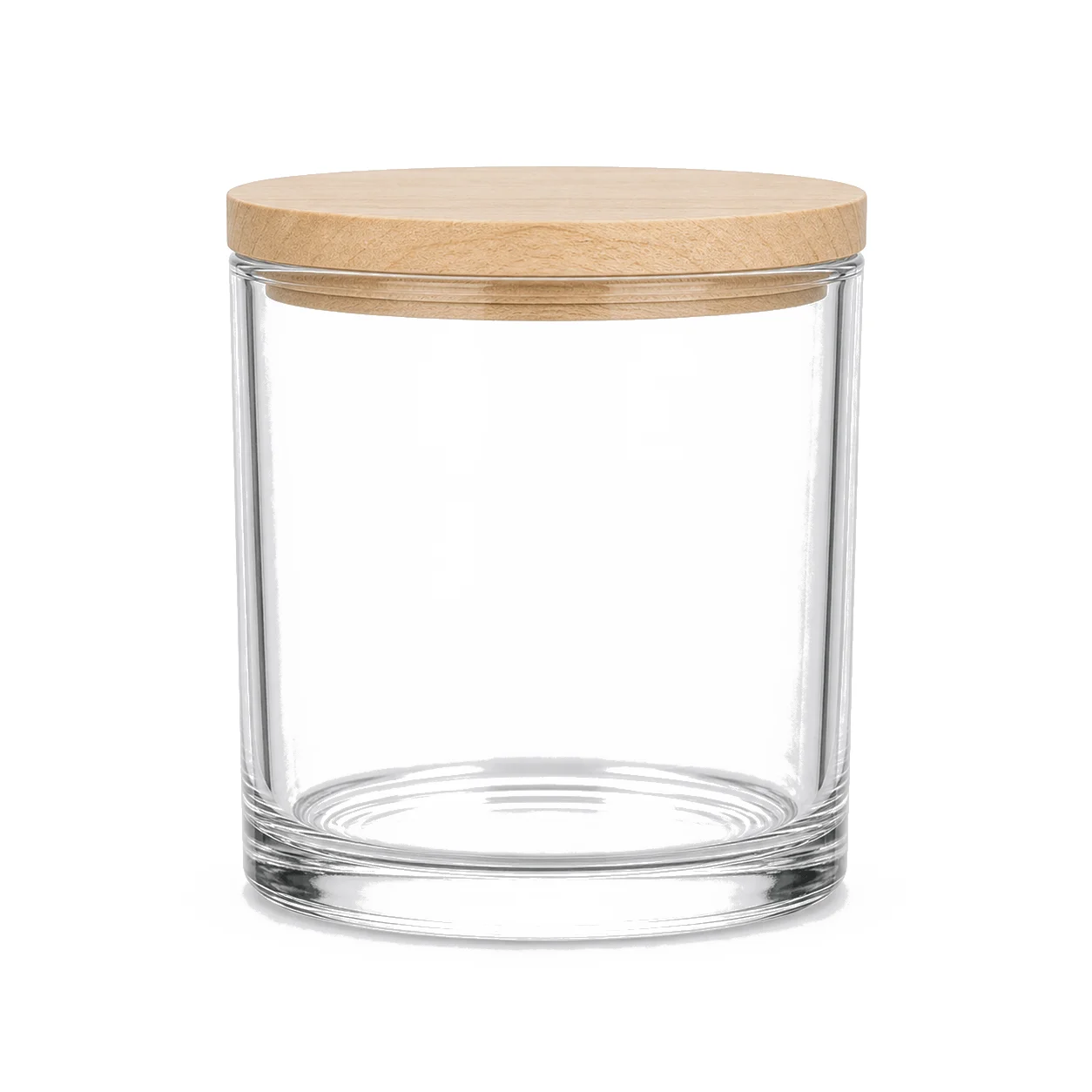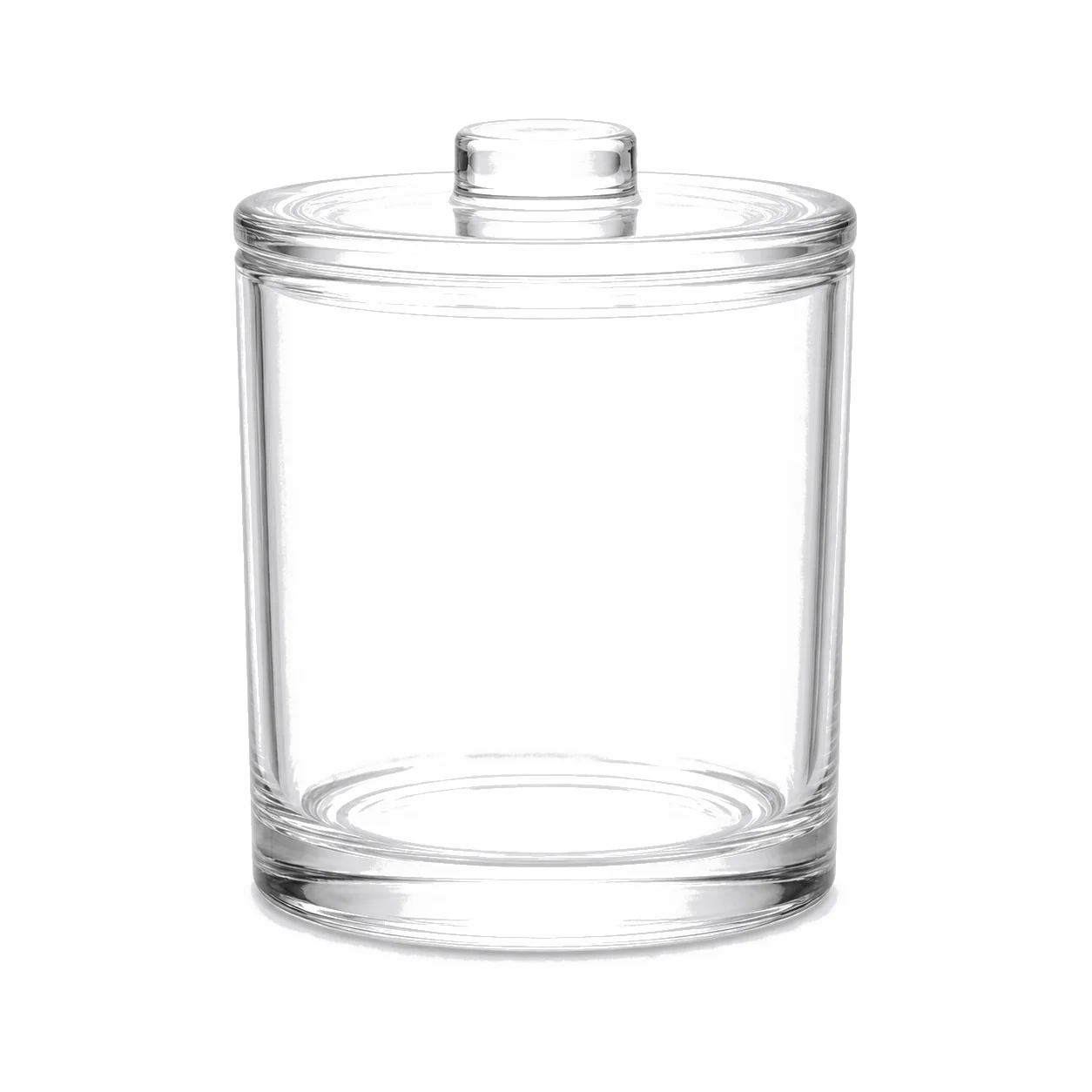
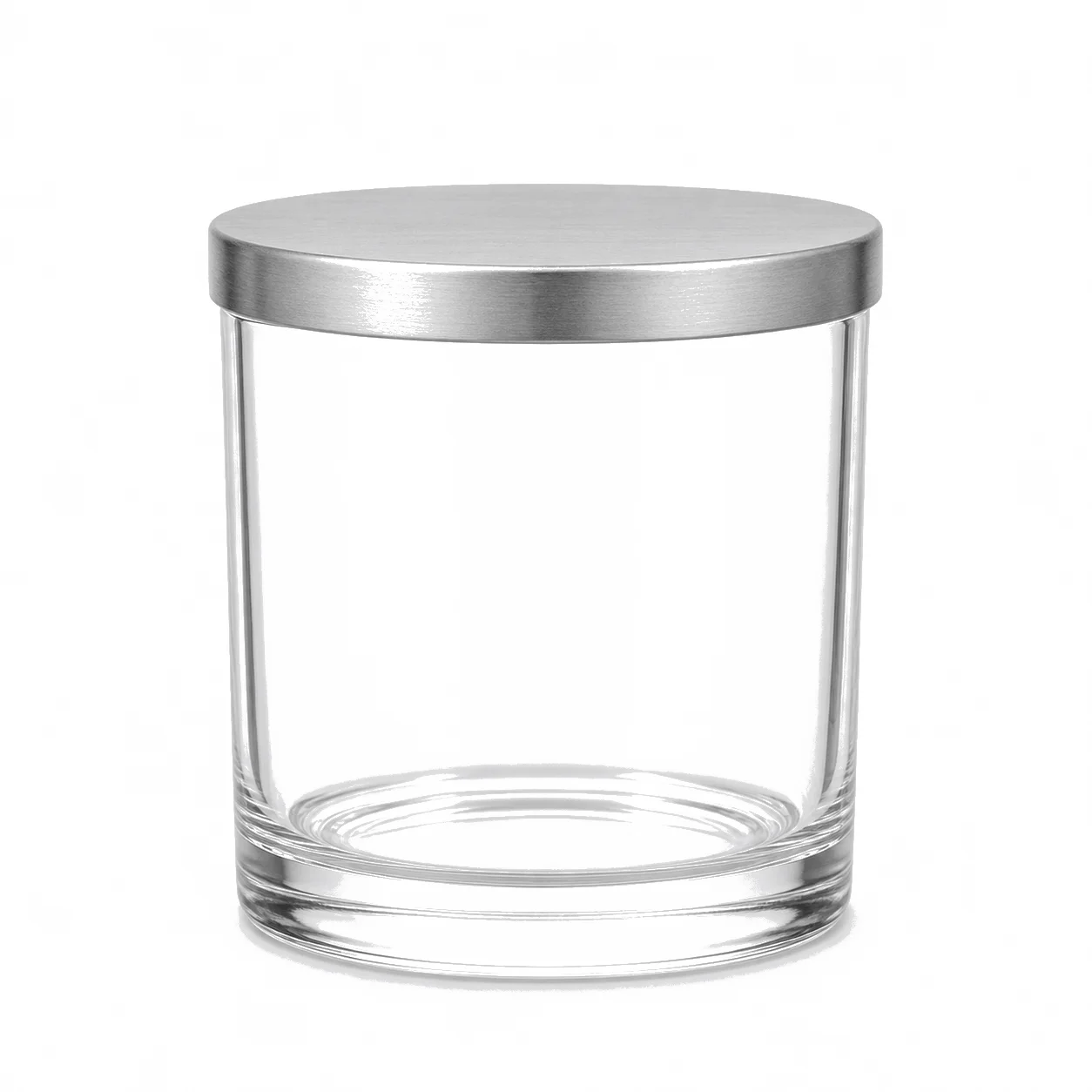
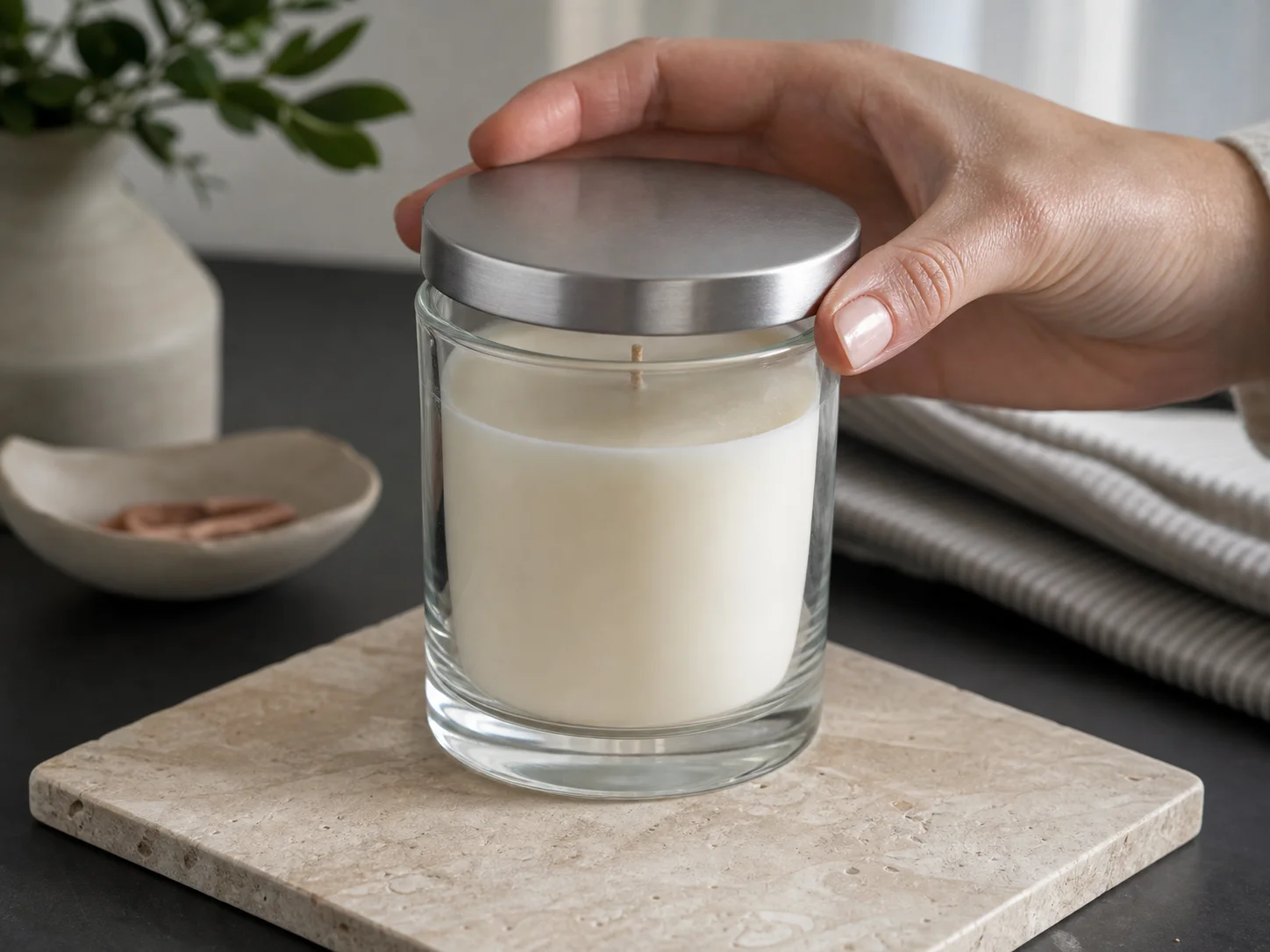
Clear candle jar with a brushed metal lid sitting on the rim
Shown configuration · jar with metal lid / wax, wick, liner and label not shown

Lidded candle vessels

Metal-lid Candle Jar

A candle jar with a metal lid, which seals better than wood, conducts heat far faster, and can be used to smother a flame — a habit worth designing for rather than against.

Tighter seal than woodConducts heat readilyUsed to snuff the flame
Stock status
In stock
Lead time
2–3 weeks
FOB price / pc
$0.95 - $1.40
MOQ
3,000 pcs

Final availability, dimensions, materials, assembled components and commercial terms are confirmed against the selected drawing and approved sample.

Dimensionally stable

No movement with humidity

Heats fast, cools fast

A lid placed on a warm jar gets hot

Snuffing is a real use

Design for it or warn against it

Metal-lid Candle Jar profile

A better seal, a worse insulator, and a customer who will use it as a snuffer.

Sealing, heat conduction & customer behavior

Five differences from a wood lid that change the specification.

Metal lids hold their dimensions regardless of humidity, take a tight lined fit and give a candle a finished, weighty feel. They also conduct heat, which means a lid put on a warm jar becomes hot, and they invite a behavior wood does not: customers use them to smother the flame instead of blowing it out.

01

A metal lid can actually seal

Because metal does not move with humidity, a lined metal lid can be dimensioned to a genuinely close fit, which slows fragrance loss during storage more effectively than a wooden lid relying on an elastomer to absorb wood movement. On a fragrance-led product that difference is measurable by comparing lidded and unlidded units from one pour.

02

It conducts, and customers discover that

Metal reaches a temperature people notice far faster than wood does. A lid resting near a burning candle, or placed on a jar that has just been extinguished, gets hot enough to be unpleasant. Candle fire safety work references a lower surface temperature limit for metal than for glass, which reflects exactly this difference in how it is experienced.

03

Snuffing with the lid is common and it has consequences

Smothering a flame with the lid extinguishes it without smoke, which is why people do it. It also deposits soot on the underside, leaves the lid hot, and can crack a lacquer or a coated finish over time. Either the lid is specified to tolerate that use, or the label tells the customer to use a snuffer instead.

04

Coating and plating decide how it ages

Brushed stainless, powder-coated steel, plated brass and anodized aluminum age very differently against fingerprints, soot and cleaning. A plated finish that looks superb in a photograph can show every mark in a month of daily handling. Choosing the finish against the way the product is actually handled is more useful than choosing it from a swatch.

05

The liner has to survive the fragrance

The disc or gasket that gives a metal lid its seal sits directly above a fragranced wax surface for months. Some liner materials absorb fragrance and pass it between products in a mixed carton, and some are attacked by it. Selecting the liner against the fragrance is a small line item that prevents a whole batch smelling of its neighbor.

06

Threaded metal on glass needs a torque, and customers over-tighten

A lid tightened hard onto a glass finish concentrates load at the thread and is the commonest cause of finish damage on this format. A liner with some compliance, and a thread profile that reaches its stop, are what keep the customer from doing damage they cannot see.
Application guide

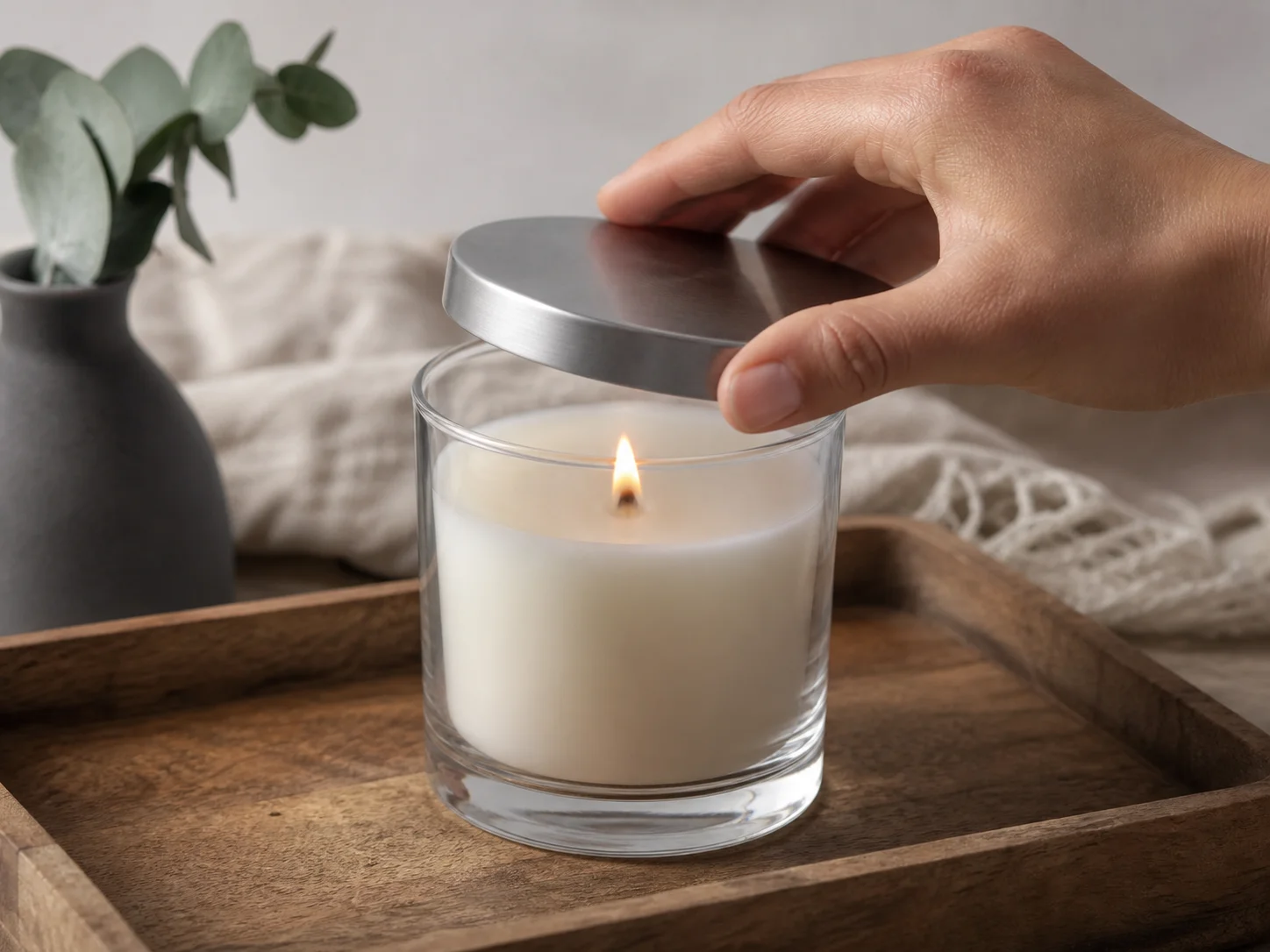
A metal lid can snuff a candle, or just cover it.

Customers often use a lid to put a candle out, dropping it onto a vessel that has been burning for hours. Whether the lid is designed for that, and how hot it becomes, are questions the finish alone does not answer. These are development directions confirmed by burn testing.

Metal-lid Candle Jar used for brushed metal against clear glass in a modern ranges setting

Modern ranges

Brushed metal against clear glass

For contemporary ranges where a brushed silver lid gives a clean contrast to clear glass and reads as more considered than a plastic or wooden top. Metal also holds its finish through years on a shelf, where coated alternatives dull or chip with handling.

  • Confirm the finish resists handling
  • Review the contrast with the wax color
  • Check the lid seats flush every time
Metal-lid Candle Jar used for lids used to put the flame out in a extinguishing setting

Extinguishing

Lids used to put the flame out

Placing a lid on a burning candle starves the flame, but it also heats the metal and can leave soot on the underside and a warm lid a customer then picks up. Whether the design supports this use, and what temperature the rim reaches, should be established rather than left to chance.

  • Test the lid used as a snuffer
  • Measure lid temperature after use
  • Check soot marking on the underside
Metal-lid Candle Jar used for keeping the scent in between burns in a fragrance retention setting

Fragrance retention

Keeping the scent in between burns

The practical reason most customers replace the lid is to stop the fragrance fading while the candle sits unused for weeks. How well the lid seals against the rim, and whether a liner is needed, determine how much scent is left when it is next lit.

  • Confirm the seal against the rim
  • Assess scent retention over weeks
  • Decide whether a liner is required

Lid metal, finish, closure role, wax, fragrance, wick, fill, burning, safety and distribution requirements are confirmed for the selected program.

Common questions

Metal-lid Candle Jar questions

Metal changes the seal, the heat and the way customers behave.

Do metal lids get dangerously hot?

They get hot enough to be unpleasant far sooner than wood, because metal conducts. A lid resting near a burning candle or placed on a just-extinguished jar is the usual case. Candle fire safety work cites a lower surface temperature limit for metal than for glass, which reflects exactly how differently the two are experienced by hand.

Which metal finish wears best?

It depends on handling rather than on appearance. Brushed stainless hides marks well; powder coat is durable but shows chips at edges; plated brass and anodized aluminum look excellent in photographs and can show every fingerprint in a month of daily use. Judge the finish on handled samples rather than on a swatch card.

Can lids transfer fragrance between products?

Yes, through the liner. The disc that gives a metal lid its seal sits directly above fragranced wax for months, and some liner materials absorb fragrance and release it into neighbors in a mixed carton. Selecting the liner against the fragrance is a small line item that prevents a whole batch smelling of the wrong scent.

How tight should a threaded metal lid go?

To a specified torque, because customers will exceed it. Metal on glass gives no feedback before it binds, and an over-tightened lid either will not come off or stresses the finish. Set an application torque and check removal after storage, not just on the line.

Next step

Send us the Metal-lid Candle Jar brief.

Tell us the product, fill volume, closure preference and destination market. We will come back with the matching drawings, available configurations and a sample plan before anything is quoted.

  • 01Send the briefProduct, volume, closure and market
  • 02Get the optionsMatching drawings and configurations
  • 03Approve the sampleConfirm the pack before production