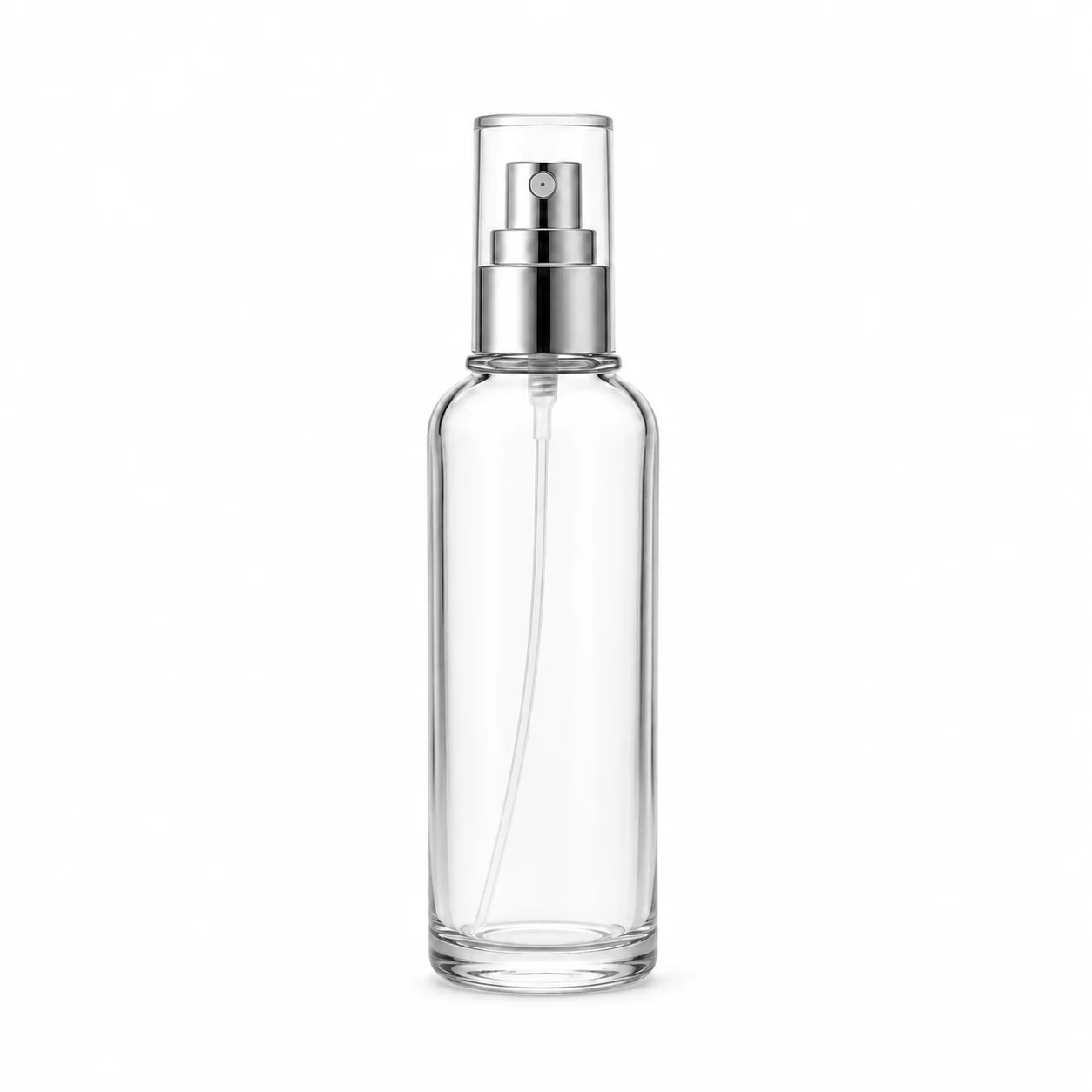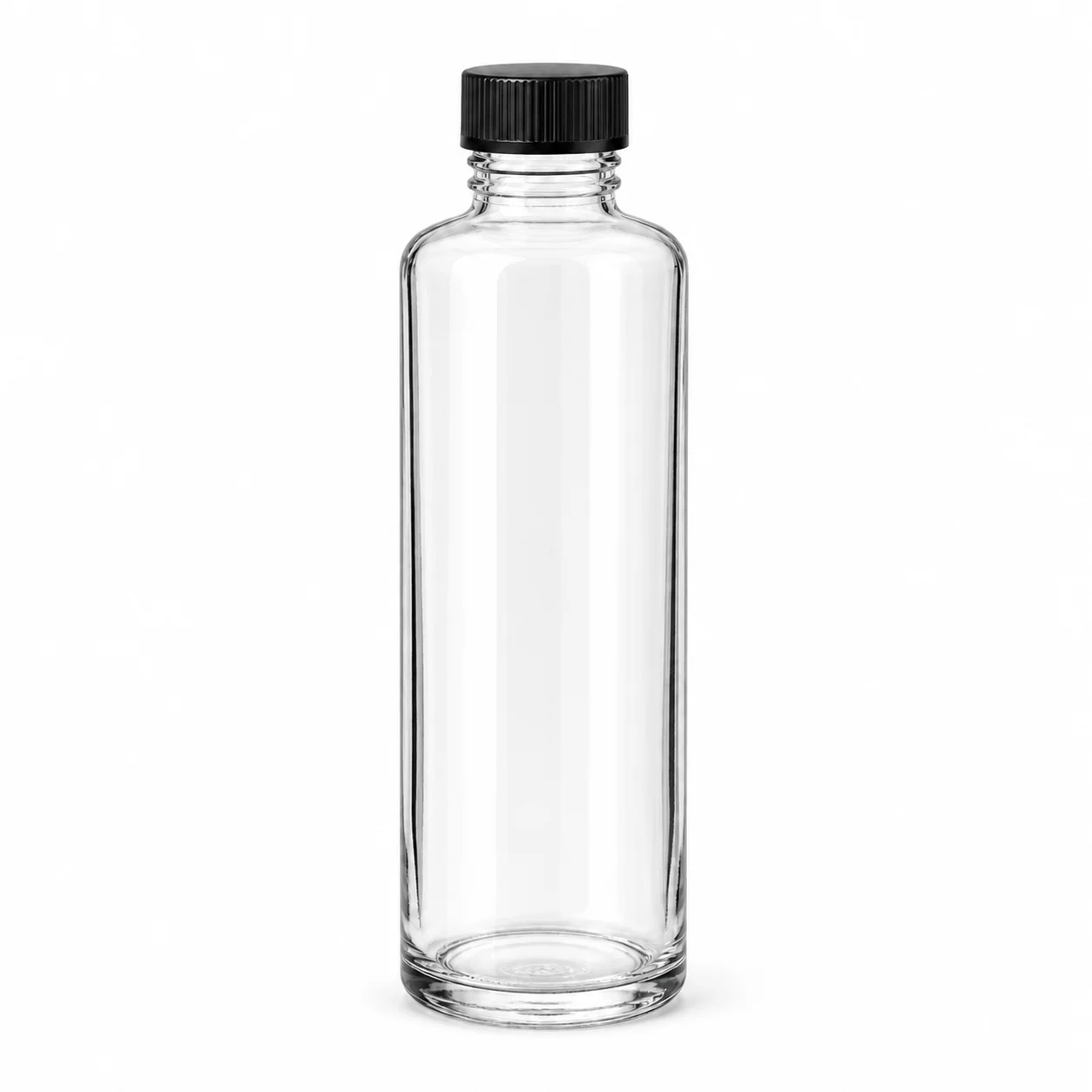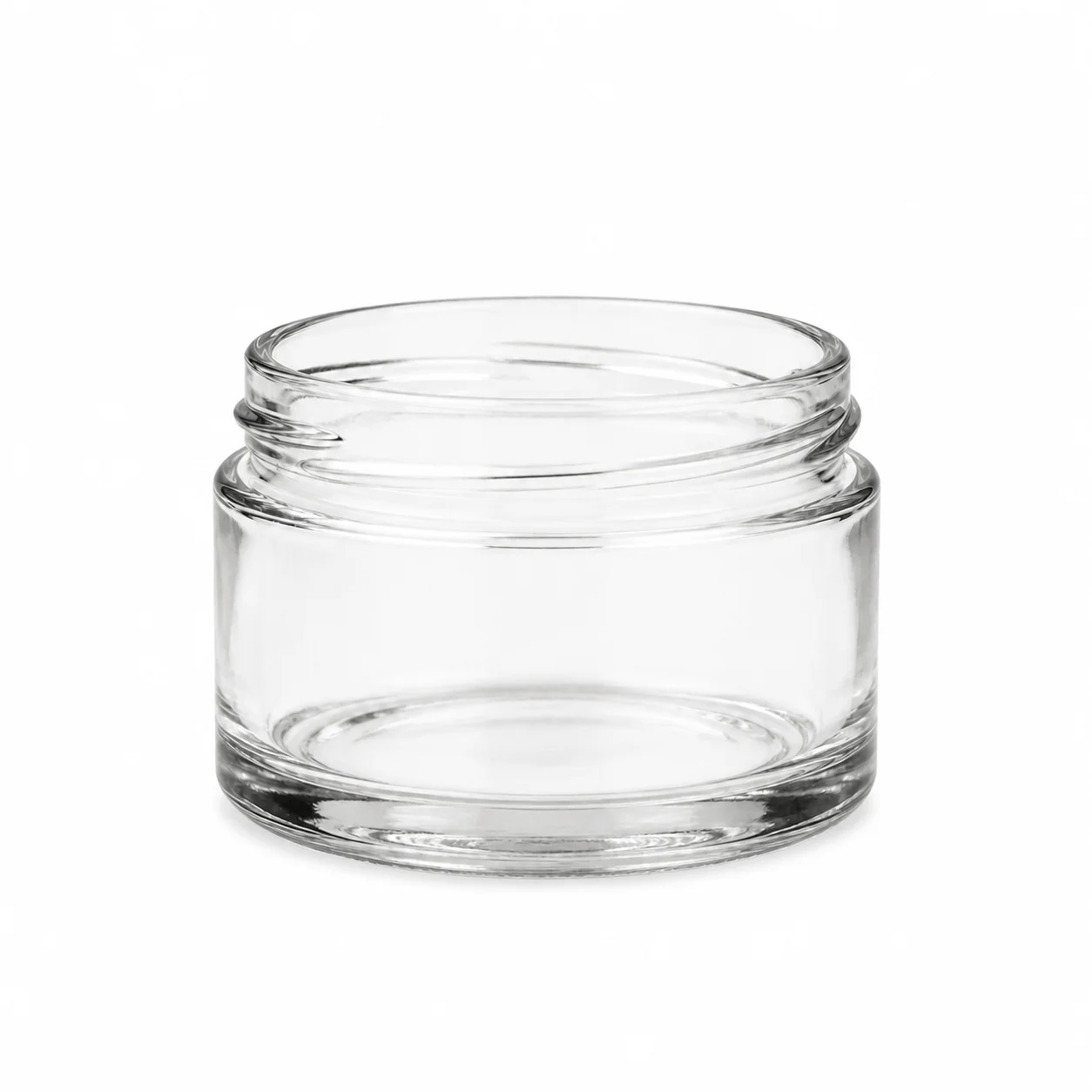
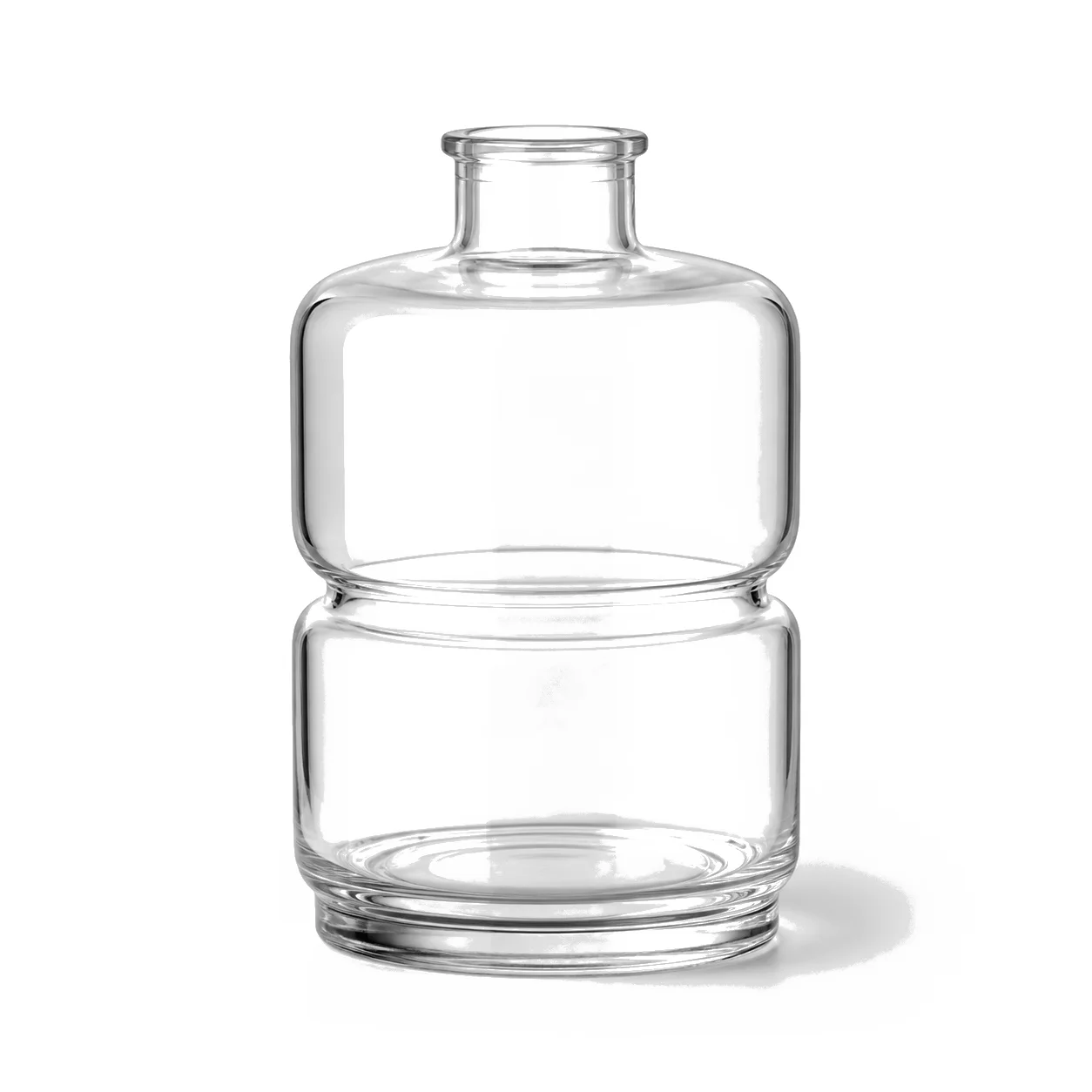
Tall clear bottle with a narrow neck, shown empty without reeds or liquid
Shown configuration · empty bottle / layered liquid, reeds, collar and label not shown

Reed diffusers

Layered Diffuser Bottle

A diffuser bottle presenting two visibly separated liquid layers, which is a formulation effect the glass has to display, keep stable in transit and survive being shaken.

Two immiscible phasesClear glass is mandatoryLayers remix when disturbed
Stock status
In stock
Lead time
2–3 weeks
FOB price / pc
$0.35 - $0.65
MOQ
10,000 pcs

Final availability, dimensions, materials, assembled components and commercial terms are confirmed against the selected drawing and approved sample.

The product is the view

A colored bottle destroys the effect

Tall and narrow shows layers

Height exaggerates the separation

It will be shaken

Recovery time is a product property

Layered Diffuser Bottle profile

A packaging format where the container's only job is to be seen through.

Phase visibility, transit behavior & neck constraints

Five requirements imposed by selling a boundary between two liquids.

Layered diffusers use two liquids of different density and immiscibility so the product shows a visible boundary, often with contrasting colors. Every packaging decision follows from making that boundary visible and keeping it intact: clear glass, a tall narrow body, and a formulation that recovers if a courier turns the carton over.

01

The glass has to disappear

Frosting, tinting or coating a layered diffuser removes the reason it exists. That rules out most of the decoration options this category normally uses and pushes the branding onto the label, the collar and the carton. It also means glass clarity and freedom from cords and seeds matter more than on any other bottle in the range.

02

Tall and narrow makes the boundary read

The same volume in a squat bottle gives a wide, shallow interface that reads as a smudge; in a tall narrow bottle it becomes a crisp line with height on either side. Proportion is therefore doing the visual work, and a bottle chosen for capacity alone can present the same formulation far less convincingly.

03

Transit will remix it, so recovery matters

Cartons get inverted, dropped and vibrated, and the layers will mix. What decides whether the customer sees the effect is how quickly they separate again — minutes is fine, days is not. That recovery time is a formulation property, but it is the container that makes it visible, so it belongs in the specification discussion.

04

The neck still meters the fragrance

Underneath the visual effect this is a reed diffuser, so the neck bore still limits evaporation and reed count and still controls throw. A tall narrow bottle chosen for the layers can end up with a bore that under-delivers, and the balance between the two requirements is one of the more genuinely difficult trades in the category.

05

Fill level shows more than usual

With a visible boundary, a customer can see exactly how much of each layer remains, and an uneven fill between units is obvious on a shelf. Filling tolerance therefore matters more here than in an opaque or single-phase product, and it is worth agreeing before a line is set rather than discovering it in a display.

06

Density separation is a formulation property, and the bottle only displays it

The layers hold because the liquids differ in density and do not mix, which is decided by the fragrance house rather than by the glass. A brand that changes formulation and keeps the bottle can find the effect has quietly disappeared, so the two are approved together.
Application guide

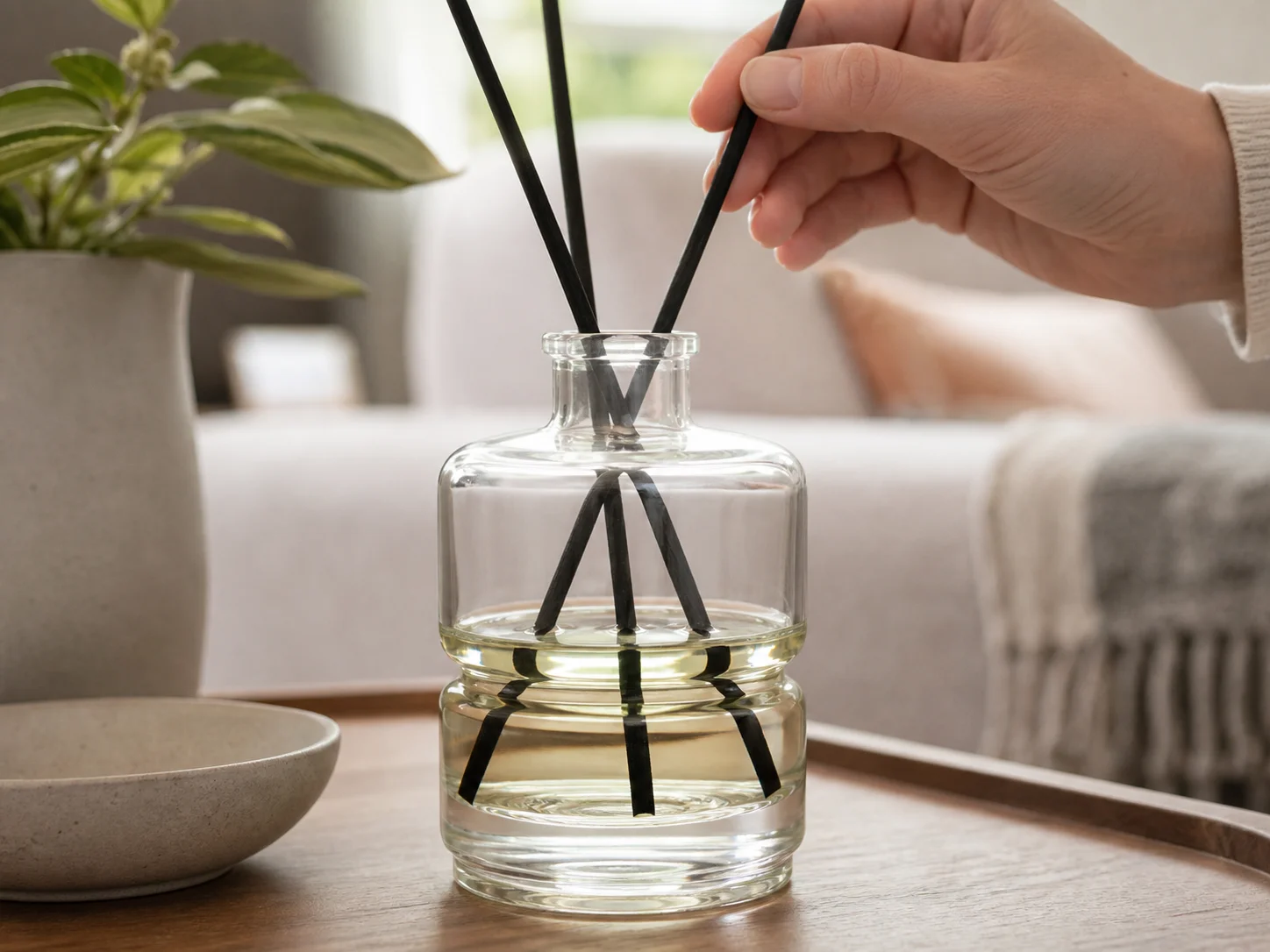
Two stacked volumes read as architecture, not packaging.

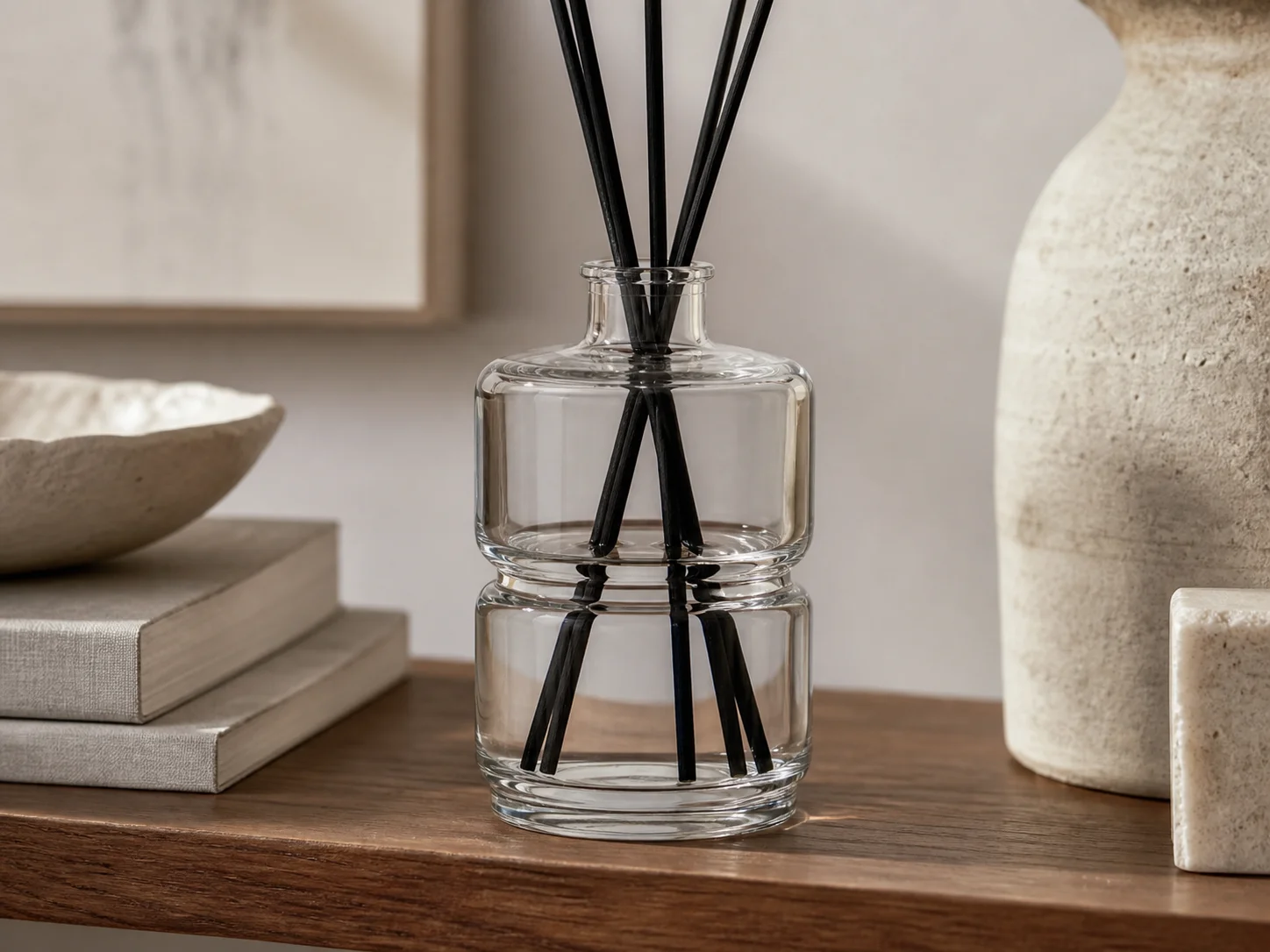
Splitting the body into a lower and an upper mass gives the bottle a deliberate, built quality that sets it apart from the plain cylinders that dominate reed diffusers. These are development directions confirmed on filled samples.

Layered Diffuser Bottle used for diffusers chosen as objects for a shelf in a design-led interiors setting

Design-led interiors

Diffusers chosen as objects for a shelf

For customers buying home fragrance from design and homeware retailers, where the vessel sits permanently on view and competes with vases rather than with air fresheners. The stepped silhouette gives it presence from across a room, which a smooth cylinder never achieves.

  • Judge the object from across a room
  • Review the step from several angles
  • Position against homeware, not fresheners
Layered Diffuser Bottle used for a bottle that looks half gone too soon in a the first month setting

The first month

A bottle that looks half gone too soon

For a diffuser a customer sets up in a living room and glances at every day. Because the body steps between two widths, the level drops past the step and the bottle suddenly reads as nearly finished, which feels like poor value even when months of oil remain, so appearance is reviewed at several fill levels.

  • Review appearance at several fill levels
  • Set the fill relative to the step
  • Confirm it looks full on first sight
Layered Diffuser Bottle used for one silhouette across several fragrances in a range platform setting

Range platform

One silhouette across several fragrances

A distinctive stepped profile works as a house signature across an entire fragrance range, with labels and the color of the liquid inside carrying the difference between variants. That keeps tooling to a single mold and filling setup constant, while the collection still reads as varied when a customer sees it grouped on a shelf.

  • Keep one mold across the range
  • Differentiate by label and liquid
  • Review the range grouped together

Applications describe program directions. Capacity, diffusion, duration, leakage, safety and distribution outcomes are confirmed for the selected program.

Common questions

Layered Diffuser Bottle questions

Selling a visible boundary constrains almost every packaging choice.

Can we frost or tint the bottle?

Not without removing the reason the product exists. The visible boundary is what the customer is buying, so the glass has to disappear. That rules out most of this category's usual decoration and pushes branding onto the label, collar and carton, while making glass clarity and freedom from cords matter more than on any other bottle.

What happens when the layers mix in transit?

They will mix — cartons get inverted, dropped and vibrated. What matters is how quickly they separate again. Minutes is acceptable; days is not, because the product reaches the shelf looking wrong. Recovery time is a formulation property that the container makes visible, so it belongs in the specification conversation rather than beside it.

Does the neck still matter?

Yes, because underneath the effect this is still a reed diffuser and the bore limits evaporation, reed count and throw. A tall narrow bottle chosen for the layers can end up with a bore that under-delivers fragrance. Balancing presentation against throw is one of the genuinely difficult trades in this category.

Is the layering the bottle's job?

No — it is a formulation property. Density difference between the phases is what creates the boundary; the bottle only displays it. If the layers do not hold, the answer is in the formulation, and no change of glass will fix it.

Next step

Send us the Layered Diffuser Bottle brief.

Tell us the product, fill volume, closure preference and destination market. We will come back with the matching drawings, available configurations and a sample plan before anything is quoted.

  • 01Send the briefProduct, volume, closure and market
  • 02Get the optionsMatching drawings and configurations
  • 03Approve the sampleConfirm the pack before production