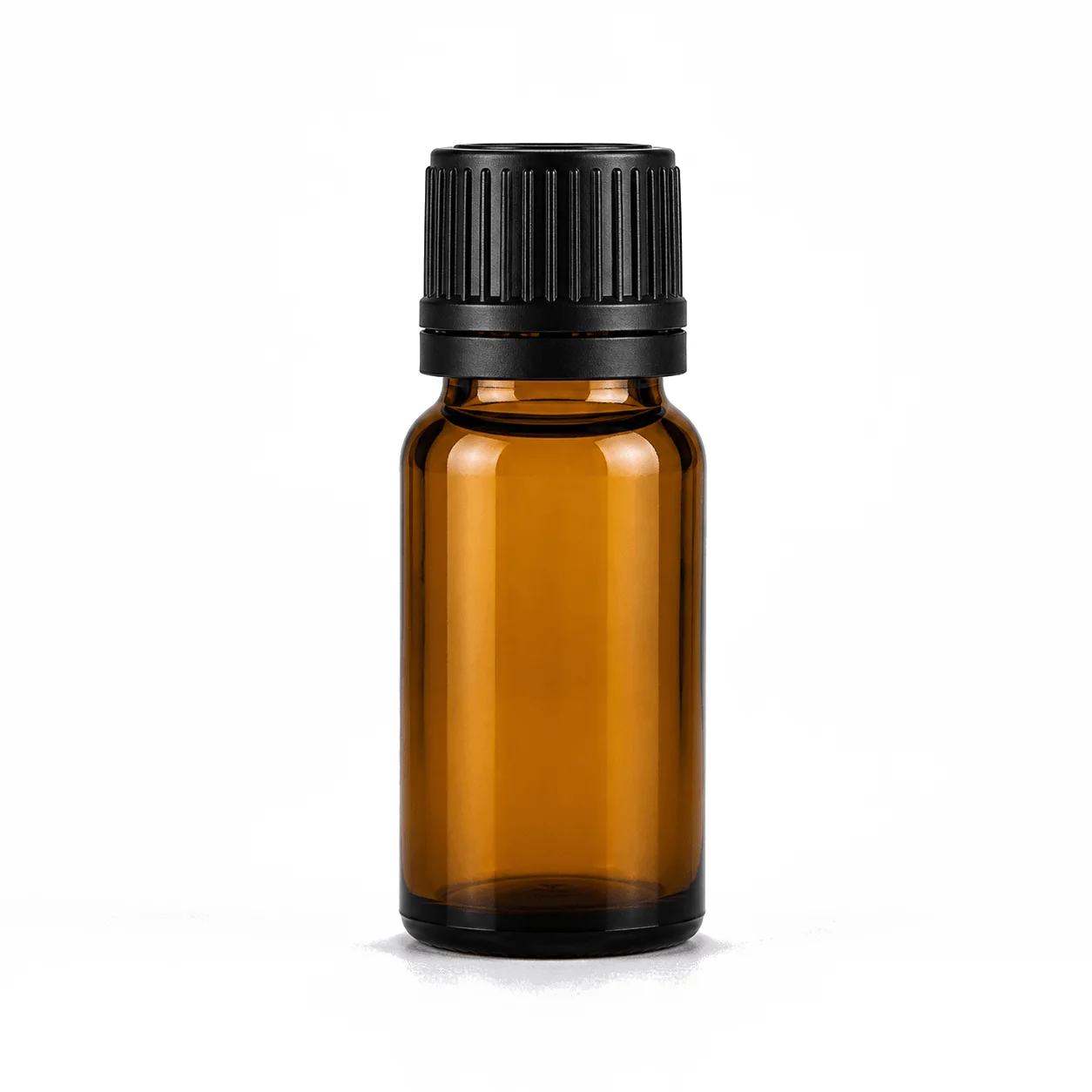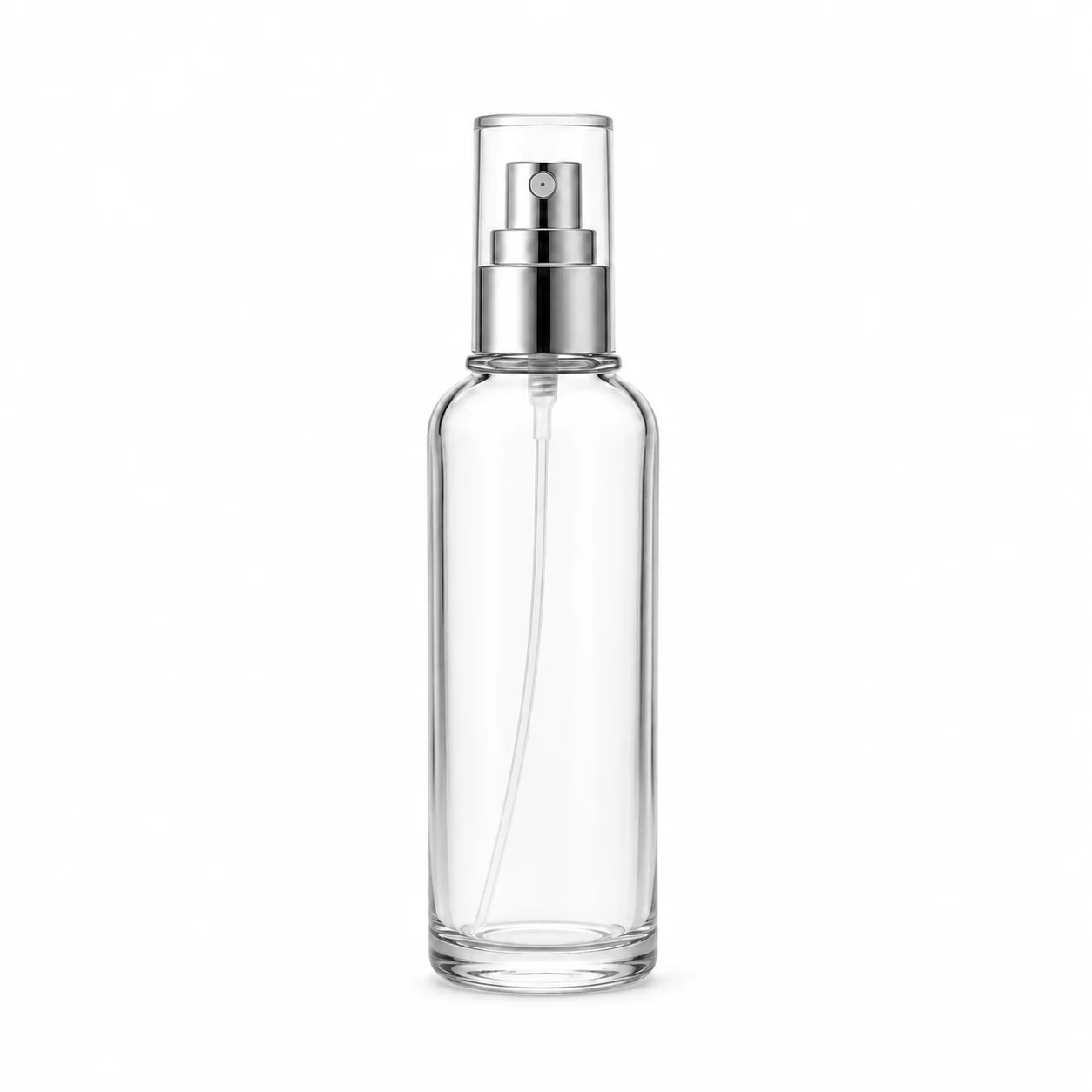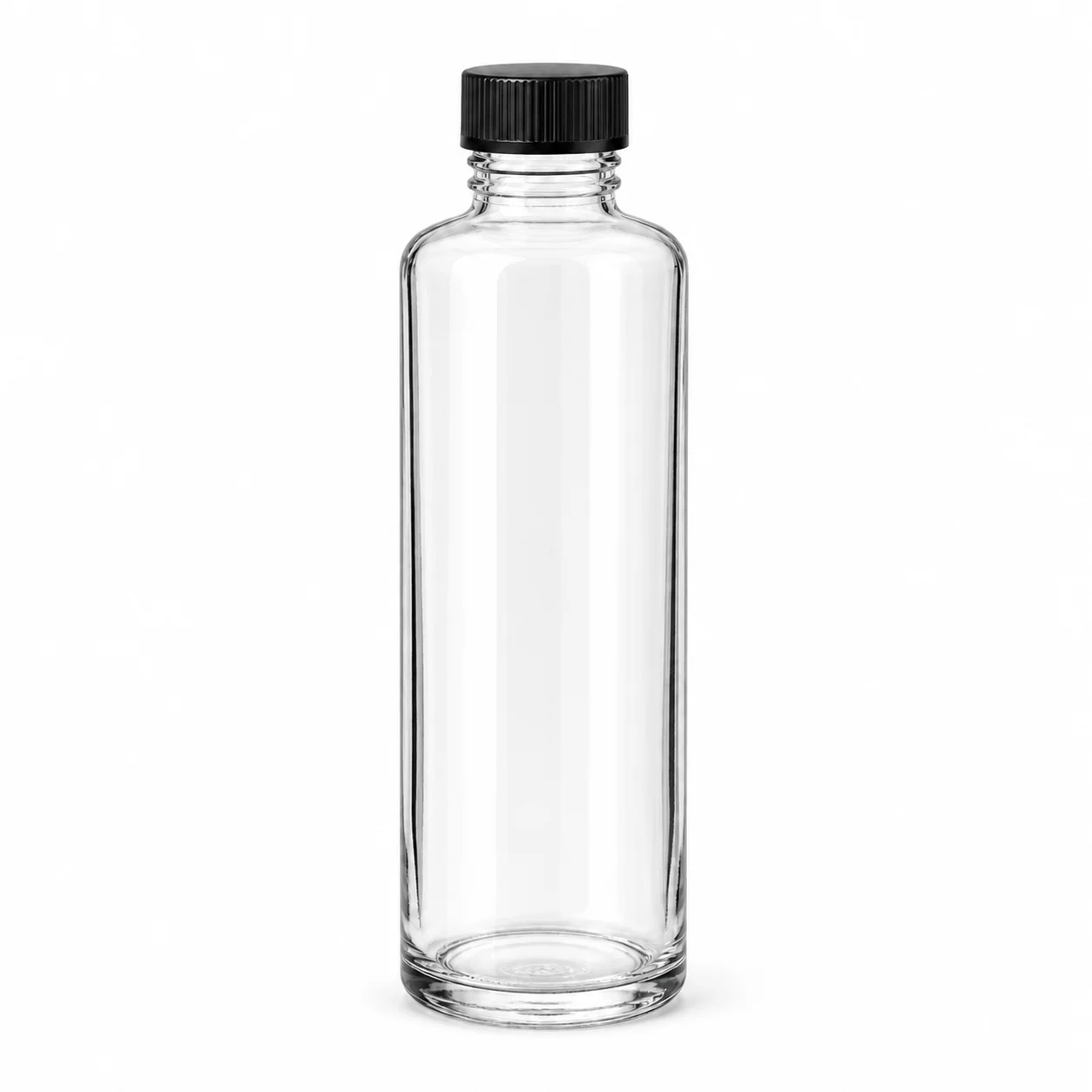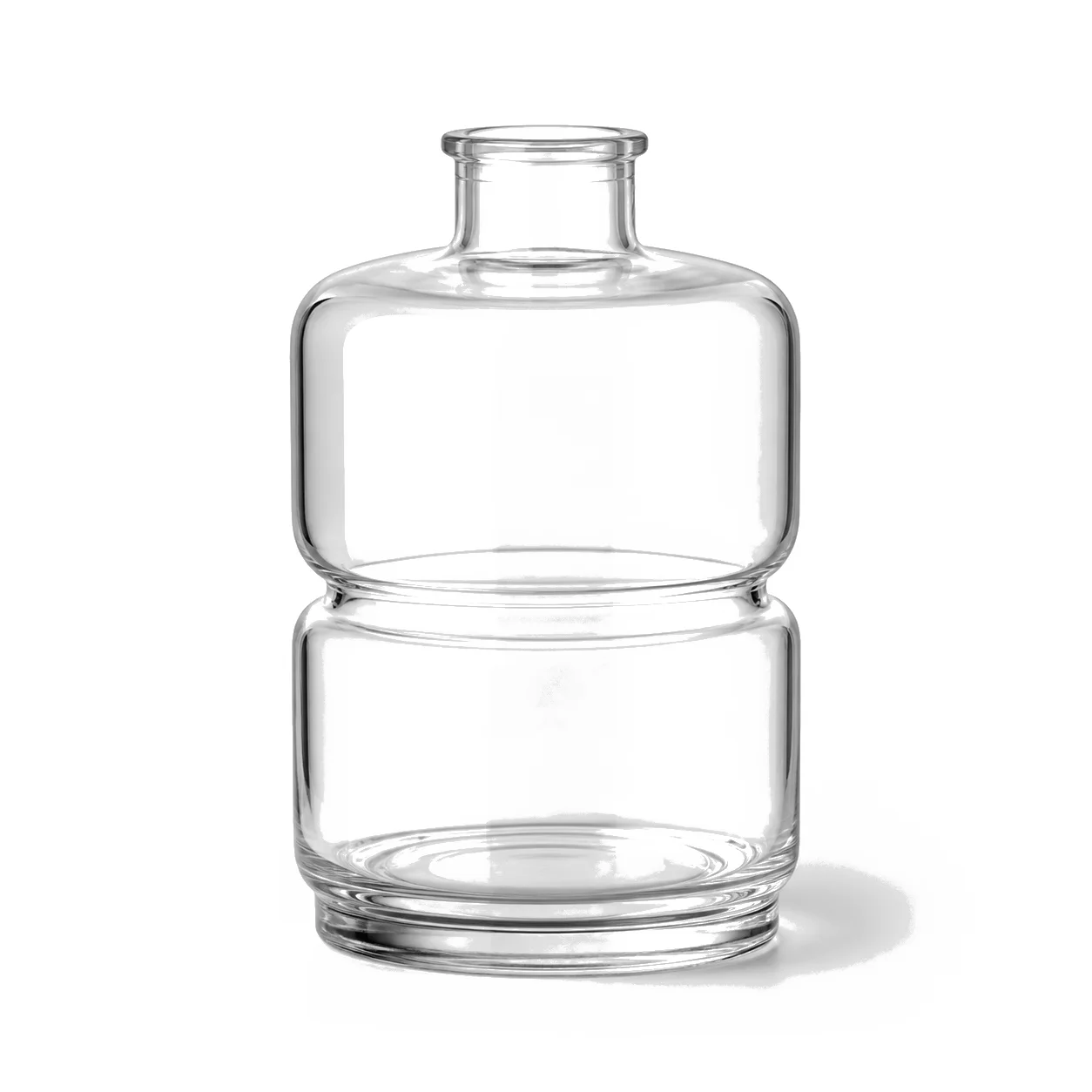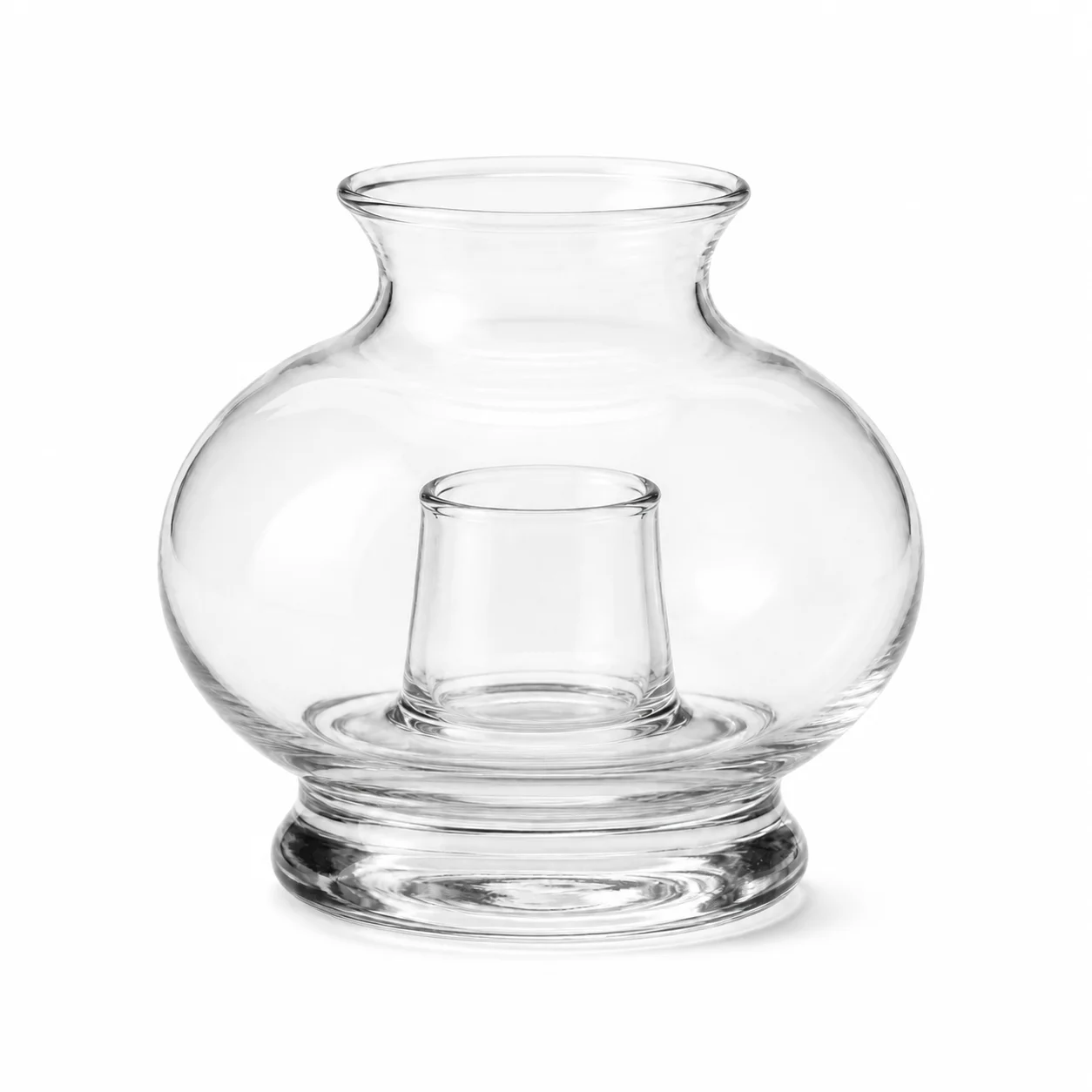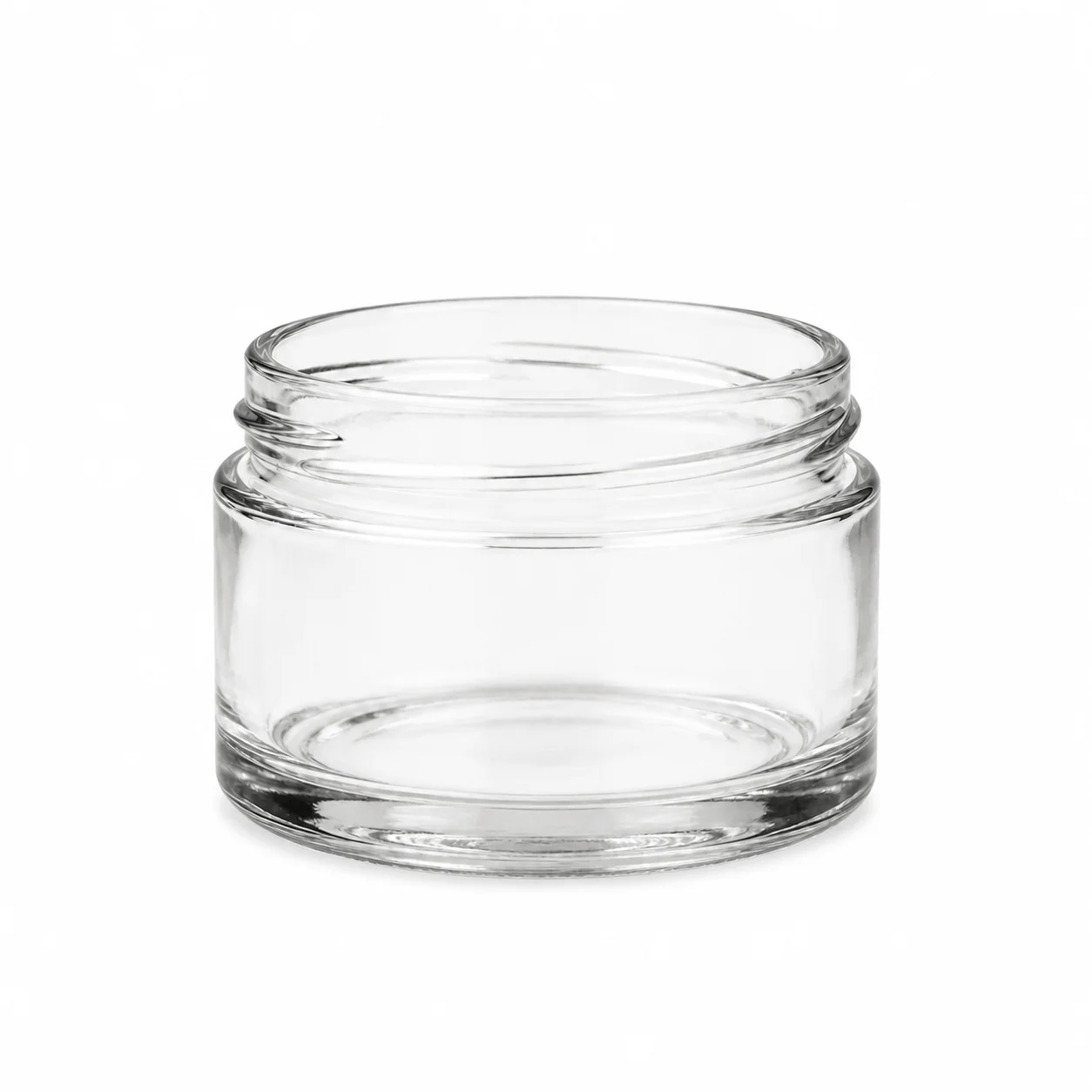
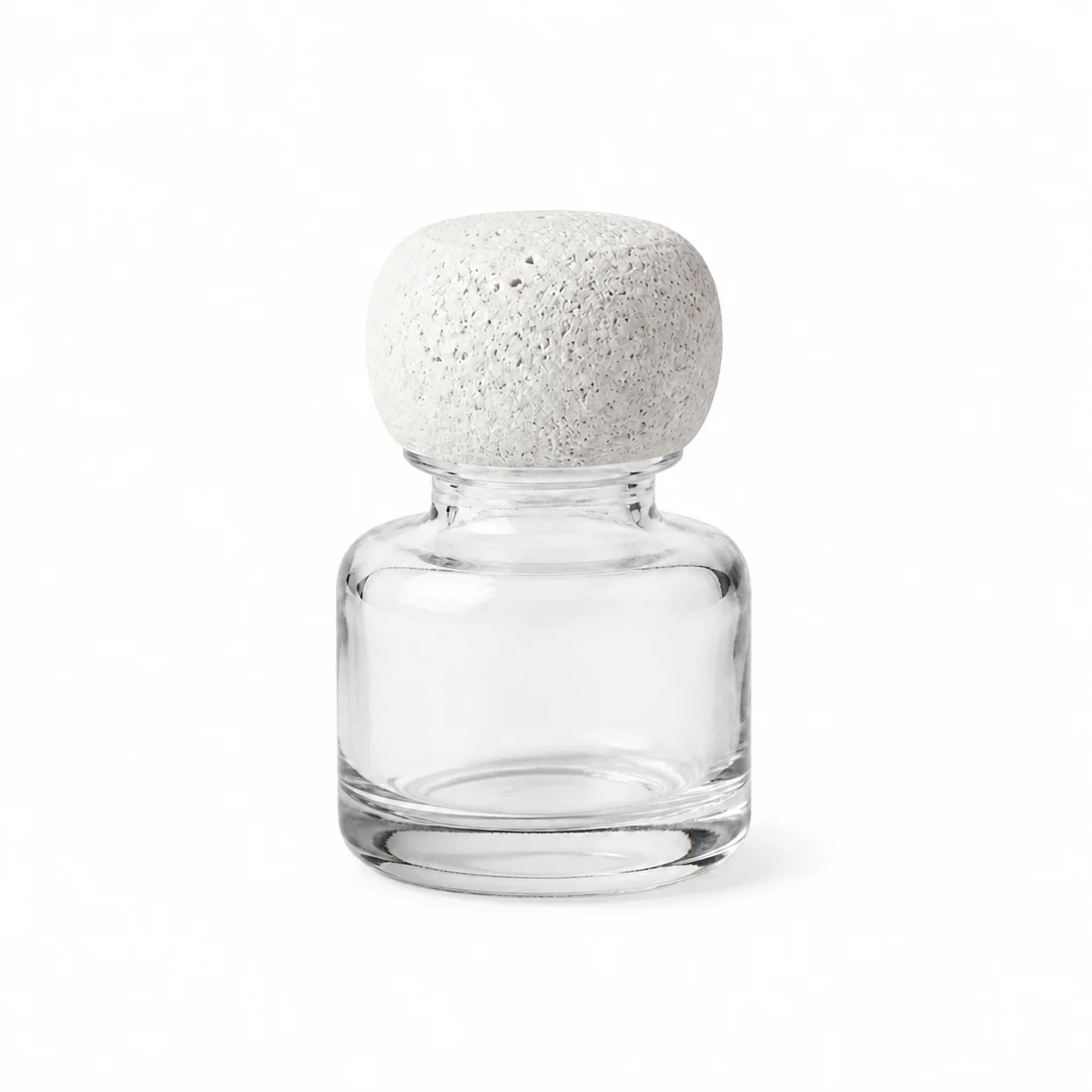
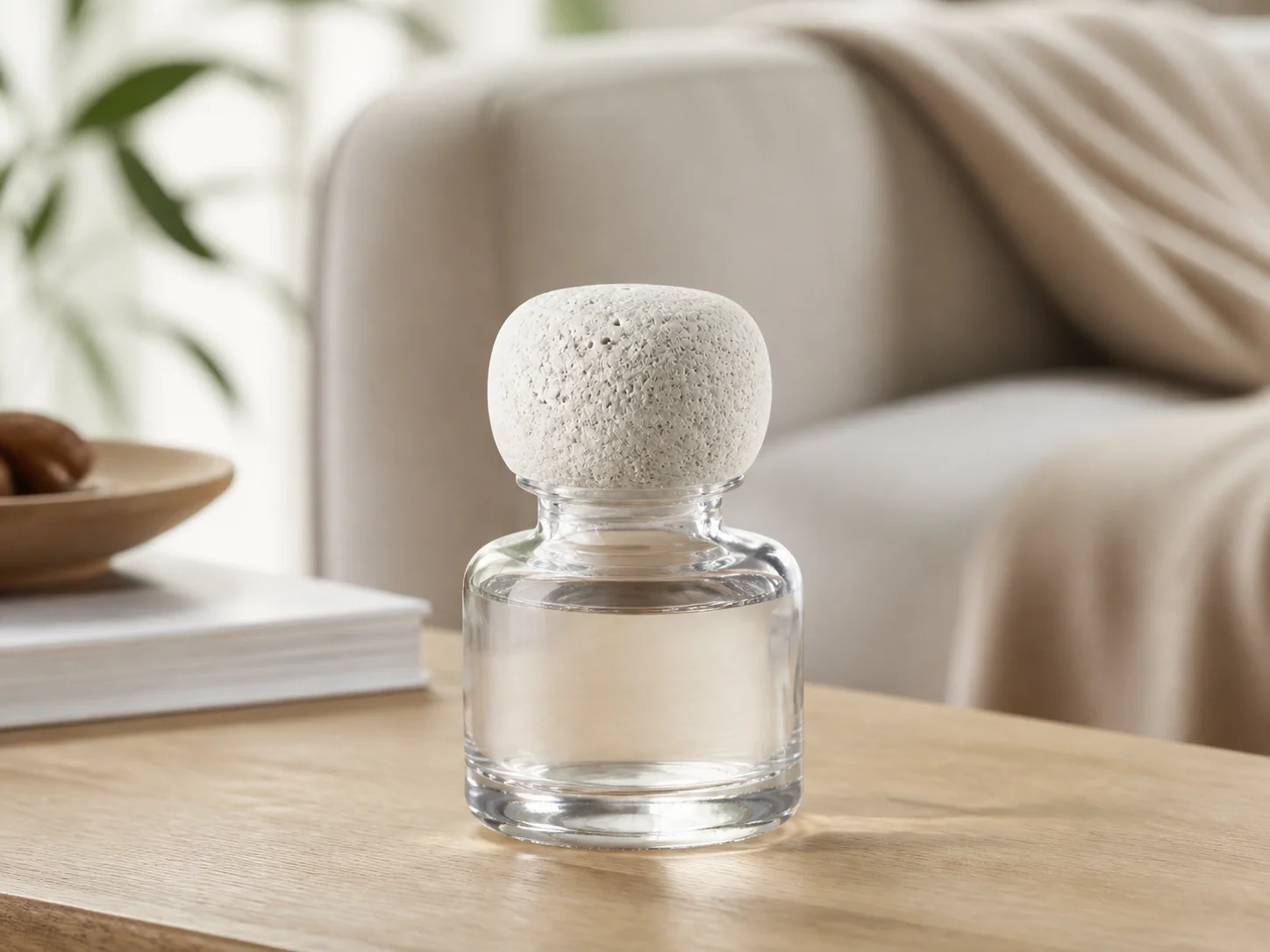
Small clear bottle with a narrow neck, shown without stone or closure fitted
Shown configuration · bottle only / oil, orifice reducer, stone and label not shown

Flameless home fragrance

Aroma Stone Bottle

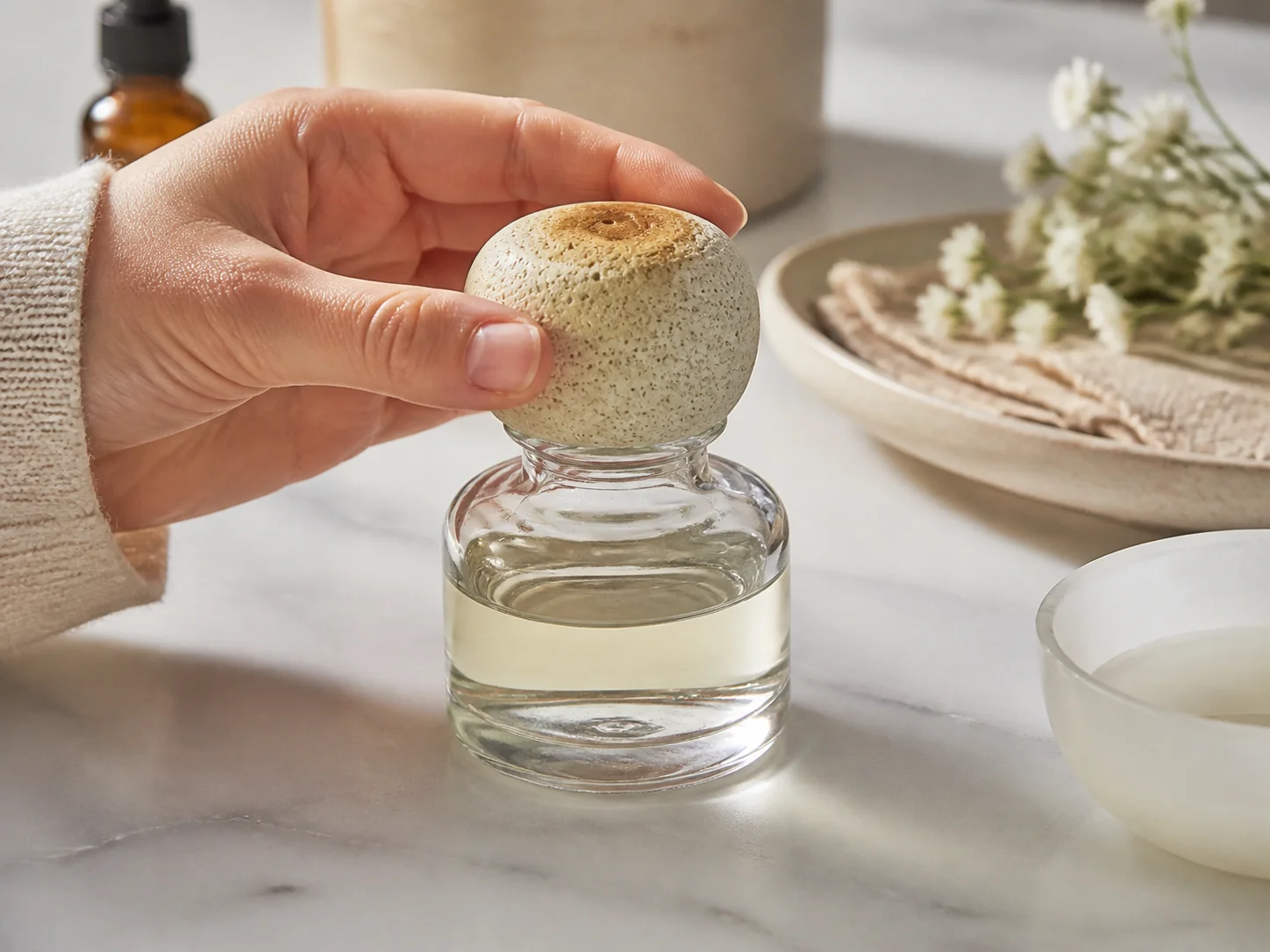
A bottle paired with a porous ceramic or gypsum stone, where fragrance is dripped onto the stone and evaporates from it rather than from the liquid surface.

Stone is the evaporatorDosed by dropsNo flame, no electricity
Stock status
In stock
Lead time
2–3 weeks
FOB price / pc
$0.30 - $0.55
MOQ
5,000 pcs

Final availability, dimensions, materials, assembled components and commercial terms are confirmed against the selected drawing and approved sample.

Stone holds the fragrance

Bottle only stores and doses

Reducer meters the drops

Dose is counted, not poured

Refill economics

Stone lasts; the oil is the repeat purchase

Aroma Stone Bottle profile

The fragrance leaves from a stone, so the bottle's only job is dosing and storage.

Dosing, storage & the stone's role

Five things that follow from putting the evaporation somewhere else.

In an aroma stone system, oil is dripped onto a porous ceramic or gypsum piece and evaporates from its large surface area. The bottle never diffuses anything. It stores the oil away from light and air, and it delivers a counted number of drops onto the stone, which makes the orifice reducer the functional heart of the pack.

01

The stone provides the surface area, not the bottle

A porous stone has an internal surface many times its external size, which is why a few drops scent a room while the same drops in a dish would not. The bottle contributes nothing to that. Understanding the division stops effort being spent on bottle features that cannot affect performance in any way.

02

The orifice reducer is the dosing instrument

Because the dose is counted in drops onto a stone, drop consistency is the whole user experience. Reducer bore, oil viscosity and temperature set the drop size, and a customer who gets six drops where they expected three has over-scented a room they cannot un-scent. It is worth specifying the reducer as carefully as the oil.

03

The oil is usually neat, so the closure must suit it

Aroma stone systems generally use undiluted or lightly diluted fragrance and essential oils, which attack ordinary liners. PTFE-faced liners or cone liners are the appropriate specification, and a liner chosen for a diluted room spray will not survive the same fragrance in its neat form for a shelf life.

04

Stones saturate and need replacing eventually

A porous stone accumulates residue and previous fragrances, so it eventually holds less and can muddle a new scent. Selling replacement stones alongside refills, and saying when to change them, prevents a customer concluding that the oil has weakened when the stone is what has stopped working.

05

Refill is the business model

The stone is durable and the oil is consumed, so the recurring purchase is the bottle. That makes fill size, price per bottle and how obviously it identifies as the right refill the commercial questions, and it makes the glass itself a minor line item — much as it is in any other refill-driven fragrance format.

06

The stone and the bottle are sold together and wear out apart

A porous stone reaches saturation long before the customer finishes buying oil, so the pack has to make replacement stones easy to find and obvious to need. Selling the vessel as a permanent object and the stone as a consumable is the honest structure, and it is what keeps the product working after the first bottle.
Application guide

The stone does the diffusing; the bottle just holds the oil.

A porous ceramic sphere draws liquid up and releases it into the air without heat, reeds or electricity. It is the working part, and how it meets the bottle determines whether the system works at all. These are development directions confirmed with the actual liquid.

Aroma Stone Bottle used for fragrance released without reeds or heat in a passive diffusion setting

Passive diffusion

Fragrance released without reeds or heat

For customers who want scent in a room without the visual clutter of reed sticks or the cost of an electric unit. The stone absorbs oil through contact and releases it slowly, which makes the interface between sphere and neck the single component that decides performance.

  • Confirm the stone contacts the liquid
  • Test release rate over weeks
  • Check the interface holds when moved
Aroma Stone Bottle used for a sculptural piece for a shelf or desk in a object design setting

Object design

A sculptural piece for a shelf or desk

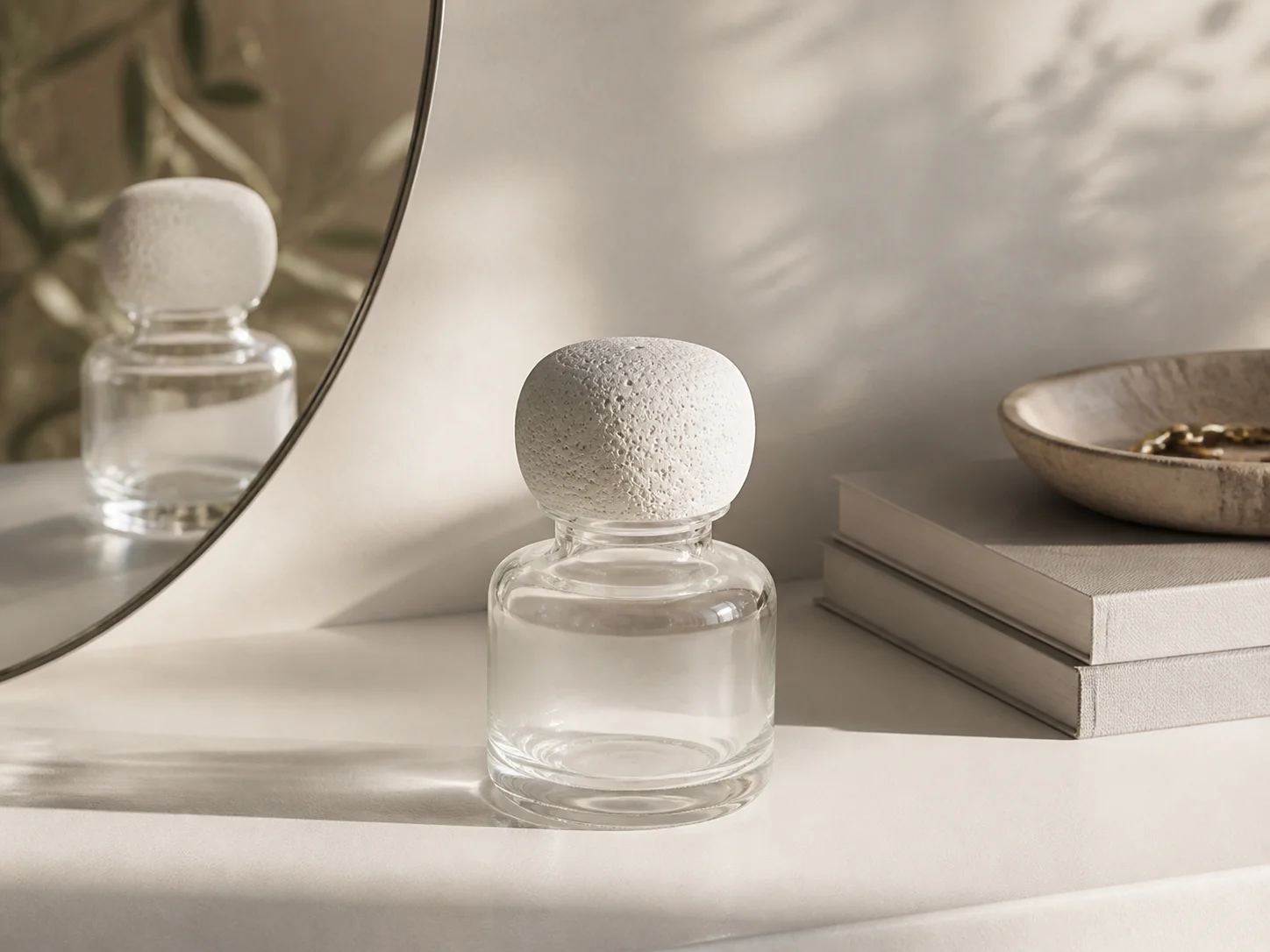
The white sphere against clear glass reads as a designed object rather than an air freshener, which is why these sell through homeware channels. Because the stone is the visual focus, its surface consistency and how cleanly it seats matter to the impression at every glance.

  • Review stone consistency between units
  • Confirm the sphere seats cleanly
  • Judge the object from across a room
Aroma Stone Bottle used for a porous component that discolors in a staining and life setting

Staining and life

A porous component that discolors

Porous stone absorbs whatever it is given, so colored or heavily pigmented oils will tint it permanently and it may darken over months of use. Setting that expectation, and deciding whether the stone is replaceable, avoids the complaint this format most often attracts.

  • Test staining with the actual oil
  • Decide whether stones are replaceable
  • Set expectations for discoloration

Applications describe design directions. Absorption, diffusion, duration, durability, safety and distribution outcomes are confirmed for the selected program.

Common questions

Aroma Stone Bottle questions

The fragrance evaporates from the stone, which decides what the bottle has to do.

Does the bottle affect how strong the fragrance is?

Barely. The stone provides the evaporating surface — a porous ceramic or gypsum piece has an internal area many times its external size, which is why a few drops scent a room. The bottle only stores the oil and doses it. Recognizing that division stops effort going into bottle features that cannot change performance.

Why does drop consistency matter so much?

Because the dose is counted rather than poured. Reducer bore, oil viscosity and temperature set the drop size, and a customer expecting three drops who gets six has over-scented a room they cannot easily un-scent. Specify the orifice reducer as carefully as the oil, since it is the only dosing instrument in the system.

Do the stones need replacing?

Eventually, yes. A porous stone accumulates residue and previous fragrances, so it holds less over time and can muddle a new scent. Selling replacement stones with refills, and saying when to change them, prevents a customer concluding that the oil has weakened when it is the stone that has stopped working properly.

Where is the value in this format?

In the refill. The stone is durable and the oil is consumed, so the bottle is the recurring purchase. That makes fill size, price per bottle and clear refill identification the commercial questions, and it makes the glass a minor line item — the same pattern as any other refill-driven fragrance system.

The stone and the bottle are sold together — what then?

They wear out at different rates. A stone saturates and needs replacing while the oil is still being repurchased, so the range has to offer both separately or customers will assume the set is finished. Plan the replacement path before the first set ships.

Next step

Send us the Aroma Stone Bottle brief.

Tell us the product, fill volume, closure preference and destination market. We will come back with the matching drawings, available configurations and a sample plan before anything is quoted.

  • 01Send the briefProduct, volume, closure and market
  • 02Get the optionsMatching drawings and configurations
  • 03Approve the sampleConfirm the pack before production