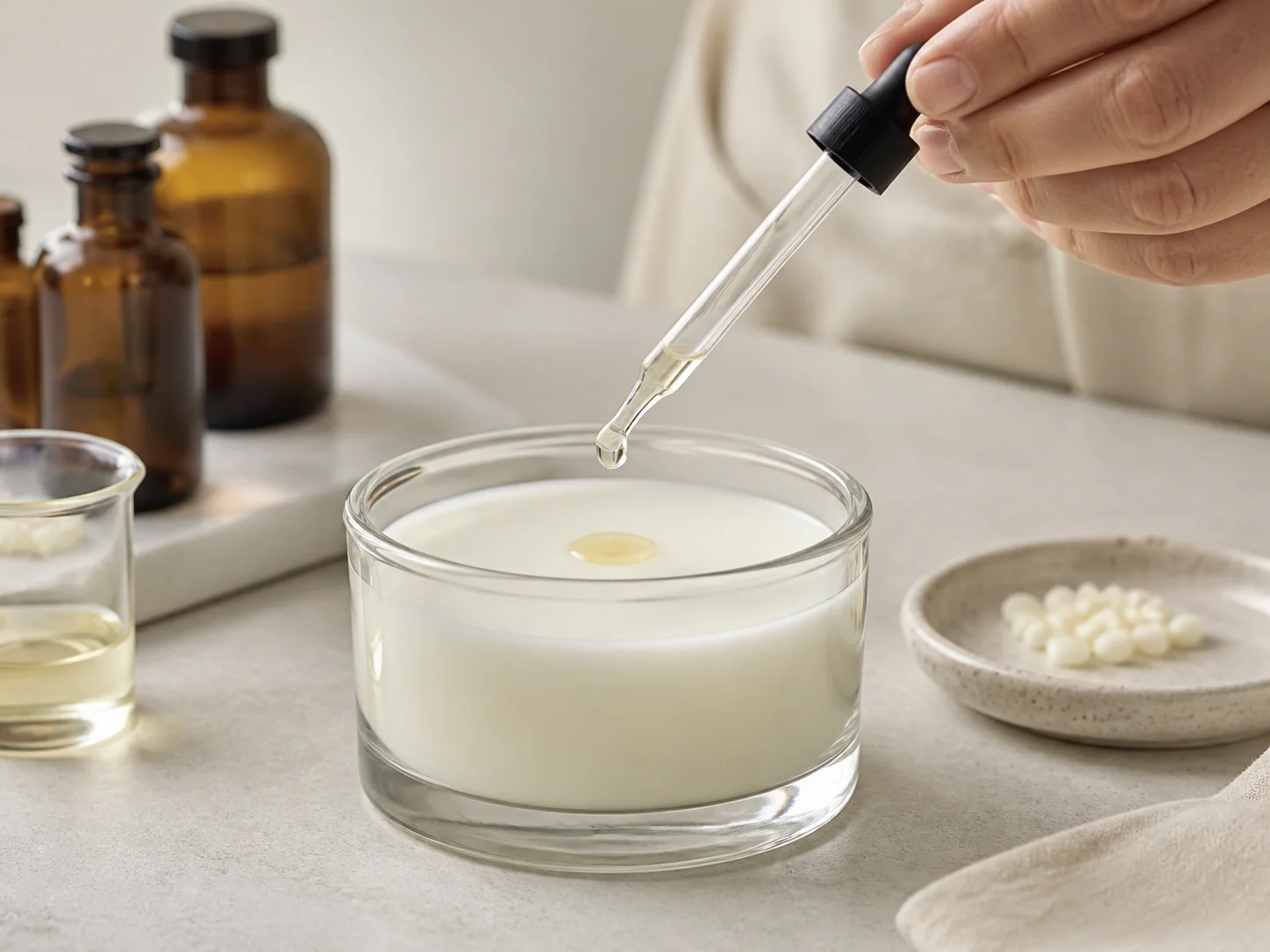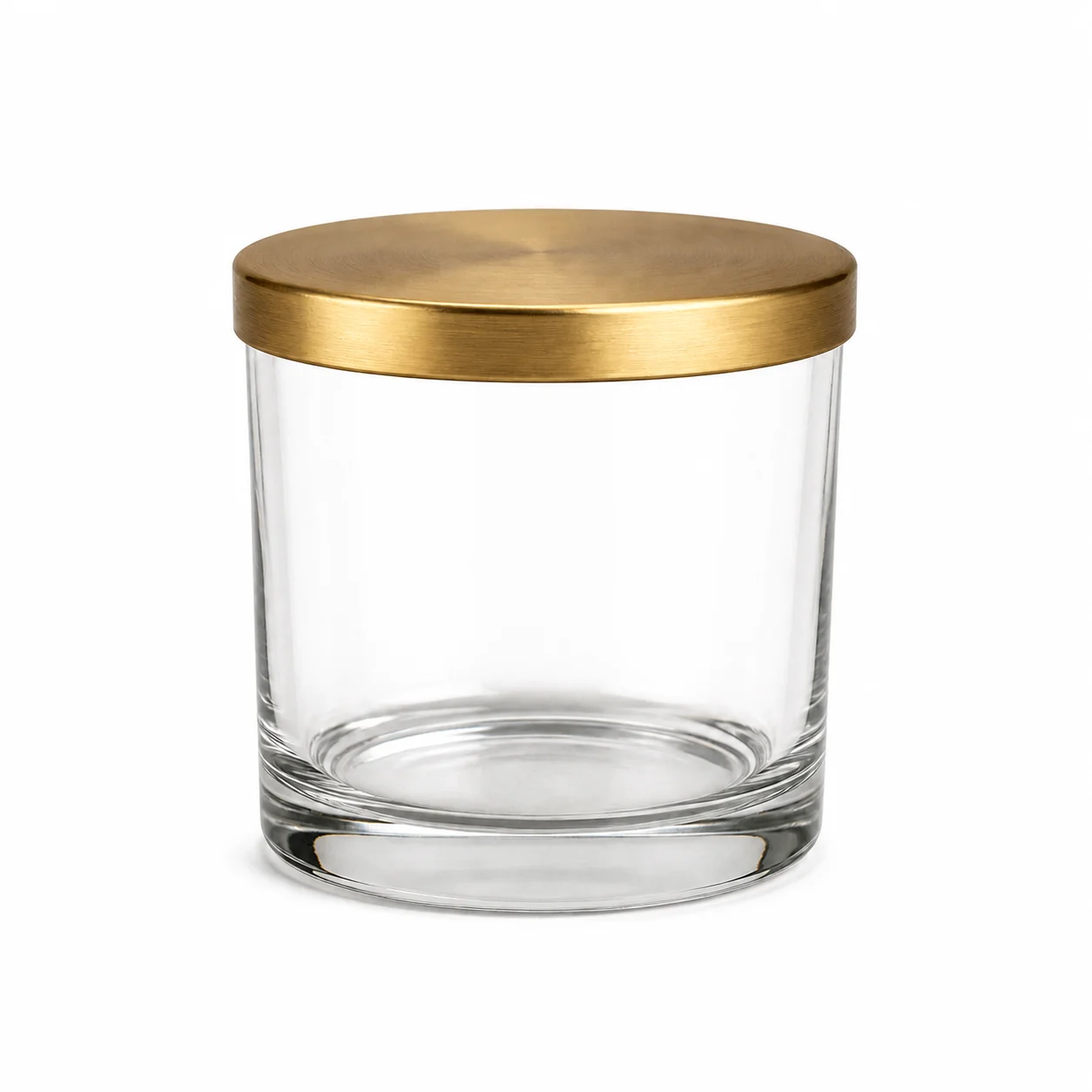
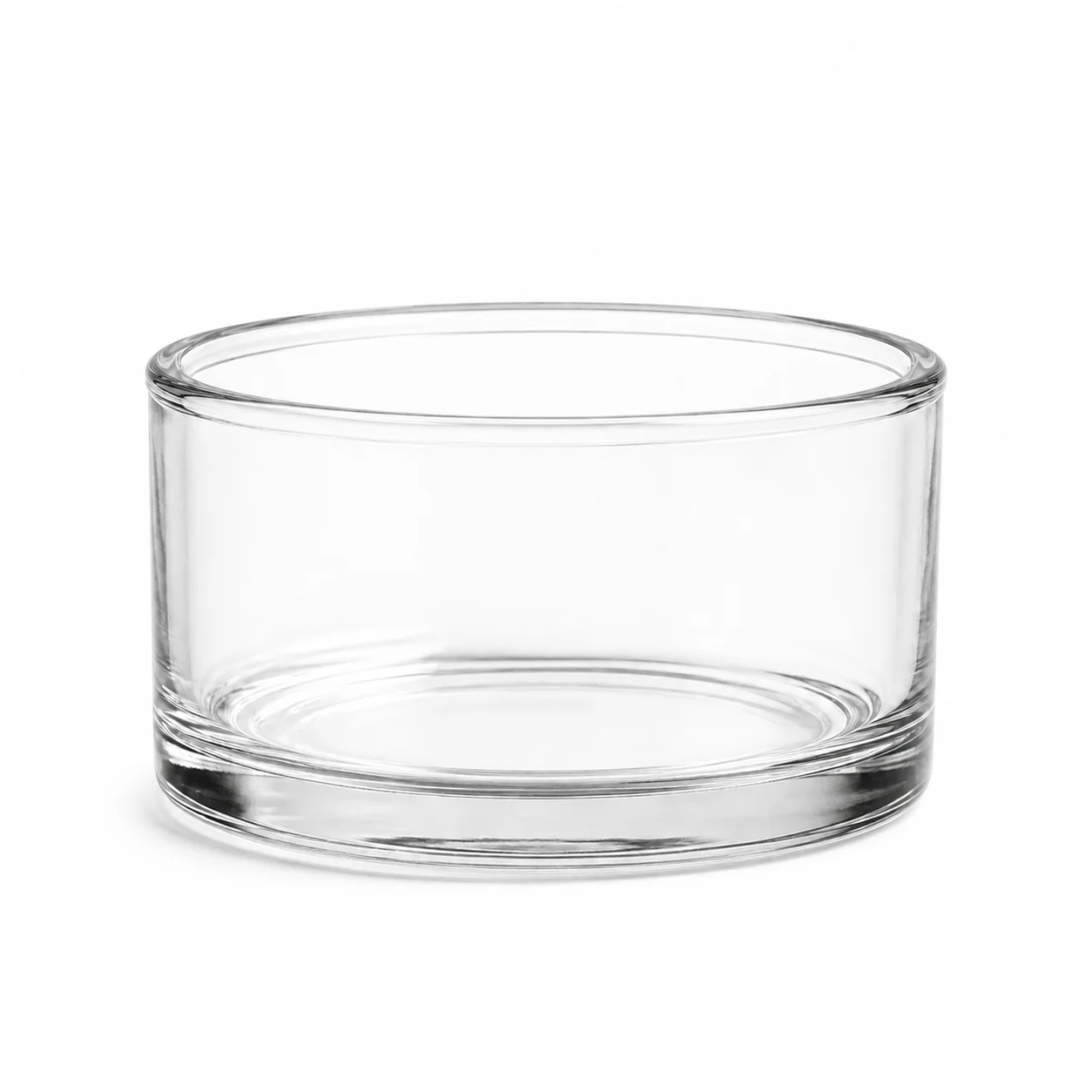
Wide-mouth clear glass jar with straight sides and a broad opening
Shown configuration · empty jar / wax, wick, lid and label not shown

Candle vessels

Soy-wax Wide-mouth Jar

A wide-mouth jar chosen for soy wax, which melts at a lower temperature, shrinks as it sets and needs more wick per unit of diameter than paraffin does.

ECO wick family for soyWet spots are cosmeticWide mouth aids repouring
Stock status
In stock
Lead time
2–3 weeks
FOB price / pc
$0.25 - $0.55
MOQ
5,000 pcs

Final availability, dimensions, materials, assembled components and commercial terms are confirmed against the selected drawing and approved sample.

Soy needs more wick

Upsizing one to three steps is normal

Adhesion is imperfect

Wet spots are appearance, not failure

Wide mouth for a second pour

Sink holes are topped up easily

Soy Wax Wide-mouth Jar profile

Soy behaves differently from paraffin in ways the jar has to accommodate.

Wick upsizing, wet spots & the second pour

Five things about soy that the vessel has to live with.

Soy wax melts at a lower temperature, holds less fragrance in solution, shrinks noticeably as it cools and does not bond to glass as consistently as paraffin. None of that is a defect, and all of it changes what a candle maker needs from the container: a wider mouth, a wick sized up, and a tolerance for cosmetic marks on the wall.

01

Soy usually needs a larger wick than intuition suggests

Natural waxes commonly need upsizing by one to three steps compared with a paraffin starting point to reach a full melt pool in the same diameter, and ECO wicks exist specifically for soy and coconut blends. Starting a test set from paraffin experience and refusing to move up is the most common reason a soy candle tunnels.

02

Wet spots are adhesion, not contamination

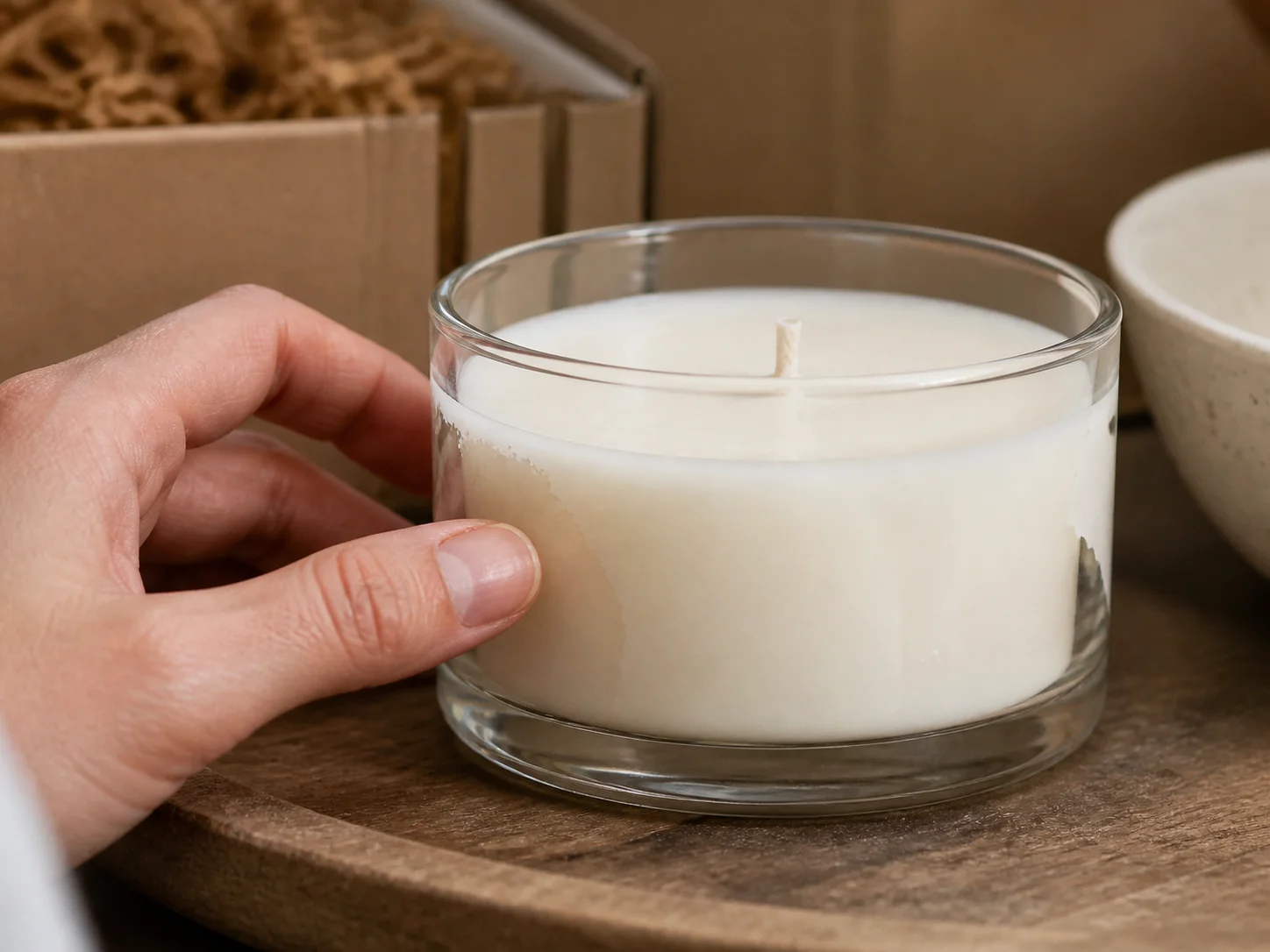
Soy shrinks as it sets and can pull away from the glass in patches, leaving translucent marks that look like moisture. They come back after each burn and reset. Preheating jars, pouring cooler and slowing the cooling rate all reduce them, and no combination eliminates them entirely, so it is worth explaining rather than chasing.

03

The wide mouth exists for the second pour

A shrinking wax forms a sink hole around the wick as it cools, and the standard fix is a small top-up pour once the candle has set. A wide mouth makes that quick and neat; a narrow one makes it a job. Given that most soy candles need it, mouth diameter is a production efficiency question as much as a design one.

04

Fragrance load has a lower practical ceiling

Soy holds less fragrance oil in solution than paraffin before it starts to weep or bloom, so the same target load may not be achievable. That matters for the container because a maker pushed toward the limit often compensates with a hotter wick, and the glass temperature has to be re-checked when they do.

05

Frosting is inherent and reads as natural

Soy develops a fine white crystalline surface over time, particularly with temperature variation. It is a property of the wax rather than a fault, and clear glass shows it plainly. Some brands lean into it as evidence of a natural wax; others move to frosted or colored glass. Both are honest, and doing neither invites the complaint.

06

Cure time is real, and it happens after the customer would have shipped

Soy blends need days to weeks for the fragrance to bind fully into the wax, and a candle burned on day one throws differently from the same candle a two weeks later. Building that interval into production planning is what makes the tested throw the throw the customer gets.

Application guide

Soy wax shows every flaw against clear glass.

Natural waxes shrink and pull away from the wall as they cool, leaving the wet spots and frosting that customers mistake for damage. A wide open surface puts all of it on display. These are development directions confirmed on poured samples.

Soy-wax Wide-mouth Jar used for soy and blended-wax retail candles in a natural wax candles setting

Natural wax candles

Soy and blended-wax retail candles

For candles sold on natural credentials, where customers actively look for soy and read the wax surface as evidence of quality. The wide flat top makes the pour finish highly visible, so surface smoothness and any frosting become part of what the customer judges at the shelf.

  • Match pour temperature to the vessel
  • Review the top surface after cooling
  • Decide how frosting is explained
Soy-wax Wide-mouth Jar used for patches a buyer reads as damage in a customer complaints setting

Customer complaints

Patches a buyer reads as damage

For soy candles sold in clear glass, where the wax shrinks back from the wall in patches and the person who unwraps it assumes the candle is faulty. Nothing is wrong and nothing burns differently, but the shop still takes it back, so an acceptable level is agreed with the pourer before a season starts.

  • Preheat jars before pouring
  • Agree an acceptable wet-spot level
  • Control the cooling rate
Soy-wax Wide-mouth Jar used for how much scent the wax will carry in a fragrance load setting

Fragrance load

How much scent the wax will carry

Natural waxes hold less fragrance oil than paraffin before the blend starts to sweat or seize, which caps how strong a candle can be made. That ceiling should be established with the actual wax and fragrance before scent strength is promised on a label.

  • Establish the maximum fragrance load
  • Watch for sweating at high loads
  • Test cold and hot throw together

Applications describe format directions. Soy content, wax properties, heat resistance, burning, safety and distribution outcomes are confirmed for the selected program.

Common questions

Soy Wax Wide-mouth Jar questions

Soy is not paraffin with a better story. These are the practical differences.

Why does our soy candle tunnel with a wick that worked in paraffin?

Because natural waxes usually need a larger wick — commonly one to three steps up from a paraffin starting point to reach a full melt pool in the same diameter. ECO wicks exist specifically for soy and coconut blends. Refusing to move up from paraffin experience is the single most common cause of a tunneling soy candle.

What are the pale patches on the glass?

Wet spots: soy shrinks as it sets and pulls away from the wall in places, leaving translucent marks that look like moisture. They return after every burn and reset. Preheating jars, pouring cooler and slowing the cooling rate reduce them, and nothing removes them entirely, so it is better to explain them than to chase them.

Can we run the same fragrance load as our paraffin range?

Often not. Soy holds less fragrance oil in solution before it starts to weep or bloom, so the same target may not be achievable. Makers pushed toward the ceiling frequently compensate with a hotter wick, and the glass temperature then has to be re-checked, which is where a cosmetic problem becomes a safety one.

Does cure time affect our shipping schedule?

It usually lands after the point you would have shipped. Soy candles keep developing scent throw for days after pouring, so a candle tested on day one is not the candle the customer lights. Build the cure into the production plan rather than into the complaint log.

Next step

Send us the Soy-wax Wide-mouth Jar brief.

Tell us the product, fill volume, closure preference and destination market. We will come back with the matching drawings, available configurations and a sample plan before anything is quoted.

  • 01Send the briefProduct, volume, closure and market
  • 02Get the optionsMatching drawings and configurations
  • 03Approve the sampleConfirm the pack before production