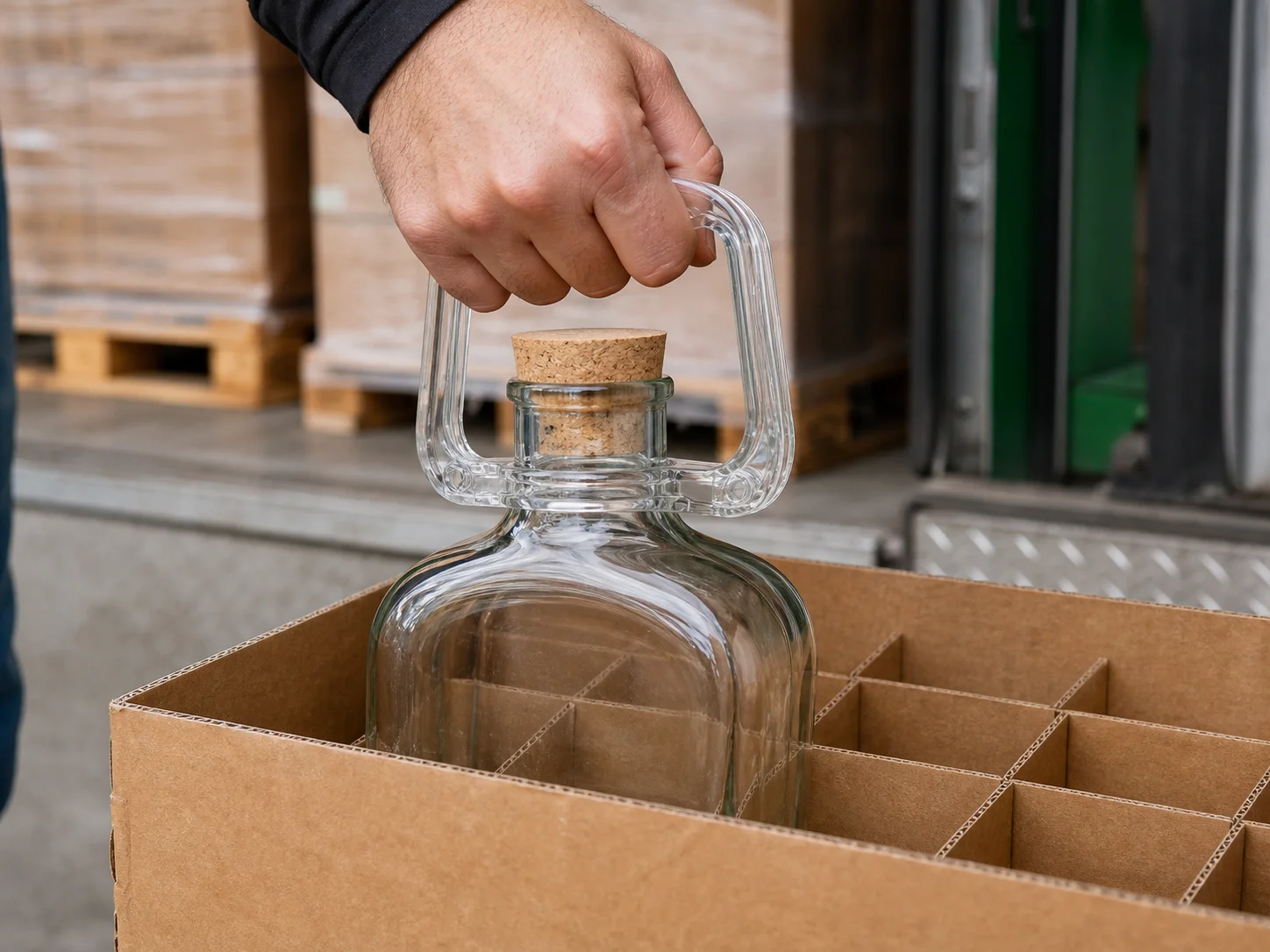
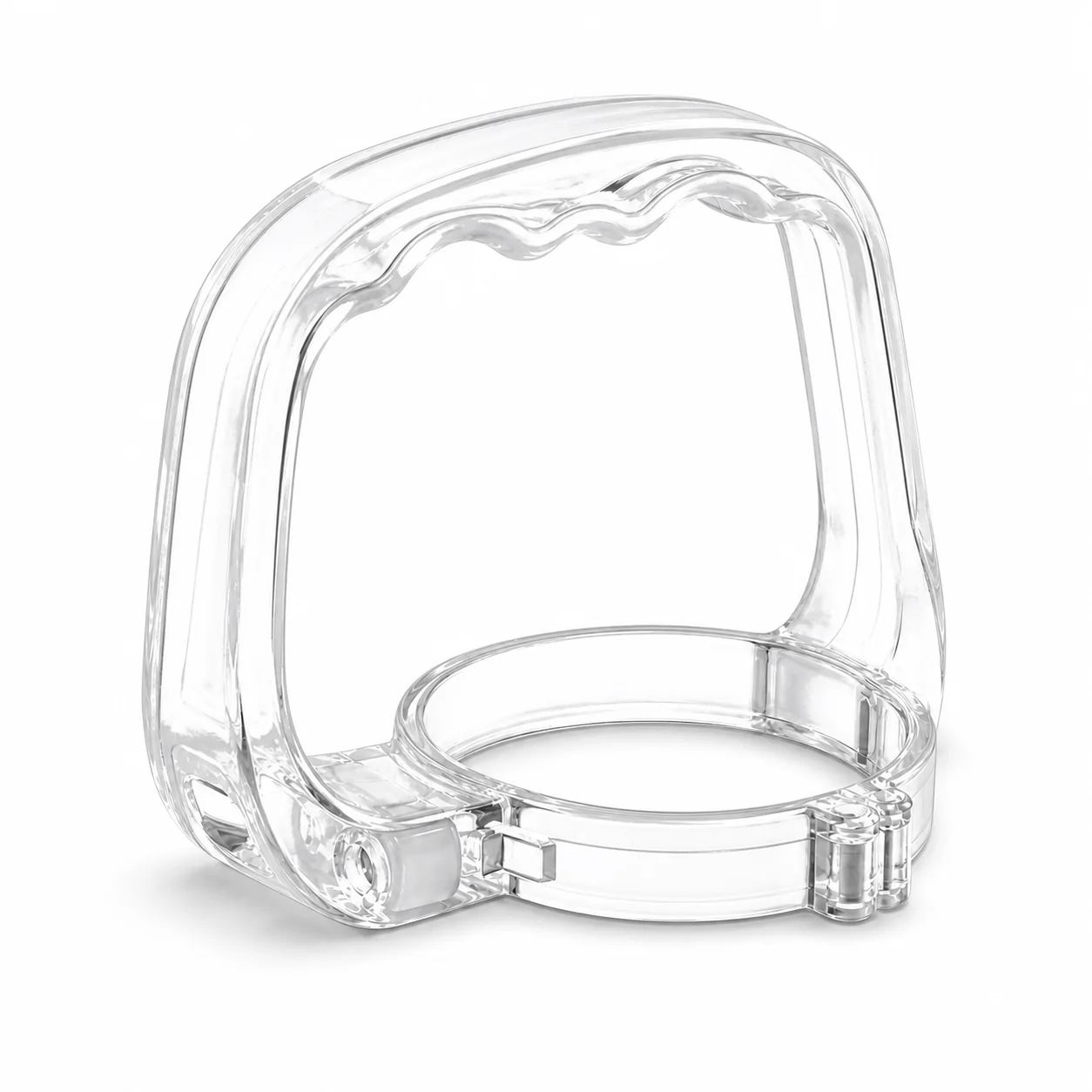
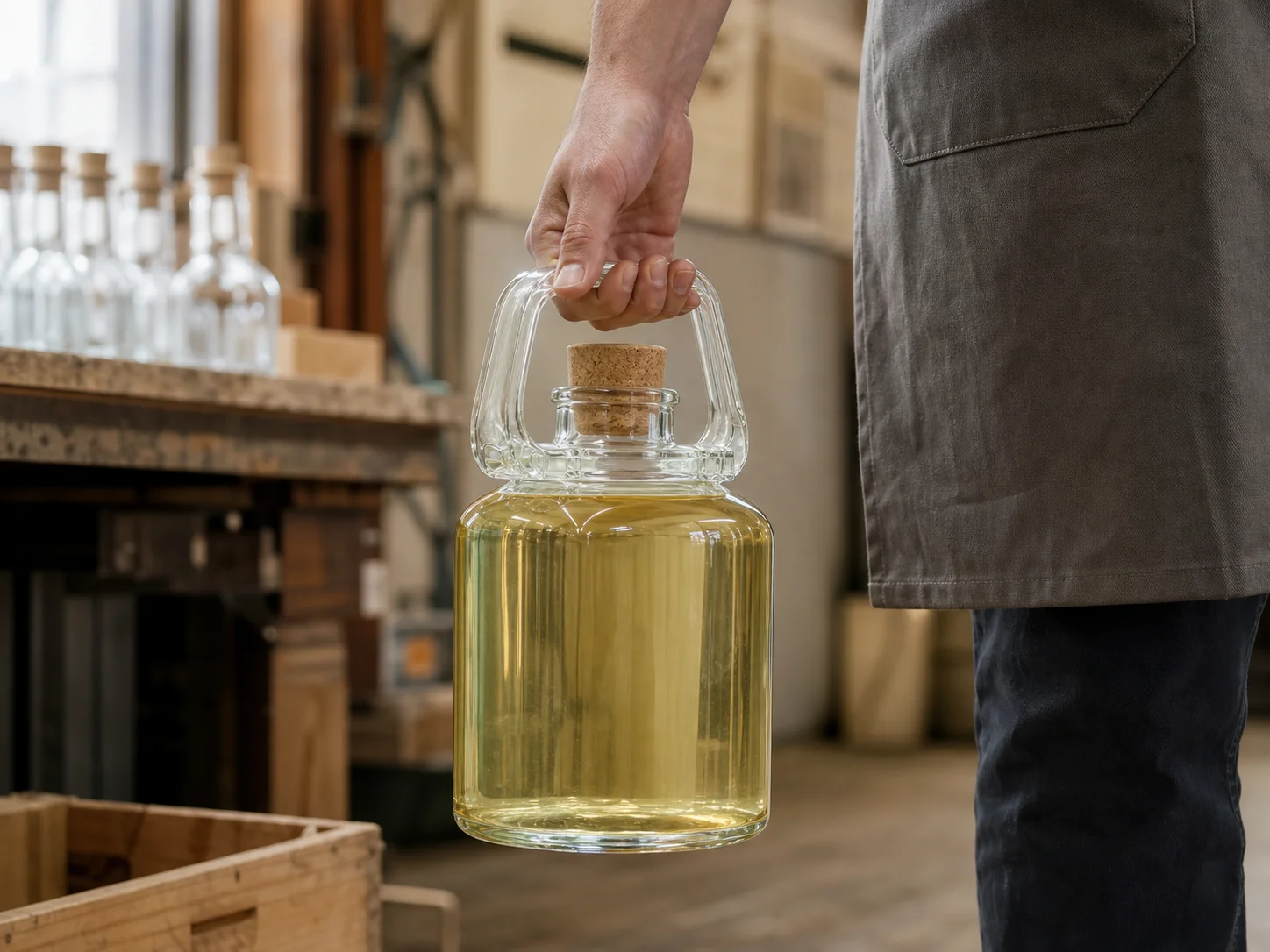
Translucent arched bottle handle with a contoured grip, lower collar ring and hinge detail
Shown configuration · handle alone / bottle, fitted position and load not shown

Carrying accessories

Bottle Handle

A snap-on carry handle that clips under the finish of a large bottle or jug, spreading the load of several kilograms across a molded grip instead of the customer's fingers.

Clips under the finishMolded polypropyleneSized to the neck, not the bottle
Stock status
In stock
Lead time
2–3 weeks
FOB price / pc
$0.35 - $0.60
MOQ
5,000 pcs

Final availability, dimensions, materials, assembled components and commercial terms are confirmed against the selected drawing and approved sample.

Fitted after filling

Clips on at the end of the line

Grip does the work

Contour spreads load across the palm

Neck must take it

Bead below the thread carries the weight

Bottle Handle profile

A handle is a load path, and it ends at a bead of glass.

Load path, neck geometry & how people lift

Six things worth knowing before a handle is clipped onto filled glass.

A clip-on handle turns an awkward five-liter bottle into something a customer can carry. It hooks under the finish, so every kilogram of product hangs from the same small ring of glass that the closure threads onto. That is the whole engineering question: whether the neck, the handle and the way people actually lift it agree with one another.

01

The load ends up on the neck, not the shoulder

A snap-on handle grips under the transfer bead or the lowest thread, so the full mass of a filled bottle passes through a few millimeters of glass. On a five-liter jug that is easily six or seven kilograms carried on a ring never designed as a lifting point. Glass that is fine under internal pressure can be marginal here, and it is worth checking the neck specification rather than assuming.

02

Fit is to the finish, and finishes vary

Handles are dimensioned against the neck profile rather than the bottle body, so one handle can serve several bottle shapes sharing a finish, and cannot serve two bottles of the same volume with different necks. Buyers who specify by bottle size rather than by finish reliably end up with handles that either fall off or will not clip on at all.

03

People lift by the middle, and swing

A handle tested by hanging a static load passes easily. In use it is snatched off a shelf, swung while walking and set down hard, all of which apply peaks far above the static weight. Testing should reflect that: repeated lifts, a drop from carrying height and a shake test say more about whether the clip survives than any single pull figure.

04

Fit it after filling, and think about where

A handle clipped on before filling gets in the way of every downstream station and can foul a capping head. Fitting it after capping means an extra station or a manual step at the end of the line. Neither is difficult, but it is a change to the line layout rather than a component swap, and it is cheaper to plan than to retrofit.

05

Polypropylene is chosen for the living hinge

Most clip-on handles include a hinged section or a sprung collar that opens to pass over the finish and closes behind it. Polypropylene tolerates that flexing without cracking, which polystyrene and many rigid resins do not. As with any living hinge, cold makes it stiffer and more brittle, so cold-chamber fitting trials are worth running for winter distribution.

06

Decide whether it stays with the bottle

Some programs treat the handle as part of the pack and expect it to be recycled with the bottle; others intend it to be removed and kept, particularly on refill schemes. That choice changes the clip strength you want, whether the handle carries branding, and what you tell the customer. Leaving it undecided produces handles that are neither comfortably permanent nor easily removed.
Application guide

A handle turns a heavy bottle into one somebody can carry.

Handles are added where filled weight makes a bottle awkward or unsafe to lift by the body, and they carry that weight through a connection to the neck. The load path is the specification. These are development directions confirmed on filled bottles.

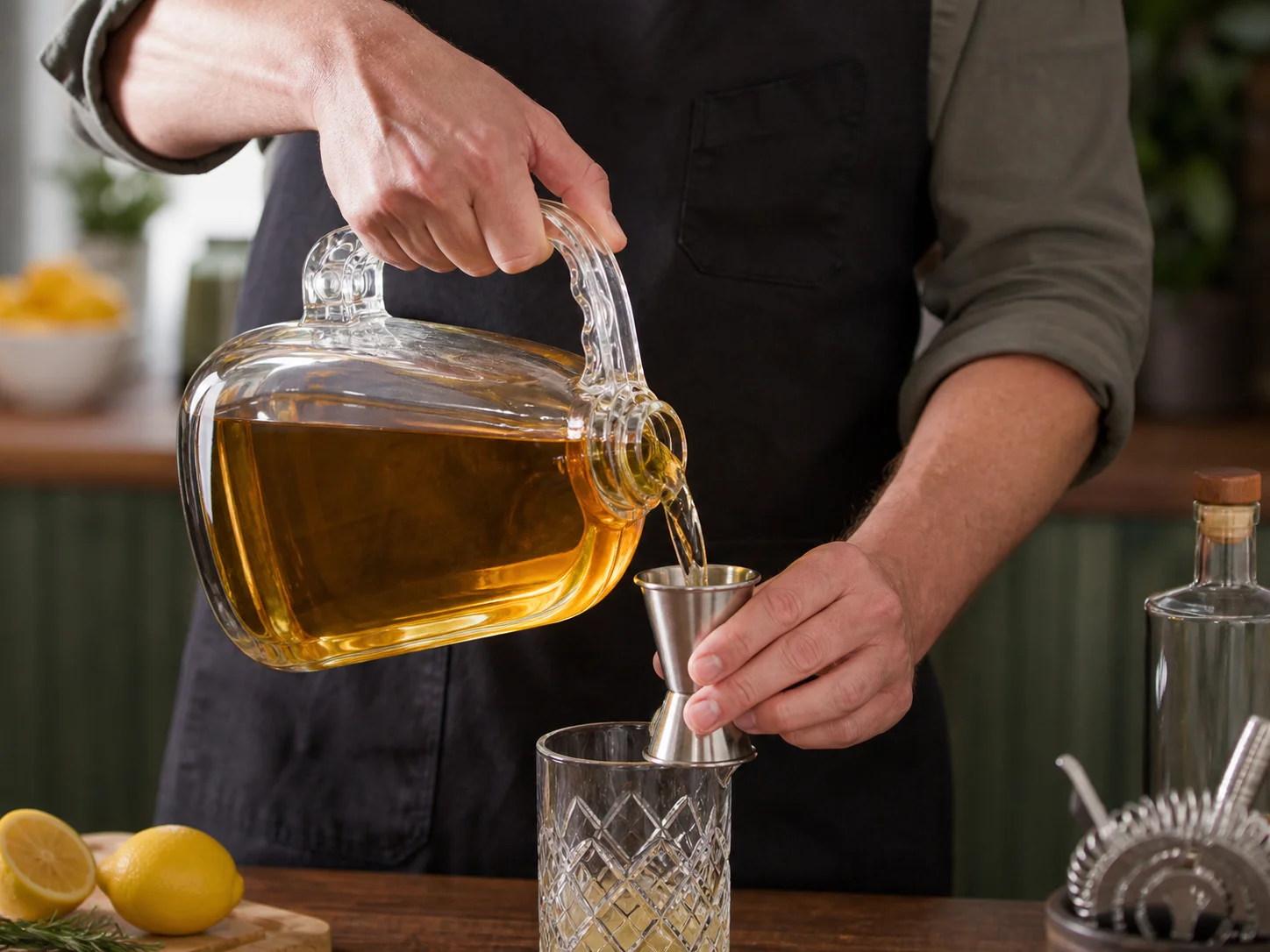
Bottle Handle used for heavy bottles lifted and poured in a large-format bottles setting

Large-format bottles

Heavy bottles lifted and poured

For large spirits, oils and beverages where a customer has to lift and tip a bottle that is genuinely heavy when full. The handle changes the grip from an awkward two-handed hug to a controlled pour, which matters most at the point where the bottle is nearly full.

  • Test lifting and pouring when full
  • Confirm the grip suits a range of hands
  • Review the pour with the handle
Bottle Handle used for a connection carrying filled weight in a load and retention setting

Load and retention

A connection carrying filled weight

Everything depends on the joint between handle and neck holding the full weight repeatedly, including when the bottle is snatched up quickly. That load has to be tested with the bottle filled rather than estimated, since failure means dropped glass.

  • Test the joint at filled weight
  • Confirm retention after repeated lifts
  • Check the neck features match the handle
Bottle Handle used for a handle that catches on the way in in a loading bays setting

Loading bays

A handle that catches on the way in

For the people packing and stacking these bottles, where a handle adds width and a projection no plain-bottle carton was drawn around. It is the first part to hook on a divider or snap when a case is dropped, so the carton is designed around it and the drop test is done filled.

  • Design the carton around the handle
  • Confirm no contact with neighboring bottles
  • Drop test the packed filled bottle

Applications describe carry-interface development directions. Load, strength, retention and regulatory outcomes are confirmed for the selected program.

Common questions

Bottle Handle questions

A handle is simple until you follow the load down to the glass.

Will a handle fit our five-liter bottle?

It fits the finish rather than the bottle. Handles are dimensioned against the neck profile, so a single handle can serve several bottle shapes that share a finish and cannot serve two bottles of the same volume with different necks. Send the finish drawing, not the bottle capacity, and the answer is immediate rather than a guess.

Can the neck take the weight?

That is the right question, and it belongs to the bottle rather than to the handle. A clip-on grips under the transfer bead, so six or seven kilograms of filled jug hangs from a few millimeters of glass never designed as a lifting point. Confirm it against the bottle specification and prove it with repeated lifts on filled units before launch.

How should we test the handle?

Not with a static hang. In real use a bottle is snatched off a shelf, swung while walking and set down hard, and those peaks are well above the resting weight. Repeated lifts, a drop from carrying height and a shake test tell you far more about whether the clip survives a customer's month than any single pull-to-failure figure.

Our handles crack when fitted in winter. Why?

The hinge. Clip-on handles open over the finish on a living hinge or sprung collar, and polypropylene stiffens as it cools, so a section that flexes freely at room temperature splits near freezing. If bottles are handled in an unheated area or fitted in a cold warehouse, run fitting trials at that temperature before the season rather than after.

Does the handle stay with the bottle?

That is a decision, not a detail. A handle intended to be discarded at first use can be lighter and simpler; one that stays through refills has to survive washing and repeated fitting. Say which it is before the part is specified.

Next step

Send us the Bottle Handle brief.

Tell us the product, fill volume, closure preference and destination market. We will come back with the matching drawings, available configurations and a sample plan before anything is quoted.

  • 01Send the briefProduct, volume, closure and market
  • 02Get the optionsMatching drawings and configurations
  • 03Approve the sampleConfirm the pack before production