Film materials, shrink ratios & distortion
Choosing a sleeve film is choosing which problem you would rather have.
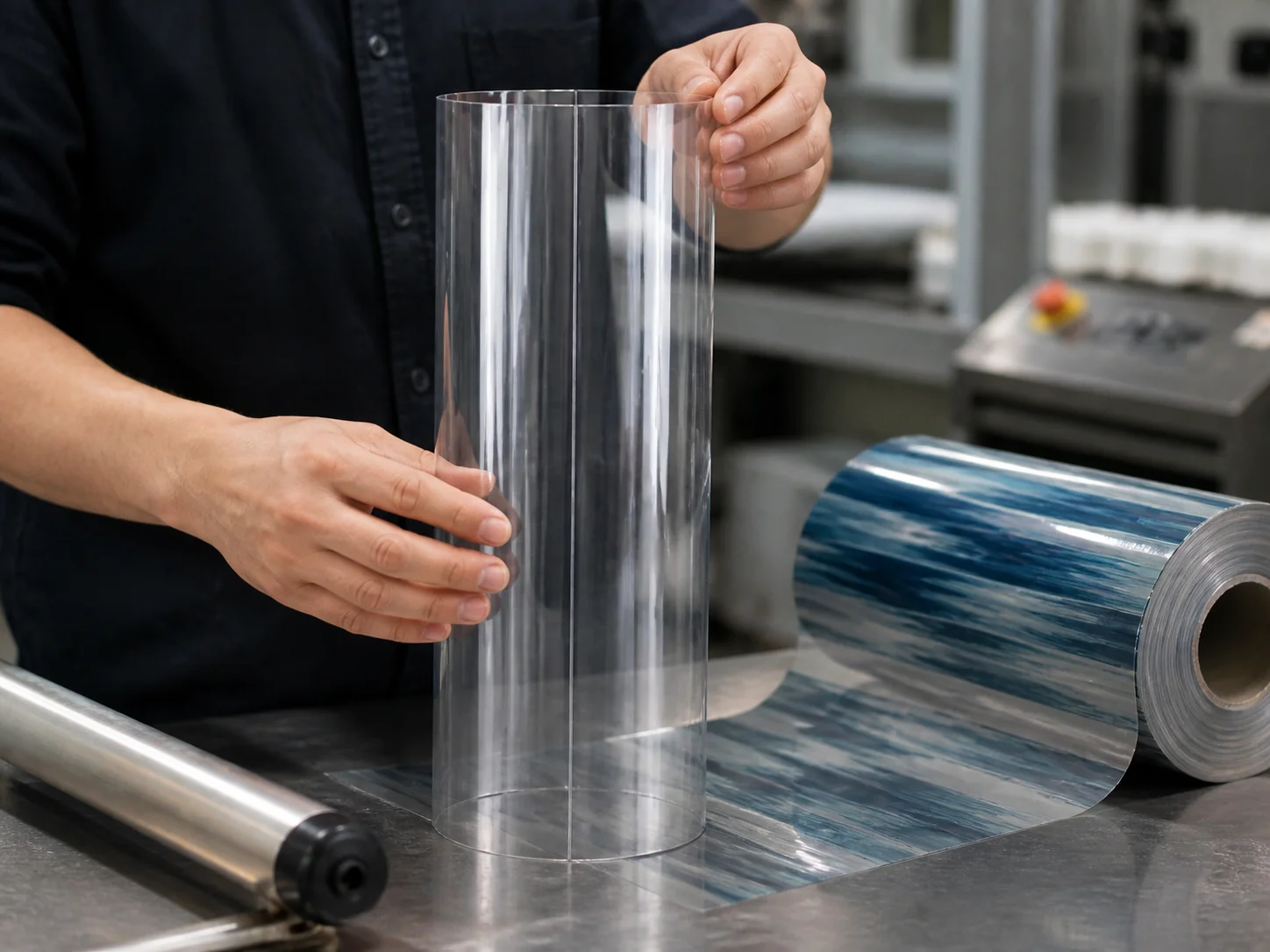
A shrink sleeve starts as a printed tube slightly larger than the bottle and ends as a skin locked onto its contours. Between those two states the film contracts by half or more, unevenly, wherever the glass is widest. Everything difficult about sleeves — the distorted artwork, the material choice, the tunnel settings — follows from that one fact.
Shrink percentage decides which bottles are possible
PVC contracts by roughly 50 to 60 percent, OPS around 60 to 70, and PETG as far as 65 to 78. A gently tapered bottle is comfortable for any of them; a bottle with a deep waist and a wide shoulder needs the top of that range. Reading the maximum circumference difference off the bottle drawing is the first step, before any artwork exists.
Artwork is pre-distorted to the bottle it will land on
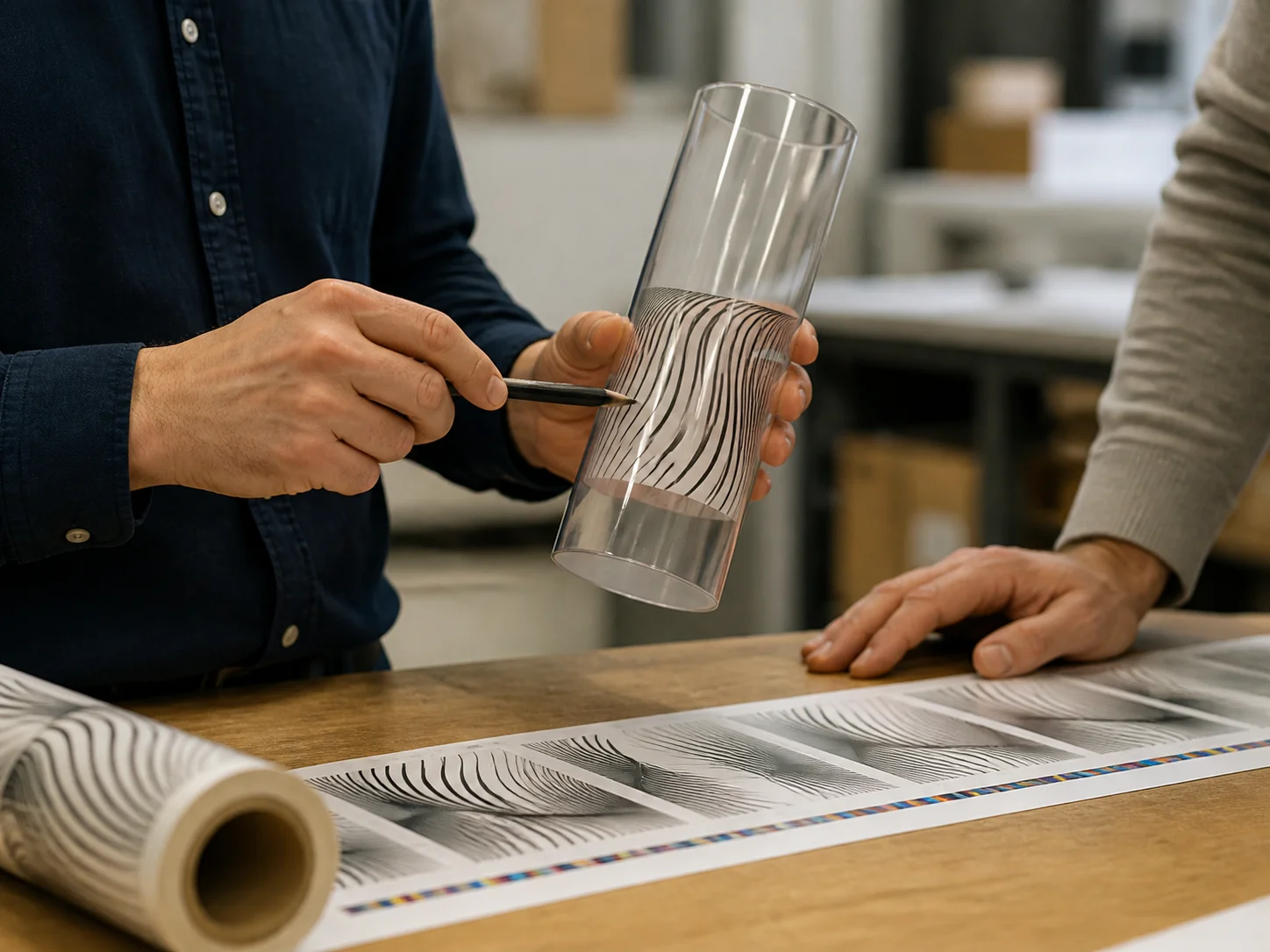
Because the film contracts most where it travels furthest, a design printed square shrinks into something compressed at the waist. Prepress therefore stretches the artwork in the opposite proportion, calculated from the bottle profile. That distortion file belongs to one bottle: reusing it on a bottle with different geometry produces stretched type that nobody at proofing stage catches.
Match the film to how the pack lives
PETG is the most heat-resistant and scuff-resistant, takes the highest gloss and costs the most, which suits premium packs and anything that will be handled hard. PVC prints beautifully and shrinks over a wide temperature window, so it is the volume default. OPS sits between them and is chosen where a lower-density film matters for recycling streams.
The tunnel is the process, not the sleeve
Steam tunnels transfer heat evenly and handle complex shapes; hot air is cheaper and gentler on the printed surface but struggles around deep recesses. Either way the settings are proved on the actual bottle: too little heat leaves wrinkles at the shoulder, too much distorts type and can soften the film against the glass. Sleeve suppliers quote a window; the line has to find its point in it.
Take the tamper band while you are there
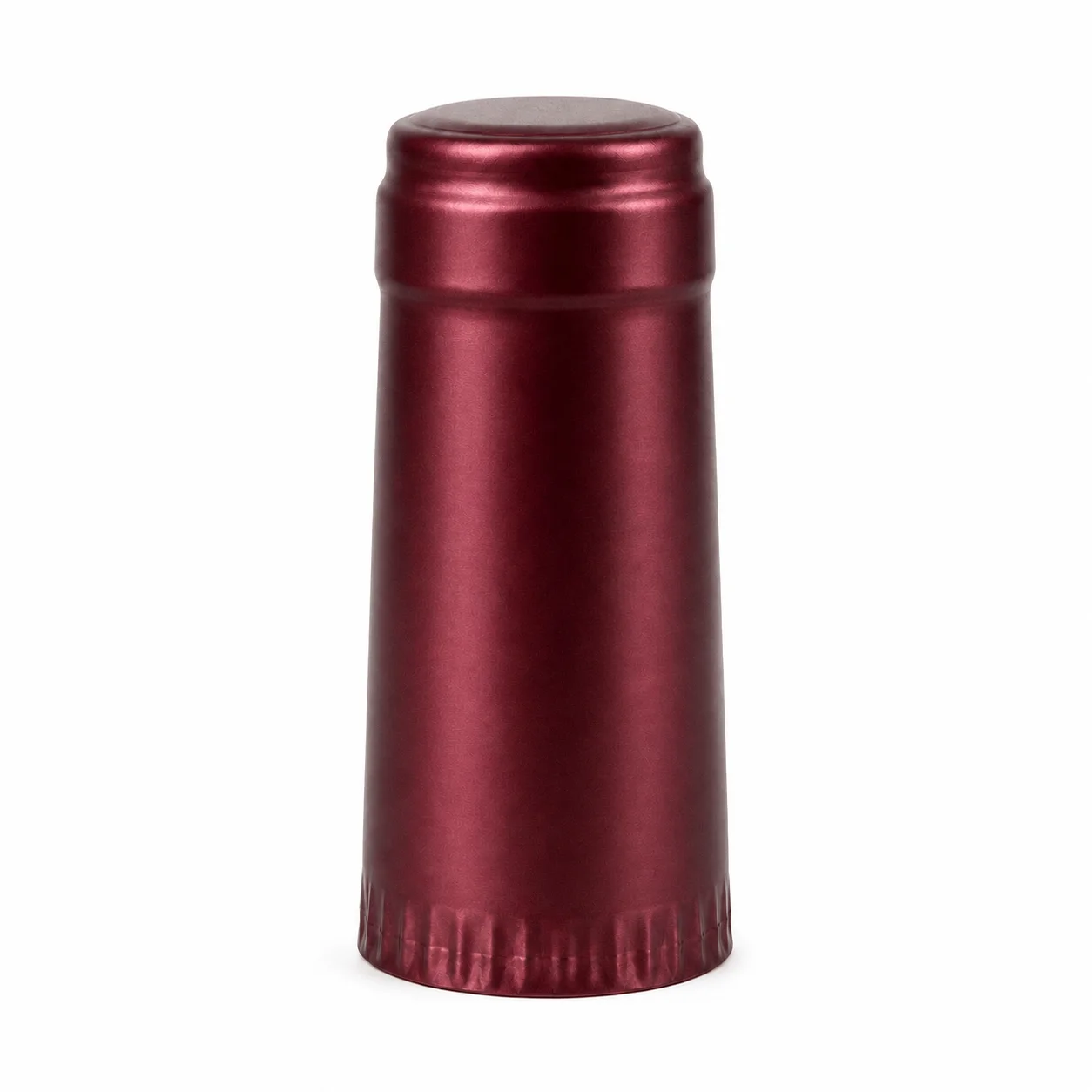
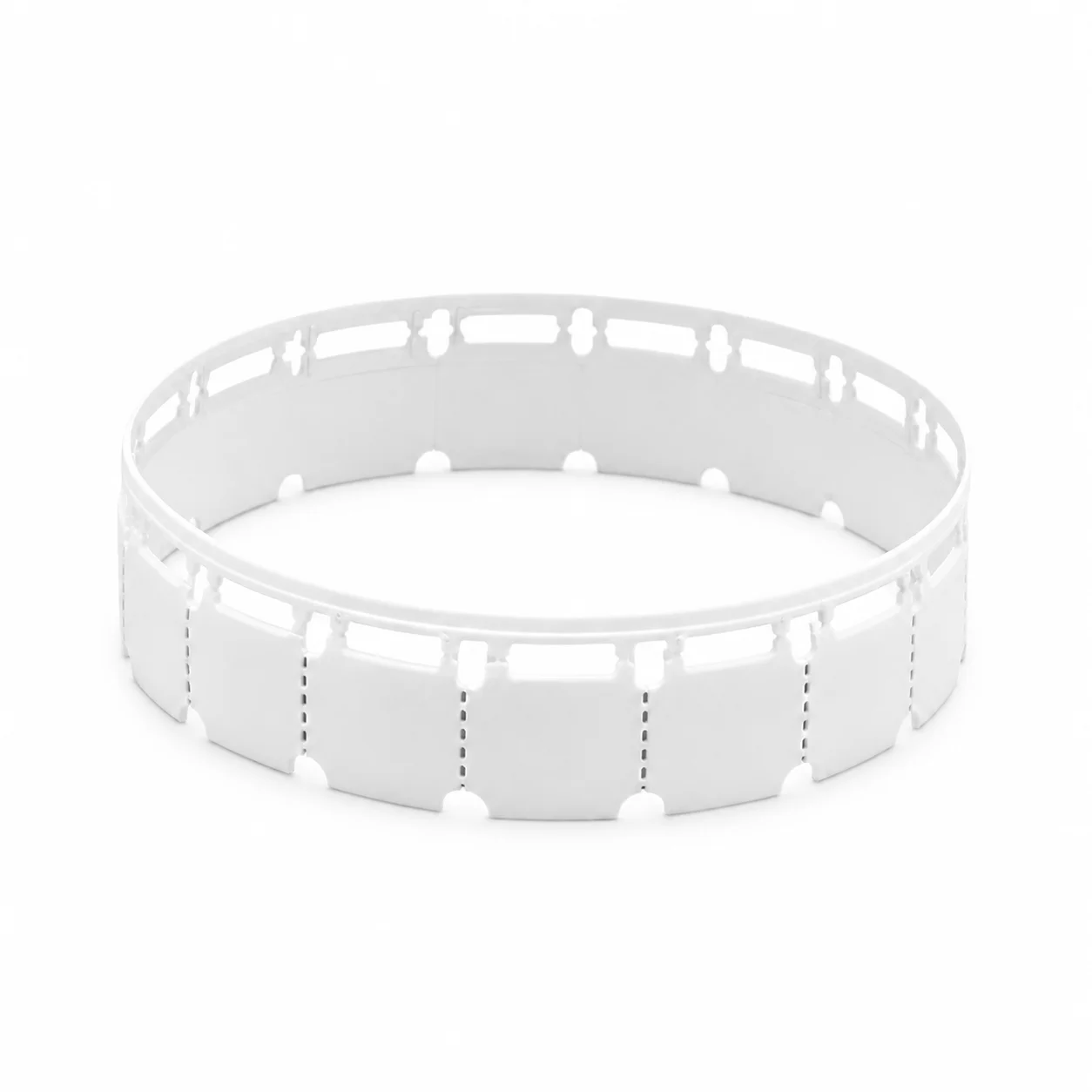
A sleeve that extends over the closure and carries a perforation line gives tamper evidence and decoration in one operation, which is cheaper than applying a separate band. It also constrains design, because the perforation has to fall where the customer will tear it and where the artwork can survive being split in two. Deciding this late usually costs a print revision.
Sleeves are the recycler's complaint, and that is changing specifications
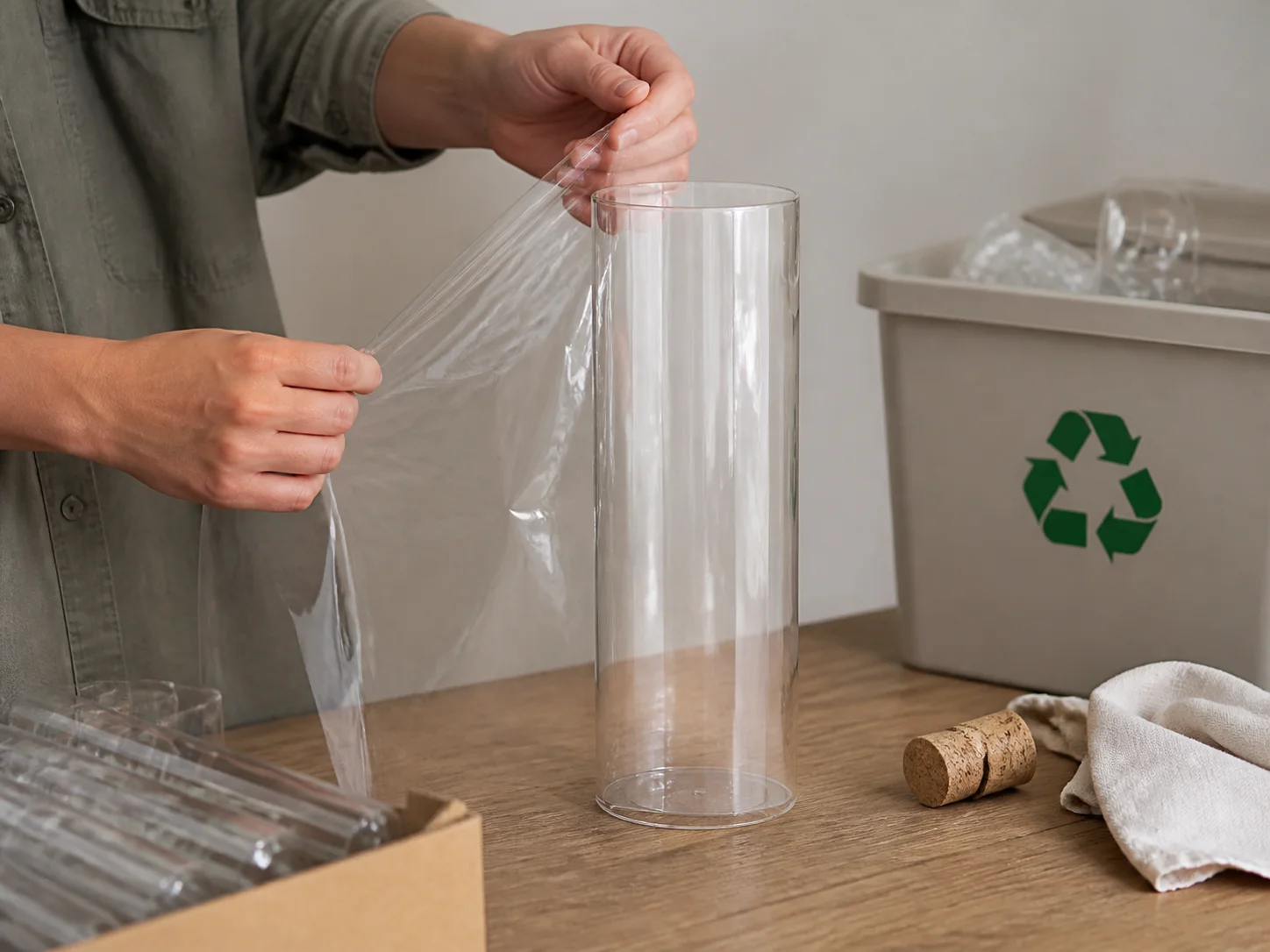
A full-body PVC sleeve on a glass bottle can carry into the cullet stream and interfere with optical sorting, which is why several markets now favor perforated sleeves that a consumer can strip, or films whose density lets them float off in washing. Where a program sells into those markets, the film decision is now made with recycling guidance in hand.