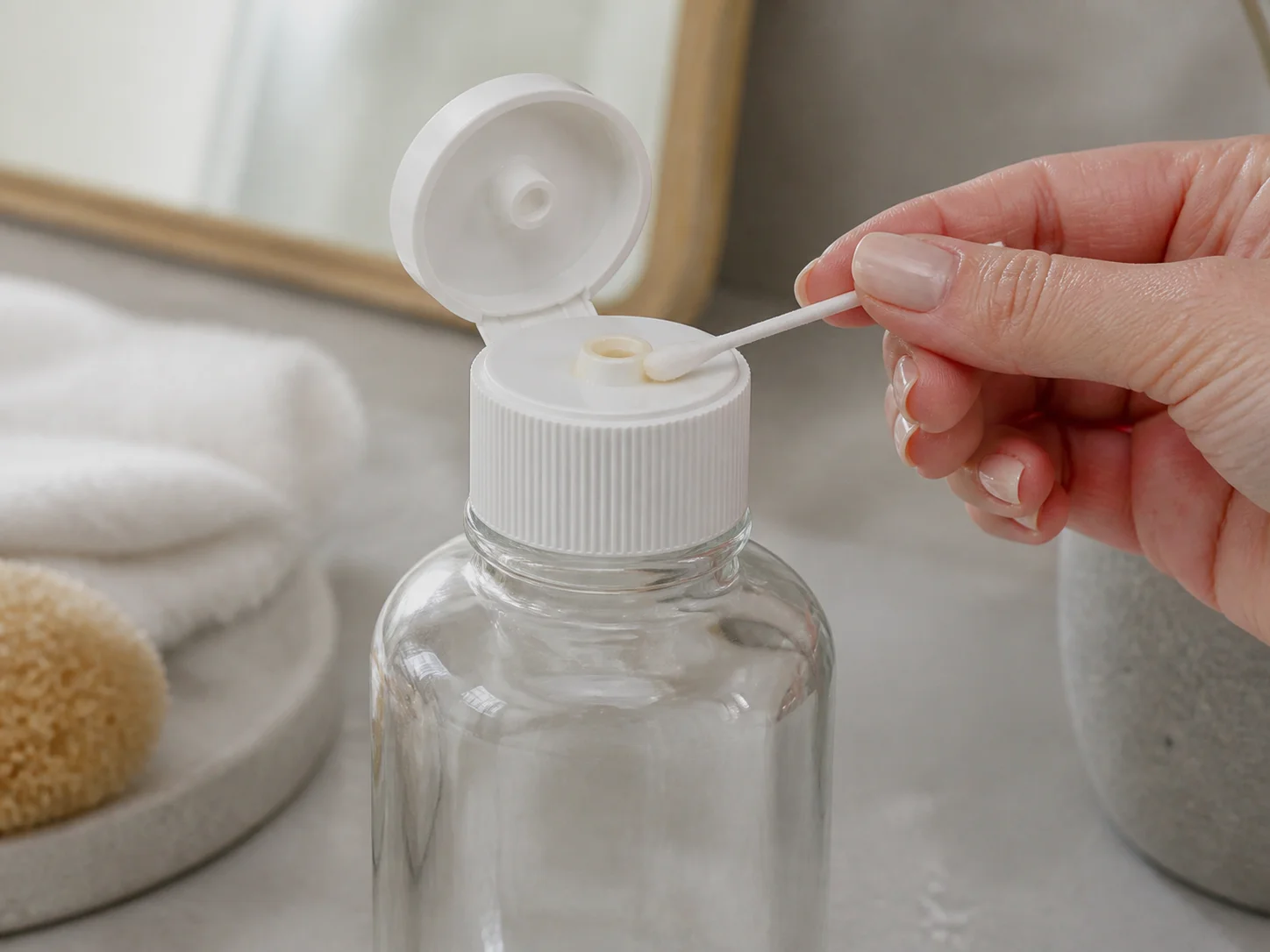
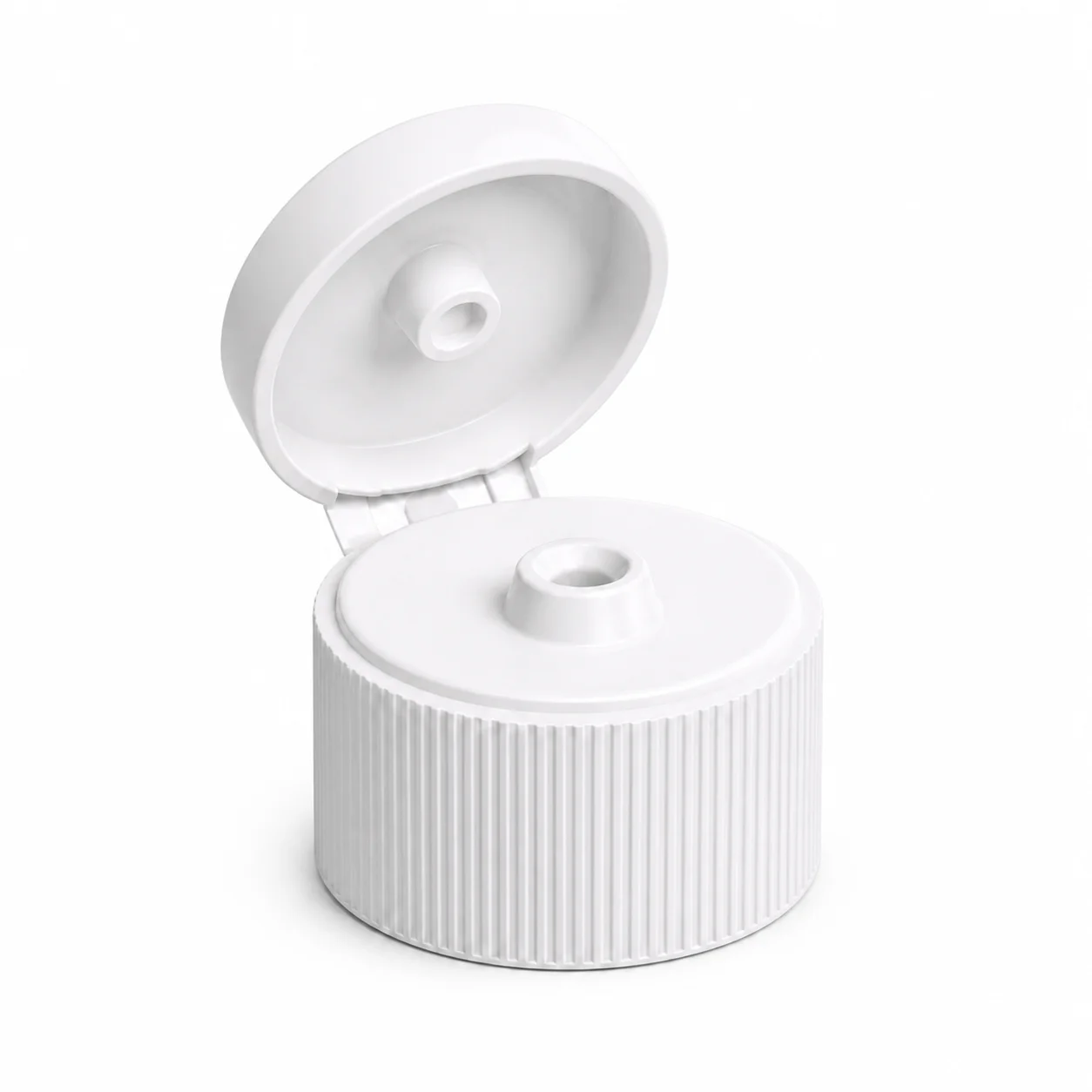
White ribbed flip-top cap with the hinged lid open, showing the raised turret spout at the center
Shown configuration · white ribbed skirt with lid open / bottle, product and printed decoration not shown

Dispensing closures

Flip-top Cap

A two-piece hinged dispensing cap molded in polypropylene for a 24-410 finish, with a turret spout bored at 2.5 mm for shampoos, sauces and light lotions.

24-410 finish2.5 mm spout borePolypropylene, resin code 5
Stock status
In stock
Lead time
2–3 weeks
FOB price / pc
$0.80 - $1.05
MOQ
3,000 pcs

Final availability, dimensions, materials, assembled components and commercial terms are confirmed against the selected drawing and approved sample.

Bore chosen by viscosity

2.5 mm, 3.2 mm and 6 mm spouts tooled

Skirt to suit the line

Ribbed for hand work, smooth for chuck capping

Capping window published

10–18 in-lb application torque at 24 mm

Flip-top Cap profile

Everything a flip top does well or badly happens in two millimeters of plastic.

Finish codes, bore sizing & hinge life

Why two white flip tops of the same diameter can be entirely different parts.

A flip top is a threaded base with a raised spout, closed by a lid on a molded hinge. The bore through that spout meters the pour, the hinge carries every open and close for the life of the bottle, and the thread series decides whether the cap fits the bottle at all. None of the three is visible from a photograph of the cap.

01

Read both halves of the finish code

In 24-410 the first figure is the nominal outside diameter of the bottle neck in millimeters and the second is the thread series: 410 runs about one and a half turns, 415 runs two turns on a finer pitch. A 24-415 cap threads onto a 24-410 neck for a turn and then stops short of the sealing land, which is why the second figure belongs in the purchase order rather than in a footnote.

02

Size the bore to the product, not the bottle

Spouts are commonly tooled at 2.5 mm for thin liquids, around 3.2 mm for lotions and hand cleansers, and 6 mm where the product carries body or particles. Viscosity does the rest: a 2.5 mm bore that pours a shampoo cleanly will make a thickened conditioner require a hard squeeze, and the customer reads that squeeze as a defective cap rather than as a bore chosen one step too small.

03

A living hinge fails by fatigue, not by wear

The hinge is a thinned web of polypropylene that survives because the polymer aligns along the fold on its first few closures. It does not wear out gradually; it cracks at a cycle count that depends on web thickness, mold gate position and temperature. Cold storage matters here, since a hinge that lasts a season on a bathroom shelf can split within weeks in an unheated warehouse.

04

Set torque with a gauge, not by feel

Published guidance for a 24 mm closure is 10 to 18 inch-pounds on application, with removal torque expected at roughly 40 to 60 percent of that figure and measured a full day after capping so the plastic has relaxed. Under-torqued flip tops weep along the thread; over-torqued ones distort the sealing land, and the leak that follows is usually blamed on the bottle.

05

Two moldings mean two places to leak

The turret and the lid are separate parts assembled after molding, so a flip top has a spout-to-base joint that a plain screw cap simply does not have. Product that dries in that joint over a few weeks is what turns a cap that sealed on the filling line into one that seeps in a suitcase, and it is only found by holding filled samples inverted after real use.

06

Choose the skirt for the capping head

Ribbed skirts give a chuck or a wet hand something to bite on and are the safe default for hand-finished and short runs. Smooth skirts photograph better and take a wrap label without ribs showing through, but they need a properly matched friction chuck, otherwise the head slips at the top of the torque range and the line quietly under-tightens a whole shift.
Application guide

One hand opens it, which is the whole reason it exists.

A flip top is chosen wherever the customer's other hand is occupied or wet, letting them open, dispense and close with a thumb. The hinge does that work thousands of times. These are development directions confirmed on filled containers.

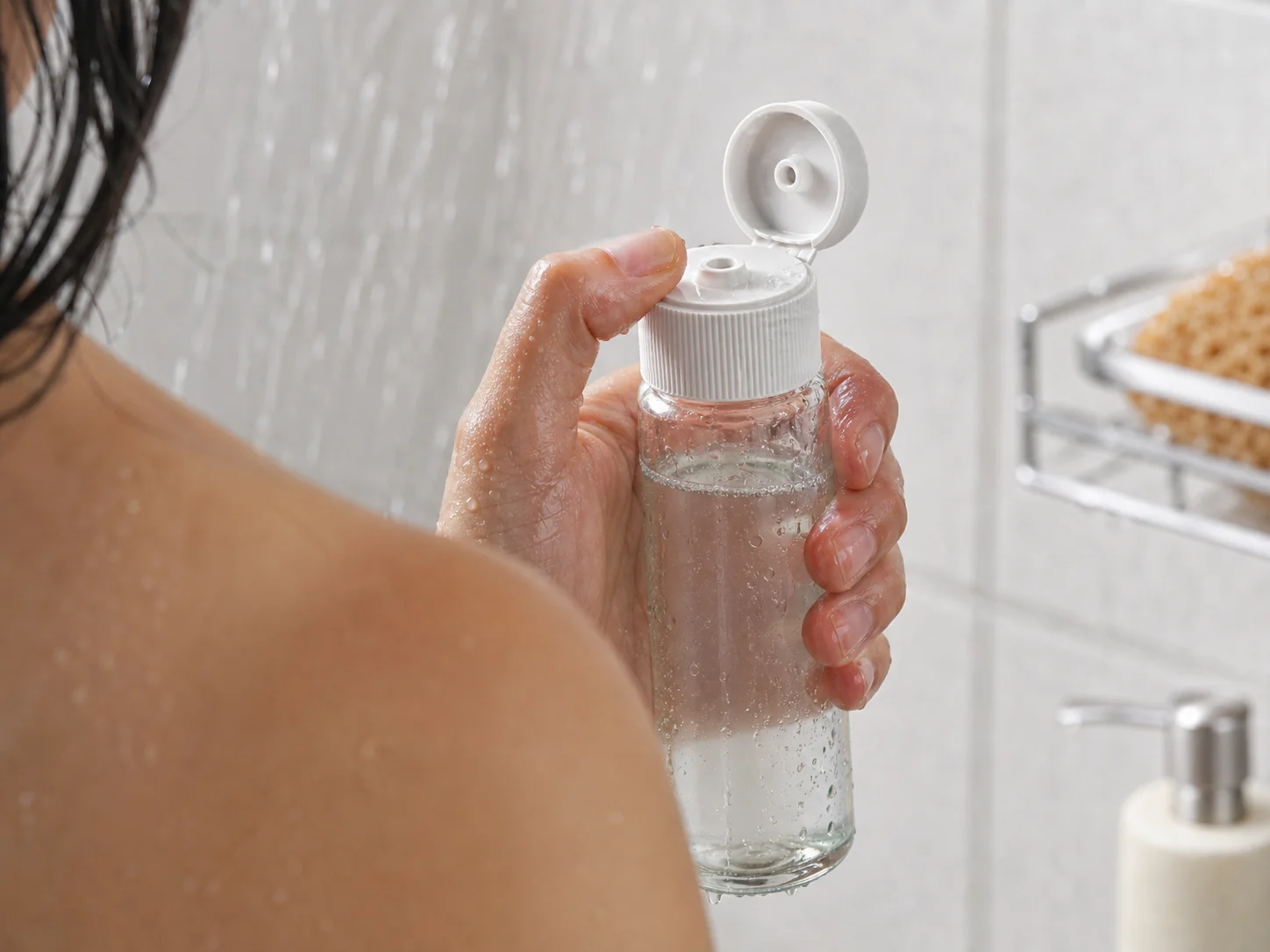
Flip-top Cap used for bottles opened with one wet hand in a shower and kitchen setting

Shower and kitchen

Bottles opened with one wet hand

For shampoos, sauces and lotions used in a shower or beside a hob, where unscrewing a cap with a full or slippery hand is impractical. The lid has to release under thumb pressure alone and snap shut positively enough that the customer knows it is closed without looking.

  • Test one-handed opening when wet
  • Confirm an audible, positive close
  • Check thumb reach on the actual bottle
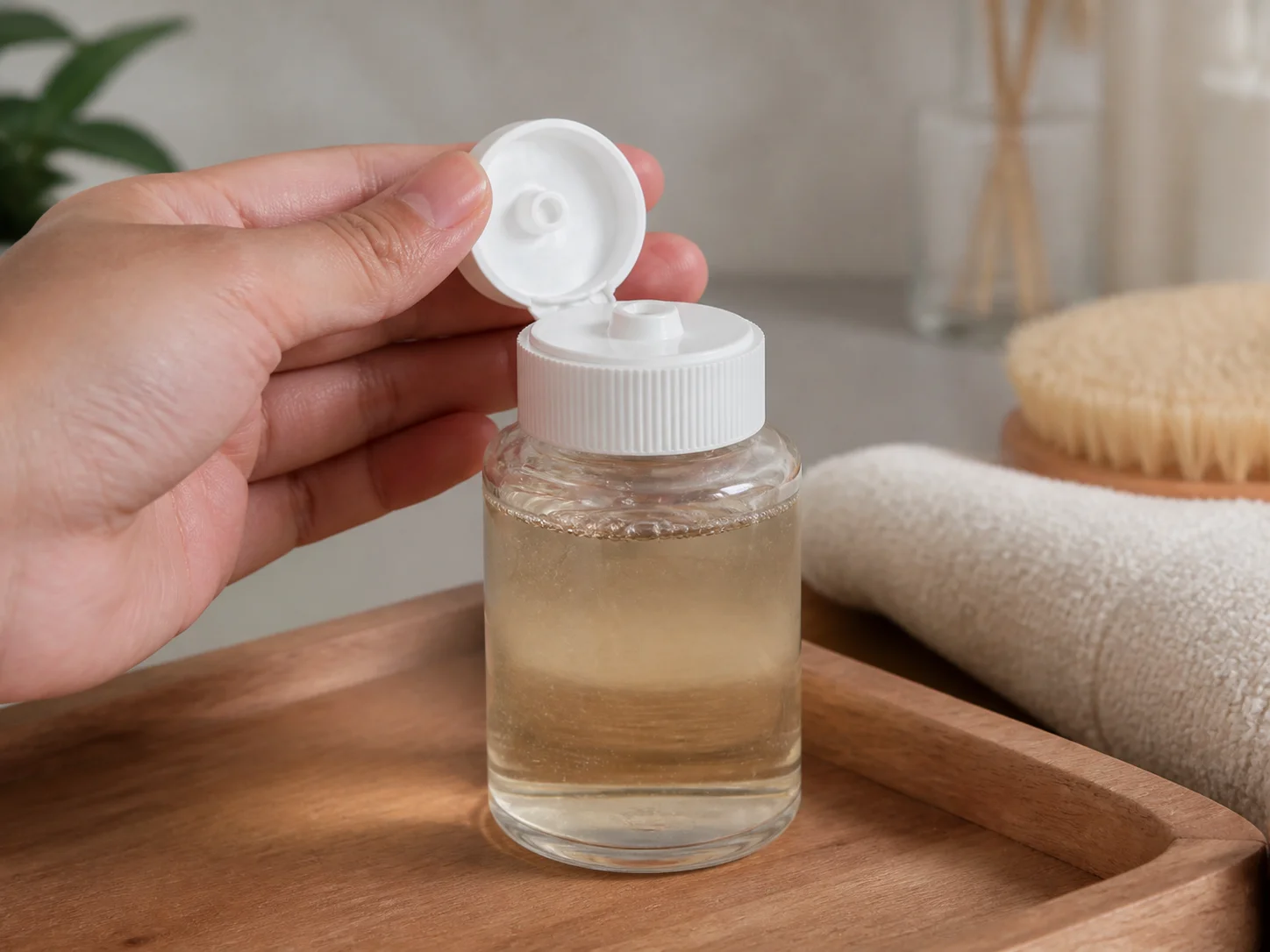
Flip-top Cap used for a living hinge flexed daily in a hinge life setting

Hinge life

A living hinge flexed daily

The hinge is a thin section of plastic bent open and closed every time the product is used, and it fails by fatigue rather than wear. Cycle testing to the number of uses a bottle will actually see is what establishes whether it survives the product it closes.

  • Cycle the hinge to expected use count
  • Test at low temperature as well
  • Confirm the lid does not creep open
Flip-top Cap used for product drying around the opening in a outlet and residue setting

Outlet and residue

Product drying around the opening

Because the outlet is small and the lid closes onto it, product dries around the orifice and on the sealing face between uses. Whether the lid still seals over that residue determines if the bottle leaks in a bag three weeks later.

  • Test reclosure with dried residue
  • Confirm the orifice suits the viscosity
  • Check leakage inverted after use

Applications describe package-development directions. Output, reclosure, sealing, leakage and regulatory outcomes are confirmed for the selected program.

Common questions

Flip-top Cap questions

Six questions that decide whether a flip top suits the bottle and the product behind it.

Which spout bore suits my product?

As a starting point, 2.5 mm handles thin liquids such as shampoo, toners and light sauces; around 3.2 mm suits lotions and hand cleansers; 6 mm is used where the product has body or visible particles. Bores behave differently with temperature and with thixotropic formulas, so the practical answer comes from pouring your own product through samples of two adjacent sizes.

How many times can the hinge be opened before it fails?

There is no single figure, because the hinge cracks from fatigue at a count that depends on web thickness, gate position and the temperature it is flexed at. A cap that survives a year in a warm bathroom can split in weeks in an unheated warehouse. Cycle samples at the number of uses one bottle will really see, and repeat the test cold.

Does this cap need a liner?

The reference part is unlined. The seal is taken by the spout land bearing on the bore of the bottle neck rather than by a disc compressed on the top face, which is why the finish dimensions of the bottle matter more here than with a plain screw cap. Where a formula demands an additional barrier, a lined variant is quoted as a different part.

Does the skirt shape matter to the capper?

It decides whether the head can hold the cap at all. A smooth skirt needs a different chuck from a knurled one, and a cap that slips under torque will not seat the hinge squarely. Confirm the skirt against the capping head before the mold is committed.

Next step

Send us the Flip-top Cap brief.

Tell us the product, fill volume, closure preference and destination market. We will come back with the matching drawings, available configurations and a sample plan before anything is quoted.

  • 01Send the briefProduct, volume, closure and market
  • 02Get the optionsMatching drawings and configurations
  • 03Approve the sampleConfirm the pack before production