Air-and-liquid mixing, dilution & neck geometry
Why a foamer fails on the formula far more often than on the mechanism.
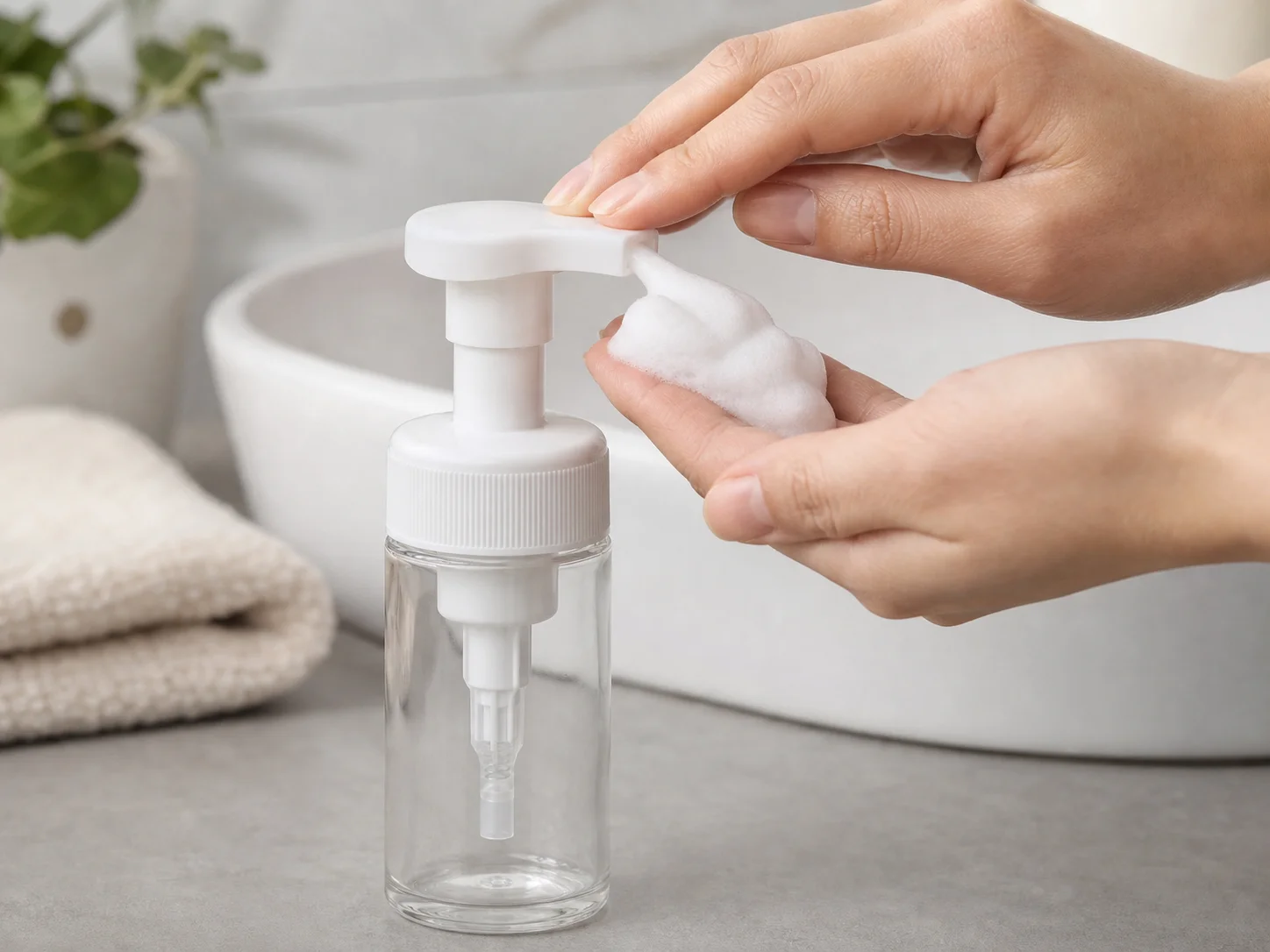
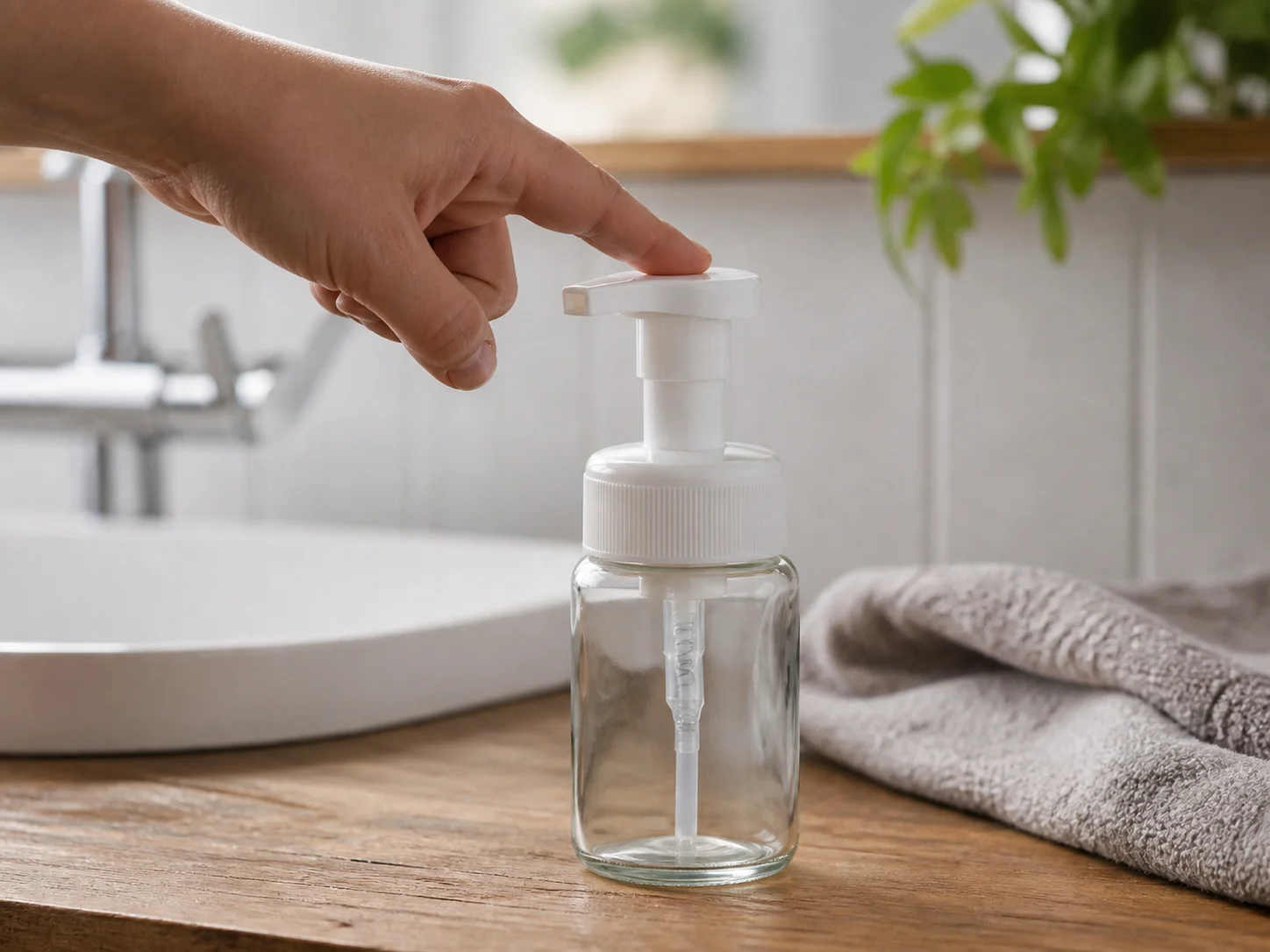
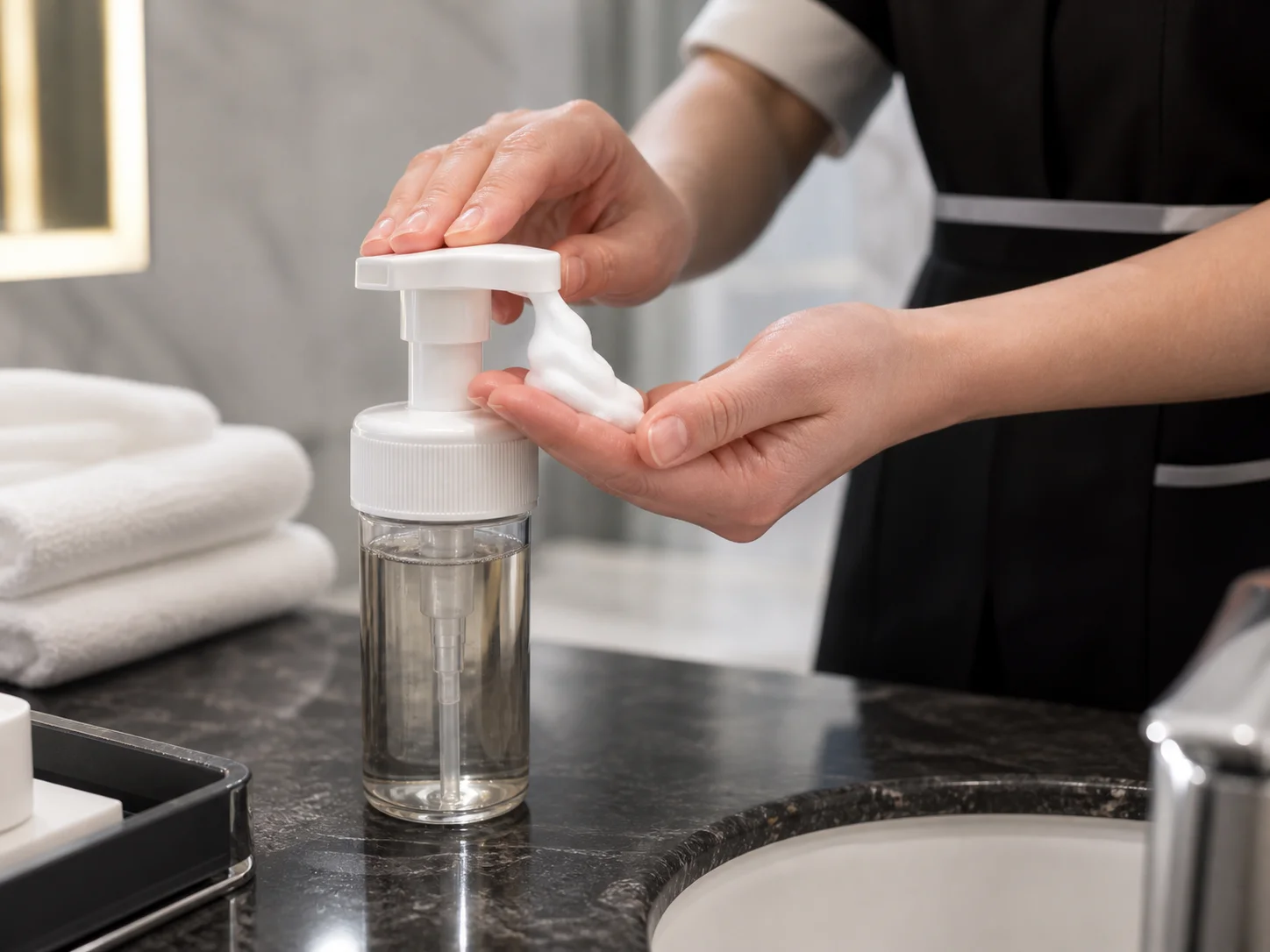
Inside a foamer, two chambers work at once: one draws liquid up the tube, the other draws air, and the two meet at a fine mesh that shears them into foam. Nothing is pressurized and nothing is stored. That makes the pump simple and the formula critical, because a liquid too thick to pass the mesh cannot be made to foam by any pump.
Dilution is a specification, not a suggestion
Foamers are built for thin liquids. Concentrated hand soap or body wash poured straight into a foamer bottle blocks the mesh, and the customer gets a wheeze of air and a dribble. Working practice is roughly one part concentrate to three or four parts water, which means the dilution ratio belongs on the label and in the filling instruction rather than being left to the customer's judgment.
The mesh is where foam quality is decided
Foam texture comes from shearing air and liquid together through a screen, so mesh aperture and the number of screens set bubble size and how dense the foam feels in the hand. A coarse mesh gives a wet, quick-collapsing lather; a finer or doubled screen gives the tight, shaving-cream texture premium products are sold on, at the cost of a slightly heavier stroke.
A foamer needs its own bottle
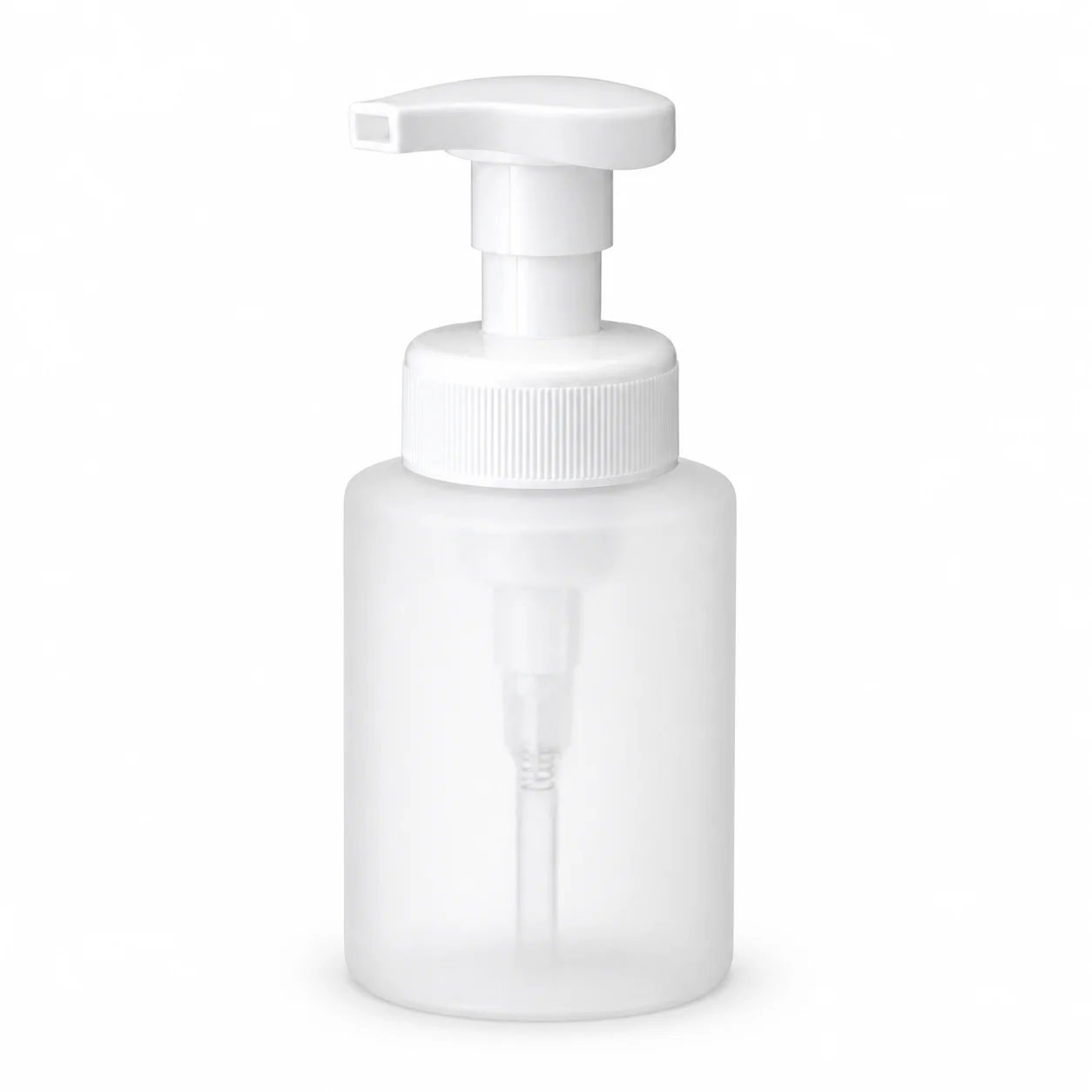
The pump has to draw air as well as liquid, so the bottle must vent freely as it empties. A rigid bottle with a tight closure starves the air chamber and the foam goes thin and inconsistent as the level drops. Foamer programs are specified as a bottle-and-pump pair, and substituting a standard bottle of the same neck size is a common cause of complaints.
The neck is wide because the mechanism is wide
Foamers run on 40-410 and 43-410 rather than the 24 mm and 28 mm necks used for lotion pumps, because two chambers and a mixing stack will not fit down a narrow throat. That has consequences beyond the closure: the wide finish drives the bottle's shoulder geometry, its label panel and often its mold, which is why the pump choice is made before the bottle is designed.
Output is a stroke volume, not a dose
Around 0.8 cc per stroke is a common reference, and lighter 0.4 cc versions exist for travel and children's packs. What the customer perceives is the volume of foam, which is several times the liquid figure and varies with the formula's surfactant load. Comparing pumps on the liquid number alone can therefore mislead, and side-by-side stroke tests with the actual product settle it.
Watch what the residue does between uses
The last of the foam sits in the mesh stack and dries there. A formula with a high solids load leaves deposits that gradually restrict the screen, so the pump feels stiffer and the foam thinner after weeks on a basin. Testing that means cycling a filled pump over days with pauses, rather than firing a hundred consecutive strokes on a bench.