Taper geometry, pairing & what a ground joint can hold
Why a stopper that fits one bottle perfectly will sit loose in the next one off the line.
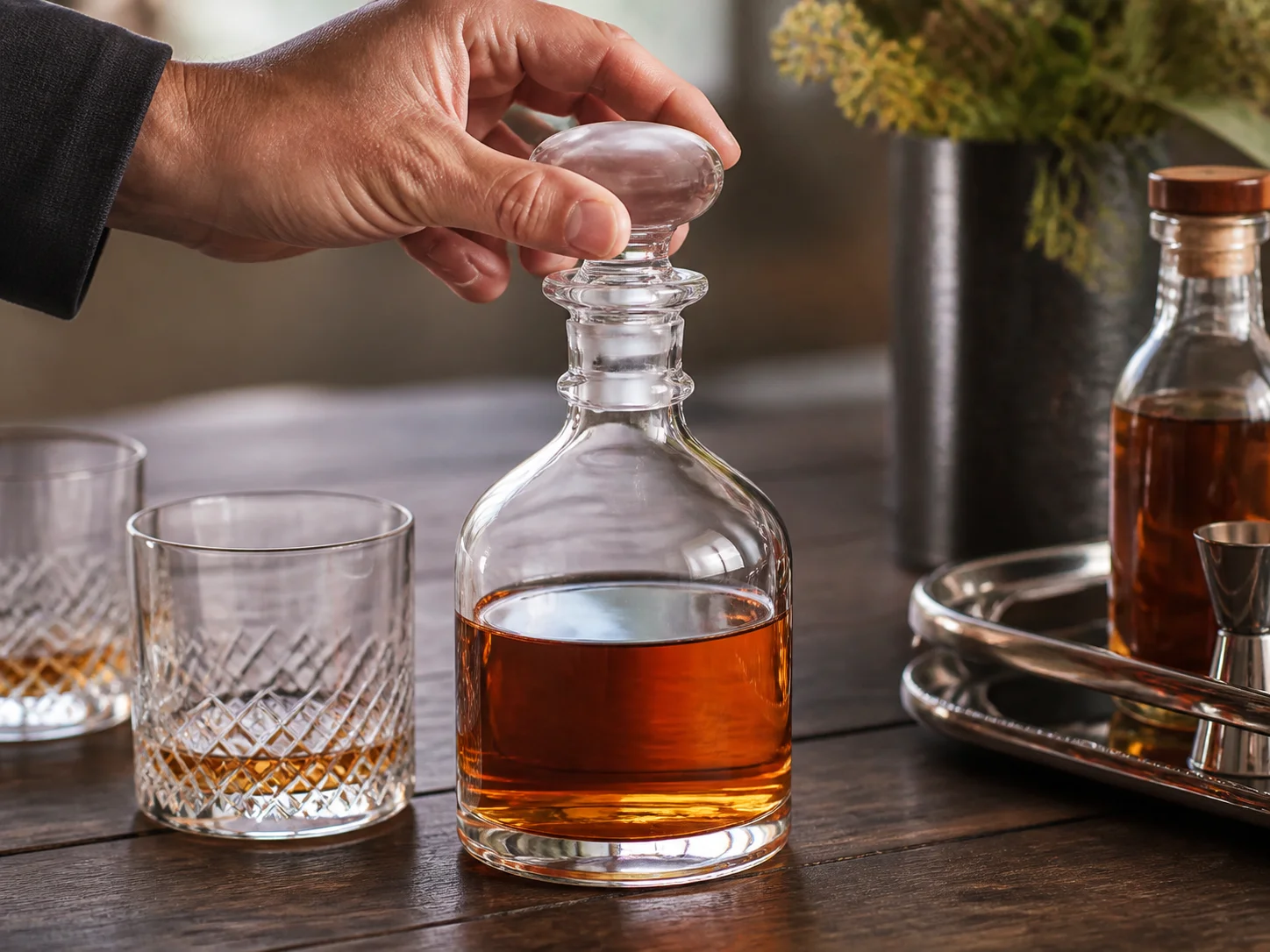
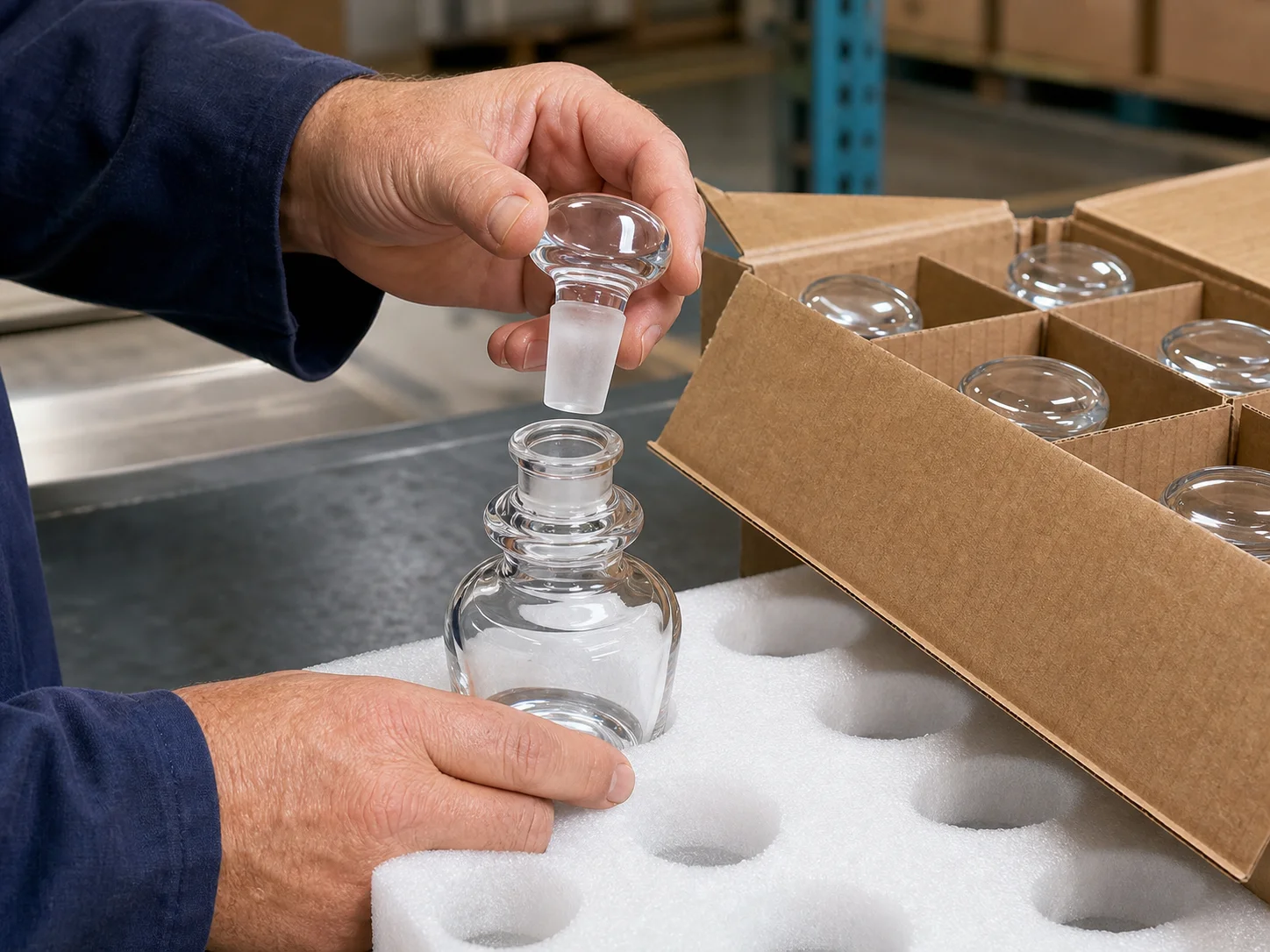
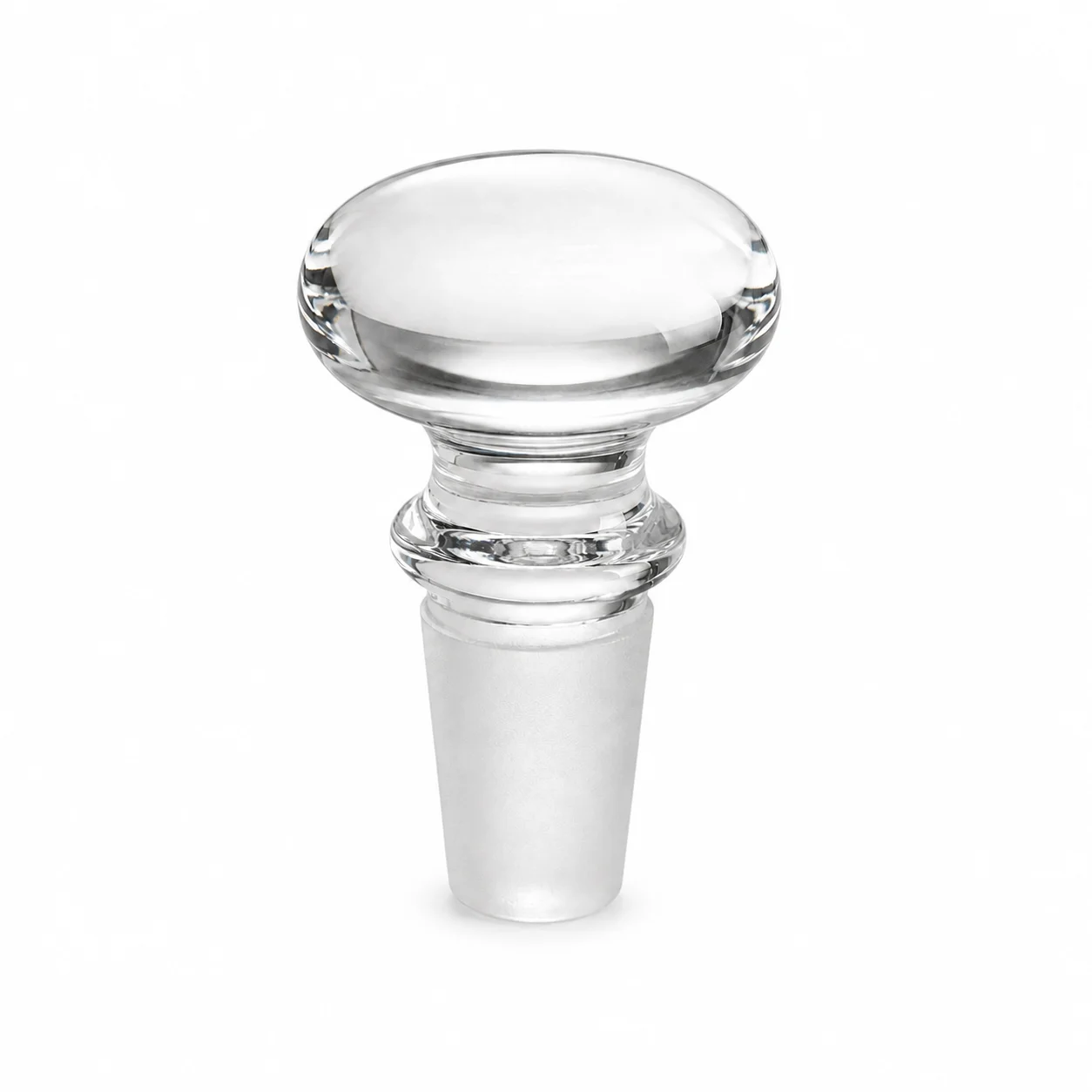
A ground-joint stopper seals on a conical band of matte glass lapped into the bottle bore. There is no gasket to compress and nothing between the product and glass, which is why the format survives in decanters and apothecary bottles. What it does not do is hold pressure, and it does not travel on its side.
Read the taper before the diameter
Standard taper joints run a 1:10 cone, so the joint narrows one millimeter in diameter for every ten millimeters of length. Designations such as 19/26 or 29/32 give the outside diameter at the wide end and the ground length in millimeters, and ISO 383 sets those figures for laboratory ware. A stopper cut to a different cone angle contacts on one ring instead of over the whole band.
Lapped pairs are not interchangeable
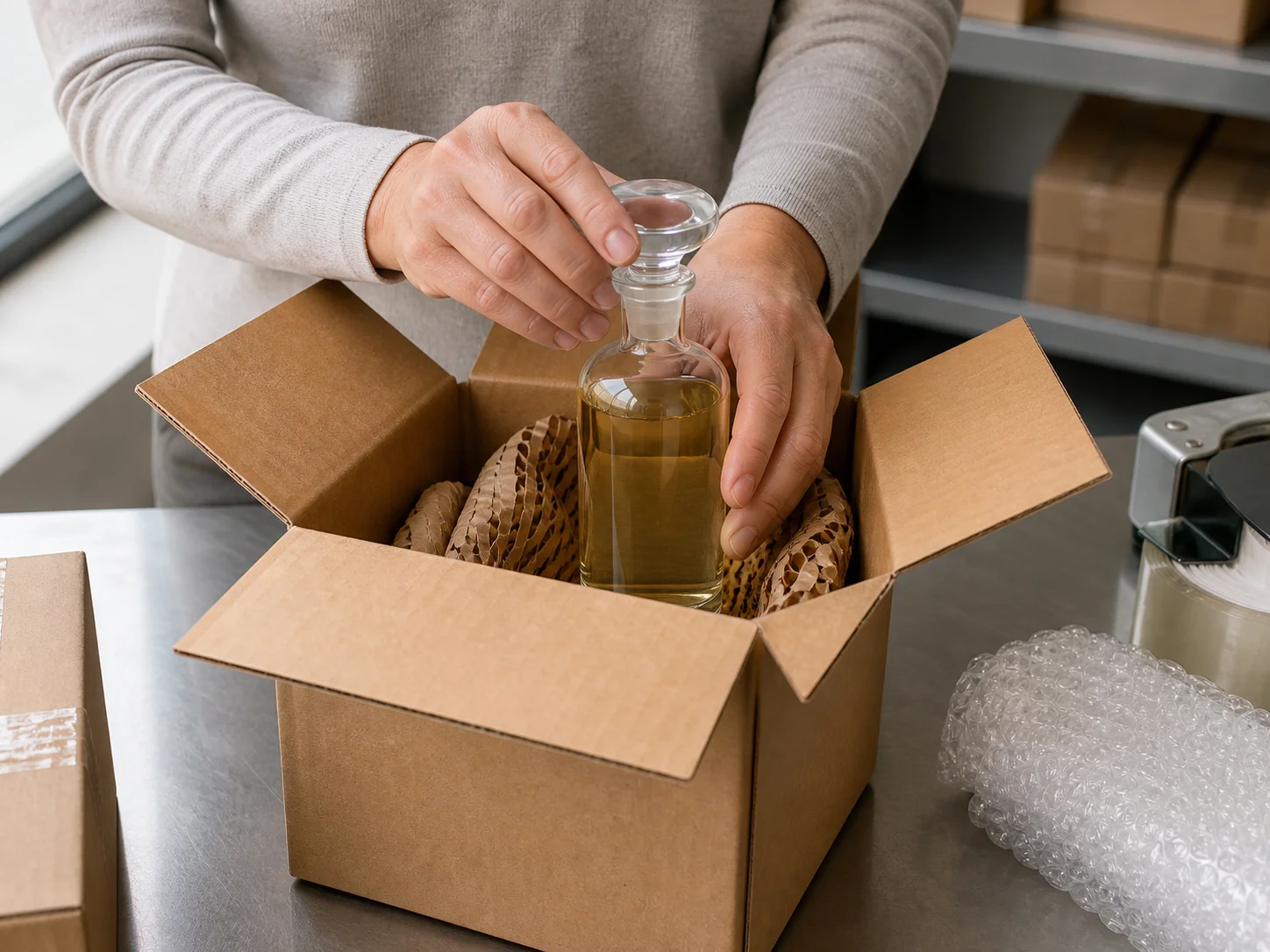
Unless a stopper is machine-ground to a published taper, it is lapped into one particular neck with abrasive slurry until the two surfaces bear evenly. Swap it into the bottle beside it and the joint either rattles or wedges. Decanter programs therefore need a pair number scratched or stickered on both parts, and packing that keeps them together from the grinding bench to the customer's table.
Treat it as a dust and evaporation control
A well-lapped joint slows evaporation and keeps dust out of a spirit or an oil for months. It is not liquid-tight on its side and it is not a pressure closure, so anything carbonated, anything shipped horizontally and anything that must survive a courier upside down needs a different closure or an added gasket ring under the head.
Choose the glass for the duty, not the look
Decorative decanter stoppers are usually soda-lime flint, worked hot and lapped cold, which suits a product that lives on a sideboard. Borosilicate 3.3 is specified where the bottle is autoclaved, filled hot or holds solvents, because the lower expansion keeps the joint from seizing after repeated heating. The two glasses look identical in the hand and cost very differently.
Expect joints to seize with alkali
Ground glass fuses when strongly alkaline product is left standing in the joint: the surfaces etch and then bond, and the stopper has to be worked free with heat or lost with the bottle. It is the standard reason laboratories keep ground stoppers away from caustic solutions, and the same caution applies to cleaning agents and some botanicals in decorative packaging.
Budget the finishing, not the glass
The blank is a small piece of glass; the cost sits in the lapping, the matching and the reject rate when a pair comes out slack. That is also why a frosted band, an engraved facet or a polished flat on the grip is quoted per operation rather than as a surcharge on the stopper, and why sample lead times run closer to a bottle's than to a plastic cap's.