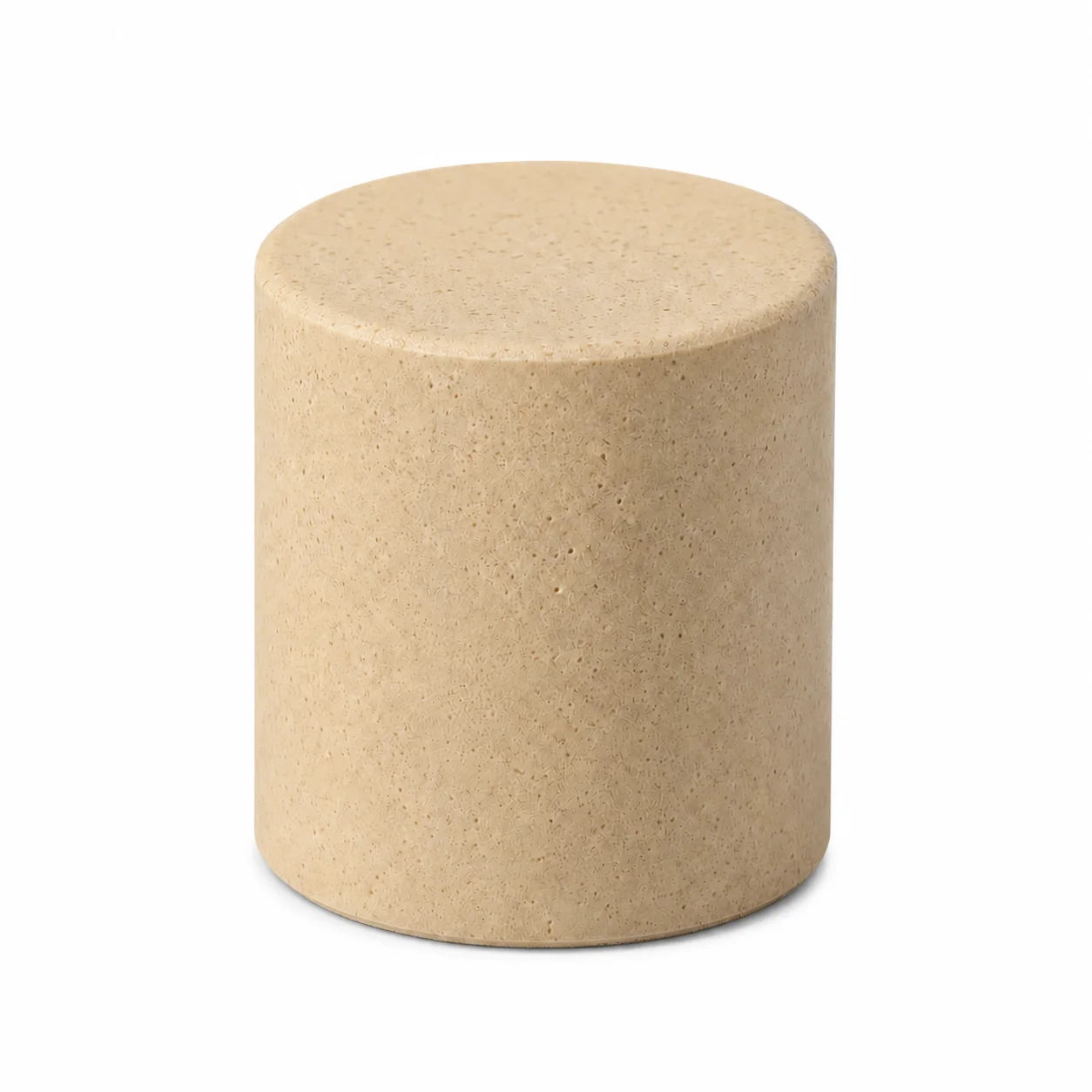
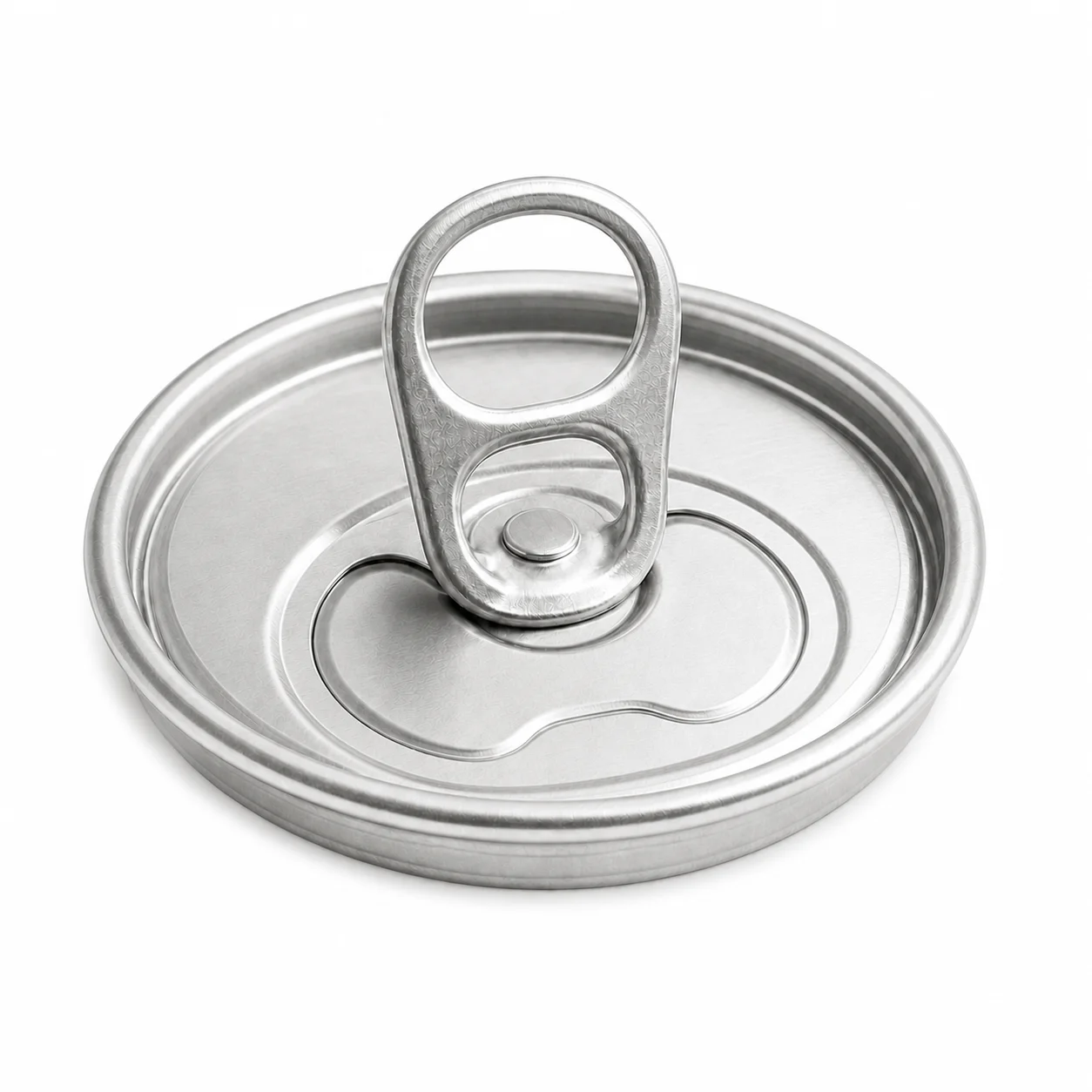
Silver aluminum easy-open end with an upright pull ring riveted to the center and a scored panel outline
Shown configuration · shell top face with ring upright / container, underside compound and opened panel not shown

Easy-open metal ends

Pull-ring Cap

A full-aperture aluminum easy-open end with a riveted pull ring over a scored panel, made in 200, 202, 209 and 307 diameters for containers with a seaming flange.

209 diameter is 63 mm5182-H19 aluminum shellSingle-use, not reclosable
Stock status
In stock
Lead time
2–3 weeks
FOB price / pc
$0.75 - $1.20
MOQ
2,000 pcs

Final availability, dimensions, materials, assembled components and commercial terms are confirmed against the selected drawing and approved sample.

Opens without a tool

Ring lifts the scored panel clear in one pull

Tamper evidence is absolute

A torn score cannot be disguised or reversed

Seamed, not capped

Applied on a flange by a seamer, not a capping head

Pull-ring Cap profile

The one closure on this site that a glass finish cannot accept.

Score construction, seaming & where glass fits

What the format does brilliantly, and the one question to settle before specifying it.

A pull-ring end is a shell of aluminum with a score pressed into the panel and a tab riveted through it. Pulling the ring tears the score and lifts the panel out, which opens the container and destroys the closure in the same motion. It is applied by rolling a double seam onto a flange — a construction glass does not have.

01

Settle the container material first

A double seam is formed by rolling the curl of the end around the flange of a metal or composite body. Glass has neither flange nor ductility, so a glass bottle cannot take a seamed end. Where a glass program wants the ring-pull gesture, the equivalent is a pull-off crown on a 26 mm crown finish — the same one-pull opening, a completely different closure to buy.

02

Read the diameter code, not the millimeters

Ends are called out in the imperial can convention: 200 is 50.0 mm, 202 is about 52.3 mm, 209 is 63 mm and 307 is 83 mm. The figures describe the seaming diameter rather than the visible top, so an end and a body only pair correctly when both are quoted in the same code. Mixing a metric diameter into that conversation is where most sampling errors start.

03

Full aperture and stay-on tab are different products

A full-aperture end scores around the whole panel so the top lifts away and the customer can reach in — that is the format for nuts, powders and paste. A stay-on tab scores only a drinking hole and keeps the tab attached, which is the beverage-can convention. They share the ring but almost nothing else, and the choice drives both the score depth and the opening force.

04

The alloy is chosen for a controlled tear

Shells are pressed from 5182-H19 aluminum, a magnesium alloy stiff enough to hold the panel flat and predictable enough that the residual metal under the score fails at a consistent load. The tab is a separate blank riveted through the panel from a softer grade so it bends rather than snaps. Change either specification and the opening force moves with it.

05

The compound does the sealing, the seam holds it

A ring of sealing compound is lined into the curl and dried before the end is shipped; on 200 and 202 ends the dry film is typically controlled to 15–40 mg. During seaming that compound flows into the space between the curls of end and body. Too little and the seam leaks; too much and it extrudes into the pack, so it is inspected as a weight rather than by eye.

06

Inspect the edge the customer will touch

A torn score leaves a cut edge on both the removed panel and the rim, and full-aperture ends are used on products people reach into. Curl geometry, score residual and how the panel is designed to fold all decide whether that edge is safe. It is judged on units opened by hand the way a customer opens them, not on the specification sheet.

Application guide

Opening it destroys it, which is exactly the point.

A pull-ring cap tears along a scored panel and cannot be put back, so the pack is unambiguously single-use and unambiguously unopened until it is not. These are development directions confirmed on filled containers.

Pull-ring Cap used for containers emptied in one use in a single-serve products setting

Single-serve products

Containers emptied in one use

For beverages, health shots and single-dose products a customer opens and finishes on the spot, where resealing is neither expected nor wanted by anyone. The torn panel gives absolute tamper evidence, since there is simply no way to disguise that a container has already been opened once.

  • Confirm the pack suits single use
  • Check the torn edge is safe to handle
  • Verify tamper evidence is unmistakable
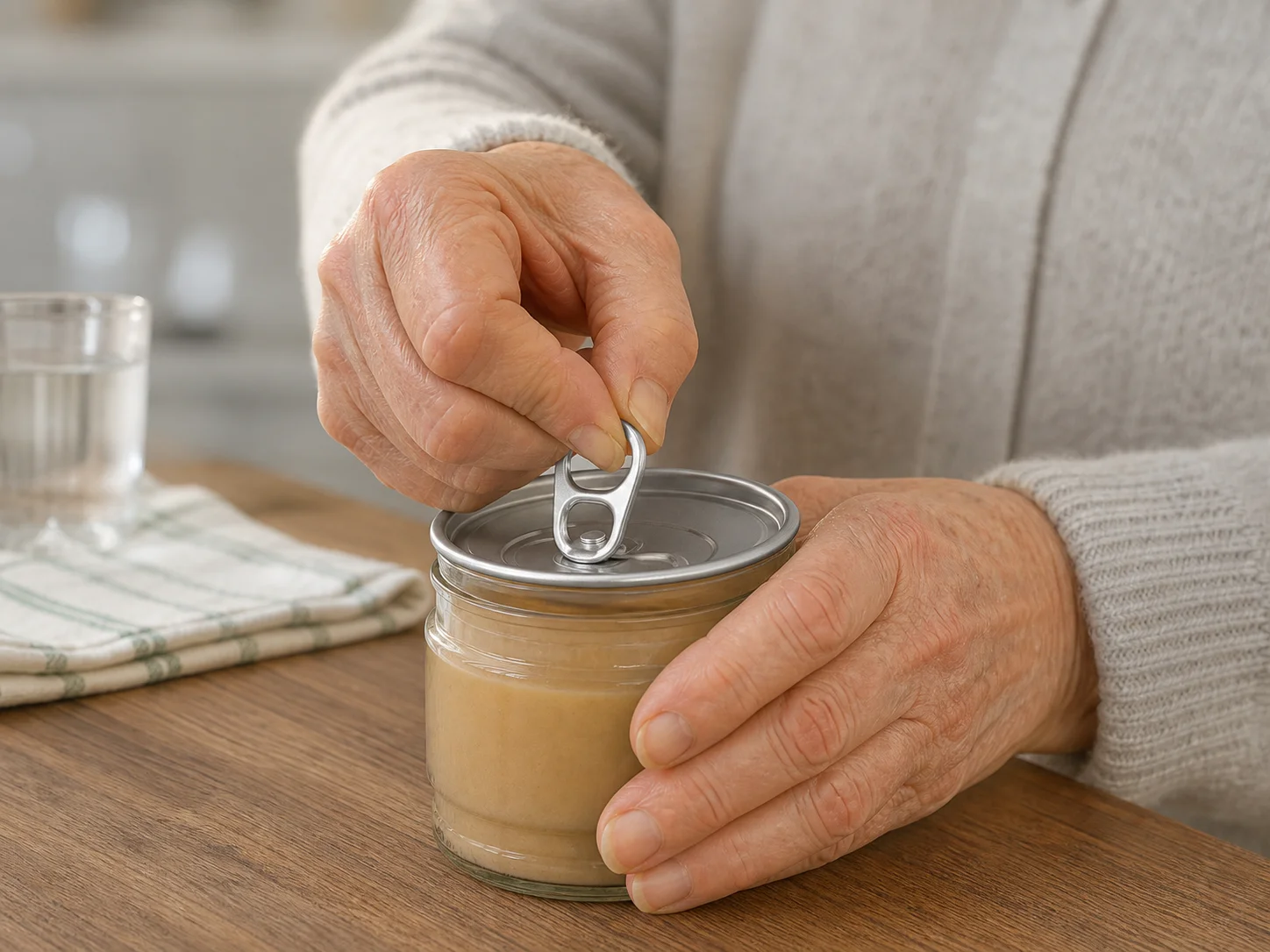
Pull-ring Cap used for a ring opened with tired hands in a older customers setting

Older customers

A ring opened with tired hands

For products bought by people whose grip is not what it was, which covers a great deal of the nutrition and medical-food market. The score has to tear under one finger and still survive filling, processing and a truck, and that balance is judged by handing filled units to people rather than by pulling loose caps on a bench.

  • Measure the pull force on filled units
  • Test with limited hand strength
  • Confirm the score survives processing
Pull-ring Cap used for a rim someone puts to their mouth in a drinking from the container setting

Drinking from the container

A rim someone puts to their mouth

For drinks and broths consumed straight from the container rather than poured out. Tearing metal leaves an edge the customer reaches past or drinks over, so curl and burr on the opened panel are a safety matter, and they get inspected on units opened by hand the way a customer would open them.

  • Inspect the opened edge for burrs
  • Confirm the panel stays attached
  • Review how the product is consumed

Applications describe package-development directions. Opening force, retention, sealing, leakage and regulatory outcomes are confirmed for the selected program.

Common questions

Pull-ring Cap questions

Start with the container, because that is what decides whether this closure is available to you at all.

Can a pull-ring end go on a glass jar or bottle?

No. The end is fixed by rolling a double seam around a flange on the container body, and glass has neither a flange nor the ductility to be rolled. Glass programs that want the same one-pull gesture use a pull-off crown on a 26 mm crown finish, which opens by ring but is applied with a crown head rather than a seamer.

What do 200, 202 and 209 refer to?

They are can-industry diameter codes rather than millimeters: 200 is 50.0 mm, 202 about 52.3 mm, 209 is 63 mm and 307 is 83 mm. The number describes the seaming diameter, so the end and the body have to be quoted in the same code. A brief written in millimeters alone is the most common reason first samples do not seam.

How is the opening edge kept safe?

By design and by inspection together. Score residual, curl geometry and how the panel is meant to fold decide what edge the customer meets, and full-aperture ends are used on packs people put their fingers into. The check that counts is opening filled units by hand the way a customer would and examining both the removed panel and the rim.

Why does the alloy matter on a pull-ring end?

Because the tear has to be controlled. The score line must open cleanly under a hand pull without tearing further than intended, and that behavior comes from the alloy and temper as much as the scoring. Changing the metal changes the opening, even at the same dimensions.

Next step

Send us the Pull-ring Cap brief.

Tell us the product, fill volume, closure preference and destination market. We will come back with the matching drawings, available configurations and a sample plan before anything is quoted.

  • 01Send the briefProduct, volume, closure and market
  • 02Get the optionsMatching drawings and configurations
  • 03Approve the sampleConfirm the pack before production