Hardness, elastomer choice & compression set
Why the same ring seals one jar and leaks on the next one down the shelf.
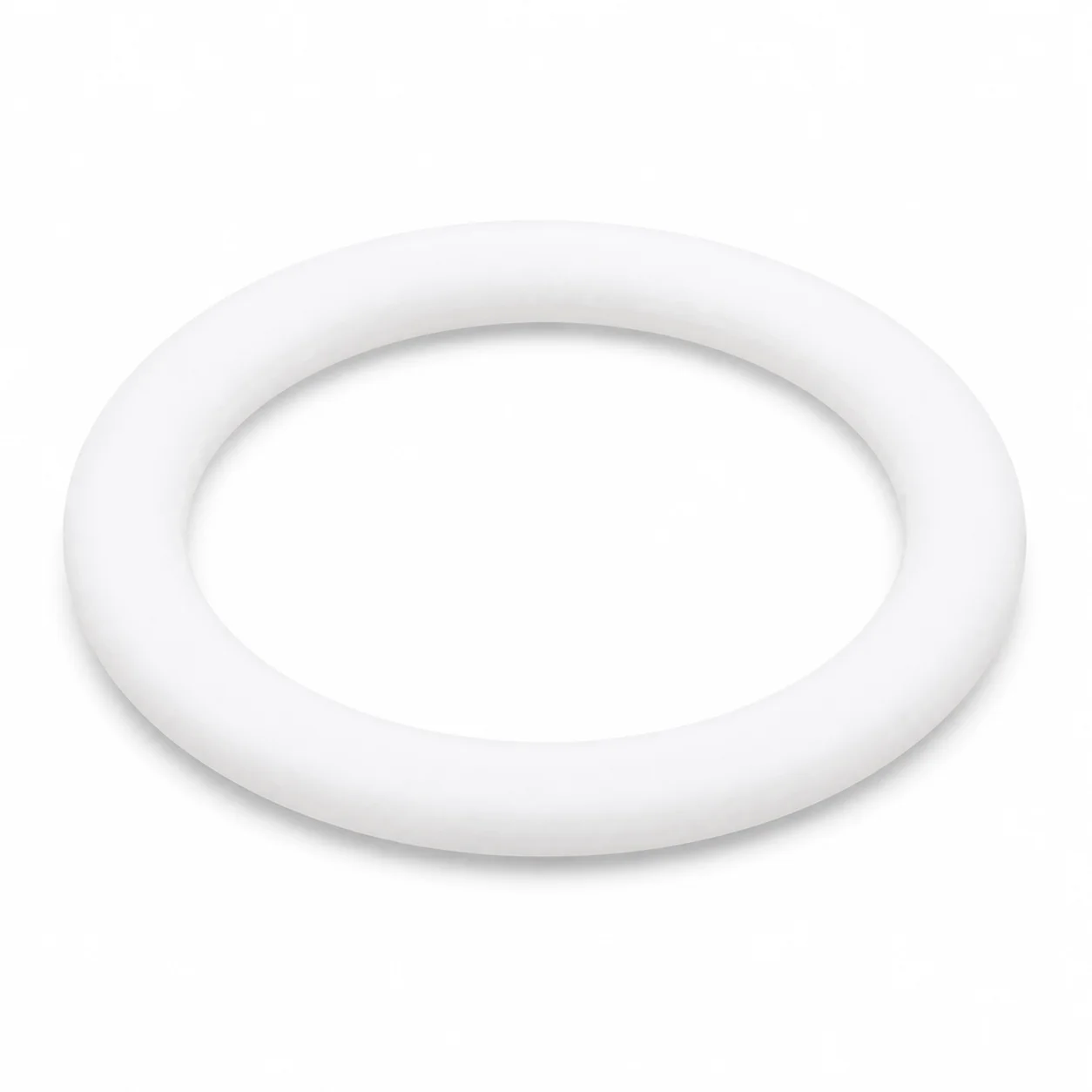
Sealing rings work by being compressed. The lid, clip or bail has to squeeze the elastomer by a designed amount so it flows into the irregularities of a glass rim and stays there under load. Every question worth asking about a gasket — material, hardness, cross-section, how often to replace it — comes back to whether that compression is still present a year later.
Hardness is a working range, not a preference
General-purpose food gaskets sit around 70 Shore A, usually quoted as 70 ± 5. Softer rings conform beautifully to an uneven rim but extrude out of the groove under clamp load; harder rings hold their shape and need more force to seal at all. Since clamp force is fixed by the lid mechanism, hardness has to be chosen against that mechanism rather than in isolation.
Choose the elastomer by what will sit against it
Silicone holds its elasticity from freezer to oven temperatures and survives repeated hot washing, which is why reusable jars specify it. EPDM handles steam and aqueous chemistry well but not oils. Nitrile is the oil-resistant choice and is the material to reach for on infused oils and fatty pastes. Getting this wrong shows up as a ring that swells, hardens or turns sticky in service.
Compression set is how a gasket really dies
Rings rarely split. They stay flattened: after months clamped in a jar, or after several hot wash cycles, the elastomer no longer springs back and the seal quietly loses its interference. Nothing looks wrong, and a customer only discovers it when a jar leaks in a bag. Aging trials that clamp filled jars for months and then measure recovery say far more than any pull test.
Cross-section and groove must be designed together
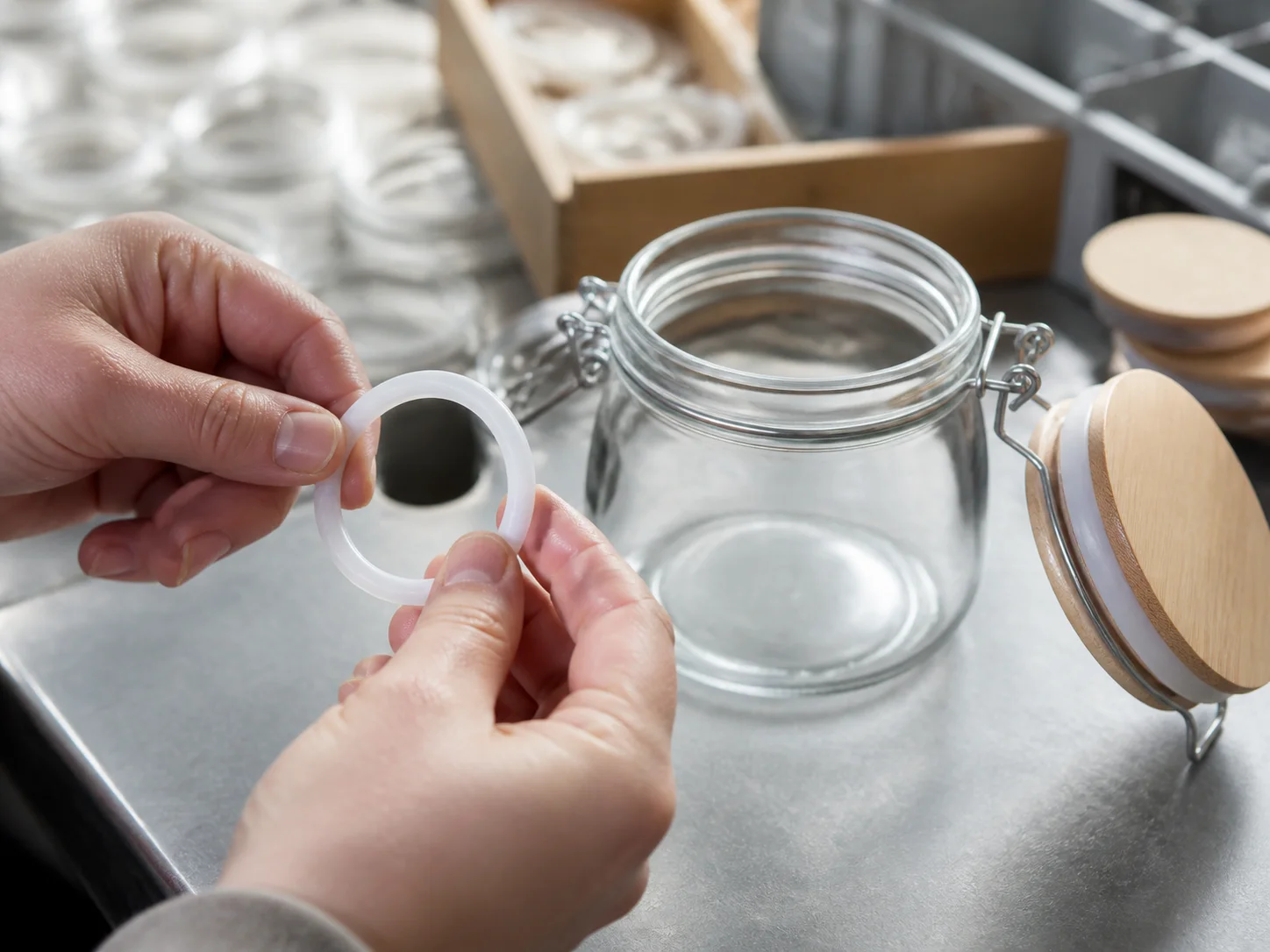
Round-section rings need a groove that holds them under partial compression; flat gaskets bear on a face and depend on the flatness of both parts. Dropping a round ring into a channel meant for a flat one leaves it rolling under the lid and sealing intermittently. Where a jar is being tooled, the groove and the ring belong on the same drawing rather than being sourced separately.
The rim is half the seal
A gasket can only bridge so much. A glass sealing surface carries mold seams, minor waviness and, on returnable jars, wear from handling, and the ring has to absorb all of it. That is why a gasket specification for a returnable pack is generally softer and thicker than one for a single-trip jar, and why a rim inspection standard usually arrives with the gasket.
Plan for replacement from the beginning
Any pack sold as reusable is a pack whose gasket will need changing, and the moment that becomes clear to a customer is the moment they discover no spares exist. Programs that stock rings from launch keep their jars in service; those that do not find their reusable packaging quietly becomes disposable in the customer's kitchen after a season.