Protocols, pass thresholds & usability
What the certificate actually says, and what it does not cover.
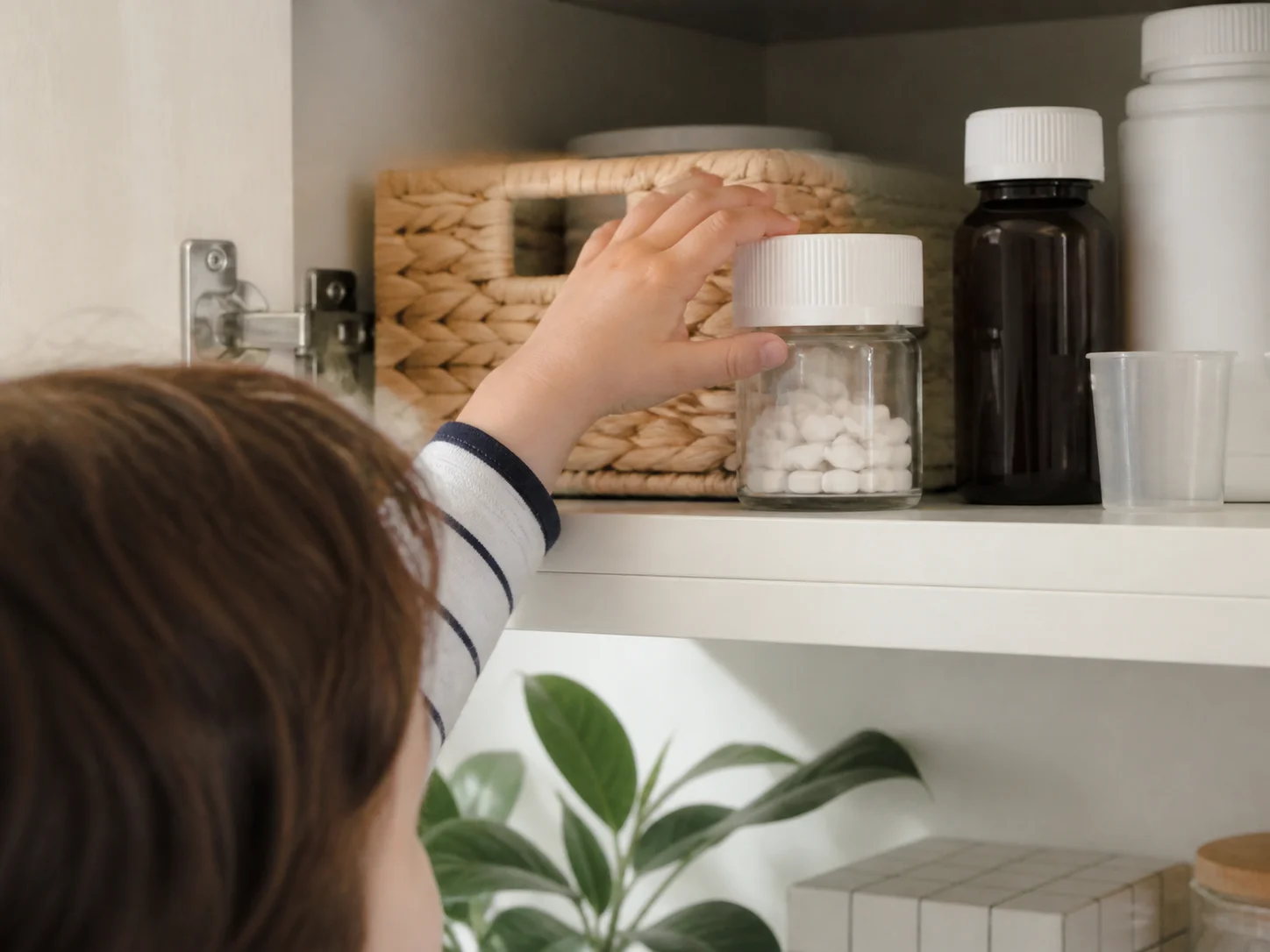
Child resistance is a tested property of a closure on a specific container, not a feature of the cap. Both ISO 8317 and US 16 CFR 1700.20 measure the same two things — that most young children cannot open it, and that most older adults can — but they use different panels, and a pass under one does not transfer to the other.
The US thresholds are numeric and strict
Under 16 CFR 1700.20 at least 85% of tested children must fail to open the pack in the first five minutes and at least 80% must still fail across the full ten. On the adult side, 90% must open it within five minutes and, where the pack is reclosable, resecure a second one within one minute. Those four numbers are the whole test.
Panel construction differs between protocols
The US protocol requires 50 children across five locations, ten per site, with a defined age spread: 30% at 42–44 months, 40% at 45–48 months and 30% at 49–51 months. ISO 8317 tests children in sequential groups of 30 across at least three sites, with no per-site or per-age subdivision, and it also requires a senior adult panel. That is why a European certificate does not satisfy a US filing.
Certification is container-specific
The test is run on the assembled pack. Change the bottle, the neck finish, the liner or the cap supplier and the certificate no longer describes what you are shipping. Buyers routinely discover this when a glass supplier is switched for cost and the CR file has to be redone.
Push-and-turn suits rigid containers
The user presses down to engage an inner shell with the outer, then rotates. It works well on glass and rigid plastic and gives a clear tactile confirmation. It also demands sustained downward force, which is exactly what an arthritic hand struggles with — the reason the senior panel exists.
Squeeze-and-turn shifts the effort sideways
Two opposed lugs are squeezed to disengage the ratchet while turning. It removes the axial load and suits users with weak wrists, but requires pinch strength and a hand large enough to span the cap. Neither mechanism is universally easier; they fail different people, which is why the choice belongs with the patient population.
Reclosable packs are tested twice
For a reclosable closure the adult panel must also resecure the pack correctly inside one minute. A cap that is easy to open but easy to leave incompletely closed can fail on that second measurement alone, and it is the most commonly overlooked half of the standard.