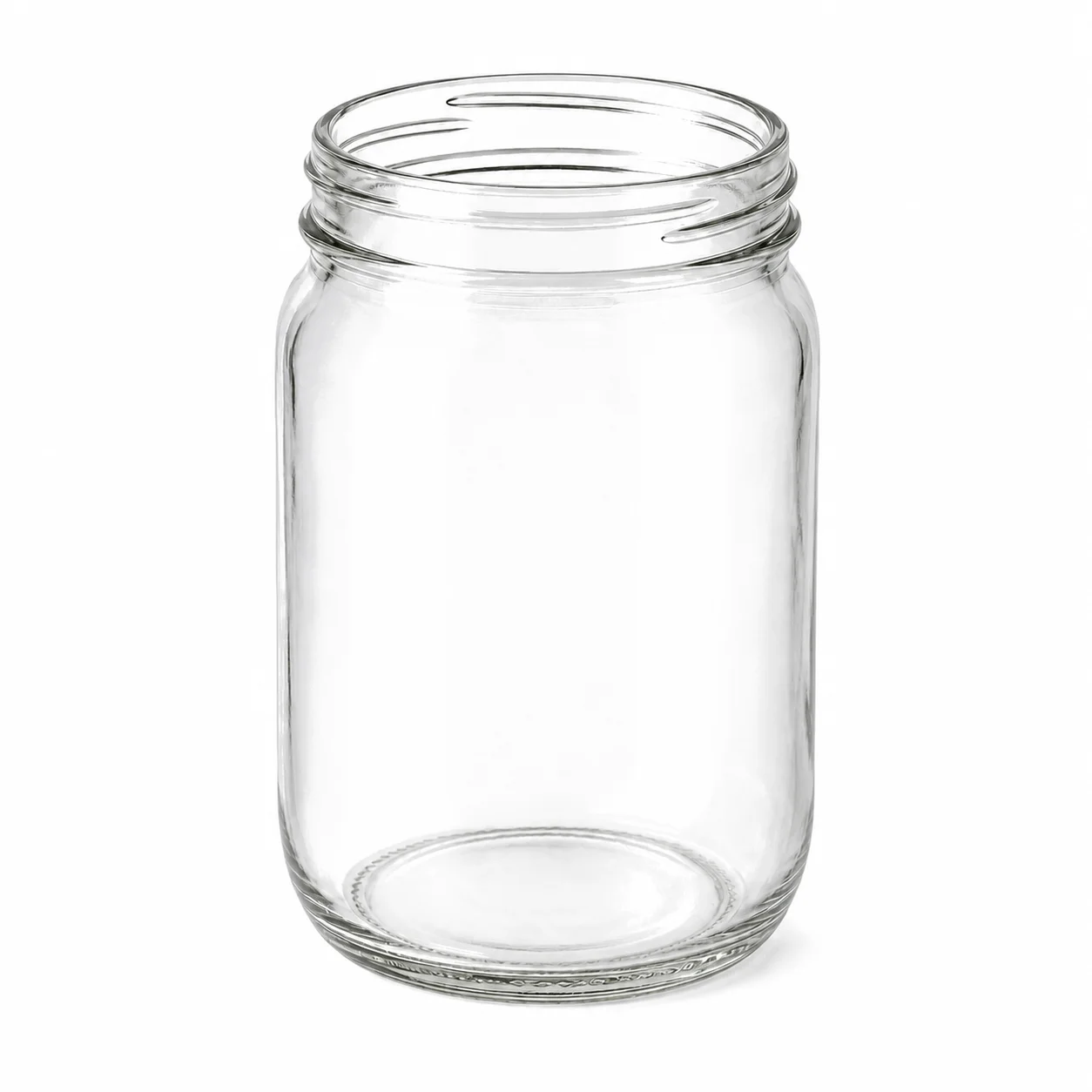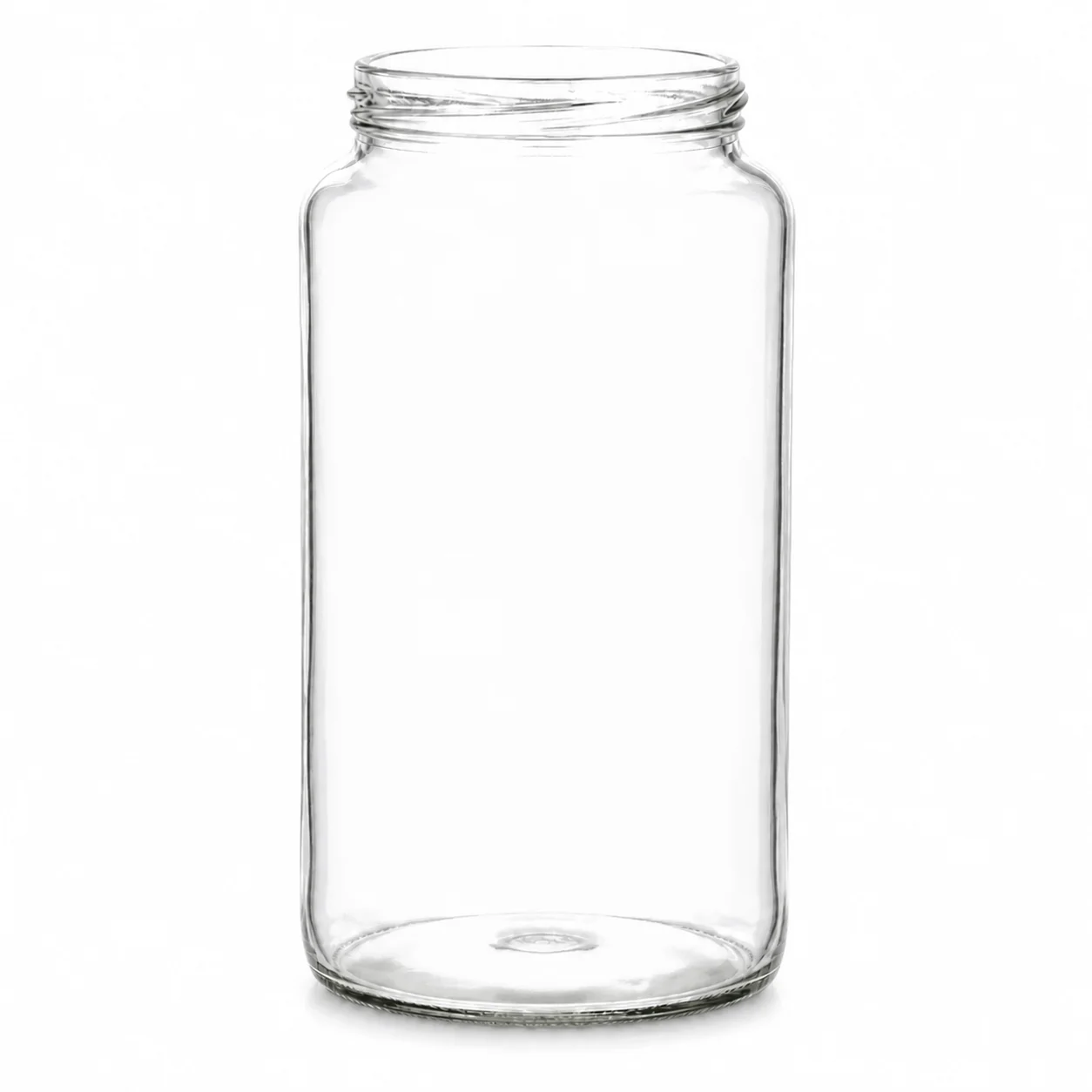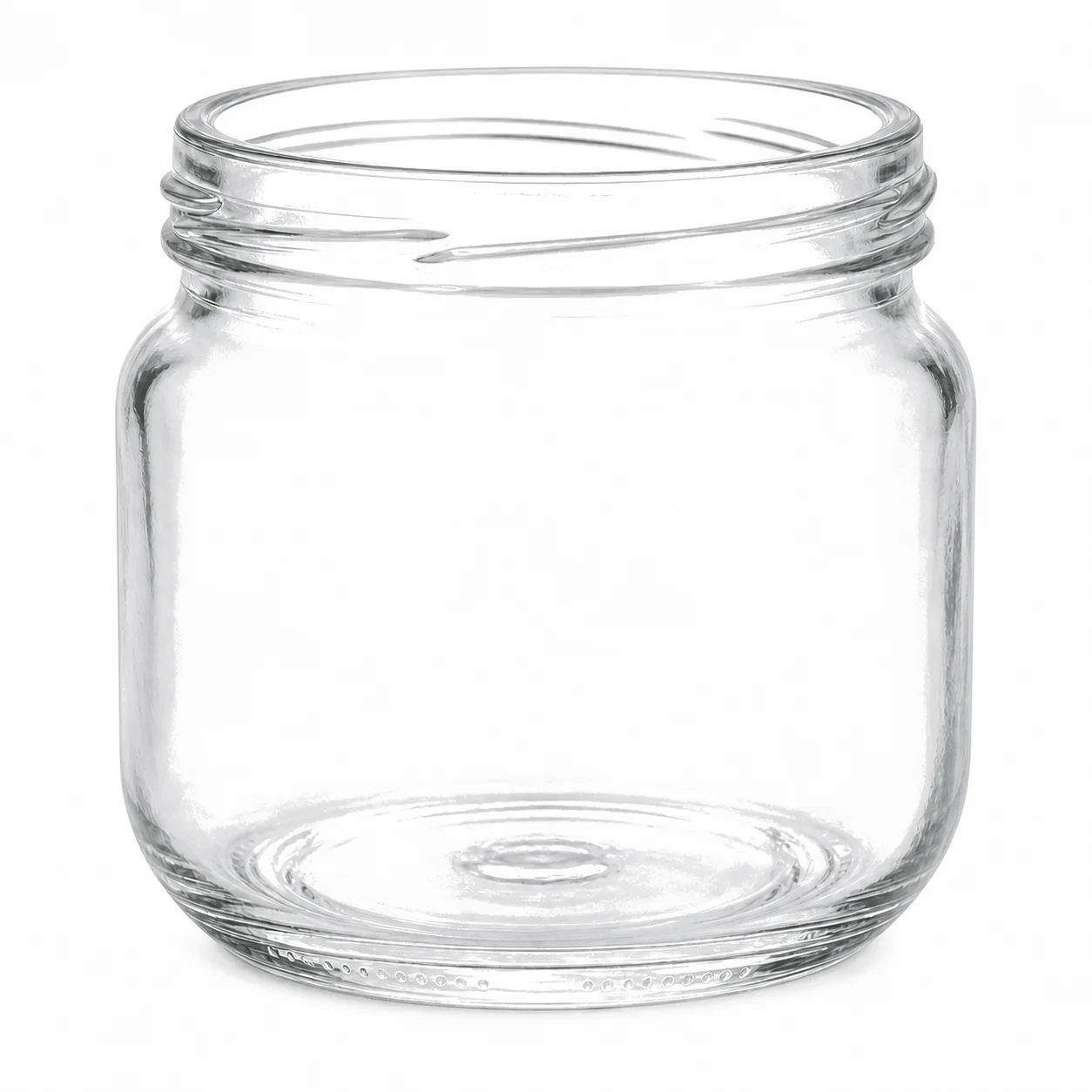
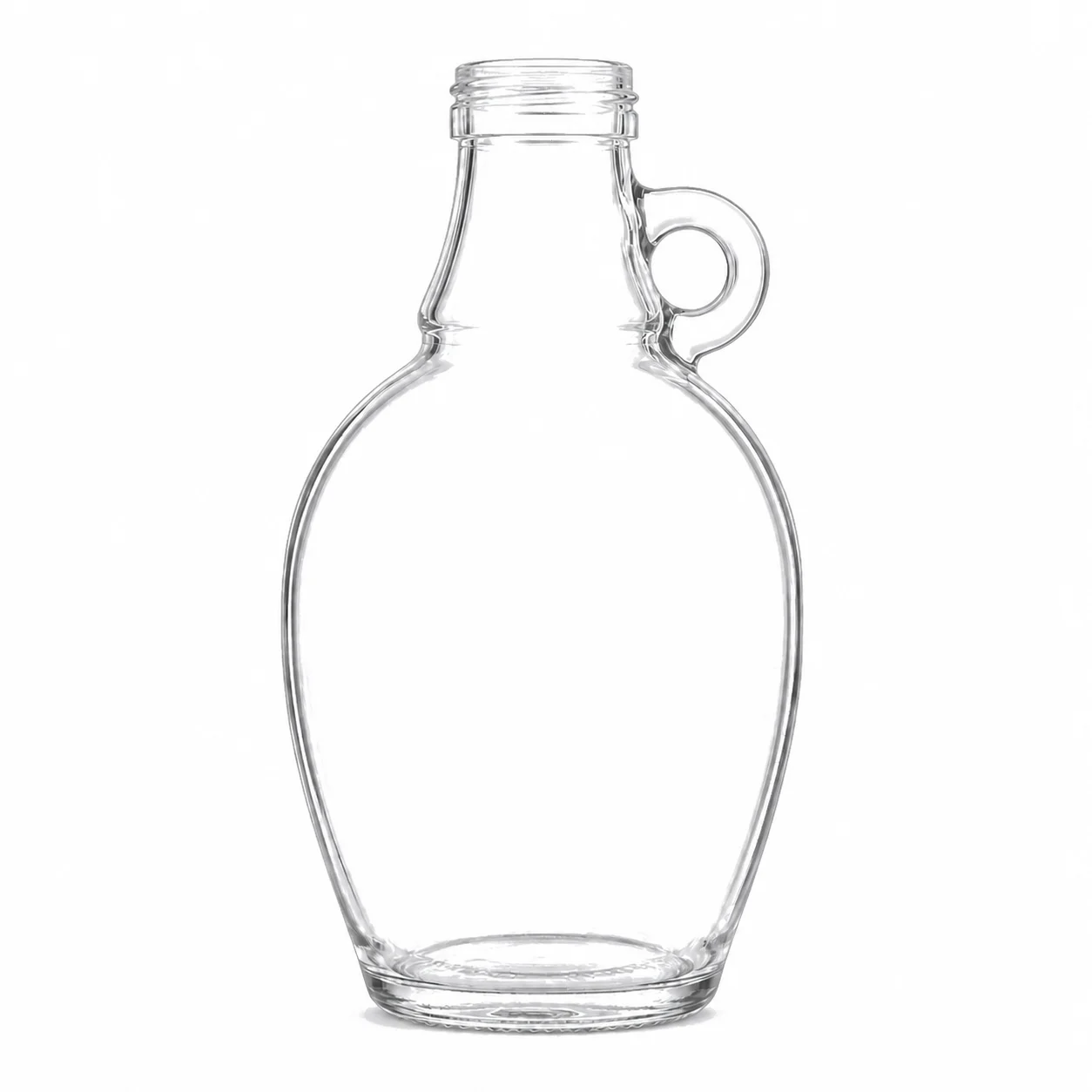
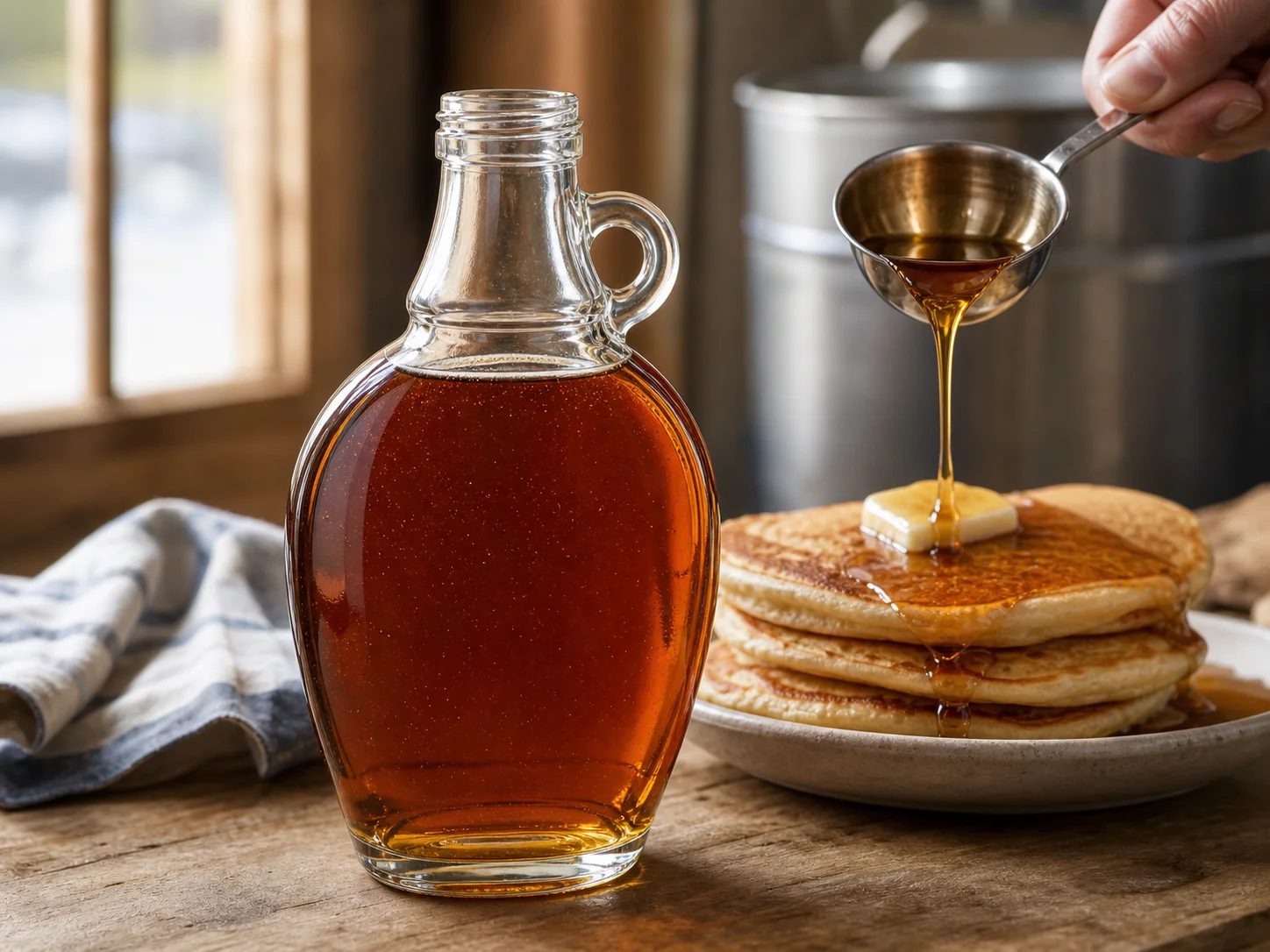
Clear 250 mL oval glass syrup bottle with loop handle and 28-400 threaded neck
Shown configuration · bare clear handled bottle / 28-400 closure not shown

Classic handled bottles for maple & table syrups

Syrup Bottle

A 250 mL clear oval glass bottle with a 265 mL overflow capacity, compact loop handle and 28-400 continuous-thread closure route for maple syrup, flavored syrup and pourable dessert sauces.

250 mL nominal fill28-400 CT finish245 g reference glass
Stock status
In stock
Lead time
2–3 weeks
FOB price / pc
$0.85 - $1.15
MOQ
10,000 pcs

Final availability, dimensions, materials, assembled components and commercial terms are confirmed against the selected drawing and approved sample.

Recognizable syrup silhouette

The oval body, long neck and loop detail signal a classic maple-syrup format

Front-and-back panels

The narrow depth creates two broad faces for branding and required information

Controlled closure route

A standard 28-400 finish supports a matched lined cap selected for the fill process

Syrup Bottle profile

A 250 mL handled bottle that turns syrup color, viscosity and the serving gesture into part of the pack.

Fill control, syrup flow & handled-bottle design

Six packaging details behind a small bottle that is opened, poured and reclosed repeatedly.

BGP-FS-9261 works to the 250 mL handled syrup envelope: 265 mL overflow, an oval 88 × 43 mm footprint and a 28 mm threaded finish. The loop at the shoulder is a visual and two-finger handling detail rather than a full jug grip, so dependable pouring comes from the syrup's rheology, the neck finish and the chosen closure together.

01

Two hundred and fifty milliliters does not set the declared grams

The nominal capacity is a volume target; maple, glucose, fruit and reduced-sugar syrups can have different densities. Set the declared net weight from the finished formula at its controlled fill condition, then establish the corresponding liquid height below the 265 mL brimful point. A weight that is correct on the scale can still look high or low if density and temperature are allowed to drift.

02

Temperature changes both flow and cutoff

Concentrated syrup becomes easier to pump and fill as temperature rises, then thickens as it cools. That shift affects nozzle pressure, trailing strings, the surface dome and residue at the neck. Line trials should bracket the real soluble-solids range and filling temperature so the cutoff remains clean without using heat as a substitute for a qualified process.

03

The oval footprint has a front, back and narrow edge

At roughly 88 mm long but only 43 mm deep, the bottle presents two broad label faces and compact shelf depth. The loop interrupts one shoulder edge, so artwork cannot be treated like a wrap label for a round bottle. Register front and back panels to the mold orientation and reserve the narrow edges for visual breathing room rather than critical copy.

04

The loop supports orientation more than full-hand grip

This small formed-glass loop is useful as a thumb or finger cue when tipping the bottle, but the main body still carries most of the filled load. Review the serving motion with wet hands and a reclosed, partially used pack. Secondary packaging also needs clearance around the projecting loop so adjacent bottles do not create point contact during transit.

05

A 28-400 cap closes the package; it does not meter the pour

The continuous-thread finish accepts a dimensionally matched 28-400 closure, commonly a lined plastic or metal cap. Stream width and the final drop are still governed by the syrup, bore and user angle unless a separate orifice reducer or dispensing fitment is engineered. If one is added, its retention, cleaning behavior and cap clearance become new control points.

06

Clear glass makes grade and residue visible

Maple grade, fruit color, suspended spice and crystallization are immediately legible through flint glass. That visibility is valuable only when the product standard is defined: a clean amber window can become a quality cue, while syrup on the shoulder or sugar crystals around the finish read as line defects. Set appearance limits after the filled bottle has cooled and equilibrated.
Application guide

Match the handled bottle to syrup viscosity, visual grade and serving frequency.

The same 250 mL glass can present several pourable sweeteners, but soluble solids, acidity, inclusions and service temperature change how each one fills, pours and leaves the neck.

Syrup Bottle used for grade-led retail & producer bottling in a pure maple syrup setting

Pure maple syrup

Grade-led retail & producer bottling

For amber maple syrups whose natural color becomes the principal visual asset. The narrow front-to-back depth keeps a 250 mL pack compact while the broad faces carry origin, grade and harvest information. Establish fill temperature and headspace from the producer's actual process, then inspect the neck after cooling for sugar residue or crystallization.

  • Set the fill from actual syrup density
  • Preserve a clear grade-viewing window
  • Inspect finish cleanliness after cooling
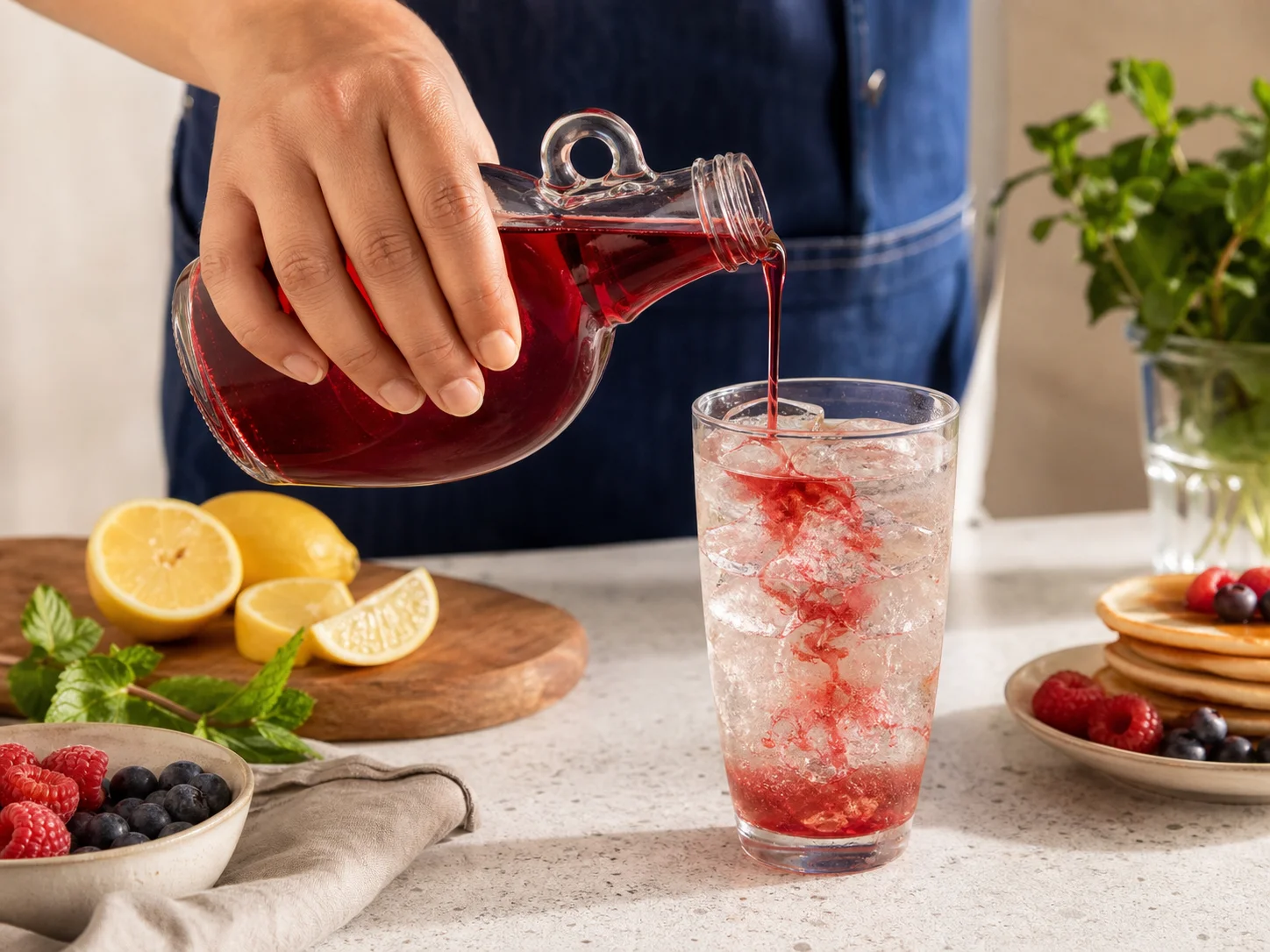
Syrup Bottle used for cocktail, soda & breakfast ranges in a fruit & flavored syrup setting

Fruit & flavored syrup

Cocktail, soda & breakfast ranges

For fruit, spice or botanical syrups differentiated by color and recipe. Acidity, pulp and suspended inclusions change liner exposure and can make a small neck harder to fill cleanly. Use a front-and-back label system that keeps the flavor code obvious while leaving the loop edge and the visible fill line unobstructed.

  • Declare maximum pulp or particle size
  • Match liner to acid and flavor oils
  • Register labels to the oval faces
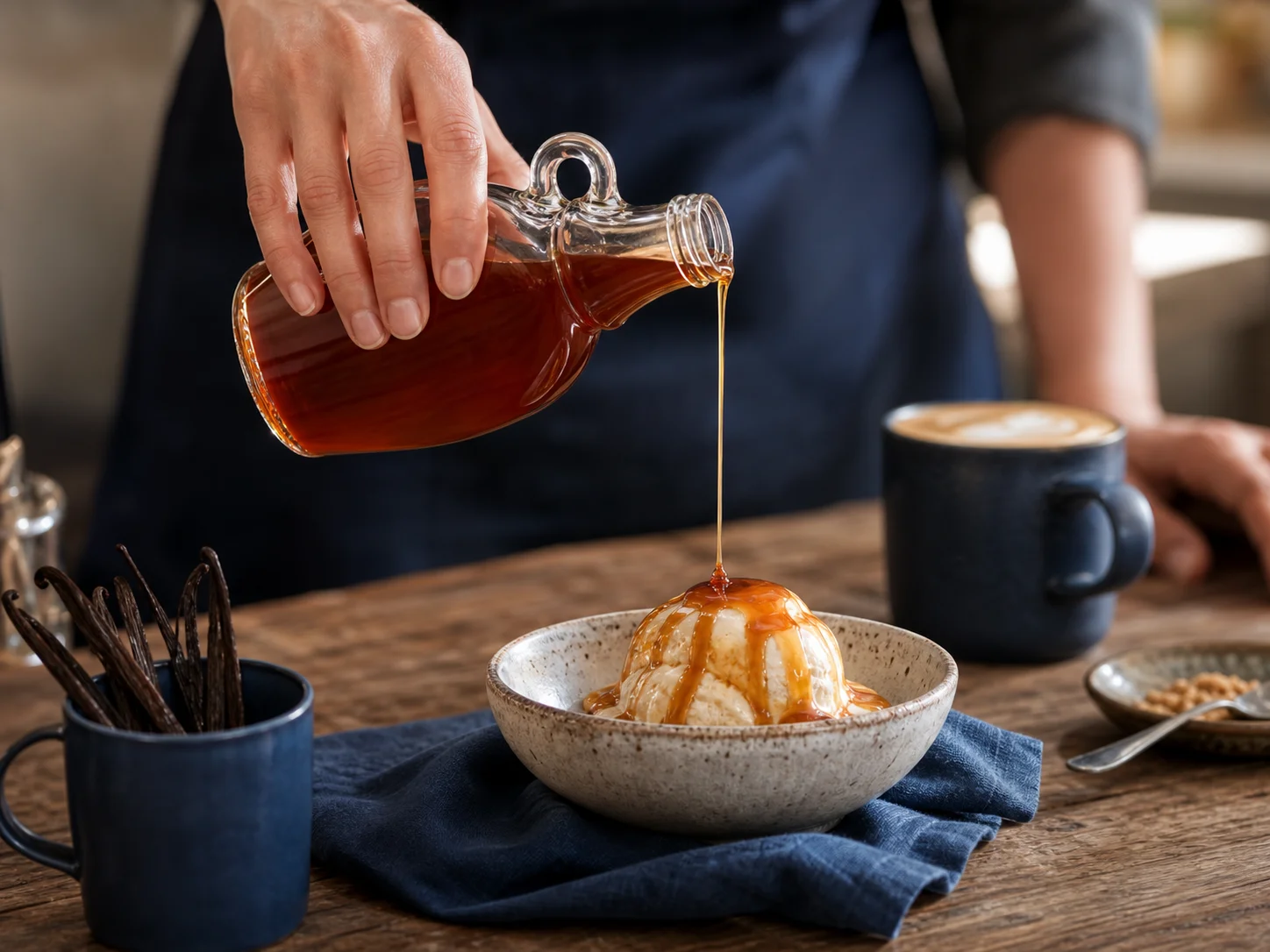
Syrup Bottle used for caramel, vanilla & concentrated sweeteners in a dessert & coffee syrup setting

Dessert & coffee syrup

Caramel, vanilla & concentrated sweeteners

For higher-solids products served in smaller pours over desserts or into beverages. These formulas may thicken sharply at room temperature and leave a longer trailing filament than maple syrup. Map the pour at expected service temperatures and consider a qualified reducer only when the intended dose and cleaning routine justify the added component.

  • Test warm and cool viscosity limits
  • Measure stringing and final-drop behavior
  • Validate any dispensing fitment separately

For hot-filled or shelf-stable syrup, define the thermal process, target vacuum, liner compound and cooling profile with the actual formulation; the 28-400 finish alone does not determine those settings.

Syrup Bottle FAQ

Technical questions about the 250 mL handled syrup format.

Answers covering the published reference, capacity, 28-400 finish, loop handle, label panel and syrup pouring behavior.

Is 250 mL the bottle's brimful capacity?

No. It is the nominal marketed capacity. The reference brimful volume is 265 mL, leaving 15 mL between nominal volume and the rim. The production fill height and declared weight still need to reflect syrup density, fill temperature and process headspace.

Can any 28 mm cap be used on this bottle?

No. Diameter alone is incomplete; the cap must match the 28-400 continuous-thread finish and the selected liner must suit the formula and process. A 28 mm cap made for a PCO beverage finish or another thread profile is not automatically interchangeable.

Is the small loop intended as a full handle?

It is better treated as an orientation and finger-support feature. The bottle body carries most of the filled weight, and the loop should not be used as the only lifting point until the exact production sample and intended handling have been assessed.

How does temperature change the filling?

It moves both flow and cutoff. Concentrated syrup pumps and fills more easily as it warms, then thickens as it cools, which shifts nozzle pressure, trailing strings and what lands on the sealing surface. Treat filling temperature as part of the closure brief rather than as a line adjustment.

Next step

Send us the Syrup Bottle brief.

Tell us the product, fill volume, closure preference and destination market. We will come back with the matching drawings, available configurations and a sample plan before anything is quoted.

  • 01Send the briefProduct, volume, closure and market
  • 02Get the optionsMatching drawings and configurations
  • 03Approve the sampleConfirm the pack before production