Relief engineering, sauce flow & graphic hierarchy
Six decisions specific to the embossed 12 oz bottle.
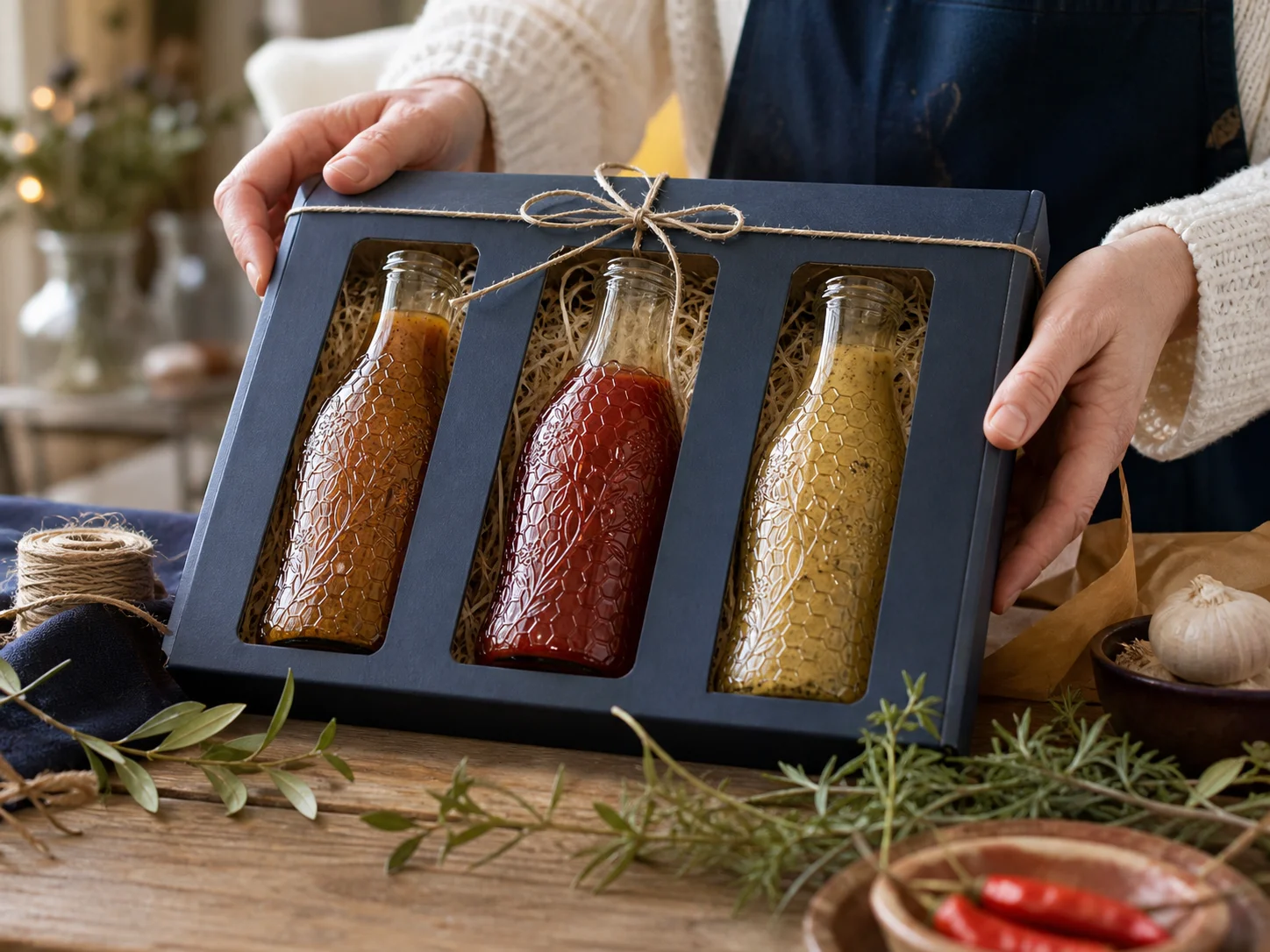
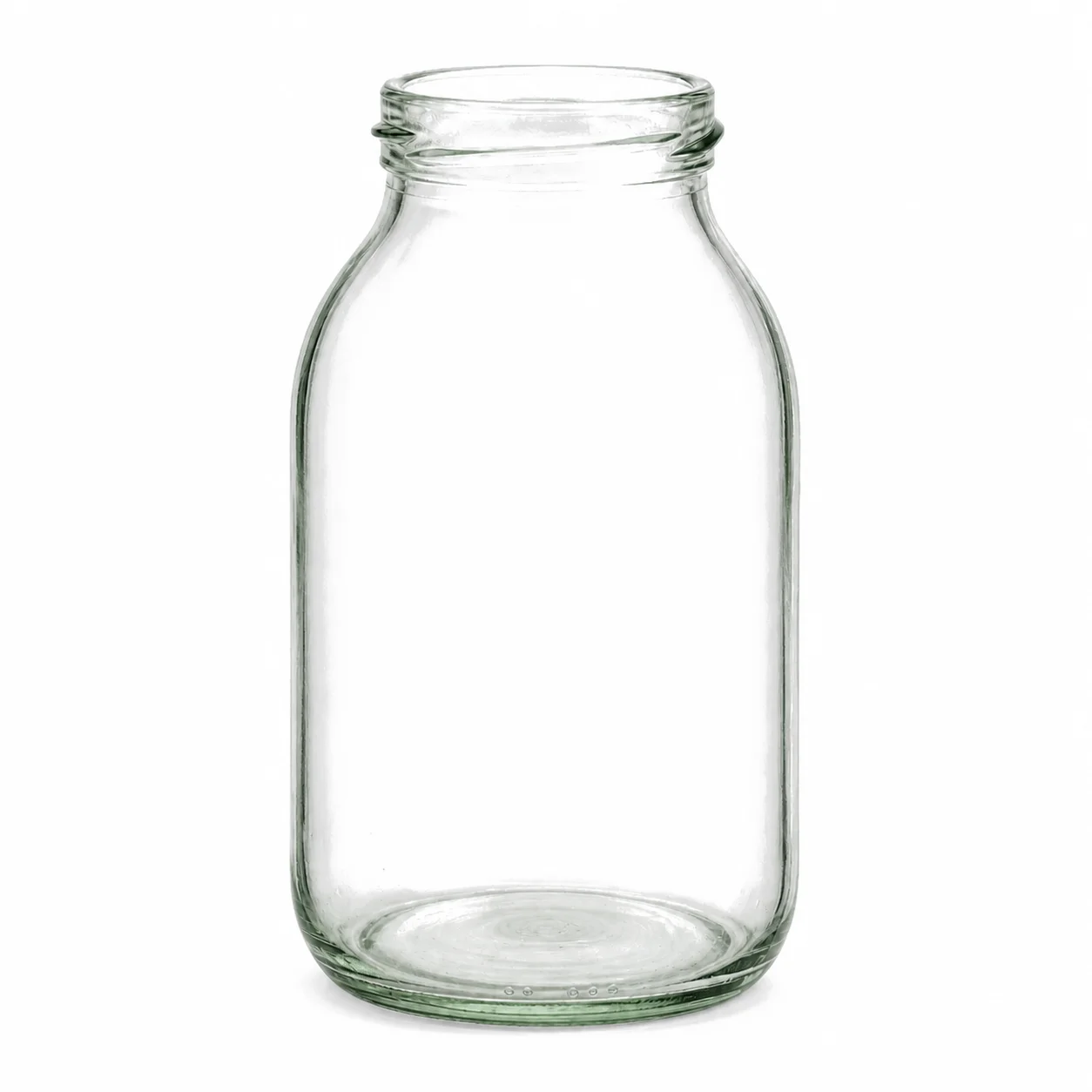
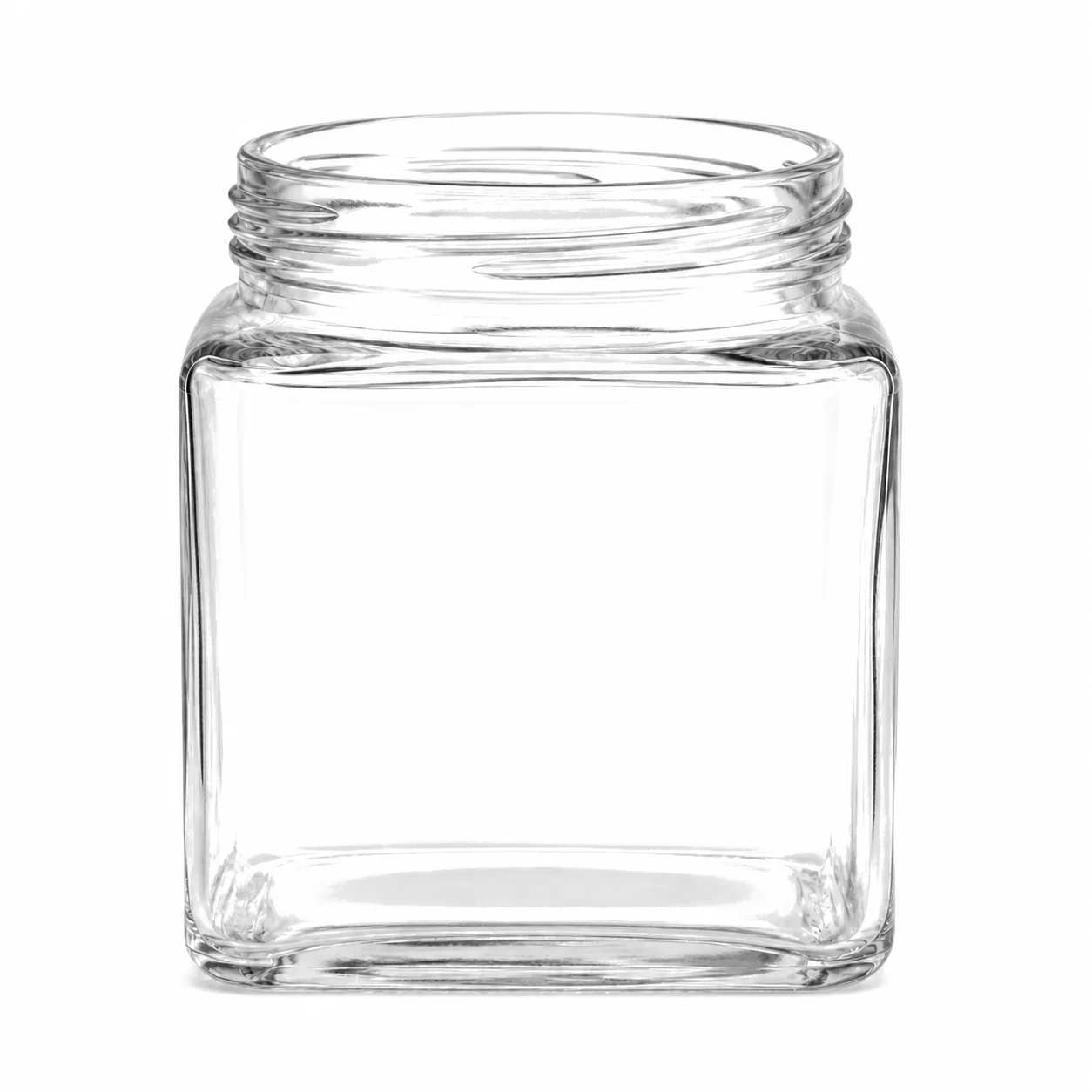
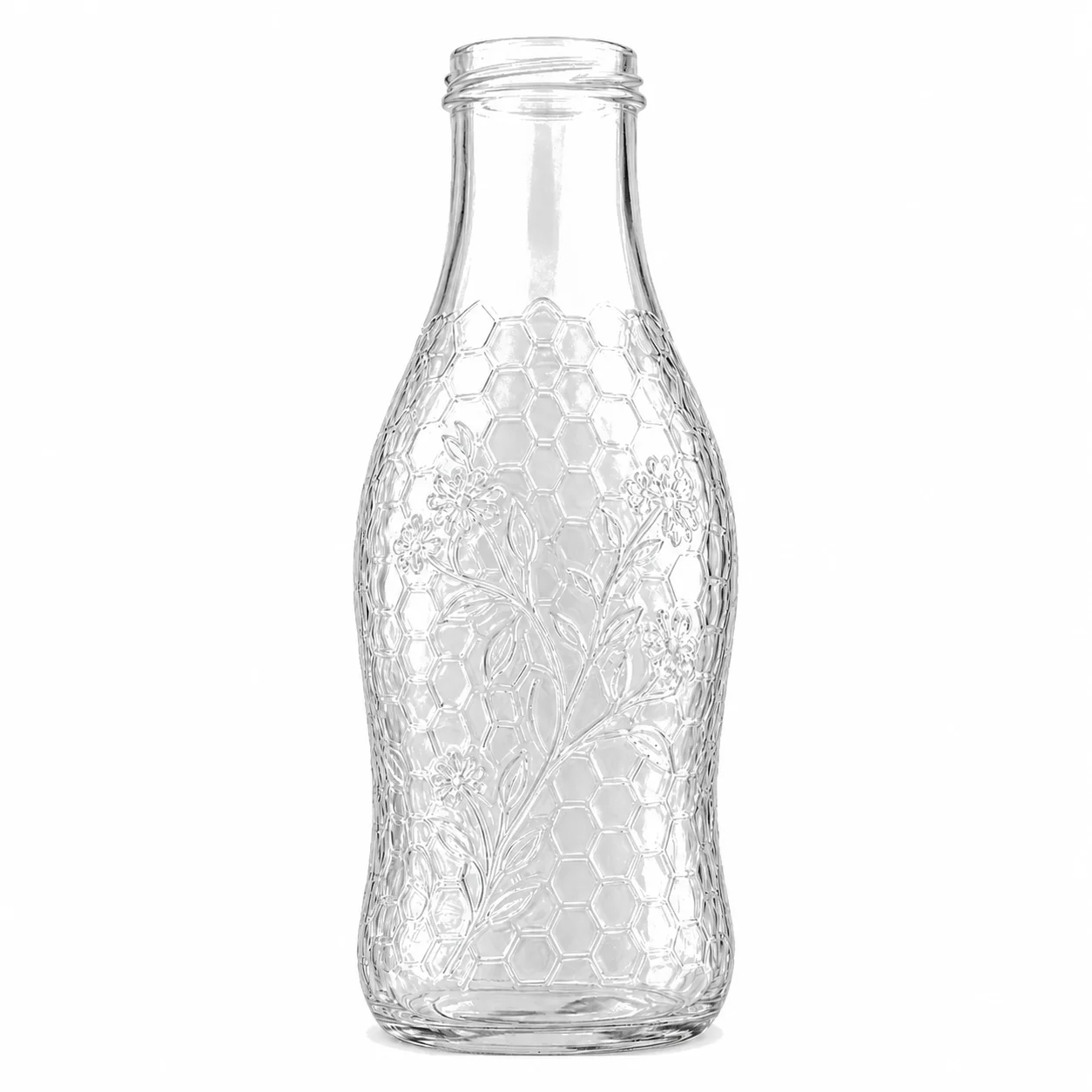
BGP-FS-8041 uses the commercial 12 oz ring-neck family as its engineering envelope: approximately 195.8 mm high, 62.2 mm in diameter, 354 mL nominal and 381.9 mL overflow, with a 38 mm food finish. Honeycomb cells and flowering stems are then integrated into the production mold instead of added as surface print. The result keeps established filler and case dimensions while requiring dedicated artwork clear zones, glass inspection and relief-protection rules.
Treat the relief as mold geometry
The honeycomb and botanical work changes local wall distribution, cooling and visual inspection; it is not simply decoration laid over a standard bottle. Freeze cell depth, flower detail, draft angles and glass-clearance zones through pilot mold samples, then review definition at the shoulder and heel where glass distribution is hardest to hold.
Keep a functional grip band
Relief can improve tactile control, but sharp high points become uncomfortable on a bottle squeezed during capping or table service. Use rounded relief edges and retain a smooth neck/upper-body band for guides and manual handling. Trial wet bottles as well as dry ones because oil and dressing residue changes the perceived grip.
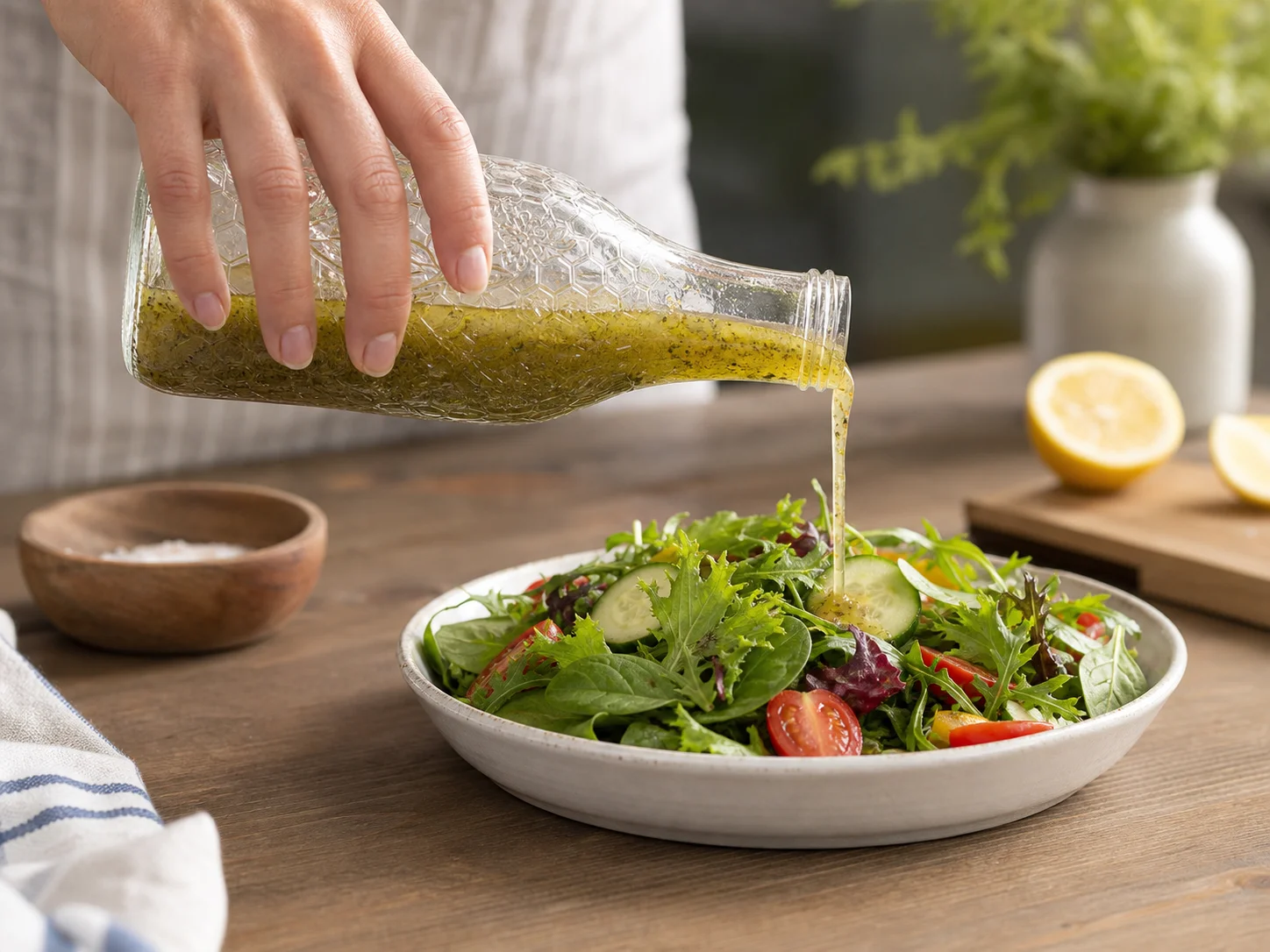
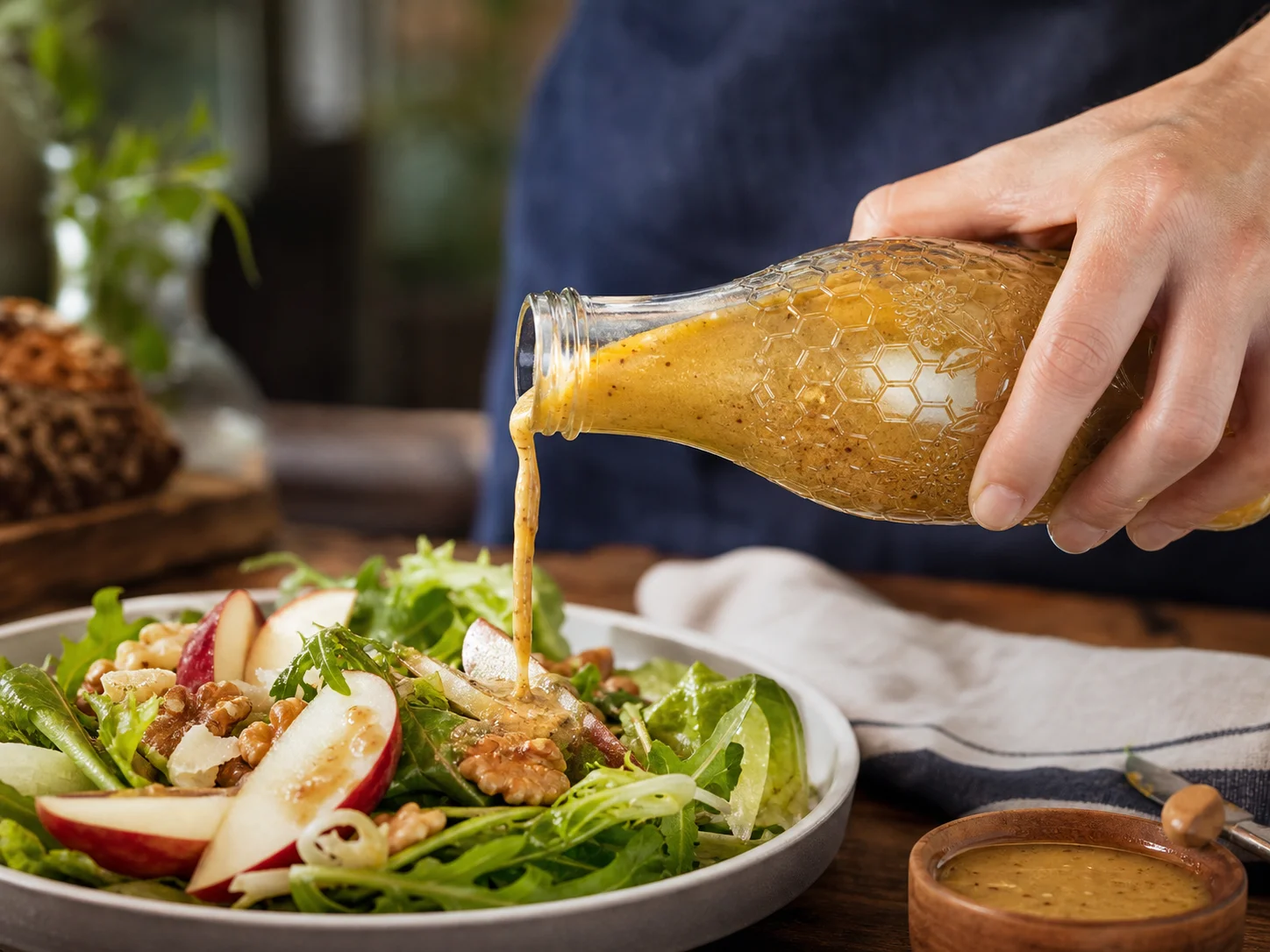
Match flow to the 38 mm opening
A 38 mm finish accommodates fluid sauces, dressings and syrups as well as closures with orifice reducers. Product viscosity, particle size and serving rate determine whether an open-mouth pour, controlled insert or dispensing cap is appropriate. Test at expected storage temperatures, since honey-led recipes and emulsions can slow dramatically when cold.
Choose CT or lug before cutting steel
Commercial ring-neck bottles exist in 38-400 continuous-thread and 38-2000 lug versions. The finish cannot remain an artwork-stage choice: it affects neck molds, cap equipment, liner options and process control. Select CT for resealable screw-cap programs or the validated lug route for applicable hot-fill/vacuum systems, then release one drawing.
Build graphics into relief-free islands
A pressure-sensitive label bridging raised honeycomb will trap air and lift at cell edges. Reserve a measured smooth cartouche for brand and statutory copy, or use a neck tag and outer carton while leaving the relief exposed. Date and lot codes need a separate flat, optically quiet zone that remains readable over amber, red and opaque sauces.
Protect texture through distribution
The smooth 12 oz reference family packs 12 bottles and approximately 2,640 units per pallet. Custom relief reduces the safe contact area between neighboring bottles, so use partitions that engage smooth shoulder or heel zones rather than flowers. Check abrasion, label snagging and glass-to-glass impact after vibration before finalizing case count.