Fill access, square geometry & information design
Six ways the wide square format changes filling, serving and presentation.
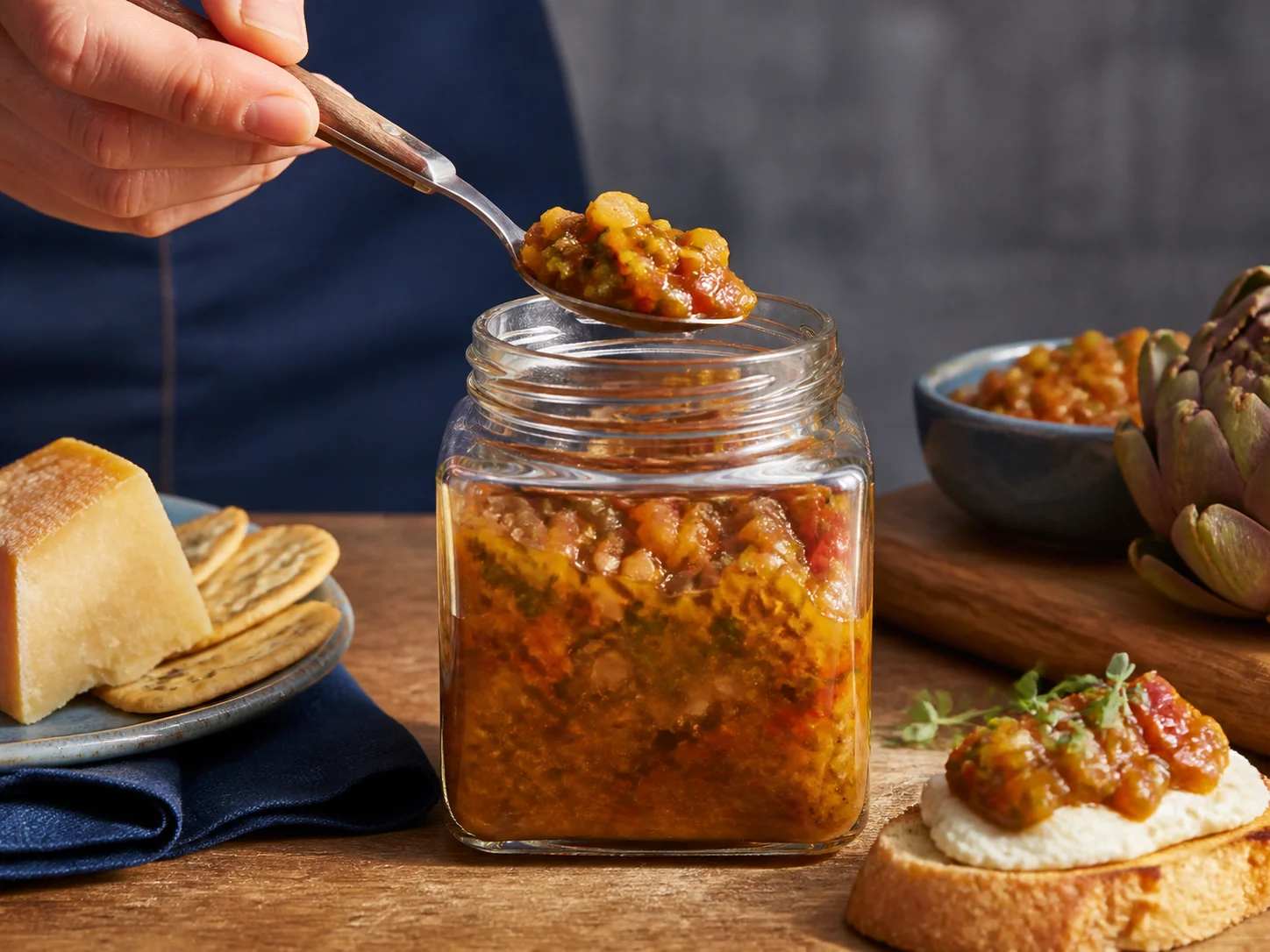
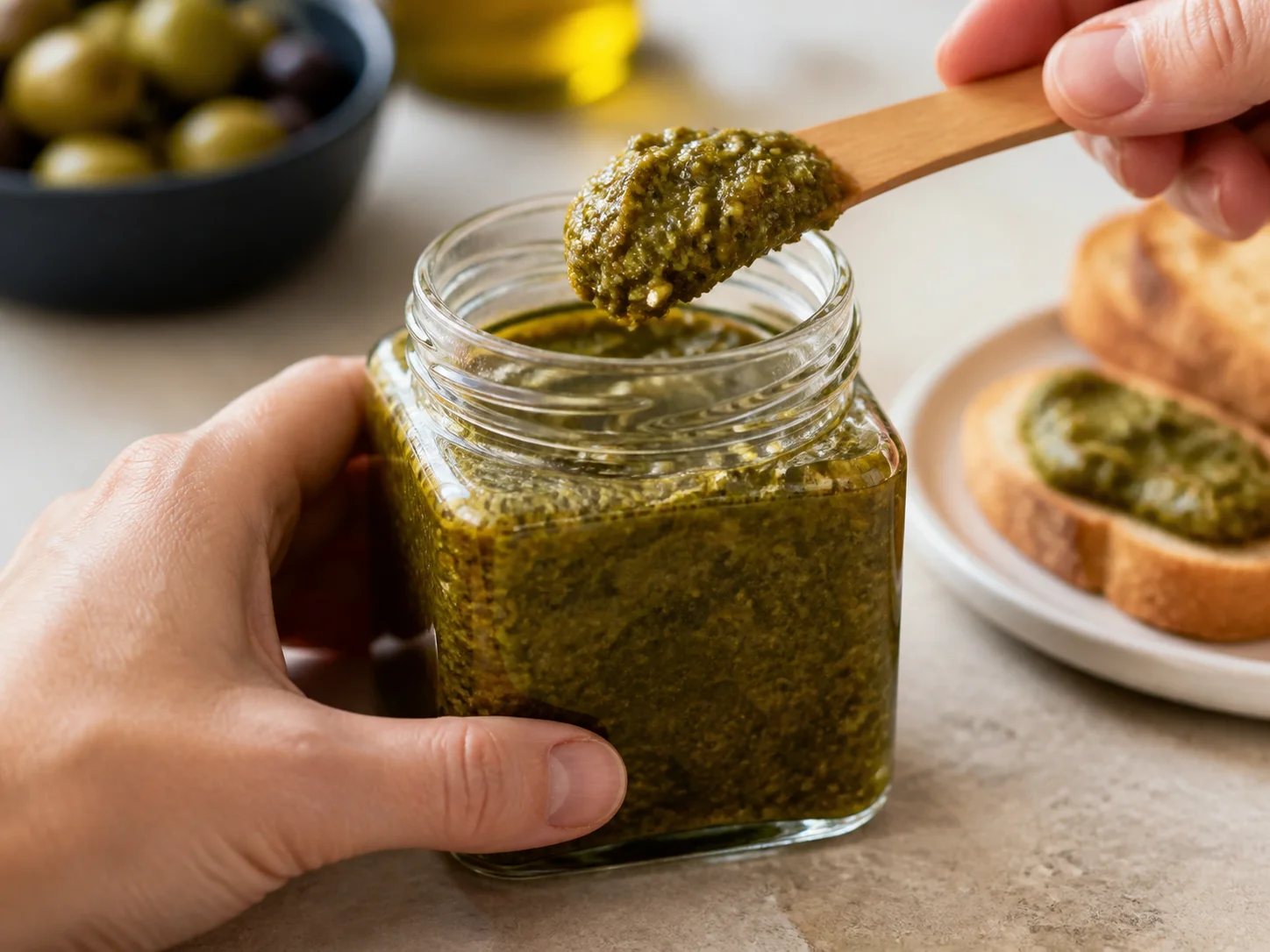
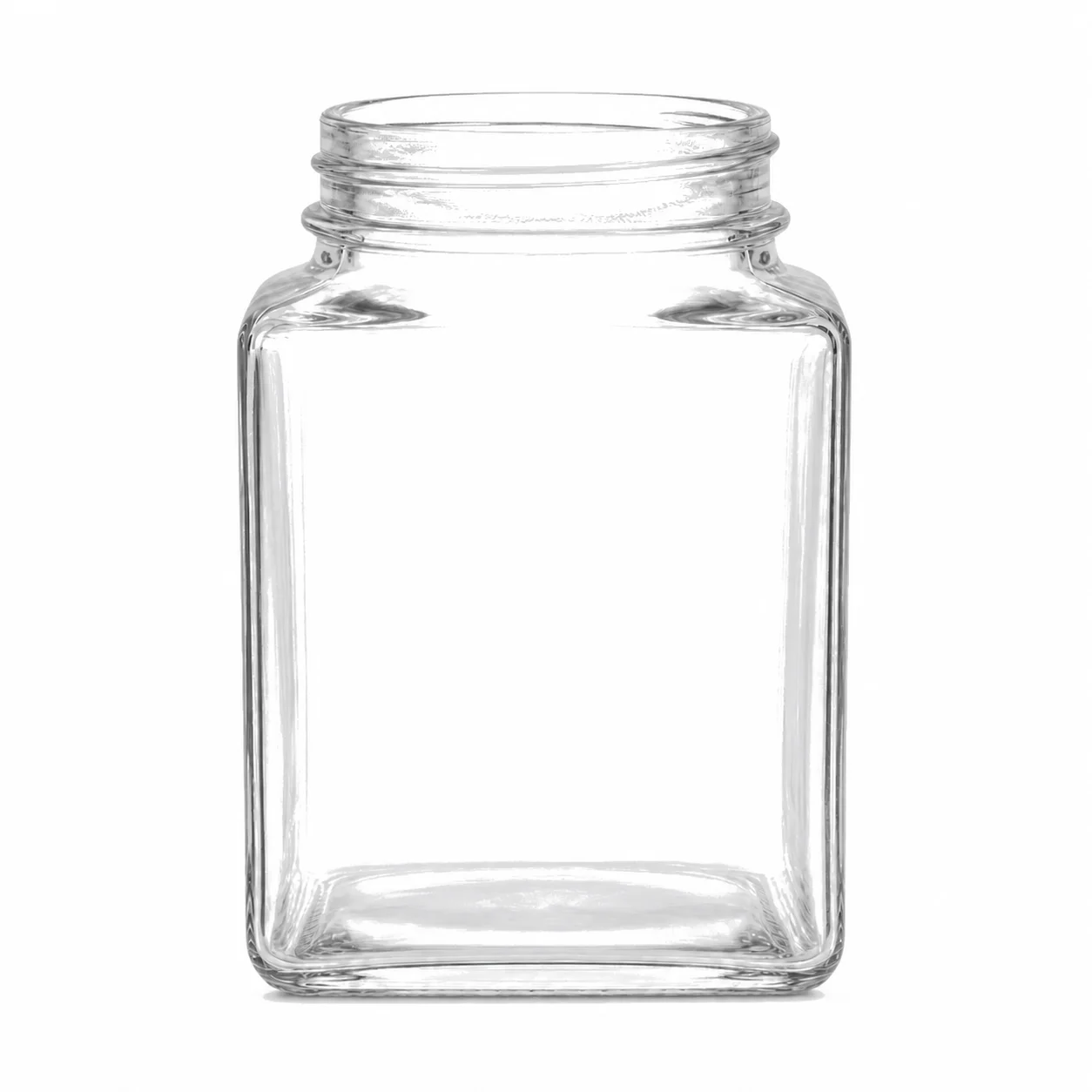
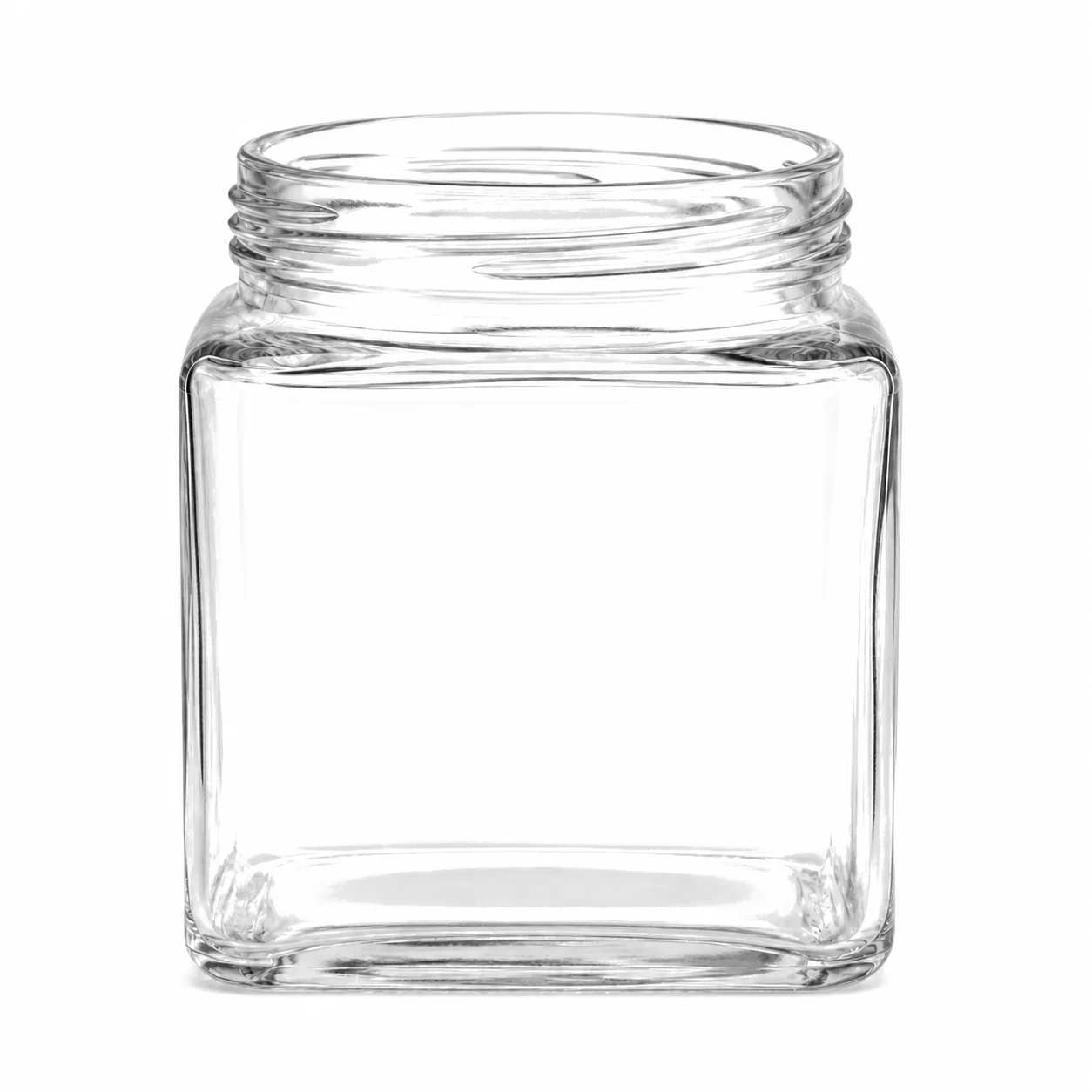
BGP-FS-7896 uses a 70 × 70 mm rounded-square footprint and a broad threaded mouth to place the product close to the opening. The 300 mL reference size is compact enough for premium condiments while its four faces divide brand identity, flavor information, ingredients and serving guidance into a deliberate pack architecture.
The 300 mL size leaves a measured reserve
The comparable jar holds 343.3 mL when filled to the brim, 43.3 mL above its 300 mL nominal size. That difference creates room for a practical fill level, but the correct headspace still depends on product displacement, closure underside and the filling process rather than on brimful capacity alone.
A broad mouth shortens the path into the jar
Compared with a bottle neck, the opening gives filling nozzles, spoons and visible food pieces a more direct route to the body. The largest fruit, vegetable or nut inclusion—not the average particle—sets the useful clearance, and the rim must remain clean enough for the chosen closure to seat consistently.
Square corners change how contents settle
The four internal corner zones can hold pieces or viscous product that would move differently along a round wall. Filled samples should be inspected after settling to confirm the intended product view, fill-line consistency and whether a consumer utensil can recover product near the base corners.
Four faces create an information hierarchy
One face can carry the brand and flavor, the opposite face can hold mandatory copy, and the side panels can support ingredients, provenance or serving ideas. This is more controlled than forcing every message onto one wrap label, provided artwork stays inside the approved flat-panel boundaries.
Rounded shoulders limit the upper label edge
Although the body reads as square, its corners and shoulder transitions are curved. A pressure-sensitive label placed too high can bridge away from the glass, while a full wrap can lift where it crosses the radii. Applied-label trials should determine panel width, edge clearance and barcode position.
Square packing needs corner protection
The 70 mm footprint can create a dense, aligned retail block, but glass corners concentrate contact if jars touch directly. Partitions, case count and pallet orientation should keep decorated faces from scuffing and prevent impacts from transferring through one corner into the next jar.