Pinch access, crystal behavior & service routine
Six details that make an open salt cellar practical rather than decorative.
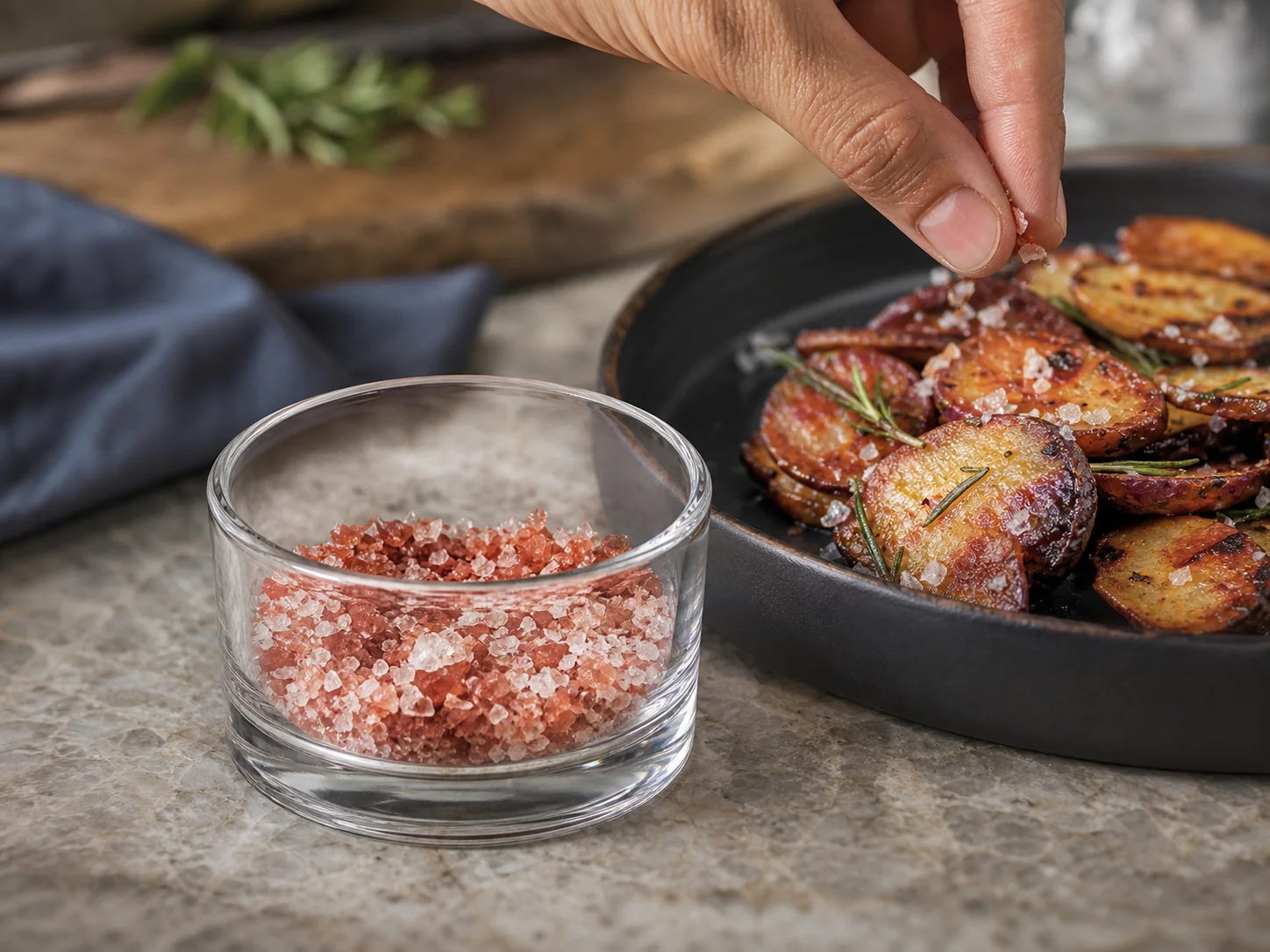
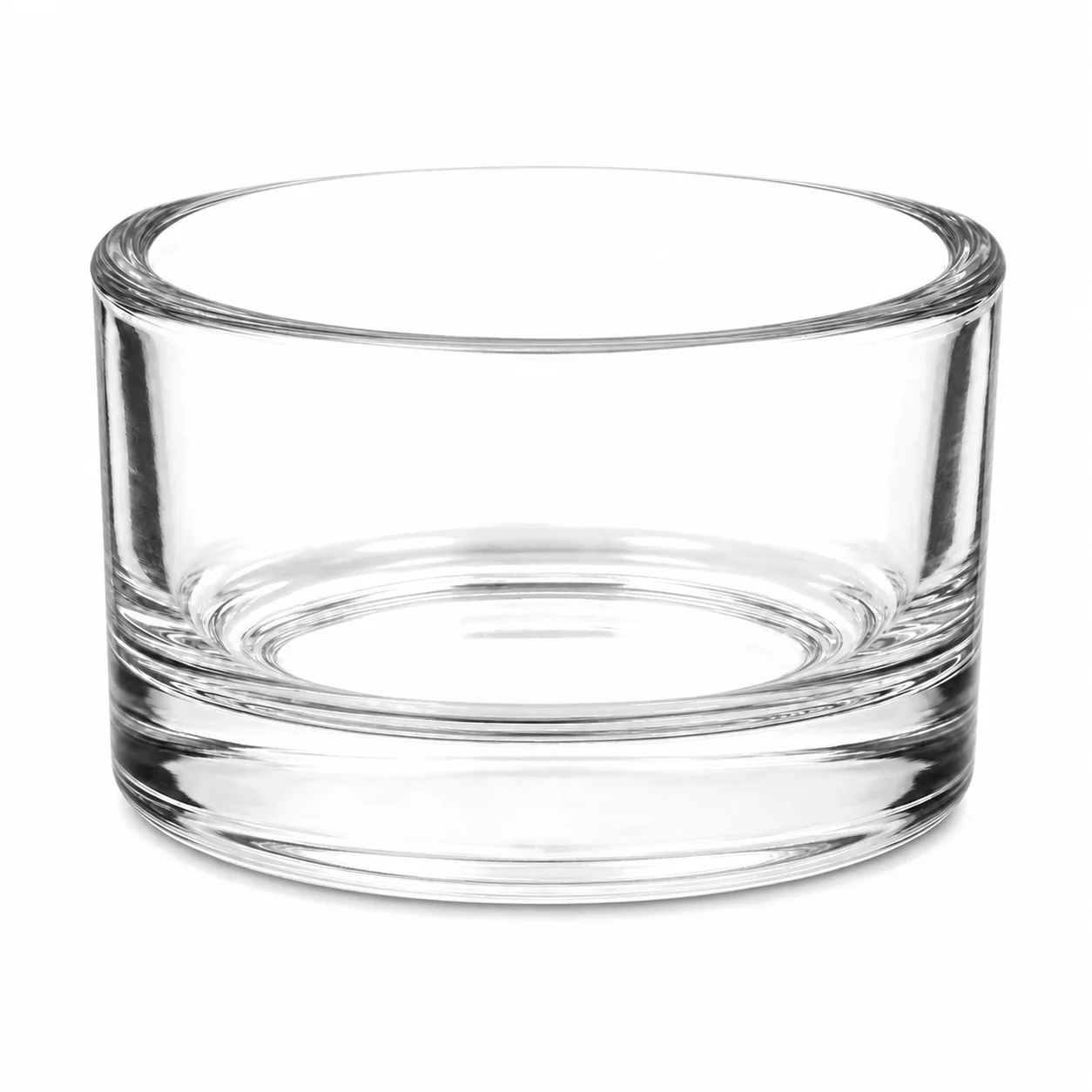
BGP-FS-2670 is a low, smooth-sided salt cellar for salt used repeatedly during cooking or at the table. The 3 oz format places a 57.2 mm opening directly above the contents, eliminating shaker holes and grinder parts so the user can judge and take the amount by pinch or spoon.
Three ounces describes volume, not grams of salt
The reference vessel holds 3 US fluid ounces, approximately 88.7 mL. Fine table salt, coarse kosher crystals and delicate flakes pack at different bulk densities, so refill mass and servings per fill should be measured with the selected salt instead of derived from the vessel volume.
The opening is sized for a deliberate pinch
A 57.2 mm reference opening gives two fingers direct access while keeping the cellar compact. Rim thickness and internal diameter still affect comfort, especially for users taking repeated pinches during service, so the approved sample should be assessed with the intended hand action and fill level.
A spoon changes the working radius
A small salt spoon can separate product access from hand contact and make table portions more consistent. Its bowl must pass comfortably through the opening, and its handle needs somewhere clean to rest without levering the cellar over or becoming buried in the salt.
The base stabilizes an otherwise light fill
Salt occupies only the upper cavity, while the thick glass foot keeps mass low in the vessel. This improves the tactile sense of stability during pinching, but table trials should still include side contact, spoon retrieval and placement on the intended tray or preparation surface.
Open salt responds to the room
Salt crystals can take up moisture from humid air, while steam and wet utensils introduce water directly. A cellar beside a cooking pot therefore sees different conditions from one used for short dining service; working quantity, refill frequency and any between-use cover should reflect that environment.
Serviceware needs a defined reset routine
In restaurant use, the operational question is not only how the cellar looks when full but who empties, washes, dries, refills and identifies it between services. A completely dry vessel prevents residual wash water from contacting the next salt charge, and a repeatable fill level keeps tables consistent.