Paste behavior, aroma & closure design
Six product realities that shape a seafood-paste package.
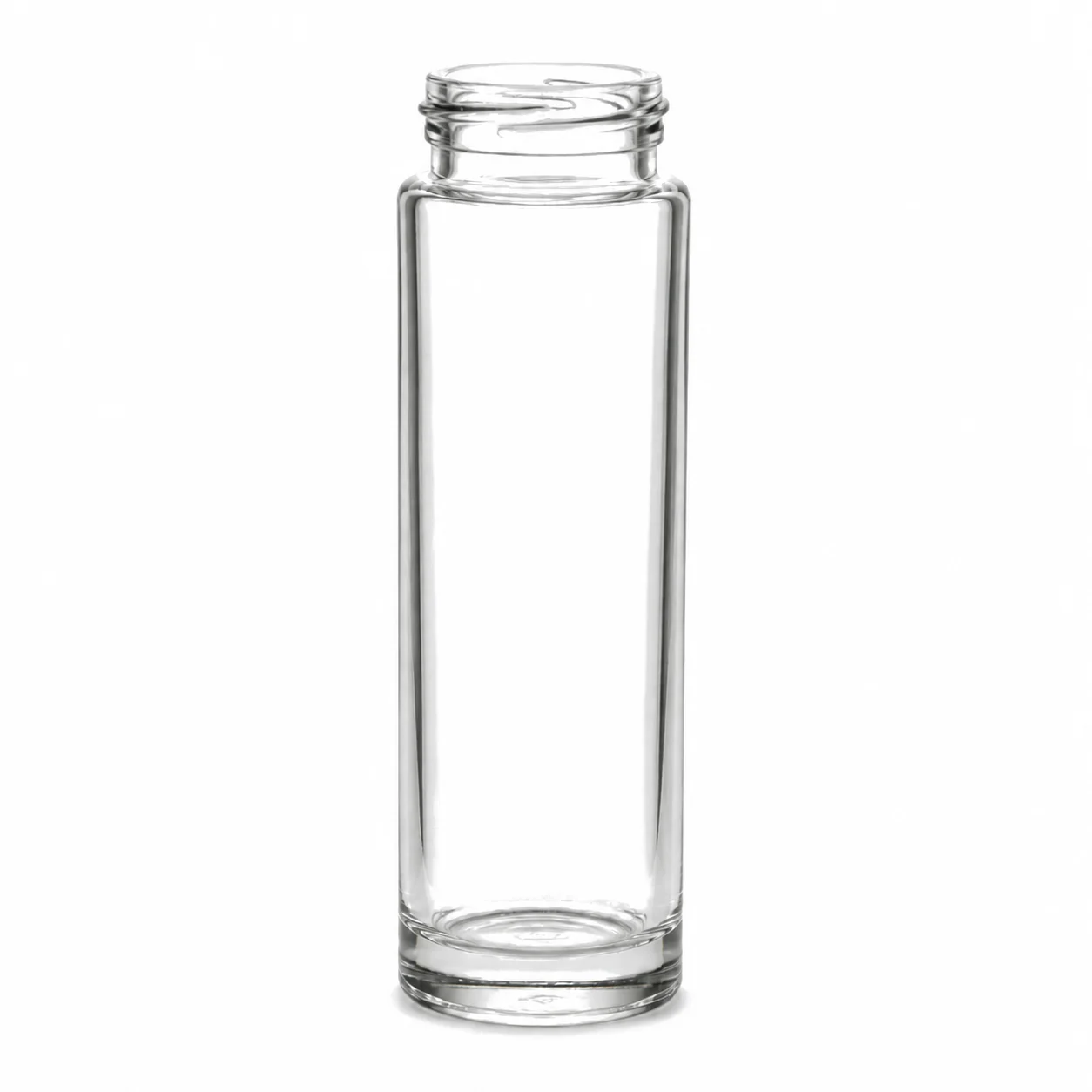
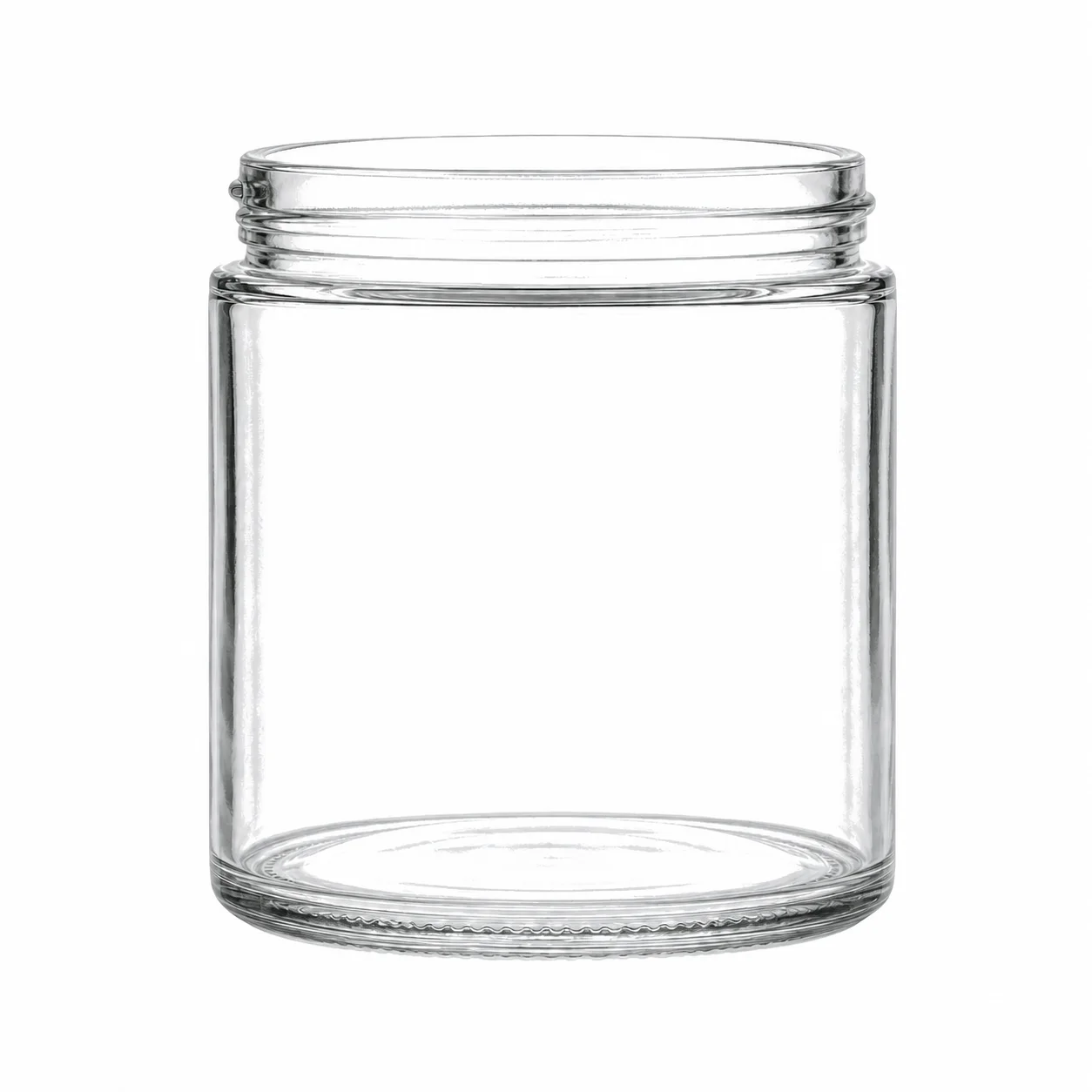
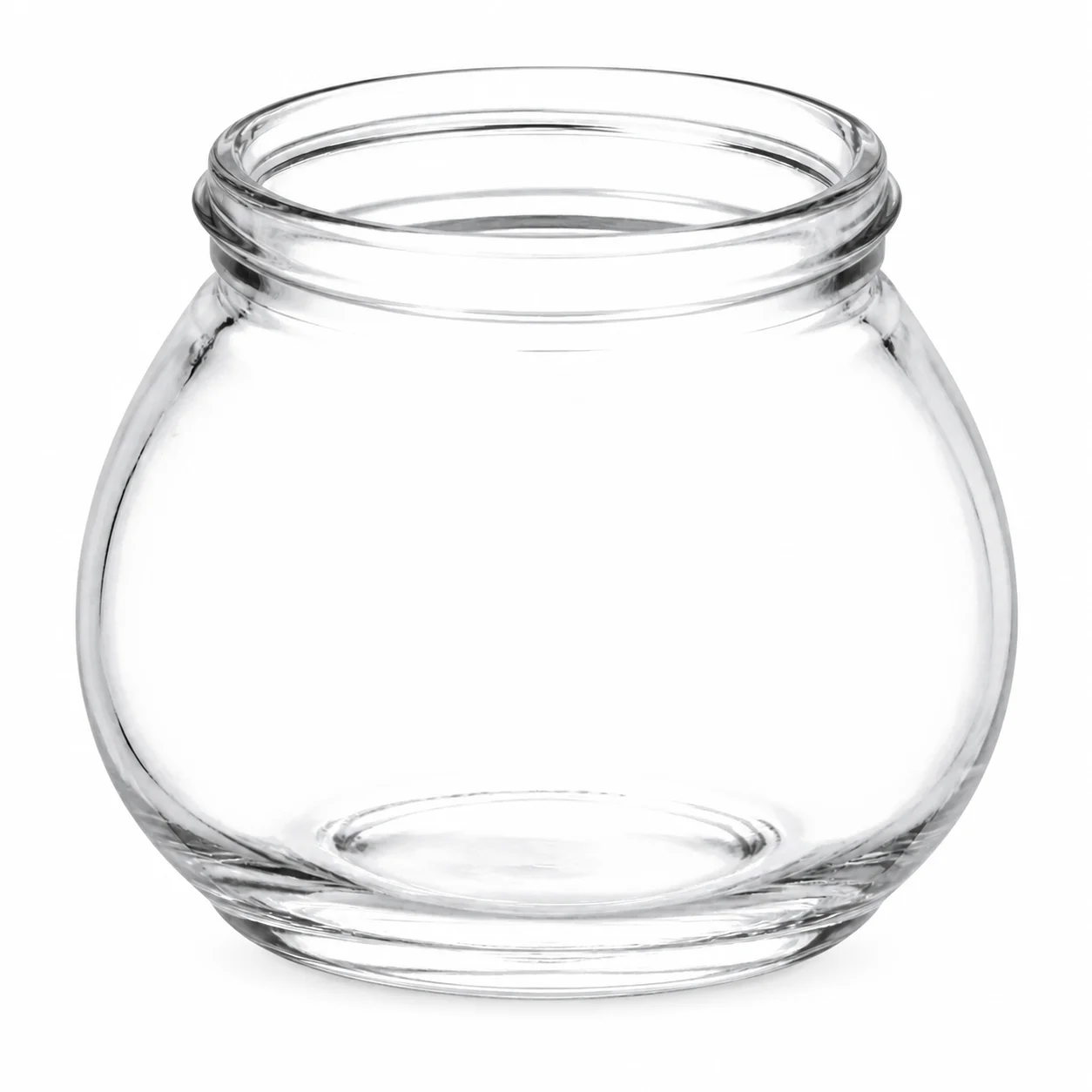
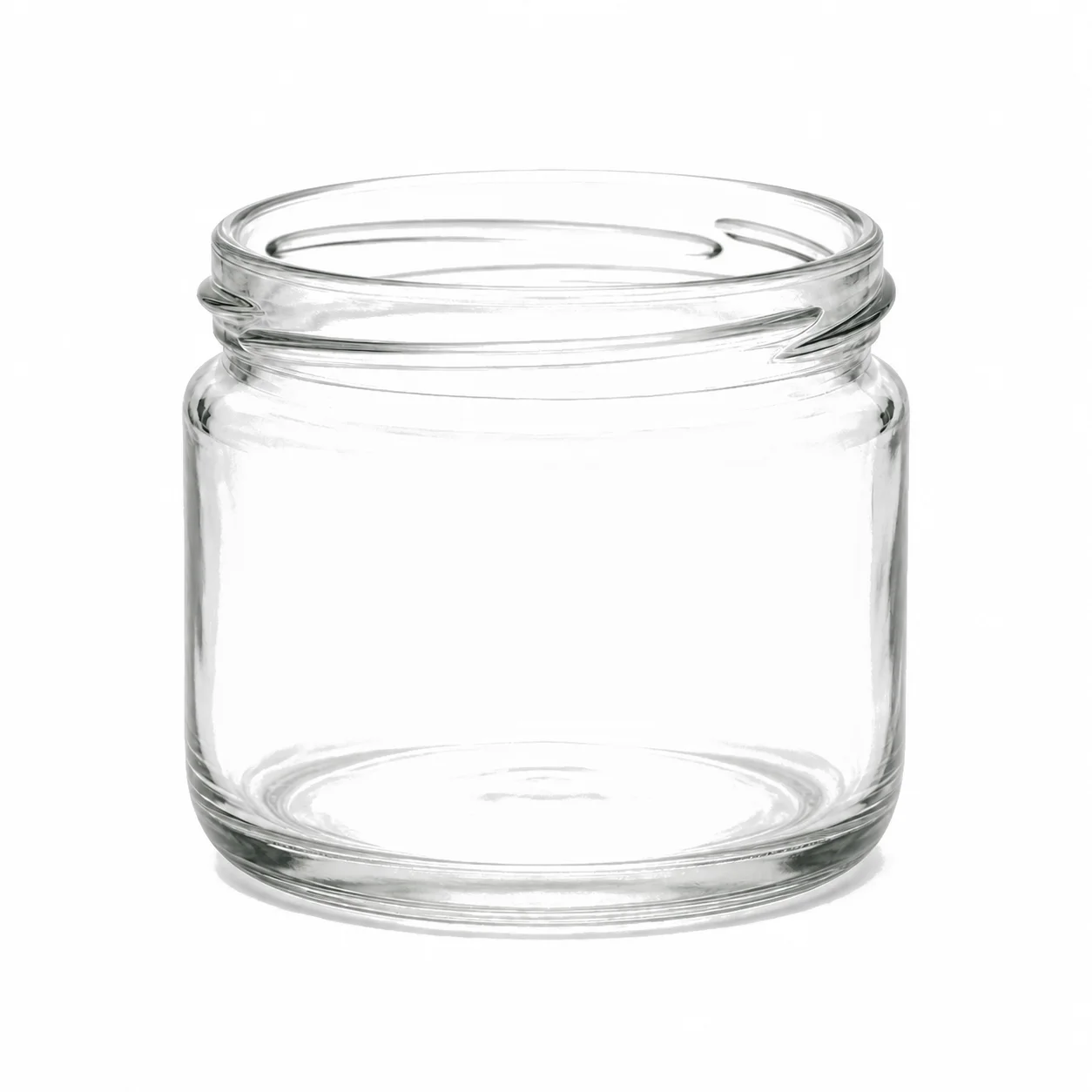
BGP-FS-4985 is based on a commercial 8 oz straight-sided jar with a 70-400 continuous-thread finish. Its broad mouth and low body suit spoonable shrimp pastes and seafood condiments, while the clear wall makes color, oil separation, fill height and finish cleanliness immediately visible.
Eight fluid ounces does not set the net weight
The jar's 8 oz designation is a liquid-volume class, not a promise that every seafood paste will yield the same declared mass. Salt level, moisture, minced solids, incorporated air and settling all change bulk density. Commercial net weight and headspace should therefore be established with the finished recipe at its real filling temperature.
There is no single shrimp-paste texture
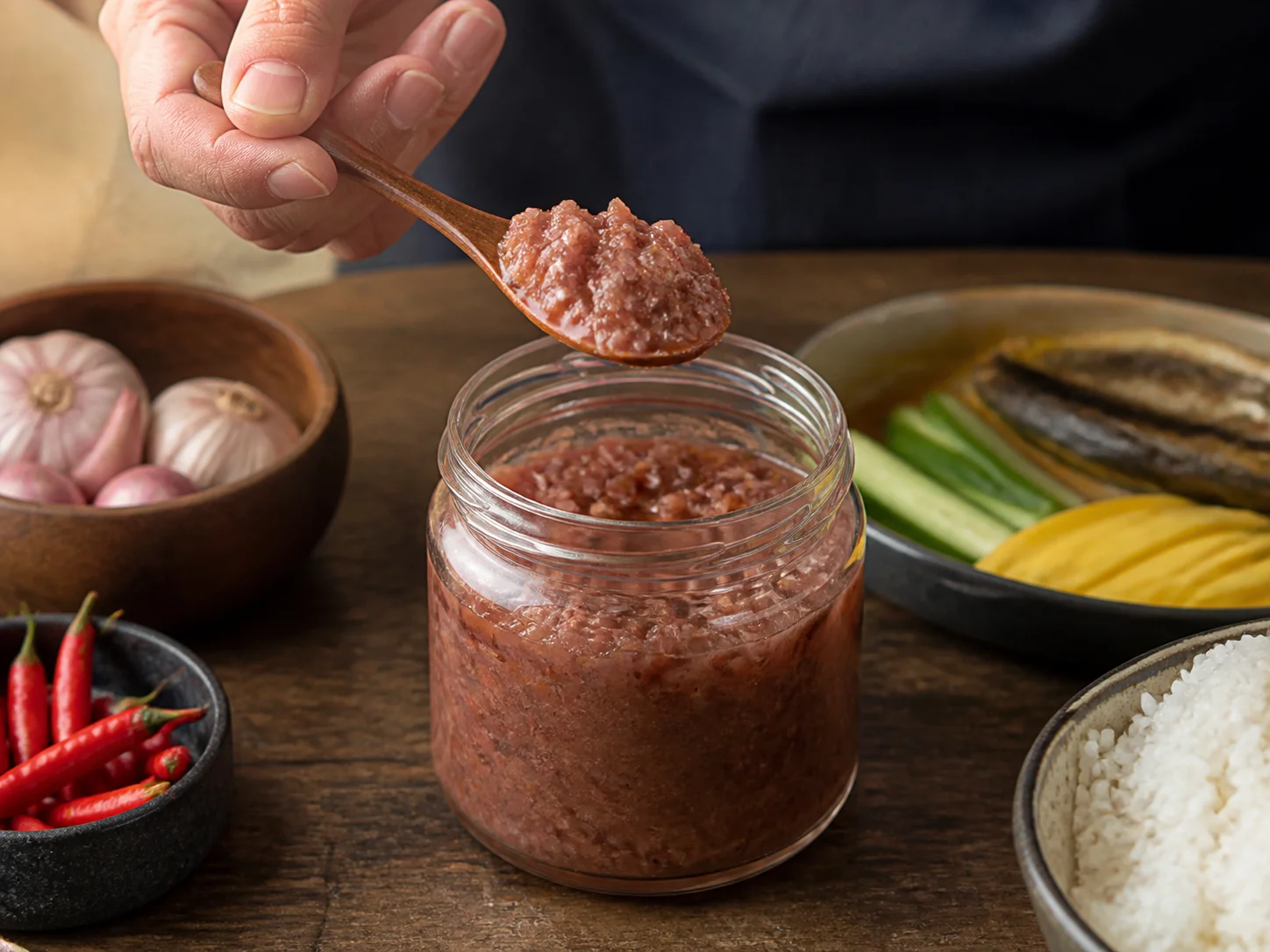
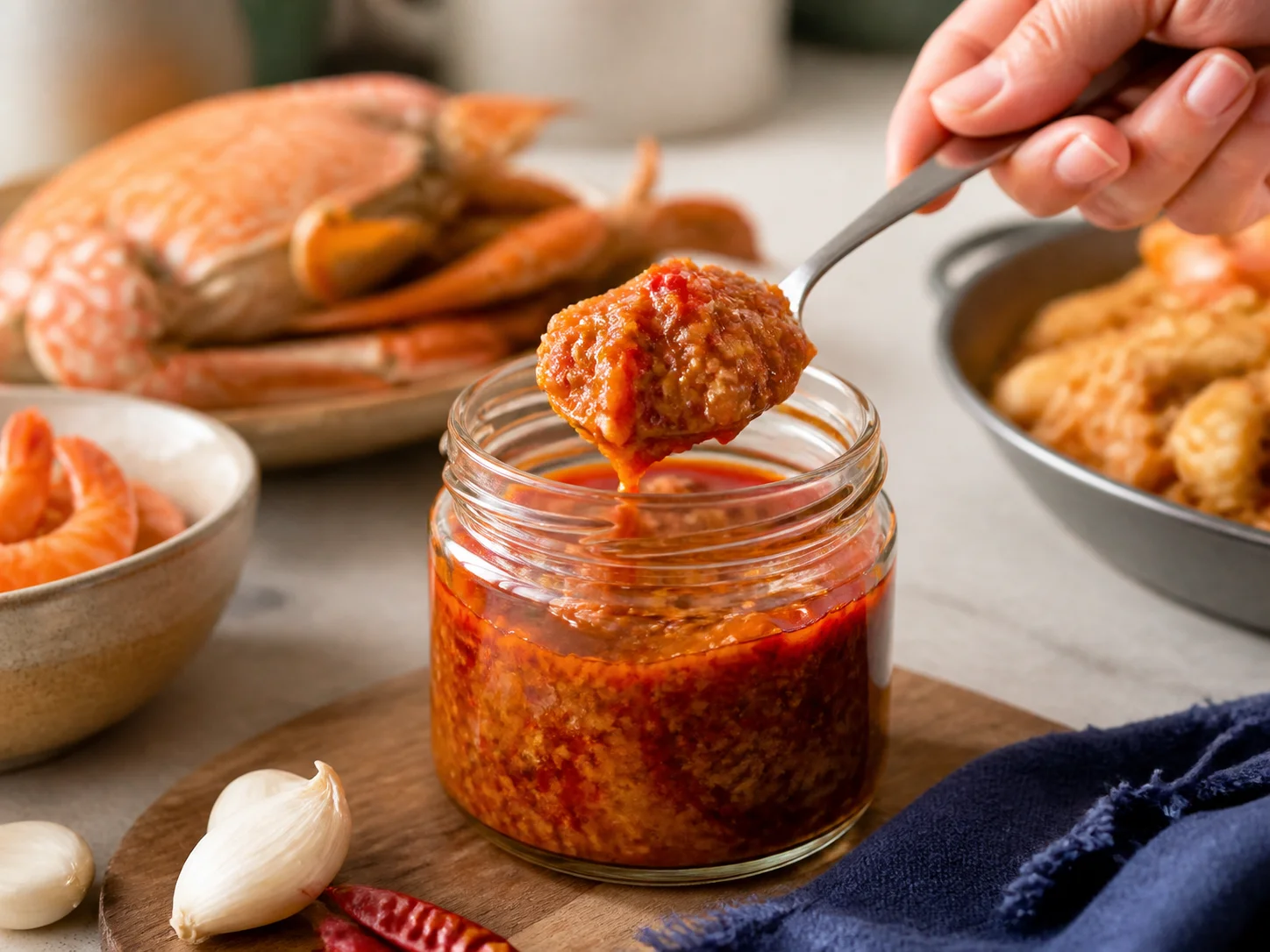
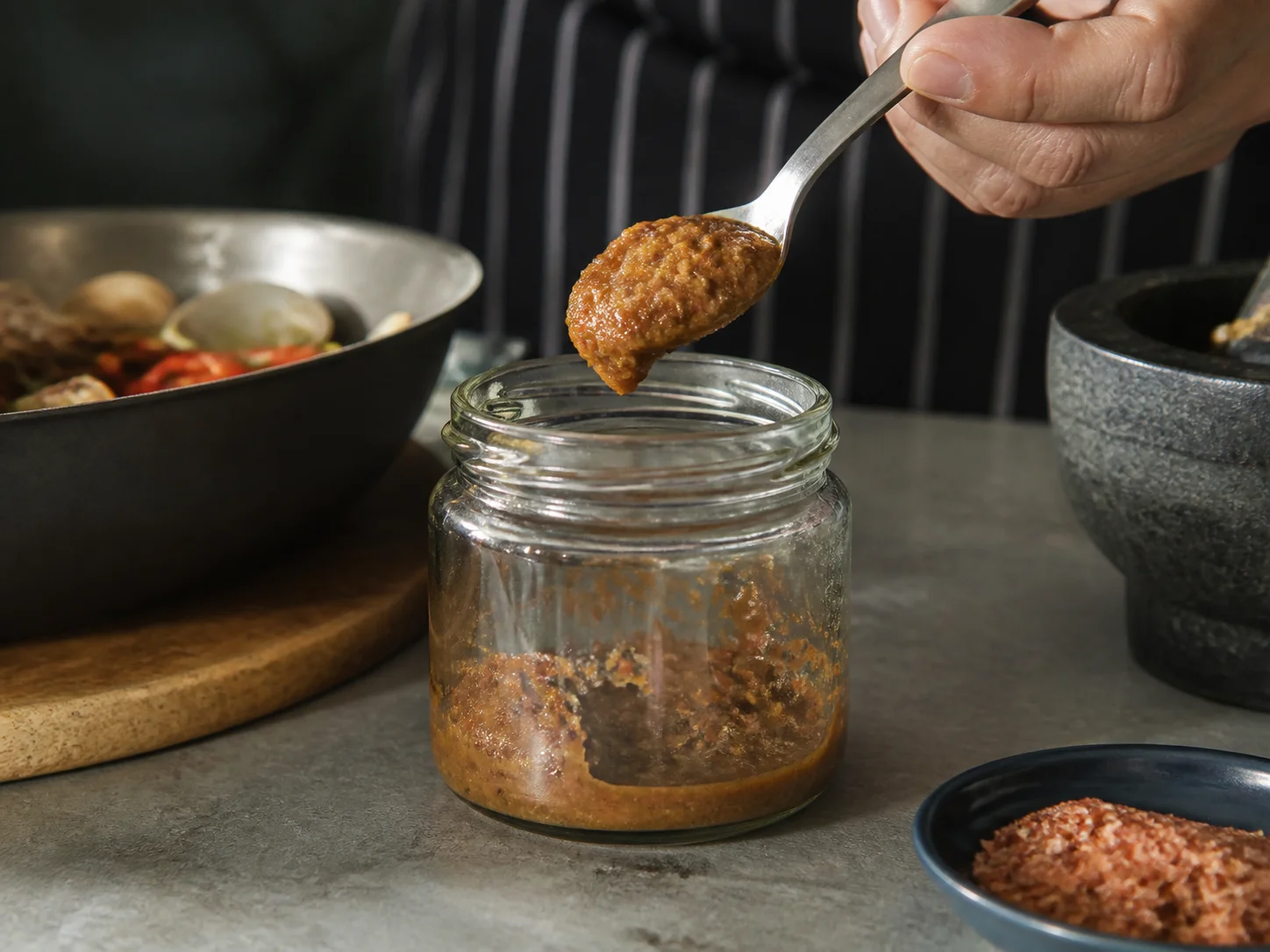
Kapi, bagoong alamang and related fermented condiments range from smooth, compact pastes to coarse, moist mixtures with visible shell or shrimp pieces. Raw material, salt concentration and fermentation time influence color, firmness and flavor chemistry, so nozzle size, pump pressure and cutoff settings must follow the individual recipe.
The 70-400 mouth supports filling and serving
The reference opening is approximately 2 3/8 inches across, giving a deposit nozzle room to handle a dense or particulate fill and allowing a spoon to reach the sidewall after opening. A clean cutoff remains important: paste dragged across the sealing land or threads makes capping less consistent and leaves an untidy first-use impression.
Aroma control belongs to the assembled closure
Published shrimp-paste research has identified nitrogen- and sulfur-containing compounds among a much broader volatile profile. The glass wall provides a nonporous container surface, but aroma retention in a retail pack also depends on the cap, liner, sealing contact, headspace and application conditions. Those elements should be specified as one closure system.
Brine, oil and solids can change the visible surface
Depending on formulation, a seafood condiment may release liquid, show an oil layer or settle during storage and distribution. The low clear jar displays those changes rather than hiding them. Filled-pack trials should examine the surface after vibration, temperature cycling and intended storage so that headspace and label language match what customers will actually see.
Clear glass turns housekeeping into presentation
Fermentation color can be a strong authenticity cue, and the 2.625-inch reference label height leaves room for a deliberate product window. The same window reveals rim smears, trapped air, uneven fill levels and product streaks. Filling accuracy, container wiping and label placement therefore contribute directly to the shelf standard.