Forming route, tolerances & where molding wins
Six practical consequences of choosing molded over tubular.
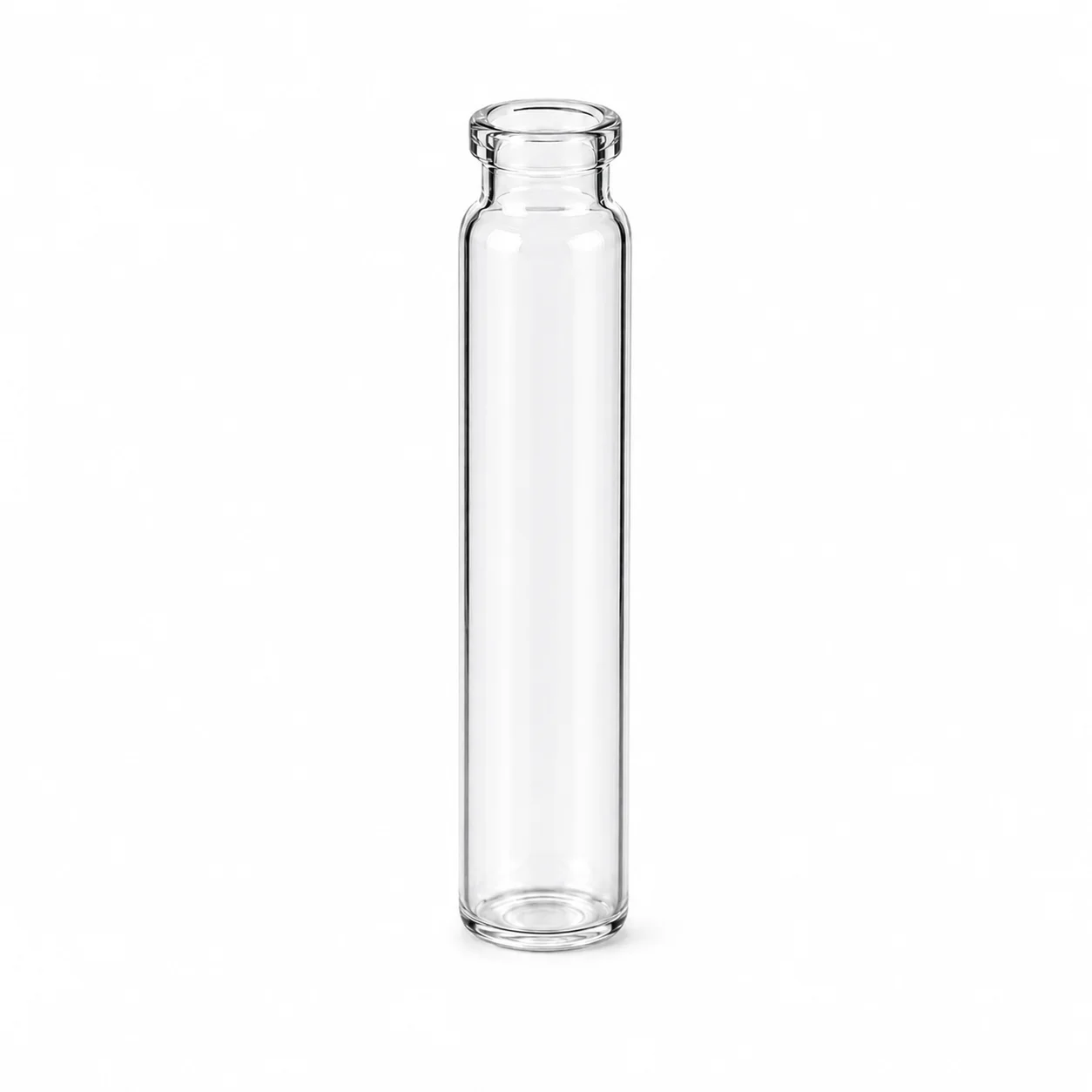
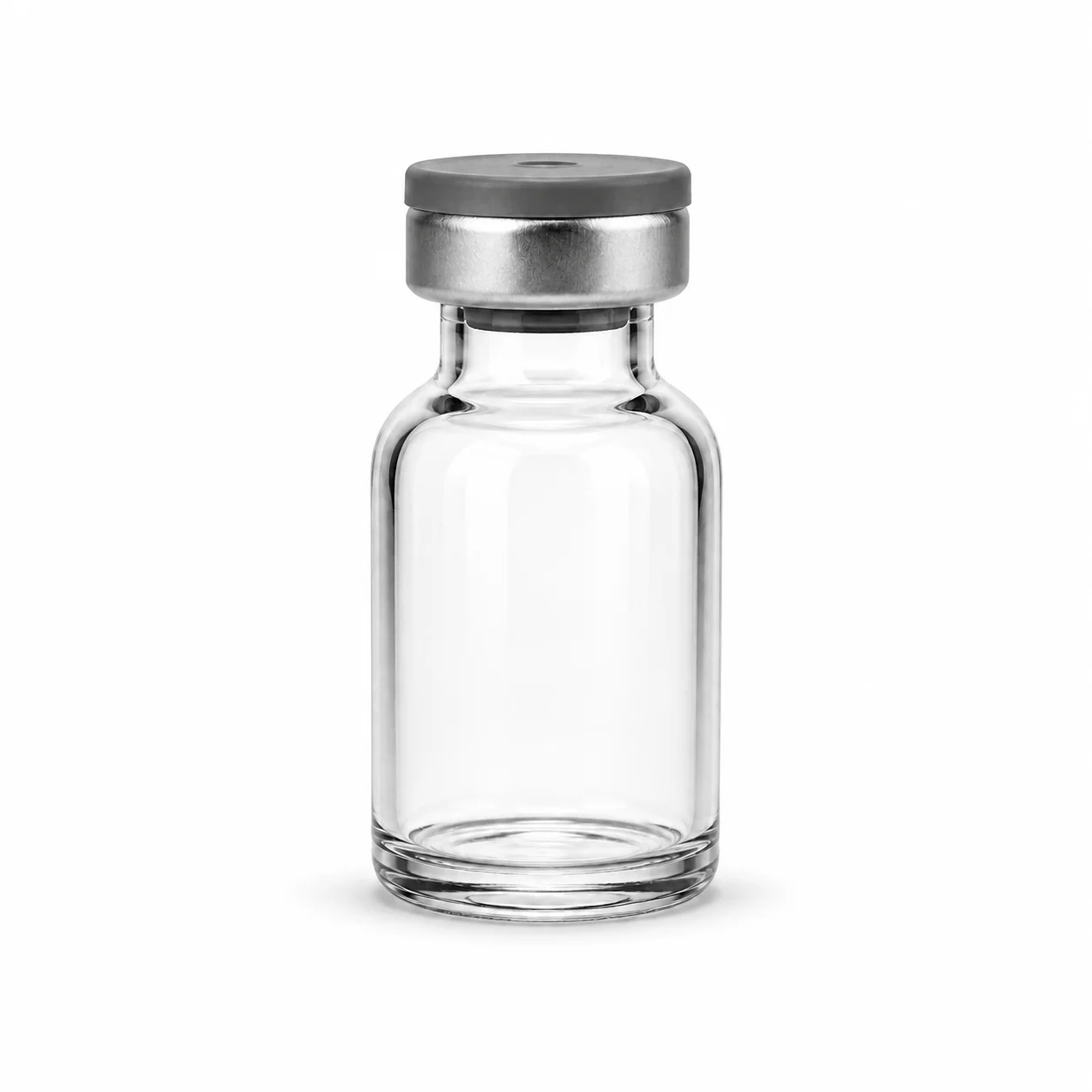
A molded vial is formed from a gob of glass in a mold, the same process that makes a jar. That gives a robust, heavy container that scales to large capacities cheaply, and it gives the dimensional variation that comes with any molded glass. ISO 8362-4 covers the format, and the differences from tubing run through the whole program.
Molding scales where tubing stops
Drawing a vial from tubing becomes difficult and expensive as diameter and wall thickness rise. Molding does not: it produces heavy containers and large capacities at a unit cost that falls with volume. For bulk parenterals, diagnostic reagents and any container above the tubing range, the forming route decides itself long before anyone compares glass specifications.
Expect wider dimensional spread and design for it
Molded glass varies more between cavities and across a mold's life than drawn tubing does, particularly in wall thickness and in the height of the finish. Filling and stoppering equipment therefore needs more tolerance for a molded program, and a line set to the edge of its range with tubular vials will reject molded ones without any change in glass quality.
A thicker wall changes heat and inspection behavior
More glass means slower heat transfer, which matters if the container is depyrogenated or lyophilized, and it means more optical distortion when a filled unit is inspected for particles. Neither is a fault; both are properties that a process validated on tubular vials will notice immediately if the container is switched.
Type I molded glass exists, and it is not universal
Molded vials are made in both borosilicate and treated soda-lime, so the glass type has to be specified explicitly rather than inferred from the format. For an injectable, that is a decision with regulatory weight. The forming route and the glass composition are two independent choices, and conflating them is a common error in early specifications.
The closure system does not change with the forming route
Molded vials take the same rubber stoppers and aluminum seals as their tubular equivalents at the same finish size, so a closure qualified on one is a sensible starting point for the other. What does change is the seating of the stopper on a finish with wider tolerance, which is why container closure integrity is re-established rather than carried across.
Base thickness variation is where molded vials differ most
The forming route leaves more variation in the base than in the wall, and for anything that heats or cools through the base that variation becomes a process variable. Where the product is lyophilized or terminally sterilized, base thickness is measured across the batch rather than taken from the nominal figure.