Child resistance, moisture barriers & transit protection
Six decisions behind a container that looks like a plain jar.
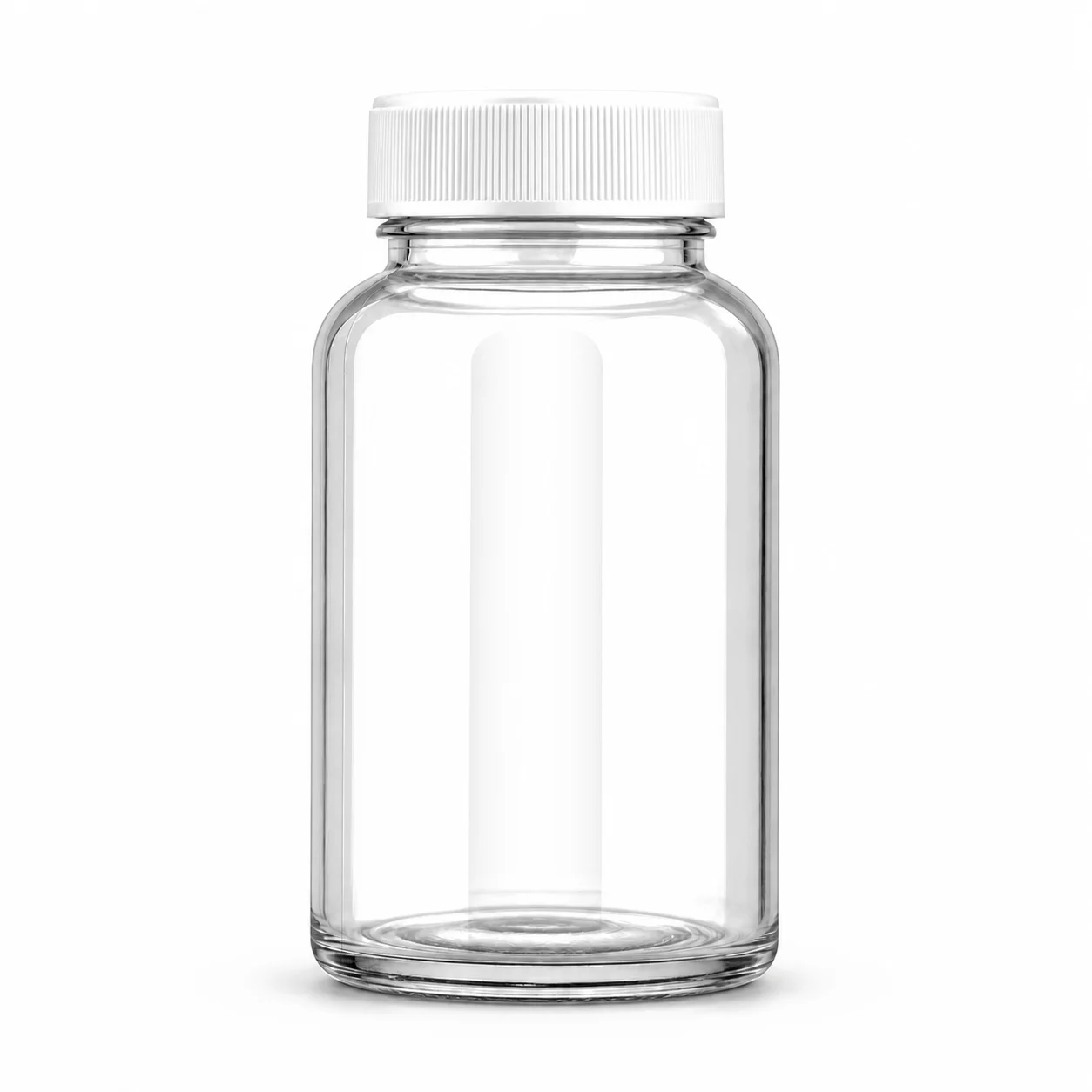
A tablet bottle has to keep a child out, keep water vapor away from a formulation that may be hygroscopic, and stop several hundred tablets grinding against each other in a carton for two days. Those three requirements pull on different components — the closure, the seal system and the fill — and they are specified independently.
Child-resistant testing is not one standard
ISO 8317 and the US 16 CFR 1700.20 protocol both test child-resistant packaging and they use different panel sizes, age distributions and pass criteria. A closure certified under one is not automatically compliant under the other. For a product sold in several markets, that has to be settled at specification rather than discovered at registration.
Whether you need a desiccant is a stability question
Desiccant is not a default. The need depends on the formulation's moisture sensitivity, the container's transmission rate, the seal system and the shelf-life target, and stability data answers it. Where it is needed, silica gel, molecular sieve or clay each have different sorption profiles, and the quantity is calculated rather than chosen by canister size.
Glass changes the moisture arithmetic entirely
Plastic bottles transmit moisture through the wall in proportion to thickness and surface area, which is why desiccant is common in HDPE packs. Glass does not transmit through the wall at all, so the ingress path is the closure alone. That often means less desiccant, or none, and it moves attention onto the liner and the seal.
The induction seal is the barrier until it is opened
A foil membrane welded to the finish gives a genuine moisture and tamper barrier for the unopened pack. Once broken it is gone, and from then on the liner in the cap is doing the work. Stability programs distinguish the two periods, and in-use shelf life is what governs how a patient's bottle behaves over a course.
Tablets damage each other in transit
A part-filled bottle lets tablets accelerate against each other and against the wall, chipping edges and generating dust. Cotton or a similar filler restrains them; so does choosing a bottle sized to the count rather than one stock size for a range. The filler then has to be compatible with the product and removable without contaminating it.
Cotton filler is a moisture decision as much as a rattle one
Filler stops tablets breaking each other in transit and it also holds moisture against them once the pack is opened. Whether to use it, and which material, follows from the stability data rather than from habit, and on a moisture-sensitive product the answer is often to fix the headspace instead.